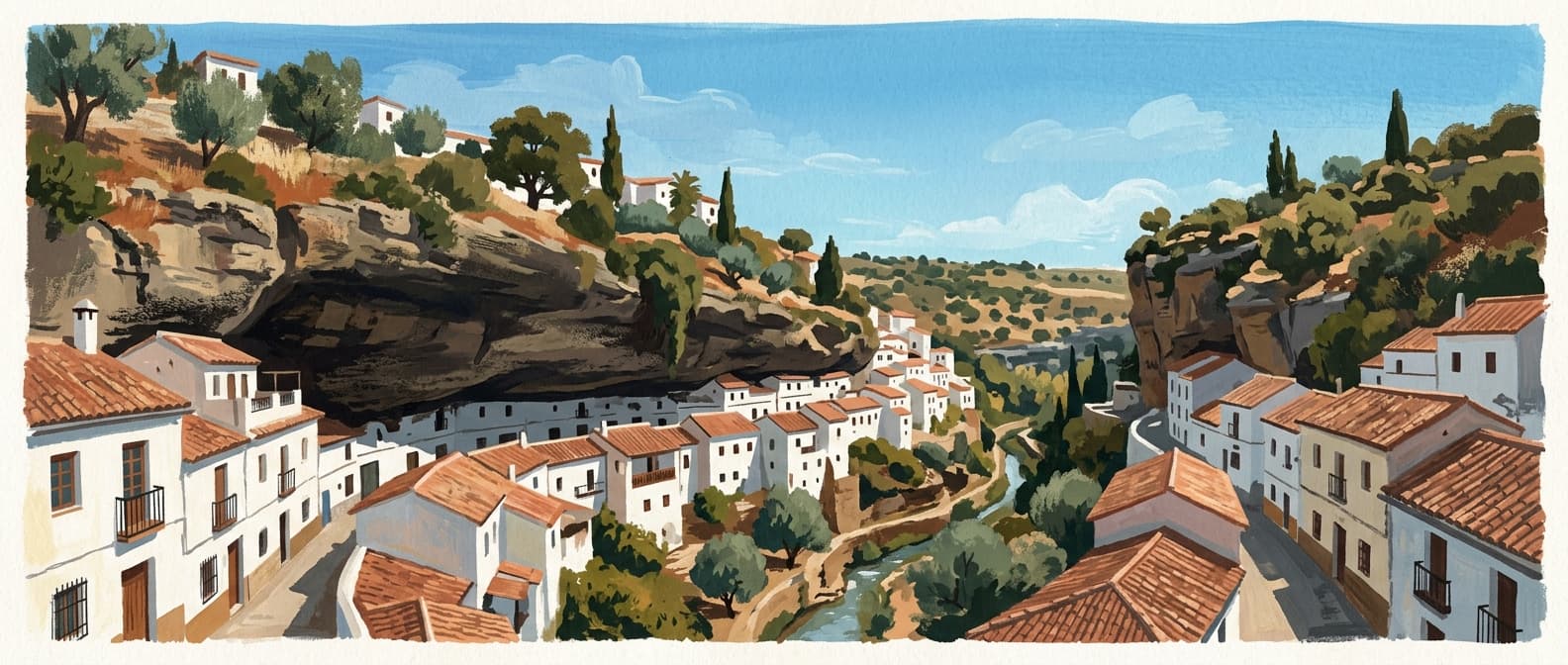
Setenil de las Bodegas is famous for its dwellings built directly into the basaltic rock overhangs of the Guadalporcún river gorge. It offers a distinct architectural experience where the cliffs serve as the roofs for the homes and shops below.
Exploring the Rock-Hewn Streets of Setenil de las Bodegas
Setenil de las Bodegas sits in the northern reaches of Málaga province, a location that distinguishes it from many of its neighbours in the Sierra de Cádiz. While most white villages in Andalusia were constructed on easily defensible hilltops, the settlers of Setenil took a different approach. They utilised the natural erosion of the Guadalporcún river, which carved deep limestone overhangs into the landscape. Rather than building over the rock, they built under it. These dwellings, known as "houses under the rocks," use the natural stone as a thermal regulator, keeping interiors cool during the scorching Andalusian summers and retaining warmth when the mountain air turns crisp in winter.
The name of the village hints at its resilient past. "Setenil" is derived from the Latin septem nihil, meaning "seven times nothing," referring to the seven occasions the Christian reconquest failed to take the Moorish stronghold. The suffix "de las Bodegas" was added later, reflecting a period when the village was renowned for its sprawling vineyards and wine cellars, many of which were housed within the cool depths of the caves. Today, it remains one of the most visually striking locations in southern Spain, providing a layout that feels more like a geological formation than a traditional town.
What to See & Do
The primary appeal of Setenil de las Bodegas is the town itself. Walking through its narrow, winding streets provides a sense of the scale of the cliffs hanging precariously over the pavements. However, there are several specific locations and monuments that provide a deeper understanding of the village’s heritage.
Calle Cuevas del Sol
This is arguably the most photographed street in the village. Named the "Caves of the Sun" because it receives direct sunlight for most of the day, this street is lined with bars and restaurants built directly into the rock face. The massive white stone ceiling looms over the outdoor terraces, creating a natural canopy. It is the best place to observe the verticality of the village, as you can see conventional houses built on top of the very rocks that form the roofs of the shops below.
Calle Cuevas de la Sombra
Just a short walk away, across one of the small bridges over the river, lies the "Caves of the Shadow." In complete contrast to its sun-drenched neighbour, this street is almost entirely enclosed by rock. The cliffs on either side meet overhead, creating a natural tunnel where the sky is invisible for a stretch of several metres. Because of the lack of sunlight, the temperature here is noticeably cooler, making it a popular refuge during July and August. It houses several artisan bakeries and craft shops where you can purchase local leather goods and ceramics.
The Nazari Castle and Torre del Homenaje
To understand the strategic importance of Setenil, you must climb to the highest point of the village. The 12th-century Moorish castle was once an almost impregnable fortress. Today, only the Torre del Homenaje (Keep) and a few stretches of the ramparts remain. For a small fee, you can enter the tower, which houses a small museum explaining the village's military history. The roof of the tower offers the most comprehensive view of the village, looking down onto the tiled roofs of the houses and the surrounding olive groves.
Iglesia de Nuestra Señora de la Encarnación
Located near the castle, this church is a fascinating mix of architectural styles. Built over the site of a former mosque, it features a late Gothic design with Renaissance elements. The interior is relatively austere but impressive in its scale, considering the cramped nature of the surrounding streets. It serves as a reminder of the Christian influence that reshaped the village after the final successful siege in 1484.
Calle Herrería
For those looking to escape the busiest tourist spots, Calle Herrería is one of the oldest and most atmospheric streets in the village. It descends sharply towards the river, with several houses featuring original rock walls and low-slung ceilings. It captures the essence of rural Málaga before the advent of mass tourism, providing a quieter space to appreciate the unique masonry required to fit windows and doors into uneven stone faces.
Practical Information
Visiting Setenil de las Bodegas requires some logistical planning, particularly regarding transport and parking, as the narrow cave streets were never designed for modern vehicles.
- How to get there: The easiest way to reach Setenil is by car. It is roughly a 20-minute drive from Ronda (18km) via the MA-7403. From Málaga city, the journey takes about 1 hour and 30 minutes via the A-357 and A-367. There are daily buses from Ronda, but services are infrequent, so it is vital to check the current timetable at the Ronda bus station before departing.
- Parking: Do not attempt to drive into the centre of the village. The streets are extremely narrow and many are pedestrianised. Use the Parking Los Caños, a multi-storey car park located at the entrance of the village. Alternatively, there is a large open-air car park on the CP-02 road (near the football pitch) which is a 10-minute walk from the main cave streets.
- Opening Times: The streets and viewpoints are accessible 24 hours a day. The Torre del Homenaje is generally open from 10:00 to 18:00 (closing slightly later in summer). The Tourist Office, located in an old town hall with a beautiful 16th-century Mudéjar ceiling, is typically open from 10:00 to 14:00 and 16:00 to 19:00.
- Ticket Prices: Entry to the Torre del Homenaje costs approximately €2. Most other sites, including the main cave streets and viewpoints, are free to explore.
Where to Eat Nearby
The local gastronomy centres on hearty mountain fare. Bar Frasquito on Calle Cuevas del Sol is a local institution, serving traditional tapas like chorizo al vino and sopa cortijera (a local soup made with bread, olive oil, asparagus, and poached eggs). For a slightly more modern take on Andalusian flavours, La Tasca offers excellent views of the rock formations and focuses on high-quality Iberian pork products and local cheeses. If you prefer a quieter setting, Restaurante El Mirador provides views across the valley and serves excellent grilled meats seasoned with herbs from the surrounding hills.
Where to Stay
Staying overnight allows you to experience the village after the day-trippers have departed and the cave streets are illuminated. Hotel Villa de Setenil is situated in the heart of the village, offering comfortable rooms with easy access to the main sites. For a more authentic experience, look for Casas Rurales (rural houses) like Casa Entre Parras, which are built directly into the rock, allowing you to sleep with a natural stone ceiling above you.