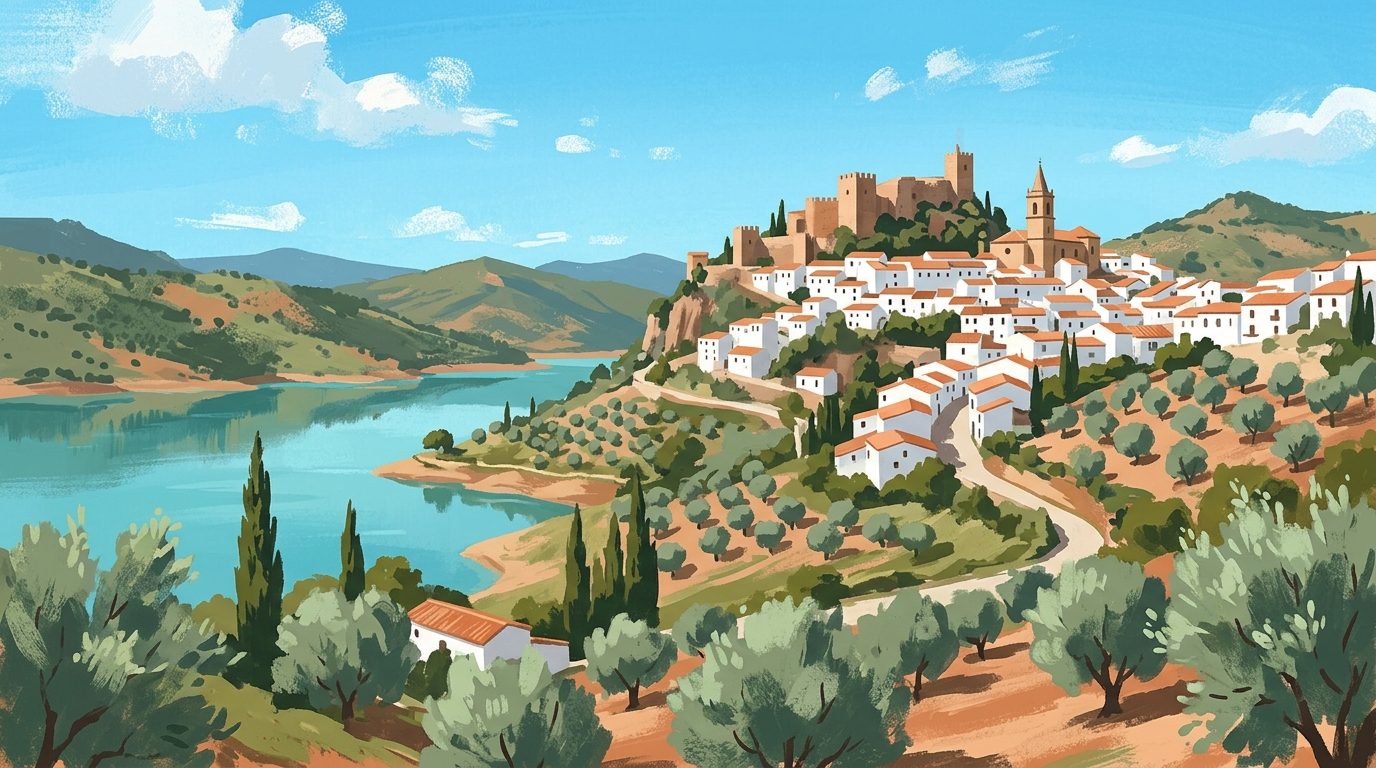
Perched on a craggy peak overlooking a turquoise reservoir, Zahara de la Sierra is one of the most visually striking villages in the Sierra de Grazalema. This former Moorish stronghold offers a blend of medieval defensive architecture and a freshwater beach that makes it a unique stop in the Pueblos Blancos.
Approaching Zahara de la Sierra from the winding mountain roads of the Sierra de Cádiz is a highlight of any trip through southern Spain. The village reveals itself as a cluster of whitewashed houses clinging to a steep limestone outcrop, topped by the skeletal remains of a 13th-century castle. Below the village, the intense blue of the Zahara-El Gastor reservoir provides a sharp contrast to the sun-bleached rock and olive groves that define the landscape.
This is a place defined by its verticality and its history as a strategic frontier town. For centuries, Zahara was a vital defensive post between the Christian and Nasrid kingdoms. Today, it serves as a gateway to the Sierra de Grazalema Natural Park, attracting hikers, cyclists, and those seeking the quiet rhythm of Andalucían village life. While many visitors arrive for the views, the village offers a surprising variety of activities, from exploring medieval fortifications to swimming in a man-made beach shaded by fruit trees.
What to See & Do
The Moorish Castle and Torre del Homenaje
The defining feature of the skyline is the Castillo de Zahara de la Sierra. Built by the Moors in the 13th century and later reinforced by Christians, the fortress sits 600 metres above sea level. To reach it, you must navigate the steep, cobbled paths of Calle El Fuerte. The climb is taxing but rewarding; the path leads through the remains of the medieval town walls to the Torre del Homenaje (Keep).
The tower has been restored and houses a small interpretive centre explaining the site's military significance during the Reconquista and later the Napoleonic Wars. From the roof of the tower, you have unobstructed views across the reservoir to the village of Olvera and the surrounding peaks of the Grazalema range. On a clear day, the perspective of the white rooftops against the turquoise water below is one of the most photographed scenes in the province.
The Zahara-El Gastor Reservoir
The Embalse de Zahara-El Gastor is more than just a scenic backdrop. This vast body of water offers several points for kayaking and paddleboarding, particularly during the spring and autumn months. Several local operators provide equipment hire near the water's edge. Even if you aren't feeling active, the road that circles the reservoir (the CA-9104) offers numerous miradors (viewpoints) where you can pull over and take in the scale of the landscape. The contrast between the rugged, arid mountains and the deep blue water is particularly striking at sunset.
La Playita (Arroyomolinos Recreational Area)
Located roughly five kilometres from the village centre at the foot of Monte Prieto, La Playita is an artificial beach created by diverting the waters of the Arroyomolinos stream. It is a popular summer retreat for locals and visitors alike. Unlike the coastal beaches of Cádiz, this is a freshwater lake surrounded by grass and trees, providing a cool microclimate during the heat of July and August. The facility includes a restaurant, lifeguards, and shaded picnic areas, making it an excellent spot for families.
Iglesia de Santa María de la Mesa
Standing in the central Plaza del Rey, this 18th-century church is a fine example of Andalucían Baroque architecture. It was built on the site of an older temple and features an impressive gilded altarpiece and a small museum of religious art. The plaza itself is the heart of the village, where you can watch the world go by from a shaded cafe terrace while admiring the church's ornate red-tinted facade.
Vía Verde de la Sierra
Though the official start of this famous 36-kilometre cycling and hiking path is in nearby Olvera or Puerto Serrano, Zahara de la Sierra is a frequent base for those tackling the route. The path follows a never-completed railway line through 30 tunnels and over four viaducts. It is an easy, flat ride that takes you through some of the most beautiful countryside in Cádiz, including the Peñón de Zaframagón, home to one of Europe's largest colonies of griffon vultures.
Practical Information
Opening Times & Prices
- Castillo & Torre del Homenaje: Generally open daily from 10:00 to 14:00 and 16:00 to 19:00 (hours vary slightly by season). Entry is approximately €3.
- La Playita (Arroyomolinos): Open seasonally, typically from mid-June to mid-September. Note: Dates may be affected by regional drought restrictions or reservoir levels. Hours are generally 11:00 to 19:00 (extending to 20:00 in July and August). Entry is roughly €3.50 for adults on weekdays and €4.50 on weekends and public holidays, with reduced rates for children (ages 4 to 11) and pensioners (check on the operator's website before travelling).
- Iglesia de Santa María de la Mesa: Usually open for visits during the morning (10:00 to 13:00) and before services in the evening. Entry is free, though donations are welcome.
How to Get There
Driving is the most practical way to reach Zahara. From Ronda, the journey takes about 40 minutes via the A-374 and CA-9104. From Sevilla or Cádiz, the drive is roughly 1 hour and 20 minutes. If you are relying on public transport, Transportes Generales Comes operates a bus service from Ronda to Zahara once daily (Monday to Friday), usually departing in the afternoon. Always check the latest timetable on the TG Comes website (note that the interface is primarily in Spanish) or at the bus station as services are infrequent.
Parking
Parking inside the village is extremely difficult due to the narrow, one-way streets. It is best to use the public car park located at the entrance to the village on the CA-9104. From here, it is a short, albeit uphill, walk to the main square. There is also a small car park near the entrance to the castle at the top of the village, but the road is very steep and narrow, making it unsuitable for large vehicles.
Where to Eat Nearby
Restaurante Al Lago is a standout choice, situated on the edge of the village with a large terrace overlooking the reservoir. They specialise in modern interpretations of local mountain dishes, using seasonal produce like wild asparagus, mushrooms, and Iberian pork. For a more traditional experience, Mesón Los Alisares offers hearty, home-cooked food such as tagarninas (golden thistle) and goat's cheese from the nearby Sierra de Grazalema. If you are visiting La Playita during the summer, the on-site restaurant serves a reliable menú del día for around €14.
Where to Stay
For those wishing to stay overnight, Hotel Arco de la Villa is built directly into the rock at the top of the village, offering some of the best views in town. Alternatively, Al Lago provides boutique guest rooms with a contemporary feel and excellent breakfasts. Many visitors also opt for rural houses (casas rurales) within the village or near the reservoir, which provide a more independent way to experience the quiet evenings when the day-trippers have departed.