
Feature · Cádiz
The Weight of the Water: Life at the Edge of Two Continents
Fourteen kilometres of salt water separate the northern edge of Africa from the southernmost tip of Spain, creating a corridor where geopolitical tension, ecological wonder, and human desperation collide.
By Dan · Updated 16 July 2026 · 7 min read
Story context
This is a narrative feature, not a breaking-news report or a legal/practical guide. It is kept on the site because it adds local texture and reading value alongside the more practical Andalucía 365 guides.
Use the links below for planning details, current access, places to stay, transport or food guidance connected with the story.
In the high, thin light of a Tarifa afternoon, the Rif mountains of Morocco do not look like another continent; they look like a neighbourhood you simply haven't visited yet. The Strait is not a void between worlds, but a narrow, violent bridge of water where the Atlantic attempts to swallow the Mediterranean whole.
Antonio stands on the stone pier of Tarifa’s harbour, his back to the sixteenth-century walls of the Castillo de Santa Catalina. He is watching the white horses. Not the literal animals, but the foam-crested peaks of the Levante wind as it whips the surface of the Strait into a frenzy. To the casual observer, the water looks blue, inviting, even celebratory. To Antonio, who has spent forty years hauling tuna and swordfish from these depths, the water looks like a loaded gun. "The Strait doesn't care about your maps," he says, squinting toward the hazy silhouette of Jebel Musa across the water. "People think this is a line on a page. It’s not. It’s a machine. It moves things (fish, ships, people) whether they want to move or not."
At this specific point in the Province of Cádiz, Europe ends with a sudden, jagged finality. You can stand at the Isla de las Palomas and feel the distinct thermal shift where the cold, heavy Atlantic current pushes beneath the warmer, lighter Mediterranean. It is one of the most strategically charged pieces of water on the planet. Fourteen kilometres (barely nine miles) separate the northern edge of Africa from the southernmost tip of Spain. It is a distance a marathon runner could cover in an hour, yet it remains one of the most formidable barriers in human geography.
The Wind’s Domain
The wind defines everything here. It is the primary architect of the local psyche. When the Levante blows from the east, it funnels through the narrow gap between the Baetic System and the Atlas Mountains, accelerating until it screams. It blows for days, sometimes weeks, at a time. It dries the skin, rattles the windows of the whitewashed houses, and, according to local folklore, drives the weak-willed to madness. In the bars of Tarifa’s old town, residents speak of the wind as if it were a temperamental landlord to whom they must all pay rent.
This wind has birthed a specific culture. On the broad, golden sweep of Playa de los Lances, the sky is perpetually punctured by the neon arcs of kitesurfers. They come from Berlin, London, and Stockholm, drawn by the thermal consistency of the Strait. For them, the turbulence of the water is a playground. They dance across the waves, tethered to their canvases, oblivious to the fact that they are playing in a high-security corridor. They represent one face of the Strait: the Europe of leisure, mobility, and high-tech carbon fibre. But as the sun dips and the kites are packed away, another reality of the water begins to stir.
The Invisible Border
While the kitesurfers chase the wind, others watch the water with a grimmer purpose. The Strait is the frontline of a migration crisis that never truly pauses. From the heights of the Sierra de la Plata, sophisticated SIVE (Integrated External Surveillance System) radar arrays scan the waves for the thermal signatures of pateras, small, overladen inflatable boats attempting the crossing from the Moroccan coast. The proximity of the two continents is a cruel taunt. On a clear night, the lights of Tangier Med port glitter so brightly they seem to be an extension of the Spanish coastline.
The tragedy of the Strait is its deceptive scale. The water looks manageable, but the currents are treacherous. There is a deep-water canyon here that drops to a depth of nearly a thousand metres, and the clash of tides creates standing waves that can flip a small vessel in seconds. For every person who makes it to the scrubland of the Cádiz coast, there is a shadow of those who did not. The local Guardia Civil maintain a constant, weary vigil. The Strait is a graveyard as much as it is a thoroughfare, a place where the promise of a European life frequently ends in the silence of the deep. This is the tension at the heart of the region: the coastal road is a scenic drive for tourists, but for the man in the patera, it is the edge of the world.
The Iron and the Rock
East of Tarifa, the geography shifts from sand to limestone. The Rock of Gibraltar looms over the bay of Algeciras like a discarded tooth. Here, the Strait takes on a different kind of weight: the weight of iron and empire. Gibraltar remains a geopolitical anomaly, a British Overseas Territory bolted onto the bottom of the Iberian Peninsula. The border, or 'the fence' as locals call it, is a site of constant diplomatic friction, yet the daily reality is one of codependency. Thousands of Spanish workers from the neighbouring town of La Línea de la Concepción cross every morning to work in the Rock’s gambling firms, ports, and shops.
But the true power lies beneath the surface. The Strait is a mandatory choke point for global trade and military movement. NATO warships and nuclear submarines glide through these waters, invisible to the tourists eating calamari in the plazas of Algeciras. Every vessel entering or leaving the Mediterranean must pass through this funnel. To control the Strait is to hold the pulse of two seas. This strategic reality means the area is perpetually monitored, a landscape of listening posts and naval bases that contrast sharply with the bohemian, laid-back atmosphere of the surfing beaches just a few miles west.
The Breach of the Giants
Beyond the politics of men, the Strait belongs to the giants. This is a biological bridge. Twice a year, millions of birds migrate between Europe and Africa, using the thermals of the Strait to gain altitude before the crossing. But the most dramatic residents are the orcas. A specific sub-population of Iberian killer whales lives here, following the migration of the bluefin tuna. Since 2020, and continuing into the 2026 season, this specific sub-population has frequently interacted with sailing vessels, damaging rudders and forcing maritime authorities to issue ongoing warnings (check the latest maritime advisories via Salvamento Marítimo or the GT Orca app before sailing).
Some scientists suggest it is play; others wonder if it is a response to the noise and pollution of the hundreds of commercial ships that pass through the Strait every single day. Watching an orca breach against the backdrop of a massive Maersk container ship is to witness the collision of two eras: the ancient, instinctive rhythms of the natural world and the relentless, grinding machinery of global commerce. The orcas are a reminder that despite the radars and the fences, the Strait remains a wild, unpredictable entity that refuses to be fully tamed.
The Cost of the View
The contradiction of the Strait is most visible at sunset. From the mirador above Tarifa, the view is sublime. The sun turns the water to molten copper, and the mountains of Morocco glow with a deep, bruised purple. It is a view that sells property and fills hotel rooms. Yet, this beauty is built on a foundation of profound instability. The Strait is where the Global North and the Global South are pressed so tightly together that the friction is heat-producing. You cannot enjoy the view without acknowledging the radar towers, the patrol boats, and the sheer audacity of the geography.
This is not a place for those who seek comfort in clear-cut boundaries. In the Strait, everything bleeds into everything else. The language of the coast is a patois of Spanish and English with a salt-spray of Arabic. The food is a mix of Atlantic catch and Moorish spice. Even the weather is a hybrid, a constant negotiation between the oceanic and the continental. To live here is to live in a state of permanent transition, standing on a narrow ledge of land while the world rushes past at thirty knots.
As the light finally fails, the lighthouse at Tarifa begins its rhythmic sweep. Its beam cuts across the water, reaching out toward Africa before swinging back to illuminate the Spanish dunes. It is a lonely, mechanical gesture of connection. Below the cliffs, the water continues its churn, indifferent to the kitesurfers, the soldiers, the whales, or the migrants. The Strait remains a dark, powerful presence, a fourteen-kilometre stretch of history that refuses to be ignored, reminding anyone who stands at its edge that Europe does not simply end: it dissolves into the sea.
Last reviewed: 16 July 2026 · Editorial policy
Related guides
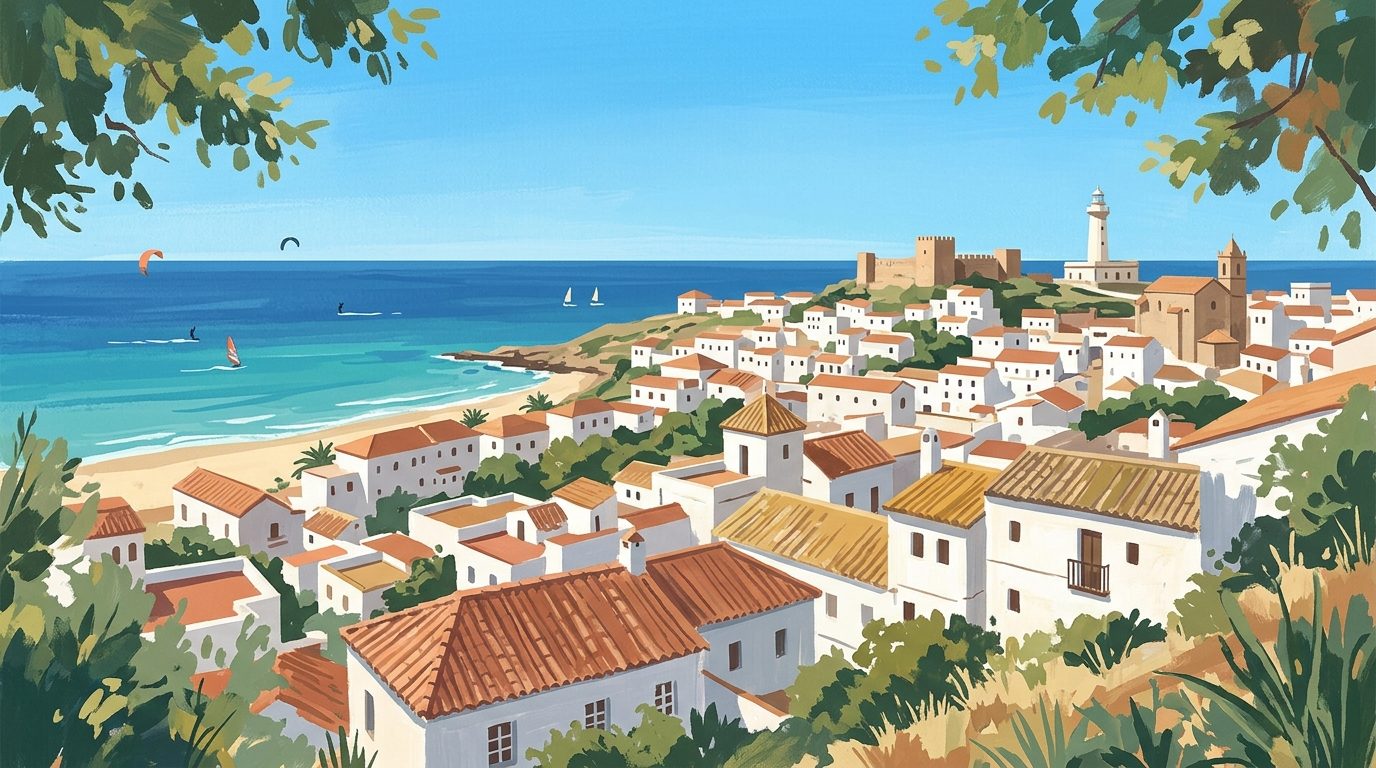
Tarifa: The Wind-Swept Gateway to Two Continents
Discover Tarifa, the wind-swept southernmost point of Europe where the Atlantic meets the Mediterranean, featuring medieval fortresses, Roman ruins, and world-class kitesurfing.
7 min read
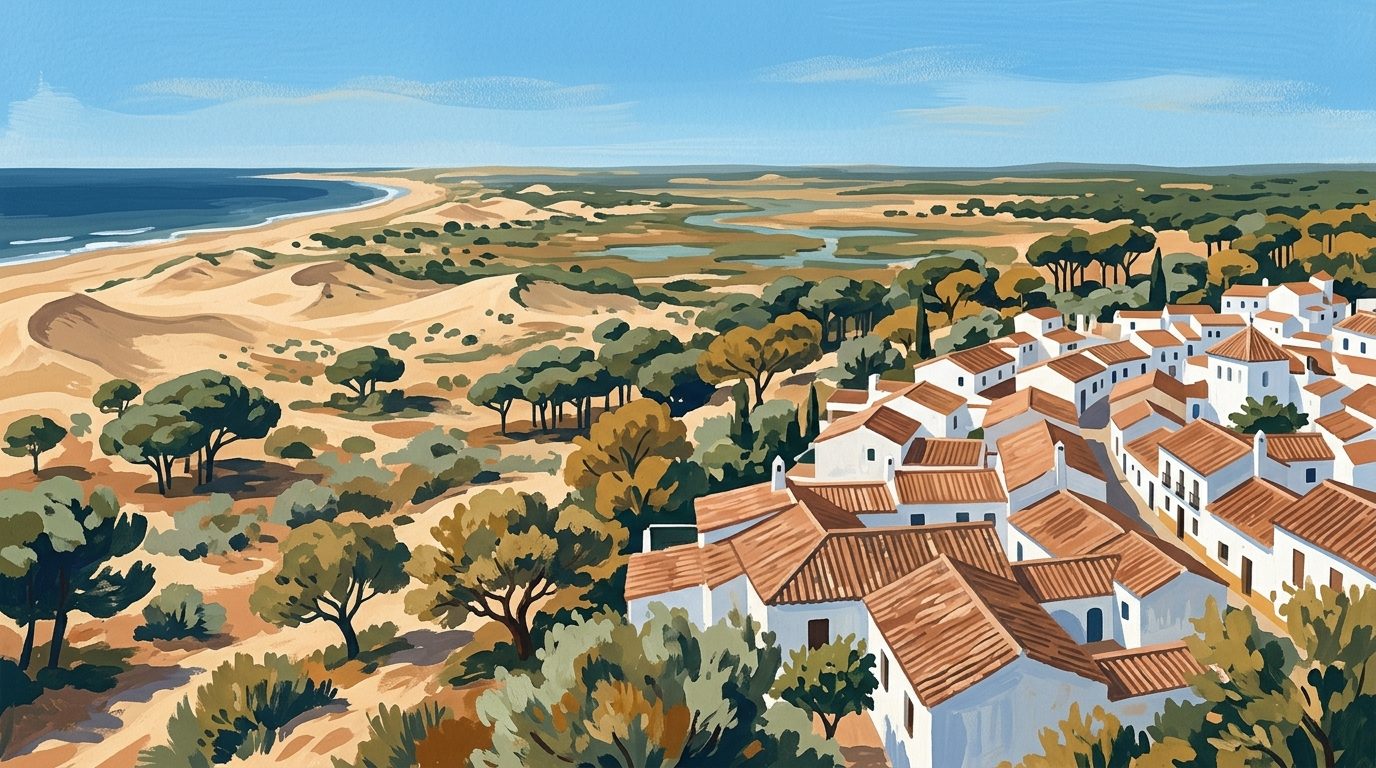
Where the Sands Shift and the Marismas Breathe: A Guide to Doñana
Discover the wild Atlantic coast of Huelva, where the shifting dunes of Doñana meet the sand-paved streets of El Rocío and the pristine beaches of Mazagón.
8 min read
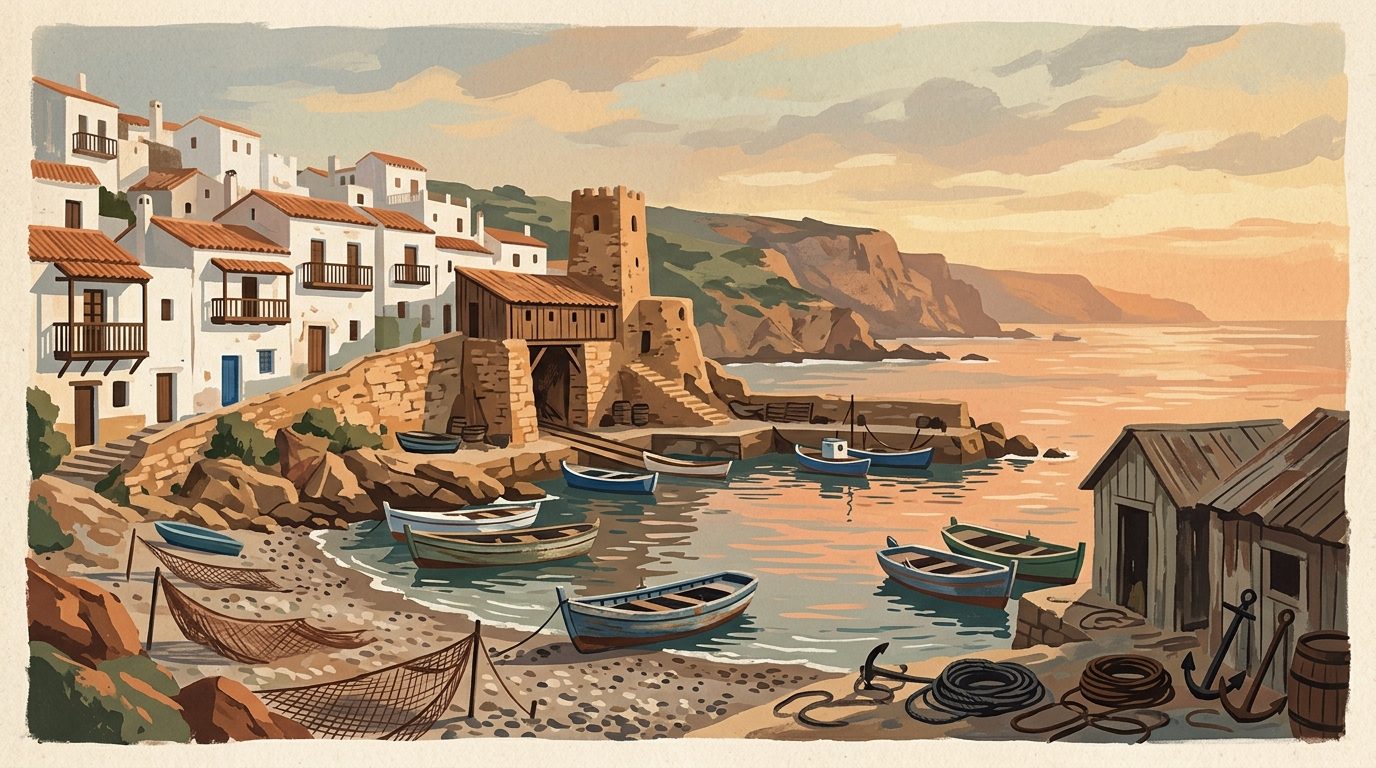
The Last Almadraba: Blood, Steel, and the Silver Ghost of Barbate
In the coastal town of Barbate, a three-thousand-year-old ritual of blood and silver continues as the bluefin tuna begin their ancient migration.
7 min read
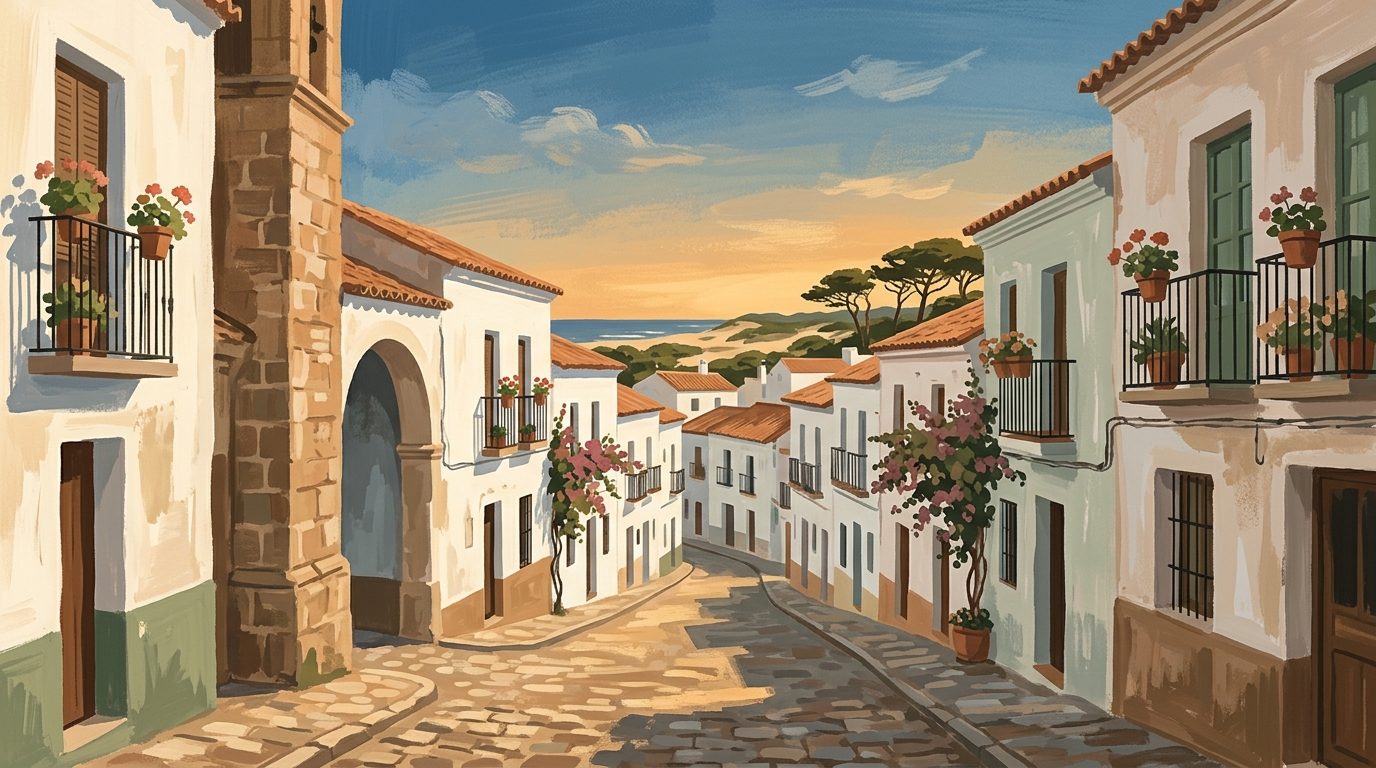
Costa de la Luz: The Complete Guide
The Costa de la Luz is an untamed stretch of Atlantic shoreline defined by wild dunes, pine forests and stiff sea breezes. Spanning the coastlines of Huelva and Cádiz, it offers a stark alternative to the concrete resorts of the Mediterranean.
9 min read
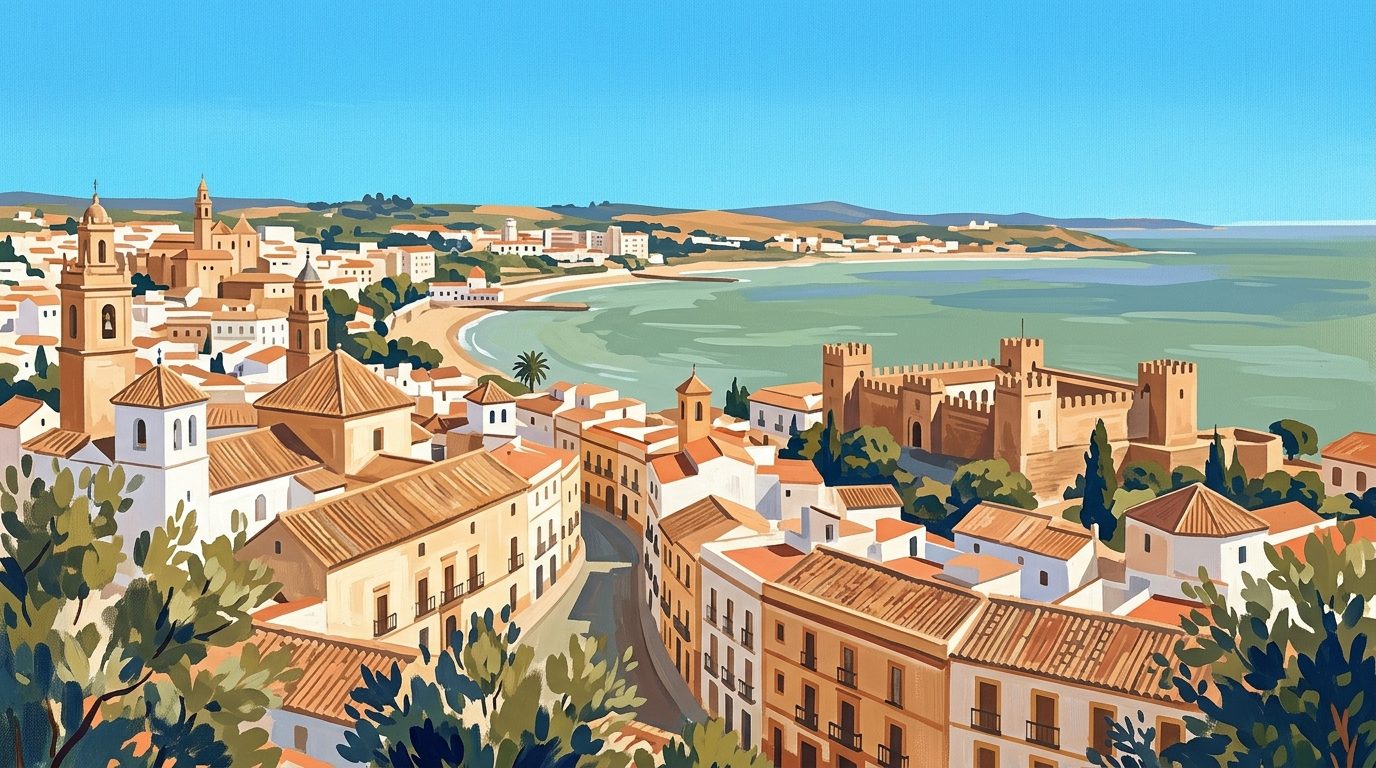
El Puerto de Santa María: Sherry, Seafood and the Bay of Cádiz
Discover El Puerto de Santa María, a coastal corner of the Sherry Triangle known for its grand merchant palaces, historic bodegas, and fresh Atlantic seafood.
6 min read
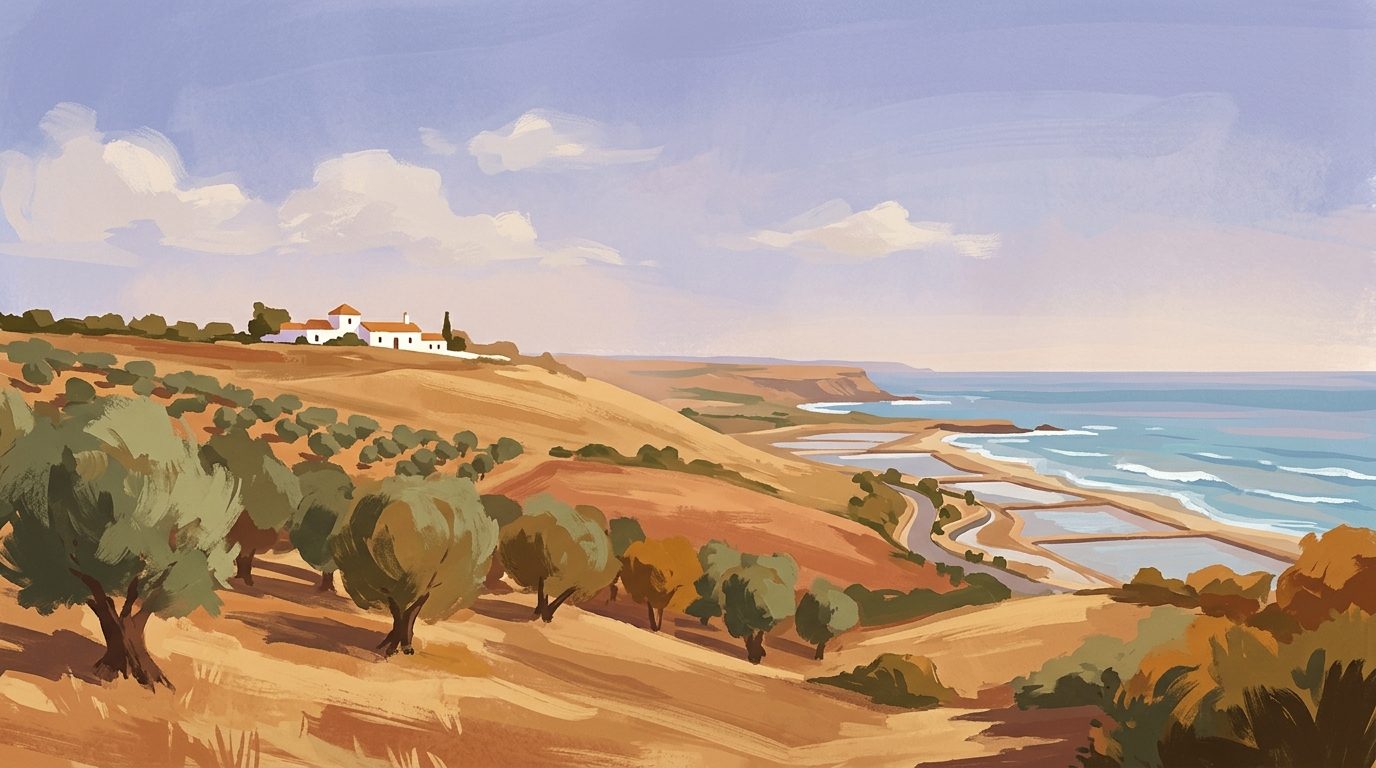
Cádiz in August: Atlantic Breezes and High Summer Rituals
Atlantic breezes offer a welcome reprieve from the stifling heat found elsewhere in southern Spain. In August, the province of Cádiz becomes the social heart of the peninsula, centred around its wide sandy shores and salt-tinged air.
6 min read
More from Cádiz
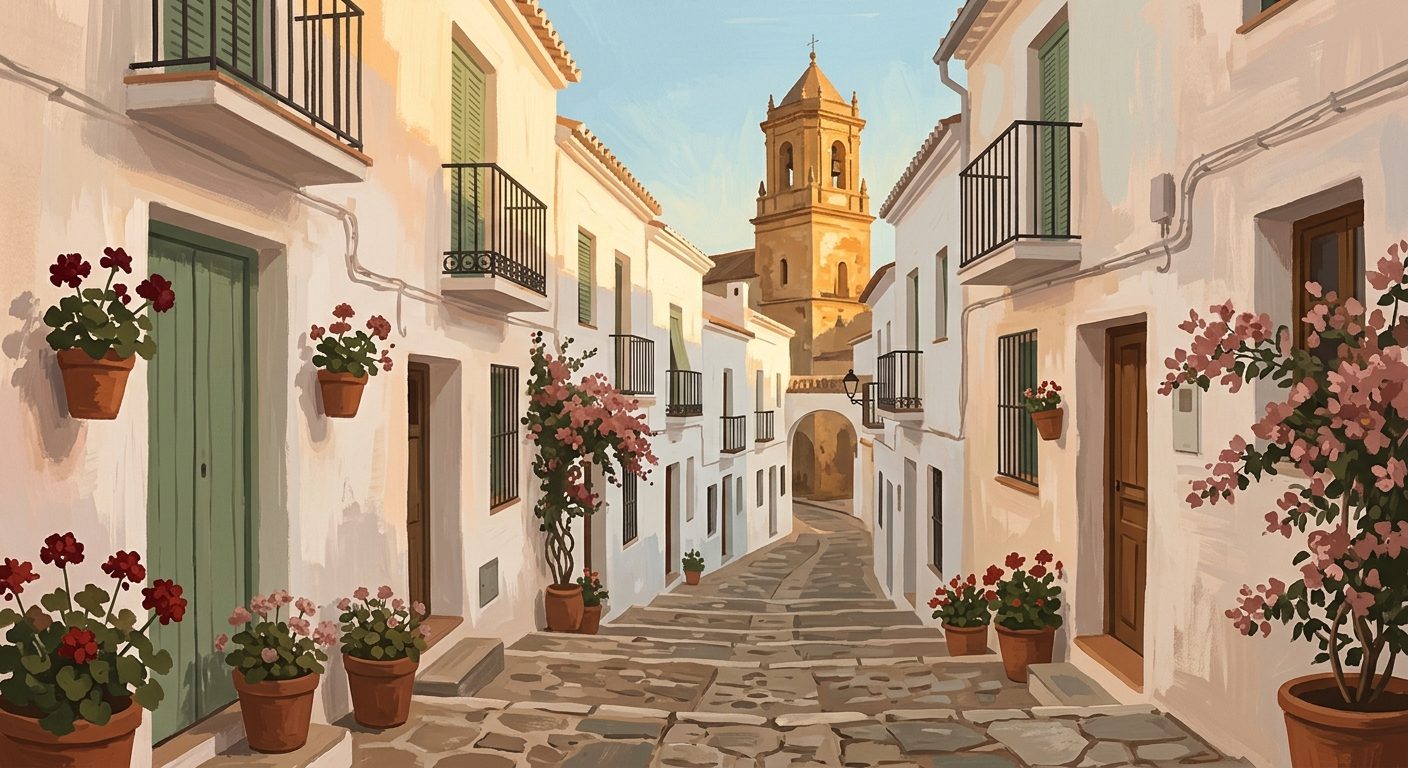
The White Villages of Andalucía: A Guide to the Pueblos Blancos
Discover the iconic white villages of Cádiz and Málaga, where lime-washed houses and narrow Moorish streets define the rugged mountain landscape of Andalucía.
6 min read
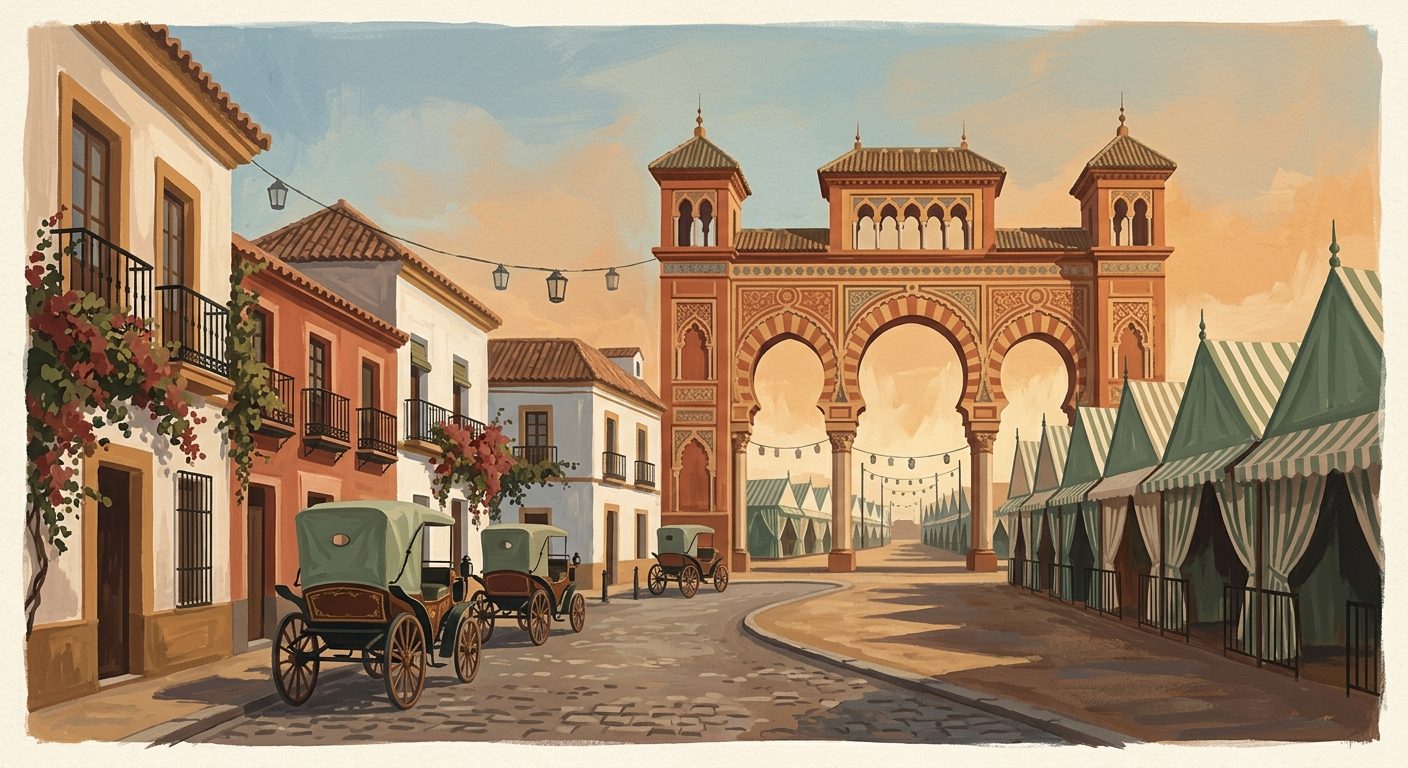
A Complete Guide to the Feria del Caballo in Jerez
The Feria del Caballo in Jerez stands apart from other spring fairs in Andalucía because its casetas are almost entirely open to the public. Here, the aristocratic tradition of the Andalucían horse meets the egalitarian spirit of the city, fuelled by endless cold glasses of fino sherry and native flamenco bulerías.
9 min read
The Albariza English: A Two-Century Shadow in Cádiz
The British presence in Andalucía is more than a seasonal migration; it is a two-hundred-year-old layering of trade, conflict, and quiet assimilation.
6 min read
The Resurrection of the Chalk: How Sherry Escaped the Dusty Sideboard
For decades, the wines of Marco de Jerez were relegated to the back of the liquor cabinet; today, a new generation of winemakers is digging into the white earth to prove Sherry is the world's most misunderstood terroir wine.
7 min read
The Weight of the Blood: How Flamenco Outlives the Stage in Jerez
In the back rooms and private social clubs of Jerez, flamenco isn't a show for tourists: it is a gritty, ancestral language passed down through bloodlines and the stubborn memory of the barrios.
7 min read
Newsletter
More stories from Andalucía
Weekly notes, seasonal picks, and the next guides worth bookmarking.