
Feature · Cádiz
The Resurrection of the Chalk: How Sherry Escaped the Dusty Sideboard
For decades, the wines of Marco de Jerez were relegated to the back of the liquor cabinet; today, a new generation of winemakers is digging into the white earth to prove Sherry is the world's most misunderstood terroir wine.
By Dan · Updated 7 June 2026 · 7 min read
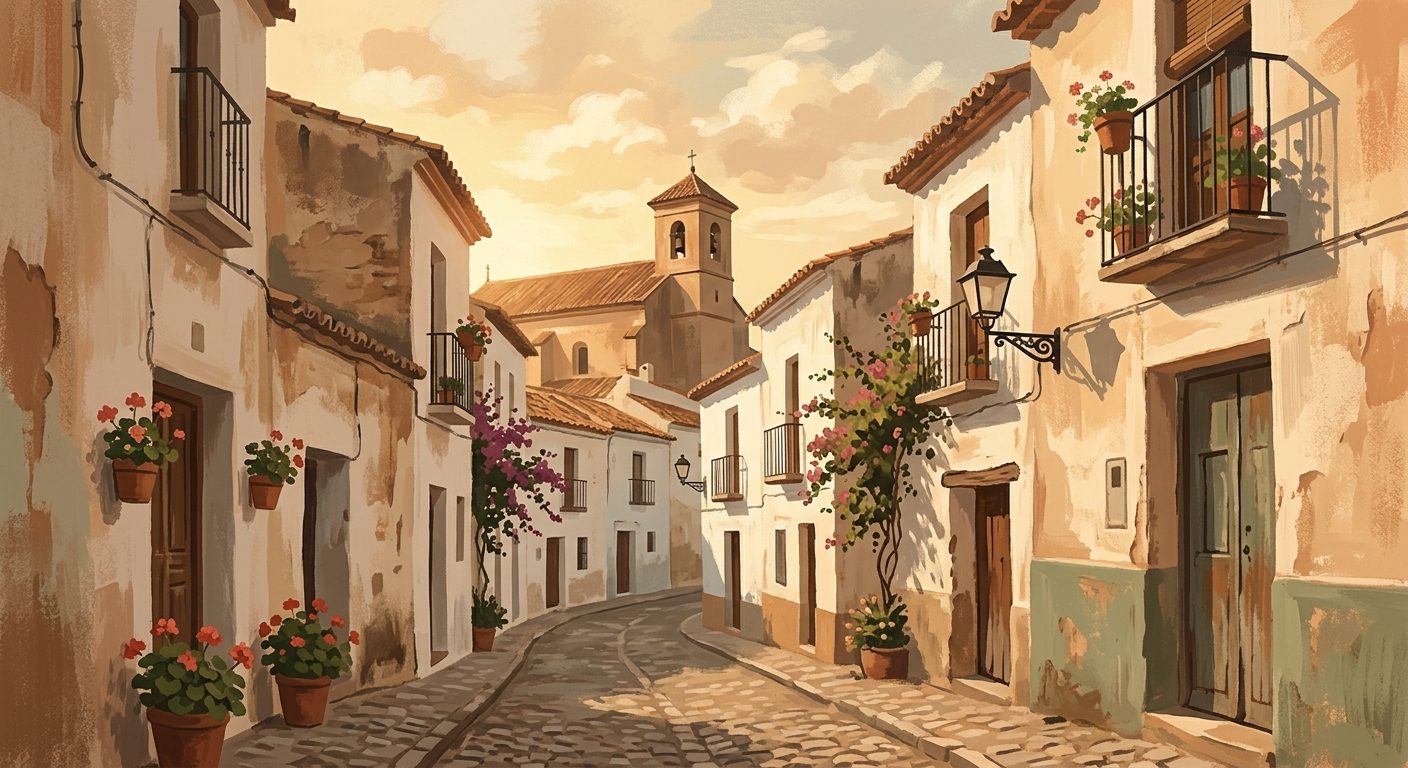
Story context
This is a narrative feature, not a breaking-news report or a legal/practical guide. It is kept on the site because it adds local texture and reading value alongside the more practical Andalucía 365 guides.
Use the links below for planning details, current access, places to stay, transport or food guidance connected with the story.
The dust in a Jerez bodega does not settle; it waits. It coats the black-staved barrels like a velvet skin, holding the breath of a wine that was, for decades, a forgotten ghost in a grandmother’s cabinet.
Armando Guerra stands in the back room of Taberna Der Guerrita in Sanlúcar de Barrameda, his hands moving with the practised twitch of a man who has poured ten thousand glasses of Manzanilla. The air here is thick, saturated with the scent of brine, toasted almonds, and the damp, mushroomy funk of the flor, the thick layer of yeast that protects the wine from the air. Outside, the Atlantic wind, the poniente, rattles the shutters, bringing with it the humidity that makes this town the only place on earth where this specific wine can exist.
“For a long time, people thought Sherry was something you bought in a supermarket for five euros to cook a chicken or satisfy an elderly aunt at Christmas,” Armando says, sliding a thin-stemmed glass across the zinc counter. The liquid inside is pale, almost straw-coloured, and bone-dry. “We spent fifty years trying to make Sherry a commodity. We forgot that it is actually a miracle of the soil.”
Armando is one of the architects of a quiet revolution. He and a handful of bartenders and winemakers, most of them under forty-five, are dismantling the heavy, stuffy image of the Sherry Triangle, the geographic wedge between Jerez de la Frontera, El Puerto de Santa María, and Sanlúcar. They are not interested in the mass-produced, sweetened ‘creams’ that nearly killed the industry in the 1980s. Instead, they are obsessed with the albariza: the blindingly white, calcium-rich soil that defines the landscape of Cádiz province.
The Great Collapse
To understand why Sherry is having a moment now, you have to understand how spectacularly it fell from grace. In the mid-20th century, Sherry was the king of the cellar. The great British houses (Harvey’s, Sandeman, Williams & Humbert) built palatial bodegas in Jerez that looked like cathedrals. But success bred greed. In the 1970s and 80s, production exploded. Quality plummeted as industrial cooperatives prioritised volume over character. Sherry became synonymous with sticky-sweet liquids and cheap, oxidised bulk wine.
The collapse was brutal. Thousands of hectares of vineyards were uprooted. The ‘Sherry Girl’ advertisements grew dusty, and the world moved on to Pinot Grigio and Chardonnay. By the turn of the millennium, the industry was a shadow of its former self, surviving on a dwindling demographic of drinkers who remembered the 1950s. The wine didn't change, but the world's perception of it did; it became a relic, a liquid antique gathering cobwebs in the back of the cupboard.
The Terroir Rebels
The turning point didn't happen in the boardroom of a multinational spirits company. It happened in the vineyards. For centuries, the ‘big houses’ focused on the solera system, a complex process of fractional blending where young wine is mixed with older wine across tiers of barrels. This process prioritised a consistent ‘house style’ over the specific character of the land. The vineyard was almost an afterthought.
“We were told the soil didn't matter, only the cellar,” says Ramiro Ibáñez, a winemaker whose Cota 45 project has become a pilgrimage site for wine geeks. Ramiro works out of a small, unpretentious shed overlooking the Guadalquivir river. He is part of a movement often called the ‘Terroirists.’ These producers are moving away from heavy fortification (the practice of adding grape spirit to the wine) and focusing instead on the biological potential of the Palomino grape.
By lowering yields and harvesting later, producers like Ramiro and Willy Pérez (of Bodegas Luis Pérez) are creating ‘unfortified’ Sherries. These wines reach 15% alcohol naturally, through the sheer power of the sun and the concentration of the soil. They are bottled by pago (specific vineyard plots), much like the grand crus of Burgundy. When you drink a wine from the Macharnudo vineyard, you are tasting the heat of the Jerez inland; when you drink from the Añina vineyard, you taste the Atlantic influence. This shift has turned Sherry from a processed product back into an agricultural one.
The London and New York Connection
Ironically, the spark for this local fire came from abroad. In the early 2010s, a new breed of sommeliers in London and New York began to rediscover the versatility of dry Sherry. Bars like Bar Pepito in King’s Cross or Terroir in Manhattan started treating Fino and Manzanilla not as aperitifs, but as world-class food wines. They realised that nothing pairs better with the oily, salty, or acidic profiles of modern gastronomy than a cold glass of Sherry.
The cocktail world followed suit. The Sherry Cobbler, a 19th-century classic of crushed ice, fruit, and Amontillado, returned to menus from Shoreditch to Brooklyn. Bartenders loved the wine's ‘umami’ quality, that savoury, saline depth that adds complexity to a drink without the cloying sweetness of vermouth. This international validation acted as a mirror for the younger generation in Cádiz. They saw that the world's most sophisticated palates were obsessed with the very thing they had grown up thinking was ‘old person wine.’
Fino vs Manzanilla: The Coastal Divide
The nuance of the current revival lies in the distinction between the towns. In Jerez, the wines are generally fuller, more muscular, reflecting the inland heat. This is the home of Fino, a wine that smells of bruised apple and sourdough. But twenty minutes away in Sanlúcar, the Manzanilla reigns supreme. Because Sanlúcar sits on the estuary of the Guadalquivir, the humidity is constant. This allows the flor to grow thicker and stay alive all year round, resulting in a wine that is leaner, sharper, and distinctly salty.
Walking through the streets of Sanlúcar at lunchtime, you see the renaissance in real-time. In the old days, you’d see tourists drinking beer. Now, you see groups of twenty-somethings sharing a bottle of en rama Manzanilla, wine bottled straight from the cask without the heavy filtration that strips away the soul. They drink it with tortillitas de camarones (shrimp fritters) and local prawns, treating it with the same reverence a Parisian might treat a bottle of Chablis.
The Tension of Progress
Success, however, brings its own friction. The Sherry revival is currently split between the traditionalists and the radicals. The Consejo Regulador, the governing body that sets the rules for what can be called ‘Sherry’, has struggled to keep pace with the innovators. For years, a wine could not be labelled as Sherry if it wasn't fortified with spirit, even if it reached the required alcohol level naturally. Following the landmark 2022 regulatory changes, the rules have bent, reflecting the reality that the best wines are often those that break the old industrial laws.
There is also the threat of the climate. The Levante, the hot, dry wind from the east, is becoming more frequent and more intense. As temperatures rise, maintaining the delicate flor inside the barrels becomes a battle of engineering and tradition. The very humidity that gives Manzanilla its life is at risk. The winemakers are now becoming climatologists, experimenting with biodynamic farming to ensure the albariza soil retains enough water to survive the increasingly brutal Andalucían summers.
Furthermore, as Sherry becomes ‘cool,’ prices are beginning to climb. The era of the ten-euro bottle of artisanal Manzanilla is ending. While this is necessary for the survival of the vineyards, it creates a tension in a region where Sherry has always been the people's wine, the cheap, reliable fuel of the local feria.
The White Soil
Back at Taberna Der Guerrita, Armando Guerra pours a final glass, this time an Amontillado. This is a wine that started its life under a veil of yeast but was eventually exposed to oxygen as the yeast died off. It is the colour of polished mahogany and smells like a forest floor after rain. It is a wine that takes thirty years to reach its peak, a timeframe that defies the logic of modern capitalism.
“The thing about Sherry,” Armando says, looking at the glass against the light, “is that it requires patience. You can’t rush the soil, and you can’t rush the barrels. We almost lost it because we tried to make it fast. Now, we are learning to be slow again.”
Outside, the sun sets over the Doñana National Park across the water, turning the river into a sheet of hammered gold. The white dust of the vineyards, invisible in the dark, remains the true foundation of everything here. It is a landscape of ghosts and survivors, where the youngest people in the room are the ones most committed to the oldest ways of making wine. Sherry isn't having a moment because it changed into something new; it is having a moment because it finally remembered exactly what it has always been.
Last reviewed: 21 June 2026 · Editorial policy
Related guides
Sherry and the Bodegas: The 19th-Century Anglo-Andalucían Wine Trade
The fortified wines of Jerez reshaped western Andalucía. British merchants and local vineyard owners forged an industrial alliance that built enormous cellars and transformed global drinking habits.
7 min read
The Albariza English: A Two-Century Shadow in Cádiz
The British presence in Andalucía is more than a seasonal migration; it is a two-hundred-year-old layering of trade, conflict, and quiet assimilation.
6 min read
Jerez de la Frontera: A Guide to the City of Sherry and Horses
Discover the heart of the Sherry Triangle in Jerez de la Frontera, a city where aristocratic bodegas, elite equestrian schools, and authentic flamenco traditions create a unique Andalucían experience.
6 min read
The Ghost in the Garden: Searching for the Al-Andalus Within
Eight centuries of Al-Andalus did not vanish in 1492; they simply moved indoors, into the kitchens, and onto the tip of the tongue.
7 min read
Corpus Christi in Granada: The Definitive Guide
In Granada, Corpus Christi is far more than a solemn religious observance. It is the city's largest annual festival, combining the scent of fresh rosemary crushed underfoot during the sacred Thursday procession with the unapologetic joy of the week-long public feria in Almanjáyar.
10 min read
Semana Santa in Sevilla: A First-Timer's Guide
Semana Santa in Sevilla is an intense expression of faith, art and civic identity. Unlike other cities, the spectacular wooden floats are carried from below by hidden costaleros, moving to the slow beat of mourning marches or absolute silence.
8 min read
More from Cádiz
The White Villages of Andalucía: A Guide to the Pueblos Blancos
Discover the iconic white villages of Cádiz and Málaga, where lime-washed houses and narrow Moorish streets define the rugged mountain landscape of Andalucía.
6 min read
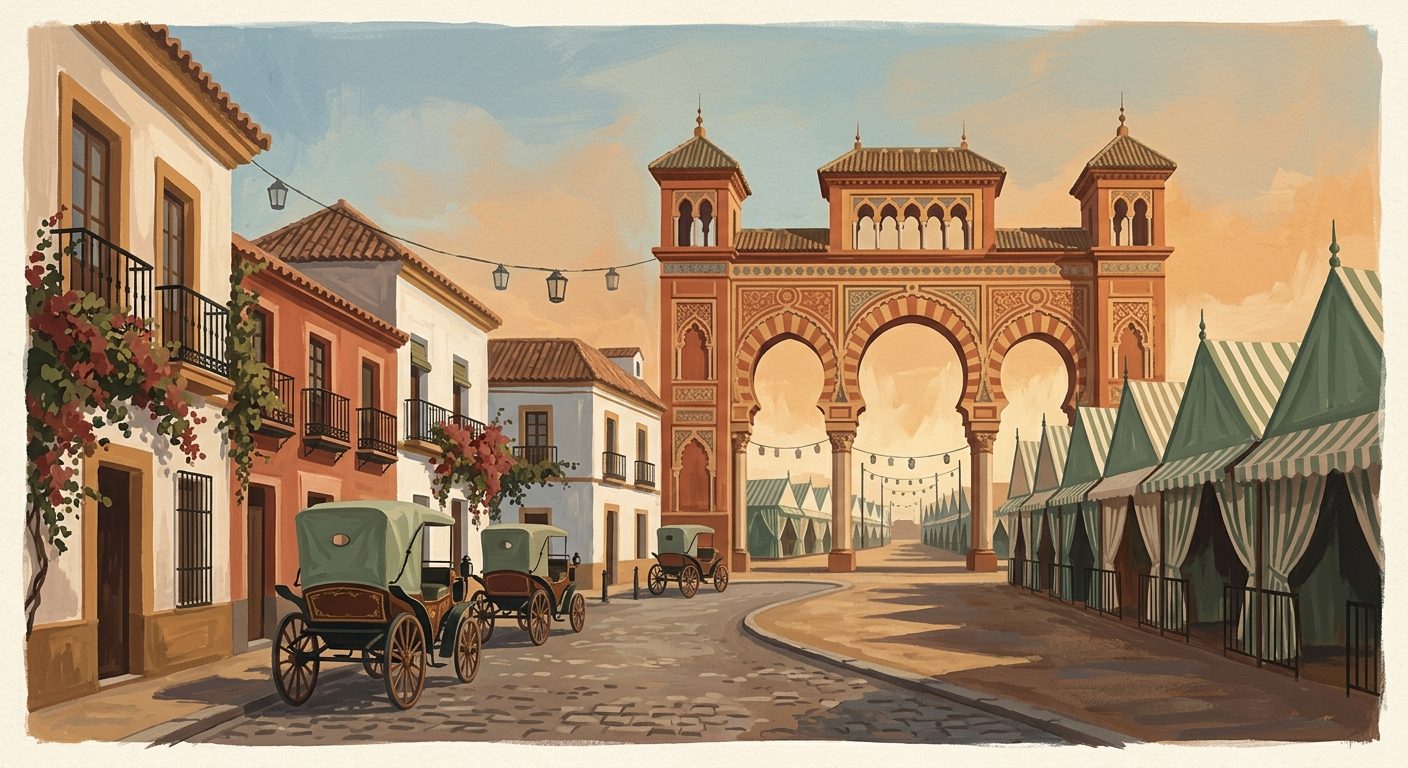
A Complete Guide to the Feria del Caballo in Jerez
The Feria del Caballo in Jerez stands apart from other spring fairs in Andalucía because its casetas are almost entirely open to the public. Here, the aristocratic tradition of the Andalucían horse meets the egalitarian spirit of the city, fuelled by endless cold glasses of fino sherry and native flamenco bulerías.
9 min read
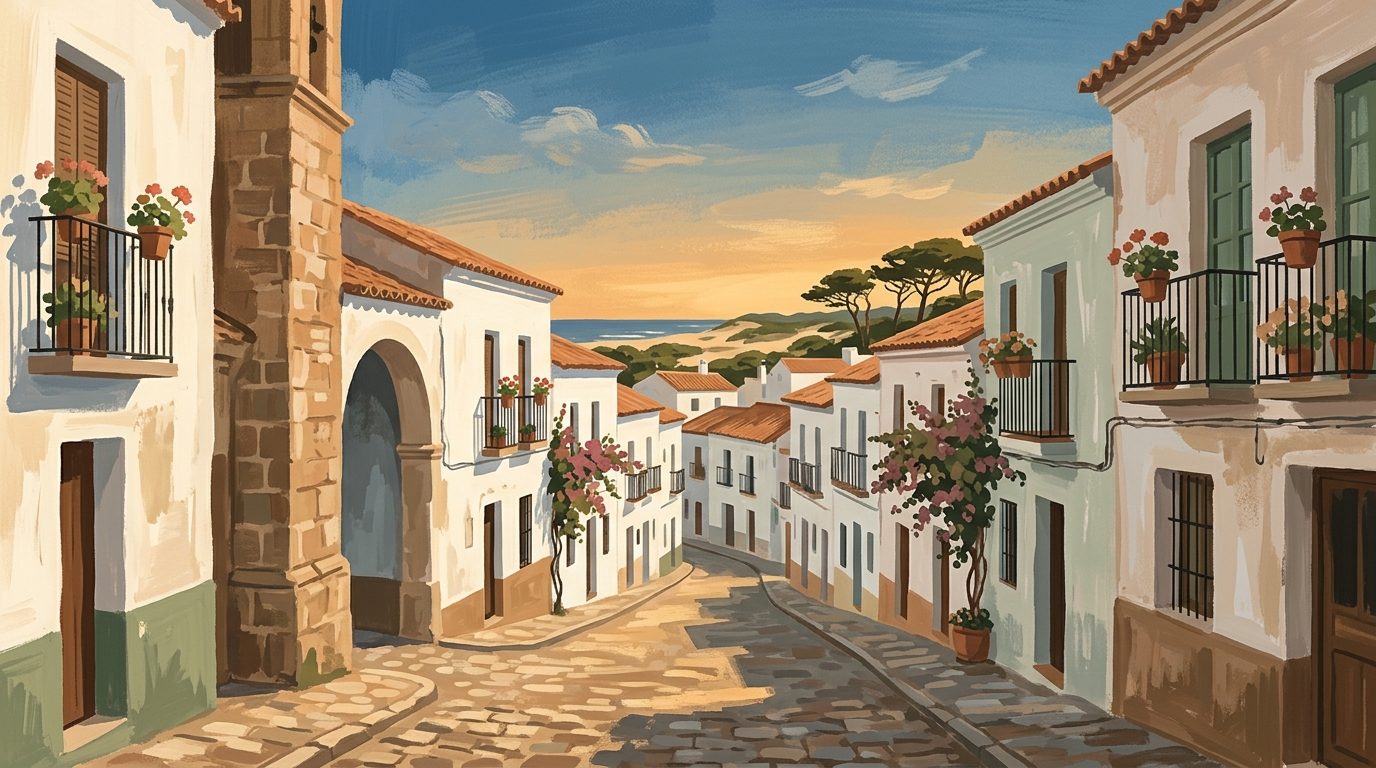
Costa de la Luz: The Complete Guide
The Costa de la Luz is an untamed stretch of Atlantic shoreline defined by wild dunes, pine forests and stiff sea breezes. Spanning the coastlines of Huelva and Cádiz, it offers a stark alternative to the concrete resorts of the Mediterranean.
9 min read
The Weight of the Water: Life at the Edge of Two Continents
Fourteen kilometres of salt water separate the northern edge of Africa from the southernmost tip of Spain, creating a corridor where geopolitical tension, ecological wonder, and human desperation collide.
7 min read
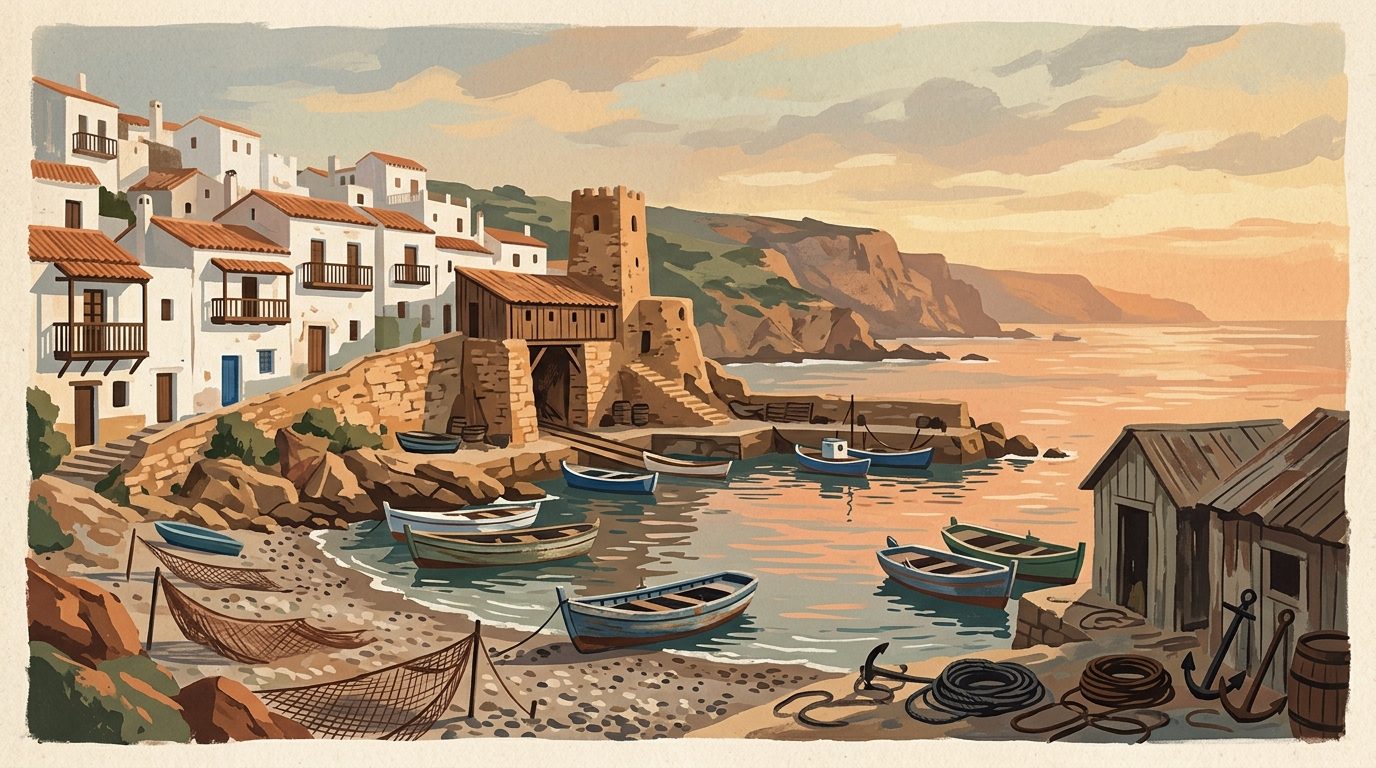
The Last Almadraba: Blood, Steel, and the Silver Ghost of Barbate
In the coastal town of Barbate, a three-thousand-year-old ritual of blood and silver continues as the bluefin tuna begin their ancient migration.
7 min read
The Weight of the Blood: How Flamenco Outlives the Stage in Jerez
In the back rooms and private social clubs of Jerez, flamenco isn't a show for tourists: it is a gritty, ancestral language passed down through bloodlines and the stubborn memory of the barrios.
7 min read
Newsletter
More stories from Andalucía
Weekly notes, seasonal picks, and the next guides worth bookmarking.