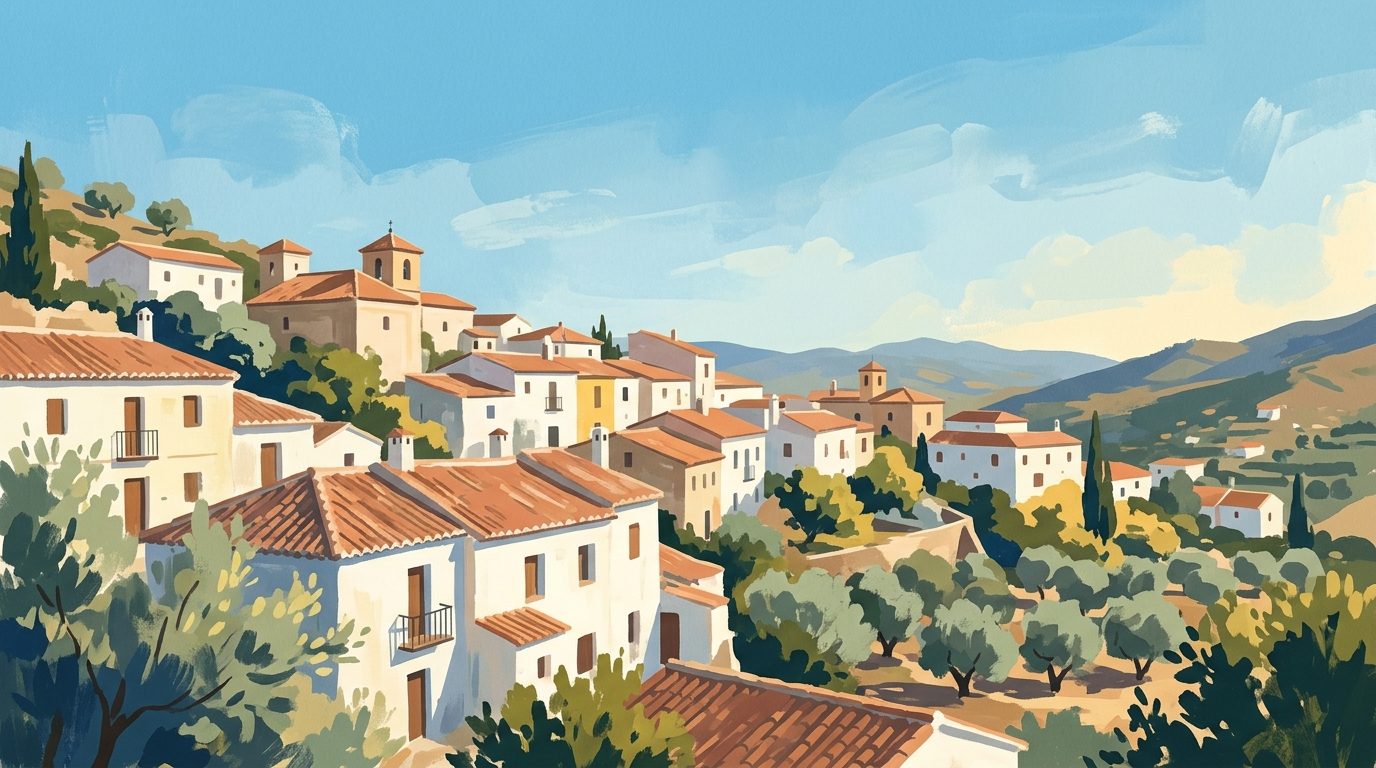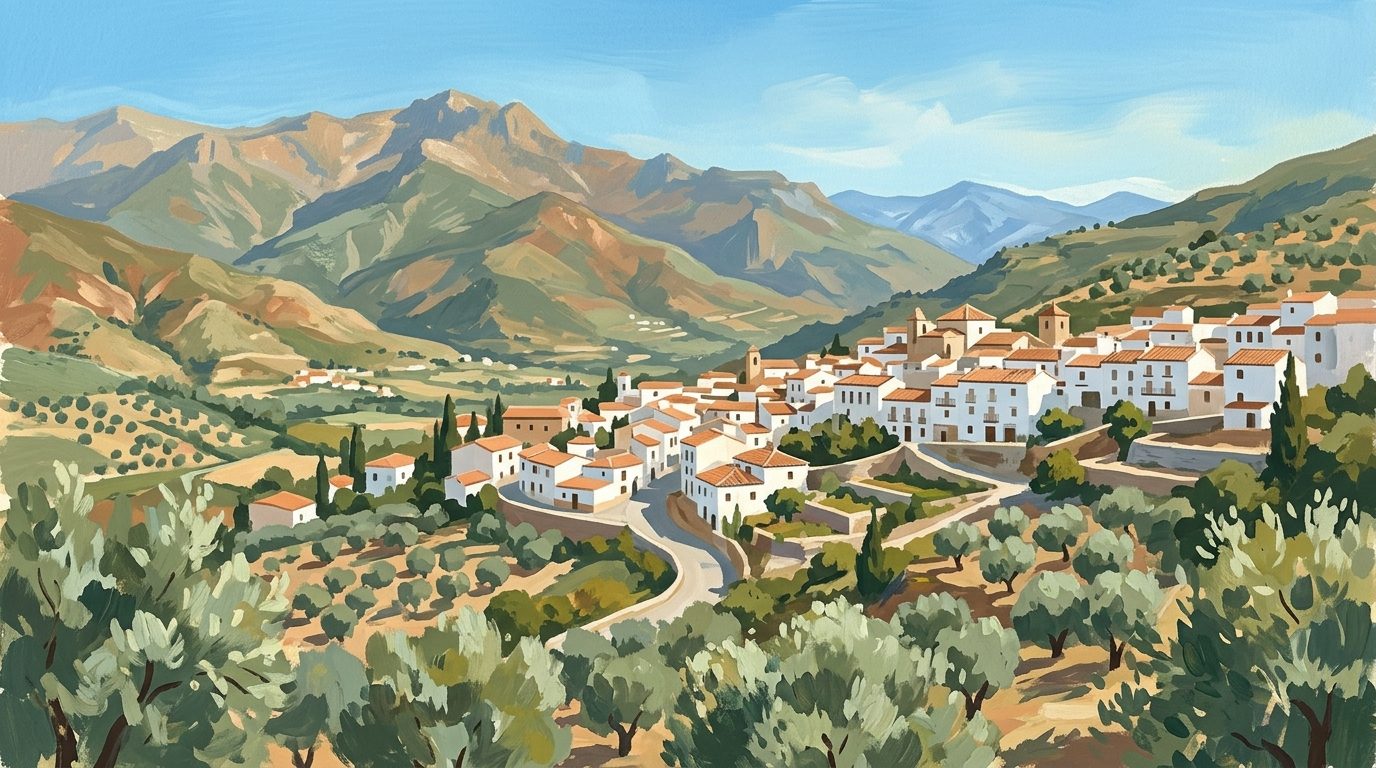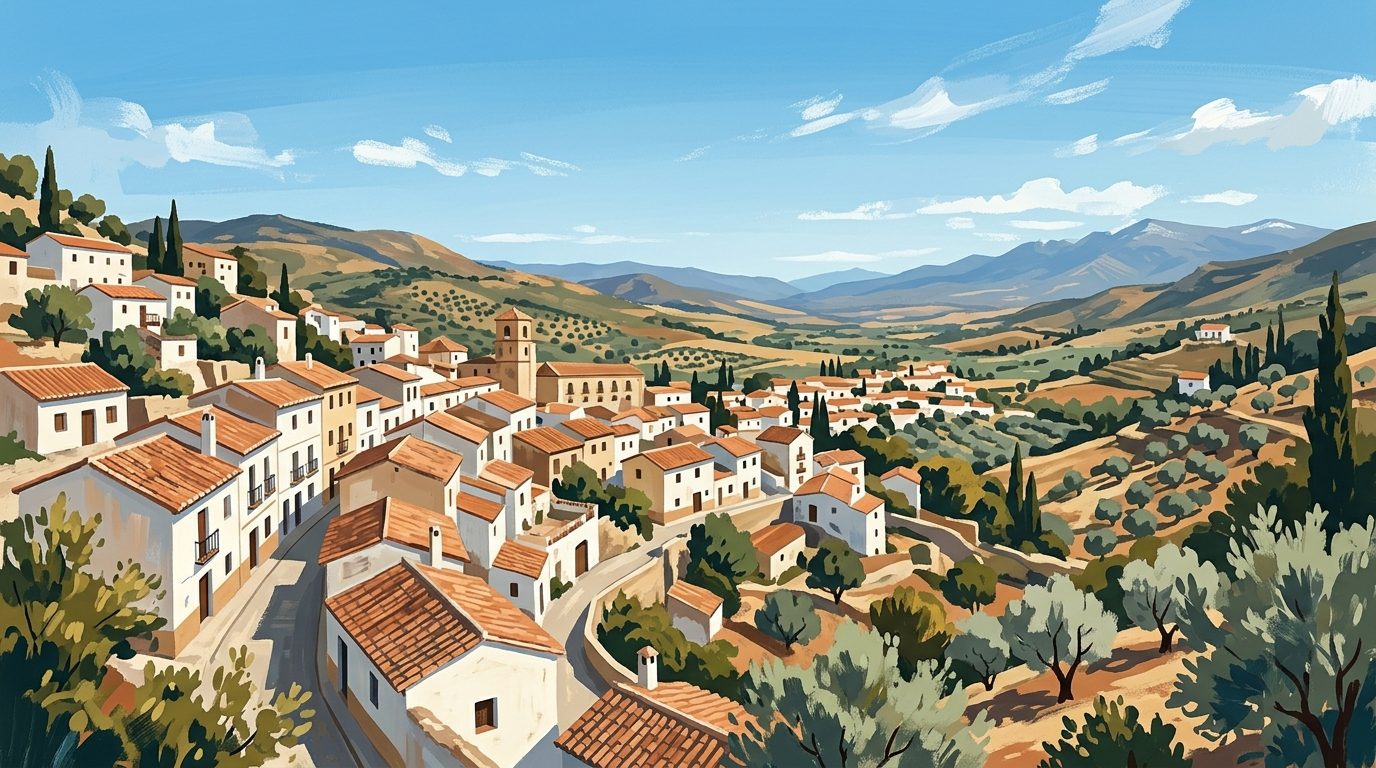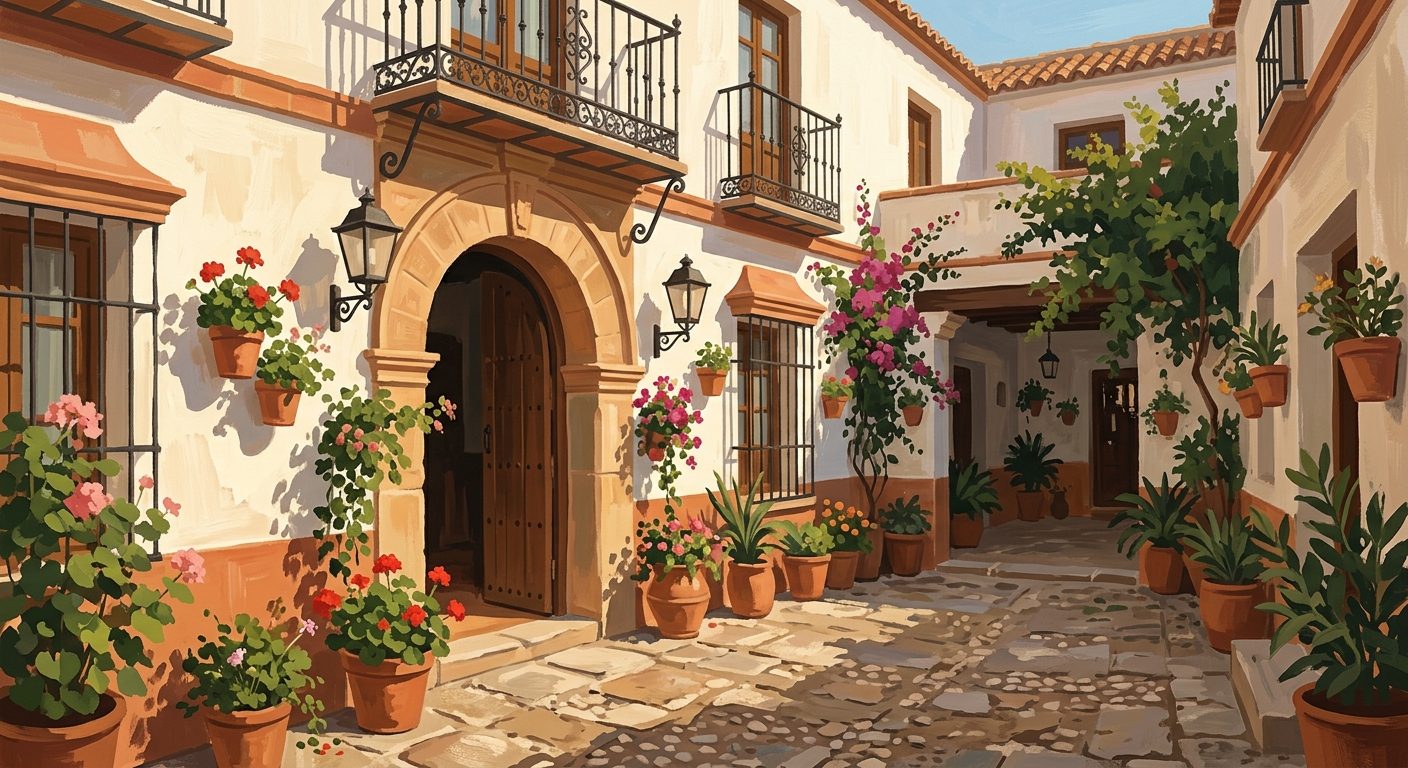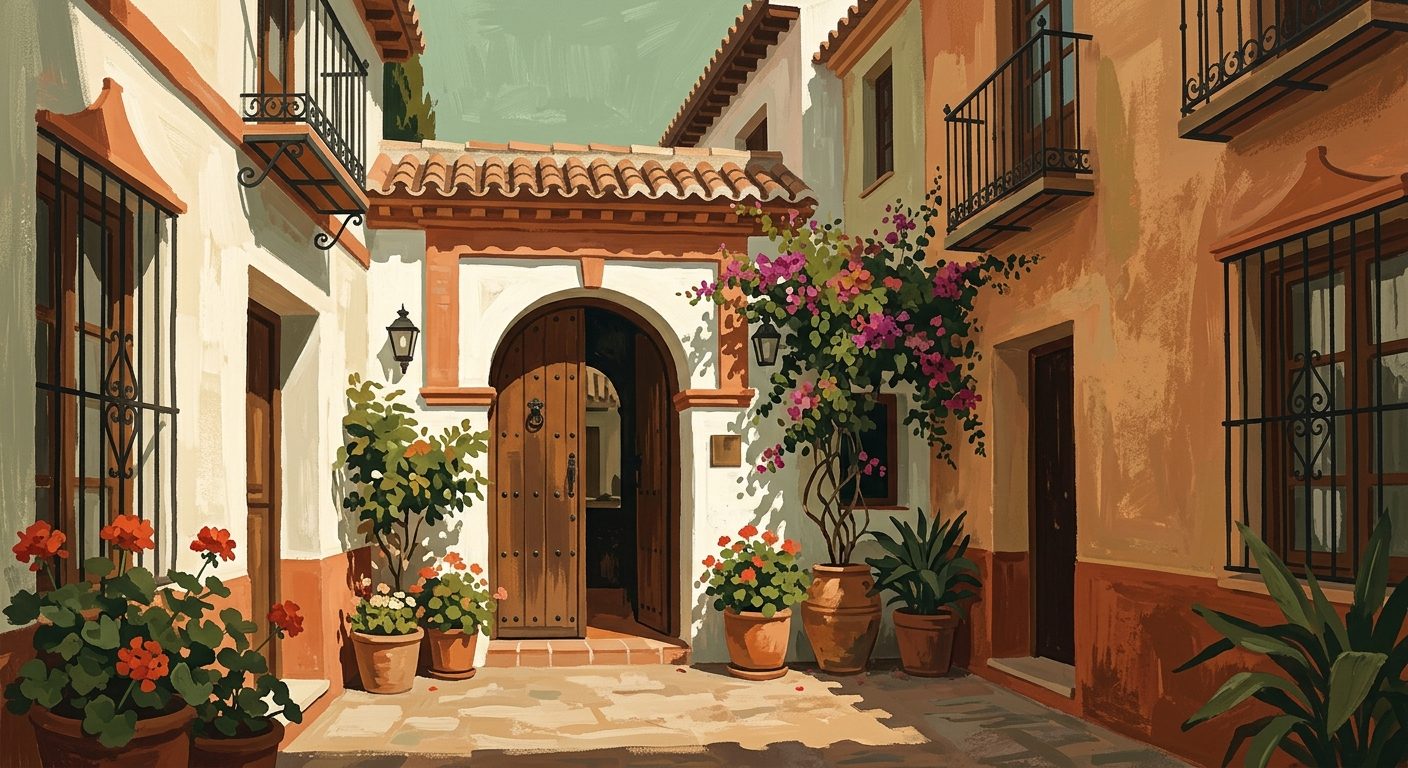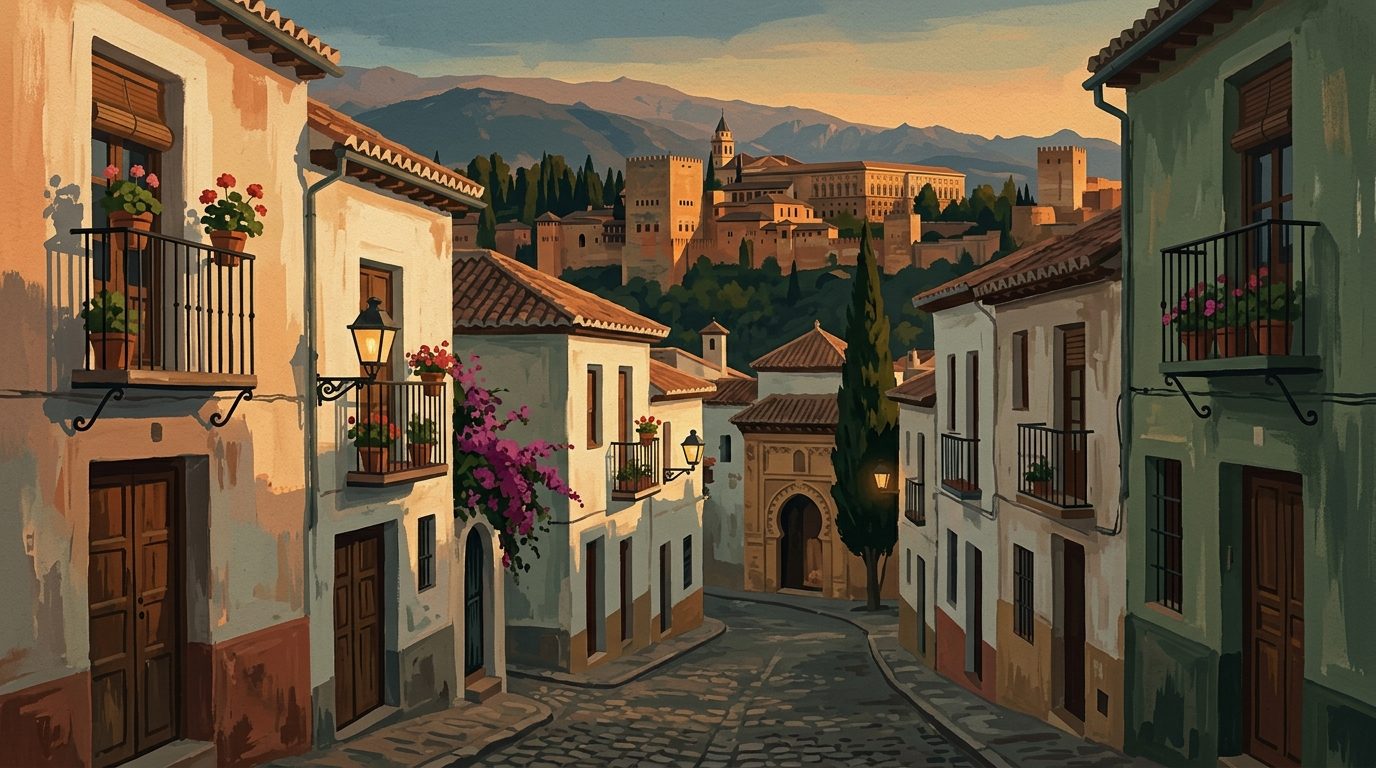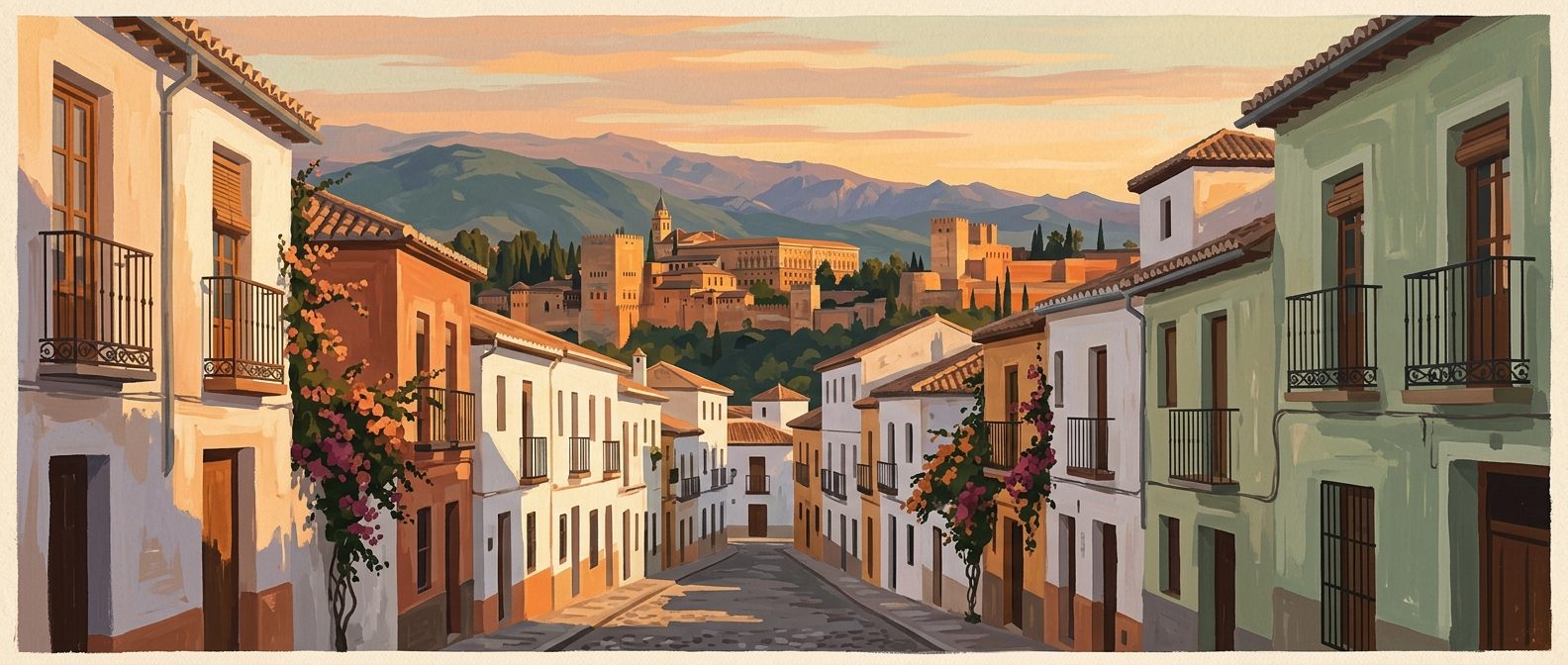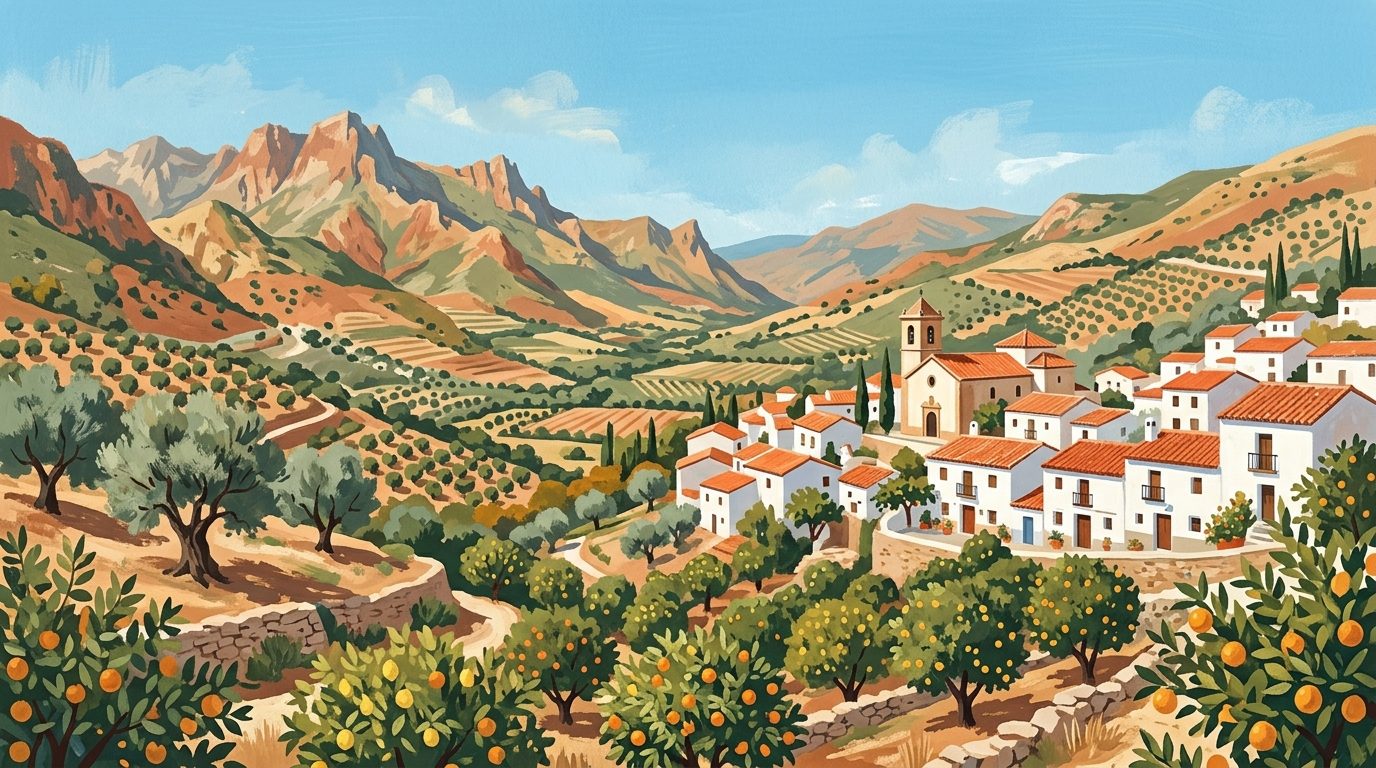
Situated between the snow-capped peaks of the Sierra Nevada and the subtropical Costa Tropical, the Lecrín Valley is a landscape defined by the scent of orange blossom and the sound of running water. It offers a slower, more deliberate pace of life, where the irrigation channels of the Moors still nourish orchards of lemon and pomegranate.
Known locally as the Valle de la Alegría (Valley of Happiness), the Lecrín Valley serves as a lush, green transition between the high mountains and the Mediterranean Sea. For those driving south from Granada city, the air changes almost instantly as you crest the Suspiro del Moro (The Moor’s Sigh). The temperature softens, and the rugged grey of the Sierra Nevada foothills gives way to a patchwork of deep green citrus groves. This is not the arid Andalucía of the postcards; it is a fertile basin fed by Alpine snowmelt, where traditional agriculture remains the heartbeat of the community.
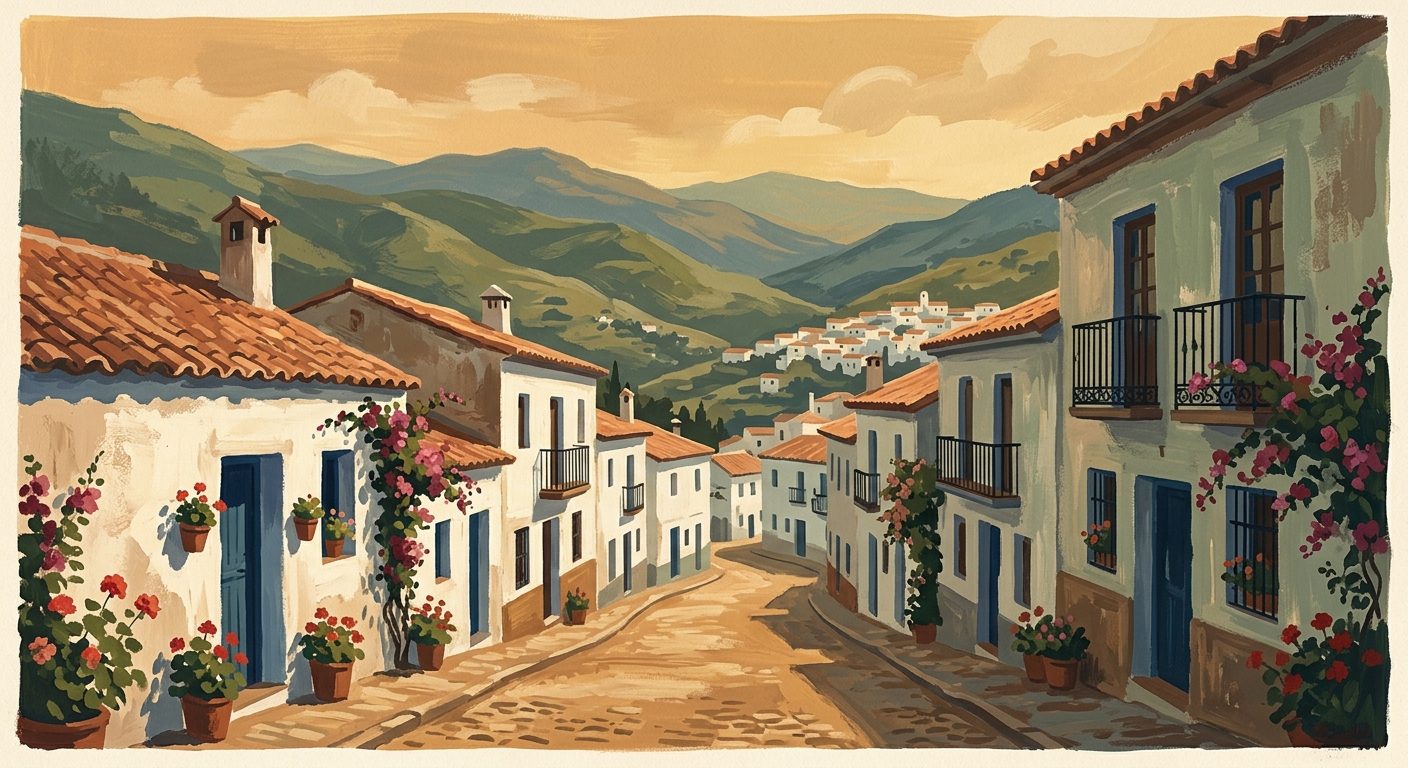
While the crowds concentrate on the Alhambra or the white villages of the Alpujarra, the Lecrín Valley remains largely the domain of walkers, cyclists, and those who prefer their tapas served without a side order of tourist menus. Each of the seventeen villages here has its own character, but they are united by a Moorish heritage that is visible in the narrow, winding streets and the complex system of acequias (irrigation channels) that criss-cross the valley floor. Spending time here requires a car and a willingness to drive narrow, cliff-hugging roads, but the reward is an encounter with a version of Spain that feels entirely authentic and unhurried.
Nigüelas: The Balcony of the Valley
Heritage, Horticulture and the Great Fault Line
Nigüelas is often the first stop for those exploring the valley, and for good reason. Perched at 840 metres, it acts as a natural viewing platform, earning its nickname as the Balcón del Valle (Balcony of the Valley). The village is a masterclass in Andalucían village life, where the main square, dominated by the 16th-century Iglesia de San Juan Bautista, provides a social hub for elderly residents who gather to discuss the weather and the upcoming olive harvest.
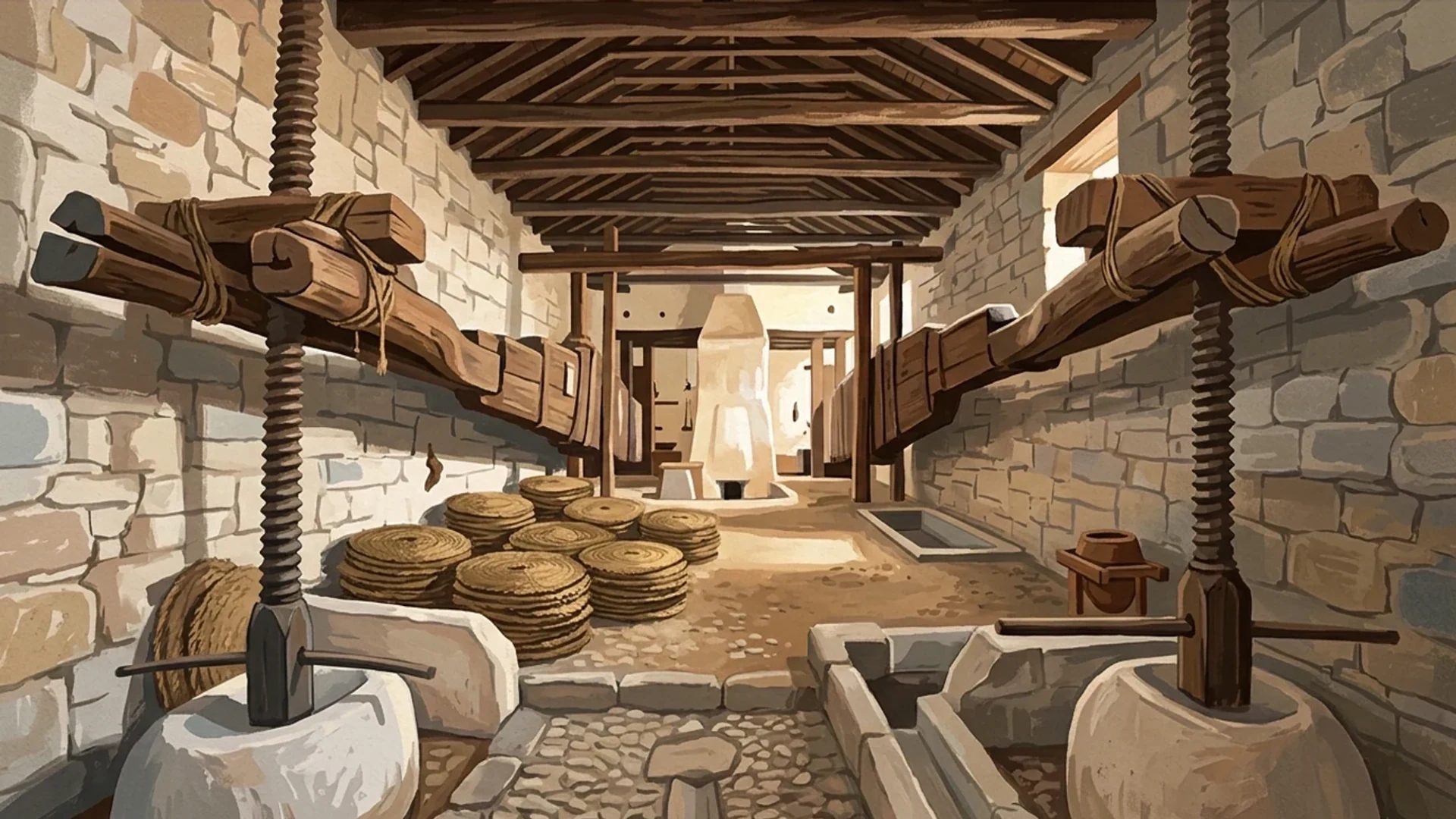
The standout cultural site here is the Almazara de las Launas, a 15th-century oil mill that is one of the oldest in Spain. Inside, the massive wooden beams and stone grinding wheels offer a visceral look at how olive oil was produced during the Nasrid period. Just a short walk away, the Jardines de la Casa Zayas (now the Town Hall) provide a shaded retreat. These French-influenced gardens are filled with ancient magnolias and roses, offering a quiet space to appreciate the village’s cooler microclimate. For those interested in the raw power of nature, follow the signs to the Falla de Nigüelas. This geological fault line is a National Monument; the smooth, polished rock face shows where the earth literally shifted, creating the dramatic drop between the mountains and the valley floor.
Before leaving, take a stroll out towards the Mirador de la Razuela. The path takes you past the Acequia de la Pavilla, a narrow walkway following the water channel that hugs the side of the gorge. It is a spectacular, if slightly dizzying, way to see the sheer scale of the landscape. For lunch, Los Naranjos is the local institution, serving traditional mountain food in a garden surrounded by the very orange trees that give the valley its name.
Read the full Nigüelas guide →
Dúrcal: The City of Bridges
Deep Ravines and Ironwork Engineering
Dúrcal is the largest town in the valley and serves as its commercial engine, but do not let its more modern exterior fool you. The real magic of Dúrcal lies in its verticality. The town is split by the deep canyon of the Río Dúrcal, and its history is told through the five bridges that span the abyss. The most iconic is the Puente de Lata (Tin Bridge), a striking red iron structure designed by a disciple of Gustave Eiffel. Originally a railway bridge for the tram that carried lead from the mines, it now serves as a walking path with some of the most dramatic views in the province.
For those who prefer their feet on the ground, the walk along the riverbed is essential. The Ruta de los Bolos is a local favourite, particularly in the warmer months. It is a wet hike: you will be wading through the river at times, leading you through lush vegetation to a spectacular waterfall at the end. It feels more like a tropical jungle than southern Spain. Along the way, you will pass the ruins of old flour mills, a reminder of the industry that once thrived on these waters.
Dúrcal is also the best place to stock up on local produce. The town’s butchers are famous throughout Granada for their longaniza (spiced sausage) and morcilla (black pudding). If you are visiting on a Tuesday, the weekly market is a sensory overload of local honey, mountain herbs, and sacks of almonds. For a restorative coffee or a massive local breakfast, Cafetería El Cruce is the place to join the locals before they head out to the fields or the mountains.
Padul: The Gate to the Wetlands
Prehistoric Giants and Peat Bogs
Padul is fundamentally different from its neighbours. While the rest of the valley is characterised by steep slopes and orchards, Padul sits on a vast flat plain known for its turberas (peat bogs). This is the Laguna de Padul, one of the most important wetlands in Andalucía. It is a haven for birdwatchers, but its most famous former residents were much larger. In the 1980s, the remains of woolly mammoths were discovered in the peat, dating back tens of thousands of years.
Today, you can walk the Ruta de los Mamuts (Mammoth Route), an easy, flat trail on wooden boardwalks that circles the wetlands. It is an evocative landscape of tall reeds and shimmering water, with the high peaks of the Sierra Nevada reflecting on the surface. Life-sized sculptures of mammoths and sabre-toothed cats dot the path, making it a popular choice for families, but the real draw is the stillness and the chance to spot marsh harriers or grey herons. The path also connects to a section of an ancient Roman road, complete with visible wheel ruts carved into the stone.
The town itself is home to the Casa Grande, a 16th-century palace that once served as a defensive fortress. It is a solid, imposing piece of architecture that hints at Padul's strategic importance as the 'gateway' to the coast. For a taste of the local terroir, visit Mesón Los Arcos. Here, the focus is on heavy, traditional stews and grilled meats, often cooked over olive wood fires. It is the kind of place where the wine is local and the portions are designed for people who have spent the morning working in the fields.
Eating & Drinking in The Lecrín Valley
The gastronomy of the Lecrín Valley is a marriage of mountain heartiness and Mediterranean freshness. The star of the show is Remojón Lecrinense, a salad of salt cod, hard-boiled eggs, spring onions, and olives, all brought together by the sweet, acidic punch of local oranges. It is a dish that perfectly encapsulates the valley’s produce. Another local staple is tortilla de habas (broad bean omelette), made with beans harvested in early spring when they are at their most tender.
In Nigüelas, Restaurante Los Naranjos is the gold standard for traditional dining; their terrace is arguably the best spot in the valley for a long, wine-soaked Sunday lunch. If you are looking for something more contemporary, Alquería de los Lentos, located just outside the village in a restored 16th-century mill, offers a refined take on local ingredients. For a quick pit stop in Dúrcal, head to Bar El Frenazo for excellent tapas: try the lomo en manteca (pork loin in lard). The valley is also gaining a reputation for its wine. Look for labels from Bodegas Señorío de Nevada; their vineyards sit on the slopes between Padul and Cónchar, producing sophisticated reds that benefit from the high altitude and the coastal breeze.
Where to Stay
The Lecrín Valley is best experienced by staying in a restored farmhouse or a small boutique hotel rather than a large resort. In Nigüelas, Casa del Trigo is a stand-out choice. This four-star hotel is housed in a beautifully converted grain store, offering a mix of original stone features and modern comforts, including a courtyard pool. For those who prefer total seclusion, the valley is peppered with cortijos (farmhouses) available for rent. Alquería de los Lentos also offers stylish rooms and 'glamping' options in the form of luxury yurts set amongst olive trees.
If you prefer a more village-centric stay, Padul offers several traditional townhouses. However, for the most authentic experience, look for accommodation in the smaller hamlets like Melegís or Restábal. These villages are the heart of the citrus production, and staying here means waking up to the sound of tractor engines and the scent of lemons. Hacienda de Orante, near Pinos del Valle, is a restored estate that offers incredible views across the valley towards the Béznar reservoir.
Getting There & Around
Access to the Lecrín Valley is straightforward thanks to the A-44 motorway, which connects Granada city to the coast. The drive from Granada via the A-44 takes roughly 25 to 30 minutes, while the beaches of Salobreña and Almuñécar are only 30 minutes to the south. However, to truly explore the villages, you will need to leave the motorway and navigate the smaller regional roads. A car is essential here; while ALSA buses serve the main towns like Dúrcal and Padul regularly, the smaller villages have infrequent services that make spontaneous exploring difficult. Parking in the older parts of the villages can be a challenge, so look for designated parking areas on the outskirts and walk in.
Best Time to Visit
The Lecrín Valley is a year-round destination, but two seasons stand out. Spring (March to May) is arguably the most magical time, as the orange and lemon trees are in blossom. The scent, known as azahar, is intoxicating and fills every street and courtyard. This is also the best time for hiking before the summer heat arrives. Autumn (October to November) is equally beautiful; the pomegranate trees turn golden, and the harvest of olives and citrus begins. Winters are crisp and sunny, perfect for clear views of the snow-capped Sierra Nevada, though evenings can be chilly as the mountain air descends.