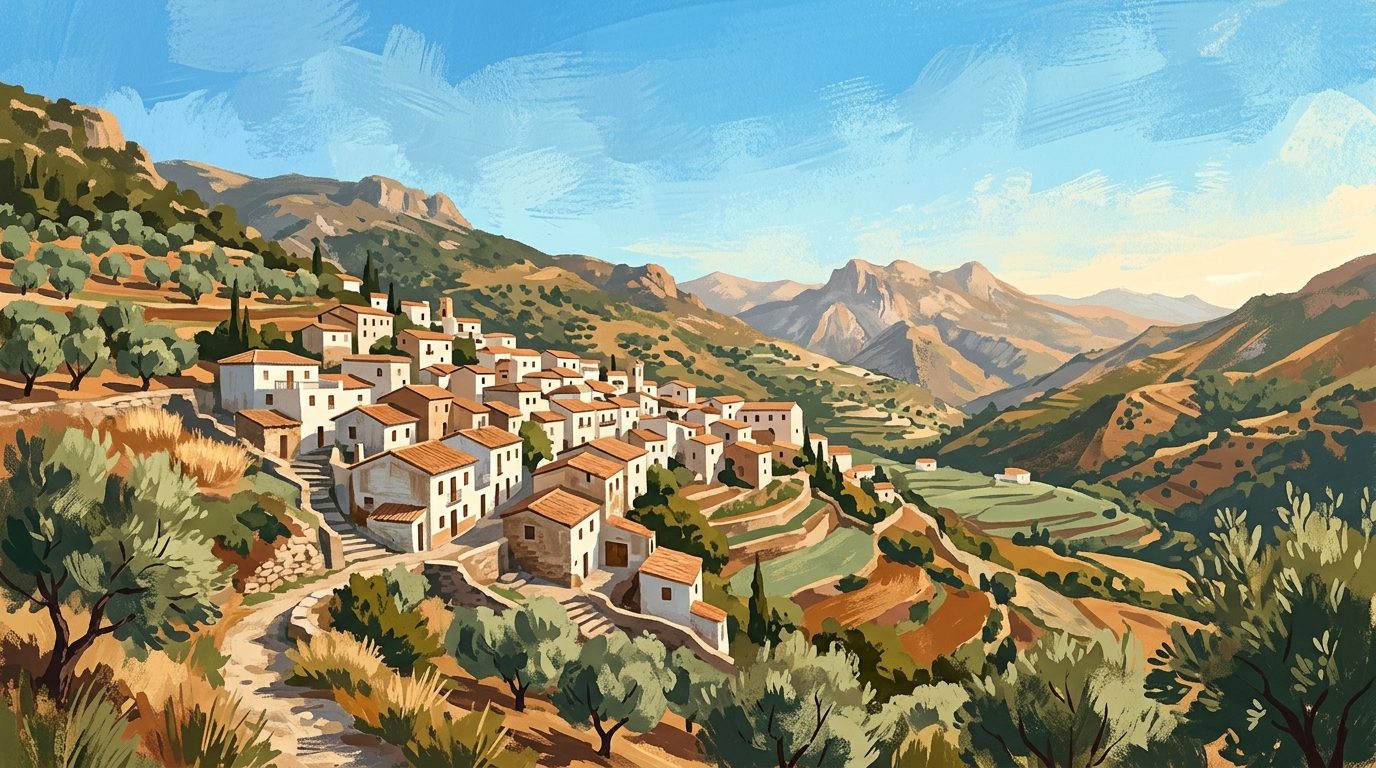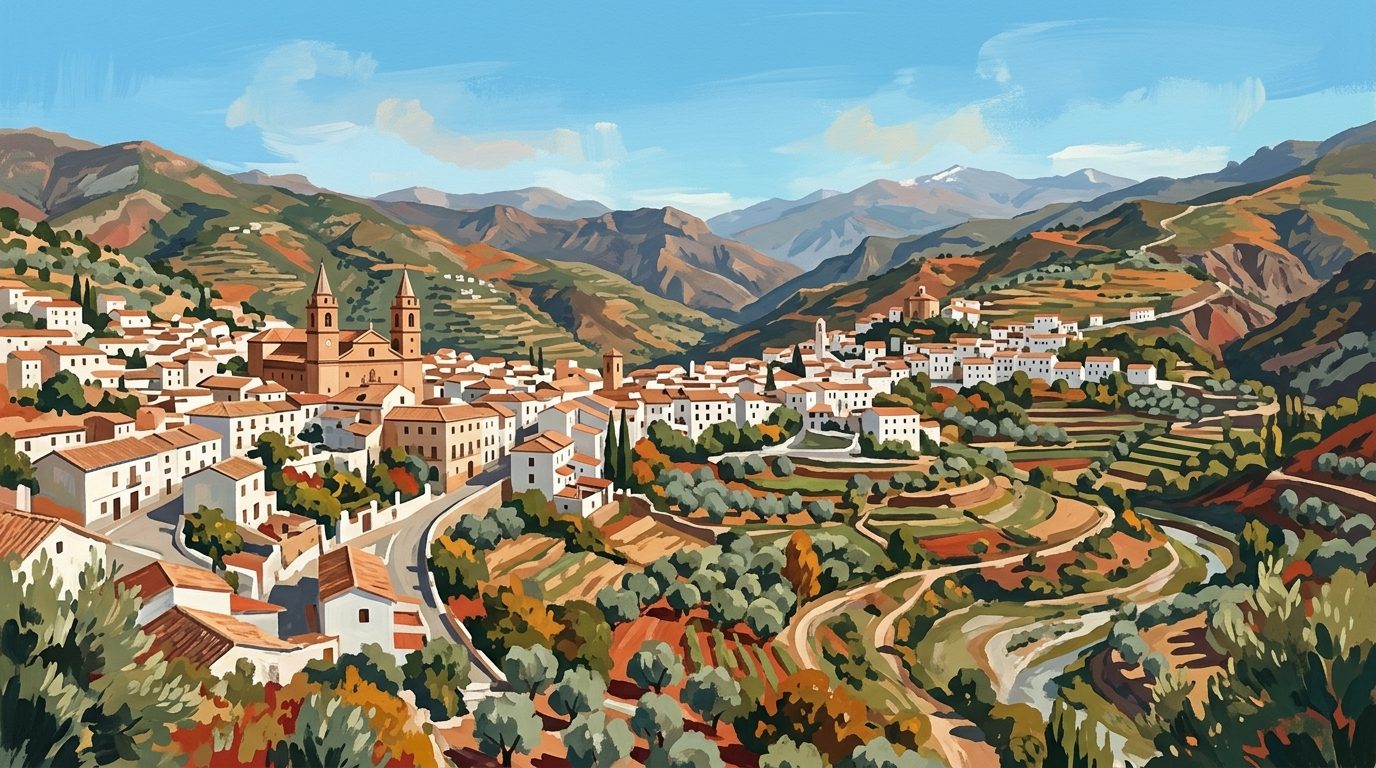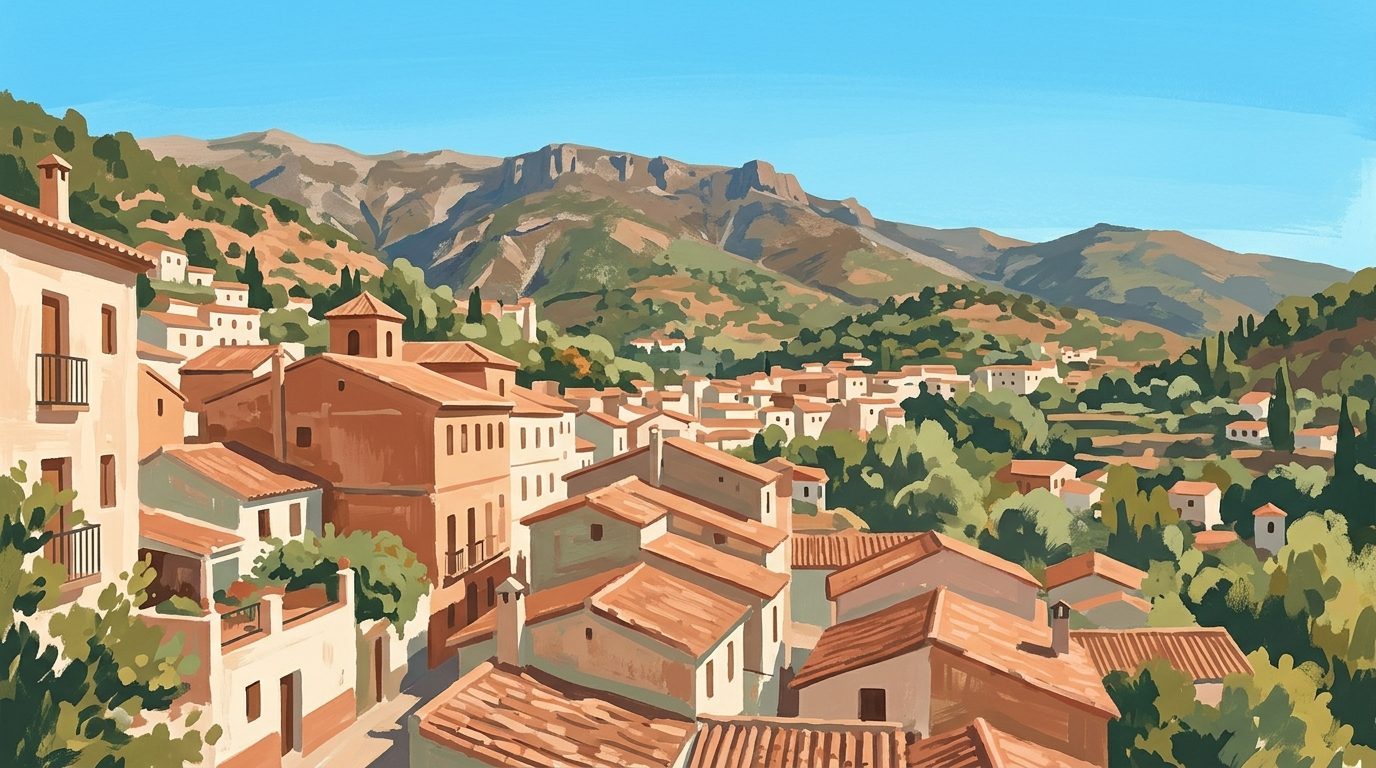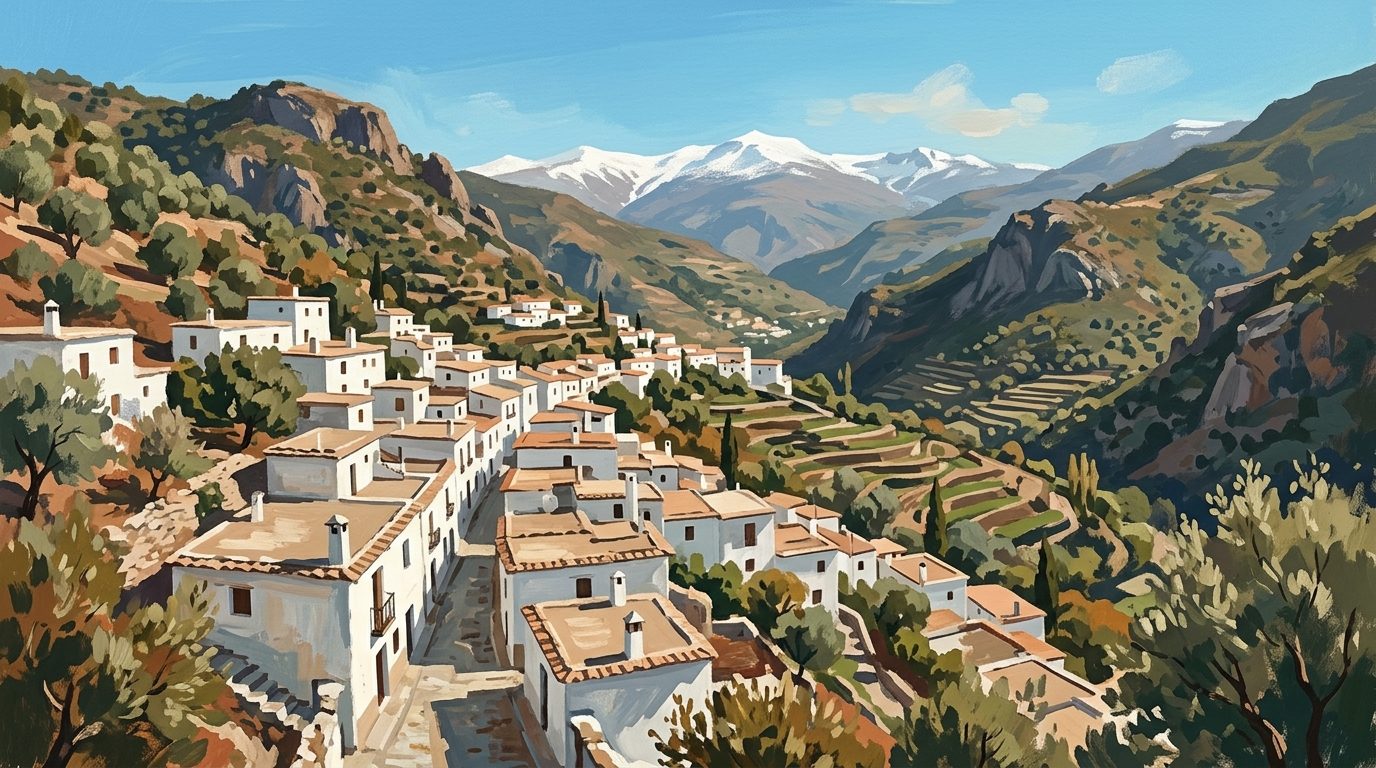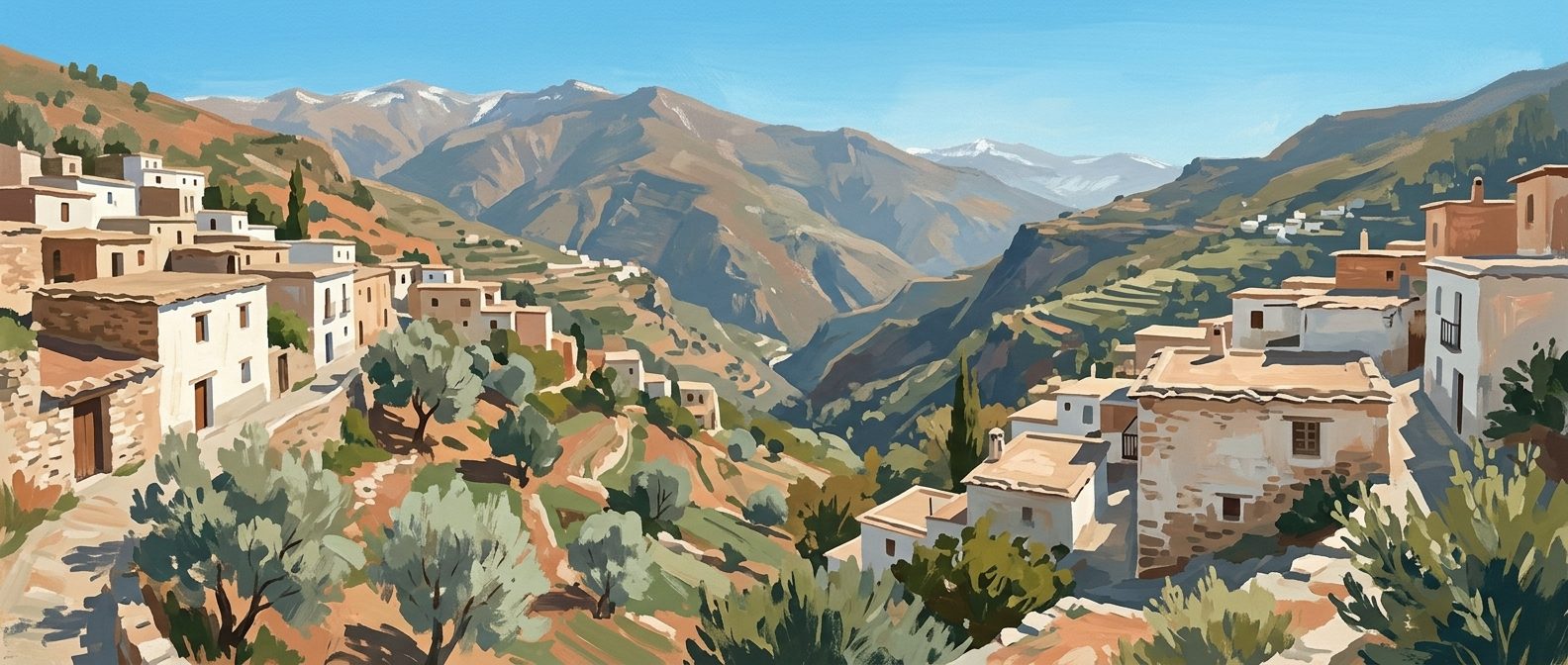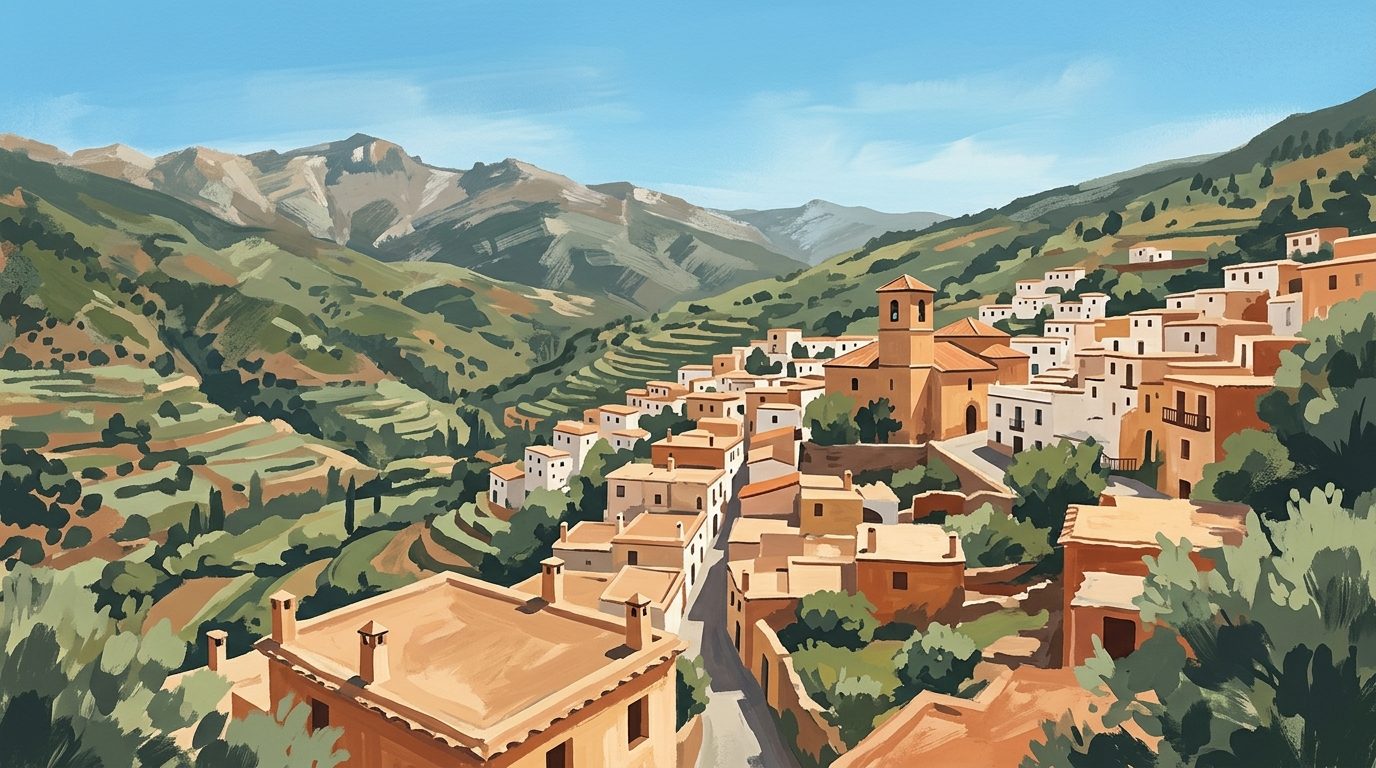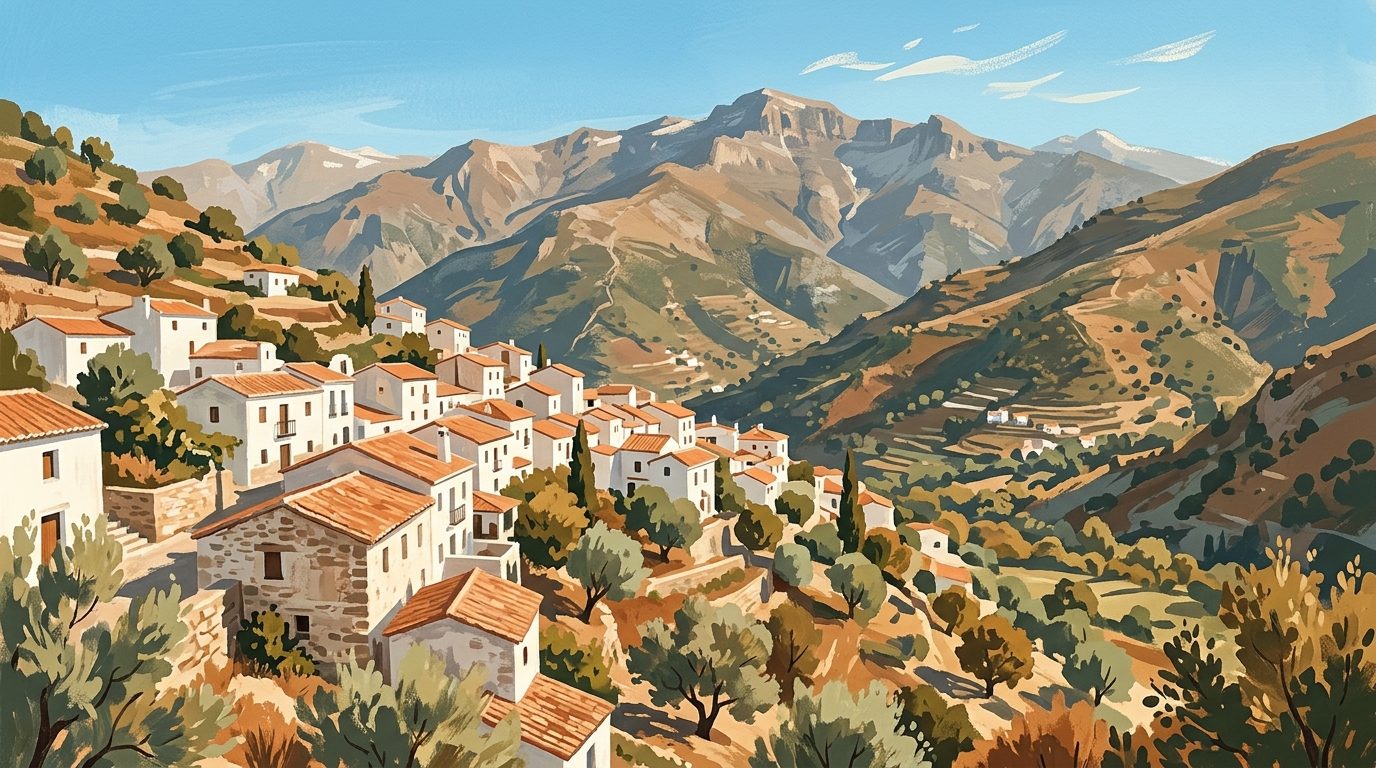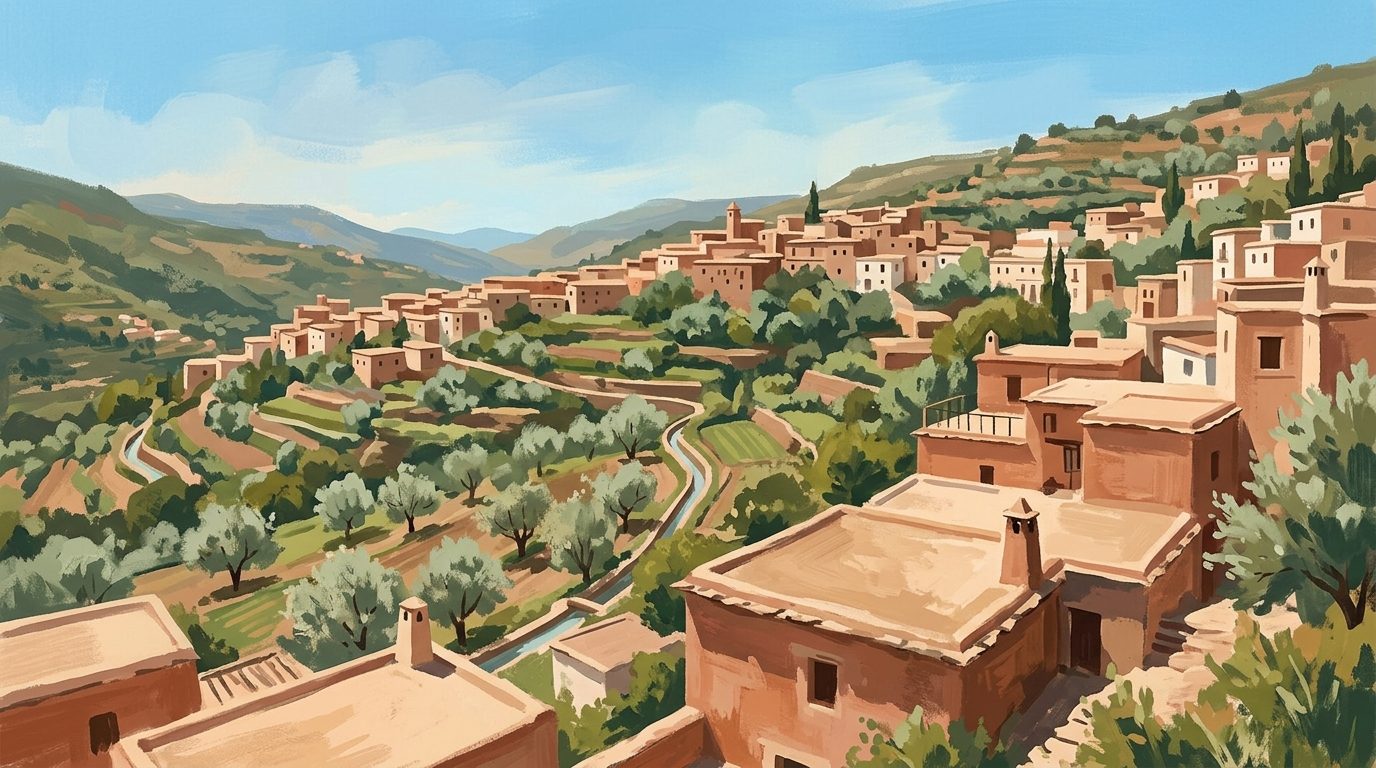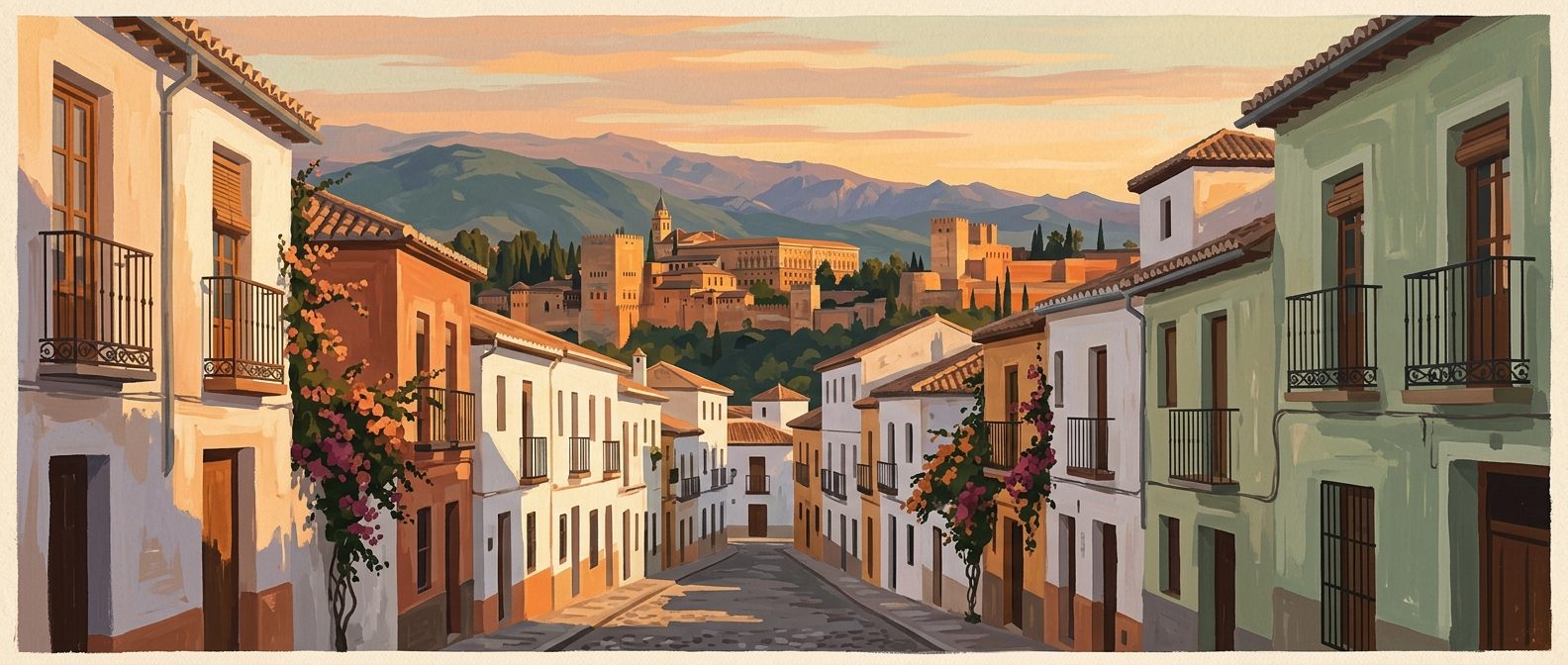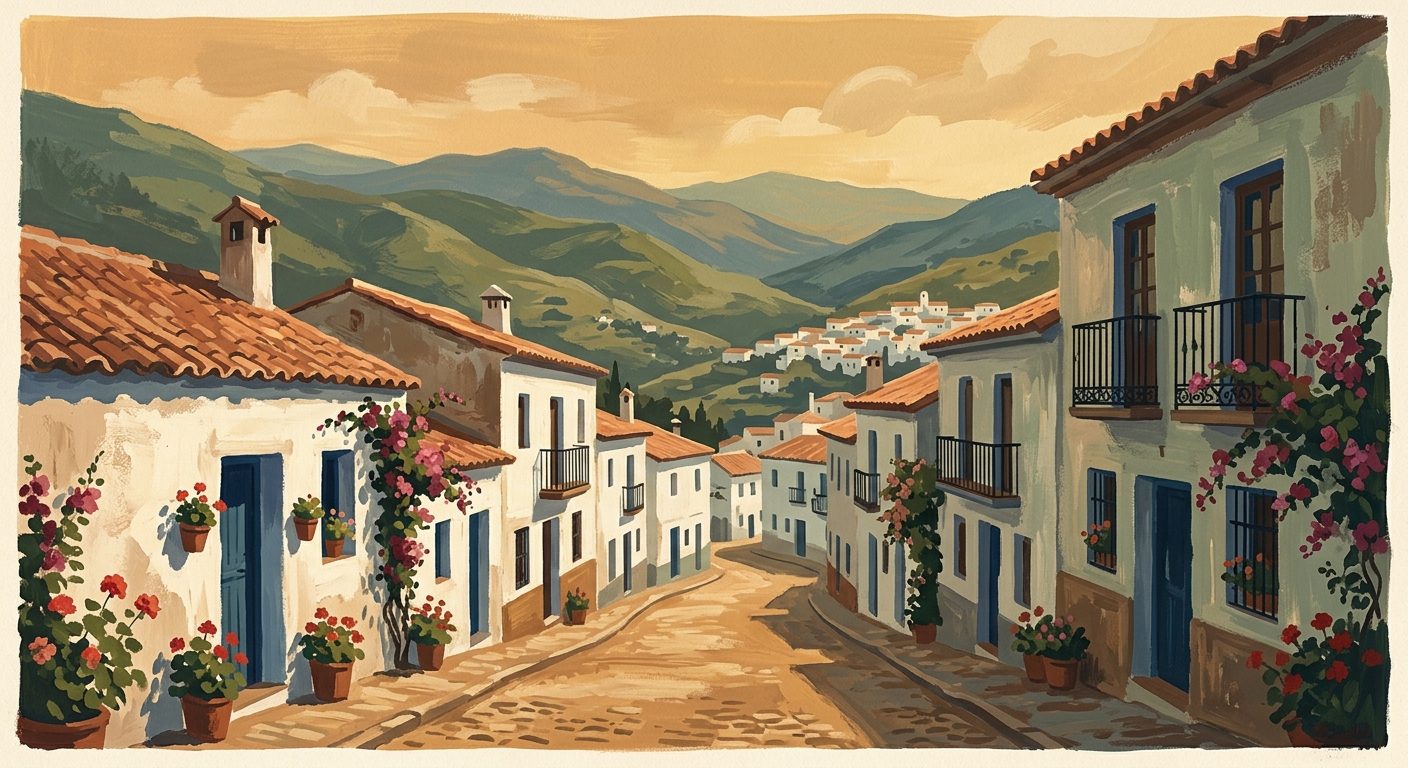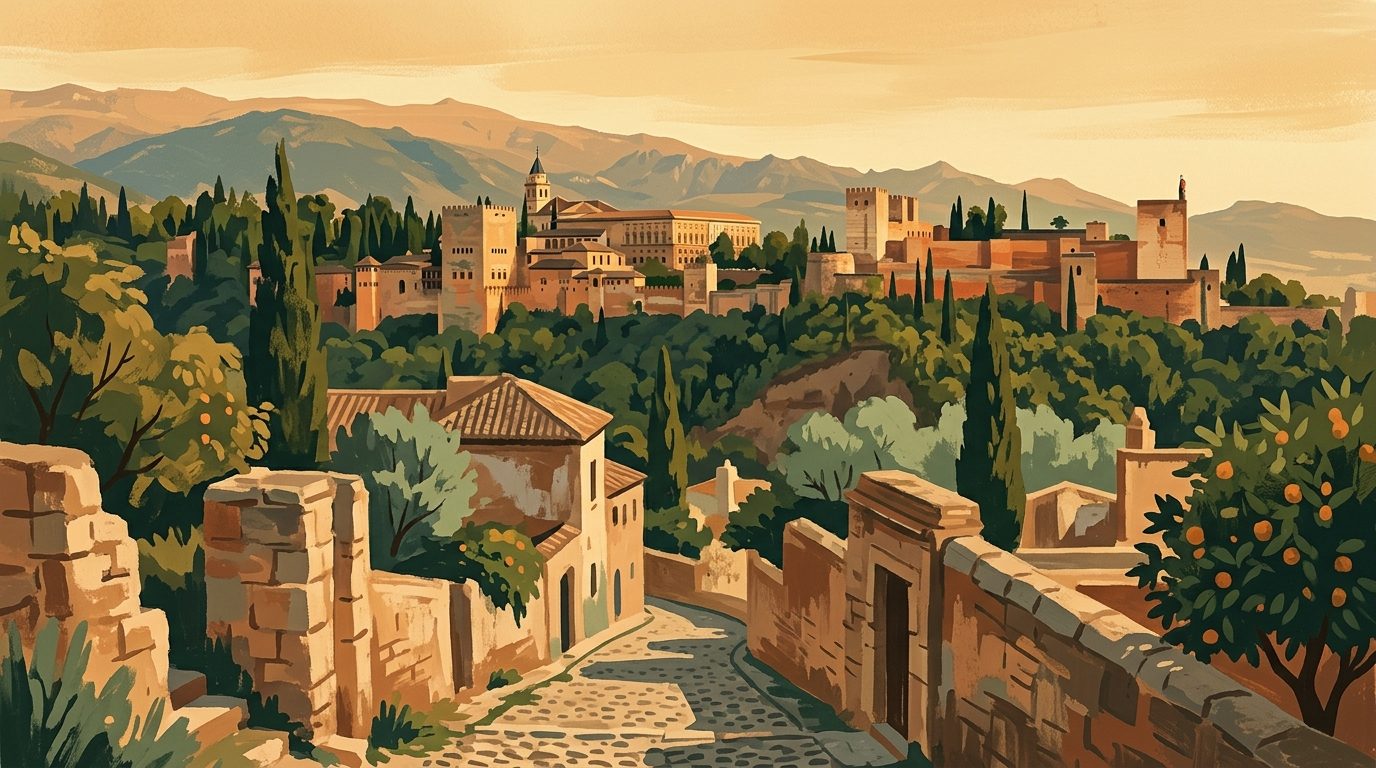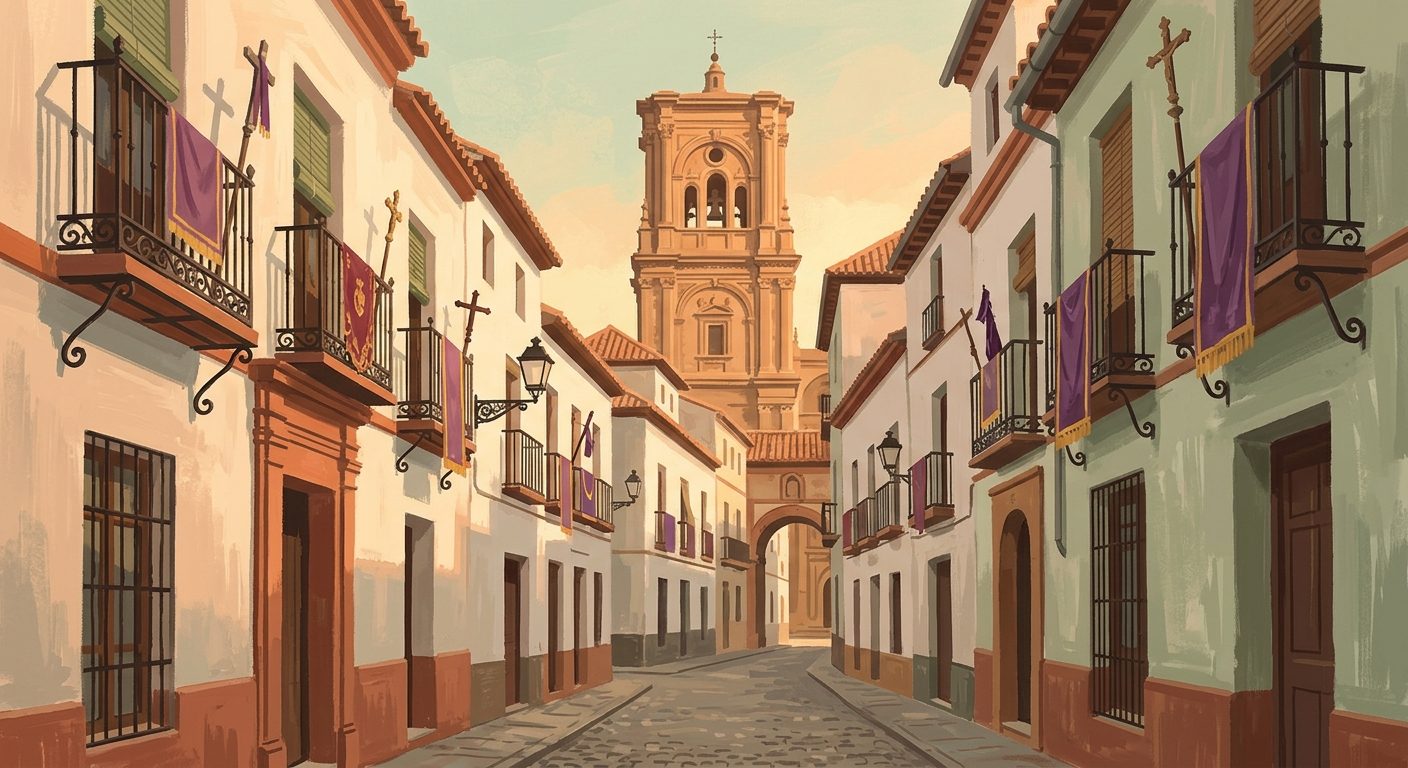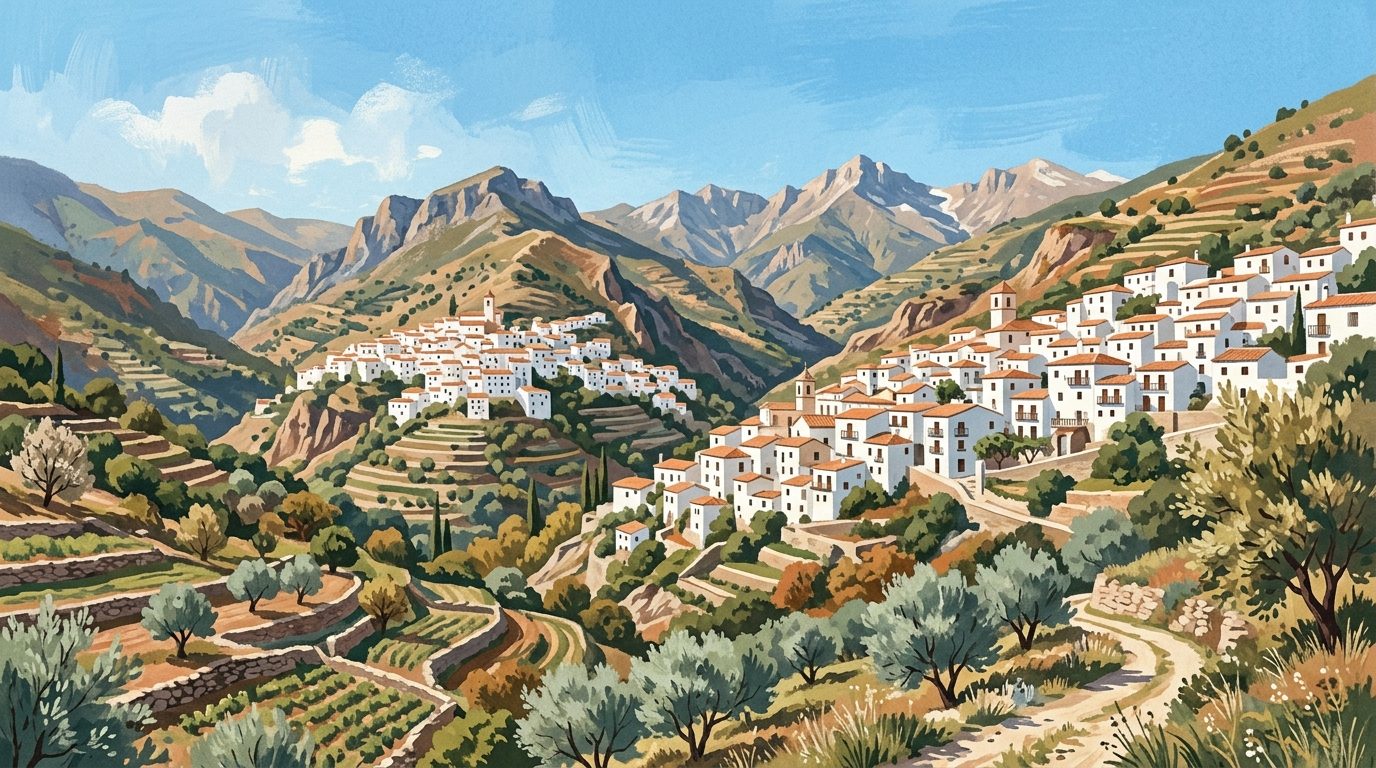
High on the southern slopes of the Sierra Nevada, the Alpujarra Granadina is a landscape of Berber-style white villages and terraced farms fed by ancient irrigation channels. It is a region where the traditions of the Moriscos survive in the architecture, the food, and the quiet resilience of mountain life.
To enter the Alpujarra is to leave the motorway-driven pace of modern Spain behind. As the road climbs from the coast or winds south from Granada city, the air cools and the scenery shifts from olive groves to chestnut forests and jagged peaks. This is a region defined by its isolation. After the fall of Granada in 1492, this was the final refuge of the Moors, and their influence remains etched into every flat-roofed house and acequia (irrigation channel) that carries snow-melt to the valley floor.
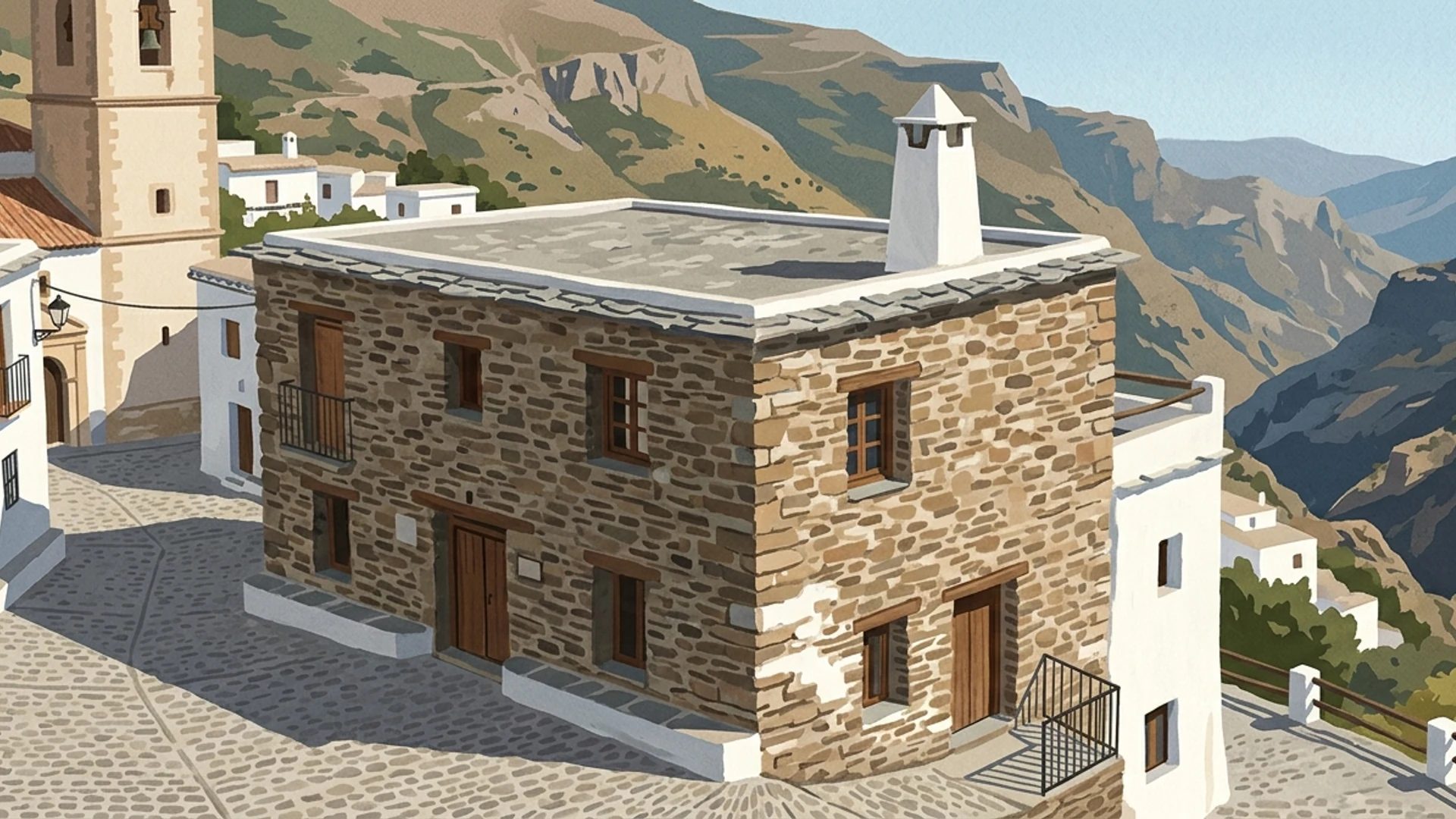
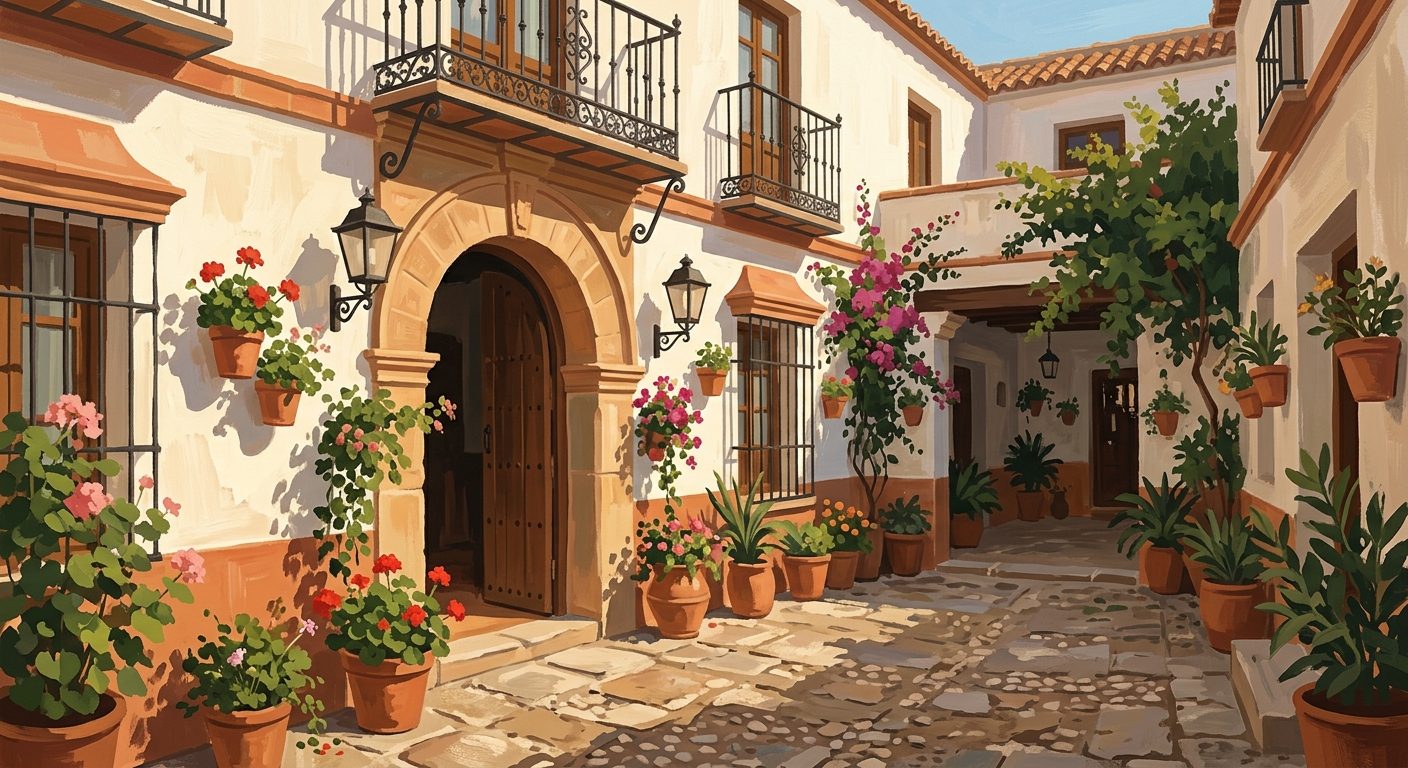
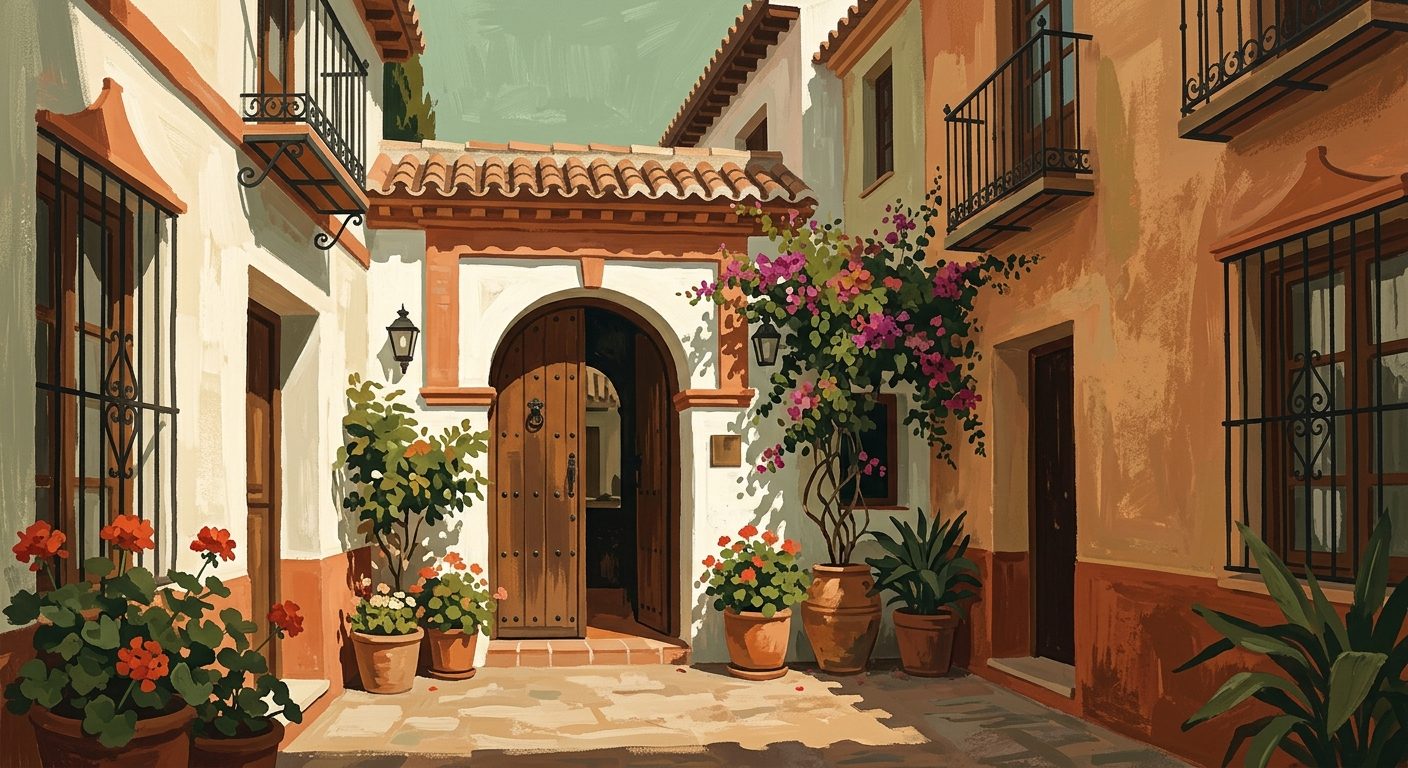
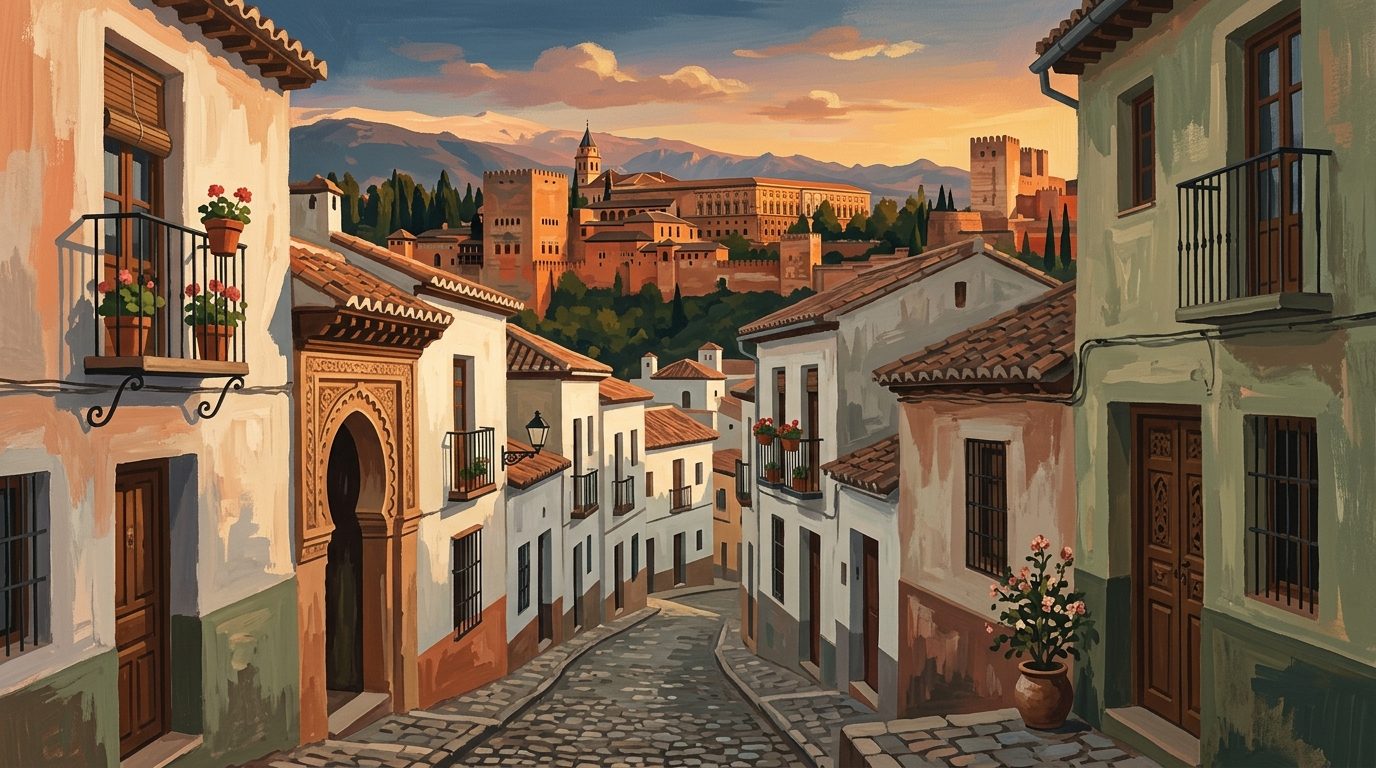
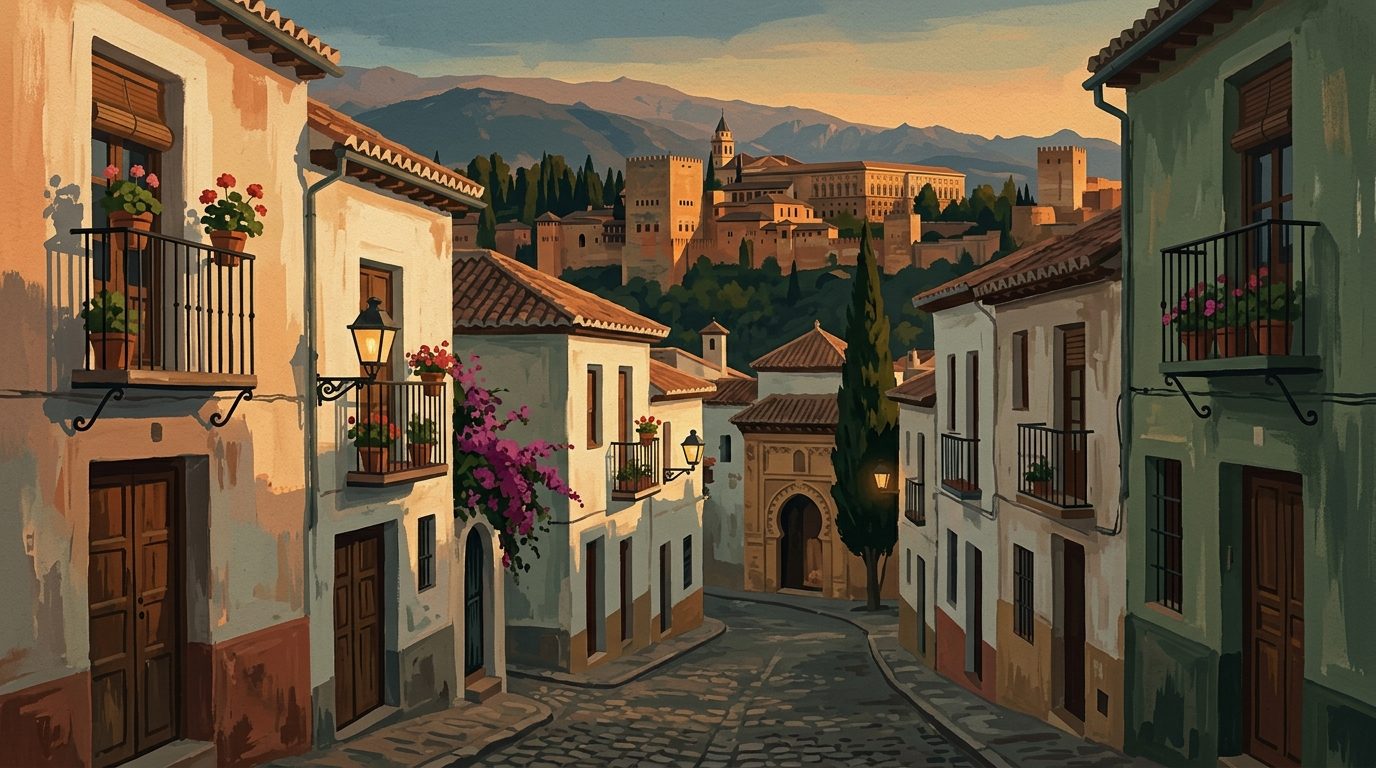
The villages here are distinct from the pueblos blancos (white villages) of Cádiz or Málaga. These are Berber in origin, with boxy houses stacked like sugar cubes, their chimneys crowned with small slate caps. Life revolves around the seasons: the autumn chestnut harvest, the winter matanza (pig slaughter), and the spring melt that turns the barrancos (ravines) into torrents. For those looking for authenticity, quiet trails, and air so clear it feels like a tonic, the Alpujarra Granadina is unmatched.
Places to Explore
Lanjarón
Often referred to as the gateway to the Alpujarra, Lanjarón is inextricably linked with water. It is home to the most famous mineral water brand in Spain, and the town is dotted with public fountains, each accompanied by a short poem. The Balneario de Lanjarón (spa) is an elegant 1920s building where people still take the waters for their medicinal properties. It is a linear town, stretching along the main road, but the real character lies in the Barrio Hondillo. Here, you will find tinaos (sheltered walkways) and narrow alleys draped in flowering pots.
For a taste of the local culture, visit on the night of 23 June for the Fiesta de San Juan, where the town erupts into a massive midnight water fight (La Carrera del Agua). For a quieter experience, hike down to the ruins of the Moorish castle overlooking the valley. Stop for lunch at Restaurante Alcadima, where they serve a refined version of mountain cuisine. The town feels less isolated than the higher villages, making it a comfortable introduction to the region before the roads become truly serpentine.
Read the full Lanjarón guide →
Órgiva
The capital of the region, Órgiva, sits in the broader Guadalfeo valley and has a markedly different feel to its high-altitude neighbours. It is a crossroads where traditional Alpujarreño farmers rub shoulders with a large international bohemian community. The Thursday market is the best time to see this melting pot in action, with stalls selling everything from local honey to handmade incense and organic vegetables. The twin towers of the 16th-century Parroquia de Nuestra Señora de la Expectación dominate the skyline, a reminder of the town's Christian resettlement.
Away from the main street, the town is surrounded by olive and citrus groves. Many visitors head to the nearby Beneficio community, one of Europe's longest-standing alternative settlements, though for most, the appeal lies in the town’s lively bars. Bar Galindo on the main road is a local institution for tapas. Órgiva is the practical hub of the region, but its relaxed, slightly eccentric atmosphere makes it more than just a service centre.
Pampaneira
Pampaneira is the first of the three famous villages in the Barranco de Poqueira (Poqueira Gorge). It is undeniably popular, but it has maintained its integrity through strict building codes and a thriving craft scene. The village is the best place to buy jarapas, the traditional multi-coloured rugs woven on ancient looms. You can see these being made at the Taller de Jarapas Morell. The Plaza de la Libertad is the heart of the village, where water flows through a central stone channel.
Wander up the steep calles (streets) to find the Bodega Asador El Teide, which offers views across the gorge and excellent grilled meats. Pampaneira is also known for its chocolate factory, Abuela Ili, which produces bars infused with mountain herbs and figs. Despite the day-trippers, the village retains a sense of timelessness, especially if you venture into the lower quarters where the houses seem to grow directly out of the mountainside.
Read the full Pampaneira guide →
Bubión
Located midway between Pampaneira and Capileira, Bubión is the quietest of the Poqueira trio. It is the place for those who find Pampaneira too busy and Capileira too high. The village is exceptionally well-preserved and has been designated a Cittaslow (slow city), a title it takes seriously. The architecture here is perhaps the most authentic in the gorge, with many houses retaining their original launa (waterproof grey clay) roofs.
The Museo Casa Alpujarreña provides a fascinating look into traditional life, showing how families lived alongside their animals and stored grain for the harsh winters. Bubión is a preferred base for hikers; several well-marked trails, like the GR-7, pass through the village. For a meal with a view, Teide is reliable, but the real joy of Bubión is simply walking its silent, sloping streets and watching the eagles circle the valley below. It feels like a village that has decided the modern world can wait.
Capileira
At 1,436 metres, Capileira is the highest of the three Poqueira villages and serves as the primary base for those climbing Mulhacén, the highest peak in mainland Spain. From the top of the village, the views extend all the way to the Mediterranean and, on clear days, the Rif Mountains of Africa. The village is a maze of steep stairs and hidden plazas, with the sound of running water ever-present from the fuentes (fountains).
During the summer (typically starting in June; check with Sierra Nevada National Park authorities before travelling), a high-altitude bus service runs from Capileira up into the Sierra Nevada National Park, dropping hikers at Alto del Chorrillo. For those not looking for a mountaineering challenge, the walk down to the abandoned village of La Cebadilla offers a glimpse into the hydro-electric history of the gorge. After a day on the trails, El Corral del Castaño serves exceptional local dishes in a cosy setting. It is the most dramatic of the villages, perched on the edge of the abyss.
Read the full Capileira guide →
Trevélez
Trevélez is famous for one thing: jamón (ham). At nearly 1,500 metres, the air is cold and dry, providing the perfect conditions for curing meat without the need for excessive salt. Huge drying sheds (secaderos) line the entrance to the village, and you can smell the sweet, nutty aroma of ageing ham as soon as you step out of the car. The village is split into three barrios (neighbourhoods): Bajo, Medio, and Alto. The Barrio Alto is the most traditional and least affected by tourism.
Eating here is mandatory. Order a plate of Jamón de Trevélez at Mesón del Jamón, and look for the seal indicating it has been cured for at least 20 months. Beyond the ham, the village is the starting point for the Siete Lagunas (Seven Lagoons) hike, one of the most beautiful high-mountain treks in the Sierra Nevada. The Rio Trevélez is also a hotspot for trout fishing. It is a rugged, working village that feels markedly different from the more manicured Poqueira valley.
Read the full Trevélez guide →
Soportújar
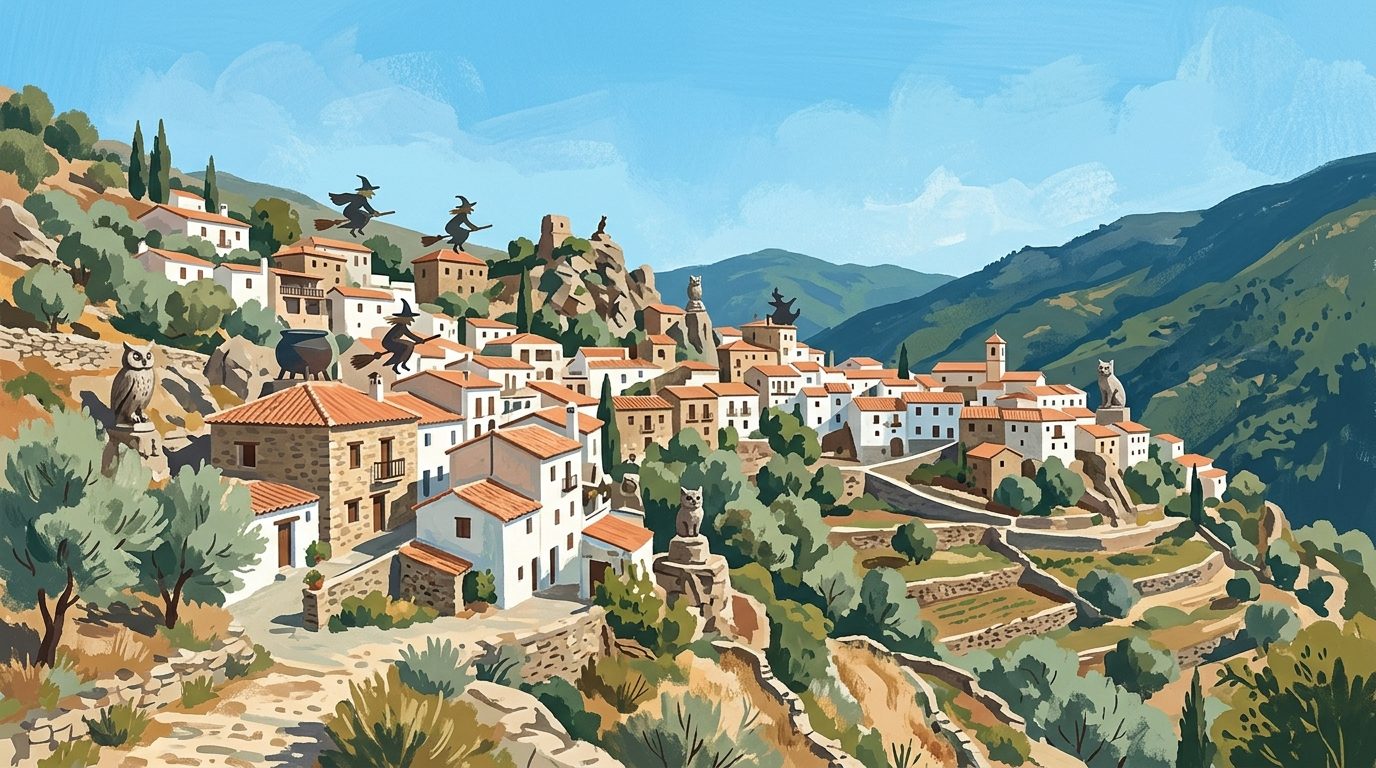
Once a standard white village, Soportújar has leaning into its folklore to become the "witch village" of the Alpujarra. According to local legend, the village was resettled by families from Galicia after the Moorish expulsion, bringing their stories of meigas (witches) with them. Today, the village is full of whimsical and slightly eerie sculptures, including a giant Baba Yaga house with chicken legs, a massive spider, and the Ojo de la Bruja (Witch's Eye) in a small cave.
It is a playful place that children adore, but it hasn't lost its traditional charm. The views from the Mirador del Embrujo (Enchantment Viewpoint) are spectacular. A short drive or hike above the village leads to O Sel Ling, a Tibetan Buddhist monastery founded in the 1980s. The Dalai Lama himself visited and named it, meaning "Place of Clear Light". The contrast between the witch-themed village and the silent Buddhist stupas on the mountain above is typical of the Alpujarra’s eclectic spirit.
Read the full Soportújar guide →
Pitres / La Taha
The municipality of La Taha consists of seven small villages, with Pitres being the largest. This area feels like the "secret" Alpujarra, largely bypassed by the tour buses. The villages (Pitres, Mecina, Fondales, Capilerilla, Atalbéitar, Ferreirola, and Pórtugos) are connected by ancient mule paths that make for excellent, relatively easy hiking. In Pitres, the main square is unusually large for the region, home to a weekly Friday market.
Pórtugos is famous for the Fuente Agria, a spring where the water is naturally carbonated and tastes strongly of iron; it stains the surrounding rocks a deep orange. Below the road, the waterfall of El Chorrerón is a hidden spot for a cooling dip in summer. Stay at La Oveja Verde in Pitres for a sustainable, local experience. This area is for those who want to see how the Alpujarra looked thirty years ago, before the world discovered the Poqueira gorge.
Read the full Pitres / La Taha guide →
Eating & Drinking in The Alpujarra Granadina
The food here is honest, calorific, and designed for people working the land. The signature dish is the Plato Alpujarreño, a mountain fry-up consisting of patatas a lo pobre (poor man's potatoes fried with peppers and onions), fried eggs, jamón de Trevélez, lomo de orza (pork loin preserved in lard), morcilla (black pudding), and longaniza (spiced sausage). It is a feast that is best enjoyed after a long morning of hiking.
Honey is another local staple, often flavoured with rosemary or chestnut. Look for pan de higo (fig bread), a dense cake made of dried figs, almonds, and spices, which provides an excellent energy boost on the trails. The local wines, particularly those from the Contraviesa mountains just to the south, are increasingly well-regarded. These are high-altitude wines, often made from the Vigiriega grape, producing crisp whites and robust reds that pair perfectly with the local cheeses. For a snack, try the soplillos, light Moorish almond meringues that melt in the mouth.
Where to Stay
Accommodation in the Alpujarra ranges from simple hostales to beautifully restored casas rurales (country houses). In the Poqueira Gorge, Hotel Rural Real de Poqueira in Capileira offers comfortable rooms and a pool at the top of the gorge. For those who want to be in the thick of it, the traditional village houses in Capileira offer the most atmosphere, often featuring wood-burning stoves and flat roof terraces.
If you prefer a more bohemian vibe, Órgiva has several eco-retreats and yurt stays. For hikers, the Refugio Poqueira is a staffed mountain hut at 2,500 metres, providing a basic but essential base for those tackling the higher peaks. Generally, booking a cottage (cortijo) with a small pool is the best way to experience the region in the summer, while in winter, ensure your accommodation has thick stone walls and a fireplace, as the mountain nights are biting.
Getting There & Around
The A-348 is the main artery through the region, but be prepared for hairpin bends and steep drops; it is not a drive for the faint-hearted. A car is essential if you want to explore the smaller villages of La Taha or the upper reaches of Trevélez. From Granada city, it is a 75-minute drive to Órgiva or 90 minutes to the Poqueira villages. ALSA operates several daily buses from Granada’s main station (Estación de Autobuses de Granada) to Lanjarón, Órgiva, and the Poqueira gorge, but the schedule is slow and stops frequently. For those without a car, base yourself in Capileira or Bubión to access the best trails on foot.
Best Time to Visit
Spring (April to June) is the most visually spectacular time, as the wildflowers carpet the slopes and the acequias are full of rushing water. Autumn (October and November) is equally beautiful, with the chestnut and cherry trees turning shades of copper and gold; this is also the time for mushroom foraging and roast chestnuts. Summer is hot in the valleys but pleasantly cool in the higher villages like Trevélez. Winter brings snow and bright, crisp days, ideal for experienced hikers, though some restaurants and shops in the smaller villages may close for the season.