
Itinerary
Winter Sun in Andalucía: A 7-Day Escape
Escape the winter gloom with a sun-drenched week in southern Spain, from the cultural streets of Málaga to the historic palaces of Sevilla.
By Dan · Updated 7 June 2026 · 9 min read
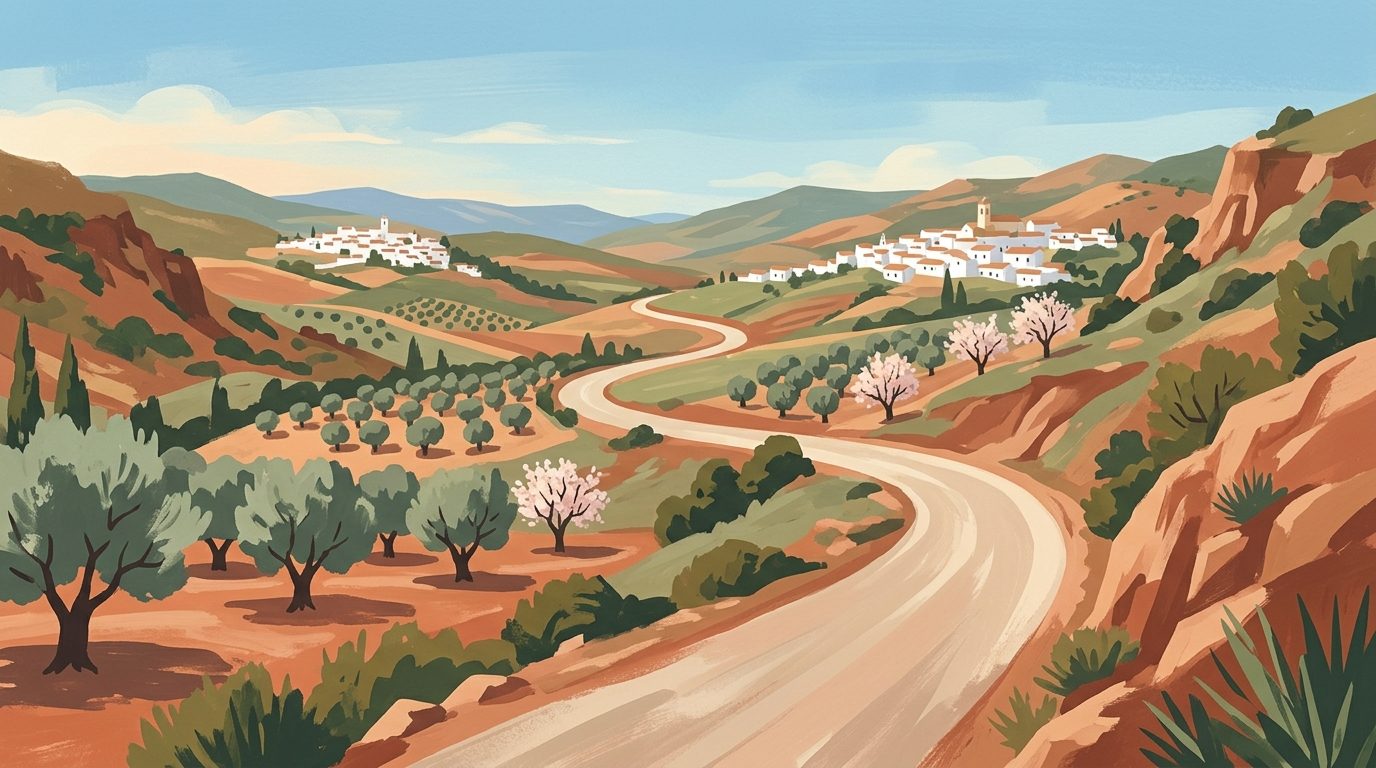
Forget the grey skies of northern Europe; in winter, Andalucía offers a sharp, clear light and temperatures that frequently reach 20°C while the rest of the continent shivers. This route is designed to capitalise on lower hotel rates and the absence of summer crowds at some of Europe's most significant monuments.
While the rest of Europe is trapped in a cycle of rain and darkness between November and February, Andalucía remains remarkably bright. This seven-day itinerary is not about finding a tropical heatwave (nights can be crisp) but about enjoying blue skies, outdoor dining, and the ability to walk through the Alcázar of Sevilla without the oppressive humidity of July. This route takes you from the coastal gateway of Málaga through the high-end coastal enclave of Marbella, across the border to the strange outpost of Gibraltar, up into the mountains of Ronda, and finishes in the orange-scented streets of Sevilla.
It suits travellers who want a mix of urban culture and driving through dramatic landscapes. It is practical, avoiding the high-altitude Sierra Nevada where snow might complicate driving, and focuses instead on the lower elevations where the winter sun is most reliable. You will need a car for the middle section of the trip, but the cities themselves are best explored on foot.
Day 1: The Gateway of Málaga
Start your journey by landing at Málaga-Costa del Sol Airport (AGP). Many visitors make the mistake of skipping the city for the resorts; do not follow them. Málaga has reinvented itself as a cultural hub with more museums per square kilometre than almost any other Spanish city.
Morning: Drop your bags and head straight to the Alcazaba. This 11th-century Moorish fortress is less crowded than the Alhambra but provides similar architectural interest. Entrance is €3.50 (check for Sunday afternoon free entry after 14:00), or you can buy a joint ticket for the Castillo de Gibralfaro. Walk up the ramparts for a view over the circular bullring and the Mediterranean.
Afternoon: Walk down through the Roman Theatre and have lunch at Casa Lola on Calle Granada. Order the vermouth on tap and a selection of pinchos. Spend the afternoon at the Picasso Museum (pre-book the 15:00 slot). Picasso was born here, and the collection is housed in a restored 16th-century palace.
Evening: Walk to Muelle Uno, the modernised port area. In winter, the sunset over the water at 18:30 is spectacular. Eat dinner in the Soho district, specifically at La Cosmopolita, where the menu changes daily based on what the chef found at the Atarazanas market that morning.
Day 2: Coastal Sophistication in Marbella
Pick up your hire car and drive 45 minutes west along the AP-7 to Marbella. Ignore the reputations of the reality TV shows; Marbella’s Old Town is one of the best-preserved in the region.
Morning: Arrive and head directly to the Plaza de los Naranjos. In winter, the orange trees are heavy with fruit. Explore the narrow streets of the Casco Antiguo, focusing on the remains of the Moorish city walls. The shops here are high-end but the architecture is traditional Andalucían.
Afternoon: Drive five minutes to the Paseo Marítimo. Walk the promenade towards Puerto Banús. It is a 6km flat walk. You will see locals in light jackets and tourists in T-shirts. Stop for lunch at a chiringuito (beach bar) like Víctor’s Beach. Order the espetos de sardinas, sardines skewered and grilled over an open wood fire in an old fishing boat.
Evening: Return to the Old Town for dinner. Avoid the main square and find The Farm, which focuses on local, seasonal produce in a courtyard setting that remains comfortable even in the cooler winter evenings.
Day 3: A British Outpost in Gibraltar
Today involves a day trip from your base in Marbella. It is a 60-minute drive to the border at La Línea de la Concepción. Do not drive across the border; the queues are long and the town is small. Park in the underground car park at Santa Bárbara and walk across the runway into Gibraltar.
Morning: Take the Cable Car to the top of the Rock. In winter, the visibility is often better than in summer, allowing you to see the Rif Mountains of Morocco clearly across the Strait. Visit the Skywalk and the Windsor Suspension Bridge. Note: the macaques (monkeys) are wild animals; keep your bags zipped and do not carry food.
Afternoon: Descend and explore the Great Siege Tunnels, an incredible feat of 18th-century engineering. For lunch, head to Casemates Square, though the food is often standard British pub fare. If you want something more local, look for calentita, a chickpea-flour bread that is the national dish.
Evening: Return to Marbella. Stop at the village of Estepona on the way back for a quick walk through its flower-filled streets (the 'Garden of the Costa del Sol') and an early dinner at La Bulla on the promenade.
Day 4: Into the Mountains of Ronda
Leave the coast behind and take the A-397. This is one of the most scenic drives in Spain, climbing from sea level to 750 metres. It takes about an hour, but allow more time for photos.
Morning: Arrive in Ronda and head for the Puente Nuevo, the 18th-century bridge that spans the 120-metre-deep El Tajo gorge. It is the town's defining landmark. Walk down the Camino de los Molinos for the best view looking back up at the bridge. It is a steep walk, but in the winter sun, you won't overheat.
Afternoon: Visit the Plaza de Toros, one of the oldest and most beautiful bullrings in Spain. Even if you dislike the activity, the museum and the architecture are essential for understanding local culture. Follow this with a visit to the Mondragón Palace, which houses the municipal museum and has lovely gardens overlooking the cliff edge.
Evening: Ronda is famous for its game and red wine. Eat at Tragatá, run by Michelin-starred chef Benito Gómez. It is a modern tapas bar. Order the oxtail and the local Serranía de Ronda wine. Stay overnight here; when the day-trippers leave, the town becomes incredibly quiet and atmospheric.
Day 5: The Grandeur of Sevilla
The drive from Ronda to Sevilla takes about 1 hour and 45 minutes through the white villages of the Sierra de Grazalema. Stop briefly in Zahara de la Sierra to see the turquoise reservoir before hitting the motorway to Sevilla.
Morning: Drop the car at the train station (Santa Justa) or a central car park (you do not want a car in central Sevilla). Check into your hotel and walk to the Plaza de España. Built for the 1929 Ibero-American Exposition, it is a semi-circle of brick and tile. In winter, the sun hits the tiles and creates a brilliant warmth.
Afternoon: Walk through the María Luisa Park and head towards the Torre del Oro by the river. Take a river cruise or simply walk along the Calle Betis in the Triana district on the opposite bank. The light here at 16:00 is perfect for photography.
Evening: Sevilla is the tapas capital of the world. Head to the Arenal district. Start at La Brunilda: get there 15 minutes before they open or you will not get a table. Try the cod fritters with pear alioli.
Day 6: Palaces and Cathedrals
This day is dedicated to the heavyweights of Sevillano architecture. Booking in advance is mandatory, even in January.
Morning: Start at the Real Alcázar at 09:30. This royal palace is still used by the Spanish Royal Family. The Mudejar architecture is some of the finest in the world. Spend at least two hours here, particularly in the gardens, which are green year-round.
Afternoon: Visit the Sevilla Cathedral and climb the Giralda bell tower. There are no stairs, only 34 sloping ramps, designed so the Sultan could ride his horse to the top. The view from the top gives you a layout of the entire city. For lunch, grab a 'montadito' (small sandwich) at Bodega Santa Cruz, locally known as 'Las Columnas'.
Evening: Spend your final night in the Alfalfa district. It is less touristy than Santa Cruz. Visit El Rinconcillo, the oldest bar in the city (founded in 1670). You stand at the wooden bar, and the waiters chalk your bill directly onto the counter. Order the spinach with chickpeas (espinacas con garbanzos).
Day 7: Final Churros and Departure
Before leaving, do as the locals do. Head to Bar El Comercio for the best churros and chocolate in the city. These are not the thin, frozen variety found elsewhere, but thick, hot, and made to order.
If you are flying out of Sevilla (SVQ), the airport is a 20-minute taxi ride from the centre (fixed fare approx. €25-30; check current rates on the official airport website before travelling). If you need to return to Málaga for a round-trip flight, take the Avant high-speed train from Santa Justa station; it takes just under two hours and is much more relaxing than driving the A-92 motorway.
Getting Around
For this itinerary, a car is necessary for Days 2 through 5. Collect your hire car in Málaga city centre (rather than the airport to save on daily fees) and drop it off at Sevilla’s Santa Justa station. Driving in Andalucía is straightforward; the motorways (Autovías) are excellent and mostly free. Avoid driving inside the old centres of Ronda and Sevilla, as streets are narrow and many are restricted to residents (ZPR zones) with heavy fines for unauthorised entry.
Where to Stay
- Málaga: Stay in the Soho district or near Calle Larios. It is central and puts you within walking distance of all major sites.
- Marbella: Book a boutique hotel within the Casco Antiguo (Old Town). Avoid the 'Golden Mile' hotels unless you want to spend the entire time in a resort.
- Ronda: Look for hotels on the edge of the El Tajo gorge. Waking up to the view of the valley in the morning mist is worth the premium.
- Sevilla: The Alfalfa or Arenal neighbourhoods are best. They are central but feel more authentic than the overly crowded Barrio Santa Cruz.
Best Time for This Itinerary
This itinerary is specifically designed for the window between November and late February. January is particularly good for those seeking quiet; the city of Sevilla is much calmer after the Three Kings parade on January 6th. Avoid late March or April for this specific route if you dislike crowds, as Holy Week (Semana Santa) and the April Fair (Feria de Abril) cause prices to triple and the streets to become impassable.
Practical Planning
- Budget: Expect to pay €100-150 per night for high-quality boutique accommodation in winter. A meal for two with wine at a good tapas bar will cost roughly €40-50.
- Booking: Even in winter, book the Real Alcázar and Sevilla Cathedral at least two weeks in advance.
- Clothing: Layers are essential. It can be 20°C at 2:00 PM but 8°C at 8:00 AM. A light wool coat or a quality trench coat is more useful than a heavy parka.
- Sun: The sun is still strong. Even in December, you will likely need sunglasses for the drive from Marbella to Ronda.
Last reviewed: 21 June 2026 · Editorial policy
Related guides
A Long Weekend in Sevilla: The Definitive Four Days Itinerary
A precise 4-day guide to Sevilla, covering the Gothic Cathedral, royal palaces, Triana's pottery workshops, and the best tapas bars in the city.
8 min read
Granada and the Alpujarras: A 5-Day Loop
Combine the architectural majesty of the Nasrid kings with the high-altitude solitude of the Sierra Nevada's southern slopes. This five-day loop transitions from urban tapas culture to the rugged traditions of Spain’s highest white villages.
8 min read
Andalucía by Train: Rail Journey from Málaga to Granada
Ditch the car hire queues and traverse southern Spain using the high-speed AVE network on this 10-day rail adventure from the coast to the Sierra Nevada.
9 min read
A Perfect Weekend in Granada
A practical three-day guide to Granada, focusing on the Alhambra, the winding lanes of the Albaicín, and the city's unique tapas culture.
8 min read
48 Hours in Cadiz: A Two Days Itinerary for Spain's Oldest City
Forty-eight hours in Cadiz allows you to properly absorb the rhythm of a city almost entirely surrounded by the Atlantic Ocean. You will have time to climb the historic watchtowers, eat freshly fried fish in the central market, and walk the coastal forts without feeling rushed.
9 min read
Three Days in Cadiz: The Ultimate Itinerary for Independent Travellers
Three days allows you to completely sink into the maritime rhythm of Europe's oldest city. You can cover the historic centre, explore the twin seaside fortresses, and still have time for a sherry tasting afternoon across the bay.
7 min read
More guides
5 Days in Jaén: Renaissance Cities and Cazorla
A realistic five-day driving itinerary through Jaén province, balancing the monumental Renaissance architecture of Úbeda and Baeza with the rugged mountain wilderness of the Sierra de Cazorla.
11 min read
5 Days in Huelva: Atlantic Coast, Doñana and Sierra
A realistic five-day driving route through Huelva province, linking the maritime history of the capital with the tidal wetlands of Doñana and the chestnut forests of the Sierra de Aracena.
12 min read
5 Days in Almería: City, Desert and Cabo de Gata
A realistic five-day driving itinerary through Almería province, balancing the historic capital, the cinematic Tabernas badlands, and the protected volcanic shores of Cabo de Gata.
13 min read
One Week in Sevilla: A Complete Seven Days Itinerary
Spending a full week in Sevilla allows you to slow down and adopt the local rhythm. You can explore the monumental centre, wander through neighbourhood markets, and take the train to nearby Andalucían cities without feeling rushed.
13 min read
Two Days in Granada: A Step-by-Step Itinerary
Two days in Granada gives you just enough time to explore the Alhambra and lose yourself in the steep alleys of the Albaicín. This itinerary balances major monuments with the city's legendary free tapas culture.
10 min read
48 Hours in Sevilla: A Weekend Itinerary
Spend a weekend in Sevilla navigating the royal palaces, historic tapas bars and shaded plazas. This two-day plan balances major architectural sights with long lunches and evening walks along the river.
8 min read
Three Days in Sevilla: The Complete Itinerary
Spend 72 hours exploring the heart of the Andalucían capital. This pacing allows time for the Real Alcázar, late tapas in Triana and the essential afternoon siesta.
9 min read
Two Days in Sevilla: A Complete Itinerary
Two days in Sevilla requires strict prioritisation to avoid exhaustion under the Andalucían sun. This itinerary balances the grand monuments of the historic centre with the slower, more local rhythm of Triana and Santa Cruz.
10 min read
A Weekend in Cordoba: Two Days in Andalucía's Caliphate City
Spend 48 hours in Cordoba exploring the mesmerising Mezquita, getting lost in the whitewashed streets of the Judería, and eating excellent salmorejo.
9 min read
Newsletter
More stories from Andalucía
Weekly notes, seasonal picks, and the next guides worth bookmarking.