
Living guide
Where to Live in Andalucía: A Practical Guide for Expats
A deep, practical guide to choosing where to live in Andalucía. Compare the coasts, inland cities, and rural villages while navigating the realities of climate, healthcare access, housing legality, and local administration.
By Dan · Updated 16 July 2026 · 7 min read
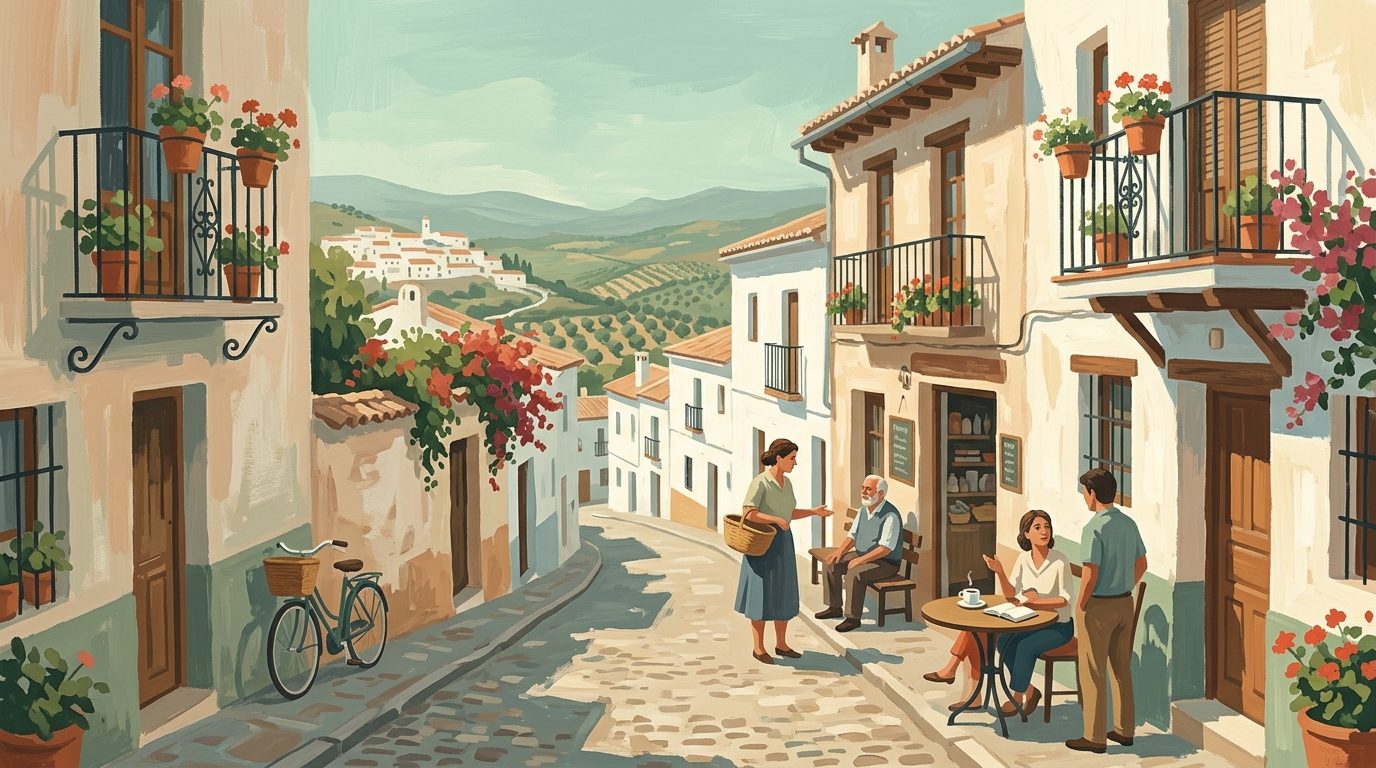
The best place to live in Andalucía is not the place that looks best on holiday. Choose by climate tolerance, healthcare access, transport, language, housing legality, community and the kind of daily life you want.
Andalucía is a vast and varied region. The coastal resorts of Málaga, the wind-swept towns of Cádiz, the high-altitude streets of Granada, the inland heat of Sevilla, and the rural villages of Jaén and Almería can feel like entirely different countries in practical terms. A location that feels like paradise during a two-week summer holiday can become unmanageable in the depths of winter or the peak of August. To avoid costly mistakes, you must test the area outside peak holiday season and understand the local administration before you commit.
How to compare areas practically
When shortlisting towns or provinces, you need to look past the scenery and evaluate the underlying infrastructure that will dictate your daily routine.
- Climate extremes: Coastal, valley, mountain and inland microclimates are drastically different. Inland cities like Sevilla and Córdoba frequently exceed 40 degrees Celsius in July and August, meaning air conditioning is a survival necessity rather than a luxury. Conversely, mountain villages in Granada can experience freezing temperatures and snow, revealing the poor insulation of many traditional properties.
- Healthcare access: Do not just look for a local doctor. Check the distance to the nearest major public hospital (hospital comarcal) and the local health centre (centro de salud). If you are relying on the state system, you will need to complete your healthcare registration to access the Servicio Andaluz de Salud (SAS). If you use private healthcare, ensure there are reputable private clinics within a reasonable drive, as these are heavily concentrated on the coasts and in major cities.
- Transport and connectivity: Decide immediately whether you can live car-free. Coastal train lines (like the Cercanías in Málaga) make car-free living highly viable, whereas rural inland villages require a reliable vehicle for everything from supermarket runs to specialist hospital appointments.
- Language and support: English-speaking services are very helpful during your first year. However, relying entirely on expat bubbles can limit your integration and make simple tasks expensive if you constantly need to pay translators.
- Year-round life: Many resort areas on the Costa de la Luz or eastern Almería coastline feel incredibly lively in August but shut down entirely by November. You must visit in January to see which shops, restaurants and medical services remain open.
Understanding the provincial patterns
Every province attracts a different type of resident. Your budget and lifestyle preferences will heavily dictate which of these areas suits you best.
Málaga and the Costa del Sol
This is the primary destination for international arrivals, offering the strongest international infrastructure and easiest access via Málaga-Costa del Sol Airport. It is excellent for soft landings, but this convenience comes at a premium. The cost of living here is significantly higher than inland areas, and the housing market is fiercely competitive. Summer traffic along the N-340 and A-7 can be exhaustingly heavy.
Cádiz and the Costa de la Luz
Known for its vast Atlantic beaches, historical links to Jerez, and a more authentic, seasonal Spanish rhythm. The critical factor here is the wind. The famous Levante and Poniente winds dictate daily life, dictating when you can go to the beach or sit on a terrace. Public transport is less comprehensive than in Málaga, meaning a car is often essential.
Granada and the mountains
Granada offers an intoxicating mix of strong city culture and rugged rural options in the Alpujarras. It is entirely possible to ski in the Sierra Nevada in the morning and drive down to the Motril coast in the afternoon. However, the winters are bitterly cold by Andalucían standards, and rural mountain roads can be challenging to navigate in poor weather.
Sevilla, Córdoba and Jaén interiors
These provinces offer deep, traditional local life and immense cultural heritage. Property is much cheaper, and you will experience authentic Spanish community life. The trade-off is the brutal summer heat. From mid-June to September, daily life halts in the afternoon, and many locals flee to the coast. You will also need a much stronger grasp of Spanish to navigate daily administration here.
Almería
Almería offers excellent property value and distinctive desert landscapes. It is noticeably drier and more isolated than the western provinces. While the coastal towns like Mojácar have strong international communities, the province generally has longer driving distances between key services and fewer direct international flights outside of the summer season.
Concrete steps before committing to an area
Never buy property in an area you have only visited on holiday. Follow these steps to test a location properly.
- Book a long-term rental first: Use long-term renting for at least six to twelve months in your chosen area. Renting gives you the freedom to walk away if the winter damp is unbearable or the local village is too quiet.
- Do an administration dry-run: Walk to the local town hall (ayuntamiento). Check how easy it will be to complete mandatory paperwork, such as your registration on the padrón, which is required for almost all other legal steps in Spain.
- Test the commute and daily friction: Drive from your prospective neighbourhood to the nearest large supermarket, the emergency room, and the airport during rush hour. If you have children, do the morning school run to see the reality of local traffic.
- Verify digital connectivity: Do not trust an estate agent when they say fast internet is coming soon. Test the 4G or 5G mobile signal inside the actual property and check with local providers if fibre optic cables are physically connected to the street.
- Engage an independent lawyer: If you decide to proceed with buying property, hire an independent legal representative (abogado) who does not work for the estate agent. They must review the property title, check for debts, and verify planning legality before you hand over any reservation fee.
Navigating local administration and friction
Moving to Andalucía involves adjusting to local bureaucratic norms, which catch many newcomers off guard.
The Cita Previa system
Almost all official administration in Andalucía now requires a prior appointment (cita previa). You can rarely just walk into a government office, a police station, or even a primary care health clinic to handle paperwork. Getting these appointments often requires navigating Spanish-only government portals, and in busy coastal areas, you may have to wait weeks for an available slot.
Rural housing legality
If you are looking at properties outside of urban centres (en suelo rústico), extreme caution is required. Historically, many houses in Andalucía were built on rural land without proper planning permission. The Junta de Andalucía has introduced processes like the AFO (Asimilado a Fuera de Ordenación) to regularise some of these properties, but buying an illegal home can mean you are barred from connecting to mains water or electricity. Always check the exact planning status under the current LISTA laws.
Common mistakes that catch expats out
- Buying after a summer holiday: Purchasing a home without testing the winter damp or the extreme July heat.
- Misunderstanding rural property: Choosing a beautiful country house (finca) before understanding its planning legality or the cost of maintaining a private well and septic tank.
- Assuming English solves everything: Believing that living in an English-speaking community exempts you from needing Spanish for taxes, medical emergencies, or dealing with local police.
- Underestimating running costs: Failing to budget for a car, soaring summer electricity bills due to air conditioning, or the maintenance of a private swimming pool.
- Ignoring social isolation: Moving to a remote location for peace and quiet, only to suffer severe loneliness once the summer visitors go home.
Frequently asked questions (FAQ)
Where is the cheapest place to live in Andalucía?
Generally, inland provinces like Jaén, Córdoba, and inland Almería offer the lowest cost of living. Property prices, council tax (IBI), and eating out are significantly cheaper here than on the Costa del Sol. However, you must factor in the cost of running a car and higher heating or cooling bills.
Is it possible to live in Andalucía without a car?
Yes, but your choices are limited. Málaga city, Cádiz city, Sevilla, and coastal towns connected by the Cercanías train line (such as Torremolinos, Benalmádena, and Fuengirola) are highly manageable without a vehicle. Rural areas and the Costa de la Luz are very difficult to navigate without a car.
Should I rent or buy when I first arrive?
You should almost always rent first. Buying property in Spain involves high purchase taxes and notary fees (roughly 10 to 12 percent on top of the purchase price), which you will not recover if you decide to sell and move after a year. Renting gives you the flexibility to learn the region intimately.
How do I know if a rural property is legal?
You must hire an independent lawyer and a local architect to check the property against the local town hall records and the property register (Registro de la Propiedad). Do not accept the estate agent's verbal assurance that paperwork is "in progress".
Official data sources for your research
Do not rely solely on social media forums for your research. Cross-reference your plans using official local and national resources. Use the INE for population demographics, the Junta statistics and cartography institute for regional mapping, and the Servicio Andaluz de Salud to locate local medical facilities. For transport, verify routes via AENA for airports, Renfe for trains, and the DGT for driving regulations. Legal property checks should involve the Registradores, the LISTA law on BOJA, the Junta housing/planning ministry and the Sede de Administraciones Públicas.
Last reviewed: 14 July 2026 · Editorial policy
Related guides
Purchasing Property in Andalucía: A Practical Guide
A practical, step-by-step guide to buying property in Andalucía. Learn how to navigate legal due diligence, the AFO process for rural homes, deposit contracts, purchase taxes, and common pitfalls.
8 min read

Property Taxes and Running Costs in Andalucía: A Practical Guide
A safer guide to property taxes and running costs in Andalucía, covering purchase taxes, IBI, Cadastre, non-resident filings, rental income, community fees and official AEAT/Junta sources.
8 min read

Moving to Andalucía: A Practical Relocation Guide
A practical roadmap for moving to Andalucía, covering visas, the padrón, the cita previa system, digital certificates, and the exact order to tackle your post-arrival paperwork.
7 min read
Non-Lucrative Visa Guide: Moving to Andalucía Without a Work Permit
A complete non-lucrative visa guide for expats moving to Andalucía. Covers IPREM financial requirements, health insurance rules, tax cautions, and step-by-step TIE card instructions.
8 min read
Choosing Your Base: A Comparison of Major Andalucían Cities
A practical comparison of Málaga, Sevilla, Granada and Cádiz for residents. Discover the realities of climate, housing markets, bureaucracy, and transport before you choose where to relocate in Andalucía.
8 min read

A Practical Guide to SAS Healthcare Registration in Andalucía
A comprehensive guide to registering for SAS public healthcare in Andalucía. We explain the exact sequence of INSS paperwork, the documents required for your local health centre, and how to avoid the most common bureaucratic traps.
7 min read
More guides

Navigating Spanish Bureaucracy: A Practical Survival Guide
A practical survival guide to Spanish bureaucracy in Andalucía: official sources, appointments, documents, digital certificates, translations and when to use a gestor.
7 min read
Understanding the Spanish School System in Andalucía
A comprehensive guide for expats navigating the Spanish school system in Andalucía, covering state, concertado, and private schools, crucial admission timelines, catchment rules, and essential paperwork.
8 min read
A Practical Guide to Working Remotely from Andalucía
A comprehensive guide to legally and practically working remotely from Andalucía, covering digital nomad visas, tax residency, employment structures, internet setup, and navigating Spanish bureaucracy.
7 min read

Recycling and Waste Management in Andalucía: A Practical Guide
A complete guide to recycling and waste in Andalucía. Learn how to use the colour-coded bins, access clean points, dispose of bulky items legally, and navigate local rubbish collection taxes.
8 min read

Registering a Foreign Vehicle in Spain: A Practical Guide
A comprehensive guide to registering a foreign vehicle in Andalucía. Learn the step-by-step process for ITV inspections, DGT paperwork, tax exemptions, customs rules, and the real-world friction to avoid.
8 min read
Setting Up Utilities in Andalucía: A Practical Guide
A complete guide to setting up utilities in Andalucía: navigating electricity (potencia and boletines), local water monopolies, gas bottles, internet contracts, and how to avoid inheriting previous debts.
8 min read

Retiring to Andalucía: A Practical Guide to Residency, Healthcare, and Finance
Retiring to Andalucía requires careful planning across residency, healthcare, and tax. This practical guide covers non-lucrative visas, the TIE process, S1 healthcare registration, pensions, and common administrative hurdles.
8 min read

Having a Baby in Andalucía: A Practical Guide to Maternity and Paperwork
Navigating pregnancy and childbirth in southern Spain involves managing a high-quality medical system alongside a complex administrative process.
8 min read
Building a Sustainable Life and Overcoming Homesickness in Andalucía
Settling in Andalucía requires more than just sunshine and paperwork. Learn how to navigate culture shock, build sustainable local routines, overcome homesickness, and manage seasonal changes in southern Spain.
7 min read
Newsletter
More stories from Andalucía
Weekly notes, seasonal picks, and the next guides worth bookmarking.