
Practical guide
Tap Water and Drinking Water in Andalucía: A Practical Guide
A practical guide to drinking water in Andalucía, covering tap water safety, extreme drought restrictions, tackling limescale, and where to buy bottled water.
By Dan · Updated 16 July 2026 · 8 min read

Tap water in Andalucía is safe to drink across the region, though mineral content, flavour, and availability vary significantly between the mountainous interior and the heavily populated coast.
Tap water throughout Andalucía meets all stringent European Union safety standards and is strictly monitored by local health authorities. While perfectly safe to consume, the exceptionally high calcium and magnesium content (known as water hardness) in coastal provinces like Málaga and Almería often leads residents to prefer bottled water or under-sink filtration systems. In contrast, inland cities like Granada and Sevilla offer some of the best tasting tap water in Spain. Adapting to the local water supply involves understanding not just what comes out of the tap, but how to manage extreme drought conditions, protect your appliances from aggressive limescale, and navigate the supermarket aisles.
Water Quality by Province
The daily experience of drinking tap water changes fundamentally depending on local geography and the source of the municipal supply. Generally, water drawn from mountain reservoirs is softer and tastes better than water reliant on coastal aquifers or desalination plants. Residents can check specific, up to date water quality reports for their municipality by name via the Spanish National Water Consumption Information System (SINAC).
Granada
Granada has the best tap water in Andalucía. Sourced primarily from the Sierra Nevada snowmelt, the water is naturally soft, very cold, and requires minimal chemical treatment. Most locals and expats drink straight from the tap here, and there is generally no need to buy bottled water for daily consumption.
Sevilla
The city's water is managed by the public company EMASESA and is consistently rated as excellent. It is sourced from natural reservoirs in the Sierra Norte. It is safe, soft, and has a neutral taste that makes it ideal for drinking and cooking without any additional filtration.
Málaga
Water in Málaga city and along the Costa del Sol is completely safe but notoriously hard. It contains high levels of carbonates and is often heavily chlorinated to ensure safety during the hot summer months when bacterial risks peak. Many people find the taste unpleasant and use the tap supply strictly for boiling, cooking, or showering.
Almería
Almería faces the most significant water challenges in the region due to its highly arid, desert like climate. Much of the domestic supply comes from desalination plants or deep underground wells. While treated to be fully safe to drink, it has a very high mineral concentration and often carries a flat or slightly metallic taste.
Cádiz, Huelva, Córdoba, and Jaén
- Cádiz: Variable. Coastal towns and beach resorts often have harder water, whereas inland areas near the Grazalema mountains enjoy far better quality from natural rainfall capture.
- Huelva: Generally good quality water sourced primarily from the Sierra de Aracena.
- Córdoba and Jaén: High quality water sourced from regional reservoirs. Both provinces have relatively soft water with a pleasant, neutral taste.
Navigating Droughts and Water Cuts (Cortes de Agua)
Andalucía experiences prolonged periods of severe drought (sequía). During these times, water conservation becomes a legal requirement rather than just a polite suggestion. If you are relocating to the region, you must be prepared for municipal water restrictions.
- Check Town Hall Edicts: Local councils (ayuntamientos) issue official notices known as bandos municipales. These dictate what is allowed. During severe droughts, filling swimming pools, washing cars with a hose, and watering private gardens are strictly banned.
- Understand Nighttime Cuts: To preserve reservoir levels, many towns implement overnight water cuts (cortes de agua). This typically involves shutting off the mains supply between 11:00 PM and 7:00 AM.
- Pressure Drops: Even during the day, authorities may lower the water pressure in the pipes to reduce overall flow. You may notice your shower is noticeably weaker during the summer months.
- Emergency Preparation: Locals adapt by keeping a few large, cheap plastic jugs of tap water in the bathroom specifically for flushing the toilet during overnight cuts.
- Installing a Depósito: If you are buying a property, consider installing a private water tank (depósito) with a pump. This tank fills up when the mains water is on, ensuring your home has continuous pressure even during municipal shut offs.
Managing Hard Water and Limescale (Cal)
In coastal Andalucía, hard water is an inescapable reality. The limescale (cal) will actively damage appliances and can cause dry skin and hair if ignored.
- Protecting Appliances: You must use anti limescale (antical) tablets or liquid in every washing machine cycle. Dishwashers require coarse granular salt (sal para lavavajillas) and rinse aid (abrillantador) to function properly and prevent glassware from turning cloudy.
- Cleaning Bathrooms: Standard bleach is ineffective against limescale. The local secret is vinagre de limpieza (cleaning vinegar), available in large bottles at every supermarket. Spray it on shower screens and taps, leave for ten minutes, and wipe away the scale.
- Hair and Skin: Many expats find that hard water makes their hair brittle and skin dry. Installing an inexpensive, screw on shower filter (available from hardware stores or online) can dramatically improve your daily showering experience by filtering out excess chlorine and minerals.
Buying Bottled Water (Garrafas)
If you dislike the taste of coastal tap water, buying large plastic jugs, known as garrafas, is standard practice. Navigating the water aisle requires knowing exactly what you are looking for.
- Sizes and Transport: Common sizes are 1.5 litres, 5 litres, and 8 litres. Carrying these is heavy work. If you rely entirely on bottled water, it is worth hiring a car for bulk supermarket runs or investing in a sturdy shopping trolley (carrito de la compra).
- Prices: A standard 5 litre garrafa typically costs between €0.70 and €1.10. An 8 litre jug usually costs between €1.30 and €1.80, though prices fluctuate slightly.
- Reading the Labels: Look at the Residuo Seco (dry residue) number. If you want light, neutral water, choose bottles labelled Mineralización Muy Débil (very low mineral content). This is also the water recommended by paediatricians for mixing baby formula.
- Home Delivery: For long term residents who want to avoid plastic waste and heavy lifting, companies like Aquaservice provide water coolers and deliver large 20 litre reusable bottles directly to your door on a monthly subscription.
- Recycling: Empty garrafas should be crushed flat to save space and deposited in the yellow recycling street bins (envases).
Public Drinking Fountains
Most towns and cities maintain public drinking fountains (fuentes). When assembling your packing guide for Andalucía, include a good quality reusable bottle to take advantage of these free resources.
- Agua Potable: Look for this specific sign. It guarantees the water is treated, monitored, and safe for human consumption.
- Agua No Potable: This means the water is absolutely not safe for drinking. It may be recycled greywater used for municipal planters or untreated agricultural well water.
- Historical and Ornamental Fountains: Many old village squares feature fountains flowing from mountain springs. While locals may swear by them, visitors with sensitive stomachs should exercise caution as this water is often unchlorinated. Never drink from purely decorative fountains in city centres or parks.
Installing Water Filters for Your Home
For those living in Andalucía permanently, particularly in Málaga, Almería, or Cádiz, filtering your own tap water is far more cost effective and environmentally friendly than constantly buying plastic bottles.
- Filter Jugs: Brands like Brita are widely available in stores like El Corte Inglés, Carrefour, and local hardware shops (ferreterías). They effectively remove the harsh chlorine taste and reduce some limescale, making the water perfect for tea and coffee.
- Reverse Osmosis (Ósmosis Inversa): This is the ultimate solution for hard water regions. These systems fit under the kitchen sink and remove nearly all minerals, heavy metals, and impurities. You can buy the units from DIY stores like Leroy Merlin for between €150 and €400.
- Installation Friction: Installing an osmosis system requires under sink space, access to a drain pipe for wastewater, and sometimes an electrical socket. If you are renting, you must ask your landlord's permission before drilling the worktop for the secondary tap. Hiring a local plumber (fontanero) to fit the system typically costs between €60 and €100. Be aware that these systems use several litres of water to produce one litre of purified water.
- Maintenance: Osmosis filters must be changed annually, which costs approximately €40 to €60 depending on the model.
What Catches People Out: Common Mistakes
- Boiling does not remove limescale: Boiling hard water kills bacteria but actually concentrates the minerals left behind. Your kettle will quickly develop a thick, white crust inside. You must clean it regularly with vinegar or a dedicated descaler.
- Ignoring water leak alerts: If your water bill suddenly spikes, you likely have a hidden leak. In rural properties with long pipes running through gardens, underground leaks are common and entirely the homeowner's financial responsibility. Check your meter regularly.
- Misunderstanding restaurant etiquette: Expecting large jugs of free tap water with ice as a default is a common cultural misunderstanding. You have to explicitly ask for it, and it usually comes in single glasses.
Frequently Asked Questions
Is it safe to brush my teeth with tap water?
Yes. Tap water is perfectly safe for oral hygiene across the entire region, including coastal areas, rural villages, and islands.
Can I ask for tap water in a restaurant?
Yes. Under Spanish law (Law 7/2022), hospitality venues are strictly required to offer free tap water to customers. You can ask for un vaso de agua del grifo (a glass of tap water). If you are unsure of how to pronounce this, our language guide for Andalucía covers essential vocabulary. While a few old fashioned establishments might act reluctant because it impacts their sales margins, they are legally obligated to provide it without charge.
Why does the water sometimes taste heavily of chlorine?
During the intense summer heat, water levels in local reservoirs drop while temperatures soar. To prevent bacterial growth in the municipal pipes, health authorities temporarily increase chlorine levels. If you find the chemical smell overpowering, simply fill a glass carafe and let it sit uncovered in the fridge for an hour. The chlorine gas will naturally evaporate, leaving the water tasting much cleaner.
Will tap water make me ill?
It is highly unlikely to cause illness or infection. The water is treated to rigorous European standards. However, the high mineral content in coastal areas can sometimes act as a mild natural laxative for visitors whose bodies are accustomed to very soft water. If you have a particularly sensitive stomach, it is wise to stick to bottled water for the first few days of your stay while your system adjusts.
Last reviewed: 21 June 2026 · Editorial policy
Related guides

Cost of Living in Andalucía by City: A Realistic Guide for Expats
A realistic guide to the cost of living in Andalucía. Learn how to budget for housing, utilities, healthcare, and daily expenses across different Andalucían cities without relying on outdated internet averages.
8 min read

A Practical Guide to Supermarkets and Food Shopping in Andalucía
A practical guide to food shopping in Andalucía: comparing supermarket chains, navigating municipal markets, understanding Sunday trading laws, and mastering local counter etiquette.
8 min read
A Practical Guide to Bus Travel in Andalucía with Alsa
A comprehensive guide to using Alsa buses in Andalucía, covering booking tips, major routes, luggage rules, and station facilities.
7 min read

Guide to Train Travel in Andalucía: Renfe, AVE, and Regional Routes
A practical guide to train travel in Andalucía, covering AVE, Avant, Media Distancia, Cercanías, airport rail, booking checks, accessibility and operator links.
8 min read

Hiring a Car in Andalucía: A Practical Guide
A practical guide to hiring a car in Andalucía, covering rental contracts, deposits, insurance exclusions, parking, tolls, cross-border rules and official driving checks.
7 min read

Money and Costs in Andalucía: A Practical Guide
A practical guide to money, daily costs, and banking in Andalucía. Discover typical prices for meals and transport, plus expert tips on avoiding ATM fees and navigating local banks.
9 min read
More guides
Using a VPN in Andalucía: A Practical Guide for Travellers and Residents
A comprehensive guide to using a VPN in Andalucía for security, accessing UK streaming services, and maintaining privacy on public Wi-Fi.
6 min read

Sevilla Airport (SVQ) Guide: Transport, Facilities and Tips
A practical guide to Sevilla Airport (SVQ) covering the EA bus, taxi flat rates, terminal facilities, car hire, and connecting to wider Andalucía.
9 min read
Practical Guide to Almería Airport (LEI)
A practical logistics guide to arriving at Almería Airport (LEI). Discover how to navigate terminal facilities, use the Surbus Line 30, connect to intercity buses, and avoid common transport mistakes.
7 min read
Practical Guide to Gibraltar International Airport (GIB)
A practical guide to using Gibraltar Airport (GIB) for trips into Andalucía, covering border logistics, avoiding vehicle queues, Spanish transport options, and how to handle wind diversions.
8 min read

Málaga-Costa del Sol Airport (AGP) Travel Guide
A deep practical guide to navigating Málaga-Costa del Sol Airport (AGP). Learn the realities of arrivals, transport connections, parking rules, and common mistakes.
8 min read
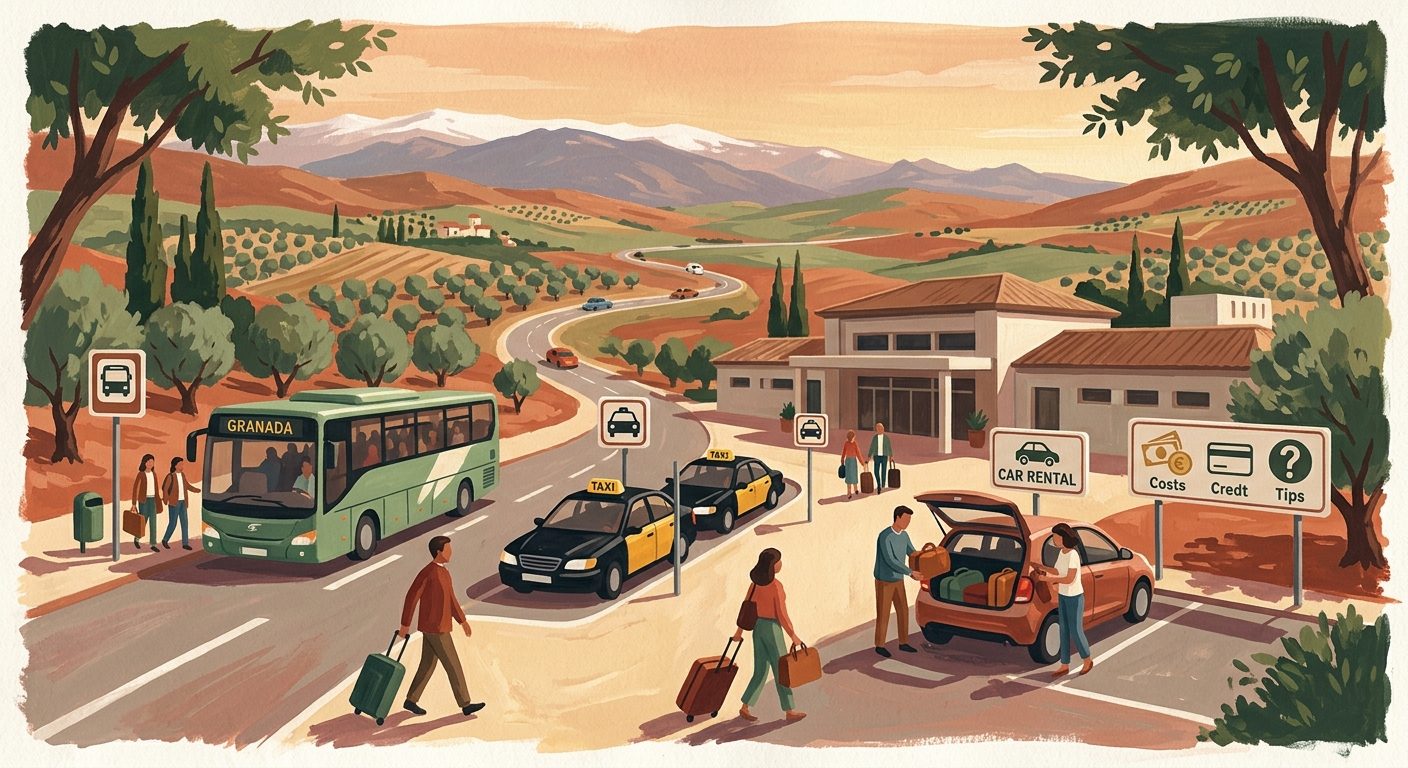
Federico García Lorca Granada-Jaén Airport Guide: Transport, Costs and Tips
A complete practical guide to Granada-Jaén Airport (GRX), covering airport buses, taxi fares, car hire friction, terminal facilities, and the step-by-step reality of arriving and departing.
7 min read

Jerez Airport (XRY): The Complete Guide to the Gateway of Cádiz
A deep-dive practical guide to using Jerez Airport (XRY). Learn the realities of onward transport to Cádiz province, car hire friction, train timetables, and how to avoid the most common arrival mistakes.
8 min read

Understanding Spanish Festival Culture in Andalucía
A deep dive into Andalucían festival culture for residents and visitors. Understand Semana Santa, ferias, local holidays, etiquette, administrative friction and how to survive the local party season.
9 min read

Driving in Andalucía: Rules, Tolls, and Parking Guide
A practical guide to driving in Andalucía, covering road rules, ZBE checks, AP-7 toll choices, parking, roundabouts, breakdown equipment and official sources.
9 min read
Newsletter
More stories from Andalucía
Weekly notes, seasonal picks, and the next guides worth bookmarking.