
Feature · Granada
Beyond the White Caves: The Unseen Struggle of Sacromonte
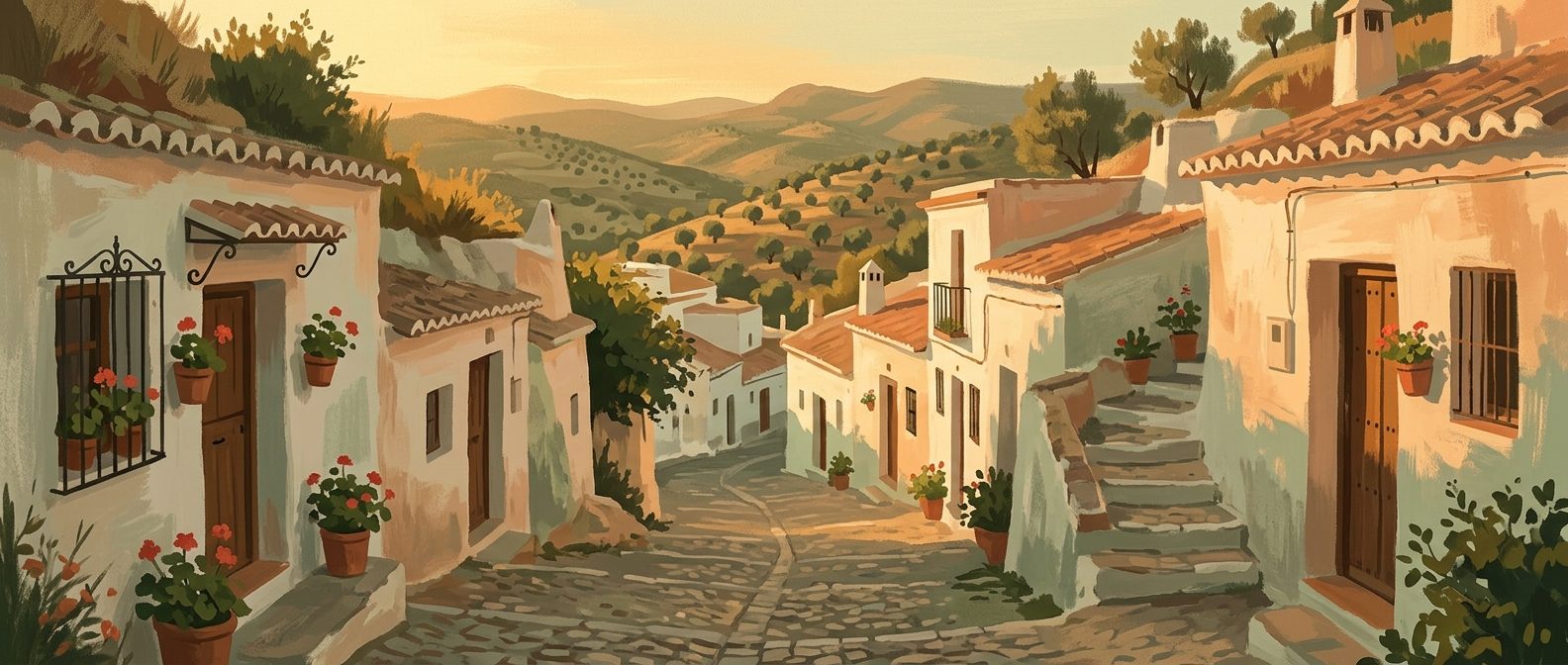
The whitewash on Curro’s fingers is thick as paste, a seasonal ritual of reclaiming a home from the damp appetite of the hillside.
By Dan · Updated 7 June 2026 · 7 min read
Story context
This is a community-sensitive narrative feature about Sacromonte, not a zambra listings page. It deliberately separates the visitor image of cave shows and sunset viewpoints from the lived questions of housing, maintenance, Gitano cultural memory and tourism pressure.
Use the Granada and Sacromonte guide links for practical route planning. Use the official Andalucía, UNESCO and city links for current heritage context, visitor information and civic references before relying on details about access, shows or neighbourhood change.
The whitewash on Curro’s fingers is thick as paste, a seasonal ritual of reclaiming a home from the damp appetite of the hillside. In Sacromonte, the line between a living tradition and a stage set is drawn in sweat and limestone.
Curro does not look like a man living in a postcard. He is seventy-two, with hands like gnarled olive wood and a cigarette that seems to have been burning since the transition to democracy. He stands on a precipitous ledge of the Valparaíso hill, slapping a mixture of lime and water onto the mouth of his cave. Below us, the Darro valley unfolds in a vertigo-inducing drop, and across the ravine, the Alhambra sits in its red-stoned arrogance, watching us. To the thousands of tourists who will shuffle past this spot by noon, Curro is background noise. He is the authentic texture they seek, yet he is entirely invisible to them.
“They think the mountain stays white on its own,” Curro says, wiping a streak of lime from his forehead. “They think these are hotel rooms that grew out of the dirt. They don’t see the damp. They don’t hear the mountain moving at night. A cave isn’t a house; it’s a living thing you have to negotiate with every single day.”
To the average visitor, Sacromonte is a convenient afternoon loop from Granada’s city centre. They walk up the Cuesta del Chapiz, snap a photo of a ceramic plate bolted to a white wall, pay around twenty euros for a forty-minute zambra performance (check current prices with the operator before travelling), and leave believing they have touched the soul of Gitano culture. But the Sacromonte of the brochures, the one of effortless romanticism and constant song, is a fiction. The real Sacromonte is a place of hard-won permanence, a neighbourhood that has survived floods, forced evictions, and now, the slow, suffocating pressure of becoming a theme park version of itself.
The Architecture of Exclusion
The history of these caves is not a story of quaint architectural choice, but one of survival. When the Catholic Monarchs took Granada in 1492, the social fabric of the city was shredded. The Muslims and Jews who were not expelled or converted were pushed to the margins. Alongside them were the Roma, the Gitanos, who had arrived in Spain decades earlier. They found refuge in the soft, sacrificial stone of the Valparaíso hill. They didn’t build houses; they carved space out of the exclusion they were granted.
By the 19th century, the caves had become a symbol of a wild, unbridled Andalucía. Romantic travellers from Northern Europe arrived with their notebooks and charcoal pencils, hungry for the exotic. They found it in the smoke-blackened ceilings and the copper-skinned dancers. This was the birth of the Sacromonte myth: the idea that the Gitano lived in a state of perpetual, tragic passion. It is a myth that the neighbourhood has both leaned into for survival and resented for its reductionism.
The geography of the hill reinforced this isolation. Even today, the paths are narrow, steep, and often confusing to the uninitiated. The caves follow the contours of the rock, not the logic of urban planning. Inside, the temperature remains a constant eighteen degrees Celsius, a natural air conditioning that feels like a miracle in the 40-degree heat of a Granadino July, and a tomb in the dead of January. There are no right angles in a traditional cave house; everything is rounded, organic, and slightly claustrophobic. It is an architecture of intimacy, where every cough or whisper echoes through the limestone veins of the mountain.
The Myth of the Zambra
Walk down the Camino del Sacromonte at eight in the evening and the air is thick with the sound of castanets and the bark of promoters. This is the zambra, a style of flamenco unique to this hill, originally performed at Gitano weddings. In its commercial form, it is a choreographed whirlwind designed to fit the attention span of a tour group. But to understand what the guidebooks miss, you have to look for the gaps between the performances.
“The zambra you see in the caves with the chairs lined up in a row? That’s bread,” says Maria, a former dancer who now runs a small grocery near the Sacromonte Cave Museum. “It’s how we pay the light bill. But it isn't the zambra. The real thing happens when the doors are closed and there are no tickets. It’s a conversation. If there is no one to talk to with the dance, it’s just exercise.”
The zambra was once a ritual of the domestic sphere. The caves were arranged in such a way that the central living space, the sala, was the stage. The audience wasn't a row of strangers with iPhones; it was the aunts, the cousins, and the neighbours. When you remove the family from the cave, the dance changes. It becomes louder, faster, more aggressive. It loses its conversational quality. The tragedy of modern Sacromonte is that the very thing that made it famous, its deep, insular culture, is being hollowed out to make room for the people who want to buy a piece of it.
The New Siege: Gentrification and Ghost Caves
The greatest threat to Sacromonte today isn’t the precariousness of the rock, but the rise of the short-term rental. In the last decade, the demographic of the hill has shifted. Traditional families, whose lineage in these caves stretches back generations, are being replaced by digital nomads and investors. A cave that once housed a family of ten is now an ‘authentic subterranean experience’ listed on global booking platforms for three hundred euros a night.
This gentrification is sanitising the very grit that gave the neighbourhood its character. The smell of woodsmoke and goat is being replaced by the scent of expensive diffusers. The rough, uneven floors are being levelled and polished. “They want the cave, but they don’t want the cave life,” Curro remarks, pointing to a newly renovated entrance further up the path. “They put in glass doors and high-speed internet, but they don’t know how to listen to the mountain. They don’t know that when it rains for three days, you have to watch the ceiling for the first signs of a crack.”
The displacement is cultural as much as it is physical. When the Gitanos are priced out, the communal memory of the hill vanishes. The stories of the 1963 floods, which forced thousands to abandon their caves for the prefab blocks of the northern districts, are no longer passed down over the stone walls. Those who remained after the floods are now the last guardians of a specific, local history. When they go, Sacromonte risks becoming a museum of itself: a beautiful, white-washed shell with no one inside to paint the walls.
The Resilient Shadow
Yet, for all the encroaching commercialism, there is a stubbornness to the hill that refuses to be tamed. Away from the main tourist drag, in the higher reaches of the Barranco de los Negros, the air changes. Here, the caves are less polished. You see laundry hanging from prickly pear cacti and hear the discordant radio of a local fixing a moped. This is where the community huddles, resisting the pull of the city below.
The resilience of Sacromonte is found in these moments of quiet defiance. It is found in the way the residents still gather at the fountain to trade gossip, or how they keep the old pathways clear of debris without being asked. There is a sense of belonging that is tied to the geology of the place. You don't just live in Sacromonte; you are part of the mountain’s weight.
The guidebooks tell you to go for the sunset, and they are right; the sunset over the Alhambra is a violent, beautiful orange that seems to set the Darro on fire. But the real story of Sacromonte happens after the sun has gone down and the tour buses have groaned their way back to the hotels in the centre. It’s the sound of a single guitar being tuned in a back room, not for a crowd, but for the player themselves. It’s the smell of the damp earth and the sight of an old man like Curro, finally sitting down on a plastic chair outside his cave, his hands white with lime, watching the lights of the city flicker on like fallen stars.
The mountain does not care about the tourists. It only cares about the people who are willing to keep it from crumbling. As Curro packs away his brushes, he looks at his work with a tired sort of pride. The wall is brilliant, blindingly white. Tomorrow, the sun will bake it, the wind will dust it, and eventually, the damp will try to reclaim it. But for tonight, the cave is held in place by the will of the man who lives inside it. He isn't part of the scenery; he is the reason the scenery still exists.
Last reviewed: 21 June 2026 · Editorial policy
Related guides
The Spanish Civil War in Andalucía
The Spanish Civil War fractured Andalucía into violently opposed zones of control, turning streets and olive groves into battlegrounds that altered the region forever. The physical remnants and deep emotional scars of those three years remain firmly inscribed upon the landscape and memory of the south.
7 min read
Corpus Christi in Granada: The Definitive Guide
In Granada, Corpus Christi is far more than a solemn religious observance. It is the city's largest annual festival, combining the scent of fresh rosemary crushed underfoot during the sacred Thursday procession with the unapologetic joy of the week-long public feria in Almanjáyar.
10 min read
Sacromonte: The Cave Dwellings and Flamenco Culture of Granada
High above the Albaicín, Sacromonte offers a glimpse into a unique subterranean lifestyle where families have carved homes into the soft rock for centuries.
5 min read
Granada's Enduring Moorish Soul: Beyond the Alhambra
Discover Granada's profound Moorish legacy beyond the Alhambra, delving into the ancient Albaicín quarter, overlooked architecture, and the layered culture that defines the city.
5 min read
Unveiling Granada's Soul: A Journey Through the Albaicín and Sacromonte Quarters
Walk through Granada’s Albaicín and Sacromonte quarters with context on Moorish streets, cave houses, flamenco heritage, viewpoints and practical routes.
7 min read
The Siege of the Real: Inside Sevilla’s Private Universe
Beyond the yellow dust of the Real, Sevilla’s great fair is a labyrinth of closed doors where the city’s true social hierarchy is revealed in the clinking of glasses.
8 min read
More from Granada
Nasrid Granada: The Last Islamic Kingdom of Iberia
Discover how the Nasrid dynasty forged a pragmatic mountain emirate that survived for over two centuries, creating the Alhambra and leaving a lasting architectural legacy.
8 min read
Lorca and the Repression in Granada
The assassination of Spain's most celebrated poet was just one part of a systematic campaign of terror. Today, the ravines of Víznar and Alfacar hold the stories of thousands whose voices were silenced.
7 min read
The Frontier of Granada: Life and War on the Edge of Al-Andalus
For over two centuries, the borderland separating the Christian Crown of Castile from the Nasrid Emirate of Granada was defined by watchful towers and sudden raids. Yet this military frontier was equally a zone of profound cultural exchange, where merchants, captives and diplomats negotiated daily survival in a divided land.
7 min read
The Morisco Revolt of the Alpujarras
The Morisco Revolt of 1568 transformed the mountainous terrain of the Alpujarras into the theatre of a brutal war. Driven to rebellion by laws erasing their culture, the descendants of Granada's Muslim population fought a desperate campaign against the Spanish Crown.
8 min read
The Fall of Granada, 1492
On the second of January 1492, the keys to the Alhambra were handed over to Ferdinand and Isabella, bringing a close to almost eight centuries of Muslim rule in the Iberian Peninsula. The capitulation of Granada reshaped the political and religious landscape of Europe forever, ending a long war of attrition.
8 min read
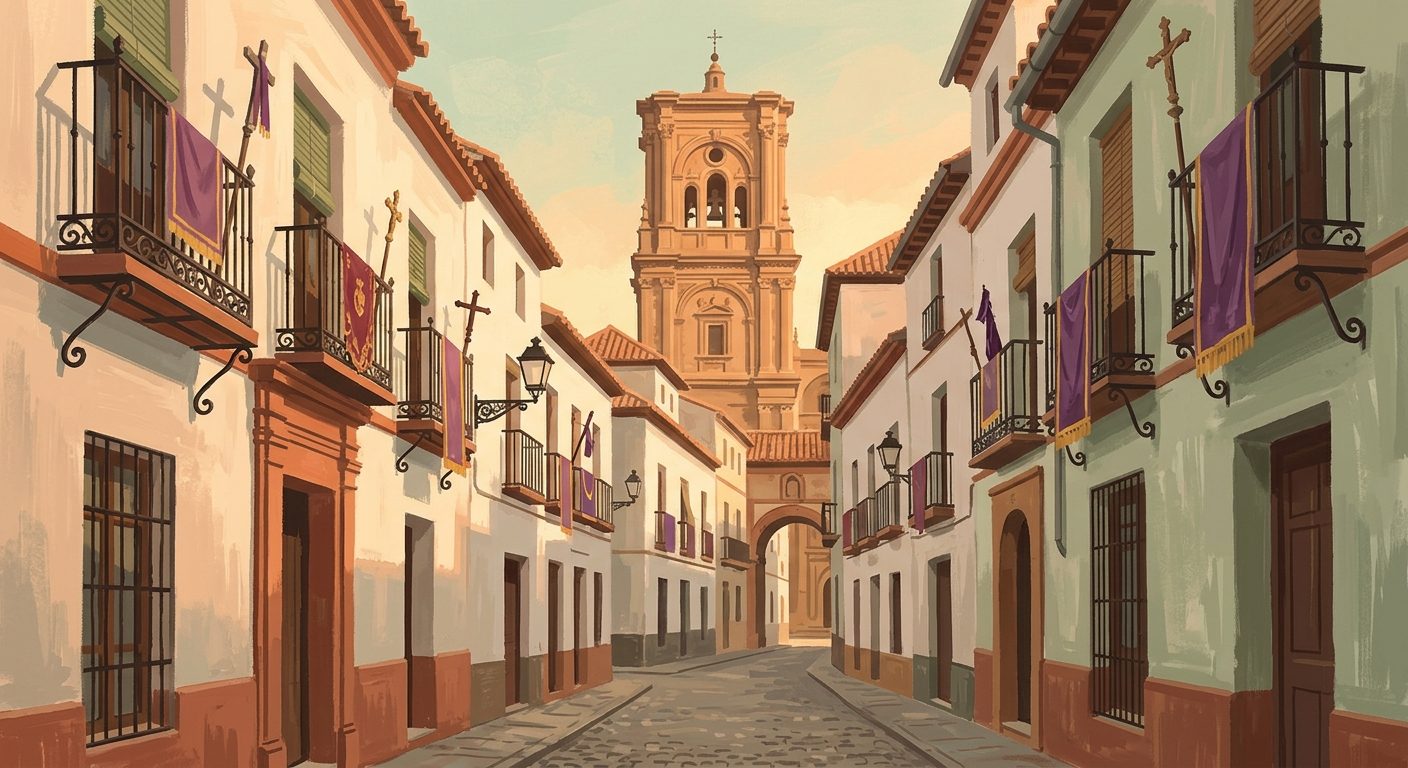
Semana Santa in Granada: A Complete Visitor Guide
Semana Santa in Granada swaps broad avenues for narrow Moorish streets and steep hillsides. Watching an illuminated wooden float emerge from the grounds of the Alhambra or ascend into the caves of Sacromonte offers a profound emotional experience that feels intimately tied to the landscape itself.
8 min read
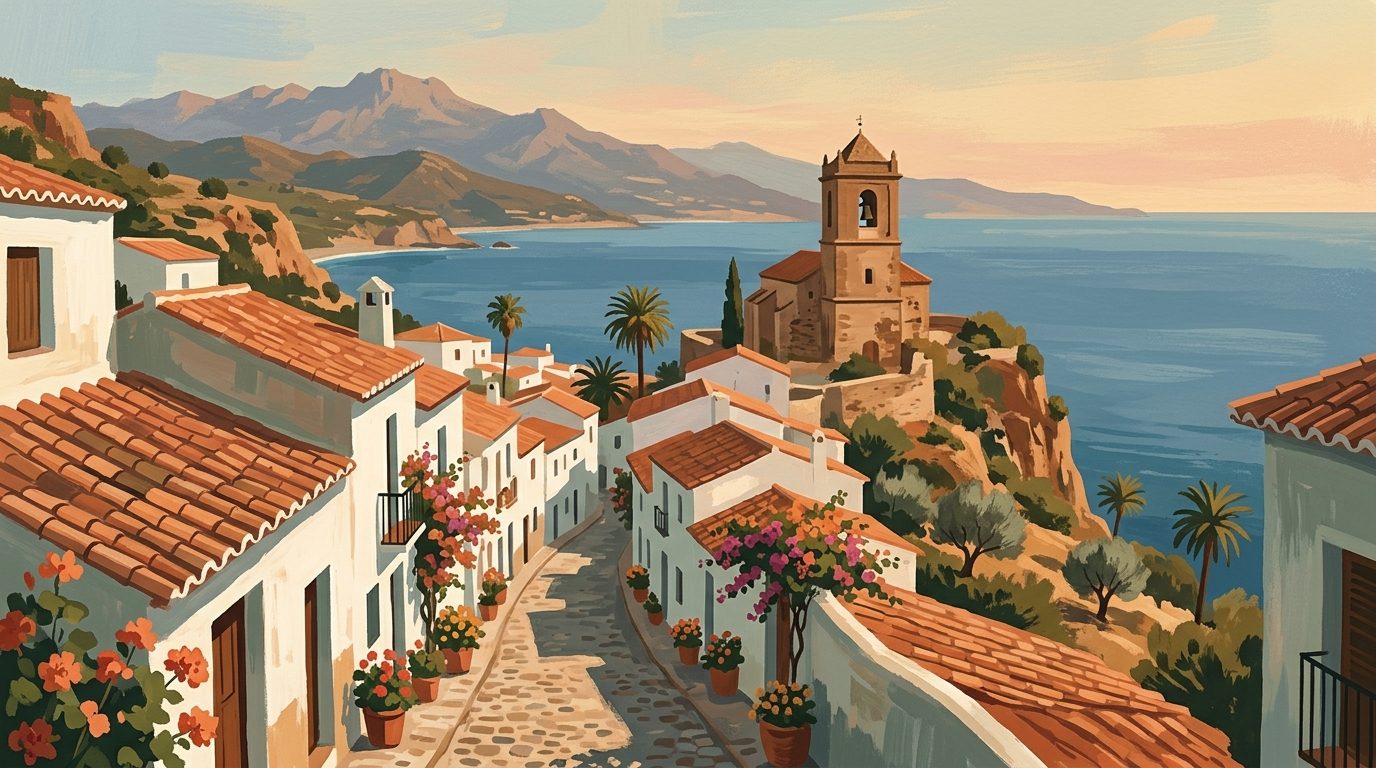
Costa Tropical: The Complete Guide to Granada's Subtropical Coast
Wedged between the foothills of the Sierra Nevada and the Mediterranean Sea, the Costa Tropical is defined by dramatic cliffs, sheltered pebble coves and a unique subtropical microclimate. It offers a quieter, more agricultural alternative to its heavily developed neighbours.
9 min read
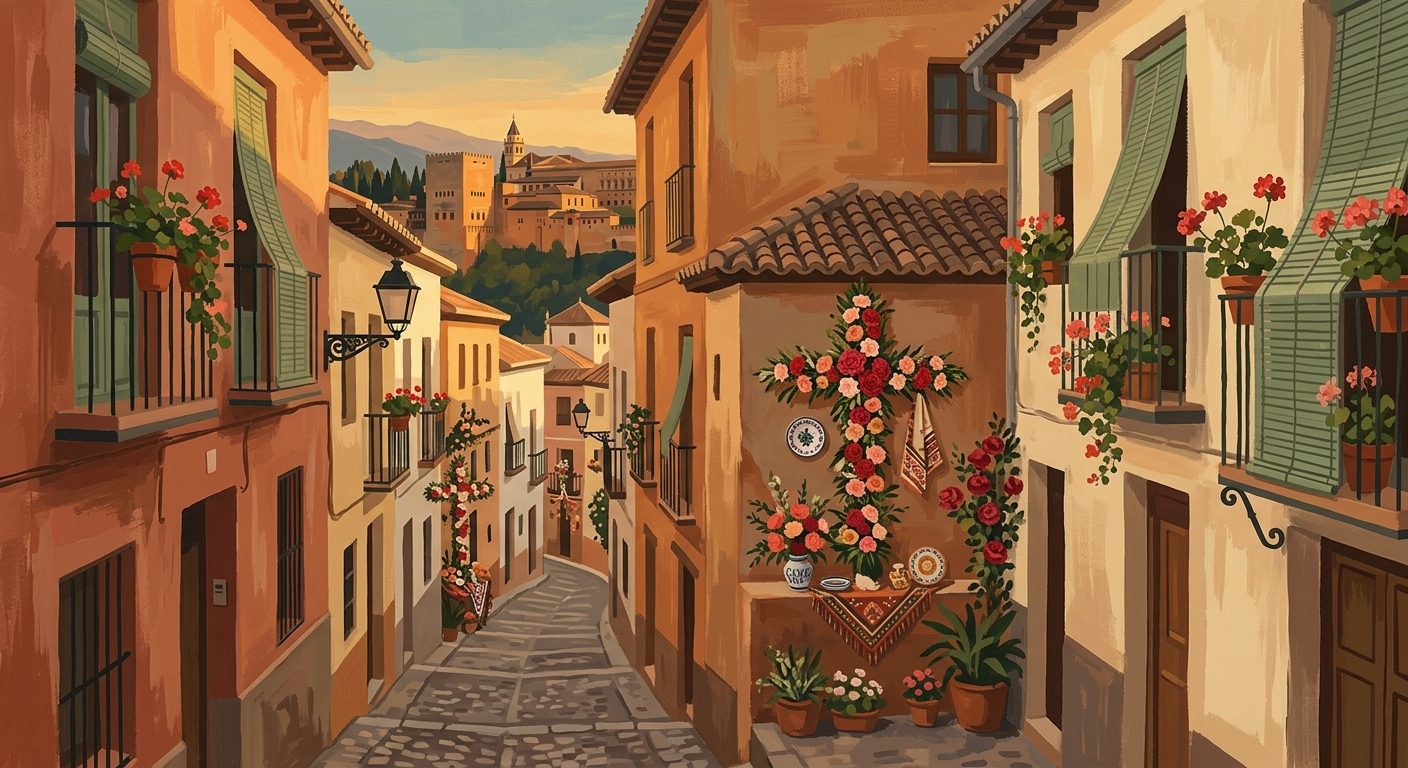
Cruces de Mayo in Granada: A Complete Guide
Discover how Granada transforms during the Cruces de Mayo festival. We detail where to find the most spectacular floral crosses, the local traditions to observe, and how to navigate the celebrations.
9 min read
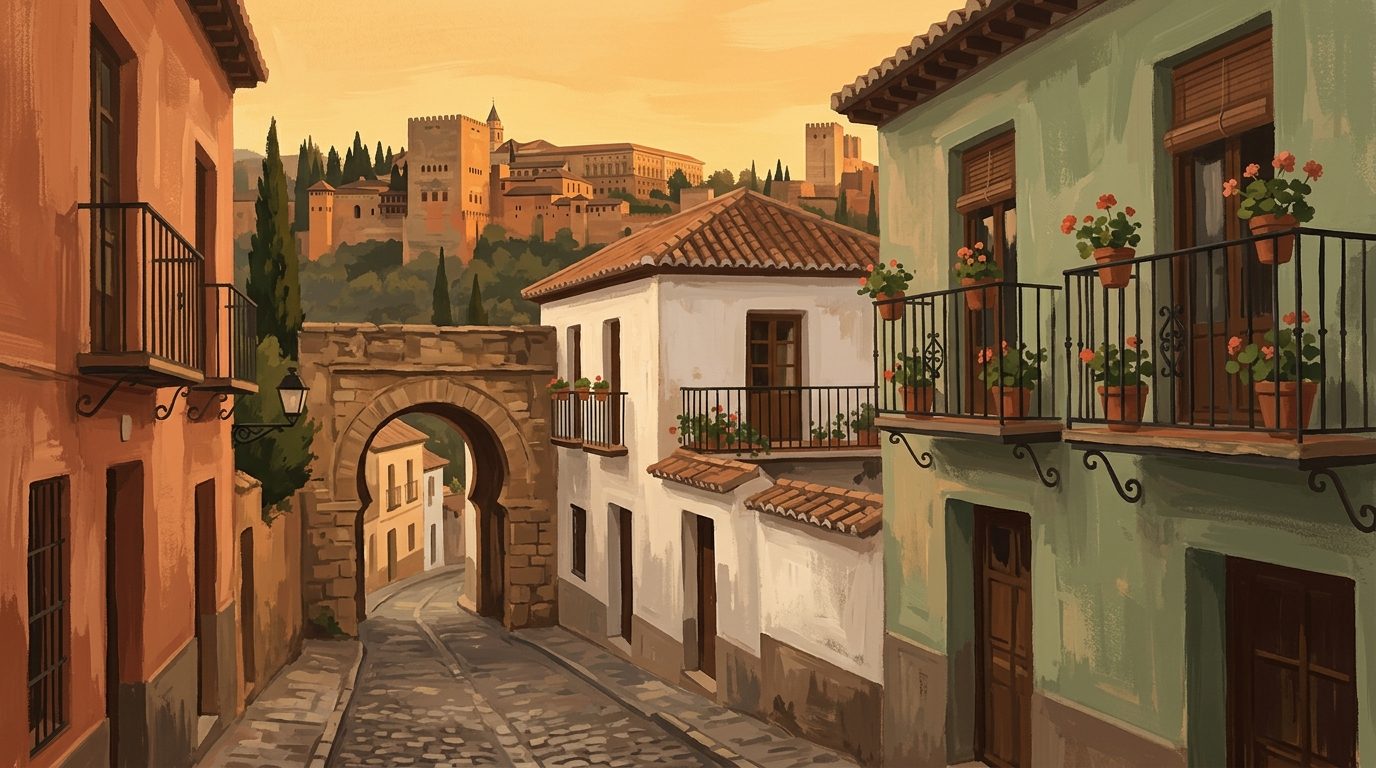
The Resistance of the Plate: Why Granada Refuses to Sell Its Soul
In a world of monetised moments and rising margins, Granada holds fast to a radical social contract: the gift of a plate with every glass.
7 min read
Newsletter
More stories from Andalucía
Weekly notes, seasonal picks, and the next guides worth bookmarking.