
Feature · Málaga
Semana Santa in Malaga: The Complete Guide
Experience the immense tronos, military anthems and communal spirit that define Holy Week in Malaga.
By Dan · Updated 12 May 2026 · 9 min read
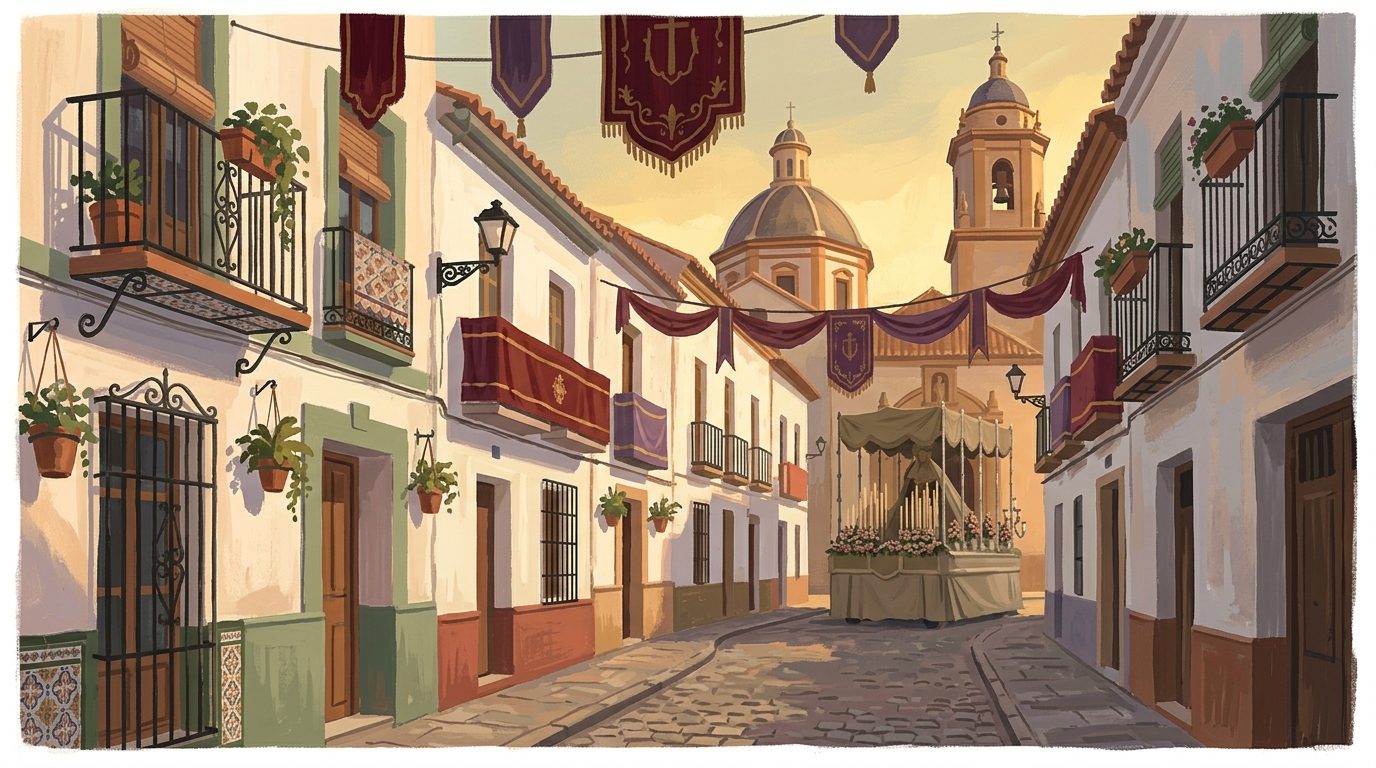
While Sevilla observes Holy Week with solemn silence and hidden bearers, Malaga carries its colossal tronos openly upon the shoulders of hundreds of men. It is a spectacle of immense scale, military precision and unapologetic joy that sets this coastal city apart from the rest of Andalucía.
Malaga experiences Semana Santa differently from anywhere else in Andalucía. If you arrive expecting the hushed, solitary mourning often associated with Holy Week, the sheer scale and noise of the local processions will come as a shock. Here, the floats are not called pasos but tronos (thrones). They are gargantuan structures weighing several tonnes, requiring up to two hundred and fifty hombres de trono to carry them. Crucially, these men carry the poles on their shoulders outside the float, rather than hidden beneath a velvet curtain, creating a visible sea of humanity moving in unison.
The atmosphere is remarkably distinct. It is deeply religious, yet it is also a massive civic celebration. Malaga embraces a lighter, more extroverted approach to its faith. You will hear applause, spontaneous flamenco verses known as saetas sung from balconies, and the roaring anthems of military regiments. The Spanish Legion plays a central role here, marching alongside the statues while singing their unofficial anthem, El Novio de la Muerte.
Understanding this dynamic is essential for any visitor. The city centre becomes an enormous open-air theatre for eight days, with hundreds of thousands of locals filling the streets. It is not merely a spectator event. Families reserve their standing spots hours in advance, armed with folding chairs and sunflower seeds. To experience it properly, you must abandon any rigid schedule and allow the slow, rhythmic sway of the tronos to dictate your evening.
What to expect
Holy Week in Malaga is defined by its staggering proportions. The tronos are so large that many brotherhoods have had to construct separate guild houses just to store them, as they cannot fit through the doors of the historic parish churches. When you watch a procession approach down a narrow street, it feels less like a religious artefact passing by and more like a golden ship navigating a tight canal.
The emotional tone shifts dramatically depending on the day and the specific brotherhood. Some moments are incredibly solemn, such as the procession of Servitas on Good Friday, which moves through the city centre in complete darkness with the streetlights turned off. Other moments are intensely patriotic and loud, particularly when the Spanish Legion or the Regulars (the Spanish Army infantry from Melilla) accompany the floats. The smell of burning incense is omnipresent, mixed with the scent of orange blossom and melting wax from thousands of candles.
Expect massive crowds. The streets are packed shoulder to shoulder, and crossing the official route is strictly controlled by local police. You will experience long periods of waiting, followed by the spine-tingling moment when the rhythmic strike of the foreman bell signals the throne to lift. The crowd falls silent, the band strikes up a dramatic march, and the massive structure begins its swaying, forward motion.
When it happens
Semana Santa takes place in late March or April, beginning on Palm Sunday and concluding on Easter Sunday. The dates change annually according to the lunar calendar, with the next event running from 21 to 28 March 2027. The city transforms entirely during these eight days, with the most intense activity occurring between Holy Thursday and Good Friday.
Processions begin in the late afternoon and often continue well into the early hours of the morning. It is completely normal for a brotherhood to return to its temple at three or four in the morning. Each day has its own character. Palm Sunday is bright and family-oriented, filled with children carrying palm fronds. Monday introduces the first of the massive tronos, including the famous El Cautivo, known locally as the Lord of Malaga, whose flowing white tunic makes him appear to walk as the throne sways. Tuesday sees the procession of La Novia de Málaga, the Virgin of Rocío, who is dressed entirely in white. Wednesday is famous for the brotherhood of El Rico, which exercises a centuries-old royal privilege to pardon a local prisoner in the main square. Thursday brings the landing of the Spanish Legion at the port, while Friday is dedicated to the sombre funeral processions.
The processions
To navigate the week, you need to understand the structure of the processions. Every brotherhood (cofradía) starts at its own church or guild house and navigates towards the official route (recorrido oficial), a mandatory path that all brotherhoods must complete before returning home.
The official route in Malaga begins in the Plaza de la Constitución, travels down the full length of Calle Larios, turns onto the wide Calle Martínez, moves along the Alameda Principal, and finishes at the Molina Lario street near the Cathedral. Some brotherhoods enter the Cathedral to perform a station of penance, while others pass by it.
Key processions require advance planning. If you want to see the Spanish Legion disembark at the port of Malaga on Holy Thursday morning, you must arrive by nine o'clock. They march to the Plaza Fray Alonso de Santo Tomás to hoist the figure of the Cristo de la Buena Muerte. This is one of the most famous events in the Andalucían calendar, and the plaza fills up hours beforehand. On Monday, following El Cautivo through the Trinidad neighbourhood offers a profound look at local devotion, as thousands of residents walk behind the throne in silent penance. On Wednesday, the act of El Rico pardoning the prisoner takes place in the Plaza del Obispo, requiring early arrival to secure a vantage point.
Where to watch
There are two distinct ways to experience the processions: paying for a seat on the official route or standing in the streets.
The official route is lined with tiered seating and private boxes. These seats are rented out by the Agrupación de Cofradías for the entire week and are usually passed down through local families. Finding a single-day ticket is incredibly difficult and often requires navigating local resale boards. However, standing on the streets is the traditional, and arguably better, way to experience the event.
The Tribuna de los Pobres (The Tribune of the Poor) is a famous flight of steps at the end of Calle Carretería. It earned its name because it provides a natural amphitheatre for those who cannot afford official seats. The atmosphere here is electric, with locals cheering and applauding as the tronos execute difficult turns.
For a more intimate experience, wait near the start or end of a brotherhood's journey. Narrow streets like Calle Casapalma or Calle San Agustín offer spectacular, albeit claustrophobic, views of the tronos squeezing past balconies. If you want to see the floats in all their grandeur, wait near the Cathedral or along the Paseo del Parque, where the wide avenues allow the marching bands to spread out and play with full force.
What to wear and cultural sensitivities
Semana Santa is a deeply respected religious event. While it has elements of a street festival, locals treat it with immense reverence. Your clothing should reflect this respect.
Beachwear, shorts, flip-flops, and overly casual attire are entirely inappropriate. On Holy Thursday and Good Friday, many locals dress in mourning. Men wear dark suits and ties, and women wear dark dresses, sometimes accompanied by the traditional black lace mantilla. As a visitor, you are not expected to wear mourning attire, but smart casual clothing is required. Opt for trousers, collared shirts, and comfortable, enclosed walking shoes. You will be standing for hours on cobbled streets, so high heels are ill-advised.
Do not cross the procession line. It is highly disrespectful to break the ranks of the penitents (nazarenos) walking with candles. If you need to cross a street, look for designated crossing points managed by the police or wait until the procession has completely passed.
Photography is permitted, but avoid using flash, especially when photographing the religious figures or the penitents. Do not walk backwards in front of a throne to take photos, as you will obstruct the foremen who need a clear line of sight to guide the bearers. Keep your voice down when a procession passes, particularly during the silent processions on Good Friday.
Where to eat and drink
Dining during Holy Week requires patience and flexibility. Most restaurants in the historic centre do not take reservations during the peak days, or they offer limited, set menus.
Your best strategy is to eat outside the traditional Spanish hours. Have lunch at midday or early afternoon, and eat dinner very late, perhaps after midnight when the crowds thin slightly. Tapas bars on the periphery of the official route are your most reliable options.
Las Merchanas in the city centre is a famous cofrade tavern, heavily decorated with Semana Santa memorabilia. It is intensely busy but serves excellent traditional tapas like croquettes and small sandwiches (montaditos). For a sit-down meal, head east of the centre to the El Palo district, where traditional restaurants like El Pimpi Florida (not to be confused with the famous Bodega Bar El Pimpi near the Alcazaba) offer excellent seafood and local wine.
Street food is also a staple of the week. You will find carts selling toasted almonds, candy floss, and roasted jacket potatoes. Churros with hot chocolate are the traditional late-night recovery food. Casa Aranda, tucked in a narrow alley near the Atarazanas market, is the premier institution for churros, but expect a long queue.
Where to stay and booking advice
Accommodation for Holy Week books up to a year in advance. If you wish to stay in the historic centre, you must secure your hotel or apartment by September or October of the preceding year.
Staying within the historic centre (Centro Histórico) means you are quite literally in the middle of the action. Be warned: this comes with constant noise, massive crowds outside your door, and the inability to use taxis to reach your accommodation. If a procession is passing your street, you may not be able to leave or enter your building for an hour.
For a more manageable experience, consider staying in the Soho district or the Malagueta neighbourhood. Soho is just south of the Alameda Principal, offering easy access to the official route but serving as a quiet retreat when you need a break. La Malagueta is a short walk away along the port, providing sea views and excellent seafood restaurants, entirely removed from the procession routes.
Expect premium pricing across all accommodation types. Budget hostels and luxury hotels alike charge their highest rates of the year during these eight days.
Practical notes
The logistical reality of Malaga during Holy Week is that the historic centre is completely sealed off to vehicle traffic. If you are arriving by car, do not attempt to drive into the centre. Park in the large underground facilities on the outskirts, such as the SMASSA parking near the Rosaleda stadium or the public parking at the Maria Zambrano train station, and walk in.
Public transport is heavily modified. City buses that normally cross the Alameda Principal are rerouted to the Paseo de los Curas or the Avenida de Andalucía. The metro system is highly efficient and often extends its operating hours until two or three in the morning during the peak days of the festival, making it the best way to travel from the western districts into the centre. The primary metro stop for the centre is Atarazanas.
Finally, download the official application provided by the Agrupación de Cofradías. It includes live GPS tracking of every throne, allowing you to see exactly where a procession is delayed and helping you navigate the labyrinth of closed streets to find your preferred viewing spot.
Last reviewed: 21 June 2026 · Editorial policy
Related guides
The Siege of the Real: Inside Sevilla’s Private Universe
Beyond the yellow dust of the Real, Sevilla’s great fair is a labyrinth of closed doors where the city’s true social hierarchy is revealed in the clinking of glasses.
8 min read
The Granite and the Geranium: The Fragile Geometry of Córdoba’s May
For two weeks in May, Córdoba’s residents throw open the doors of their private courtyards, turning a city of stone into a living, breathing laboratory of botanical obsession.
6 min read
The Sound of Silence: Inside Semana Santa
The drumbeat hits the sternum first, a rhythmic thud that vibrates through the marrow before the ear registers the sound. Then comes the silence: a heavy, suffocating quiet.
7 min read
Corpus Christi in Granada: The Definitive Guide
In Granada, Corpus Christi is far more than a solemn religious observance. It is the city's largest annual festival, combining the scent of fresh rosemary crushed underfoot during the sacred Thursday procession with the unapologetic joy of the week-long public feria in Almanjáyar.
10 min read
Semana Santa in Sevilla: A First-Timer's Guide
Semana Santa in Sevilla is an intense expression of faith, art and civic identity. Unlike other cities, the spectacular wooden floats are carried from below by hidden costaleros, moving to the slow beat of mourning marches or absolute silence.
8 min read
Semana Santa in Granada: A Complete Visitor Guide
Semana Santa in Granada swaps broad avenues for narrow Moorish streets and steep hillsides. Watching an illuminated wooden float emerge from the grounds of the Alhambra or ascend into the caves of Sacromonte offers a profound emotional experience that feels intimately tied to the landscape itself.
8 min read
More from Málaga
The Definitive Guide to Feria de Málaga
Unlike famously private celebrations elsewhere, the Feria de Málaga is built on absolute inclusion. Virtually every marquee at the fairground opens its doors to anyone wanting to celebrate.
9 min read
The Complete Guide to the Costa del Sol
Spanning 150 kilometres of Mediterranean shoreline, the Costa del Sol is the most developed coastal strip in Spain. Discover where to find quiet coves, excellent seafood and the right resort for your style of travel.
9 min read
The Concrete Shore: A Post-Mortem of the Costa del Sol
The shadow of the Pez Espada hotel stretches longer than the memories of the men who once pulled nets from this sand. It is a coast that traded its silence for a fortune, and now spends its days trying to remember the shape of the wind.
7 min read
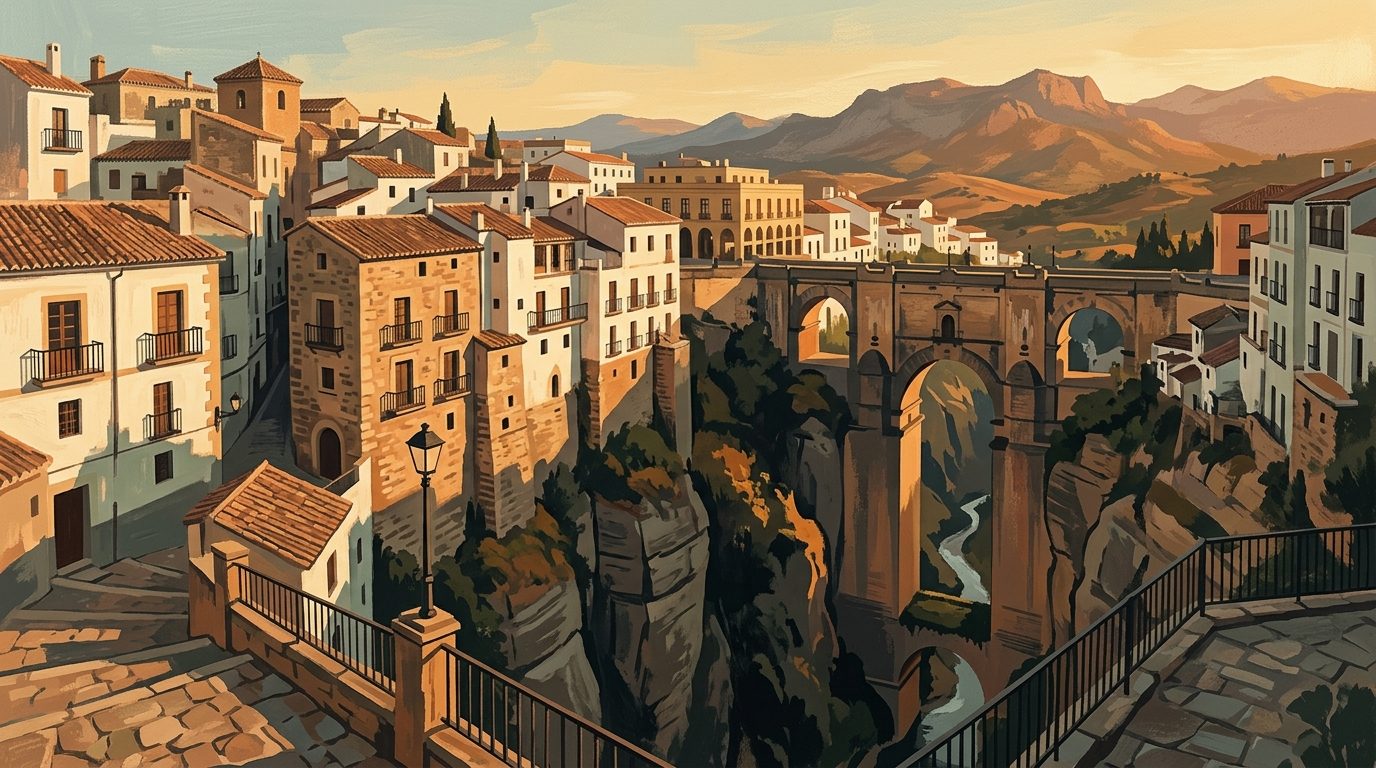
The Vertical City: Watching the Shadows Lengthen in Ronda
Beyond the crowded lip of the Tajo gorge, Ronda reveals itself as a city of quiet alcoves, blood-stained history, and a gravity that pulls at the soul.
7 min read
The Museum and the Metropolis: Málaga’s Radical Reinvention
Once a gritty industrial port and a mere transit hub for the Costa del Sol, Málaga has spent two decades undergoing a radical cultural transformation that has turned it into a global art capital.
7 min read
Newsletter
More stories from Andalucía
Weekly notes, seasonal picks, and the next guides worth bookmarking.