
Feature · Málaga
The Vertical City: Watching the Shadows Lengthen in Ronda
Beyond the crowded lip of the Tajo gorge, Ronda reveals itself as a city of quiet alcoves, blood-stained history, and a gravity that pulls at the soul.
By Dan · Updated 16 July 2026 · 7 min read
Story context
This is a narrative feature, not a breaking-news report or a legal/practical guide. It is kept on the site because it adds local texture and reading value alongside the more practical Andalucía 365 guides.
Use the links below for planning details, current access, places to stay, transport or food guidance connected with the story.
The Tajo does not merely divide the land; it demands a physical response from the blood. To stand on its lip is to understand that Ronda was built not just to defend a ridge, but to command the air itself.
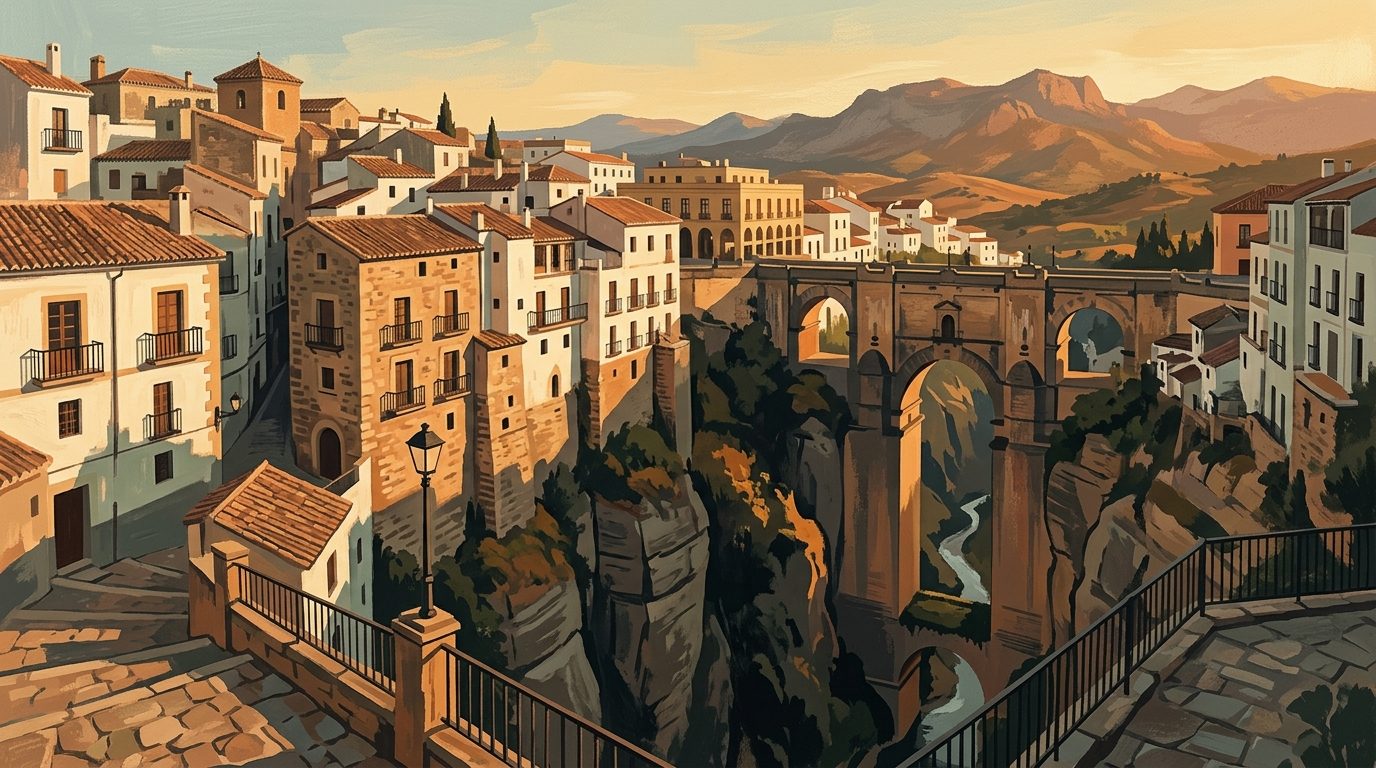
By four o'clock in the afternoon, the light in Ronda begins to thicken, turning the limestone of the Puente Nuevo from a pale bone-grey to a warm, dusty ochre. Most of the coaches have already begun their winding descent back towards the Costa del Sol, carrying away the day-trippers who came for the three-minute walk across the bridge and the requisite selfie against the abyss. As their engines fade into the distance, a different city emerges. It starts with the sound of the swifts, thousands of them, screaming in high-pitched arcs as they dive into the 120-metre chasm, their wings slicing through the updrafts of the Guadalevín river.
I stood by the iron railings of the Alameda del Tajo, watching an elderly man in a flat cap lean precariously over the edge. He wasn't looking at the view; he was watching a hawk circling a ledge halfway down the cliff. "She has a nest there every year," he remarked, not looking at me, his voice gravelly with the cadence of the Serranía. "The tourists think the bridge is the miracle, but the miracle is that the rock hasn't swallowed us all yet." He tapped his cane against the pavement, a hollow sound that seemed to echo the emptiness beneath our feet, and shuffled off towards the Calle Jerez. In Ronda, gravity is not a scientific law; it is a local character you live with every day.
The Gravity of the Chasm
The Puente Nuevo is a misnomer. Completed in 1793 after thirty-four years of precarious labour, it is 'new' only in comparison to the Roman and Moorish structures that preceded it. It is a terrifying achievement of masonry, a wall of stone that plugs the gap between the old Moorish district, La Ciudad, and the 'newer' Mercadillo. Its architect, José Martín de Aldehuela, is said to have died by falling from the bridge: some say by accident, others say he threw himself off because he knew he could never build anything more beautiful. Whether the legend is true matters less than the fact that people believe it; Ronda is a place where the dramatic must always be coupled with the tragic.
Walking across the span, the wind whips up from the valley floor, carrying the scent of damp earth and wild oleander. There is a small window above the central arch, once a prison, later a bar, and during the darkest days of the Spanish Civil War, a place from which prisoners were allegedly cast into the void. This is the Ronda Hemingway wrote about in For Whom the Bell Tolls, a town where the beauty of the landscape is inseparable from the capacity for violence. To walk these streets is to tread on layers of memory that the whitewash can never quite mask. The stones here are heavy with the weight of what they have witnessed.
Silence in La Ciudad
Crossing the bridge into La Ciudad is like stepping into a vacuum. The noise of the shops and the chatter of the Plaza de España evaporate. Here, the streets narrow until they are barely wider than a donkey’s reach, and the houses turn their backs to the road, presenting blind, white facades and heavy wooden doors studded with iron. This was the heart of the Moorish medina, and it retains a North African sense of privacy and shade.
I followed the Calle Santo Domingo, where the Palacio de Mondragón sits perched on the very edge of the cliff. Inside, the water gardens are small and precise, the trickle of fountains providing a rhythmic counterpoint to the silence. In the mudéjar courtyards, the tiles are worn smooth by centuries of footsteps. There is no hurry here. To walk through La Ciudad is to succumb to a slower pace, dictated by the uneven cobbles and the sudden, striking glimpses of the Sierra de Grazalema through gaps in the masonry. It is a place of shadows and secrets, where the air feels several degrees cooler and the modern world feels like a distant, frantic rumour.
Shadows of the Plaza de Toros
If the Tajo is Ronda’s soul, the Plaza de Toros is its heart. Built in 1785, it is one of the oldest and most beautiful bullrings in Spain, a circle of golden stone held up by double tiers of Tuscan columns. It feels more like a cathedral than an arena. This is the cradle of the Ronda style of bullfighting, pioneered by the Romero family and later immortalised by Antonio Ordóñez. Here, the spectacle was stripped of its flamboyance and turned into a sombre, stoic art form: the toreo a pie, or bullfighting on foot.
Standing in the centre of the empty ring, the silence is physical. You can feel the focus of the five thousand seats pressing down on the sand. Outside, the statue of a fighting bull stands in the plaza, its bronze hide polished bright by the hands of thousands of passers-by. For the people of Ronda, the bullring is not a museum; it is a repository of identity. Even those who find the spectacle abhorrent cannot deny its influence on the town’s psyche. It has attracted the myth-makers (Hemingway, Orson Welles, Rilke), all of whom came looking for something primal and found it in this circle of sand. Welles loved the place so much his ashes are buried at the nearby estate of El Recreo de San Cayetano; he came for the drama but stayed for the stillness.
The Descent into the Deep
To truly understand the scale of the city, one must leave it. I took the path that winds down from the Plaza de María Auxiliadora, a steep, dusty track that leads into the valley of the Guadalevín. As you descend, the perspective shifts. The Puente Nuevo, which seemed so solid from above, now looks like a delicate lace ribbon pinned between two massive curtains of rock. The houses of the old town appear to grow directly out of the cliffside, their foundations indistinguishable from the limestone spurs.
Down here, by the Camino de los Molinos, the roar of the waterfall is constant. This is the kingdom of the almond trees and the ruins of the old flour mills that once gave the river its purpose. The heat of the day lingers in the red earth, and the smell of dry grass and goat musk fills the air. Looking up, the city seems impossible. How could anyone have thought to build a life on the edge of such a fracture? Yet, there it sits, defiant and serene, a monument to the human desire to inhabit the uninhabitable.
The Cost of the View
There is, however, a tension that hums beneath the surface of Ronda. The very geography that protected it for centuries (the vertical walls that kept the Catholic monarchs at bay until 1485) now makes it vulnerable in a different way. The city is a victim of its own silhouette. In the heights of summer, the narrow arteries of the Mercadillo can feel choked, the local life pushed to the peripheries to make room for the commerce of the spectacle. You see it in the eyes of the shopkeepers on the Carrera Espinel, a weary patience as they navigate the same questions in five different languages.
The contradiction lies in the fact that Ronda is a working mountain town that must also function as a stage set. When a local woman hangs her laundry over a balcony that overlooks a thousand-year-old Moorish wall, she isn't doing it for the cameras; she’s doing it because the sun is hot and the wind is high. There is a quiet struggle to maintain the domesticity of a place that the rest of the world treats as an icon. The true Ronda exists in the moments of friction: the sound of a television blaring through an open window in a 13th-century alleyway, or the sight of a teenager kicking a football against a wall that once guarded the gates of the city.
As the sun finally dipped behind the peaks of the Sierra, I climbed back up towards the old town. The air had turned sharp, the mountain evening settling in with a sudden, refreshing chill. I stopped at a small tavern near the Church of Santa María la Mayor, where the only sound was the clinking of glasses and the low murmur of men discussing the olive harvest. I ordered a glass of the local Serranía wine, dark and heavy with the taste of the soil.
A cat stretched itself across a stone step, perfectly indifferent to the thousand-foot drop just a few hundred yards away. In that moment, the bridge and the bullring felt less like monuments and more like furniture: the familiar, worn-out pieces of a home that has survived too much history to be bothered by it anymore. I looked out towards the horizon, where the lights of distant farmhouses began to flicker like fallen stars in the valley. Ronda doesn't ask you to look at it; it simply waits for you to realise that you cannot look away. The city doesn't just stop you in your tracks; it holds you there, suspended between the rock and the sky, until you forget which way is down.
Last reviewed: 21 June 2026 · Editorial policy
Related guides
One Week in Andalucía Itinerary: The Classic Triangle & Ronda
Seven days in southern Spain is just enough time to trace the defining Moorish capitals and mountain roads of Andalucía. This itinerary strips away the coastal sprawl to focus entirely on the essential cities of Málaga, Granada, Córdoba, and Sevilla, returning via the dramatic mountain gorge of Ronda.
9 min read
A Guide to Segura de la Sierra: The Defensive Heart of the Jaén Highlands
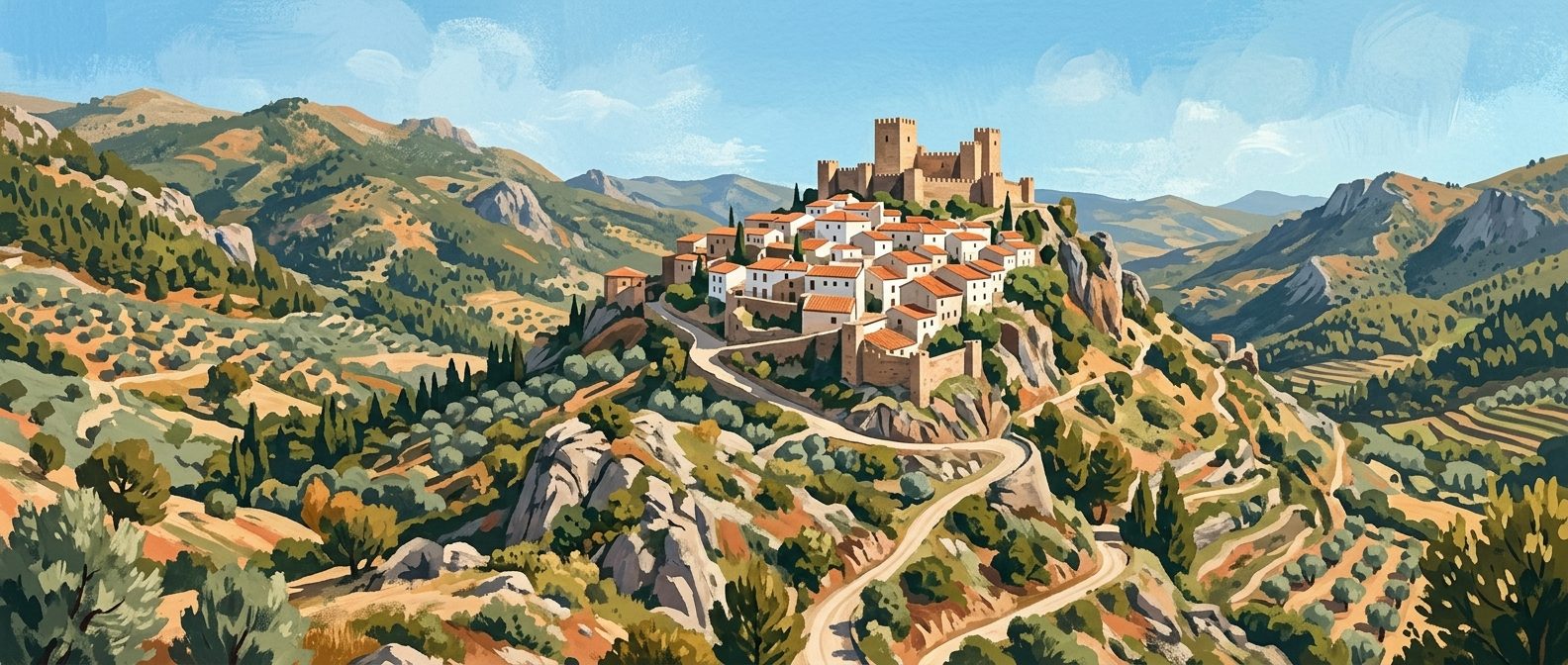
Perched on a jagged peak at 1,145 metres, Segura de la Sierra offers some of the most expansive views in Jaén. This fortified village preserves its medieval layout and remains the historical heart of the Sierra de Segura.
5 min read
Exploring Almonaster la Real: A Time Capsule in the Huelva Mountains
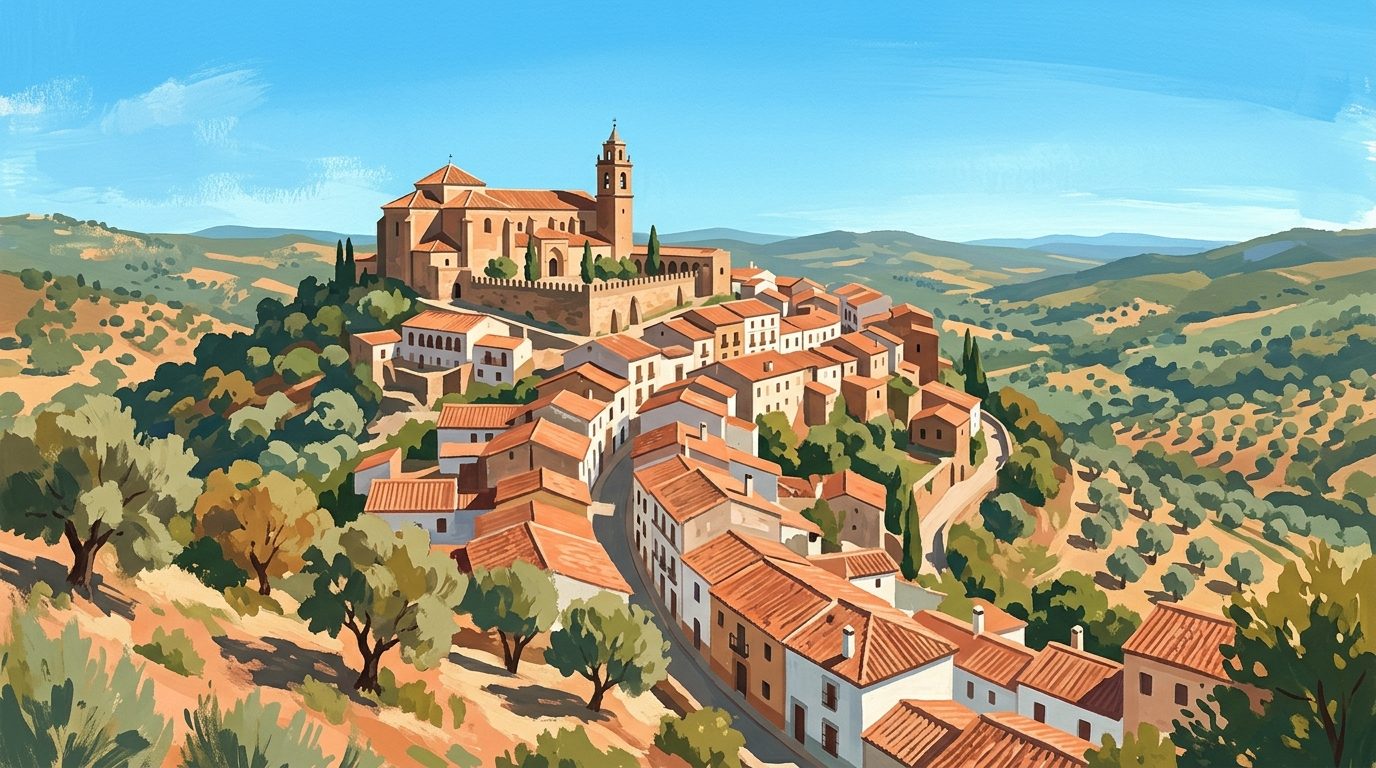
Standing atop a rugged ridge in the Sierra de Aracena, Almonaster la Real holds one of Spain’s rarest architectural survivors: a tenth-century rural mosque. This quiet village invites you to step through centuries of history, from Roman foundations to the distinctive Gothic-Manueline flourishes of its parish church.
6 min read
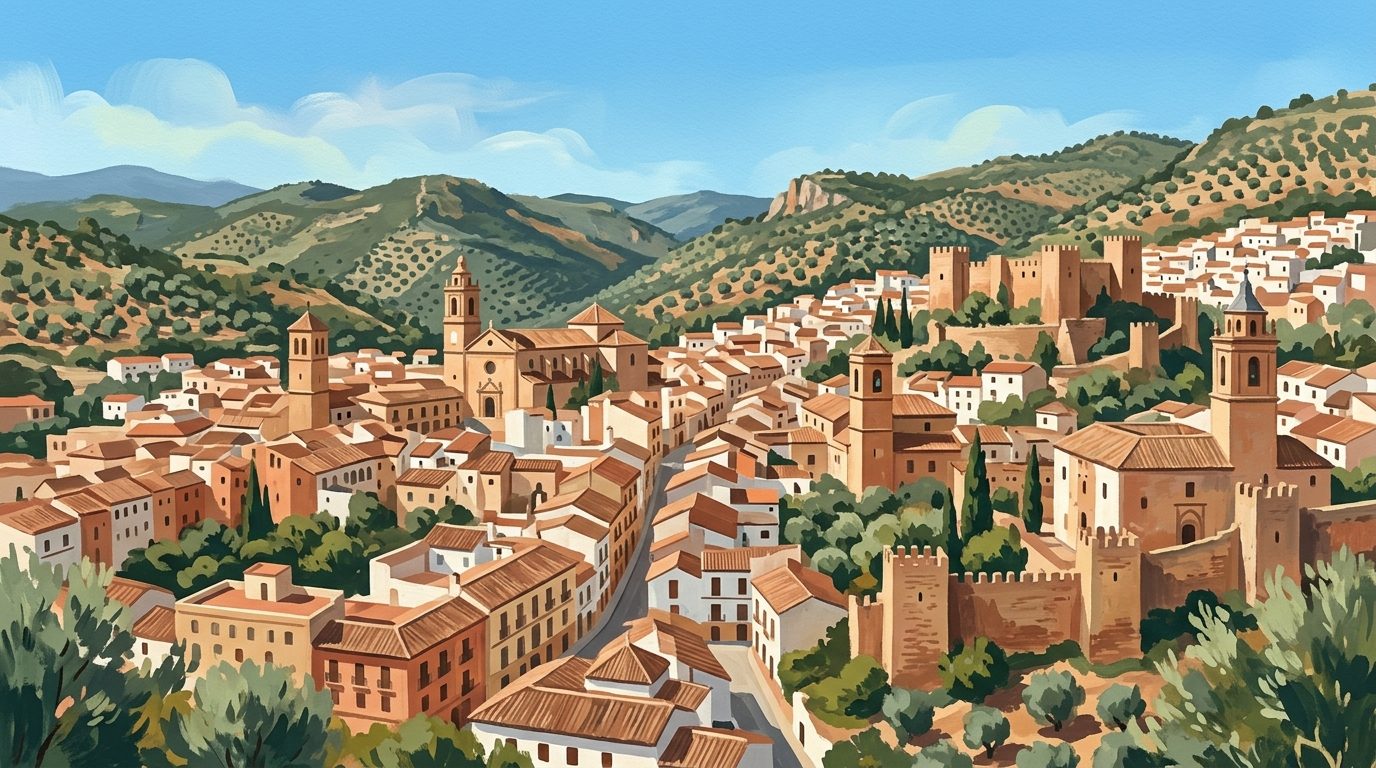
A Guide to Cabra: Red Marble and Mountain Views
Discover Cabra, the heart of the Subbética, famous for its red marble 'Baroque Mosque' and stunning mountain viewpoints.
6 min read
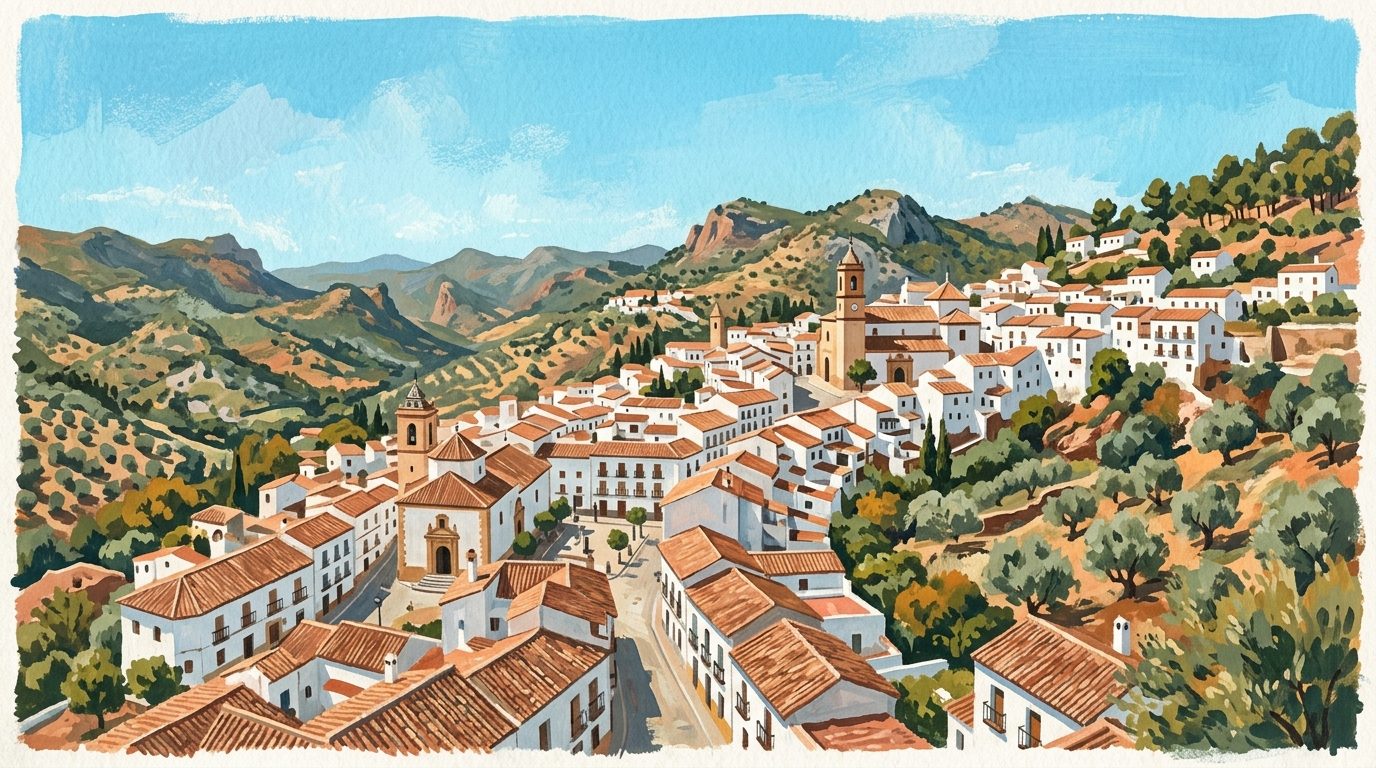
A Guide to Cazalla de la Sierra: Anisette, Wilderness, and Renaissance Grandeur
Discover Cazalla de la Sierra, the historic anisette capital of the Sierra Norte de Sevilla, where Renaissance architecture meets rugged mountain trails.
6 min read
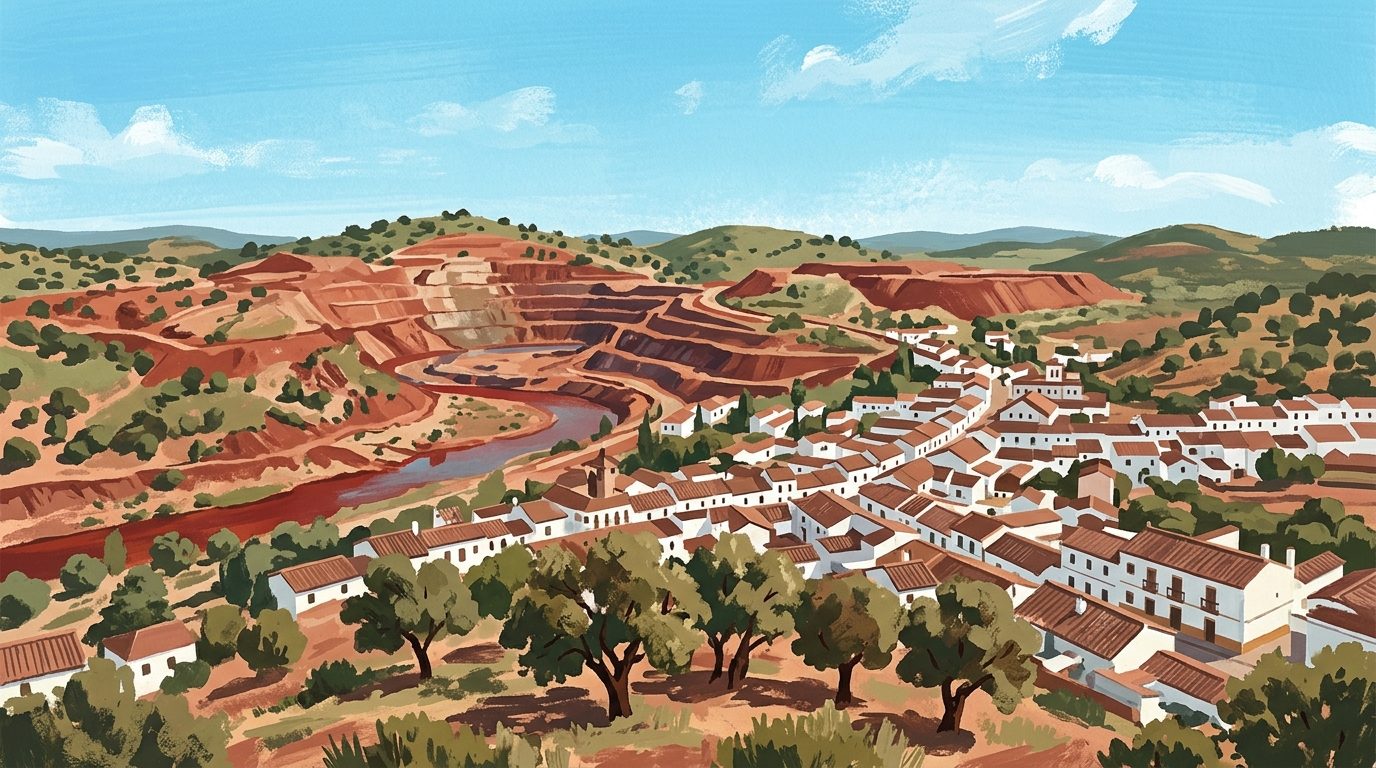
Mars on Earth: A Guide to Minas de Riotinto and Nerva
Discover the otherworldly red landscapes of the Rio Tinto mines in Huelva, where you can explore Victorian British colonies and ride a 19th-century mining train.
5 min read
More from Málaga
The Definitive Guide to Feria de Málaga
Unlike famously private celebrations elsewhere, the Feria de Málaga is built on absolute inclusion. Virtually every marquee at the fairground opens its doors to anyone wanting to celebrate.
9 min read
Semana Santa in Malaga: The Complete Guide
Experience the immense tronos, military anthems and communal spirit that define Holy Week in Malaga.
9 min read
The Complete Guide to the Costa del Sol
Spanning 150 kilometres of Mediterranean shoreline, the Costa del Sol is the most developed coastal strip in Spain. Discover where to find quiet coves, excellent seafood and the right resort for your style of travel.
9 min read
The Concrete Shore: A Post-Mortem of the Costa del Sol
The shadow of the Pez Espada hotel stretches longer than the memories of the men who once pulled nets from this sand. It is a coast that traded its silence for a fortune, and now spends its days trying to remember the shape of the wind.
7 min read
The Museum and the Metropolis: Málaga’s Radical Reinvention
Once a gritty industrial port and a mere transit hub for the Costa del Sol, Málaga has spent two decades undergoing a radical cultural transformation that has turned it into a global art capital.
7 min read
Newsletter
More stories from Andalucía
Weekly notes, seasonal picks, and the next guides worth bookmarking.