
Feature · Málaga
The Museum and the Metropolis: Málaga’s Radical Reinvention
Once a gritty industrial port and a mere transit hub for the Costa del Sol, Málaga has spent two decades undergoing a radical cultural transformation that has turned it into a global art capital.
By Dan · Updated 7 June 2026 · 7 min read
Story context
This is a narrative feature, not a breaking-news report or a legal/practical guide. It is kept on the site because it adds local texture and reading value alongside the more practical Andalucía 365 guides.
Use the links below for planning details, current access, places to stay, transport or food guidance connected with the story.
For decades, this was merely the draughty lobby of the Costa del Sol, a place where travellers checked their watches and waited for the bus to Marbella. Today, the salt air in the port smells less of industrial diesel and more of fresh acrylic, as the city trades its grit for a curated, cubic cool.
On a Tuesday morning in October 2003, a woman named Christine Ruiz-Picasso stood inside the Palacio de Buenavista, a 16th-century mansion of heavy stone and cool courtyards. She wasn’t there to buy property or attend a gala; she was there to settle a debt. "My soul and the soul of my husband belong to Málaga," she had once remarked, and as she handed over 285 works by her father-in-law, Pablo, she fundamentally altered the trajectory of a city that had spent the better part of a century trying to forget its most famous son, and its own potential.
Before that moment, Málaga was a city of transit. It was a place you survived to get to somewhere else. It was rough-edged, loud, and unpolished, a port town defined by the sweat of its docks and the soot of its chimneys. If you stayed, you stayed for a cheap beer near the central market or to catch a train. The idea that Málaga could be a peer to Bilbao, London, or Paris was not just ambitious; it was laughable. But as the ribbon was cut on the Museo Picasso, the first domino fell. A city that had been an afterthought began to paint itself into a masterpiece.
The Shadow of the Chimneys
To understand the magnitude of this shift, one must look at what Málaga was before the white cubes of the galleries arrived. In the mid-20th century, the city’s identity was tied to the industrial, to the sugar refineries, the textile mills, and the heavy shipping that lined the Muelle Uno. It was a place of utility. While Sevilla traded on its romantic imagery of flamenco and orange blossom, and Granada on the red-tinted majesty of the Alhambra, Málaga was the workhorse. It was gritty, humid, and largely ignored by the cultural elite.
By the 1990s, the decline of traditional industry left the city centre hollowed out. The historic core was a maze of crumbling facades and darkened alleys. The river Guadalmedina, which bisects the city, was a dry, concrete scar. The youth were leaving for Madrid or the tourism goldmines further west along the coast. The local government realised that the sun-and-sand model, which had enriched the rest of the province, would never be enough for the capital. They needed a new currency. They chose art.
This wasn't a grassroots movement; it was a top-down, surgical strike of urban planning. Led by long-standing mayor Francisco de la Torre, the city began an aggressive campaign to court the world’s most prestigious cultural institutions. The strategy was clear: if you build a cathedral of culture, the pilgrims, and their wallets, will follow.
The Art of the Deal
The Picasso Museum was the proof of concept, but the true expansion arrived with the speed of a Mediterranean storm. In 2011, the Carmen Thyssen Museum opened in the Palacio de Villalón, bringing a private collection of 19th-century Spanish painting to the heart of the city. Suddenly, the crumbling streets around Calle Compañía were being scrubbed clean, the derelict buildings transformed into boutique residences and polished cafes.
But the city’s ambition didn't stop with domestic brands. In 2015, Málaga pulled off a cultural coup that silenced the remaining sceptics. They secured the Centre Pompidou, the first time the French institution had ever allowed its name to be used outside of France in a permanent capacity. They placed it in 'The Cube,' a glass structure at the corner of the renovated port, its multicoloured panels reflecting off the water like a digital sunset. In the same year, the State Russian Museum of Saint Petersburg opened a branch in a converted tobacco factory. However, following the geopolitical shifts of 2022, the gallery was forced to suspend its ties with Russia and entirely reinvent its collection away from its namesake roots.
Within a decade, Málaga had more museums per square kilometre than almost any other city in Europe. The CAC (Centro de Arte Contemporáneo), housed in a former wholesale market by the river, became a powerhouse for the avant-garde, bringing in names like Ai Weiwei and Marina Abramović. The city was no longer a transit hub; it was a destination. The cruise ships that once disgorged tourists directly onto buses bound for the Alhambra were now letting them loose into the city’s own galleries.
The Resurrection of Soho
The transformation wasn't limited to the hallowed halls of marble and glass. South of the main Alameda Principal lies an area formerly known as the 'Barrio de las Artes,' though for decades it was better known for its derelict warehouses and illicit nighttime trade. Now rebranded as Soho, this district became the canvas for the MAUS (Málaga Arte Urbano Soho) project, which by 2026 had successfully transitioned from active commissioning into a curated maintenance phase.
Walking through Soho today is an exercise in scale. Giant murals by world-renowned street artists like Shepard Fairey (Obey) and D*Face loom over narrow streets. A massive rat, painted by the Belgian artist ROA, crawls down the side of an apartment block. This wasn't the sterile art of the elite; it was an attempt to bring the city's reinvention to the pavement. It turned a ‘no-go’ zone into a neighbourhood of craft beer taprooms, independent theatres, and graphic design studios. It was the moment the city’s rebranding felt complete: it had captured both the high-brow institutionalist and the gritty urbanist.
The Weight of the Frame
However, every masterpiece has its price, and the varnish on Málaga’s new face is beginning to crack under the pressure of its own success. The tension between the city as a living community and the city as a cultural product is the defining conflict of contemporary Málaga.
Walk into any taberna that has managed to survive the last five years, and the conversation often turns to the turistificación. The very streets that were saved from decay are now being emptied of their residents. Long-term rentals have vanished, replaced by the ubiquitous lockboxes of short-term holiday apartments. The hardware stores and local bakeries of the city centre are being replaced by brunch spots serving avocado toast to visitors who have come to see the Picasso Museum but will never know a Malagueño.
There is a growing sentiment that Málaga has become a victim of its own rebranding. The 'Museum City' can feel performative, a stage set designed for the leisure class while the people who make the city breathe are pushed further to the periphery. The soul of Málaga (the chaotic, loud, sardonic character of its people) is harder to find in a city centre that feels increasingly like an outdoor gallery with an entry fee.
Even the art itself has become a point of contention. Some critics argue that by importing 'franchise' museums like the Pompidou, the city has ignored its own local artists in favour of a polished, international aesthetic that could exist anywhere. They ask: is this Málaga, or is this a simulation of a European cultural capital?
The Last Light on the Cube
Late on a Friday evening, the sun dips behind the Montes de Málaga, casting a long, violet shadow over the port. The glass Cube of the Pompidou begins to glow from within, its primary colours bleeding into the twilight. A group of teenagers sits on the concrete edge of the pier, their backs to the multimillion-euro artworks, laughing and sharing a bag of sunflower seeds. They are a reminder that despite the grand narratives of urban planning and the influx of global capital, the city remains a place of small, human moments.
Málaga has succeeded in its gamble; it has reinvented its future through the lens of its past. It is no longer the draughty lobby, but the main event. Yet, as the lights of the city flicker on, illuminating the murals of Soho and the towers of the cathedral, there is a lingering sense of a city holding its breath. It has found its new face, but in the quiet hours when the galleries close their doors, it is still searching for the reflection it recognises as its own.
Last reviewed: 21 June 2026 · Editorial policy
Related guides
The Long Decline and Final Abolition of the Inquisition in Andalucía
The twilight of the Holy Office was a slow, bureaucratic fading rather than a sudden collapse. Enlightenment ideals and political upheaval finally dismantled a system that had overseen centuries of religious orthodoxy.
8 min read
Iberian Art and Sculpture: The Great Ladies and Warrior Shrines
The monumental stone carvings of the Iberians reveal a society deeply concerned with lineage, divine protection, and the afterlife.
7 min read
The Iberians in Andalucía: Warlords, Sculptors and the Dawn of Iron
Who were the sophisticated, iron-working peoples who controlled southern Spain before the Roman conquest? Their fortified hill towns and striking stone sculptures reveal a formidable culture caught between ancient local traditions and Mediterranean ambition.
6 min read
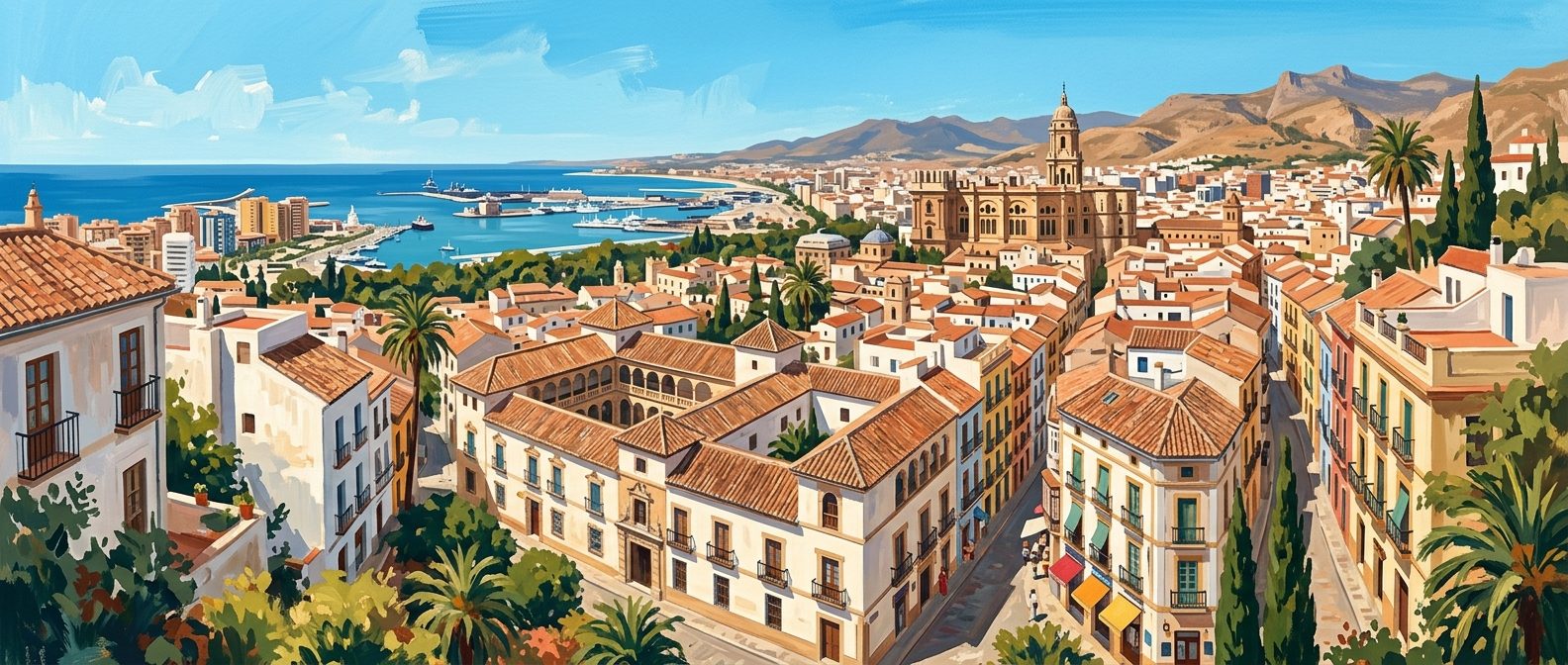
Málaga’s Creative Core: A Guide to the Picasso Museum and Soho Arts District
Discover the artistic evolution of Málaga, from the intimate galleries of the Picasso Museum to the large-scale murals of the Soho Arts District.
6 min read
Ink and Olive Groves: A Literary Journey through Andalucía
Discover the literary heart of Southern Spain, from the tragic poetry of Lorca in Granada to Hemingway’s dramatic Ronda and the contemplative prose of Machado in Sevilla.
10 min read
The Auto-da-Fé in Andalucía: Spectacle and Judgement
The auto-da-fé was not merely a trial, but a highly choreographed spectacle of religious and political power. Across the great squares of Sevilla, Córdoba and Granada, these public acts of faith transformed the grim mechanics of judgement into grand urban theatre.
8 min read
More from Málaga
The Definitive Guide to Feria de Málaga
Unlike famously private celebrations elsewhere, the Feria de Málaga is built on absolute inclusion. Virtually every marquee at the fairground opens its doors to anyone wanting to celebrate.
9 min read
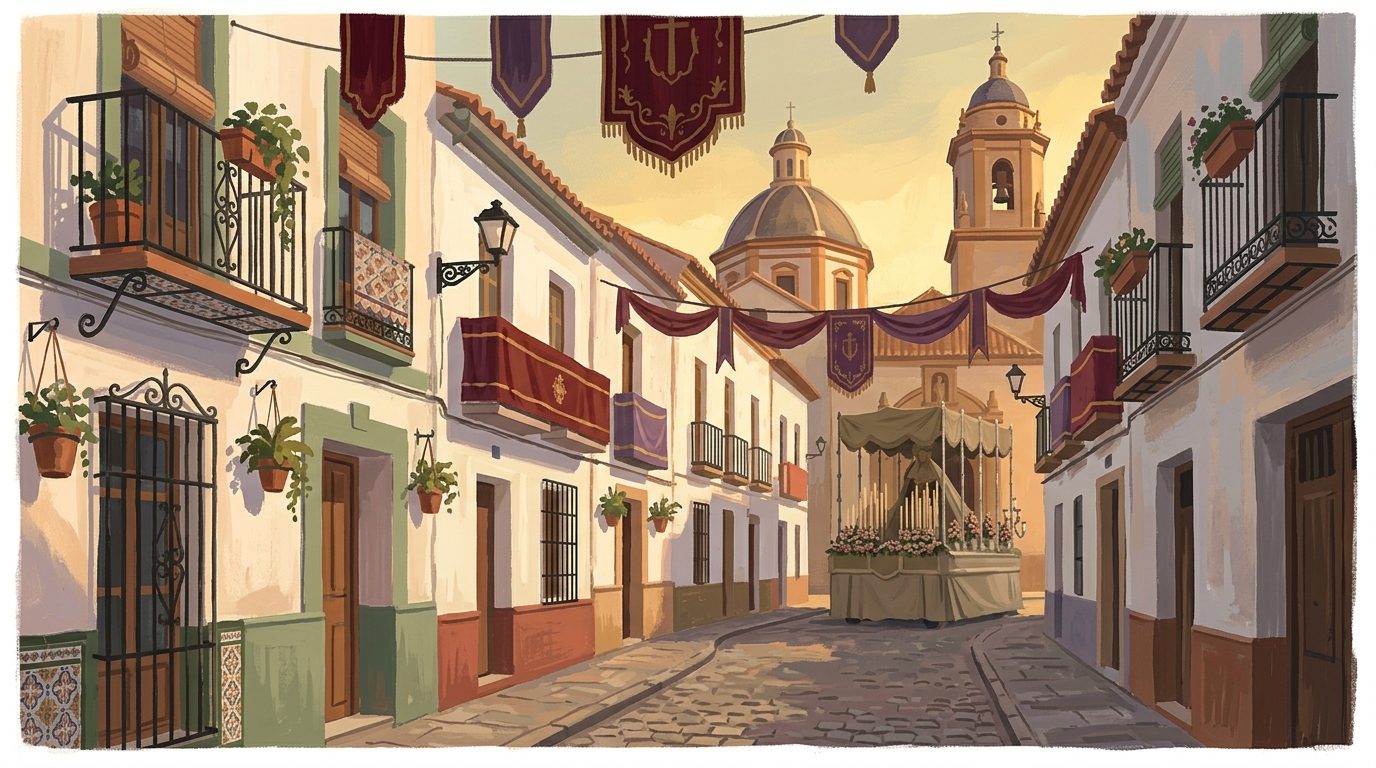
Semana Santa in Malaga: The Complete Guide
Experience the immense tronos, military anthems and communal spirit that define Holy Week in Malaga.
9 min read
The Complete Guide to the Costa del Sol
Spanning 150 kilometres of Mediterranean shoreline, the Costa del Sol is the most developed coastal strip in Spain. Discover where to find quiet coves, excellent seafood and the right resort for your style of travel.
9 min read
The Concrete Shore: A Post-Mortem of the Costa del Sol
The shadow of the Pez Espada hotel stretches longer than the memories of the men who once pulled nets from this sand. It is a coast that traded its silence for a fortune, and now spends its days trying to remember the shape of the wind.
7 min read
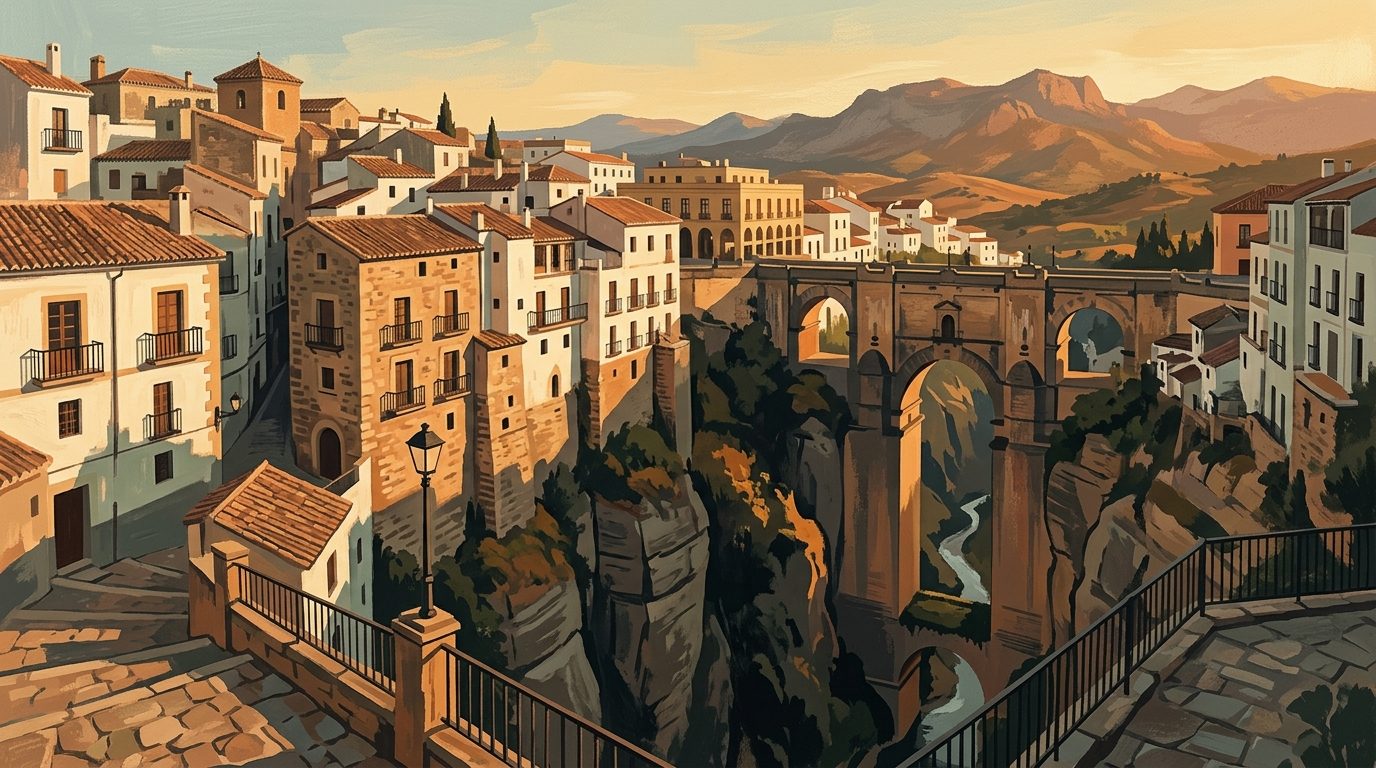
The Vertical City: Watching the Shadows Lengthen in Ronda
Beyond the crowded lip of the Tajo gorge, Ronda reveals itself as a city of quiet alcoves, blood-stained history, and a gravity that pulls at the soul.
7 min read
Newsletter
More stories from Andalucía
Weekly notes, seasonal picks, and the next guides worth bookmarking.