
attraction · Jaén
Castillo de la Yedra
Andalucía 365 · Updated 18 July 2026
Our Verdict
“A commanding medieval fortress offering sweeping views over Cazorla, housing a dual museum that explores both noble military history and traditional rural life.”
Last verified: July 2026
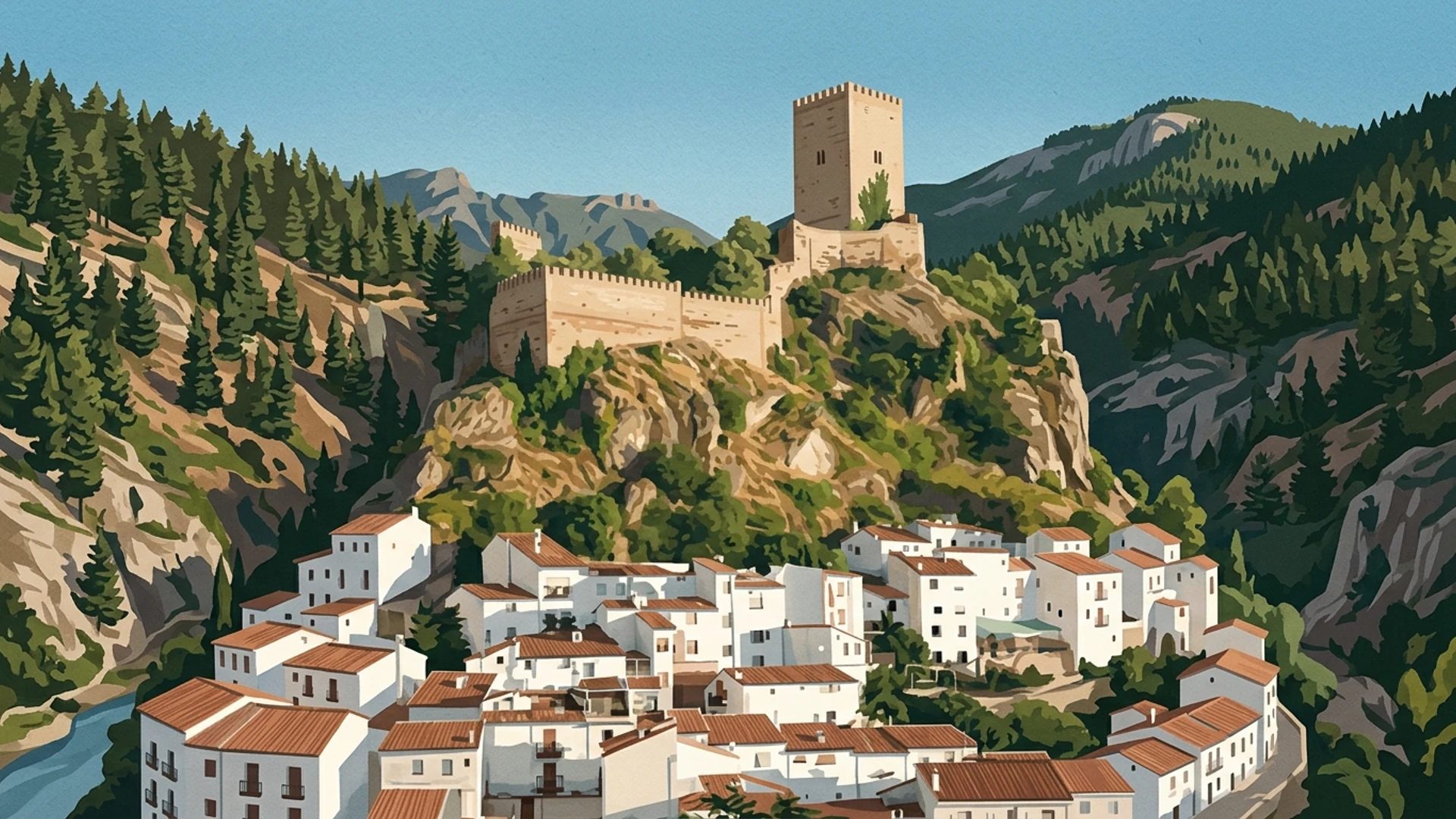
Dominating the whitewashed town of Cazorla from the slopes of the Salvatierra hill, Castillo de la Yedra is a formidable stone fortress that traces its roots to 11th-century Berber origins. Later expanded by Castilian forces between the 13th and 15th centuries, the castle served as a critical defensive stronghold for the Archbishopric of Toledo. Today, its imposing Torre del Homenaje and annexed buildings house the Museum of Popular Arts and Customs of the Upper Guadalquivir. The site offers visitors a dual experience: a journey through the region's military and noble history within the keep, and a detailed look at traditional rural life in the ethnographic wing. It is a highly informative stop for history enthusiasts and cultural travellers exploring the gateway to Spain's largest protected natural area.
A Fortress Forged by Conflict
Positioned at 831 metres above sea level, Castillo de la Yedra was built to control the strategic Cerezuelo river valley. The original foundations and the lower defensive walls, including the barbican, were laid by Berber forces during the Islamic rule of the Iberian Peninsula. Following the Christian conquest of the region in the 13th century, the fortress fell under the control of the Archbishopric of Toledo. Archbishop Rodrigo Ximénez de Rada established the Adelantamiento de Cazorla, a feudal frontier territory that required a robust military headquarters to defend against the neighbouring Emirate of Granada.
Throughout the 14th and 15th centuries, Castilian architects heavily modified the structure, giving the interior its distinct Gothic character. The most prominent addition was the Torre del Homenaje, a square keep whose four corners align with the cardinal points, earning it the alternative name of Castillo de las Cuatro Esquinas. This tower was designed strictly for military utility and as a residence for the feudal lord, resulting in a sober, unadorned exterior that contrasts with the dramatic topography of the Sierra de Cazorla, Segura y Las Villas.
Inside the Torre del Homenaje
The keep now contains the historical section of the museum, spread across three distinct levels. The ground floor houses a small chapel featuring a life-size Romanesque-Byzantine Christ figure mounted on a cross carved from cypress wood. This central piece is flanked by a complete 17th-century anonymous apostolate and a Baroque carving of the Bishop San Ambrosio.
Ascending to the second floor, visitors enter the Weapons Room. Here, the walls are decorated with panoplies displaying a variety of historical armaments, including swords, crossbows, axes and cutlasses. The room is furnished with carved wooden chests and authentic 16th and 17th-century furniture, providing a tangible sense of the fortress's martial past. The third floor, known as the Noble Room, shifts the focus from warfare to aristocratic life, featuring 17th-century Flemish tapestries and ornate Vargas-style cabinets that illustrate the wealth of the regional lords.
The Museum of Popular Arts and Customs
While the keep focuses on the elite, the annexed building is dedicated to the everyday lives of the people who inhabited the surrounding mountains and valleys. The ethnographic section of the Museum of Popular Arts and Customs of the Upper Guadalquivir was established in 1983 to preserve the rural heritage of the region.
The exhibits are divided into three main rooms that display a vast collection of agricultural implements, traditional clothing and domestic artefacts. The ground floor introduces visitors to historical farming techniques, featuring heavy wooden ploughs, threshing boards and animal yokes. A highlight of the second floor is the detailed scale model of a traditional olive oil mill, which provides valuable context for those interested in Andalucían olive oil production, alongside regional ceramics. The upper floor recreates a typical Cazorla kitchen, complete with authentic utensils and hearth equipment, illustrating the self-sufficient lifestyle that defined the isolated communities of the upper Guadalquivir basin for centuries.
The Legend of La Tragantía
No visit to Castillo de la Yedra is complete without encountering the local folklore that surrounds it. The most famous tale is that of La Tragantía, a legend rooted in the violent transition between Moorish and Christian rule. According to the story, as Castilian troops approached Cazorla, the local Moorish king fled the castle. To protect his daughter, he locked her in a secret subterranean chamber, leaving her with enough provisions to survive until his planned return.
The king never returned, leaving the princess trapped. Legend says she became a serpent-tailed creature whose song can still be heard from the castle on the eve of San Juan.
Our verdict
Castillo de la Yedra is a highly rewarding historical site that anchors any visit to the town of Cazorla. The architecture of the keep is genuinely impressive, and the panoramic views over the town and the olive groves beyond are superb. The dual nature of the museum is a strong point, offering both high-status military history and grounded ethnographic context.
However, visitors should manage expectations regarding the museum displays. The ethnographic section, while comprehensive, relies on traditional glass-case presentations and lacks the interactive elements found in more modern institutions. Furthermore, the physical demands of reaching the castle are significant. The steep approach requires a reasonable level of fitness, and the historic nature of the building means that accessibility for wheelchair users or those with limited mobility is severely restricted. Despite these limitations, it remains a compelling monument that provides deep insight into the region's complex past.
Practicalities and Access
Reaching Castillo de la Yedra requires a physical effort. The most direct route on foot begins at the Plaza de Santa María, near the ruins of the Renaissance church that spans the Cerezuelo river. From here, visitors must follow the Camino del Ángel, a steep and winding path that takes approximately 15 minutes to ascend. The cobblestones can be slippery after rain, so sturdy footwear is strongly recommended.
Parking in the immediate vicinity of the castle is extremely limited and the narrow, steep access roads are difficult to navigate. The most practical approach is to leave your vehicle in one of the public car parks in the lower town and walk up. If you are incorporating the castle into a wider itinerary through Jaén province, allocate at least 90 minutes for the visit itself, plus the time required for the walk from the town centre.
During the summer months, the climb is best attempted early in the morning to avoid the intense midday heat. The interior of the stone keep remains relatively cool, offering a welcome respite. For the most current information regarding seasonal opening schedules and access arrangements, visitors should consult the official museum website before planning their ascent.
Nearby worth your time
A few well-placed stops for extending the day without turning it into a checklist.
Continue through Sierra de Cazorla, Segura y Las Villas
Step back into the wider landscape with local guides, nearby places and the province overview.
Things to do · 12 min
Golf in Jaén Province: A Practical Guide to Courses, Clubs, and Holidays
Discover the reality of playing golf in Jaén. From the 9-hole course at La Garza to local societies and combining rounds with olive oil tourism.
Nature & wildlife · 7 min
Sierra de Cazorla: Spain's Largest Protected Area
Covering over 200,000 hectares of rugged limestone peaks and deep river canyons, the Sierra de Cazorla forms the green heart of the Iberian Peninsula.
Itinerary · 11 min
5 Days in Jaén: Renaissance Cities and Cazorla
A realistic five-day driving itinerary through Jaén province, balancing the monumental Renaissance architecture of Úbeda and Baeza with the rugged mountain wilderness of the Sierra de Cazorla.