
attraction · Málaga
Castillo de Sohail
Andalucía 365 · Updated 18 July 2026
Our Verdict
“A formidable tenth-century Moorish fortress offering excellent coastal views, though its empty interior is frequently closed for summer events.”
Last verified: July 2026
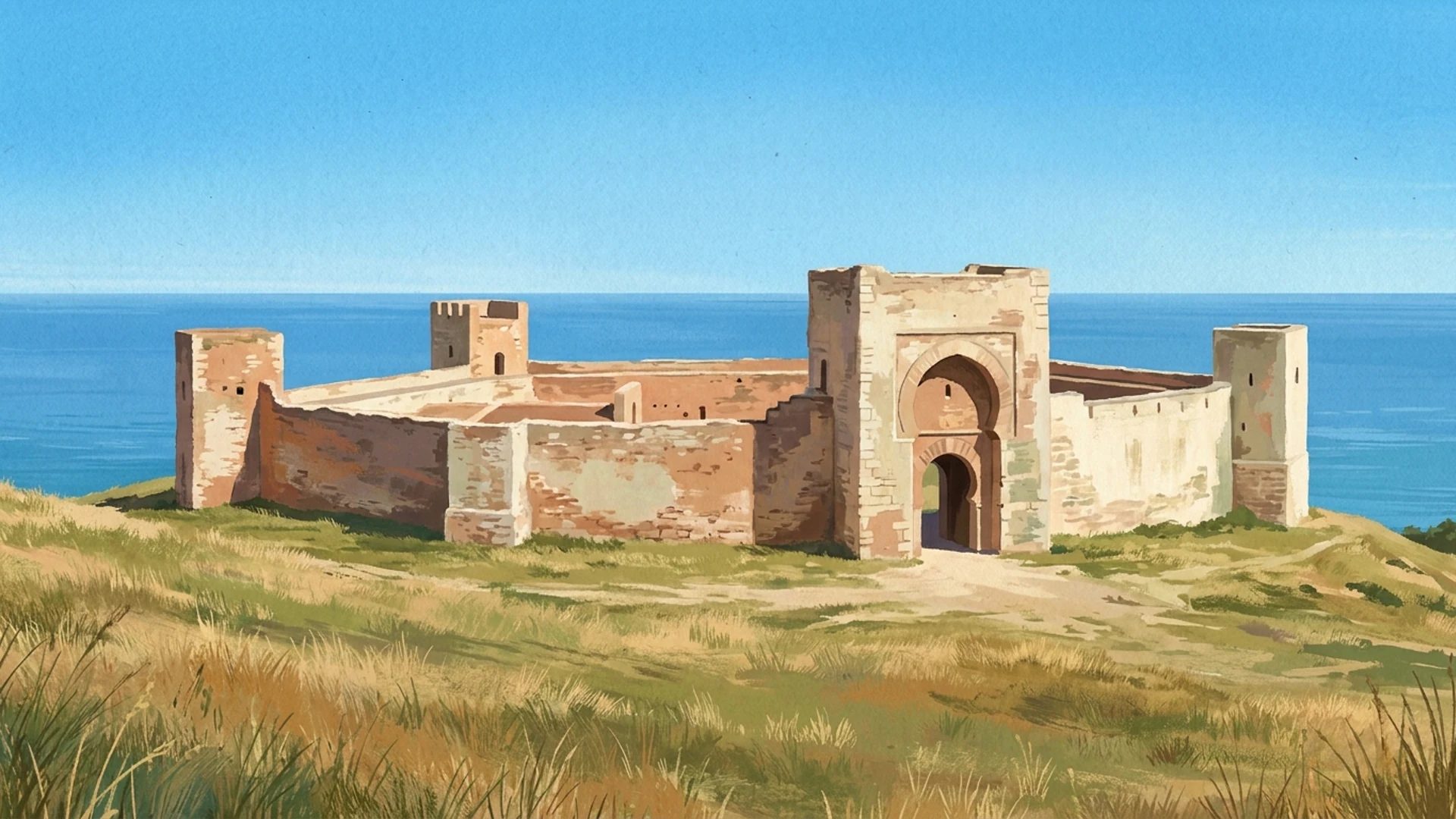
Standing sentinel on a 38-metre hill at the mouth of the Fuengirola River, Castillo de Sohail is a formidable reminder of the region's strategic military past. Commissioned in 956 AD by Abd-ar-Rahman III during the Caliphate of Córdoba, the fortress was designed to defend the coastline against naval incursions. Today, its restored stone walls and irregular polygonal towers offer broad views across the Mediterranean Sea and the Sierra de Mijas. While the interior courtyard is largely empty, having been repurposed as an open-air auditorium for major cultural events, the exterior grounds remain a focal point for coastal walks. The site suits history enthusiasts, families seeking an accessible landmark, and anyone looking for an elevated vantage point away from the immediate beachfront developments of Fuengirola.
A History of Coastal Defence
The geographical advantage of the hill at the river mouth has attracted settlements since the Phoenician and Roman eras. The foundations of the current structure were laid in the tenth century when the Caliphate of Córdoba sought to fortify the coastline against the Fatimid caliphate and Norman raiders. In the twelfth century, the Almoravids expanded the site, constructing a defensive enclosure that adapted to the uneven terrain.
The fortress changed hands in 1485 when it was captured by the Catholic Monarchs during their campaign against the Nasrid Kingdom of Granada. Following the conquest, the military complex underwent significant architectural modifications to accommodate artillery. Centuries later, the castle played a notable role in the Peninsular War. In 1810, during the Battle of Fuengirola, it was occupied by Napoleon's troops before eventually being reclaimed by Spanish forces. After losing its military function in the nineteenth century, the site fell into ruin and was sold at public auction. It remained neglected until comprehensive restoration work by the local municipality began in the late twentieth century, culminating in its reopening in the year 2000.
Architecture and Layout
Unlike the highly decorative palaces found elsewhere in the Málaga province, Castillo de Sohail is a strictly utilitarian military outpost. The structure features an irregular polygonal floor plan, dictated by the natural slopes of the hill. Thick stone walls connect a series of defensive towers, designed to provide clear sightlines over the sea and the surrounding river valley. The masonry consists of rough stone blocks and mortar, typical of the defensive architecture of the period.
Visitors enter through a main gate that once featured a drawbridge and a curved defensive approach, though these elements have been modified over time to allow direct access. Inside, the original barracks, storerooms and living quarters have long since disappeared. What remains is a broad, open parade ground surrounded by the high parapets. A few historical cannons are positioned along the walls, pointing out towards the Alboran Sea, serving as a reminder of the site's original purpose.
The Surrounding Park and Roman Ruins
The hill on which the fortress stands is surrounded by a landscaped public park that slopes down towards the river and the sea. This green space provides a buffer between the historical site and the modern town, offering shaded walking paths under mature pine trees. Archaeological excavations in the vicinity have revealed that the area was occupied long before the Moorish conquest.
The nearby Finca del Secretario site, located further inland, contains the remains of a Roman fish-salting factory and thermal baths, highlighting the long-standing economic importance of the local coastline. Closer to the castle, ongoing digs continue to uncover Phoenician and Roman foundations, suggesting that the hill has served as a strategic lookout for millennia. The park itself is a popular recreational area, featuring:
- Paved walking trails that wind up the hillside.
- Resting areas with benches overlooking the Mediterranean.
- A pedestrian bridge connecting the castle grounds to the main beach promenade.
- Direct access to a designated dog-friendly beach at the mouth of the river.
The Modern Cultural Role
Rather than functioning as a traditional museum, the castle has been integrated into the contemporary life of the Costa del Sol Occidental. The empty interior courtyard provides a dramatic setting for the Marenostrum Fuengirola music festival, which brings international artists to the venue each summer. The grounds also host seasonal events, including a medieval market and an autumnal beer festival.
This active use ensures the monument remains relevant to the local community, but it fundamentally alters the nature of a visit. The focus shifts from historical immersion to communal gathering. For current access arrangements, event schedules and ticketing information, visitors should consult the official Fuengirola tourism website.
Our verdict
Castillo de Sohail is a striking architectural shell that provides excellent context for the region's history. The panoramic views from the hilltop are superb, offering a clear perspective of the coastline and the mountains inland. It stands in sharp contrast to modern architectural follies like the nearby Castillo Monumento Colomares, offering a genuine, unvarnished look at medieval military engineering.
However, visitors expecting a furnished interior or extensive historical exhibits will be disappointed. The courtyard is essentially bare, lacking informational plaques or reconstructed rooms. Furthermore, the dual use of the site as an event venue means that access to the interior is frequently restricted. During the summer months, the courtyard is often closed to the public for days at a time while stages and seating are constructed. It is best approached as a scenic viewpoint and an impressive exterior landmark rather than a comprehensive museum experience.
Practicalities and Access
The castle is located at the western edge of the town's main beachfront, just before the river meets the sea. It can be reached on foot by following the coastal promenade and crossing the pedestrian bridge over the river. For those driving, there is a dedicated parking area at the base of the hill, accessible from the N-340 highway. The beach directly below the castle, Playa del Castillo, is a designated dog-friendly zone and a popular spot for local fishermen.
The ascent to the castle involves steep, paved inclines winding through a park planted with pine trees. While the exterior paths and the main courtyard are generally accessible, reaching the upper parapets and towers requires climbing steep, uneven stone stairs. This makes full exploration difficult for wheelchair users or those with limited mobility.
The site is completely exposed to the elements, with no shade provided in the main courtyard. During the peak summer months, it is advisable to visit early in the morning or late in the afternoon to avoid the intense heat. The surrounding parkland offers a cooler environment for a walk before or after viewing the fortress, with benches providing resting spots along the ascent.
Nearby worth your time
A few well-placed stops for extending the day without turning it into a checklist.

Continue through Costa del Sol Occidental
Step back into the wider landscape with local guides, nearby places and the province overview.
Place guide · 7 min
Playa de Burriana: A Guide to Nerja's Premier Beach
Discover Playa de Burriana, the most iconic beach in Nerja, known for its wide sands, excellent chiringuitos, and clear waters on the Costa del Sol.
Place guide · 7 min
Playa de Cabopino: Dunes, Pines and Clear Waters near Marbella
A protected enclave of natural dunes and fine sand situated between Marbella and Fuengirola. This coastal stretch offers a rare glimpse of the original Mediterranean landscape.
Itinerary · 13 min
One Week in Ronda: A Seven-Day Itinerary for the Serranía
A seven-day stay in Ronda allows you to experience the deep gorge and ancient streets long after the day-trippers have left. Using the city as a base, you can easily explore the surrounding white villages, hike the Sierra de las Nieves, and settle into the true rhythm of mountain life.