
Place guide · Málaga
Playa de Burriana: A Guide to Nerja's Premier Beach
Discover Playa de Burriana, the most iconic beach in Nerja, known for its wide sands, excellent chiringuitos, and clear waters on the Costa del Sol.
By Dan · Updated 16 July 2026 · 7 min read
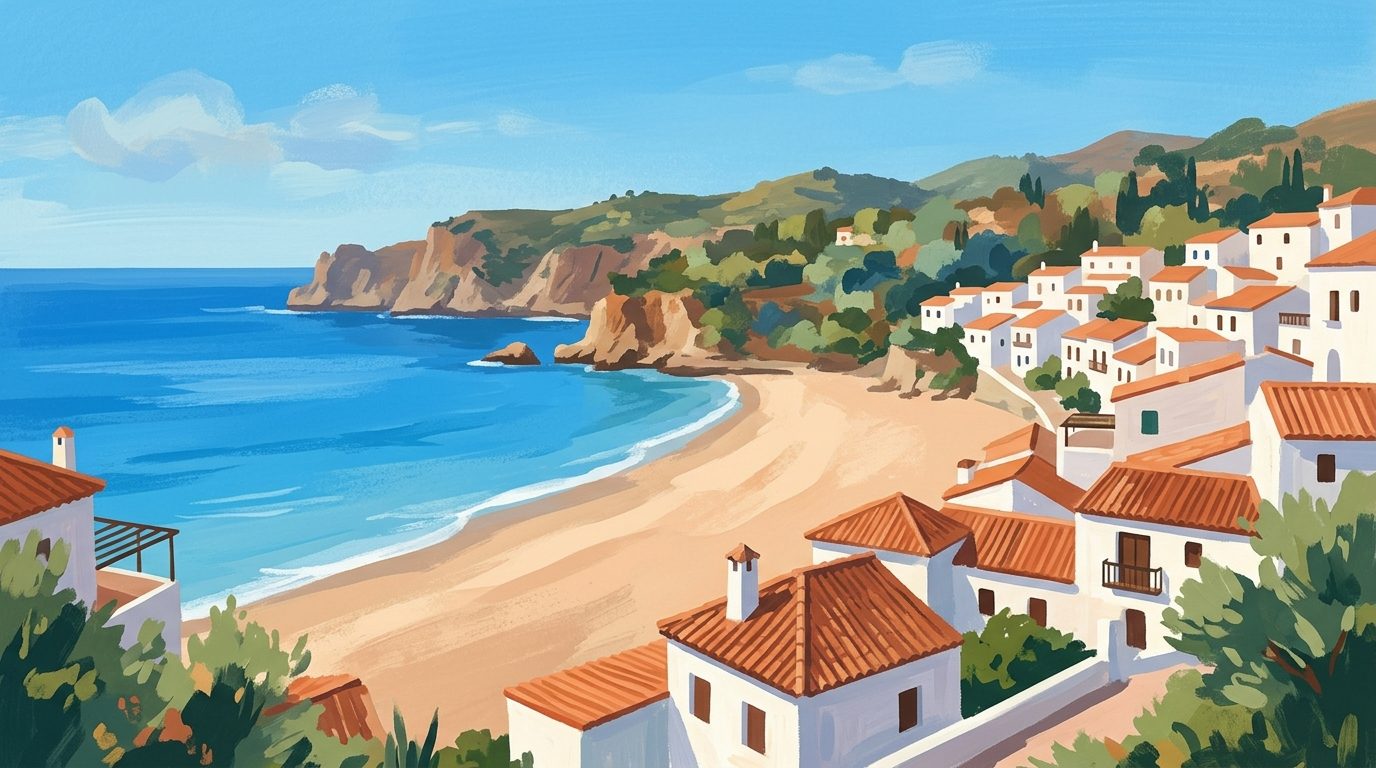
Playa de Burriana is the most celebrated stretch of coastline in Nerja, offering a wide expanse of sand and a lively promenade. This beach provides a perfect balance between modern facilities and the traditional charm of the Costa del Sol.
Playa de Burriana occupies a unique position in the geography of the eastern Costa del Sol. While many of the beaches in the Axarquía region are small coves tucked between cliffs, Burriana is a broad, expansive stretch that serves as the social and recreational heart of Nerja. It is the beach that many visitors think of first when they imagine a holiday in this part of Andalucía, yet it retains a character that is distinct from the more urbanised stretches found further west towards Málaga city. What makes this beach distinctive is its scale and the way it manages to feel like a self-contained resort while remaining closely connected to the town centre. The backdrop is a dramatic mix of steep cliffs and residential villas, creating a sense of being in a natural amphitheatre. The atmosphere here is energetic from early morning until long after the sun sets, driven by a collection of long-standing family-run businesses that have operated on these sands for decades.
The beach is not merely a place for sunbathing; it is a hub for activity. It serves as the primary gateway for those looking to explore the rugged coastline of the Maro-Cerro Gordo Natural Park by sea. Arrive for a morning of kayaking and a long lunch of wood-fired paella, and Burriana offers a sense of space that is hard to find in smaller urban coves such as Playa de la Caletilla or Playa Carabeo. It is a place where the local residents of Nerja and international travellers mix freely, creating a social environment that feels inclusive and grounded.
The beach itself
Playa de Burriana stretches for approximately 800 metres and is about 40 metres wide on average. The sand quality is typical for this part of the coast: it is a mix of coarse, dark grey volcanic sand and small pebbles. It is not the fine, powdery white sand found in Cádiz, but it has the distinct advantage of not sticking stubbornly to your skin and clothes. The water clarity is usually exceptional, often appearing in shades of deep turquoise and cobalt blue. It is important to note that the sea floor drops off quite sharply. Within a few steps of entering the water, you will likely find yourself out of your depth, which makes it excellent for swimming but requires extra vigilance for those with small children.
The beach has been awarded the Blue Flag for 2026 for its cleanliness and the quality of its services. For families, this is an ideal spot because the facilities are so close at hand. There are several dedicated play areas for children on the sand, including climbing frames and slides. Unlike some of the more secluded coves nearby, Burriana does not have a designated naturist section; it is very much a family-oriented beach where conventional swimwear is the norm. The length of the beach allows for different zones: the western end near the cliffs tends to be slightly quieter, while the central area is where you will find the highest concentration of sun-beds and activity. Despite its popularity, the sheer size of the beach means that you can usually find a spot for your towel, though in the height of summer, the front line by the water is claimed very early in the day.
Getting there & parking
Reaching Playa de Burriana from Málaga Airport involves a straightforward drive of approximately 50 to 60 minutes. You follow the A-7 motorway eastbound, taking the exit for Nerja. Once you enter the town, the route to Burriana is well-signposted. However, the physical access to the beach is via Calle Filipinas, a road famous for its incredibly steep gradient. Driving down is easy, but walking back up to the town centre at the end of the day can be a significant physical challenge. For those staying in the centre of Nerja, a walk to the beach takes about 15 minutes, but the return journey feels much longer due to the climb.
The parking reality at Burriana is a frequent topic of conversation among locals. There is a fair amount of street parking along the Paseo Marítimo Antonio Mercero and the surrounding side streets, but during July and August, these spaces are usually full by 10:00. There is a large underground car park located at the eastern end of the beach, which offers a reliable alternative, though it can be expensive for a full day. If you are visiting in peak season, public transport or a taxi from the town centre is often a more stress-free option. A local bus service circles the town and stops near the top of the hill, though it does not descend all the way to the sand.
Facilities & chiringuitos
The facilities at Playa de Burriana are among the best in the province of Málaga. The promenade is lined with a variety of shops, cafes, and restaurants. One of the most famous locations on the beach is Chiringuito Ayo. Known for its massive pans of paella cooked over open wood fires, it has become an institution in Nerja. The tradition here is that if you buy a plate of paella, you are welcome to go back for seconds at no extra cost. Other excellent options include Chiringuito Moreno and Restaurante Rincon de Pepe, both of which offer fresh local fish such as sardines (espetos) and grilled calamari.
For those looking for comfort, there are numerous concessions offering sun-bed and parasol hire, typically costing between 10 and 15 Euros for the day in 2026 (rates and regulations are guided by the Nerja Town Hall). The beach is equipped with clean toilets, changing rooms, and multiple sets of showers located at regular intervals. During the official season, which runs from Easter through to the end of October, a professional lifeguard service is in operation with several lookout posts along the shore. For the more adventurous, there are several water sports centres offering scuba diving lessons, stand-up paddleboard rentals, and the very popular guided kayak tours that head east towards the waterfalls of Maro.
Best time to visit
To experience Playa de Burriana at its best, the shoulder months of June and September are ideal. During calculations, the weather is consistently hot, the sea temperature is perfect for swimming, and the crowds are manageable. You can enjoy the full range of facilities without the intense pressure of the August holidays. If you must visit in August, it is advisable to arrive before 09:30 to secure a parking space and a prime spot on the sand.
Winter in Nerja is mild, and Burriana remains a popular spot even in January. While the water may be too cold for most swimmers, many of the chiringuitos stay open throughout the year, making it a great location for a sunny lunch. One thing to avoid is visiting during a strong Levante wind, which blows from the east. This can create choppy water and bring in some sea debris, though the beach is relatively well-protected compared to others on the coast. Morning is generally the best time of day, as the water is at its calmest and the light hitting the cliffs to the east is particularly beautiful.
Combine with
A visit to Playa de Burriana is easily paired with a trip to the Nerja Caves (Cuevas de Nerja), which are located just a short drive away in the village of Maro. After a morning underground exploring the stalactites, the beach provides the perfect contrast. Alternatively, you could spend the morning at the Balcón de Europa in the town centre, taking in the panoramic views of the coast before walking down to Burriana for a long lunch and an afternoon by the water. For those who enjoy nature, the kayak route from Burriana to the Maro waterfalls is one of the most scenic coastal trips in Andalucía, offering views of hidden coves that are inaccessible by land.
Practical notes
When preparing for a day at Burriana, consider bringing water shoes if you have sensitive feet, as the transition from the coarse sand to the water can be stony in places. Accessibility is generally good; the promenade is flat and there are wooden walkways extending onto the sand to assist those with limited mobility. Regarding local regulations, dogs are not permitted on the beach during the high season, and this rule is strictly enforced by local police. Fires and barbecues are also prohibited on the sand. While the water is generally safe, always pay attention to the flag system: a green flag means safe swimming, yellow indicates caution, and red means swimming is forbidden. The currents are rarely strong here, but the sudden depth of the water is the primary safety factor to keep in mind.
Last reviewed: 14 July 2026 · Editorial policy
Related guides
A Guide to Playa de La Herradura: The Horseshoe Bay of the Costa Tropical
A curved bay on the Costa Tropical providing clear waters and a relaxed alternative to the busier resorts of Málaga. It remains a favourite for scuba divers and families seeking a classic Mediterranean setting.
7 min read
Fuengirola: A Family Favourite on the Costa del Sol
Discover Fuengirola, the family-friendly heart of the Costa del Sol, where Roman ruins and a Moorish castle meet seven kilometres of sandy beaches and a world-class zoo.
6 min read
Torremolinos: The Original Spirit of the Costa del Sol
Explore Torremolinos, the pioneer of Andalucían tourism, where traditional fishing heritage meets a lively modern shoreline and inclusive nightlife.
5 min read
Playa de Puerto Banús: A Guide to the Most Prestigious Sands in Marbella
Discover Playa de Puerto Banús, a refined golden sand beach in Marbella known for its calm waters and luxury amenities. Explore the best chiringuitos, parking tips, and why this Blue Flag beach is perfect for families.
8 min read
Playa de la Fontanilla: Marbella's Premier Urban Beach
Playa de la Fontanilla is the quintessential Marbella town beach, offering refined amenities and a prime location right on the Paseo Marítimo. This central stretch of coastline provides a sophisticated urban beach experience with excellent dining and accessible facilities.
6 min read
A Local Guide to Playa de La Malagueta in Málaga
Playa de La Malagueta is the iconic urban beach of Málaga, known for its dark sand, sardine skewers, and immediate proximity to the city centre.
7 min read
More from Málaga

Playa de Cabopino: Dunes, Pines and Clear Waters near Marbella
A protected enclave of natural dunes and fine sand situated between Marbella and Fuengirola. This coastal stretch offers a rare glimpse of the original Mediterranean landscape.
7 min read
A Guide to Playa de Maro: The Best Snorkelling Beach on the Costa del Sol
Playa de Maro is a rugged, cliff-backed cove that offers some of the clearest waters in the Province of Málaga. This protected stretch of the coast provides a wilder alternative to the urban beaches of nearby Nerja.
7 min read
Exploring Sierra de las Nieves National Park
Discover the prehistoric Spanish fir forests and the rugged limestone peaks of the Sierra de las Nieves, Málaga’s first National Park.
6 min read
A Guide to Benahavís: The Gastronomic Heart of the Costa del Sol
Discover the culinary heart of the Costa del Sol in Benahavís, a mountain village famed for its high-end dining, river adventures, and stunning views of the Mediterranean.
5 min read

Casares: A Guide to the White Village of the Sierra Cristellina
Casares sits precariously on a limestone ridge, its whitewashed houses stacked like sugar cubes beneath the remains of a Moorish fortress.
6 min read

A Guide to Vélez-Málaga and Torre del Mar: History and Coast in the Axarquía
Discover the dual appeal of the Axarquía capital, from the Moorish fortress of Vélez-Málaga to the extensive Mediterranean promenade of Torre del Mar.
5 min read
Archidona: The Octagonal Heart of Inland Málaga
Discover Archidona, a northern Málaga town famous for its unique 18th-century octagonal square and a Moorish fortress with views over the olive groves.
5 min read

A Guide to Alozaina and Yunquera: Gateways to the Sierra de las Nieves
Discover Alozaina and Yunquera, the essential gateway villages to the Sierra de las Nieves National Park, home to ancient fir forests and legendary history.
6 min read
A Guide to Rincón de la Victoria: Gateway to the Axarquía
Discover Rincón de la Victoria, a coastal town near Málaga famous for the sea-formed Cueva del Tesoro and its traditional Spanish atmosphere.
6 min read
Newsletter
More stories from Andalucía
Weekly notes, seasonal picks, and the next guides worth bookmarking.