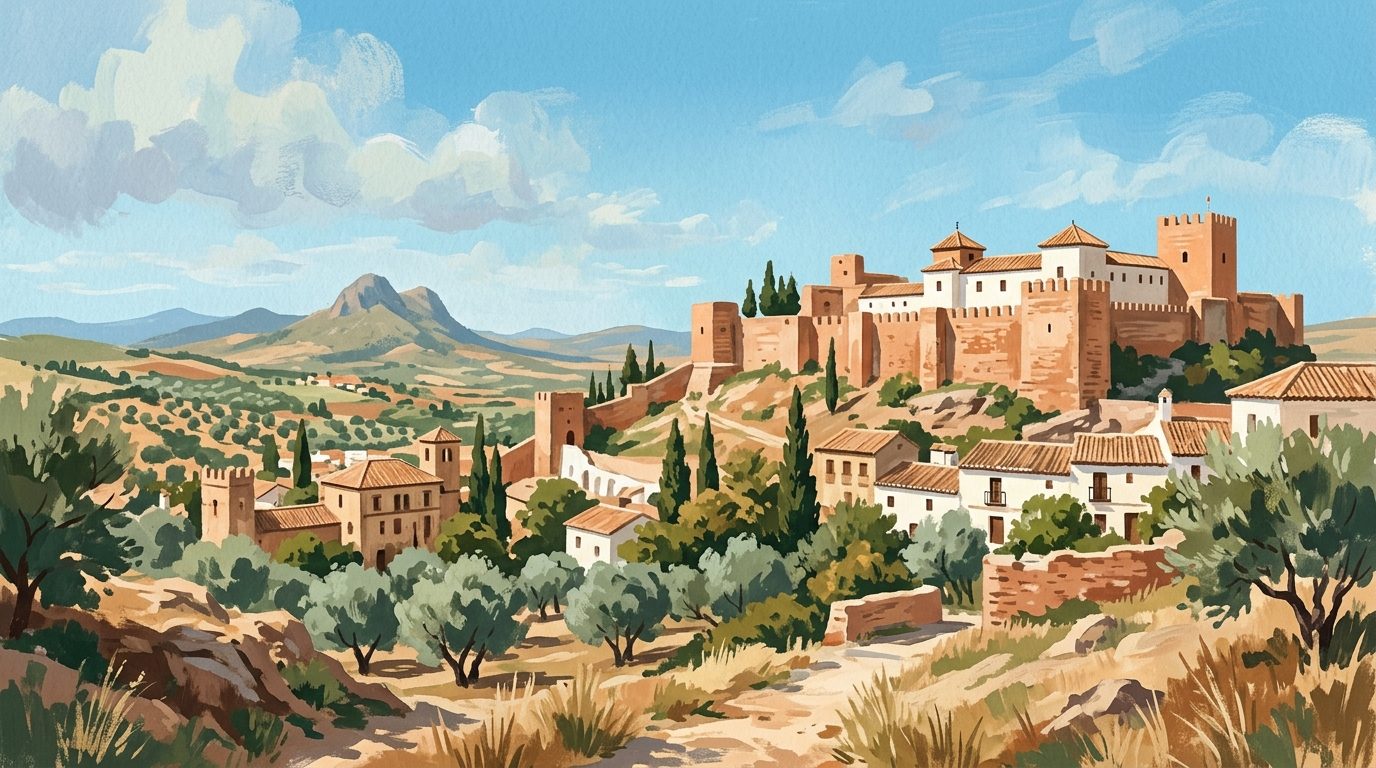
Attractions in Andalucía

The Alhambra, the Mezquita, flamenco tablaos, natural parks and prehistoric caves — every must-see across southern Spain.

26 attractions in Málaga

Alameda del Tajo

The Alameda del Tajo is a nineteenth-century public park located in the heart of Ronda, serving as one of the most significant green spaces in the city. Originally developed in the early 1800s, it provides a dramatic contrast to the dense, stone-heavy architecture of the old town. This attraction is perfectly suited for visitors who appreciate landscape architecture and botanical diversity, as well as those seeking a momentary pause from sightseeing. Because it is positioned directly on the edge of the limestone cliffs that define the town, it offers a safe and accessible way to experience the sheer verticality of the landscape. It is particularly popular with families who need space for children to move freely and photographers looking for the panoramic views of the Guadalevín river valley and the distant mountain ranges. The park is organised into five distinct parallel avenues, but the primary highlight is the main promenade that leads directly to the cliff edge. As you walk through, look out for the diverse botanical collection which includes Himalayan cedars and ancient pine trees that provide substantial shade. The most famous feature is the series of balconies that project out over the precipice. These viewpoints, sometimes colloquially referred to by locals as balcones del coño due to the involuntary exclamation visitors make when looking down, offer an unobstructed look at the three hundred foot drop to the valley floor below. From here, you can observe the agricultural patches of the Vega de Ronda and the rugged peaks of the Sierra de Grazalema in the distance, providing a clear perspective of Ronda's strategic high-ground position. Beyond the central viewpoints, the Paseo de los Ingleses is an essential path that skirts the edge of the cliffs, leading from the park towards the historic Reina Victoria Hotel. This walkway allows for a more contemplative experience away from the busier central plazas. Within the park itself, the statues and the Teatro Vicente Espinel add a cultural dimension to the greenery. The small duck pond and the stone fountains offer a cooling effect during the warmer months, making it a pleasant spot to observe local life as residents often use the park for their evening strolls. It is also an excellent vantage point for bird watching, as swifts and kestrels are frequently seen darting through the thermals rising from the gorge. Located on Calle Virgen de la Paz, the Alameda del Tajo is situated directly next to the historic bullring and is easily reachable on foot from any central location in Ronda. The park is a public space with no entrance fee, making it one of the most accessible attractions in the city. It is generally open twenty-four hours a day, though the best lighting for photography is during daylight hours. Most visitors find that forty-five minutes to an hour is sufficient to walk the length of the avenues and spend time at the various miradores. If you are staying in the city, it is a convenient landmark to return to several times throughout your trip to see the light change across the valley. To experience the park at its finest, aim to arrive shortly before sunset. The golden hour light illuminates the limestone cliffs and the distant mountains in a way that is truly spectacular. During the height of summer, the park remains several degrees cooler than the surrounding streets thanks to its mature tree canopy and the breeze coming off the plateau. Check the official website for current opening times and prices if there are any seasonal events or closures planned. Ensure you bring a camera with a wide-angle lens to capture the scale of the Serranía de Ronda panorama.

Alcazaba
attraction

Alcazaba

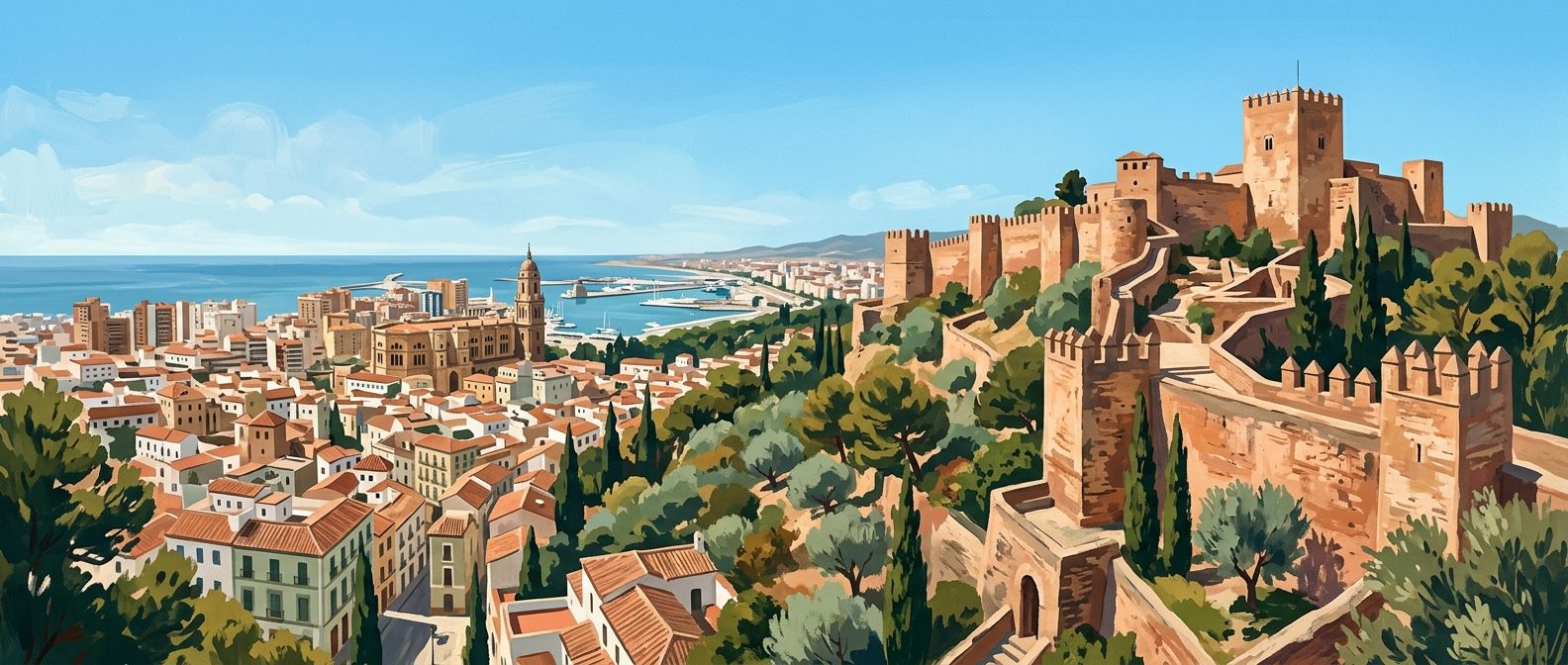
The Alcazaba of Málaga is a palatial fortification dating primarily from the 11th-century Hammudid dynasty. It stands as one of the best-preserved Moorish citadels in Spain, serving as a powerful reminder of the city’s Islamic past. Perched on a hillside overlooking the Mediterranean Sea and the port, it combines military architecture with the refined beauty of Nasrid-style palace gardens. This site suits anyone interested in medieval history, architecture, or urban photography. It offers a quieter alternative to the Alhambra in Granada while providing a similar architectural language of horseshoe arches, cooling water features, and intricate brickwork. History enthusiasts will appreciate the strategic layering of the site, which incorporates Roman materials into its Moorish walls, reflecting the diverse cultural shifts that have shaped Málaga over two millennia. As you ascend through the fortification, you pass through a series of defensive gates designed to trap and confuse invaders. The Puerta de la Bóveda and the Puerta de las Columnas are particularly impressive, with the latter reusing Roman marble columns for its construction. Once inside the inner enclosure, the environment shifts from austere military stone to the delicate aesthetics of the Taifal and Nasrid palaces. The Plaza de Armas provides a panoramic view of the coastline and the bullring, while the residential area features traditional courtyards. Look for the Patio de los Surtidores, where a central channel of water leads the eye toward a triple-arched portico. The craftsmanship in the carved plasterwork and the geometric tile patterns in these quarters demonstrates the sophistication of the ruling elite who lived here during the Middle Ages. Higher up the complex, the Cuartos de Granada house a small archaeological museum where you can see ceramics and pottery discovered on-site. The views from the ramparts are exceptional, offering a clear line of sight over the Roman Theatre located at the foot of the hill. Exploring the various terraced gardens is a highlight in itself, as the smell of jasmine and orange blossom fills the air during spring. Take time to sit by the small pools and fountains that were designed not just for beauty but to provide a natural cooling system against the heat of southern Spain. The main entrance is located on Calle Alcazabilla, right next to the Roman Theatre in the city centre. You can purchase tickets at the automated machines or the ticket office at the entrance, and there is a combined ticket available if you also plan to visit Gibralfaro Castle. Check the official website for current opening times and prices. Most visitors find that two hours is sufficient to explore the site at a leisurely pace, though you might want longer if you are a keen photographer. There is a lift accessible from Calle Guillén Sotelo behind the City Hall, which is useful for those who wish to avoid the steep initial climb, though some parts of the upper fortification still require navigating uneven stone steps. Visit early in the morning or late in the afternoon to avoid the midday sun and the largest crowds. Sunday afternoons often offer free entry, though this can make the pathways quite congested. Wear sturdy walking shoes as the original stone paths can be slippery and irregular. Carrying a bottle of water is essential, particularly in the summer months, as the climb involves a fair amount of physical exertion in exposed areas with little shade.

Alcazaba de Antequera

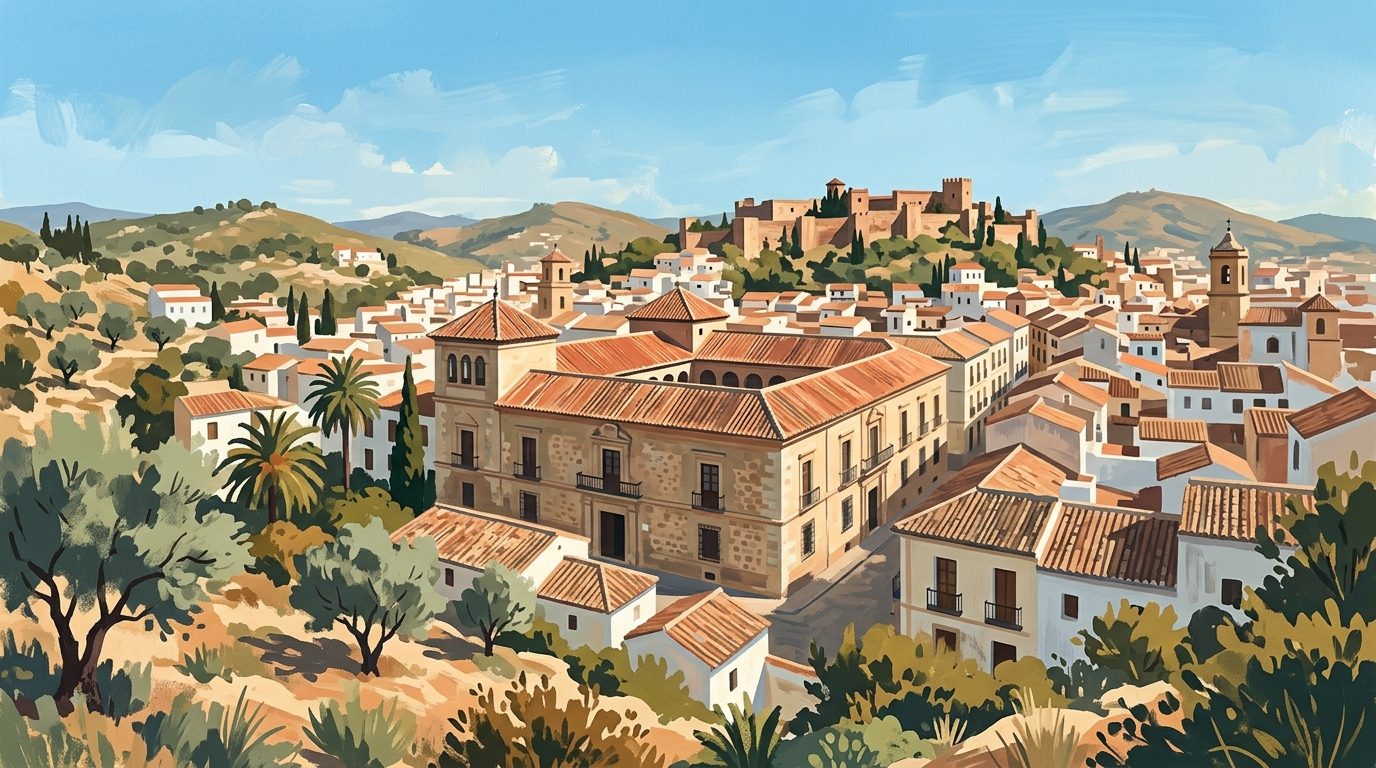
The Alcazaba of Antequera is a formidable Moorish fortress that dominates the skyline of this historic inland city in the province of Málaga. Built primarily during the fourteenth century on the foundations of a Roman settlement, it served as a vital defensive bastion for the Nasrid Kingdom of Granada. This site is particularly well-suited to travellers who have an interest in military architecture and those who enjoy seeing the physical layers of Spanish history. As a key strategic point often called the heart of Andalucía, it offers a window into the transition between Islamic and Christian rule. Visitors will find a well-preserved complex of walls, towers, and courtyards that provide a sense of the scale of medieval warfare and the importance of controlling the surrounding fertile plains. One of the most significant features is the Torre del Homenaje, or the Keep, which stands as one of the largest towers from the Moorish period in the region. Atop this tower sits an eighteenth-century bell tower, added later to signal the irrigation shifts in the valley. From this vantage point, you can look out across to the Peña de los Enamorados, a distinctive limestone mountain shaped like a human face. Another architectural highlight is the Torre Blanca, which demonstrates impressive masonry and features elegant vaulted ceilings inside. While exploring the ramparts, you should look for the ancient cisterns designed to sustain the garrison during prolonged sieges. The remains of the mosque and later dwellings within the perimeter show how the space evolved over several centuries of occupation. Before entering the main gates, you pass through the Arco de los Gigantes, a monumental archway built in 1585. This structure is fascinating because it incorporates Roman statues and inscriptions found in the vicinity, serving as an early outdoor museum. Inside the fortress, the Patio de Armas has been landscaped into gardens that offer a tranquil environment compared to the stark stone walls. Exploring these grounds allows you to see the foundations of the original Roman structures that predate the Islamic fortress. Using the provided audio guide is beneficial here, as it explains the military tactics used during the final siege in 1410 and helps bring the silent ruins to life with historical context. The Alcazaba is situated at the highest point of the town in Plaza de los Escribanos, immediately adjacent to the Royal Collegiate Church of Santa María la Mayor. Accessing the site usually involves a walk up through the narrow streets of the old quarter, which can be quite steep. It is advisable to purchase a combined ticket that includes entry to both the fortress and the Collegiate Church for a more comprehensive experience of Antequera’s heritage. You should plan to spend approximately two hours to see everything without rushing. Check the official website for current opening times and prices, as the site sometimes operates on a reduced schedule during public holidays or the winter months. Visiting during the early morning or late afternoon is recommended to avoid the strongest sun, as the stone battlements offer little shade. The late afternoon light is particularly effective for photography, casting long shadows across the valley and highlighting the peaks of the El Torcal mountain range in the distance. Wear comfortable, closed-toe shoes to navigate the uneven stone steps and gravel paths safely. If you are looking for a quieter experience, midweek visits are generally less crowded than weekends when more day-trippers arrive from the coast.

Antequera. Arco de los Gigantes

The Arco de los Gigantes, or Arch of the Giants, serves as a monumental gateway to the upper reaches of Antequera, specifically leading towards the Alcazaba and the Collegiate Church of Santa María la Mayor. Constructed in 1585, this late Renaissance structure is far more than a simple entry point; it is an open-air museum that signifies the city's pride in its Roman ancestry. It was designed by Francisco de Azurriola and sponsored by the local council to showcase the archaeological wealth of the region. History enthusiasts and those interested in classical architecture will find it particularly rewarding, as it incorporates ancient inscriptions and sculptures recovered from surrounding Roman settlements. It marks the transition from the medieval lower town to the noble religious and military heart of the city, making it an essential stop for anyone wanting to understand the layers of civilisation that have shaped this part of Málaga. When standing before the arch, take a moment to examine the two-metre-thick walls and the sheer scale of the construction. The most striking features are the Roman stones embedded directly into the masonry. These blocks come from various Roman towns such as Singilia Barba, Nescania, and Iluro, and they carry Latin inscriptions that were intentionally placed there to celebrate the imperial past. High above the central opening, you can see the coat of arms of the city, which includes a jar of lilies and the castle and lion of the Spanish crown. Historically, a large statue of Hercules stood atop the structure, though it has long since disappeared. You should also look for the relief depicting a vase of lilies, a symbol synonymous with Antequera's historical identity. The arch acts as a frame for the view of the church behind it, providing an excellent vantage point for photographs. Beyond the physical carvings, the experience of walking through the arch offers a perspective on the strategic layout of the city. As you pass through, the elevation provides a sweeping view over the white-washed rooftops of Antequera and towards the distinctive limestone formation known as the Peña de los Enamorados. This rock, which resembles a sleeping giant's profile, creates a dramatic backdrop that connects the man-made history of the arch with the natural landscape of the region. Many visitors spend time tracing the weathered letters of the Roman inscriptions, some of which remain remarkably legible despite centuries of exposure to the elements. Located at the Plaza de los Escribanos, the arch is easily reached on foot if you are already in the historical centre, though the walk involves a steady uphill climb. For those arriving by car, there is some parking available nearby, though spaces are limited during peak periods. The arch itself is an outdoor monument and can be viewed at any time without a ticket, making it a flexible addition to your itinerary. To fully appreciate the site and the adjacent monuments, allow approximately thirty minutes, though this can be extended if you plan to visit the Alcazaba immediately after. Check the official website for current opening times and prices for the nearby fortress and church. The best time to visit is during the late afternoon when the sun hits the sandstone and creates a warm glow on the Roman inscriptions. This timing also allows for better light when looking out towards the Peña de los Enamorados. Wear comfortable walking shoes, as the surrounding streets are paved with traditional cobbles. It is advisable to visit on a weekday to avoid the larger weekend crowds that gather near the viewpoints.

Baños Árabes Yacimiento Arqueológico

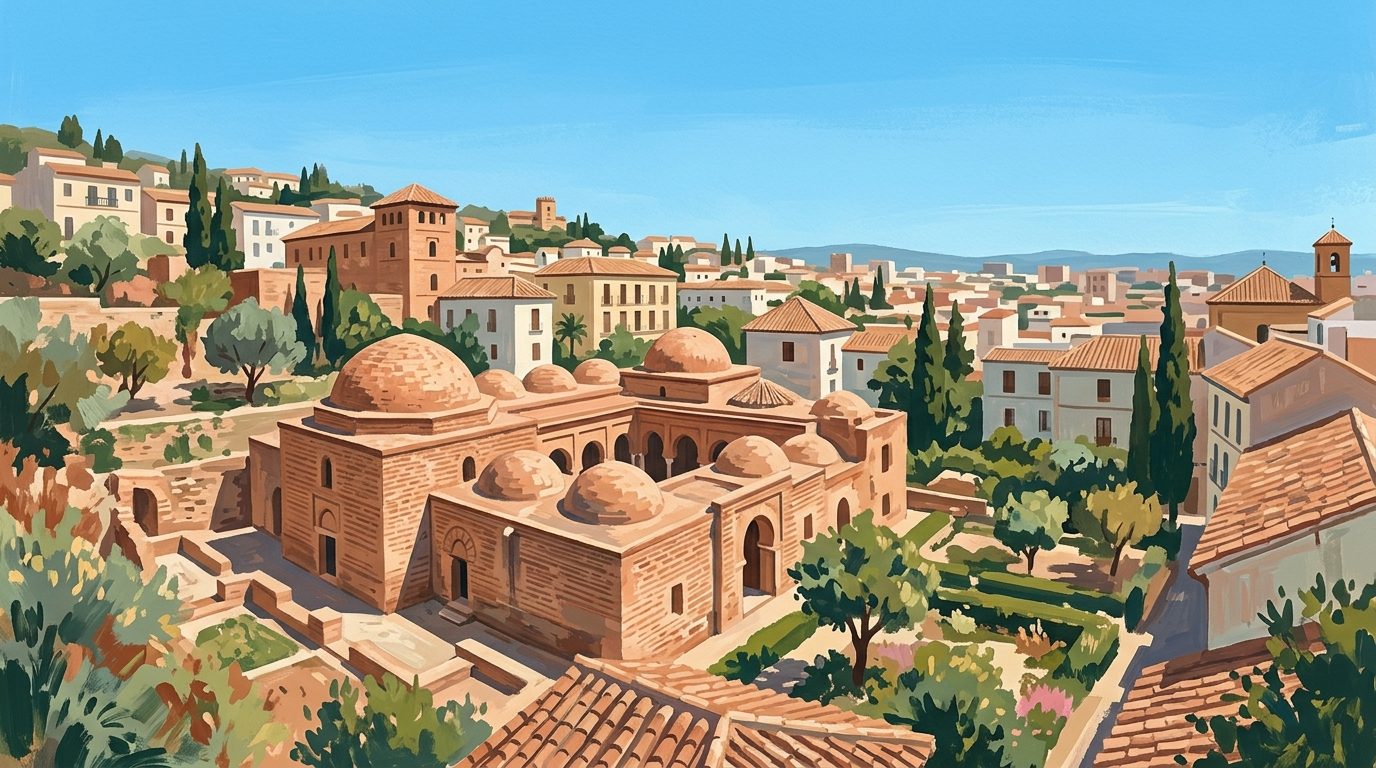
The Arab Baths in Ronda, located near the Old Bridge at the foot of the city walls, are among the best-preserved Islamic thermal complexes in the Iberian Peninsula. Constructed during the late thirteenth and early fourteenth centuries during the Marinid period, this site offers a profound look into the social and ritual purification practices of Al-Andalus. It is an ideal destination for history enthusiasts and architecture lovers who want to understand the urban fabric of medieval Ronda. Unlike many other baths that were repurposed or destroyed after the Reconquista, these remained largely intact because they were buried by flooding from the nearby Guadalevín River, preserving their structure for centuries until their excavation in the twentieth century. The site provides a rare opportunity to see a complete water management system that functioned at the edge of the medina. Visitors should pay close attention to the three main chambers, which follow the traditional Roman layout of cold, warm, and hot rooms. The central warm room is the most impressive, featuring horseshoe arches supported by brick and stone columns that create a sense of rhythmic symmetry. Look up at the barrel-vaulted ceilings to see the star-shaped skylights, which were designed not only to provide natural illumination but also to allow steam to escape and regulate the temperature. The hydraulic system is equally fascinating, particularly the well and the large water wheel, known as a noria, which was powered by a donkey to draw water from the river. The brickwork throughout the site remains remarkably crisp, demonstrating the sophisticated engineering skills of the builders who managed heat distribution through a subterranean hypocaust system. The boiler room, located at the end of the circuit, provides a glimpse into the functional side of the baths, where wood was burned to heat the water and the floors. A small interpretation centre on-site offers a short video presentation that helps reconstruct how the space would have looked and functioned in its prime, which is helpful for visualising the original marble finishes and colourful decorations. Walking through the outdoor garden area allows for a different perspective on the defensive walls of the city and the Puente Viejo. The quiet atmosphere of the San Miguel quarter adds to the experience, making it feel removed from the more crowded tourist spots near the New Bridge. Reaching the site requires a walk down from the main town centre towards the San Miguel neighbourhood. The descent is steep, so comfortable footwear is essential for the return journey uphill. You should plan to spend about forty-five minutes to an hour exploring the ruins and the visitor centre. Entry tickets are inexpensive and can usually be purchased at the small kiosk at the entrance, though those holding a Ronda Pass may find admission included. It is wise to check the official website for current opening times and prices, as these can vary between the summer and winter seasons. The site is generally open every day, though it may close early on Sunday afternoons. The best time to visit is during the morning to avoid the heat of the afternoon and the larger tour groups that often arrive midday. Bringing a bottle of water is recommended, as there are few facilities once you descend into the valley. If you are a photographer, the morning light filtering through the star-shaped vents in the ceiling creates a striking atmosphere inside the chambers. Combining this visit with a walk along the river path provides a comprehensive view of Ronda's historic fortifications.

Barco de chanquete La Dorada

The Barco de Chanquete, known as La Dorada, serves as a poignant monument to a defining moment in Spanish popular culture. Located in the Parque Verano Azul in Nerja, this is a full-scale replica of the fishing boat featured in the legendary 1980s television series Verano Azul. For Spanish visitors, the vessel is a site of deep nostalgia, representing the childhood summers of an entire generation. International travellers will find it an intriguing cultural landmark that highlights how a single television programme transformed this once-quiet fishing village into a major destination. This attraction particularly suits those interested in social history or television heritage, as well as families looking for an easy stop during a walk through the town. It stands as a permanent tribute to the character Chanquete and the actor Antonio Ferrandis. While visitors are unable to board the vessel, the exterior provides plenty of detail to admire from the ground. The boat is a faithful reconstruction of a traditional Mediterranean fishing craft, painted in the distinctive blue and white colours seen on screen. Observe the intricate rigging, the wooden masts, and the way the hull is positioned on its stone pedestal to simulate its presence on the water. Surrounding the boat, the park contains a series of commemorative plaques, each dedicated to a different character or child from the series. These plaques are arranged along the paths and provide a scavenger-hunt style activity for those familiar with the cast. The craftsmanship of the boat itself reflects the maritime traditions of the Axarquia coastline, offering a physical link to the local industry that preceded the tourism era. Beyond the ship itself, the wider park offers several related points of interest. Information panels are situated nearby, detailing the filming process and the massive impact the show had on Nerja’s development during the early 1980s. Each of the streets bordering the park is named after a character from the programme, which reinforces the sense of place. It is worth taking a slow circuit of the entire vessel to see the different angles of the rigging and the name La Dorada painted on the prow. The site also functions as a communal space where local residents gather, providing a glimpse into daily life in Nerja away from the immediate seafront hotels. Finding the attraction is straightforward as it sits on the western edge of the town centre. From the Balcón de Europa, it is a pleasant fifteen-minute walk through the residential streets of Nerja. For those driving into the town, a large underground public car park is situated directly beneath the Parque Verano Azul, providing immediate access to the site. Because the boat is located within a public park, there are no admission fees and no tickets are required for entry. The park remains open twenty-four hours a day, allowing for flexible planning. Most people find that thirty minutes is sufficient to view the boat and read the nearby information boards before moving on to the beach or the town centre. To avoid the strongest heat of the day, plan your visit for the early morning or the golden hour of the late afternoon when the light hits the white paint of the boat most effectively. For the most authentic experience, try to watch an episode or listen to the whistle-heavy theme music of the show before your arrival. Since the park is close to the mouth of the Rio Chillar and El Playazo beach, it makes an excellent starting point for a longer coastal walk.

Bullring of the Royal Cavalry of Ronda

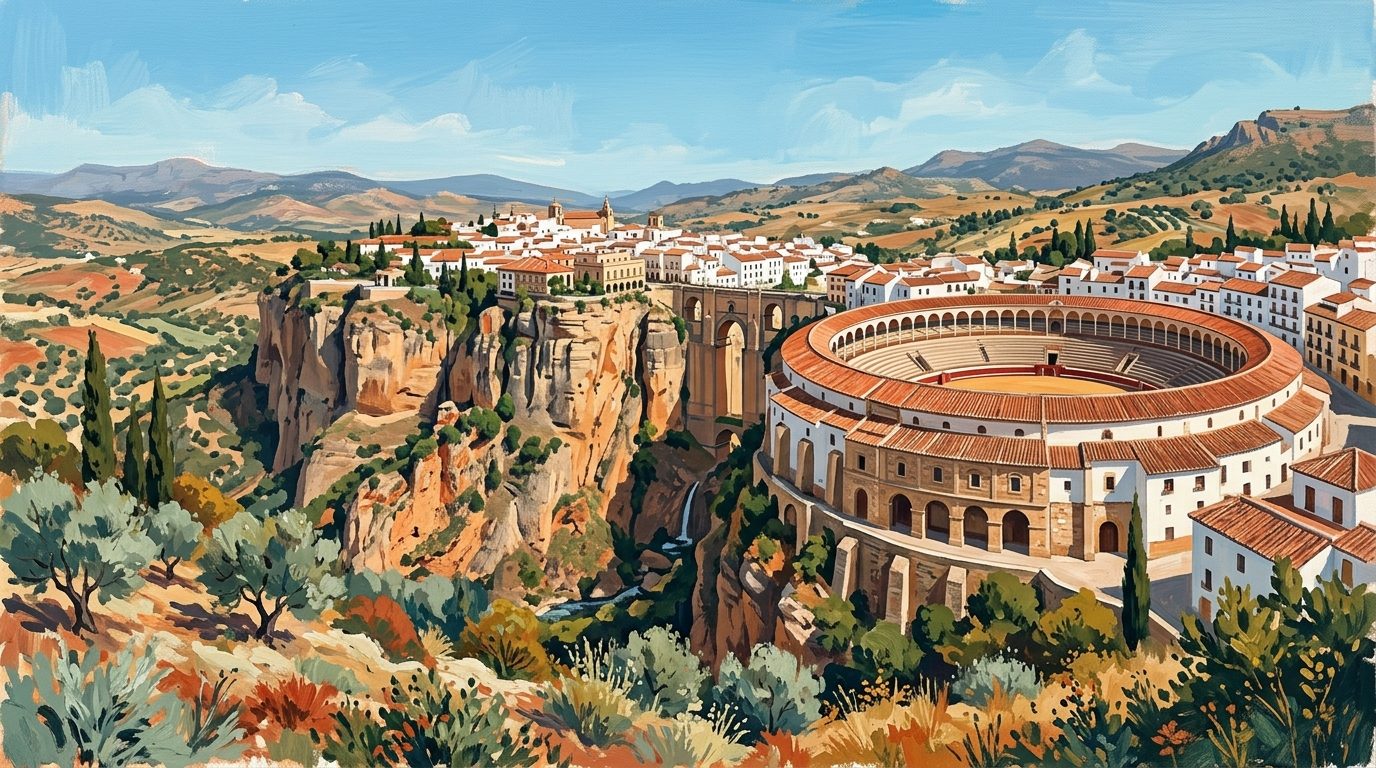
The Plaza de Toros de Ronda is one of the oldest and most architecturally significant bullrings in Spain, standing as a testament to the town's deep-rooted equestrian and bullfighting traditions. Built in 1785 by the Royal Cavalry of Ronda, this arena is crafted entirely from stone and holds a special place in Spanish history as the birthplace of the modern style of bullfighting. It is particularly well-suited to history enthusiasts and those interested in traditional Spanish culture, offering a window into the evolution of local customs. Even for those who choose not to watch a live event, the building itself is a masterpiece of Neoclassical design that reflects the prestige of the noble cavalry order that commissioned it. Walking through its gates allows you to appreciate the weight of several centuries of heritage within a town famous for its dramatic cliffside location. The most striking feature of the arena is its elegant double-tiered arcade, supported by one hundred and thirty-six Tuscan columns that form sixty-eight distinct arches. Unlike many other bullrings, the spectator galleries are covered by a roof, providing a sense of grandeur and intimacy. While exploring, you should pay close attention to the Royal Box, which was designed for the Spanish monarchy and features intricate stone carvings. Beneath the seating area, the site houses the Taurine Museum, which contains an extensive collection of historical artefacts, including ornate suits of lights, original posters, and equipment used by legendary matadors from the Romero and Ordóñez dynasties. The museum provides the necessary context to understand how the rules of the sport were codified here in the eighteenth century, transitioning from a mounted activity to the foot-based performance seen today. Beyond the main arena and the museum, visitors can explore the stables and the tack room, which offer a glimpse into the daily life of the horses and riders of the Royal Cavalry. The saddlery collection is particularly impressive, displaying leatherwork and equipment that have remained largely unchanged in design for generations. Another essential part of the visit is the collection of antique firearms and the gallery dedicated to the history of the institution itself. This section explains the noble order's role in training the local aristocracy for military service and equestrian excellence. Do not miss the opportunity to stand in the centre of the yellow sand arena to experience the acoustics and the sheer scale of the stone tiers rising around you. The bullring is located on Calle Virgen de la Paz, just a short walk from the famous Puente Nuevo bridge in the centre of Ronda. It is easily accessible on foot from anywhere in the old town or the newer commercial district. The site is generally open every day of the week, though it may close early or entirely during special events or the annual Pedro Romero Fair in September. Most visitors find that ninety minutes to two hours is sufficient to explore the arena, the museum, and the peripheral galleries at a relaxed pace. Tickets can be purchased at the entrance or through the official website, and an audio guide is recommended to provide more detailed historical background. Check the official website for current opening times and prices to ensure your visit aligns with the latest schedule. To avoid the busiest crowds and the heat of the midday sun, aim to arrive as soon as the gates open in the morning. The light during the early hours is also ideal for capturing the texture of the stone and the contrast of the yellow sand. Wear comfortable shoes, as the ground inside the arena and the surrounding paths can be uneven. If you are visiting during the height of summer, the shaded galleries provide a welcome relief while you study the museum exhibits.

Castillo de Gibralfaro

Perched on a high hill overlooking the city and the Mediterranean, the Castillo de Gibralfaro is a fourteenth-century fortress built by Yusuf I of the Kingdom of Granada. It was designed primarily to protect the Alcazaba below and eventually became one of the most impenetrable strongholds on the Iberian Peninsula. It is an essential stop for history enthusiasts and anyone who appreciates expansive panoramic views of the coastline. The site suits active travellers who do not mind a steep climb and those interested in military architecture or the Islamic heritage of the Costa del Sol. It provides a sense of scale and perspective to Málaga that you simply cannot get from the city streets below. This fortress stood as a witness to the final stages of the Catholic Reconquest and remains a symbol of the city's strategic importance. The primary reason to visit is the extensive circuit of defensive walls. You can walk the entire perimeter of the ramparts, which offer three-hundred-and-sixty-degree views of the bullring, the port, and the cathedral. Look out for the Main Tower, known as the Torre Blanca, which contains a small museum detailing the history of the castle through military uniforms, navigation maps, and period weapons. The architecture reflects its function as a permanent garrison, with zig-zagging walls designed to prevent attackers from gaining ground easily. You will also see the deep Airón Well, which was carved directly into the rock to supply water to the soldiers during long sieges. The internal courtyards are now planted with fragrant pines and eucalyptus trees, providing a brief respite from the sun while you explore the outer fortifications. Do not miss the interpretation centre located in the former gunpowder store. It houses an informative model of the castle and historical artefacts that explain how life functioned within these walls during the Reconquista and beyond. Walking along the high sections of the wall gives you a clear view of the Coracha, the double-walled corridor that historically linked the castle to the lower palace. Watching the sunset from the western ramparts is a memorable experience as the city lights begin to glow and the harbour reflects the changing colours of the sky. It is a peaceful spot to contemplate the layers of history that have shaped this Mediterranean port. Reaching the castle involves a strenuous thirty-minute walk up a steep path from the city centre, starting near the Plaza de la Aduana. If you prefer to save your energy for the ramparts themselves, take the number thirty-five bus from the Alameda Principal or use the tourist bus service. Tickets can be purchased at the entrance, and there is a combined ticket available for those who also plan to visit the Alcazaba. Check the official website for current opening times and prices. You should allow at least ninety minutes to explore the grounds and walk the full circuit of the walls properly without feeling rushed. The best time to visit is early in the morning or late in the afternoon to avoid the midday heat, as there is very little shade on the exposed ramparts. Wear sturdy shoes because the stone paths and stairs can be uneven and slippery in places. Carry a bottle of water with you, although there is a small kiosk near the entrance for basic refreshments. Visiting on a clear day ensures you can see as far as the Rif Mountains across the sea.

Centre Pompidou Málaga

The Centre Pompidou Málaga serves as the first international branch of the renowned Parisian institution, situated within the glass-and-steel structure known as El Cubo at the corner of the city's harbour. It represents Málaga's transformation into a major European cultural hub and offers a curated selection of modern and contemporary art from the twentieth and twenty-first centuries. The gallery is particularly well-suited to those who enjoy diverse artistic movements, from cubism and surrealism to digital installations and photography. It provides a more intimate and manageable experience than its French counterpart, making it an excellent choice for art enthusiasts who prefer a thematic journey rather than an overwhelming marathon through vast corridors. The permanent collection is frequently reconfigured but usually follows specific themes such as the body, the city, or the portrait. Visitors should keep an eye out for works by masters like Francis Bacon, Frida Kahlo, and Marc Chagall, alongside pieces by contemporary creators who challenge traditional perspectives. The underground gallery space is surprisingly spacious and uses light effectively to highlight the textures and colours of the canvases and sculptures. One of the most striking aspects is the collection of Spanish avant-garde works, which bridges the gap between local history and international modernism. The curated paths encourage you to look at how different artists have interpreted similar human experiences across different decades and continents. Beyond the permanent exhibitions, the centre hosts temporary shows that often focus on specific artists or niche movements. There is also a dedicated space for children and families which provides interactive workshops and exhibits designed to introduce younger visitors to the concepts of modern art through play and tactile engagement. The gift shop is worth a stop for its selection of design books and artistic souvenirs that are difficult to find elsewhere in the region. Before you leave, take a moment to stand directly beneath the multicoloured glass cube on the surface level, as the shifting sunlight creates a kaleidoscope of colour on the floors below. You can find the gallery at the Muelle Uno waterfront development, a short and pleasant walk from the historic centre and the cathedral. The entrance is located beneath the large glass cube which acts as a landmark for the entire port area. Most visitors find that two to three hours is sufficient time to explore both the permanent and temporary collections at a leisurely pace. You should check the official website for current opening times and prices, as these can change seasonally, though the gallery generally remains open throughout the day without a midday closure. Tickets can be purchased at the entrance or online in advance to avoid queues during peak holiday periods. The best time to visit is during the early morning or late afternoon when the harbour is less crowded and the light hitting the cube is at its most dramatic. Since the gallery is located underground, it serves as a perfect retreat from the intense midday heat of the Andalucian sun. Consider combining your visit with a walk along the palm-lined promenade of El Palmeral de las Sorpresas for a full afternoon of culture and seaside views.

El Tajo de Ronda

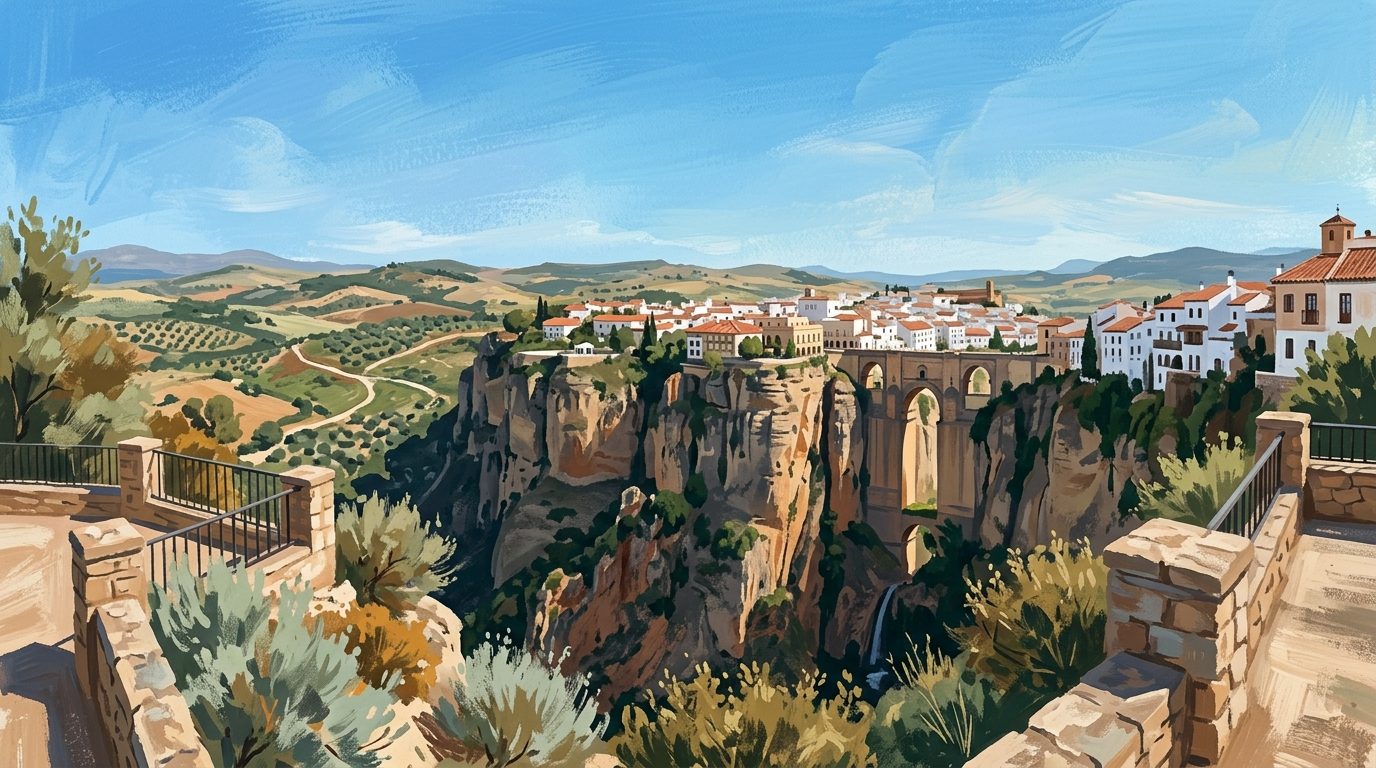
El Tajo is the dramatic limestone gorge that cleaves the city of Ronda in two. Carved by the Guadalevín River over millions of years, it is the defining geological feature of the town and provides the foundation for its most famous landmarks. It matters because it historically served as a formidable defensive barrier and now offers some of the most recognisable landscapes in southern Spain. This site suits photographers, history enthusiasts, and nature lovers who appreciate rugged landscapes and the intersection of human engineering with natural wonder. It is a place for those who do not mind walking on uneven surfaces and are comfortable with heights. The primary focal point of the gorge is the Puente Nuevo, the eighteenth-century bridge that spans the deep chasm. Look for the small windows in the central arch of the bridge, which once served as a prison and later a tavern. To appreciate the scale of the cliffs, walk to the Alameda del Tajo gardens where balconies project over the edge, offering views of the river nearly one hundred metres below. The contrast between the whitewashed buildings of the old Moorish quarter and the newer mercantile district is most apparent from the various lookout points. Keep an eye out for the kestrels and swifts that nest in the vertical rock faces, soaring through the updrafts created by the gorge. For a different perspective, descend the Camino de los Molinos trail that winds down to the base of the cliffs. This path leads to the remains of old flour mills and offers the classic view of the Puente Nuevo towering above. Alternatively, visit the Casa del Rey Moro to access the Water Mine, a fourteenth-century military engineering feat. You can climb down nearly three hundred steps carved into the rock to reach the riverbed. This underground passage was used to supply water to the city during sieges and provides an intimate, if strenuous, encounter with the geology of the gorge from the inside out. Ronda is well-connected by road and rail, with direct trains from Algeciras and easy bus links from Marbella or Seville. The gorge itself is an open natural feature and can be viewed for free from many public terraces at any hour. However, specific sites like the Water Mine or the bridge museum require paid entry. Check the official website for current opening times and prices for these specific attractions. A thorough exploration of the various viewpoints and the hike to the bottom typically takes between two and four hours, depending on your pace and how many photographs you stop to take. Visit during the early morning or late afternoon to experience the most evocative lighting and to avoid the day-trip crowds that arrive by midday. The sunset over the gorge is particularly striking as the limestone takes on a golden hue. Wear sturdy walking shoes with good grip, as the cobblestones and mountain paths can be slippery. If you plan to hike to the bottom, carry water and avoid the midday sun during the summer months when the heat in the canyon can be intense.

Iglesia del Carmen

The Iglesia del Carmen in Antequera is one of the most significant religious buildings in the province of Málaga, representing a peak of Andalusian Baroque architecture. Originally part of a Carmelite convent, this sixteenth-century church stands on a rocky outcrop overlooking the river, offering a sense of historical weight that appeals to art historians and casual travellers alike. It is particularly suited to those who appreciate intricate craftsmanship and the theatricality of Spanish religious art. While the exterior appears relatively sober, the interior contains some of the most extraordinary woodcarvings in the region. Visitors come here to witness the transition from the Renaissance to the exuberant Baroque style, making it a foundational stop for anyone exploring the cultural heritage of inland Andalusia. The focal point of the interior is the monumental main altarpiece, a masterwork created by Antonio Primo in the eighteenth century. This colossal structure is carved entirely from pine and remains unpainted, which allows the intricate detail of the figures and botanical motifs to stand out through the play of light and shadow. You should spend time examining the central niche, which houses the image of the Virgen del Carmen. Beyond the altarpiece, the church features three distinct chapels on each side of the nave. Look up to appreciate the Mudéjar armoury ceiling, a remnant of the earlier construction phases that contrasts sharply with the later Baroque additions. The fusion of these styles provides a visual timeline of the building's evolution and demonstrates the skill of the local artisans who worked on the site over several centuries. The side chapels contain equally impressive works, including the Chapel of the Soledad, which is decorated with elaborate plasterwork typical of the Antequera school. Another notable feature is the pulpit, an intricate piece of red marble and jasper that showcases the mineral wealth of the surrounding Sierra de la Torcal. As you walk through the nave, notice the various oil paintings depicting scenes from the life of Saint Elias and other Carmelite figures. The sheer scale of the decorative elements creates an immersive atmosphere that feels more like an art gallery than a simple parish church. It is worth pausing at the back of the church to take in the symmetrical balance of the architecture before you leave. To reach the Iglesia del Carmen, head towards the upper part of Antequera near the river. If you are arriving by car, it is best to park in the lower town and walk up the hill, as the streets surrounding Plaza del Carmen are narrow and steep. The church is a short walk from other major sites like the Alcazaba. Check the official website for current opening times and prices, as these can vary depending on the season and local religious festivities. A typical visit lasts about forty-five minutes to an hour, allowing enough time to study the altarpiece and the various side chapels without rushing. Small entrance fees are common for heritage sites in the city, usually helping with the ongoing conservation of the woodwork. The best time to visit is during the morning when the sunlight filters through the high windows, illuminating the natural wood of the altarpiece. Visiting on a weekday is generally quieter, allowing for a more contemplative experience away from the weekend crowds. Since the church is located on a hill, wear comfortable walking shoes and carry water, especially during the summer months. Photography is often permitted without flash, but always verify current rules at the entrance to respect the sanctity of the space.

Malaga Museum
attraction

Malaga Museum

The Malaga Museum occupies the imposing neoclassical Palacio de la Aduana, situated between the park and the hillside of the Alcazaba. This institution serves as the provincial headquarters for both fine arts and archaeology, making it the largest museum in Andalusia. It is an essential stop for anyone wanting to understand the deep historical layers of the city, from its Phoenician foundations to its nineteenth-century artistic flowering. The space suits visitors who appreciate a quiet, well-curated environment where the architecture of the building is as much a part of the experience as the exhibits themselves. It offers a comprehensive overview of the region's cultural heritage under one roof. On the second floor, the archaeological section displays an impressive array of artefacts discovered across the province. Look out for the Phoenician marble sarcophagi, which are remarkably well-preserved and highlight the city's ancient maritime connections. The Roman era is represented by intricate mosaics and statues found at nearby sites like Cartama. Moving to the first floor, the fine arts collection focuses heavily on nineteenth-century Spanish painting. Key works include the dramatic historical scenes of Jose Moreno Carbonero and the luminous landscapes of Enrique Simonet. The collection of Antonio Munoz Degrain is particularly noteworthy for its bold use of colour and imaginative subjects, representing a peak in local artistic production. Do not miss the section dedicated to the Loringian Museum, which recreates the private collection of a prominent nineteenth-century Malaga family. This includes the Lex Flavia Malacitana, a series of bronze plates containing the Roman laws of the city. The top floor of the museum provides a different perspective, housing the storage areas where visitors can see how objects are organised and preserved. The Islamic collection also deserves attention, featuring delicate ceramics and architectural fragments recovered from the neighbouring Alcazaba fortress, illustrating the importance of the city during the period of Al-Andalus. The museum is located at Plaza de la Aduana, easily reached on foot from the cathedral or the Roman Theatre. It typically opens from Tuesday to Sunday, though it is usually closed on Mondays and certain public holidays. Entry is free for citizens of the European Union, while others pay a small nominal fee. You should set aside at least two or three hours to explore both the art and archaeology sections thoroughly. Check the official website for current opening times and prices before your visit, as these can vary during the summer months or during local festival periods. To avoid the largest crowds, try to arrive shortly after the doors open in the morning. The building features a spacious central courtyard with palm trees, which offers a cool retreat during the warmer parts of the day. Take advantage of the free lockers near the entrance to store bags, as security staff are strict about large items in the galleries. The upper terrace provides excellent views over the city rooftops and the nearby fortress walls.

Málaga Park
attraction

Málaga Park

Málaga Park, often referred to as the Paseo del Parque, is an expansive botanical garden that stretches alongside the city’s primary thoroughfare. Created at the end of the nineteenth century on land reclaimed from the Mediterranean Sea, it serves as a green corridor linking the historic centre with the modern port area. This space is particularly suited to travellers who appreciate a quiet interlude between sightseeing or families looking for a safe, shaded area for children to play. It holds significant importance as one of Europe’s most diverse collections of tropical and subtropical flora, offering a unique microclimate that is noticeably cooler than the surrounding streets. Rather than a formal botanic garden, it functions as a public thoroughfare where exotic plants are woven into the daily life of the city. The primary highlights of the park are the immense botanical specimens brought back from across five continents. Visitors should look for the towering Canary Island palms and the dragon trees that line the main paths. Amongst the dense greenery, several ornate fountains provide focal points for a stroll, including the Nymph of the Shell and the Fountain of Neptune. Numerous statues and busts dedicated to Málaga’s cultural figures are scattered throughout the grounds, such as the monument to the poet Salvador Rueda. The park’s layout consists of three parallel walkways, with the central path being the widest and most formal. Pay attention to the intricate pebble mosaics beneath your feet, which are a traditional feature of southern Spanish landscaping. Beyond the plant life, the park contains the Eduardo Ocón auditorium, an open-air venue that frequently hosts concerts and cultural festivals throughout the year. One of the most pleasant experiences is sitting on the various benches decorated with colourful Sevillian tiles, each telling a story or depicting scenes from Spanish life. Towards the eastern end, you will find dedicated play areas for children and quiet corners where locals gather to read or play chess. Looking upwards through the palm fronds, you can catch glimpses of the Alcazaba fortress and the Cathedral, providing a striking contrast between the natural canopy and the historic stone architecture of the city. Reaching the park is straightforward as it sits directly between the Plaza de la Marina and the Plaza del General Torrijos. Most city buses stop along the northern edge of the park, and it is a five-minute walk from the main pedestrian shopping street, Calle Larios. As a public park, it is free to enter and remains open twenty-four hours a day, allowing for evening strolls under the wrought-iron streetlamps. There is no requirement for tickets or pre-booking. Most visitors find that ninety minutes to two hours is sufficient to walk the length of the garden and admire the botanical variety, though it is a place that invites a slower pace. The best time to visit is during the height of summer, as the dense canopy provides a natural air conditioning effect when temperatures in the city centre become oppressive. Early mornings are particularly peaceful before the city fully wakes up, while sunset offers beautiful light filtering through the trees. For a seamless experience, combine your visit with a walk towards Muelle Uno at the port. Ensure you wear comfortable walking shoes, as the ground can be uneven in places due to tree roots.

Mirador de Ronda

The Mirador de Ronda refers to the series of lookout points offering sweeping views over the Tajo de Ronda gorge and the surrounding Serranía mountains. It is the defining landmark of this ancient plateau city, providing a dramatic perspective on the 120-metre deep chasm that splits the town in two. This site appeals to anyone from keen photographers and nature lovers to history enthusiasts who want to understand the strategic importance of Ronda's location. It is a place for contemplation, offering a sense of the sheer scale of the Andalucían landscape. Whether you are standing on the edge of the Alameda del Tajo or looking up from the valley floor, the site captures the rugged spirit of the region. The most prominent feature is the view of the Puente Nuevo, the eighteenth-century bridge that spans the abyss. From the viewpoints along the cliffs, you can observe the Guadalevín River cutting through the limestone rock far below. Look for the small balconies that overhang the drop, known locally as balcones del coño for the exclamation visitors often make when looking down. Beyond the immediate architecture of the town, the vista opens out across the Hoya del Tajo, a fertile plain dotted with olive groves and vineyards, framed by the peaks of the Sierra de Grazalema in the distance. The geological formations of the gorge itself are remarkable, showing centuries of water erosion that have created the vertical walls the city rests upon. For a different perspective, follow the path leading down from the town into the valley. Walking the Camino de los Molinos allows you to see the bridge from its base, where the scale of the masonry becomes truly overwhelming. You will pass the ruins of old flour mills that once used the river's power. It is also worth visiting the nearby Plaza de Toros, one of the oldest in Spain, which sits just behind the main cliff-side promenade. Standing at the railing as the sun begins to shift reveals different textures in the rock and the changing colours of the distant mountains. Most of the lookout points are public spaces and do not require a ticket or have specific opening hours. If you are arriving by car, park in one of the underground car parks near the town centre, such as the one beneath Plaza del Socorro, as the narrow streets of the old quarter are difficult to navigate. If you are travelling from Málaga or Seville, trains and buses run regularly to Ronda station, which is a ten-minute walk from the gorge. Allow at least two hours to walk the length of the cliffs and explore the various vantage points. Check the official website for current opening times and prices for specific monuments nearby like the bullring or the Casa del Rey Moro. Late afternoon provides the most dramatic light as the sun sets behind the mountains, casting long shadows across the valley. To avoid the largest crowds, try to arrive before the day-trip buses from the coast appear at mid-morning. Wear shoes with good grip if you plan to walk the lower trails, as the paths can be dusty and uneven. Bring a light jacket even in summer, as the wind off the mountains can be surprisingly cool.

Mirador del Bendito

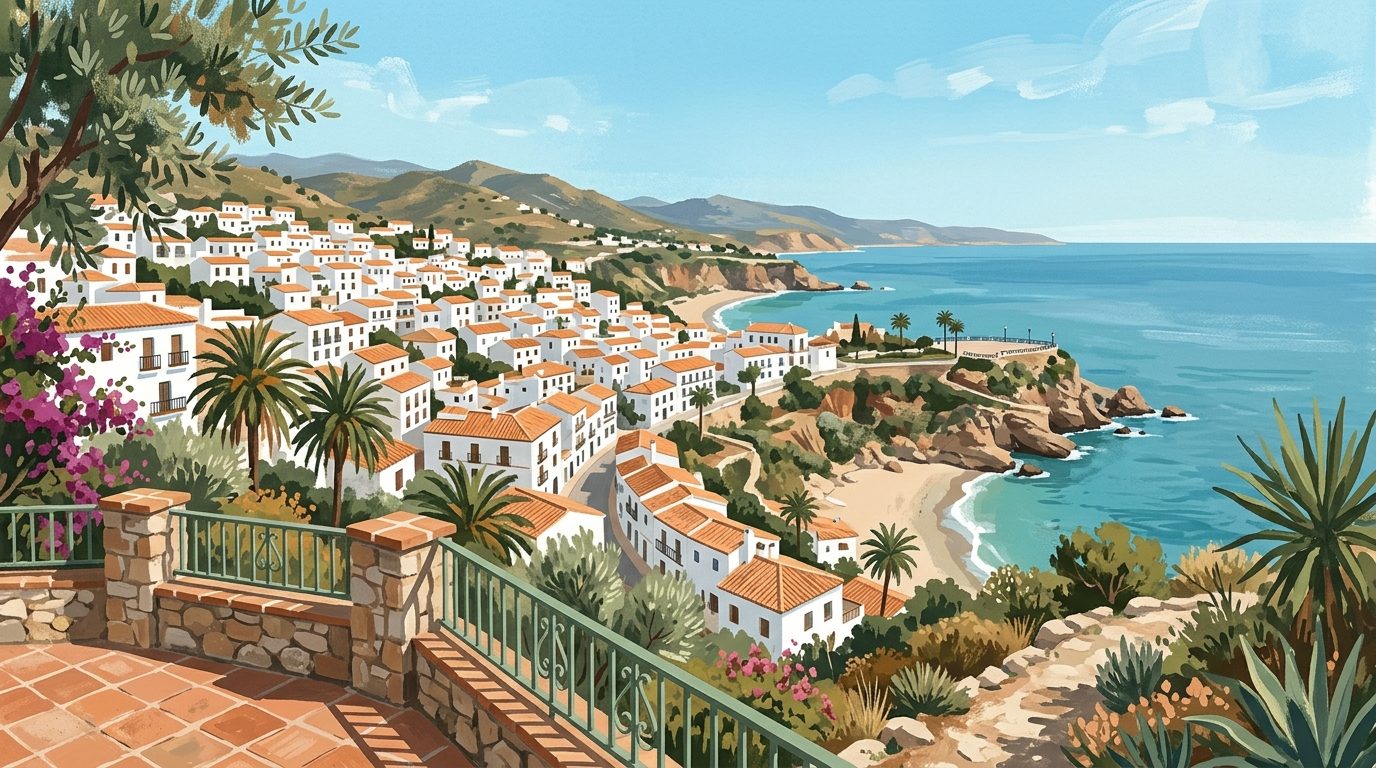
Mirador del Bendito is a quiet observation point located at the eastern end of the old town in Nerja. While many visitors flock to the famous Balcón de Europa, this particular viewpoint offers a more tranquil perspective of the rugged coastline. It sits atop a cliff overlooking the small cove of Playa de Carabeillo and the larger, more popular Playa de Burriana. This spot is perfectly suited for those who appreciate coastal scenery without the intense crowds often found in the town centre. It serves as a natural balcony where the Mediterranean meets the dramatic cliffs of the Axarquía region. Whether you are a photographer looking for the perfect light or a walker seeking a moment of stillness during a promenade through the white-washed streets, this lookout provides an authentic sense of the town seaside character. The primary draw of the Mirador del Bendito is its panoramic view of the coastline stretching towards the east. From this vantage point, you can see the azure waters of the Mediterranean crashing against the dark rocks and the golden sands of Burriana beach below. Look out for the traditional fishing boats that sometimes bob in the distance and the steep, winding steps that lead down towards the shore. The design of the viewpoint itself is modest and fitting for the local architecture, featuring a simple tiled area with benches that invite you to sit and watch the horizon. The surrounding gardens are often well-maintained, providing a splash of greenery and floral scent that mixes with the salty sea air. It is a place where the scale of the Sierra Almijara mountains meeting the sea becomes truly apparent. Walking along Calle Carabeo to reach the lookout is an experience in itself. This narrow street is one of the oldest in Nerja and remains remarkably well-preserved with its traditional houses and iron-wrought balconies. As you approach the viewpoint, the transition from the enclosed village atmosphere to the wide-open sea view is striking. Once at the mirador, take a moment to observe the different shades of blue in the water, which change depending on the depth and the seabed. It is an excellent spot for birdwatching, as seagulls and other coastal birds often soar at eye level near the cliff edge. The atmosphere here is particularly evocative during the blue hour just after the sun has set. Located at the end of Calle Hernando de Carabeo, the viewpoint is easily accessible on foot from the centre of Nerja. It is roughly a ten-minute walk from the Balcón de Europa, making it a simple addition to any walking tour of the town. Access to the Mirador del Bendito is entirely free of charge and the site remains open twenty-four hours a day, as it is a public space. You should expect to spend between fifteen and thirty minutes here, though many choose to stay longer to enjoy the breeze. While there are no facilities on the viewpoint itself, numerous cafes and shops are located just a short walk back along the street in the direction of the town hall. The best time to visit is during the early morning when the air is cool and the light is soft, or late in the evening to avoid the heat of the afternoon sun. If you plan to walk down the paths to the beaches below, ensure you are wearing sturdy footwear as the terrain can be steep and uneven. Bring a bottle of water, as there is very little shade at the viewpoint during the middle of the day.

Museo Casa Natal de Picasso

The Museo Casa Natal de Picasso is situated on the northern corner of Plaza de la Merced, occupying the very house where Pablo Picasso was born in 1881. This institution serves as a poignant gateway for understanding the formative years of the twentieth century's most influential artist. While the larger Museo Picasso Málaga nearby focuses on his major works, this site offers a more intimate glimpse into his early childhood and family life. It appeals to art historians and casual tourists alike who wish to connect with the man behind the Cubist movement. Visitors can walk through the rooms where the Picasso family lived, gaining a sense of the domestic environment that shaped his initial creative impulses and his lifelong connection to his Andalusian roots. Inside the museum, the nineteenth-century atmosphere is carefully preserved through a collection of personal belongings and period furniture. One of the most significant areas is the main salon, which reflects the bourgeois social standing of his father, José Ruiz Blasco, who was himself a painter and art teacher. You should look for the christening gown Picasso wore and various photographs that document the family’s daily life in Málaga. The museum also houses an impressive collection of graphic works, including lithographs and linocuts produced between 1930 and 1960. These pieces demonstrate his mastery of printmaking and show the evolution of his style long after he left his childhood home. The ceramic collection is equally noteworthy, featuring sketches and clay works that highlight his versatility as a craftsman. Beyond the domestic quarters, the museum manages a research library and a dedicated space for temporary exhibitions. These rotating displays often explore specific themes related to Picasso’s contemporaries or the historical context of his era. Make sure to visit the ground floor gallery, which often presents modern interpretations of Picasso's legacy. Another highlight is the collection of illustrated books, featuring rare editions that the artist collaborated on with famous poets and writers. This aspect of the museum reveals his intellectual depth and his involvement in the broader European avant-garde movement, providing a comprehensive view of his career beyond just painting. Reaching the museum is straightforward as it is located in the heart of Málaga’s historic centre, within walking distance of the cathedral and the Roman Theatre. Several local bus lines stop nearby at Plaza de la Merced, and the city’s central train station is a short taxi ride away. Most visitors find that one hour is sufficient to explore the galleries at a comfortable pace. You should check the official website for current opening times and prices, though it is worth noting that the museum typically opens daily except for major holidays. Tickets can be purchased at the door or online, with combined entry options often available for those wishing to see the temporary exhibition space located nearby. To avoid the largest crowds, try to visit during the mid-week or early in the morning when the museum first opens. The Plaza de la Merced itself is an excellent spot to sit and reflect on your visit, and you will find a bronze statue of Picasso on a bench outside where many people stop for a photograph. Remember that photography inside the galleries may be restricted, so pay attention to the signs in each room to ensure you follow the local regulations.

Museo de la Ciudad de Antequera (MVCA)

The Museo de la Ciudad de Antequera, housed in the grand Palacio de Nájera, acts as a primary chronicle of a town that has sat at the crossroads of Andalucía for millennia. This institution provides a sophisticated look at the cultural evolution of the region, making it an essential stop for history enthusiasts and those curious about the deep roots of southern Spain. It successfully bridges the gap between the prehistoric significance of the nearby Dolmens and the artistic heights of the Baroque era. The museum is particularly appealing for visitors who appreciate seeing high-quality archaeological finds presented within the elegant surroundings of an eighteenth-century noble residence, offering a clear sense of how the identity of the city has been shaped by successive civilisations. The most celebrated item in the museum is the Efebo de Antequera, a first-century Roman bronze of a beautiful youth that is widely regarded as one of the most important archaeological discoveries in the country. Found on a nearby farm in the mid-twentieth century, the statue stands as a testament to the sophistication of the Roman town of Anticaria. Beyond this single masterpiece, the Roman galleries are filled with expressive sculptures and detailed mosaics, such as the large mosaic of Oceanus. Visitors should look for the inscriptions and funerary markers that provide a human scale to the ancient world, particularly those detailing the lives of freed slaves who became significant figures in local society. The upper levels of the palace transition into the artistic wealth of the sixteenth to the nineteenth centuries. This section features an extensive collection of silverware and religious art, highlighting the historical importance of the city as a centre for silver smithing and ecclesiastical power. The museum also showcases the work of local painter Cristóbal Toral, known for his intriguing use of luggage and suitcases as central themes in his paintings. The building itself is a highlight of the visit; climbing the tower of the palace offers a panoramic perspective of the town, allowing you to see the relationship between the historic centre and the limestone landscape that surrounds it. Finding the museum is straightforward as it sits on Plaza del Coso Viejo, a prominent square within easy walking distance of the central shopping streets and the Alcazaba. If you are driving into Antequera, it is best to use the underground car park at Plaza de Castilla or nearby street parking, as the immediate vicinity of the museum consists of narrow pedestrian-friendly lanes. Plan to spend around two hours exploring the various floors. Check the official website for current opening times and prices, and keep in mind that many museums in the region close on Monday. Tickets are typically purchased at the entrance, and the facility is well-equipped with modern amenities for visitors. To enjoy the galleries at a more leisurely pace, try to visit on a weekday morning or during the late afternoon. The museum is an excellent retreat when the sun is at its strongest, as the thick walls of the palace keep the interior galleries naturally cool. After finishing your tour, take a moment to sit in the courtyard or the surrounding plaza to appreciate the exterior architecture of the Palacio de Nájera, which is considered one of the finest examples of civil architecture in the province of Málaga.

Museo Picasso Málaga

Located within the historic Palacio de Buenavista, the Museo Picasso Málaga stands as a profound tribute to the city’s most famous son. Established in 2003, it fulfilled Pablo Picasso's own wish that his work be represented in the place of his birth. The museum occupies a converted sixteenth-century palace that seamlessly blends Renaissance architecture with modern gallery spaces. It is an essential stop for anyone wanting to understand the immense breadth of Picasso’s creative output, spanning nearly eight decades of his life. While seasoned art historians will find plenty to analyse, the collection is accessible enough for casual visitors who wish to explore how a child prodigy from the south of Spain transformed into the most influential figure in modern art history. The permanent collection comprises over two hundred works donated or loaned by members of the Picasso family. Rather than focusing solely on his most famous masterpieces found in Paris or Madrid, this museum offers an intimate look at his personal artistic evolution. You should pay close attention to his early academic studies, which reveal a technical mastery often overshadowed by his later experimental styles. The exhibition rooms guide you through his various phases, including his explorations of Cubism, his classical period, and his deeply moving late portraits. Of particular interest are the sculptures and ceramics on display, which showcase his playful nature and his ability to find creative potential in unconventional materials. The layout is designed to be chronological, allowing you to trace the shifting themes of his life, from domestic intimacy to the broader tragedies of the twentieth century. Beyond the canvases and sketches, the museum offers several unique architectural experiences. Do not overlook the basement level, where excavations during the palace's renovation revealed significant archaeological remains. Here, you can view Phoenician walls, Roman structures, and elements of an Islamic palace, providing a physical timeline of Málaga’s long history beneath the modern gallery floors. The central courtyard of the Palacio de Buenavista is another highlight, offering a tranquil space to reflect on the art. The museum also hosts high-quality temporary exhibitions that often place Picasso’s work in conversation with other major artists or specific movements, so it is worth checking the schedule before your arrival to see what additional displays are available. You can find the museum on Calle San Agustín, a short walk from the Cathedral in the historic centre of Málaga. The city is well-connected by train and bus, and the museum is easily reached on foot from most central locations. It is open every day of the week, though hours can vary slightly depending on the season. To avoid disappointment and long queues, it is highly recommended to book your tickets in advance through the official website, where you can choose a specific entry time. Most visitors find that ninety minutes to two hours is sufficient to appreciate both the permanent collection and the temporary exhibitions at a comfortable pace. Check the official website for current opening times and prices to ensure you have the most up-to-date information for your trip. To enjoy a quieter experience, try to schedule your visit for early morning immediately after opening or during the late afternoon when the largest tour groups have departed. Taking advantage of the included audio guide is highly beneficial, as it provides valuable context to the works on display. If you have a deeper interest in the artist, consider purchasing a combined ticket that includes the Museo Casa Natal, located nearby in Plaza de la Merced, where Picasso spent his early childhood.

Museum of the village of Nerja

The Museo de Nerja, situated in the heart of the town, serves as an essential companion to the famous Nerja Caves. It offers a comprehensive chronological journey through the history of the Axarquía region, from the Palaeolithic era to the tourism boom of the 1960s. This museum is particularly suited to those who want to understand the cultural and archaeological context of the area beyond its beaches. It appeals to history enthusiasts and families who have visited the caves and wish to see the artefacts discovered there. By placing the town’s development within a wider Mediterranean framework, the museum provides a deeper appreciation for how this former fishing village evolved into a major international destination. The collection is organised across several floors, featuring interactive displays and significant archaeological finds. A primary highlight is Pepita, the well-preserved skeleton of a young woman dating back nearly 10,000 years, which offers a poignant glimpse into prehistoric life in the caves. Visitors should also look for the Roman ceramics and Moorish coins that document the various civilisations that settled along this coastline. The museum uses modern technology, including touch screens and audiovisual presentations, to explain the geological formation of the landscape and the importance of the local sugar industry in the nineteenth century. Look out for the detailed models of the village as it appeared in centuries past, which help to visualise the urban transformation that occurred before the arrival of modern tourism. Beyond the permanent archaeological exhibits, the museum often hosts temporary art exhibitions and cultural events in its lower gallery. One specific experience to look for is the section dedicated to the filming of the popular Spanish television series Verano Azul, which brought Nerja into the national spotlight during the 1980s. This nostalgic display connects the town’s ancient roots with its contemporary identity. The rooftop area also provides a different perspective of the surrounding square and the mountains in the distance, offering a quiet space to reflect on the historical timeline presented throughout the building. The museum is located at Plaza de España, right next to the Balcón de Europa, making it easy to find on foot from the town centre. It is open throughout the year, though hours may vary between the summer and winter seasons. Visitors can purchase a joint ticket that includes both the Nerja Caves and the museum, which is often more economical than buying them separately. You should allow approximately one to two hours to explore the exhibits thoroughly. Check the official website for current opening times and prices, especially as evening hours can change during local festivals or the peak summer months. To avoid the busiest crowds, it is best to visit the museum in the morning or during the mid-afternoon siesta period when many people are at the beach. If you are visiting the Nerja Caves first, keep your ticket as it may provide discounted entry here. Wear comfortable shoes as there is a fair amount of walking between floors, although the building is fully accessible with lifts for those who need them.

Parque Verano Azul

Parque Verano Azul is a pleasant public park in Nerja that serves as a living tribute to one of Spain’s most beloved television series from the early 1980s. While international visitors might not initially recognise the cultural significance of the show, the park is a central part of the town’s identity and offers a quiet retreat from the more crowded coastal areas. It is particularly well-suited for families with children, fans of classic television, and anyone looking for a relaxed stroll through landscaped gardens. Located on the western side of the town near the mouth of the Chillar river, the park provides a spacious environment where locals and tourists alike can enjoy the Mediterranean air while reflecting on the nostalgic connection between the town and the screen. The most prominent feature of the park is undoubtedly La Dorada, a full-scale replica of the fishing boat belonging to Chanquete, the show’s central character. This striking blue and white vessel sits atop a brick pedestal and serves as the park’s focal point, offering an excellent opportunity for photography. As you walk through the various paths, you will notice that the streets within the park are named after the main characters of the series, such as Tito, Bea, and Pancho. There are also stone plaques and memorials dedicated to the cast and crew, providing context for those interested in the history of the production. Beyond the television memorabilia, the park contains well-maintained flower beds, palm trees, and a large children’s play area that makes it a practical destination for those travelling with younger children who need space to run around. In addition to the main monuments, the park offers several quiet corners with benches where you can sit and take in the views of the Sierra de Almijara mountains rising behind the town. The layout is quite open, making it a popular spot for outdoor exercise or a leisurely afternoon walk. If you follow the paths towards the southern end, you are only a short distance from the pebble shores of Playa el Chucho and the start of the larger Playa Playazo. This makes the park a sensible starting point for a coastal walk before heading back towards the town centre or the Balcón de Europa lookout point. Accessing the park is straightforward as it is situated on Calle Antonio Ferrandis Chanquete, just a ten-minute walk from the town centre. For those arriving by car, there is a large public car park located directly adjacent to the gardens, which is one of the most convenient places to park in Nerja. As a public municipal space, entry is free of charge and the park remains open throughout the day and evening. Most visitors find that forty-five minutes to an hour is sufficient time to see the boat and walk the length of the grounds, though families may wish to stay longer to make use of the playground facilities. To avoid the strongest sun, it is best to visit during the late afternoon or early evening when the light softens over the mountains. The park provides a useful shortcut if you are walking from the western hotels towards the historic centre. For the best experience, bring some water and a camera, and check the official website for current opening times and prices, although as a public space it generally remains accessible and free to enter throughout the year.

Playa la Malagueta

Playa la Malagueta is the most famous city beach in Málaga, situated just a short stroll from the historic centre and the modern port. For visitors to the city, it provides an immediate escape to the Mediterranean without the need for a car or public transport. The beach stretches for over a kilometre and is characterised by its dark volcanic sand and calm waters, protected by the harbour walls. It suits almost every type of traveller, from families with young children who appreciate the shallow shoreline and play areas to solo travellers looking for a convenient spot to sunbathe between visiting museums. Its urban location means it acts as the city's communal front garden, where locals and tourists mingle along the wide promenade and under the shade of palm trees. The most recognisable landmark on the beach is the large Malagueta sculpture, made of sculpted sand-coloured concrete, which serves as a popular spot for photographs. Beyond the iconic signage, the beach is lined with traditional chiringuitos, or beach bars, which are the heart of the local culinary scene. Here, you can watch chefs prepare espetos de sardinas, which are fresh sardines skewered on bamboo sticks and roasted over open wood fires in small boats filled with sand. The scent of wood smoke and grilled fish is a constant presence here. The promenade itself, the Paseo Marítimo Pablo Ruiz Picasso, is wide and well-maintained, offering plenty of space for walkers, runners, and cyclists to enjoy the sea breeze. You will also find various fitness areas and children's playgrounds interspersed along the sandy stretch. To experience the beach like a local, aim for a late lunch at one of the chiringuitos, such as El Cachalote or one of the smaller family-run establishments. Eating espetos with a cold glass of tinto de verano while your feet are almost in the sand is a quintessential Málaga experience. If you prefer a more active visit, many of the beach stations offer sunbed and umbrella rentals, which provide a comfortable base for a full day of swimming. For those interested in the maritime history of the area, the view of the large lighthouse, La Farola, at the western end of the beach offers a sense of the city's long connection to the sea. The nearby Muelle Uno development also provides a sophisticated space for shopping and dining right by the water. Reaching Playa la Malagueta is straightforward, as it is located about a ten-minute walk from the Plaza de la Marina or the Cathedral. If you are staying further away, several local bus lines, including the 3, 11, and 34, stop along the main road behind the beach. Access to the beach is free and it remains open to the public twenty-four hours a day. While there are no tickets required for the beach itself, you should expect to pay for sunbed rentals or parking if you choose to drive, though parking can be difficult to find during the summer months. Most visitors find that two to four hours is sufficient for a relaxed visit, although many choose to stay for the entire afternoon to enjoy the sunset. The best time to visit is during the late spring or early autumn when the temperatures are warm but the crowds are manageable. During the height of summer, it is wise to arrive before eleven in the morning to secure a good spot. To make the most of your visit, bring plenty of water and high-factor sun protection, as the Andalusian sun is intense even on breezy days. Check the official website for current opening times and prices regarding beach services and equipment hire.

Puente Nuevo de Ronda viewpoint

The Puente Nuevo de Ronda viewpoint provides the quintessential perspective of the city’s most famous landmark. Spanning the deep El Tajo gorge, this eighteenth-century bridge connects the ancient Moorish quarter, La Ciudad, with the later El Mercadillo district. It is a monumental feat of engineering that took over forty years to complete, reaching a height of nearly one hundred metres from the riverbed. This site appeals to those who appreciate dramatic geological formations and grand architecture, as well as photographers looking to capture the definitive image of Ronda. It serves as a reminder of the city’s historical strategic importance and its ability to overcome the challenges of its rugged landscape. From the vantage point at Calle Tenorio, you can observe the intricate masonry and the way the bridge appears to grow directly out of the limestone cliffs. One of the most intriguing features to look out for is the small window located directly above the central arch. This space once served as a prison and later a bar, and now houses a small interpretation centre detailing the construction of the bridge. Looking down, you will see the Guadalevín River as a thin silver thread carving its way through the bottom of the chasm. The surrounding views extend across the rolling hills of the Serranía de Ronda, providing a sense of the isolation and beauty that defined this mountain stronghold for centuries. For a more immersive experience, follow the paths that lead down into the valley, such as the Camino de los Molinos. These trails offer a completely different perspective, looking up at the towering arches of the bridge from the base of the gorge. Along the way, you can see the remains of ancient flour mills that once used the power of the river. The walk provides an opportunity to appreciate the sheer verticality of the cliffs and the engineering required to anchor such a massive structure into the rock. It is a rewarding trek for those who wish to escape the main tourist thoroughfares and experience the natural environment more closely. Reaching the viewpoint is straightforward as it is located in the heart of the city at Calle Tenorio, 20. Most visitors arrive on foot from the nearby Plaza de España or the Alameda del Tajo park. Access to the viewpoints along the cliff edge is generally free, though there is a small fee if you wish to enter the interpretation centre inside the bridge itself. Check the official website for current opening times and prices. You should plan to spend at least ninety minutes here, especially if you intend to walk down the stone paths into the valley to see the bridge from below. The most rewarding time to visit is during the late afternoon when the setting sun turns the golden limestone of the bridge into a warm orange hue. Early morning is also excellent for avoiding the midday heat and the largest groups of visitors. Wear sensible walking shoes with good grip, as the paths down the gorge are steep and can be covered in loose gravel. Always carry a bottle of water, particularly during the summer months when the valley floor traps the heat and the climb back up can be quite strenuous.

Puente Viejo
attraction

Puente Viejo

The Puente Viejo, or Old Bridge, stands as a significant historical link between the ancient Moorish town and the newer parts of Ronda. While the towering Puente Nuevo often captures the attention of photographers, this smaller structure offers a more intimate connection to the city's medieval origins. It was constructed in the sixteenth century on the foundations of an earlier Arab bridge that collapsed during the Christian era. This site particularly suits travellers who enjoy exploring the layers of urban history on foot and those who prefer a quieter perspective on the dramatic Tajo gorge. It serves as a reminder of how the inhabitants of Ronda managed the steep terrain long before modern engineering transformed the landscape into what visitors see today. When standing on the bridge, look closely at the masonry and the single elegant arch that spans the river Guadalevín. One of the most striking features is the viewpoint it provides looking upwards at the sheer limestone cliffs and the much taller New Bridge in the distance. Below the bridge, you can observe the remnants of the old tanneries and water systems that once served the community. Directly adjacent to the bridge sits the Arco de Felipe V, a double-arched gateway that marked the formal entrance to the city after the bridge was rebuilt. The scale here is much more human than at the city's higher vantage points, allowing you to appreciate the geological force of the water that carved the canyon over millennia. Do not miss the opportunity to walk along the cobbled paths leading away from the bridge towards the Jardines de Cuenca. These terraced gardens provide a spectacular series of balconies overlooking the river and offer a different angle of both bridges. Following the path in the other direction leads you towards the Baños Árabes, which are some of the best-preserved Islamic thermal baths in Spain. This walk allows you to trace the defensive walls of the city and understand how the bridge functioned as a secure entry point. The sound of the water rushing below is particularly atmospheric during the wetter months of spring and autumn, providing a sensory connection to the river's power. Puente Viejo is located at Calle Real, 2, and is easily reached on foot from any central point in Ronda. There are no tickets or entry fees required to cross the bridge, as it remains a functioning public thoroughfare for pedestrians. It is accessible twenty-four hours a day, though the surrounding steep streets are best navigated during daylight hours for safety and visibility. Most visitors find that thirty minutes is sufficient to take in the views and photograph the surroundings, but it is best enjoyed as part of a longer two-hour walking tour through the old quarter. Check the official website for current opening times and prices of nearby attractions like the Arab Baths if you plan to combine your visit. The best time to visit is during the golden hour shortly before sunset, when the light hits the gorge walls and turns the stone a warm honey colour. Early mornings are also excellent for avoiding the crowds that gather at the more famous landmarks further up the hill. Ensure you wear sturdy walking shoes with good grip, as the ancient cobblestones can be slippery when damp and the gradients are quite steep throughout this part of Ronda. Carrying a bottle of water is recommended during the summer months, as the climb back up to the modern town centre can be strenuous in the midday heat.

Real Colegiata de Santa María la Mayor

The Real Colegiata de Santa María la Mayor stands as a landmark of Spanish architecture, representing the first major transition from Gothic to Renaissance styles in Andalucía. Constructed in the early sixteenth century, this collegiate church reflects the intellectual and cultural ambition of Antequera during its golden age. It is a building that appeals to those who appreciate sober, balanced proportions and the evolution of European religious design. Rather than the ornate Baroque common in the region, this monument offers a sense of classical harmony and scholarly intent. It is particularly well-suited to visitors who enjoy exploring historical monuments that tell a story of intellectual shifts and artistic innovation. When approaching the main entrance, notice the grand tripartite facade, which mirrors the interior layout of the three naves. This exterior acts as a triumphal arch, a design choice that was revolutionary for its time in Spain. Inside, the sheer scale of the space is immediate, defined by massive Ionic columns and semicircular arches that replace the pointed vaults of the preceding era. Look upwards to admire the Mudejar-style coffered ceilings, particularly in the central nave and the chancel. These wooden structures showcase intricate geometric patterns, a subtle nod to the Islamic craftsmanship that continued to influence local builders long after the Reconquista. The altarpiece area, though simpler than some later cathedrals, retains an air of quiet dignity that complements the structural clarity of the building. Beyond the architectural framework, the church often hosts cultural exhibitions and concerts, taking advantage of its impressive acoustics and atmospheric setting. One of the most striking features is the relationship between the building and its surroundings. From the square outside, the Plaza de Santa María, you have a direct line of sight to the Peña de los Enamorados, a limestone mountain that resembles a human profile. This connection between the monumental man-made structure and the natural landscape is a key part of the experience. Within the church itself, pay attention to the remaining decorative elements and the way the natural light filters through the high windows to illuminate the stone masonry. Reaching the collegiate church requires a walk up into the higher part of Antequera, near the Moorish Alcazaba. It is located at Cuesta de Santa María, and while the climb is steep, the views over the town are worth the effort. For those with mobility concerns, local taxis can drop you at the plaza level. Visitors should allow roughly forty-five minutes to an hour to appreciate the interior and the exterior details. The site is usually part of a joint ticket that includes entry to the adjacent Alcazaba fortress, offering good value for money. Check the official website for current opening times and prices, as these can vary between the summer and winter seasons. To see the facade at its most impressive, aim to visit in the morning when the sun hits the stone and highlights the carved details of the columns and niches. Combining your visit with a walk through the nearby Roman baths provides a complete historical overview of the site. Wear sturdy shoes, as the ancient paving stones in this part of the city can be uneven and slippery, especially after rain.

Santa Iglesia Catedral Basílica de la Encarnación de Málaga

The Santa Iglesia Catedral Basílica de la Encarnación stands as the defining landmark of the Málaga skyline. Constructed over two centuries between 1528 and 1782, it occupies the site of the city's former Great Mosque. Its most famous characteristic is its unfinished state; the south tower was never built due to a lack of funds during the American Revolutionary War, leading locals to affectionately call it La Manquita, or the one-armed lady. This architectural site appeals to anyone interested in the transition from Gothic to Renaissance and Baroque styles. It represents the power of the Spanish crown after the Reconquista and remains a quiet sanctuary in the middle of a busy coastal city. Once inside, the immense scale of the cathedral becomes clear. The central nave reaches a height of forty metres, supported by massive Corinthian columns that create a sense of verticality. One of the most significant artistic treasures is the choir, which features forty-two exquisitely carved wooden figures by the renowned sculptor Pedro de Mena. These stalls are considered some of the finest examples of seventeenth-century Spanish woodcarving. Visitors should also spend time examining the high altar, designed by Diego de Vergara, and the numerous side chapels, such as the Chapel of the Incarnation, which contains intricate marble work and religious paintings of immense quality. A visit to the cathedral is incomplete without ascending to the rooftops. The cubiertas tour involves climbing two hundred steps via a spiral staircase to reach the vaulted ceiling. From this vantage point, you can walk along the perimeter of the building and see the architectural details of the domes and pinnacles up close. Beyond the masonry, the panoramic views across the rooftops of the historic centre, the Mediterranean Sea, and the adjacent Alcazaba fortress are excellent. It provides a unique perspective on how the cathedral integrates into the surrounding urban landscape and offers a close-up look at the stonework that is impossible to see from the ground. Located in the heart of the historic district on Calle Molina Lario, the cathedral is easily accessible on foot from almost any central location. For those arriving from further afield, several local bus routes stop nearby at the Alameda Principal. Entrance fees vary depending on whether you choose to visit only the interior or include the rooftop walk, and combined tickets are usually the best value. It is advisable to check the official website for current opening times and prices, as hours can be restricted during religious services or feast days. Most visitors find that ninety minutes to two hours is sufficient to appreciate both the sanctuary and the views from the roof. To avoid the largest crowds, try to visit during the morning shortly after the doors open or in the late afternoon when the light filters through the stained glass. If you plan to take the rooftop tour, booking a slot for the late afternoon provides a particularly memorable atmosphere. Wear comfortable shoes for the climb and remember to dress modestly as this is an active place of worship. Audioguides are generally included with entry and provide essential context for the artwork and history found within the nave.

Visitas Guiadas en Antequera - Grupo Dolmenes

Visitas Guiadas en Antequera - Grupo Dolmenes offers expert-led tours of the Antequera Dolmens Site, a UNESCO World Heritage complex of immense historical importance. This site comprises three distinct megalithic monuments: the Menga and Viera dolmens and the Tholos of El Romeral. The experience is designed for visitors who want to look beyond the surface of these ancient structures and understand the Neolithic and Bronze Age civilisations that created them. These tours suit anyone with a keen interest in archaeology, engineering, or the deep history of the Iberian Peninsula. By joining a guided group, you gain access to specialist knowledge regarding the site’s unique orientation and its relationship with the surrounding natural landmarks, which is essential for appreciating why these structures were built here over five thousand years ago. The standout feature of the visit is the Dolmen de Menga, a monumental gallery grave that ranks among the largest prehistoric stone structures in Europe. As you move into the cool, dark interior, pay close attention to the massive capstones; the largest is estimated to weigh around 180 tonnes. A knowledgeable guide will highlight the deep well discovered at the rear of the chamber and explain the unusual orientation of the entrance. While most megaliths in Europe align with the sun, Menga points directly towards the Peña de los Enamorados, a limestone mountain that resembles a sleeping giant’s face. This intentional link between human architecture and the natural landscape is a primary reason for the site's protected status. Nearby, the Dolmen de Viera provides a contrast with its more conventional corridor design, aligned precisely with the equinox sunrises. A short distance from the main visitor centre lies the Tholos of El Romeral, which represents a later and more sophisticated style of construction. It features a false dome created by overlapping layers of stones, a technique that demonstrates the evolving skills of prehistoric builders. This third tomb is aligned with the mountains of El Torcal, further reinforcing the connection between the burials and the local geography. Many visitors choose to extend their experience by following their guide to the El Torcal de Antequera nature reserve. Here, the surreal karst landscape provides a dramatic visual context to the stone used in the dolmens, with its stacks of pancake-like limestone rocks and narrow alleys formed by millions of years of erosion. The main archaeological site is situated on the edge of Antequera, a town well-connected by road to Malaga, Seville, and Granada. If you are arriving by car, follow the signs for the Conjunto Arqueológico Dólmenes de Antequera, where there is ample parking. It is a pleasant twenty-minute walk from the town centre to the main gates. While entry to the monuments is often free for many visitors, booking a professional guide through the office on Calle Encarnación ensures you do not miss the subtle details that define the site. You should plan to spend at least three hours to see all three monuments and the interpretive centre comfortably. Check the official website for current opening times and prices for specific tour packages. To have the most comfortable experience, visit during the morning or late afternoon to avoid the midday sun, particularly in the summer months when temperatures in the Antequera basin can be high. Spring and autumn offer the most temperate weather for walking between the different tomb sites. Always wear sturdy, closed-toe shoes as the paths are made of compacted earth and gravel. Carrying a bottle of water is highly recommended, as the walk to the Tholos of El Romeral is exposed with very little shade along the route.