
attraction · Almería
Cueva de los Letreros
Andalucía 365 · Updated 18 July 2026
Our Verdict
“This protected rock shelter offers a rare glimpse of Neolithic art in its original setting, though advance booking for a guided tour is essential.”
Last verified: July 2026
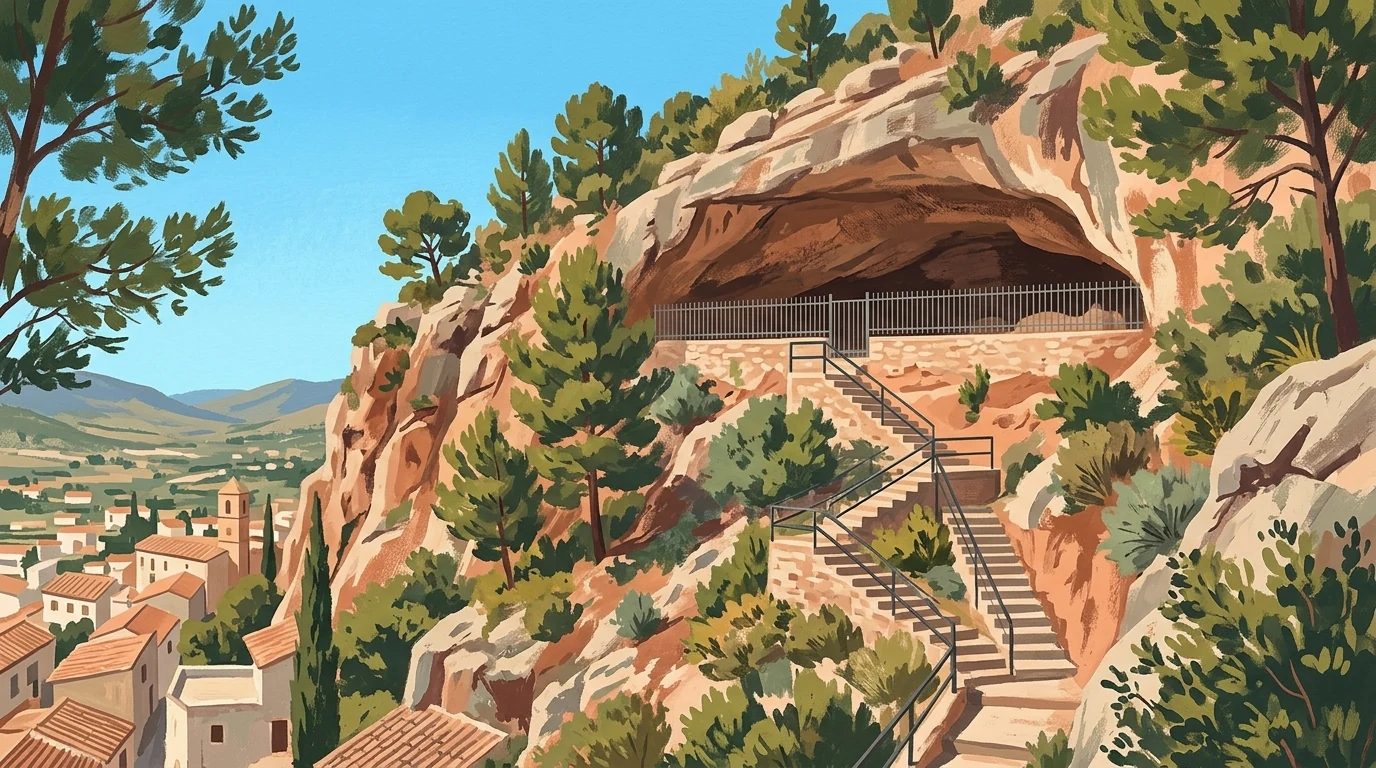
Tucked into the limestone flanks of the Maimón Grande mountain near Vélez-Blanco, the Cueva de los Letreros is one of Andalusia's most significant prehistoric sites. This shallow rock shelter preserves a remarkable collection of late Neolithic and Copper Age rock art, earning it a place within the UNESCO World Heritage designation for the Mediterranean Basin. It is most famous as the discovery site of the Indalo, a stick-figure motif that has become the universal symbol of Almería. Protected by strict access controls, the shelter can only be explored on a guided tour. For archaeology enthusiasts, hikers and those interested in the deep history of the Iberian Peninsula, this rugged hillside offers a rare, intimate encounter with the artistic expressions of early human communities.
Why It Matters
First formally described in 1868 by Manuel de Góngora y Martínez in Antigüedades Prehistóricas de Andalucía, the Cueva de los Letreros contains paintings dating back approximately 7,500 years. These Levantine and schematic artworks offer insight into the beliefs and daily life of established Neolithic and early Copper Age communities. The shelter's red-pigment figures provide invaluable insight into early social organisation, spiritual beliefs and daily life in the region. Its inclusion in the UNESCO World Heritage list underscores its global importance, preserving a fragile visual record of prehistoric Iberia that has survived millennia exposed to the elements.
What to See and Do
The Indalo and the Sorcerer
The shelter's most celebrated painting is the Indalo, an anthropomorphic figure depicted with outstretched arms holding an arch or rainbow over its head. While small and easily missed without a guide's direction, this simple schematic drawing has been adopted as a talisman of good luck and the official emblem of Almería. Equally compelling is the figure known as the Sorcerer, a detailed human shape adorned with what appears to be a horned headdress and holding curved implements. This figure suggests a shamanic or ritualistic role within the ancient community.
Animals and Geometric Motifs
Beyond the famous human figures, the rock walls are decorated with a variety of naturalistic and abstract designs. Visitors can spot depictions of local fauna, including red deer and Iberian ibex, which were vital to the survival of these early settlers. The site also features complex geometric patterns, such as grids, dots and intertwined triangles. Archaeologists believe these interlocking shapes may represent early forms of social organisation or kinship networks, offering a fascinating glimpse into the structured society of the Copper Age.
The Trail and Landscape
The experience begins before you even reach the art. The approach involves a short but steep hike up the limestone slopes of the Sierra de María-Los Vélez Natural Park. The trail winds through almond groves, reforested pine woods and aromatic Mediterranean scrub. As you ascend the final zig-zagging staircases to the 25-metre-wide rock shelter, the elevation provides sweeping panoramic views over the Vélez-Blanco valley, allowing visitors to appreciate the strategic vantage point chosen by the prehistoric artists.
Planning Your Visit
Getting There
The trail to the Cueva de los Letreros begins approximately three kilometres south of the village of Vélez-Blanco, in the northern reaches of Almería province. The route is clearly signposted from the local roads. Visitors typically meet their guide at the Almacén de Trigo visitor centre in Vélez-Blanco or at the designated trailhead parking area before making the ascent.
How Long to Allow
Set aside roughly 90 minutes to two hours for the entire experience. This provides ample time for the uphill walk to the shelter, a detailed explanation of the rock art by your guide, and the descent back to the parking area.
When to Go
Spring and autumn are the most comfortable seasons to visit, as the trail offers little shade and summer temperatures in Almería can be punishing. If visiting during the summer months, early morning or late evening tours are essential to avoid the intense midday heat.
Access and Booking
To protect the fragile pigments, the rock shelter is secured behind a locked gate and cannot be accessed independently. Visitors must arrange a guided tour in advance. It is strongly recommended to contact the Almacén de Trigo visitor centre or check the official Andalusian environmental portal prior to travel to confirm the current schedule of guided visits and secure a booking.
Good to Know
- Wear sturdy walking shoes with good grip, as the final ascent involves steep ramps and uneven zig-zag stairs.
- Bring plenty of water and sun protection, particularly if you are visiting outside the winter months.
- Binoculars or a camera with a good zoom lens can be helpful for viewing the higher or more faded paintings in detail.
- There are no toilet facilities or water fountains at the trailhead or the cave itself, so use the amenities in Vélez-Blanco before setting off.
- The path is not suitable for wheelchairs or visitors with significant mobility issues due to the steep, rocky terrain.
Nearby worth your time
A few well-placed stops for extending the day without turning it into a checklist.
Continue through Los Vélez
Step back into the wider landscape with local guides, nearby places and the province overview.
Place guide · 8 min
A Local Guide to Playa de Mojácar: Sands, Spirits and Almerían Soul
Experience the diverse 17-kilometre coastline of Mojácar Playa, where volcanic sands meet clear waters and lively chiringuitos offer the perfect Almerían escape.
Place guide · 7 min
Playa de los Genoveses: A Guide to the Wild Heart of Cabo de Gata
Experience the untouched beauty of Playa de los Genoveses, a vast volcanic bay in Almería where golden sands meet shallow turquoise waters in a protected natural park.
Itinerary · 13 min
5 Days in Almería: City, Desert and Cabo de Gata
A realistic five-day driving itinerary through Almería province, balancing the historic capital, the cinematic Tabernas badlands, and the protected volcanic shores of Cabo de Gata.