
Place guide · Almería
A Local Guide to Playa de Mojácar: Sands, Spirits and Almerían Soul
Experience the diverse 17-kilometre coastline of Mojácar Playa, where volcanic sands meet clear waters and lively chiringuitos offer the perfect Almerían escape.
By Dan · Updated 16 July 2026 · 8 min read
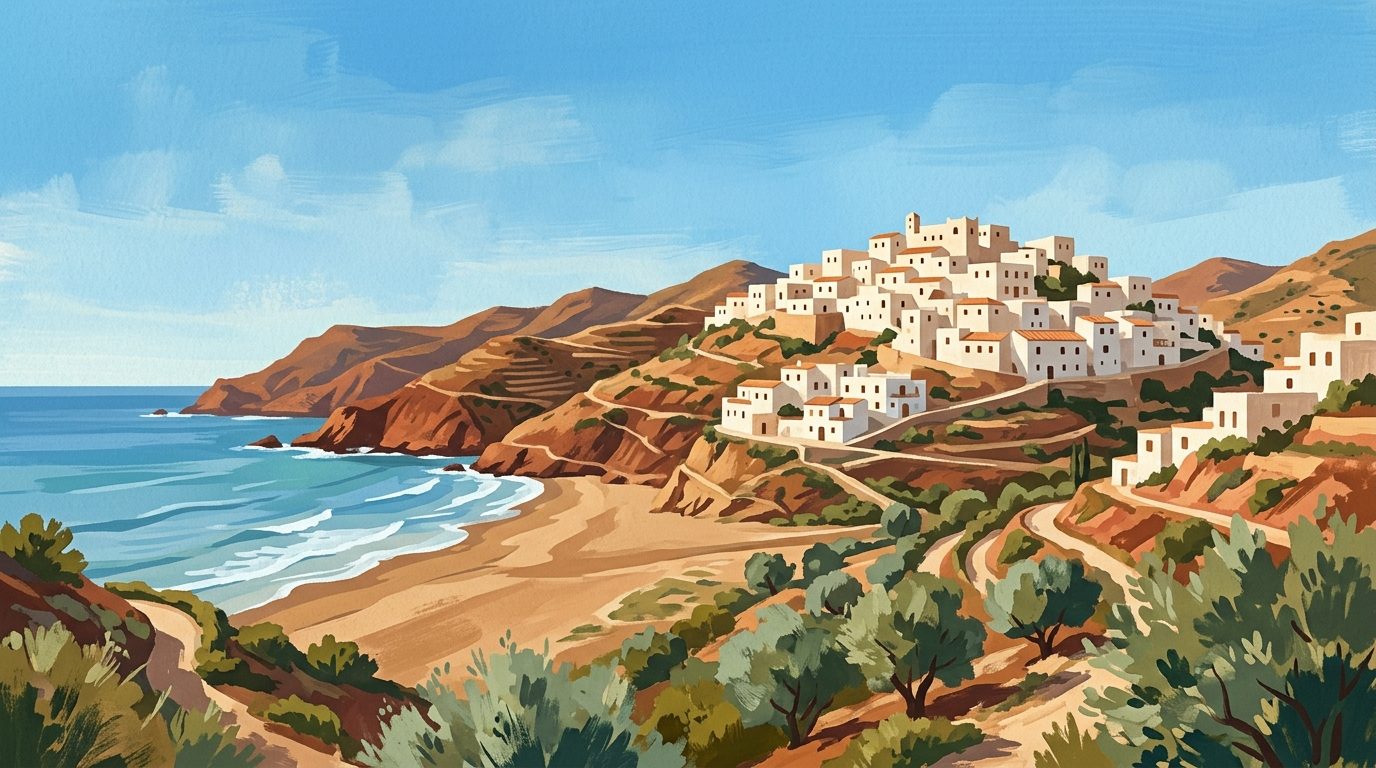
Playa de Mojácar is a sprawling seventeen-kilometre coastline where volcanic sands meet a clear Mediterranean, offering a distinct alternative to the more commercialised western costas. It is a destination of two halves, balancing high-energy beach clubs with quiet, rugged coves that remain untouched by large-scale development.
Playa de Mojácar is not a single beach, but rather a long and varied coastal strip that serves as the seaside counterpart to the famous white-washed village of Mojácar Pueblo. While the village sits defensively on a hilltop two kilometres inland, the beach area has evolved into a diverse resort destination that retains a surprisingly low-rise, relaxed atmosphere. The coastline here in the province of Almería is characterised by its light-brown, coarse sand and exceptionally clear waters, which benefit from the lack of heavy industrial shipping in the immediate vicinity. It is a place where the Sierra Cabrera mountains seem to tumble directly into the sea, creating a dramatic backdrop that changes colour from ochre to deep purple as the sun sets.
What makes this stretch of the Costa de Almería distinctive is its refusal to follow the high-rise model of the Costa del Sol. Building regulations have largely kept the skyline low, ensuring that the sea views remain unobstructed. The atmosphere transitions noticeably as you move from north to south. The northern end is dominated by wider beaches and family-oriented hotels, while the central section is the heartbeat of the local social scene. As you head further south, the environment becomes increasingly wild, eventually leading into the protected landscapes that border the Cabo de Gata-Níjar Natural Park. This variety ensures that if you want a lively lunch at a chiringuito or a solitary walk on a windswept shore, you can find a corner of Mojácar that fits the mood.
The beach itself
The coastline is officially divided into several distinct beach zones, each with its own character. At the northern end, near the boundary with Garrucha, lies Marina de la Torre. This is a wide, sandy stretch located in front of a series of large hotels and a golf course. It is particularly popular with families due to the calm waters and the availability of water sports. Moving south, you encounter Playa de la Rumina and Playa del Descargador. These areas are typically less crowded and are favoured by local residents who appreciate the extra space and the proximity to traditional Spanish cafes.
The most famous stretch is Playa del Cantal, which serves as the social epicentre of Mojácar Playa. Here, the sand is a mix of grit and small pebbles, and the concentration of beach bars is at its highest. It is recognised for its water quality and excellent services. Further south is Playa de las Ventanicas, one of the largest and most popular sandy beaches in the area. It is exceptionally well-maintained, with a gentle slope into the water that makes it the safest choice for those travelling with young children. For those who prefer a more natural setting, the southern coves like Playa del Sombrerico offer a rugged escape. These areas lack the manicured feel of the central beaches and are often frequented by naturists, particularly in the quieter coves where the cliffs provide natural privacy. The water throughout Mojácar is known for being remarkably transparent, though swimmers should note that the seabed can drop away quite quickly in the central sections, creating a steep shelf that can be challenging for inexperienced swimmers when the surf is up.
Getting there & parking
Accessing Playa de Mojácar is relatively straightforward, though it requires a bit of planning during the height of the summer. The nearest major gateway is Almería Airport (LEI), which is approximately a 50 to 60-minute drive away via the A-7 motorway and the AL-6113. If you are arriving from Murcia (Corvera) Airport, expect a journey of about 90 minutes. For those driving from the village of Mojácar Pueblo, it is a quick five-minute descent down the winding hillside road, which offers spectacular views of the coastline as you approach.
Parking is the primary challenge for visitors during July and August. The main coastal road, the Paseo del Mediterráneo, features parking bays along much of its length, but these are often claimed by 10:00. There are several large, unpaved parking areas near the Red Cross station and the Parque Comercial shopping centre, but these also fill up quickly. A more reliable strategy is to seek parking in the residential streets located one or two blocks back from the beach front. These areas are often shaded and provide a much easier exit at the end of the day. If you wish to avoid the stress of driving, the local "Mojácar Bus" (Yellow Line) is an excellent service. It runs frequently between the Pueblo, the Playa, and the neighbouring port of Garrucha. It is an affordable and efficient way to navigate the seventeen-kilometre front without having to worry about parking regulations or the summer traffic congestion.
Facilities & chiringuitos
The chiringuitos of Mojácar are legendary and form the backbone of the beach experience. Unlike the temporary structures found in some other Andalucían provinces, many of these are established venues with full kitchens and sophisticated décor. Maui Beach is perhaps the most famous, known for its lively afternoon sessions, music, and social atmosphere. It attracts a younger, energetic crowd and is a central point for the local nightlife scene. For a more relaxed and food-focused experience, Aku Aku is a long-standing favourite. It offers a more bohemian vibe and is highly regarded for its menu, which features fresh Mediterranean flavours and excellent cocktails.
If you are looking for traditional Almerían seafood, Chiringuito El Palmeral is a superb choice, offering local specialities such as red prawns from Garrucha and various rice dishes. Most of these establishments manage their own sun-bed and umbrella concessions, with prices generally starting from approximately 15 to 20 Euros for a full-day rental of two beds (check local signage or the operator's website before travelling). Public facilities are plentiful along the urban stretches, including clean toilets, outdoor showers for rinsing off sand, and accessible ramps for those with mobility issues. During the official bathing season, which runs from mid-June to mid-September, the Red Cross provides professional lifeguard coverage at multiple points along the shore. Outside of these months, services are significantly reduced, though many of the larger chiringuitos remain open during the weekends throughout the autumn and spring.
Best time to visit
The timing of your visit will fundamentally change your perception of Playa de Mojácar. To experience the best balance of warm weather and manageable crowds, the months of June and September are ideal. During this period, the Mediterranean has reached a comfortable temperature for swimming, and the beach bars are fully operational without the overwhelming volume of people seen in mid-summer. August is the peak month when the resort is at its busiest. While the atmosphere is energetic, the heat can be intense and the competition for beach space and restaurant tables is fierce. If you do visit in August, it is wise to book your lunch tables at the chiringuitos several days in advance.
The low season in Mojácar has its own appeal, particularly for walkers and those seeking solitude. From November through to March, the sun often shines, but the area can be subject to the Levante wind. This easterly wind can be quite strong, making the beach less suitable for sunbathing but perfect for long, bracing walks. While many of the seasonal shops and bars close during the winter, Mojácar has a significant resident population, meaning the area never feels completely deserted. The light in the winter months is particularly beautiful for photography, as the Almerían skies are often cloudless and deep blue.
Combine with
No visit to the beach is complete without spending time in Mojácar Pueblo. This hilltop village is a labyrinth of narrow, floral-heavy streets and hidden squares. It is the best place to find traditional Almerían pottery and to see the Indalo, the prehistoric symbol that has become the icon of the province. For those who want to explore further afield, a twenty-minute drive north takes you to the working fishing port of Garrucha, which is famous for its red prawns and its long marble promenade. Alternatively, heading south will lead you towards the town of Carboneras and the entrance to the Cabo de Gata-Níjar Natural Park. This journey takes you along a dramatic coastal road with several viewpoints where you can look back across the entire bay of Mojácar. Pairing a morning of exploring the volcanic coves of the natural park with an afternoon at a Mojácar chiringuito provides a perfect overview of the Almerían coastline.
Practical notes
When preparing for a day at Playa de Mojácar, there are several practicalities to keep in mind. The sand here, due to its volcanic origin and darker colour, can become extremely hot during the afternoon. Sturdy flip-flops or water shoes are highly recommended, especially when walking across the wider sections of the beach. Water shoes are also beneficial for entering the sea in areas where small pebbles have accumulated at the shoreline. The water quality is monitored regularly, and while the sea is generally safe, always pay attention to the flag system. A yellow flag is quite common here when the wind picks up, indicating that while swimming is allowed, caution should be exercised due to currents.
Regarding local regulations, dogs are not permitted on the main urban beaches during the summer season, which typically extends from the start of Easter week until the end of October. There are, however, designated areas on the outskirts where pet owners can take their dogs. For those with limited mobility, the central beaches offer excellent accessibility, including wooden walkways that extend deep onto the sand and amphibious chairs available at certain lifeguard stations. Finally, it is worth noting that Almería is one of the driest regions in Europe, so sun protection is vital. The breeze from the sea can often mask the true strength of the sun, making it easy to underestimate the risk of sunburn even on cooler days.
Last reviewed: 16 July 2026 · Editorial policy
Related guides
Playa del Playazo: A Guide to Rodalquilar's Golden Coast
A sweeping valley of golden sand flanked by volcanic cliffs and the historic Castillo de San Ramón. This is one of the most accessible yet visually striking beaches in Almería.
7 min read
Playa de Agua Amarga: A Guide to Almería's Premier Coastal Village
Playa de Agua Amarga is a sophisticated coastal retreat in Almería, offering a perfect balance of fine golden sand, crystal-clear water, and excellent village chiringuitos.
7 min read
Playa de Vera: Naturist and Family Beach Guide
Playa de Vera is a vast Almerían beach known for its pioneering naturist zones and wide, golden sands. It offers a unique combination of clothing-optional freedom and traditional family-friendly facilities.
7 min read
Playa de los Genoveses: A Guide to the Wild Heart of Cabo de Gata
Experience the untouched beauty of Playa de los Genoveses, a vast volcanic bay in Almería where golden sands meet shallow turquoise waters in a protected natural park.
7 min read
Fuengirola: A Family Favourite on the Costa del Sol
Discover Fuengirola, the family-friendly heart of the Costa del Sol, where Roman ruins and a Moorish castle meet seven kilometres of sandy beaches and a world-class zoo.
6 min read
Torremolinos: The Original Spirit of the Costa del Sol
Explore Torremolinos, the pioneer of Andalucían tourism, where traditional fishing heritage meets a lively modern shoreline and inclusive nightlife.
5 min read
More from Almería
A Guide to Playa de Las Negras: Volcanic Shores in Almería
Playa de Las Negras is a unique volcanic beach in Almería, known for its dark pebbles, turquoise waters, and bohemian village atmosphere within the Cabo de Gata-Níjar Natural Park.
6 min read
Playa de los Muertos: Almería's Wild Coastal Masterpiece
Playa de los Muertos is a starkly beautiful stretch of white volcanic pebbles and turquoise water, offering some of the clearest swimming conditions in Andalucía.
7 min read
A Guide to Playa de Mónsul: The Volcanic Masterpiece of Cabo de Gata
Discover the volcanic beauty of Playa de Mónsul, an iconic Almerían beach famous for its dramatic lava formations and cinematic history.
7 min read
A Guide to Roquetas de Mar: Beaches, Castles and Coastal Life
Discover Roquetas de Mar, an Almerian coastal town offering expansive blue-flag beaches, a 16th-century castle, and a spectacular natural reserve.
6 min read
A Guide to Vélez-Rubio: Almería’s Baroque Masterpiece
Discover the grand Baroque architecture and deep archaeological heritage of Vélez-Rubio, the elegant market town serving Almería’s northern highlands.
6 min read
Vélez-Blanco: The Renaissance Stronghold of the Almería Highlands
Discover Vélez-Blanco, a high-altitude Almerían village featuring a 16th-century Renaissance castle and UNESCO-listed prehistoric cave art.
6 min read
Exploring the Gypsum Karst and Hanging Houses of Sorbas
Discover Sorbas, the Almerian town famous for its precarious hanging houses and Europe's most extensive network of gypsum caves.
6 min read
Almería City: The Gateway to Europe's Wild West
Discover the storied cinematic past of Almería City and explore the rugged Tabernas Desert film sets where Hollywood legends were born.
6 min read
A Guide to Mojácar: Exploring Almería’s Iconic Hilltop Village and Coast
Discover the contrasting charms of Mojácar, from the whitewashed alleys of its hilltop Moorish old town to the long, sun-drenched beaches of the Almerian coast.
6 min read
Newsletter
More stories from Andalucía
Weekly notes, seasonal picks, and the next guides worth bookmarking.