
Place guide · Almería
Playa de los Genoveses: A Guide to the Wild Heart of Cabo de Gata
Experience the untouched beauty of Playa de los Genoveses, a vast volcanic bay in Almería where golden sands meet shallow turquoise waters in a protected natural park.
By Dan · Updated 11 May 2026 · 7 min read
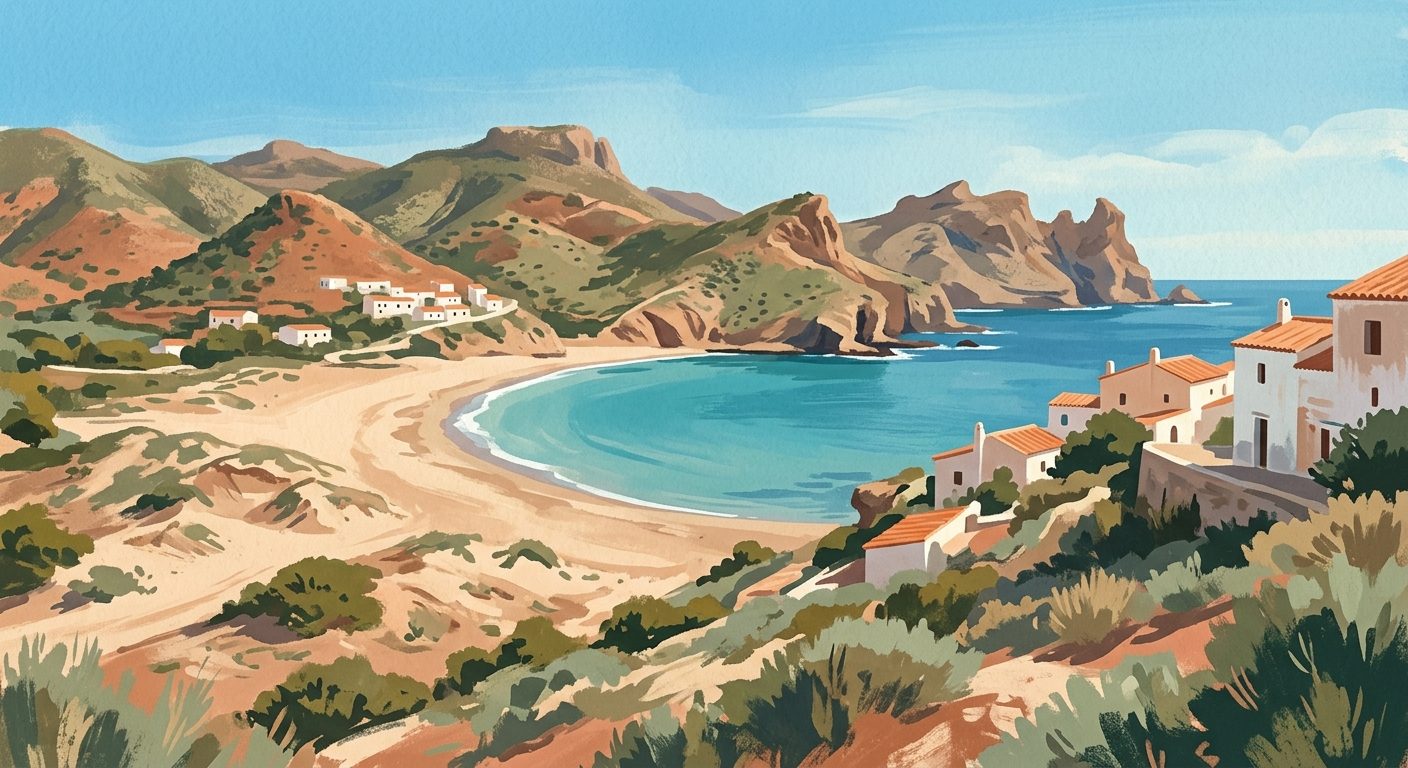
Playa de los Genoveses is a sprawling crescent of fine sand and shallow turquoise water, representing the most iconic wild landscape in the Cabo de Gata-Níjar Natural Park. This undeveloped bay offers a rare opportunity to experience the Almerían coast exactly as it appeared before the rise of Mediterranean tourism.
Playa de los Genoveses is often cited as one of the most beautiful beaches in Andalucía, yet it remains entirely devoid of permanent structures, paved roads, or commercial services. Located just a short distance from the village of San José, it occupies a broad valley known as the Campillo del Genovés. The name originates from 1147, when a Genoese fleet of over two hundred galleys anchored in the bay to assist Alfonso VII in the conquest of Almería. Today, the only reminders of human intervention are a few traditional farmsteads and the occasional film crew, as the beach has served as a backdrop for numerous international cinema productions.
What makes this beach distinctive is its scale and its preservation. Unlike the small, rocky coves found elsewhere in the volcanic park, Genoveses is a wide, open expanse of golden sand backed by a landscape of prickly pear cacti, towering agave plants (pitas), and low-lying dunes. It feels vast and ancient. The lack of electricity and running water in the immediate vicinity ensures that the environment remains pristine, though this also means visitors must arrive fully prepared for a self-sufficient day under the intense Almerían sun. The visual impact of the bay, framed by the volcanic peak of Morrón de los Genoveses at its southern end, is one of the most photographed vistas in the region.
The beach itself
The sand at Playa de los Genoveses is fine-grained and golden, a contrast to the darker, more basaltic sands found further west at Playa de Mónsul. The shoreline stretches for approximately one thousand metres, providing ample space even during the busier summer months. One of the primary draws for families is the very gentle slope of the sea floor. You can walk out into the Mediterranean for thirty or forty metres and still find the water only reaching your waist. This makes it exceptionally safe for children and less confident swimmers, provided the wind conditions are favourable.
The water clarity is generally superb, appearing as a pale turquoise over the sandy patches and a deep navy over the seagrass meadows (Posidonia oceanica) that lie further out. These meadows are vital to the local ecosystem and contribute to the high oxygen levels and biodiversity of the water. While there is no official Blue Flag status here, this is a deliberate choice to maintain the natural, non-industrialised state of the park rather than a reflection of water quality. Naturism is common and widely accepted, particularly at the northern and southern ends of the bay, though the beach is frequented by a diverse mix of families, hikers, and local residents.
Getting there & parking
Accessing Playa de los Genoveses requires some planning, especially during the high season from mid-June (typically starting 13 June 2026) to mid-September. The beach is located roughly two kilometres from the centre of San José. For those flying in, Almería Airport is the nearest hub, located about a fifty-minute drive away. From the airport, follow the AL-3113 and then the ALP-202 towards San José. Once in the village, follow the signs for "Playas de Genoveses y Mónsul."
During the peak summer months, the dirt track leading to the beach is restricted to a specific number of vehicles per day (check the Cabo de Gata-Níjar Natural Park official site for summer access updates). Once the small dirt car park is full, the barrier is closed. There is a parking fee (usually around 6 Euros, but check on the operator's website before travelling) during this period. To ensure a spot, you must arrive before 09:00. Alternatively, a shuttle bus runs every thirty minutes from San José, stopping at various points in the village and dropping passengers at the entrance path to the beach. For the more active, the walk from San José is highly recommended. A well-marked trail begins at the southern edge of the village, leading you through the Campillo del Genovés. The walk takes about twenty to thirty minutes and offers spectacular views of the bay as you descend towards the sand.
Facilities & chiringuitos
It is crucial to understand that Playa de los Genoveses has zero facilities on the sand. There are no chiringuitos, no public toilets, no showers, and no rubbish bins. This is a "leave no trace" environment. You will not find sun-beds or umbrellas for hire, so bringing your own shade is essential. During the peak summer months (July and August), a basic lifeguard station is usually present, but this is the only concession to modern safety infrastructure.
For food and drink, you must look back towards San José. Before heading out, many visitors stop at local bakeries or small supermarkets in the village to stock up on supplies. If you prefer a seated meal after your beach day, Restaurante Casa Tato and Chiringuito el Pez Rojo in San José are popular choices for fresh local fish and rice dishes. Do not expect to find vendors selling cold drinks on the beach; the protected status of the park strictly prohibits mobile vending to prevent littering and environmental degradation.
Best time to visit
The ideal window for visiting Playa de los Genoveses is during the shoulder seasons of May, June, September, and early October. During these months, the temperatures are pleasant (typically between 24 and 28 degrees Celsius) and the water is warm enough for swimming. Crucially, the crowds are significantly thinner than in August, and the vehicle restrictions are often relaxed. Winter visits are also beautiful for hiking, though the water will be too cold for most swimmers and the wind can be biting.
The wind is a major factor at this beach. The Levante (the strong easterly wind) can transform Genoveses from a calm swimming pool into a choppy, sand-blasted environment. If the Levante is blowing hard, the beach becomes quite uncomfortable as the fine sand is easily whipped up. In such conditions, it is often better to seek out more sheltered coves further north. Conversely, during a Poniente (west wind), the water at Genoveses is usually flat and crystalline. Early morning is the best time of day to arrive, not just for parking, but to experience the bay in the still, soft light before the heat of the afternoon sets in.
Combine with
A visit to Playa de los Genoveses is perfectly paired with its famous neighbour, Playa de Mónsul. While Genoveses is wide and soft, Mónsul is defined by its dramatic volcanic rock formations, including the famous "La Peineta" (the comb), a massive wave-like rock frozen in stone. You can drive between the two (if the track is open) or hike the coastal path that connects them, which takes about forty-five minutes. After a day at the beach, spending the evening in San José is the logical conclusion. This former fishing village has managed to maintain a low-rise, white-washed aesthetic. The marina area is a pleasant spot for a glass of Almerían wine and some tapas as the sun goes down behind the volcanic hills.
Practical notes
Preparation is key for a successful trip. You must bring at least two litres of water per person, as the heat in the Cabo de Gata can be dehydrating even on breezy days. High-factor sunscreen and a sturdy beach umbrella are non-negotiable. Regarding accessibility, the path from the car park to the beach is relatively flat but consists of soft sand and uneven dirt, which can be challenging for those with limited mobility or for standard pushchairs. All-terrain strollers are recommended if travelling with young children.
Dog rules are strict during the summer season; pets are generally not permitted on the beach from June to September to protect the nesting birds and maintain hygiene in the absence of cleaning crews. Outside of these months, the rules are more relaxed, though dogs should still be kept under control. Finally, while the bay is generally safe, be aware of the absence of shade. The heat reflects off the light sand, and the volcanic hills trap the warmth in the valley. If you are hiking to the beach, wear proper footwear rather than flip-flops, as the trails are stony and lined with sharp agave leaves.
Last reviewed: 21 June 2026 · Editorial policy
Related guides
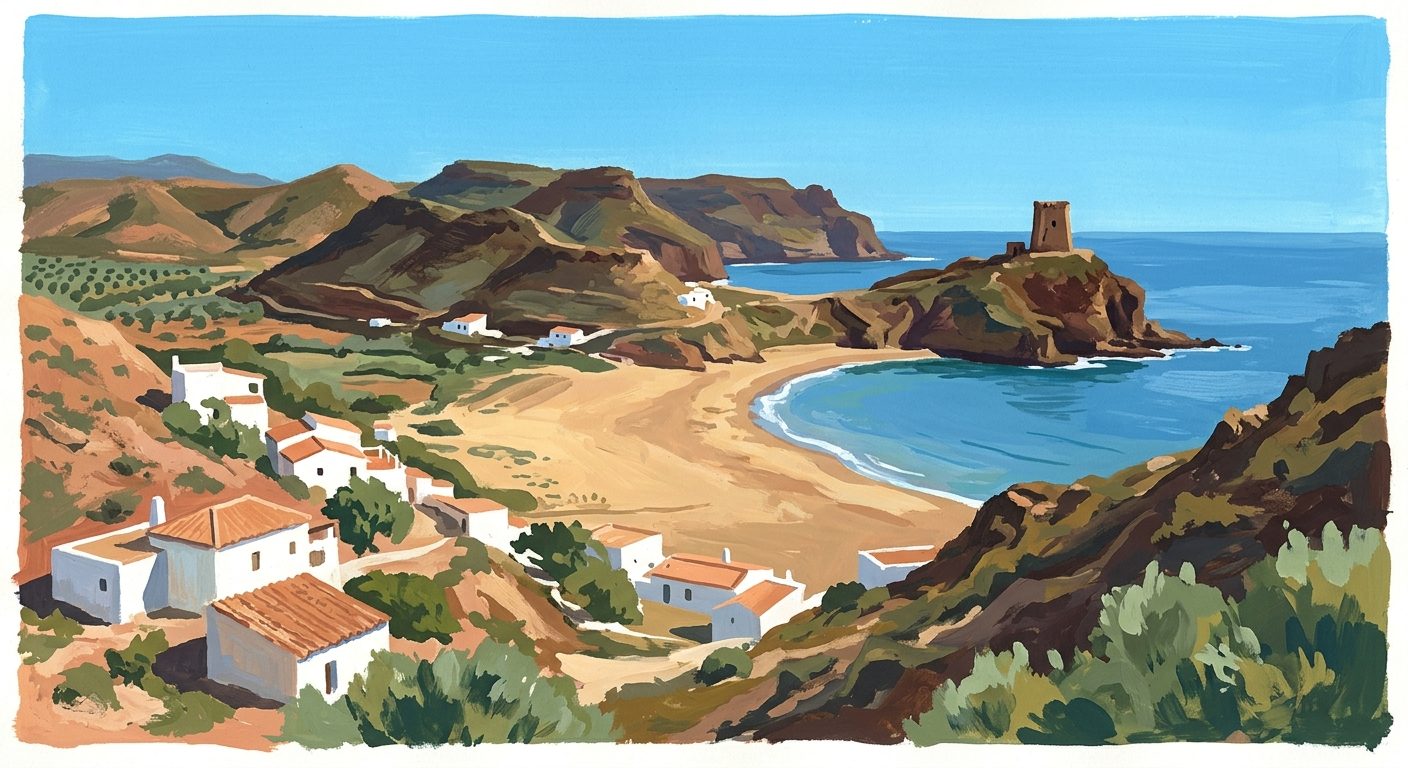
Playa del Playazo: A Guide to Rodalquilar's Golden Coast
A sweeping valley of golden sand flanked by volcanic cliffs and the historic Castillo de San Ramón. This is one of the most accessible yet visually striking beaches in Almería.
7 min read
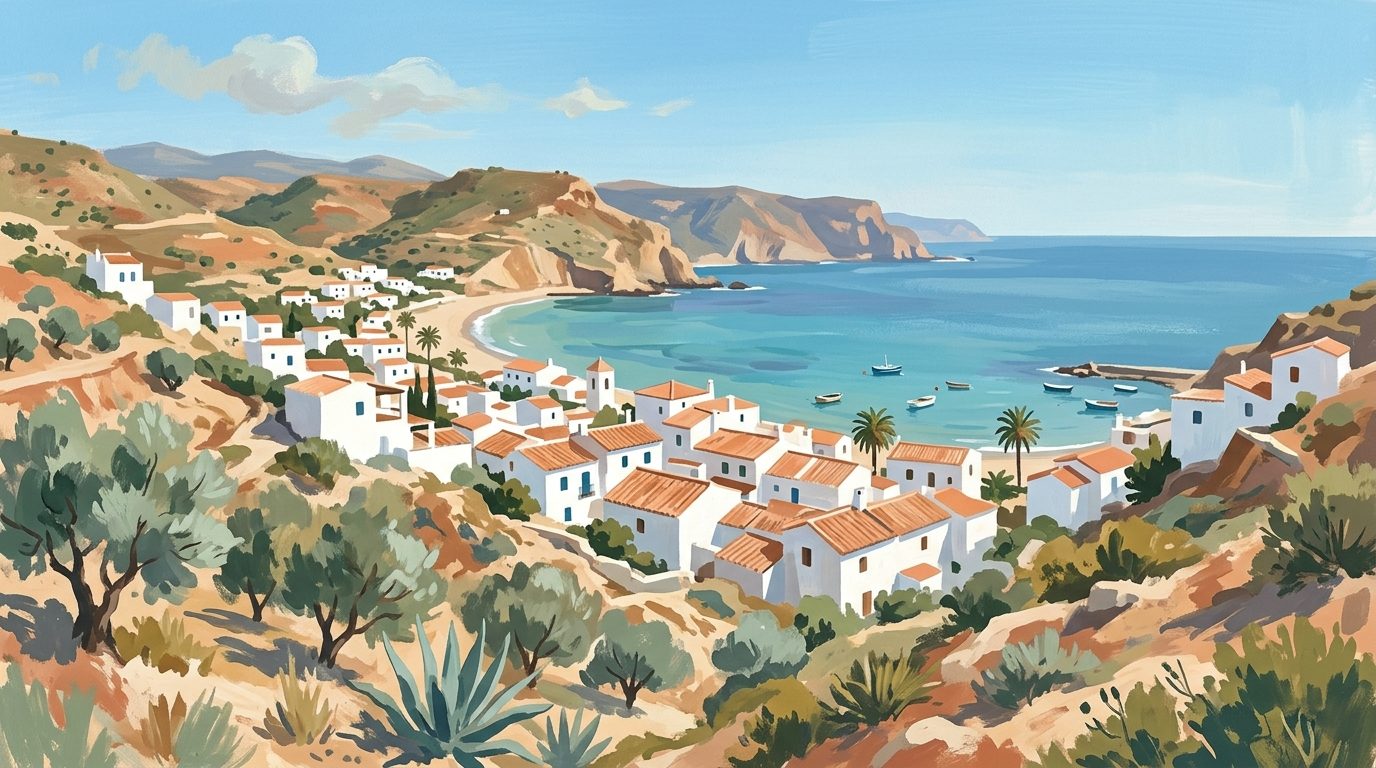
Playa de Agua Amarga: A Guide to Almería's Premier Coastal Village
Playa de Agua Amarga is a sophisticated coastal retreat in Almería, offering a perfect balance of fine golden sand, crystal-clear water, and excellent village chiringuitos.
7 min read
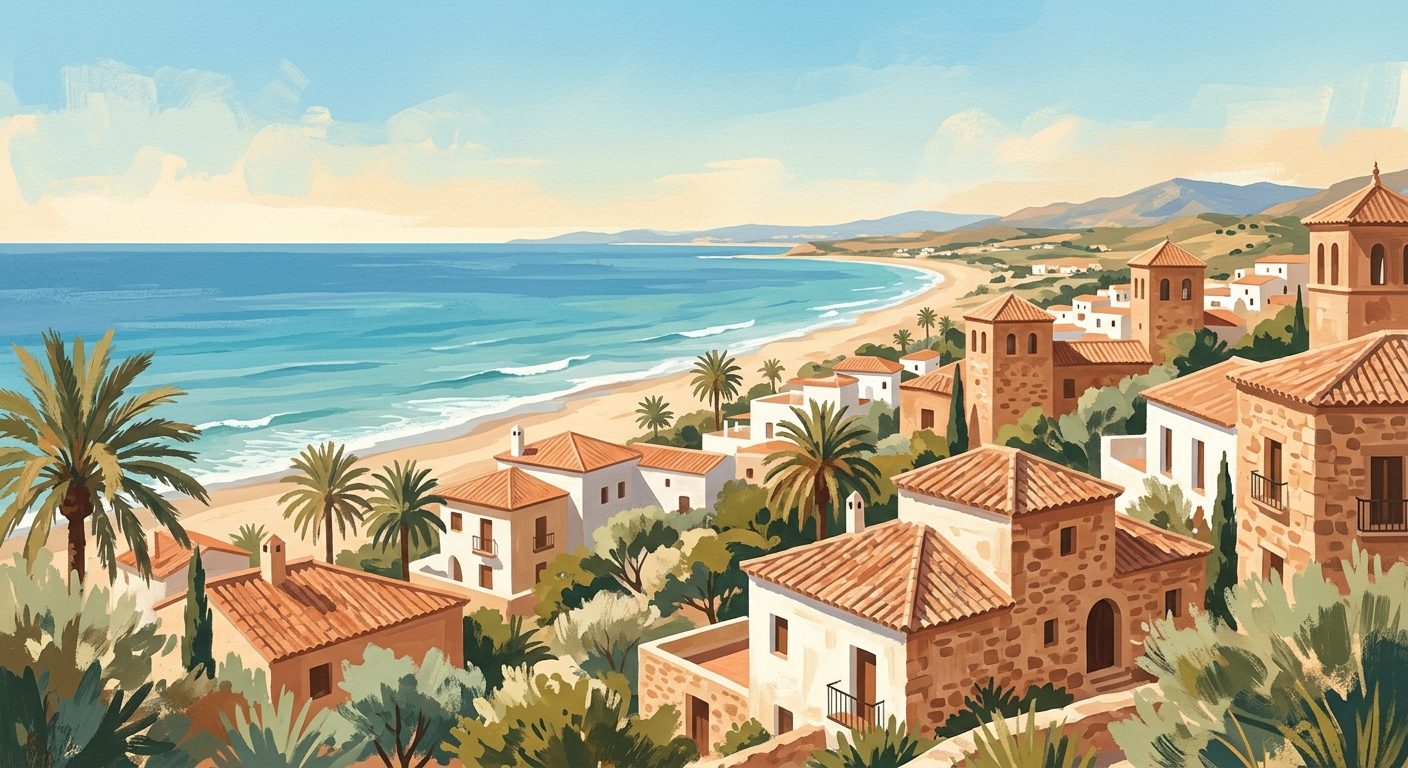
Playa de Vera: Naturist and Family Beach Guide
Playa de Vera is a vast Almerían beach known for its pioneering naturist zones and wide, golden sands. It offers a unique combination of clothing-optional freedom and traditional family-friendly facilities.
7 min read
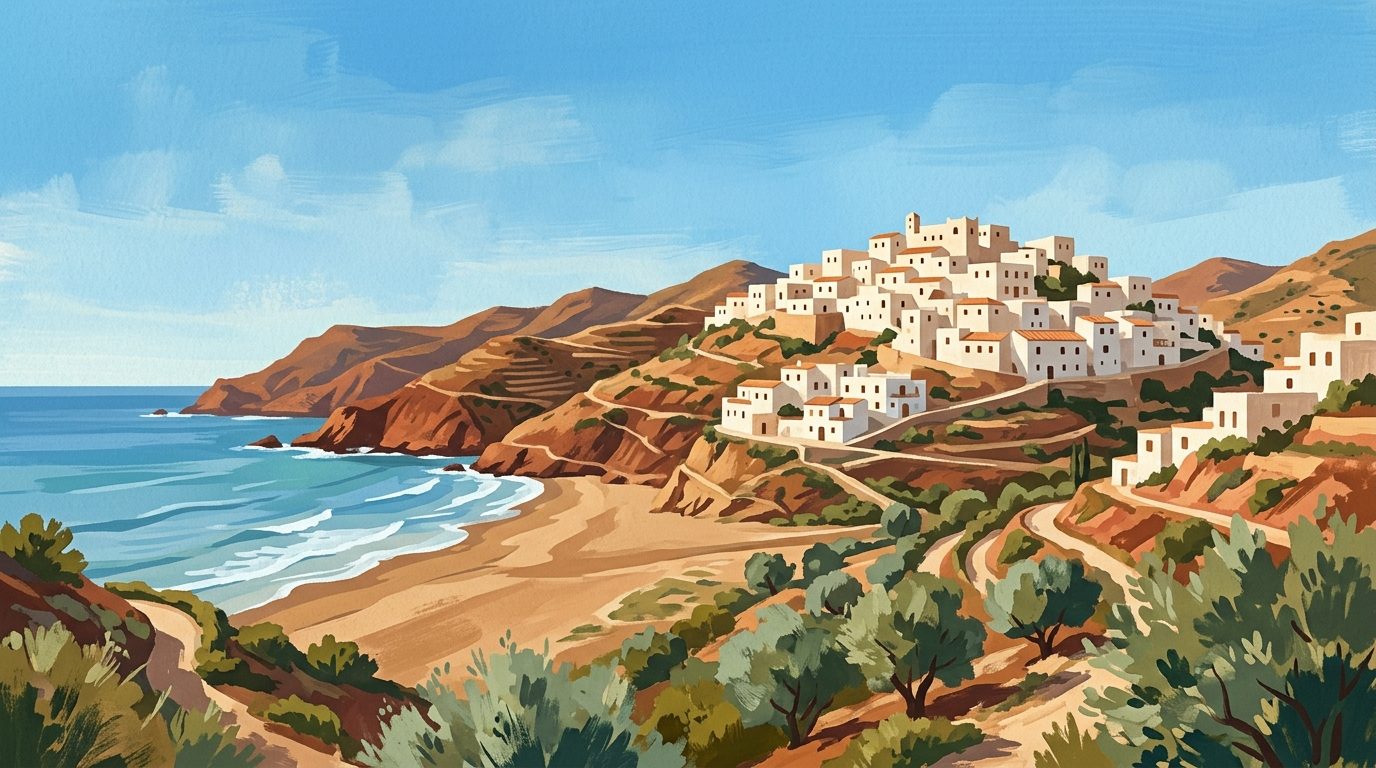
A Local Guide to Playa de Mojácar: Sands, Spirits and Almerían Soul
Experience the diverse 17-kilometre coastline of Mojácar Playa, where volcanic sands meet clear waters and lively chiringuitos offer the perfect Almerían escape.
8 min read
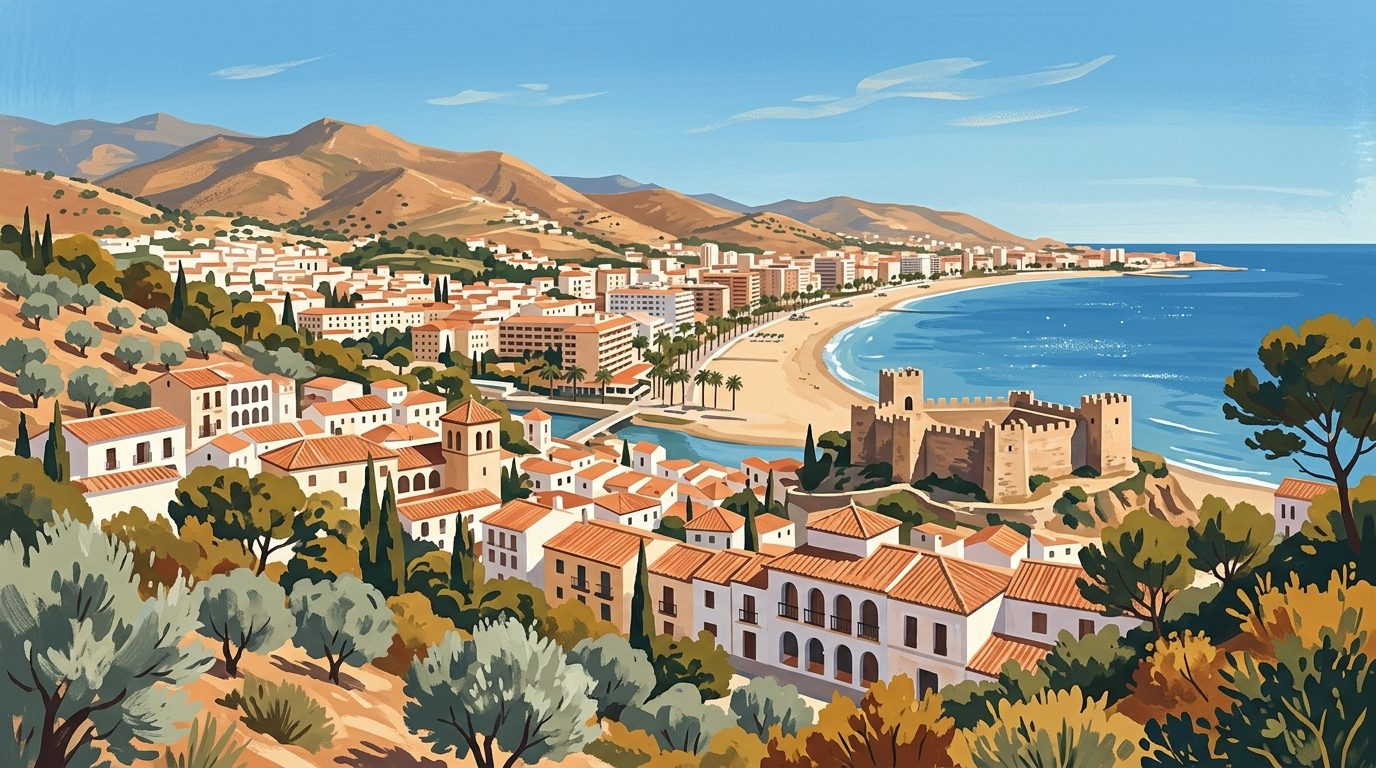
Fuengirola: A Family Favourite on the Costa del Sol
Discover Fuengirola, the family-friendly heart of the Costa del Sol, where Roman ruins and a Moorish castle meet seven kilometres of sandy beaches and a world-class zoo.
6 min read
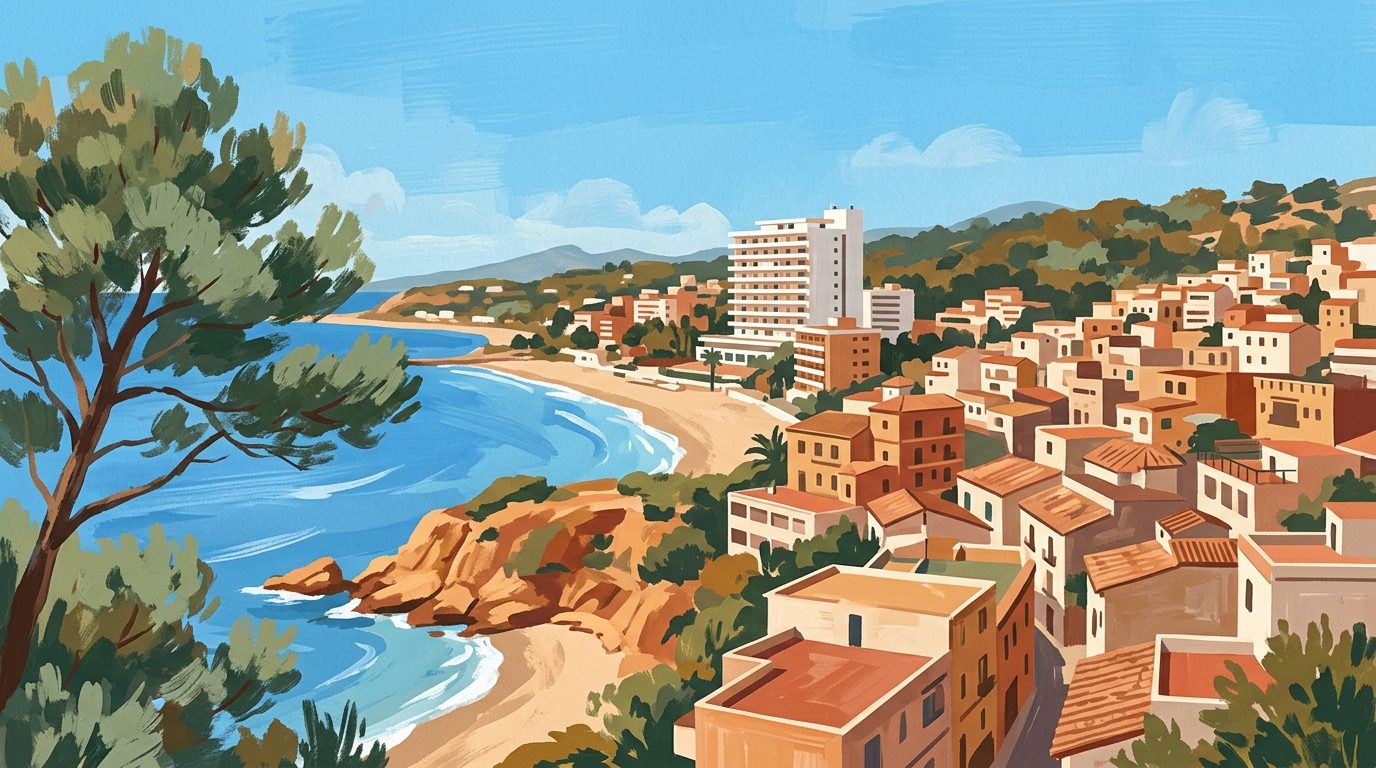
Torremolinos: The Original Spirit of the Costa del Sol
Explore Torremolinos, the pioneer of Andalucían tourism, where traditional fishing heritage meets a lively modern shoreline and inclusive nightlife.
5 min read
More from Almería
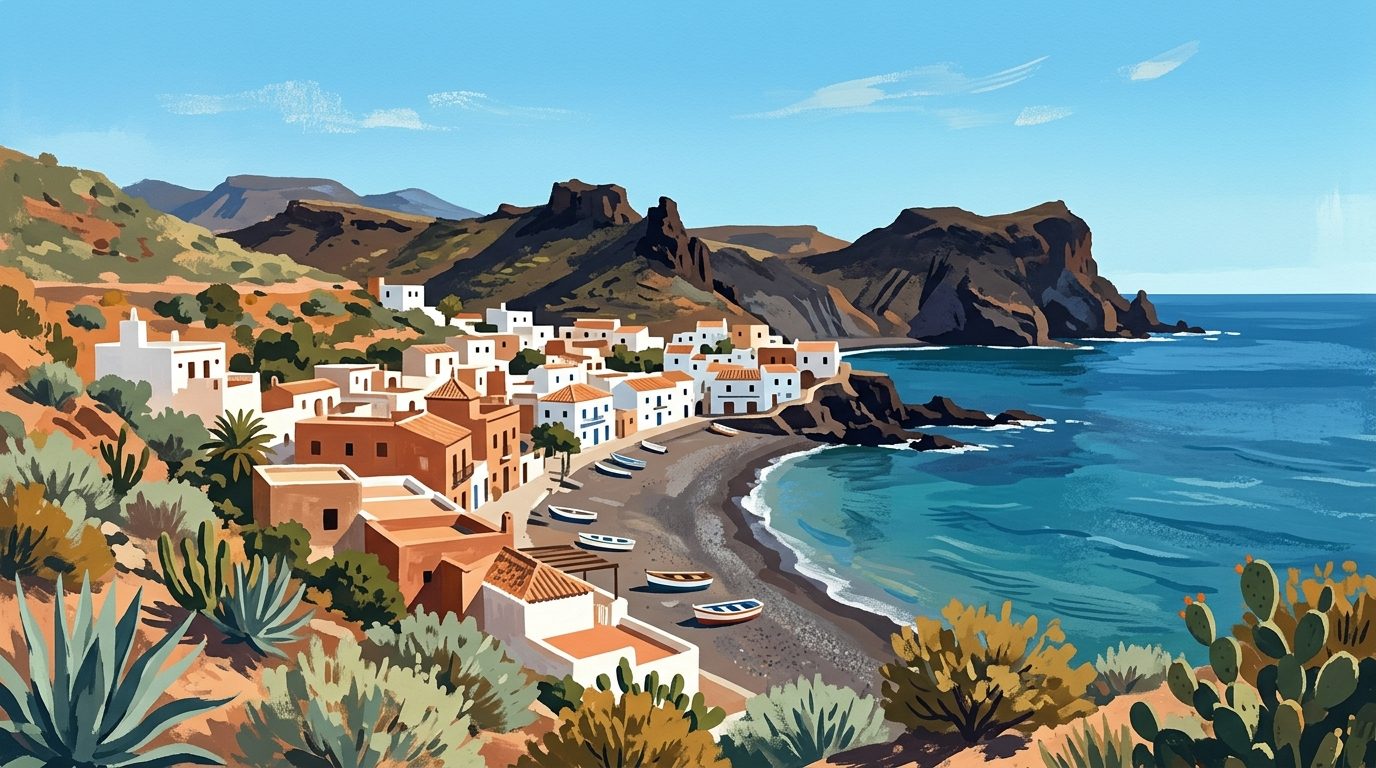
A Guide to Playa de Las Negras: Volcanic Shores in Almería
Playa de Las Negras is a unique volcanic beach in Almería, known for its dark pebbles, turquoise waters, and bohemian village atmosphere within the Cabo de Gata-Níjar Natural Park.
6 min read
Playa de los Muertos: Almería's Wild Coastal Masterpiece
Playa de los Muertos is a starkly beautiful stretch of white volcanic pebbles and turquoise water, offering some of the clearest swimming conditions in Andalucía.
7 min read
A Guide to Playa de Mónsul: The Volcanic Masterpiece of Cabo de Gata
Discover the volcanic beauty of Playa de Mónsul, an iconic Almerían beach famous for its dramatic lava formations and cinematic history.
7 min read
A Guide to Roquetas de Mar: Beaches, Castles and Coastal Life
Discover Roquetas de Mar, an Almerian coastal town offering expansive blue-flag beaches, a 16th-century castle, and a spectacular natural reserve.
6 min read
A Guide to Vélez-Rubio: Almería’s Baroque Masterpiece
Discover the grand Baroque architecture and deep archaeological heritage of Vélez-Rubio, the elegant market town serving Almería’s northern highlands.
6 min read
Vélez-Blanco: The Renaissance Stronghold of the Almería Highlands
Discover Vélez-Blanco, a high-altitude Almerían village featuring a 16th-century Renaissance castle and UNESCO-listed prehistoric cave art.
6 min read
Exploring the Gypsum Karst and Hanging Houses of Sorbas
Discover Sorbas, the Almerian town famous for its precarious hanging houses and Europe's most extensive network of gypsum caves.
6 min read
Almería City: The Gateway to Europe's Wild West
Discover the storied cinematic past of Almería City and explore the rugged Tabernas Desert film sets where Hollywood legends were born.
6 min read
A Guide to Mojácar: Exploring Almería’s Iconic Hilltop Village and Coast
Discover the contrasting charms of Mojácar, from the whitewashed alleys of its hilltop Moorish old town to the long, sun-drenched beaches of the Almerian coast.
6 min read
Newsletter
More stories from Andalucía
Weekly notes, seasonal picks, and the next guides worth bookmarking.