Attractions in Andalucía
The Alhambra, the Mezquita, flamenco tablaos, natural parks and prehistoric caves — every must-see across southern Spain.
8 attractions in Almería

Cathedral Encarnación de Almería
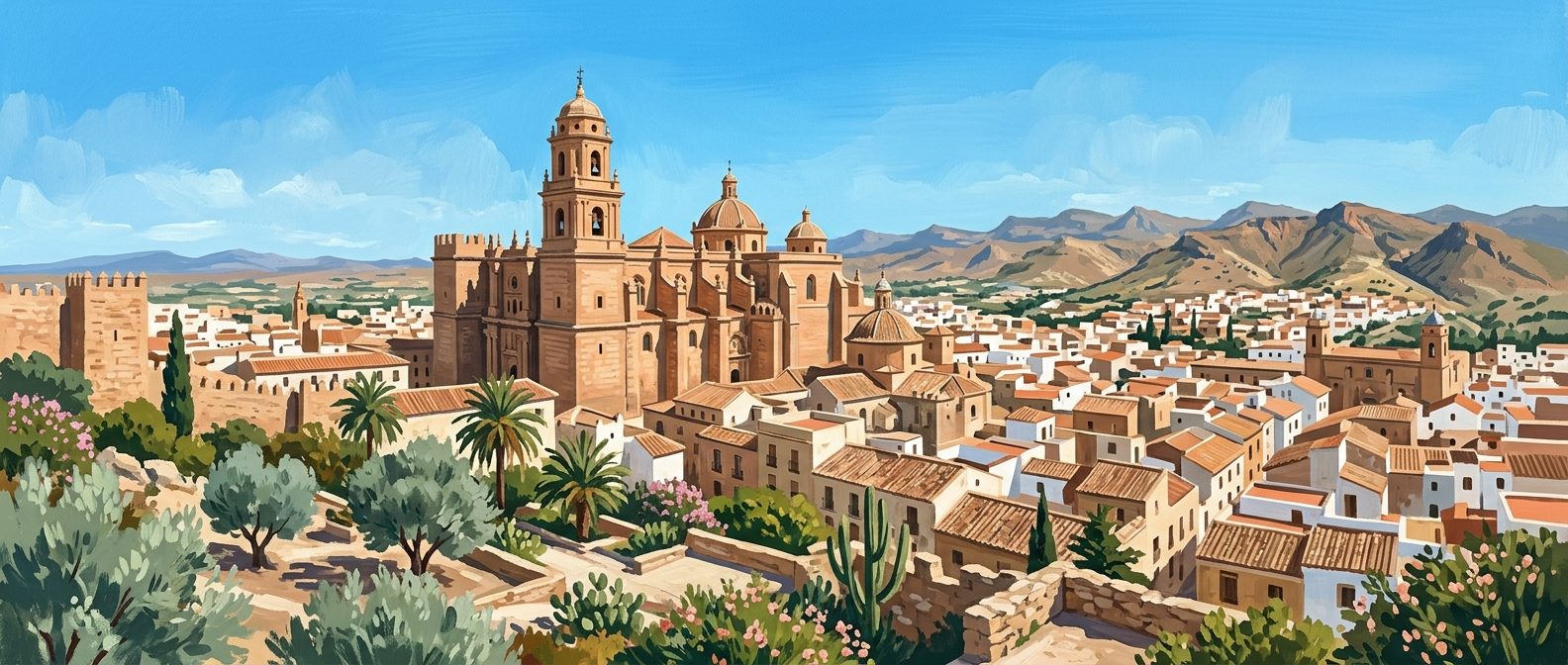
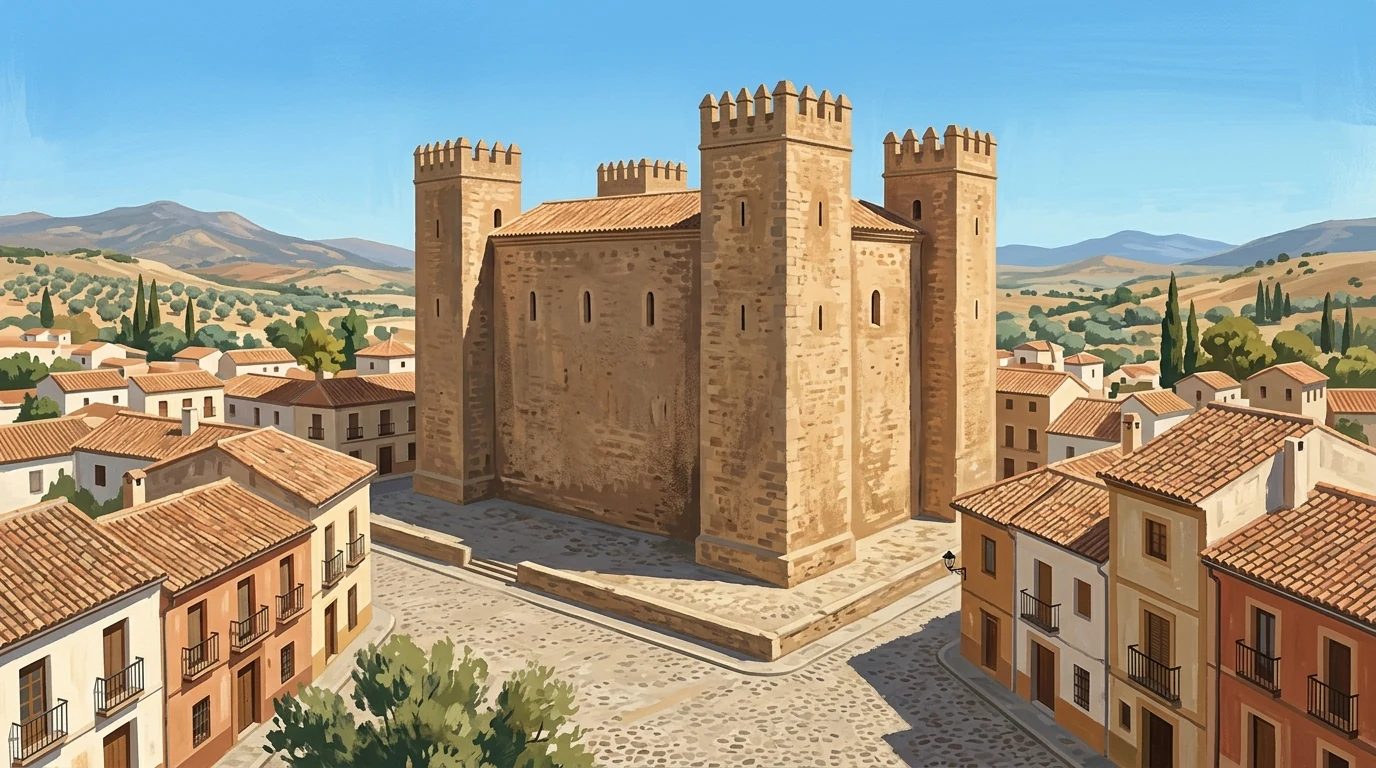
The Cathedral of Almería stands as a unique example of a cathedral-fortress, built in the mid-sixteenth century to protect the city from pirate raids and the local Moorish uprisings. Unlike many Andalucian cathedrals that focus purely on ornamentation, this structure prioritised defence, featuring thick walls, battlements, and flat roofs designed to accommodate artillery. It matters because it illustrates the historical tension between the Christian population and the constant threat of North African corsairs during the Renaissance. It is an ideal destination for history enthusiasts who appreciate military architecture and those interested in how religious buildings adapted to practical security needs. Visitors will find a building that looks more like a castle from the outside than a house of worship, providing a stark contrast to the more delicate Gothic cathedrals found in northern Spain. As you approach the main facade, take note of the Renaissance portals designed by Juan de Orea, which introduce a touch of elegance to the otherwise austere exterior. Once inside, the transition from the rugged defensive shell to the refined interior is striking. The high ribbed vaults and the choir stalls are significant features to observe. The choir stalls are particularly noteworthy for their walnut carvings, showcasing detailed craftsmanship from the late sixteenth century. Look up to see the lantern above the crossing, which allows light to flood into the central space. Another key highlight is the Sun of Portocarrero, a sculpted sun on the exterior eastern wall that has become an unofficial symbol of Almería. This stone relief is easily missed if you do not walk around the perimeter of the building towards the Calle del Cubo. Do not overlook the cloisters, which were built in a neoclassical style and offer a serene space for reflection. The cathedral museum houses a collection of religious art, including silverware and paintings that provide context to the ecclesiastical history of the region. The chapels lining the sides of the nave contain various altarpieces, with the Chapel of San Indalecio being particularly significant as it holds the remains of the city patron. Spending time in the ambulatory allows you to appreciate the scale of the pillars and the defensive thickness of the walls, which serve as a constant reminder of the cathedral’s dual purpose as a sanctuary and a stronghold against naval invaders. The cathedral is situated in the heart of Almería's old quarter, making it easily accessible on foot from other major sites like the Alcazaba. It is located at Plaza de la Catedral, a spacious square lined with palm trees. You should check the official website for current opening times and prices, as these can vary during religious festivals or local holidays. Generally, a visit takes between one and two hours to fully explore the interior, the museum, and the surrounding exterior walls. Tickets usually include an audio guide, which provides valuable historical context about the specific defensive features and artistic works found throughout the building. Visiting in the morning is recommended to avoid the strongest heat of the day and to see the interior under the best natural lighting conditions. Since this is an active place of worship, ensure you dress respectfully by covering your shoulders and knees. Photography is typically allowed, but using a flash is often restricted to protect the artwork. The palm-lined plaza outside provides a perfect spot to observe the fortress-like towers once your tour is complete.

Cerro San Cristobal
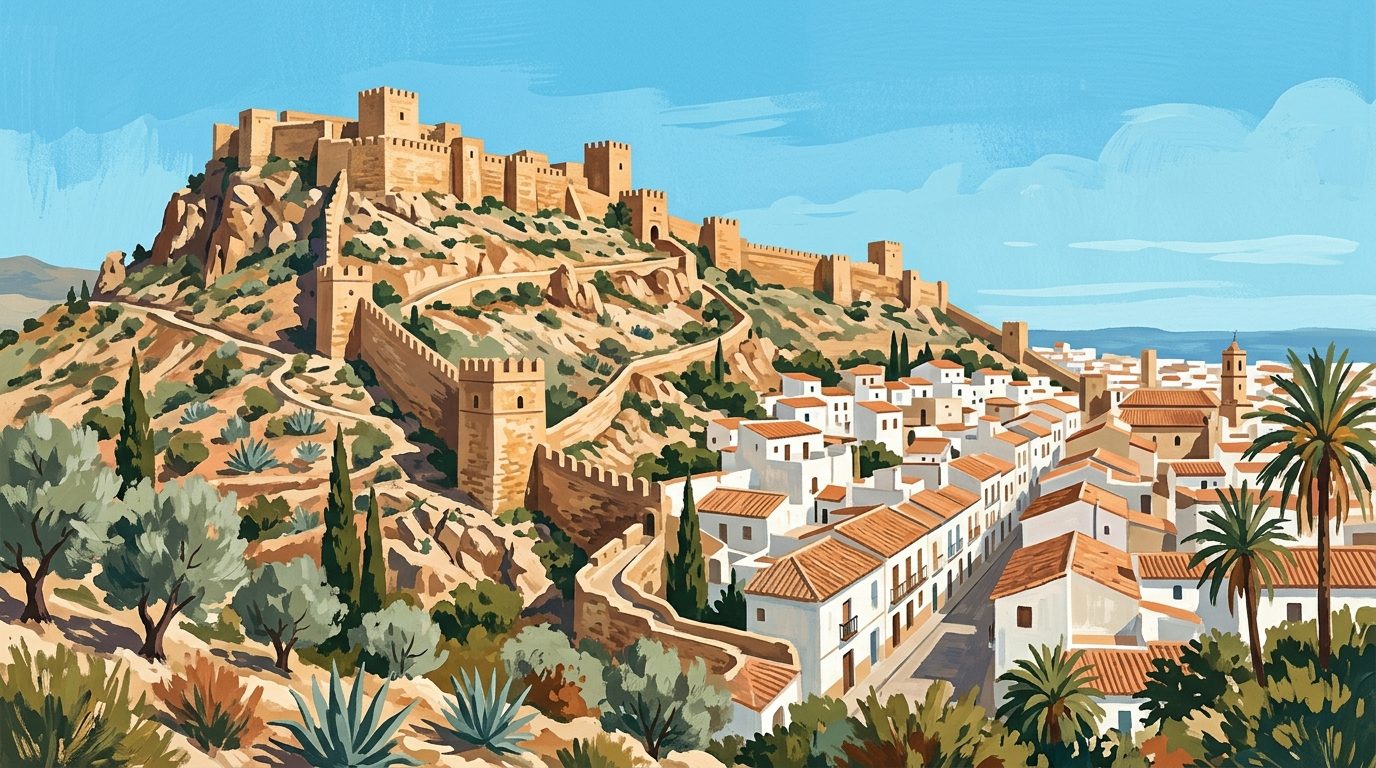
Cerro San Cristobal is a prominent hill that rises above the city of Almeria, offering the most comprehensive panoramic views of the urban landscape, the Mediterranean Sea, and the sprawling Alcazaba fortress. Historically, it served as a vital defensive outpost, forming part of the city's complex medieval fortifications. Today, the summit is dominated by the monumental statue of the Sacred Heart of Jesus, which stands as a local landmark visible from across the city. This site particularly suits visitors who enjoy photography, history, and a touch of physical activity, as it provides a unique perspective on the intersection of Almeria's Islamic past and its Christian heritage. While the climb can be steep, the reward is a sense of scale and orientation that is difficult to find elsewhere in the city centre. It is an essential stop for those wanting to understand the layout of Almeria's historic quarters. The most striking feature upon reaching the summit is the marble statue of the Sacred Heart of Jesus, erected in the mid-twentieth century on a massive stone pedestal. Surrounding this monument are the remnants of the ancient walls that once connected the hill to the nearby Alcazaba. These fortifications include seven towers, four of which date back to the eleventh-century Islamic period, while the remaining three were constructed later by the Templars after the city was taken by Christian forces. Walking along these stony remains allows you to see the contrast in masonry and design between the different eras of Almeria's defensive history. Below the summit, the hill offers a clear view of the Pescaderia and La Chanca neighbourhoods, characterised by their cubic, whitewashed houses that cling to the rugged slopes, providing a stark architectural contrast to the modern city developments further east. One of the most rewarding experiences here is observing the Alcazaba from this elevated vantage point. While visiting the fortress itself is necessary, seeing its three distinct walled enclosures laid out from across the ravine provides a much clearer understanding of its sheer size and strategic importance. It is also worth looking for the various viewpoints, or miradores, which offer different angles of the Almeria Cathedral and the port area. On clear days, the sight of the ferry ships entering and leaving the harbour against the backdrop of the Alboran Sea is quite captivating. The rugged, arid landscape of the surrounding hills also serves as a reminder of the unique desert-like environment of this province. Accessing Cerro San Cristobal can be done on foot or by car. If you choose to walk, the route typically begins near the Calle Antonio Vico, ascending through narrow streets and stairways that can be quite demanding in the heat. For those driving, there is a winding road that leads almost to the base of the statue, with limited parking available at the top. The site is an open public space, so there are no entrance fees or rigid opening times, making it a flexible addition to your itinerary. Most visitors find that forty-five minutes to an hour is sufficient to take in the views and explore the immediate ruins. Check the official website for current opening times and prices if there are special guided tours scheduled during your visit. The best time to visit is undoubtedly during the late afternoon or early evening. The setting sun casts a warm light over the Alcazaba and the city, making it the ideal moment for photography. However, ensure you arrive well before dusk if you are walking, as the paths can be poorly lit at night. Wear comfortable footwear with good grip, as the stony ground and steps can be uneven. Always carry water, as there are few facilities at the summit.

Fuente de los Peces
The Fuente de los Peces, or Fountain of the Fish, stands as a central artistic landmark within the Parque de Nicolás Salmerón in Almería. Designed by the renowned local artist Jesús de Perceval in 1947, this fountain is more than a simple water feature; it represents the Indaliano movement which sought to revitalise the cultural life of the city after the Spanish Civil War. It appeals to those who appreciate public sculpture and local history, offering a quiet moment of reflection for families and solo travellers alike. The fountain serves as a bridge between the historic city centre and the maritime activities of the port, making it a natural stopping point for anyone exploring the coastal side of the provincial capital. When you approach the fountain, take a close look at the central figures which depict children playing with large, fantastical fish. Perceval used stone from the nearby quarries of San Miguel, giving the work a distinct connection to the local landscape. The composition is dynamic, with the figures appearing to interact with the water as it flows from the mouths of the fish. You should notice the mythological undertones in the design, which blend traditional Mediterranean themes with a modern, slightly surrealist touch characteristic of the Indaliano style. The way the water cascades over the rounded forms of the sculptures creates a soothing sound that masks the nearby traffic, providing a serene environment in the heart of the city. Beyond the fountain itself, the experience of visiting includes the surrounding greenery of the park, which is the oldest in Almería. Large ficus trees provide a thick canopy of shade that frames the fountain, creating a cool microclimate even during the height of summer. Walking along the manicured paths toward the fountain allows you to see how it anchors the mid-section of the park. It is worth spending time observing the details of the carvings from different angles, as the changing position of the sun reveals new textures in the stone and different reflections in the water basin. This area is particularly pleasant for a slow stroll away from the more commercial streets. Accessing the Fuente de los Peces is straightforward as it is located on the edge of the city centre, parallel to the harbour. Since it is situated within a public park, there is no entrance fee and it is accessible at any time of day or night. For those arriving by public transport, several local bus lines stop along the Avenida de Federico García Lorca and the Paseo de Almería, both of which are a short walk away. You can easily incorporate a visit into a two-hour stroll through the park and the neighbouring port area. Check the official website for current opening times and prices of nearby museums if you plan to combine your visit with other cultural sites. The best time to visit is during the late afternoon when the golden hour light hits the stone, or in the evening when the fountain is often illuminated. This creates a different atmosphere compared to the bright midday sun. Wear comfortable walking shoes as the park paths are long, and consider bringing a bottle of water, although there are several cafes nearby where you can sit and enjoy the view of the Mediterranean across the road.

Museo de Almería
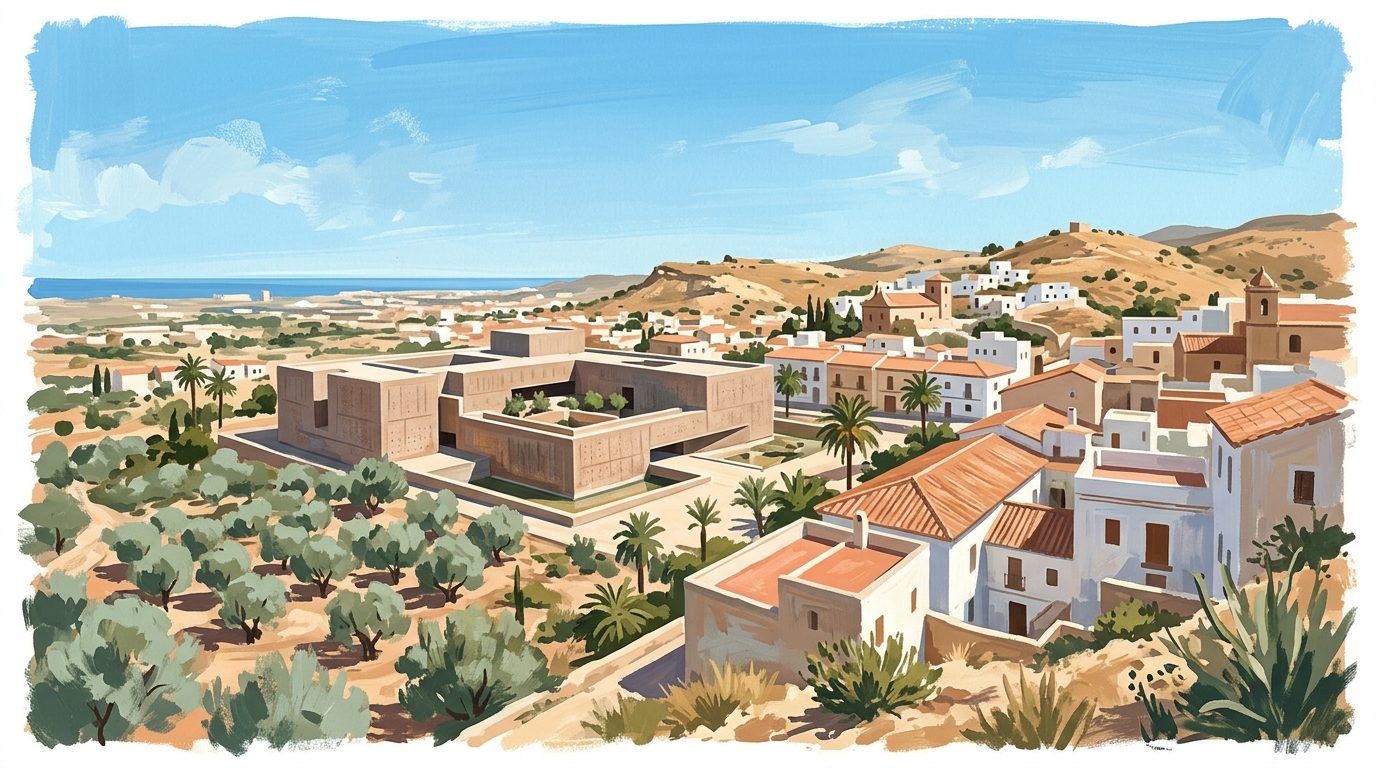
The Museo de Almería stands as a testament to the complex archaeological history of southeast Spain, housed within a striking contemporary building that has won numerous architectural awards. It is primarily dedicated to the prehistoric cultures that shaped this arid landscape, specifically the Copper Age settlement of Los Millares and the Bronze Age society of El Argar. This site is particularly suited for those who enjoy structured storytelling, as the museum uses a conceptual approach rather than a simple chronological display. Families and scholars alike will find the interactive elements and large-scale reconstructions helpful in understanding how early humans managed resources in one of Europe’s driest regions. It is an essential stop for anyone wanting to grasp the historical context of the Almería province before exploring its outdoor archaeological sites. The museum is designed around a central stratigraphy column that rises through the floors, symbolising the layers of time. The first floor focuses on Los Millares, featuring a vast array of grave goods and tools that reveal a sophisticated social hierarchy and a command of copper metallurgy. Look out for the idiosyncratic oculados or eye-idols, which are small stone cylinders carved with haunting, owl-like eyes. Moving up to the second floor, the focus shifts to the Argaric culture. Here, the displays show a transition to more specialised craftsmanship and the distinctive practice of burying the deceased in large ceramic jars beneath the floors of their houses. The clarity of the displays allows you to see the evolution of pottery forms and the increasing complexity of social organisation as you ascend. Beyond prehistory, the third floor transitions into the Roman and Islamic periods of Almería’s history. A notable highlight is the marble statue of the god Priapus, found in a Roman villa near the coast, which remains one of the museum’s most famous individual pieces. The Islamic section provides context for the city’s founding as Al-Mariyya, showcasing intricate funeral steles and daily objects that reflect the era when Almería was a major Mediterranean port. The building itself, with its clever use of natural light and open spaces, enhances the experience, making the transition between different historical eras feel seamless. Do not miss the temporary exhibition space on the ground floor, which often hosts high-quality contemporary art or regional history deep-dives. You will find the museum on Carretera de Ronda, at the intersection with Calle Hermanos Pinzón, within walking distance of the central train and bus station. For those arriving by car, there is some street parking in the surrounding neighbourhoods, though public transport remains the simplest option. European Union citizens usually enjoy free entry upon presenting a valid identity card or passport, while a small fee applies to other international visitors. Most people find that two to three hours is sufficient to engage with the permanent collections thoroughly. Opening hours generally follow the standard Andalucían pattern of being closed on Mondays and having shorter hours on Sundays. Check the official website for current opening times and prices. To make the most of your visit, aim to arrive on a weekday morning when the galleries are quietest and the light filtering through the atrium is at its best. Since the museum provides the archaeological backbone for the region, it is wise to visit here before heading out to the actual site of Los Millares or the Alcazaba fortress. Wear comfortable shoes as there is plenty of walking across the different levels, and keep in mind that the climate control inside offers a welcome respite from the intense Almerían sun during the summer months.

Museo de la Guitarra Almeria
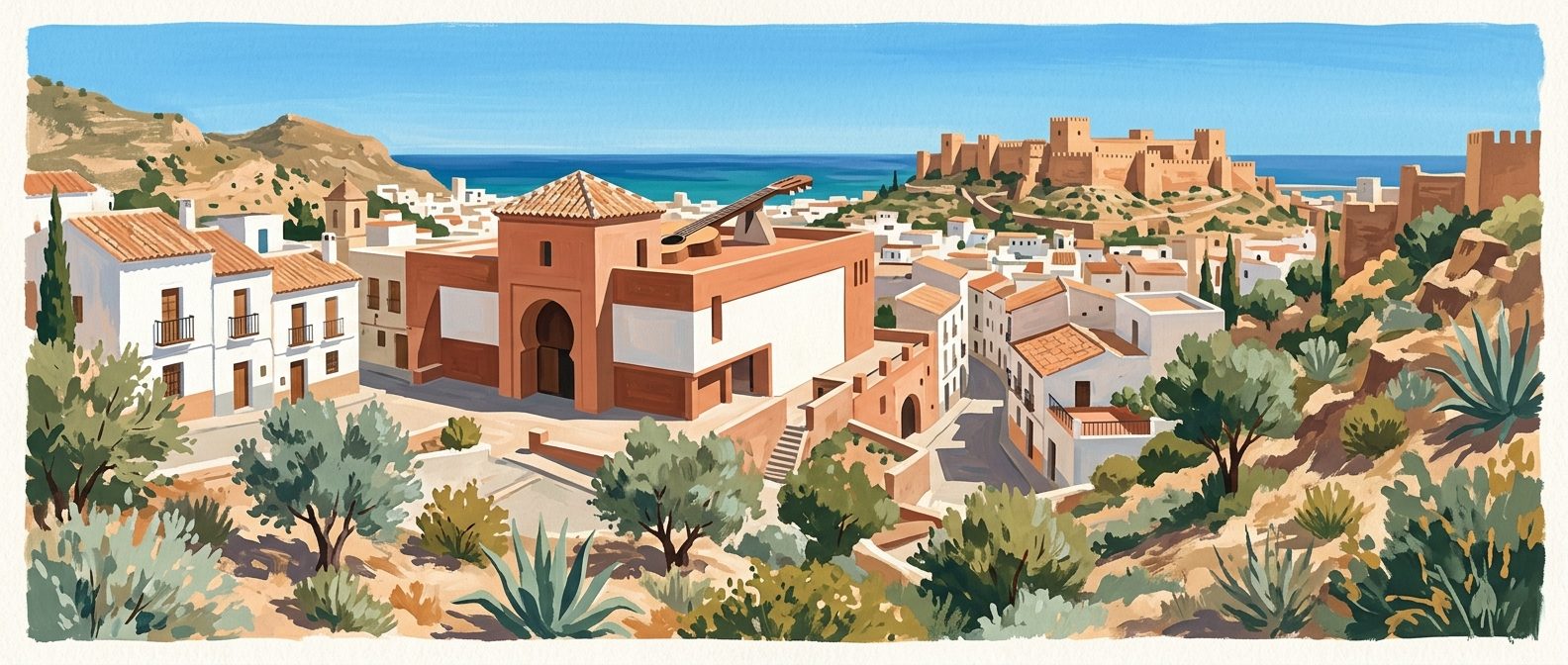
The Antonio de Torres Spanish Guitar Museum in Almería is a sophisticated tribute to the man often called the father of the modern guitar. This museum occupies a contemporary building in the heart of the old city and serves as both a memorial to Torres and a comprehensive educational centre. It is an essential stop for music enthusiasts and those curious about the artisan traditions of Andalucía. Visitors will discover why Almería is considered the spiritual home of the instrument, as the museum explains how Torres revolutionised guitar design in the nineteenth century. It is a well-paced attraction that appeals to families, historians, and professional musicians alike, providing a quiet space to appreciate the craftsmanship behind one of the world's most popular instruments. The primary draw is the collection of instruments, particularly those linked to Antonio de Torres himself. Visitors can examine the intricate details of his designs, which increased the body size and changed the internal bracing to create a richer and more resonant sound. Interactive displays explain the various stages of guitar construction, from selecting the specific types of wood to the final polishing process. One room features a series of historical guitars that trace the lineage from early baroque versions to the familiar six-string setup used today. Keep an eye out for the workshop recreation, which provides a tactile sense of the environment where these instruments were crafted, complete with authentic tools and templates used by luthiers throughout the centuries. The museum also explores the guitar's role across various musical genres, including flamenco, classical, and jazz. There are dedicated listening stations where you can hear the distinct tonal qualities of different models played by masters. A highlight for many is the soundproof room where visitors can actually pick up a guitar and play, regardless of their skill level. This hands-on element makes the technical history feel much more tangible and engaging. Additionally, the top floor often hosts temporary exhibitions or small recitals that take advantage of the building’s excellent acoustics and intimate atmosphere. The museum is situated in the historic centre of Almería, just behind the cathedral on Ronda del Beato Diego Ventaja. It is an easy walk from most central landmarks and the main shopping avenues. It generally opens from Tuesday to Sunday, though it usually closes for a few hours in the afternoon following the traditional local schedule. Check the official website for current opening times and prices. A thorough visit usually takes between sixty and ninety minutes, making it a perfect addition to a morning stroll through the old quarter. Admission is typically very affordable, and the museum is fully accessible for those with mobility issues. Visit on a weekday morning to enjoy the galleries without the crowds. Combining this museum with a tour of the nearby cathedral or the Alcazaba provides a well-rounded experience of the city's heritage. If you are a guitarist, the soundproof room is a highlight, so do not be shy about testing the instruments. Check the local cultural listings as the museum occasionally hosts intimate evening performances which are highly recommended for the atmosphere.

Parque de las Almadrabillas
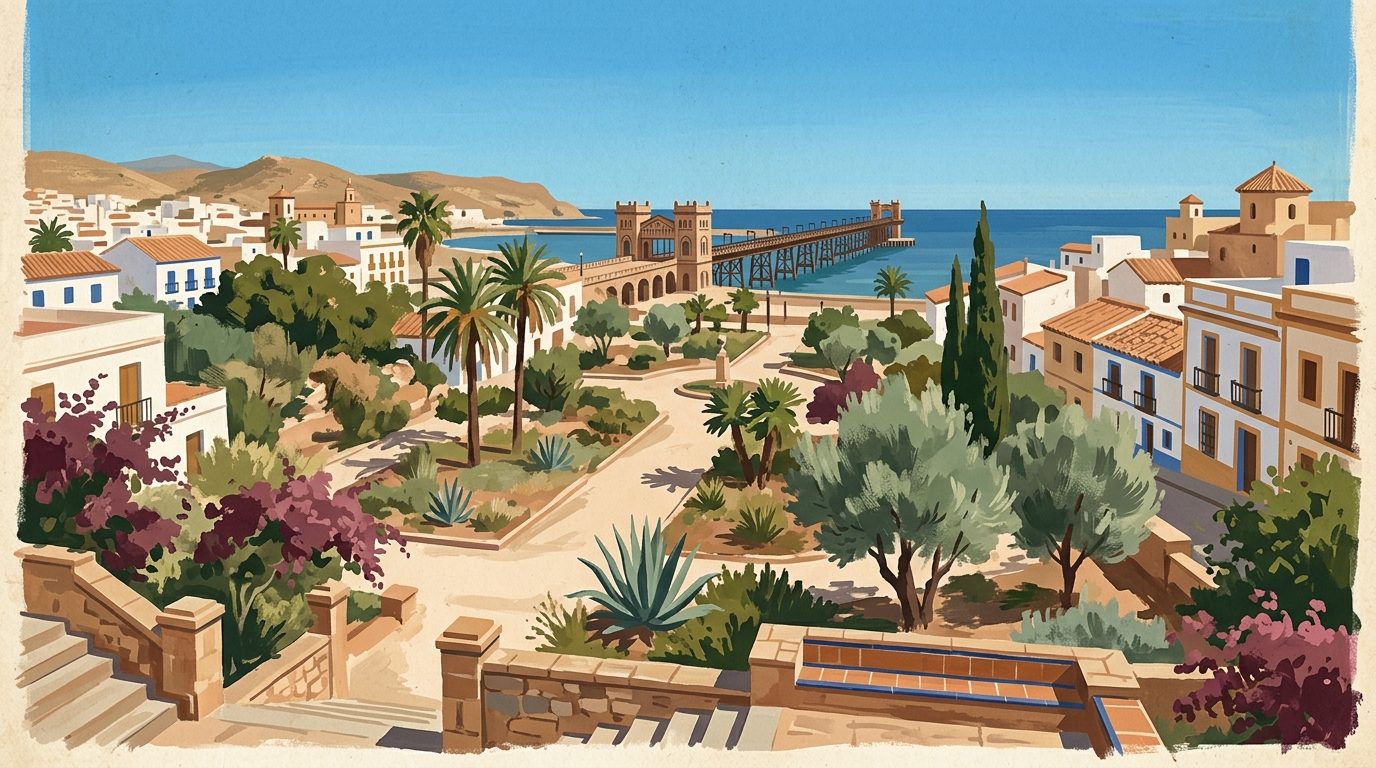
Situated at the southern end of the Rambla where the city meets the sea, Parque de las Almadrabillas serves as a vital link between the maritime heritage of Almería and its modern urban life. The park occupies land once dedicated to the industrial storage and transport of iron ore, and its name pays homage to the traditional tuna fishing nets that were once common in these waters. It is an ideal destination for visitors who appreciate industrial architecture, local history, or simply a tranquil space to walk by the Mediterranean. The layout caters to families, photography enthusiasts, and history students alike, offering a spacious green lung that transitions from the dense city centre to the expansive horizon of the Alborán Sea. The most striking feature within the park is the Cable Inglés, a colossal iron pier that remains a landmark of early twentieth-century engineering. This former mineral loading dock was designed to transport ore from the Alquife mines directly onto waiting ships, and its intricate lattice of rusted iron creates a dramatic silhouette against the sky. Recently restored, the structure now features a wooden walkway on its upper level, providing an elevated vantage point over the harbour. Nearby, you should also look for the moving Monument to the Victims of Mauthausen. This memorial consists of 142 stone columns, each representing a resident of Almería who died in the Nazi concentration camps, creating a sombre and reflective atmosphere amongst the surrounding palm trees. Further into the park, you will encounter various sculptures and installations that celebrate the relationship between Almería and the sea. One notable sight is the Almería Whale, a skeletal structure that commemorates a large rorqual whale that stranded on the local coast years ago. The park also includes an artificial pond and well-maintained paths that lead towards the marina and the lighthouse. Walking through the grounds allows you to observe the daily rhythms of the port, with ferries departing for North Africa and local fishing boats returning with their catch. It is a place where the utilitarian history of the city is preserved alongside contemporary leisure spaces, making it a multifaceted stop on any Almería itinerary. Accessing the park is very simple on foot, as it sits at the end of the main Avenida de Federico García Lorca. For those staying in the historic centre, it is less than a fifteen-minute stroll from the cathedral. If you are travelling by car, there is a large public car park located directly beneath the nearby seafront promenade. The park itself is an open public space with no entry fee and is accessible twenty-four hours a day. However, access to the upper walkway of the Cable Inglés is managed separately and usually requires a reservation. Check the official website for current opening times and prices for the pier. A visit of around one hour is typically sufficient to see the main monuments and enjoy the coastal views. To experience the park at its best, plan your visit for the late afternoon or early evening. The setting sun highlights the red tones of the ironwork and provides a more comfortable temperature for walking than the midday heat. Bringing a bottle of water is advisable, as the open layout means many areas are exposed to the sun. If you intend to walk along the Cable Inglés, try to time your visit for sunset to capture the best light over the port and the city skyline. Wear comfortable walking shoes, as the park covers a significant area and connects directly to the long promenade that runs along the city's beaches.

Parque Nicolás Salmerón
Parque Nicolás Salmerón serves as Almería’s primary green lung, extending linearly between the city’s residential heart and the active commercial port. This historic strip of greenery is the oldest park in Almería, named after the local philosopher and politician who served as President of the First Spanish Republic. It provides an essential buffer against the Mediterranean sun, making it an ideal destination for those seeking a quiet stroll away from the heat of the urban stone. The park is particularly suited to travellers who appreciate botanical history, as it contains some of the most impressive centenarian trees in the region. It also appeals to families who need open space for children and anyone looking for a scenic pedestrian route that connects the western entrance of the city to the central docks and the historic Cable Inglés monument. The park is divided into two distinct sections known as the Parque Viejo and the Parque Nuevo. The older part, closest to the port entrance, is characterised by its traditional nineteenth-century design featuring grand fountains and formal stone benches. Visitors should look for the Fountain of the Fish, a well-known landmark designed by Jesús de Perceval, which stands as a symbol of the city’s maritime heritage. Throughout this section, the most striking features are the enormous Australian banyan trees, or Ficus macrophylla, whose massive trunks and sprawling aerial roots create a prehistoric atmosphere. These trees offer a dense canopy that keeps the area significantly cooler than the surrounding streets. As you walk, you will encounter various monuments dedicated to local figures, providing a quiet narrative of the city's intellectual and political past. In the newer section of the park, the layout becomes more open with larger paved areas and modern landscaping. This part is particularly enjoyable for its proximity to the water, allowing for views of the cruise ships and ferries that link Almería to North Africa. One of the best experiences here is simply sitting on the mosaic-tiled benches and observing the daily rhythm of the locals who use the park for socialising and exercise. The park also provides an excellent vantage point for looking up towards the Alcazaba fortress, offering a perspective on how the medieval fortifications dominate the skyline above the modern city. Located along the Carretera de Málaga, the park is easily accessible on foot from the city centre, the Almería Cathedral, or the central market. There is no entrance fee, as it is a public space open twenty-four hours a day, making it a very flexible addition to any itinerary. Most visitors spend between one and two hours here, perhaps combining a walk through the park with a visit to the nearby port area or the English Cable iron pier. For those using public transport, several local bus lines stop along the park’s northern edge, providing easy access from further out in the city. The best time to visit is during the late afternoon when the low sun filters through the ficus leaves, creating a soft light ideal for photography. In the height of summer, it is a practical refuge during the hottest hours of the day because of its deep shade. Wear comfortable walking shoes, as the park is quite long, and consider bringing a bottle of water, although there are several small kiosks nearby for refreshments.

The Refugios de la Guerra Civil in Almería represent one of the most significant pieces of twentieth-century history in southern Spain. Engineered by Guillermo Langle, these subterranean tunnels were built between 1936 and 1938 to protect the civilian population from the devastating aerial bombardments during the Spanish Civil War. Unlike many other shelters across the country, the network in Almería is exceptionally well-preserved and extensive, stretching for several kilometres beneath the city streets. This attraction is ideally suited to history enthusiasts, those interested in urban engineering, or any visitor who wants to understand the resilience of the local population during a period of intense conflict. It offers a somber yet deeply moving perspective on a city that remained one of the last Republican strongholds. As you descend nine metres below the surface, the atmosphere changes instantly to a cool, quiet stillness. The most striking aspect of the visit is the sheer scale of the construction, which once featured ventilation shafts, electricity, and even a dedicated surgery room. Pay close attention to the charcoal drawings and inscriptions etched into the stone walls by those seeking shelter decades ago; these personal marks provide a visceral connection to the past. The tour takes you through long galleries where you can see the original benches and the separate storage areas for food. One of the most remarkable sections is the underground hospital, which was equipped with an operating theatre and recovery rooms, reflecting the sophisticated level of planning that went into ensuring the safety and survival of nearly forty thousand residents. The experience is enhanced by the guided nature of the visit, which provides context that would otherwise be lost in the echoing tunnels. You will walk through roughly one kilometre of the original four-kilometre network, moving from the entrance at Plaza Manuel Pérez García towards various exit points in the city. The transition between the modern city above and the preserved silence below is necessary to appreciate the engineering feat. Do not miss the explanation of how the air filtration systems worked, as these were revolutionary for their time and highlight the ingenuity required to keep such a large number of people safe in confined spaces for extended periods. Finding the entrance is straightforward as it is located in the heart of the city at Plaza Manuel Pérez García, within walking distance of the cathedral and the central markets. Access is strictly by guided tour only, and because group sizes are limited for safety reasons, it is essential to book your tickets in advance through the official Almería tourism website or at the ticket office. A typical visit lasts around seventy-five minutes, providing ample time to explore the main galleries. Check the official website for current opening times and prices, as these can vary depending on the season and local holidays. If you are arriving by car, use the public parking near the port, as the immediate vicinity is largely pedestrianised. The tunnels maintain a constant, cool temperature throughout the year, making this an excellent activity during the height of the Almerían summer heat. Wear comfortable, flat walking shoes as the floors can be uneven in places and you will be on your feet for the duration of the tour. While the shelters are well-lit, those who suffer from claustrophobia should be aware that the spaces are enclosed and deep underground. It is advisable to arrive ten minutes before your scheduled slot to ensure a prompt start to the tour.