
attraction · Sevilla
Monumento Natural Cerro del Hierro
Andalucía 365 · Updated 18 July 2026
Our Verdict
“A surreal paleokarst landscape where centuries of iron mining have exposed a dramatic topography of limestone needles and deep chasms, now reclaimed by nature.”
Last verified: July 2026
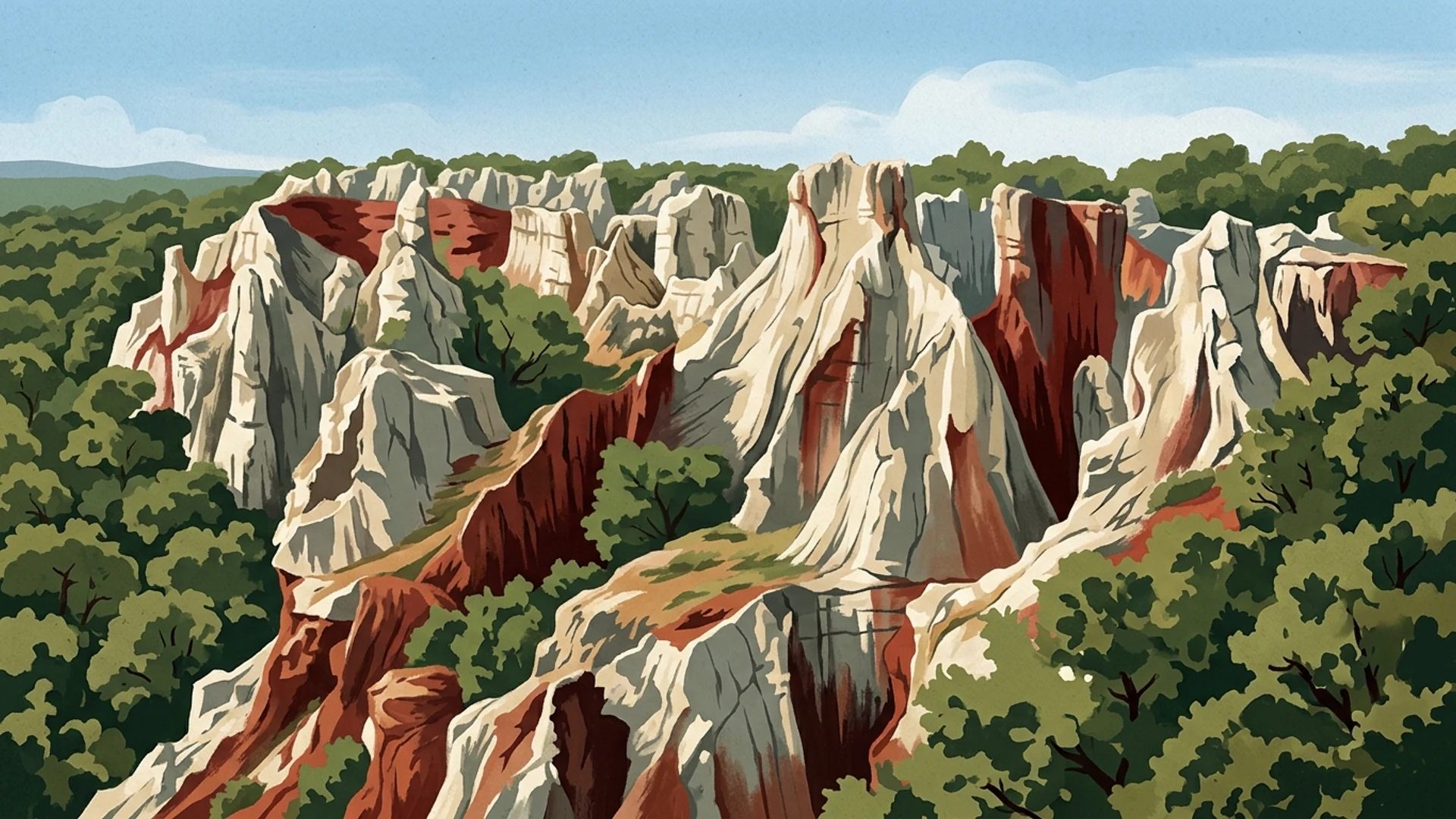
Monumento Natural Cerro del Hierro is a striking paleokarst landscape situated between Constantina and San Nicolás del Puerto in the Parque Natural Sierra Morena de Sevilla. For over two millennia, miners extracted iron ore from this limestone terrain, stripping away the topsoil to reveal a surreal topography of jagged needles, deep sinkholes, and narrow corridors. Today, the 121-hectare site is a protected natural monument where industrial archaeology meets ecological recovery. The rugged terrain provides a habitat for black storks, eagle owls, and rare ferns, while the former mining railway now serves as the accessible Vía Verde de la Sierra Norte. It is a compelling destination for geology enthusiasts, hikers, and industrial history buffs wanting to explore one of Andalucía's most unusual outdoor environments.
A Landscape Forged by Water and Iron
The geological foundation of Cerro del Hierro dates back to the Cambrian period, when the area was a shallow seabed rich in marine sponges. Over millions of years, these organic deposits compressed into limestone. Rain and snow eroded the rock, creating a karst system of caves and subterranean channels. However, the high concentration of iron oxides defined the site's human history.
From the Roman era until the late twentieth century, miners dismantled the hillside to extract the ore. This excavation removed softer materials, exposing the hard limestone skeleton beneath. The result is an otherworldly environment of pale rock spires, known as lapiaces, contrasted against earth stained deep red by iron oxide. The iron extracted here was used to forge the railings of the Real Fábrica de Tabacos and the Puente de Isabel II in the regional capital. Visitors exploring the Sevilla Province Guide: Sunlight, Shadows and the Soul of the South will frequently encounter metalwork originating from this exact hillside.
The Scottish Engineers and the Mining Village
Industrial operations peaked in the late nineteenth century when a Scottish mining company took control of the extraction. They constructed a dedicated railway line to transport ore to the port of Sevilla, alongside a purpose-built village for the workers. The remnants of this settlement, known as Poblado de Cerro del Hierro, still stand today and maintain a small permanent population.
The most prominent architectural survival from this era is the Casa de los Ingleses. Built to house the Scottish engineers, this colonial-style building now functions as the official information point. The contrast between the austere mining cottages and the elaborate managerial quarters provides a clear physical record of the social hierarchy that governed the site. The village is often referred to locally as the Siberia of Sevilla due to its microclimate; the elevation and continental influences result in winter temperatures that frequently drop below freezing.
Navigating the Trails and the Vía Verde
The primary way to experience the monument is via the Sendero Cerro del Hierro, a circular walking route of approximately two kilometres. This path provides safe access into the heart of the excavated areas, guiding walkers through narrow rock corridors, short tunnels, and past deep chasms. The trail includes elevated viewpoints that look down into the main open-cast pits, offering a clear perspective on the sheer scale of the historical mining operations.
For those seeking a longer excursion, the monument serves as a key node on the Vía Verde de la Sierra Norte. This greenway follows the route of the dismantled mining railway, providing a flat, accessible surface ideal for walking or cycling. The route connects the site to the nearby town of San Nicolás del Puerto and extends further through the protected woodland. Visitors planning a broader exploration, perhaps after reading Beyond the Orange Groves: An Insider’s Guide to the Sierra Norte de Sevilla, will find the Vía Verde an excellent artery for navigating the area without a vehicle.
Flora and Fauna in the Karst
Despite severe industrial degradation, nature has aggressively reclaimed Cerro del Hierro. The complex topography creates numerous microclimates, allowing a surprising diversity of plant life to flourish. The exposed rock spires support hardy aromatic plants like thyme and chamomile, while the deep, shaded sinkholes retain moisture, allowing ferns and fig trees to thrive in the cooler air. The surrounding landscape is dominated by dense forests of cork oak and Pyrenean oak, providing a stark green contrast to the red and white rock of the mine.
The vertical rock faces and isolated pinnacles offer secure nesting sites for several bird species, protected from ground predators. Eagle owls and black storks are the most notable residents, though visitors are also likely to spot blue rock thrushes and red-rumped swallows darting between the limestone needles. The area is a recognised Special Protection Area for birds, making it a significant location for wildlife observation within the broader context of the Sierra Morena: The Forgotten Wild of Andalucía.
Our verdict
Monumento Natural Cerro del Hierro is a highly rewarding destination that successfully balances industrial heritage with natural recovery. The visual impact of the red earth against the pale limestone is genuinely striking, and the accessible main trail allows visitors of most fitness levels to experience the dramatic topography up close. The integration of the Vía Verde adds significant value for cyclists and long-distance walkers.
However, the site does have limitations. The terrain beyond the designated paths is treacherous, with unmarked drops and unstable rock, meaning visitors must stick strictly to the official routes. Furthermore, the exposed nature of the karst means there is very little shelter from the elements; it can be punishingly hot in summer and bitterly cold in winter. Those expecting extensive museum facilities will be disappointed, as the interpretation is relatively modest, relying heavily on the landscape itself to tell the story.
Practicalities and Planning
The monument is five kilometres south of San Nicolás del Puerto, accessible via the SE-7102 from Constantina. For those basing themselves nearby, A Guide to Constantina: The Gateway to Sevilla’s Sierra Norte provides useful context for the immediate area.
Access to the natural monument and trails is free and open year-round. The Casa de los Ingleses houses the information point, where visitors can obtain maps and advice on trail conditions. Parking is available near the village entrance, adjacent to the main walking route.
Due to the lack of shade on the rock formations, early morning or late afternoon visits are strongly advised during warmer months. Sturdy footwear is essential, even on the main trail, as the limestone can be slippery when wet or dusty. For current details on guided tours and the information point, consult the official Junta de Andalucía visitor portal.
Nearby worth your time
A few well-placed stops for extending the day without turning it into a checklist.
Continue through Sierra Norte de Sevilla
Step back into the wider landscape with local guides, nearby places and the province overview.
Things to do · 9 min
The Definitive Guide to Feria de Abril in Sevilla
Discover the cultural nuances, strict dress codes, and insider advice for navigating Sevilla's exclusive spring fair like a seasoned local.
Things to do · 10 min
Golf in Sevilla Province: Courses, Holidays and Local Pro Shops
Swap the crowded coastal fairways for the refined courses of Sevilla province. Discover top layouts designed by golfing legends, local shops, and expert tips for your next trip.
Itinerary · 13 min
One Week in Sevilla: A Complete Seven Days Itinerary
Spending a full week in Sevilla allows you to slow down and adopt the local rhythm. You can explore the monumental centre, wander through neighbourhood markets, and take the train to nearby Andalucían cities without feeling rushed.