
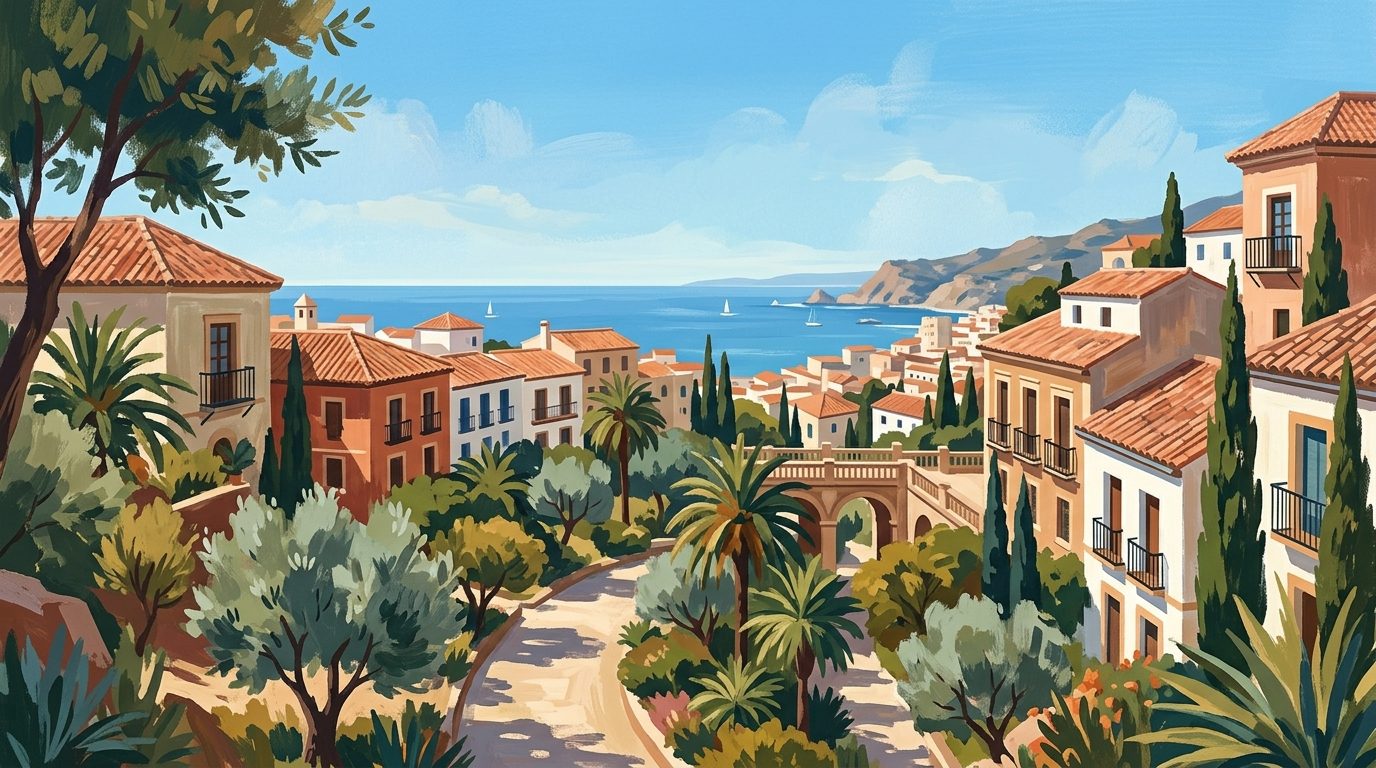
attraction · Málaga
Parque Verano Azul
Andalucía 365 · Updated 18 July 2026
Our Verdict
“Parque Verano Azul is a functional community space wrapped in a heavy dose of Spanish television nostalgia. While international visitors might not grasp the cultural weight of the replica fishing boat, the flat terrain, modern playgrounds, and petanque courts make it a highly practical stop for families exploring the western edge of Nerja.”
Last verified: July 2026
On the western edge of Nerja, a full-scale fishing boat sits stranded on dry land, surrounded by tall Mediterranean pines and paved walkways. This is La Dorada, the focal point of Parque Verano Azul, an open-air municipal space dedicated entirely to the 1980s Spanish television phenomenon of the same name. While international travellers might walk past unaware of its cultural weight, for generations of Spanish visitors, this park is a site of genuine pilgrimage. The series broadcast images of a sunny Andalucían coastal town into millions of living rooms, single-handedly accelerating the transformation of the coastal town of Nerja into a premier holiday destination. Today, the park serves as both a nostalgic monument and a highly functional green space for local residents.
The Legacy of Verano Azul
The cultural footprint of the television series is visible throughout the park. The programme followed the summer adventures of a group of teenagers and their friendship with an old sailor named Chanquete. It resonated deeply with a post-transition Spain, capturing the innocence of coastal summers. To commemorate the twentieth anniversary of its broadcast in 2001, the local council inaugurated Parque Verano Azul. Ceramic plaques bear the names of the main characters, while the pathways mirror the layout of a maritime promenade. The space ensures that the cinematic heritage of the Costa del Sol Oriental is preserved in a tangible format. Even if you have never watched a single episode, the sheer scale of the dedication offers an interesting insight into Spanish popular culture and the development of national tourism.
La Dorada and the Episode Monoliths
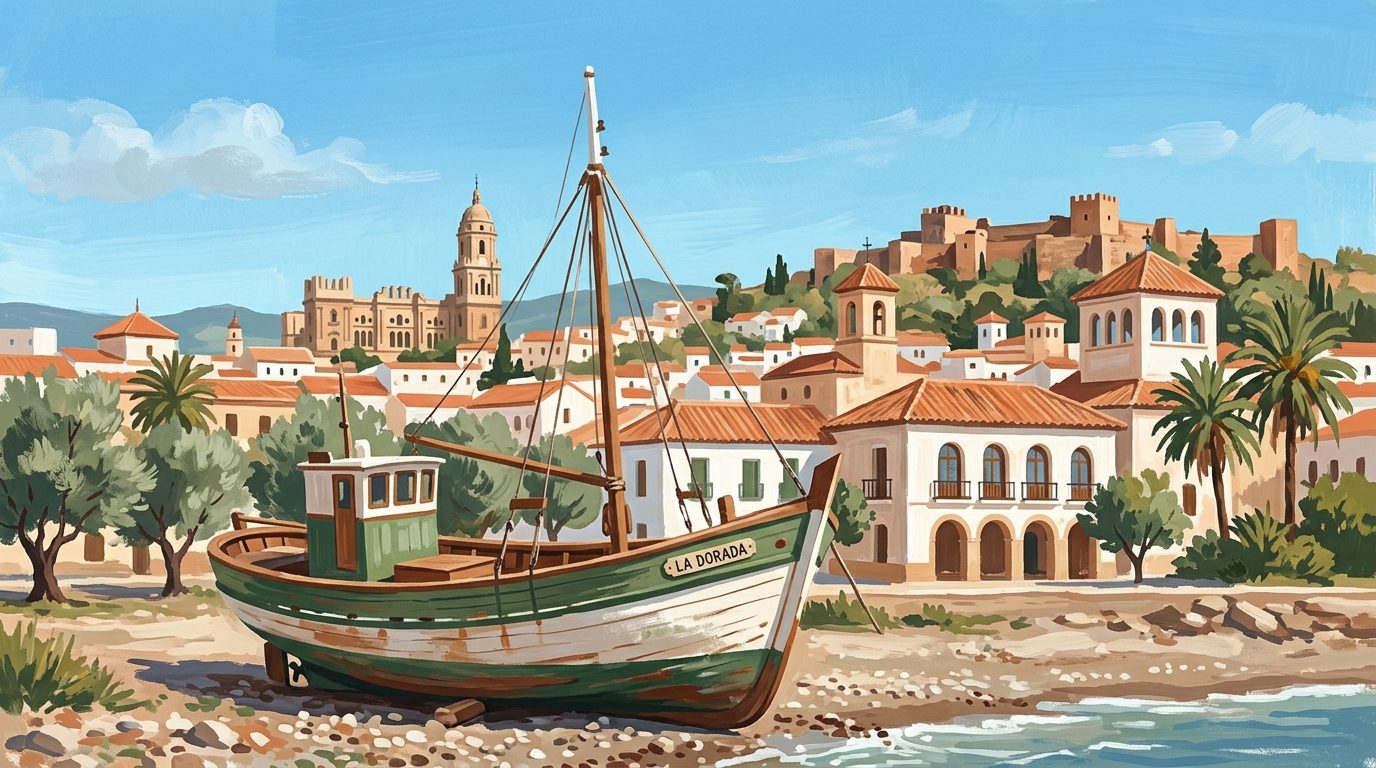
The undisputed star of the park is La Dorada. The original boat used in the series was a studio set, built in Madrid and dismantled shortly after filming wrapped. Recognising the immense public interest and the stream of visitors looking for the famous vessel, the town hall sourced a similar vintage fishing vessel. They painted it in the traditional white, blue and red maritime colours, and installed it permanently on a raised platform at the edge of the park. It is now one of the most photographed structures in the province.
Adjacent to the boat, the park features a series of stone monoliths. Each block is inscribed with the title of one of the episodes, serving as markers that guide visitors through the narrative of the series. Fans often stop to pose by the marker of their favourite episode, while locals use the monoliths as structural dividers within the parking grounds.
Modern Recreation and Family Facilities
Beyond the television memorabilia, Parque Verano Azul functions as a vital outdoor recreation area for the western side of the town. Following consistent municipal upgrades, the park features modern amenities designed for daily use. The children's play areas are particularly well-equipped, boasting safe rubberised flooring, varied climbing frames, and swings specially adapted for children with mobility challenges.
Adults and older residents frequent the well-maintained petanque courts, which add a strong community atmosphere to the grounds during late afternoon matches. Sports enthusiasts also make use of the municipal seven-a-side artificial grass football pitch located within the park limits. Wide, paved avenues lined with young trees make the park ideal for a gentle stroll, while a dedicated canine agility circuit sits adjacent to the main recreation zones, integrating the space into the daily routines of local pet owners.
A Candid Assessment
Travellers seeking untouched nature or ancient history will find little of interest here. The park is essentially a modern urban green space set alongside a large public car park. Some visitors note that the immediate presence of tourist coaches and passenger vehicles detracts slightly from the romance of the legendary fishing boat. However, as a cultural artefact and a piece of Spanish television history, it is unparalleled in the region. If you view it as a functional community park infused with a heavy dose of national nostalgia, it delivers exactly what it promises. It operates perfectly as a well-kept diversion for an hour rather than a primary, full-day attraction.
How to Visit and Accessibility
Parque Verano Azul is an open municipal space with free entry at all times. The terrain is entirely flat and features wide, paved pathways, making it fully accessible for wheelchair users, visitors with limited mobility, and families with pushchairs. Wide, modernised staircases and ramped entry points ensure smooth pedestrian access from the main avenue.
Those arriving by car will find the adjacent Aparcamiento Verano Azul incredibly convenient. This large public car park is often the easiest place to leave a vehicle when exploring the western quarter of the town, offering immediate access to the site. The park is exposed to the sun during the middle of the day, so visiting in the late afternoon or early evening is highly recommended to avoid the peak heat. For general municipal notices, always check the official Nerja tourism portal.
What to Pair it With
Given its central location on the western flank, the park is an excellent starting point for exploring the wider town. A short walk south brings you to the coastline, where you can easily reach the dark sands of Playa de la Torrecilla or the promenade at Playa El Chucho. Alternatively, you can head east through the town centre to discover excellent dining options; read our guide on where to eat in Nerja to find everything from traditional tapas to modern Andalucían seafood dishes. If you prefer to stay strictly on the theme of local television history, you can drive across town to see the monument dedicated to the show's director on the promenade of Playa de Burriana, or look out for the statue of Chanquete overlooking the Mediterranean near the Balcón de Europa.
Nearby worth your time
A few well-placed stops for extending the day without turning it into a checklist.
Continue through Costa del Sol Oriental
Step back into the wider landscape with local guides, nearby places and the province overview.
Place guide · 7 min
Playa de Burriana: A Guide to Nerja's Premier Beach
Discover Playa de Burriana, the most iconic beach in Nerja, known for its wide sands, excellent chiringuitos, and clear waters on the Costa del Sol.
Place guide · 7 min
Playa de Cabopino: Dunes, Pines and Clear Waters near Marbella
A protected enclave of natural dunes and fine sand situated between Marbella and Fuengirola. This coastal stretch offers a rare glimpse of the original Mediterranean landscape.
Itinerary · 13 min
One Week in Ronda: A Seven-Day Itinerary for the Serranía
A seven-day stay in Ronda allows you to experience the deep gorge and ancient streets long after the day-trippers have left. Using the city as a base, you can easily explore the surrounding white villages, hike the Sierra de las Nieves, and settle into the true rhythm of mountain life.