
Practical guide
Health and Safety in Andalucía: A Practical Guide
A practical health and safety guide for Andalucía, covering 112, EHIC/GHIC, urgent care, pharmacies, heat, beach safety, theft awareness and official health links.
By Dan · Updated 18 July 2026 · 7 min read
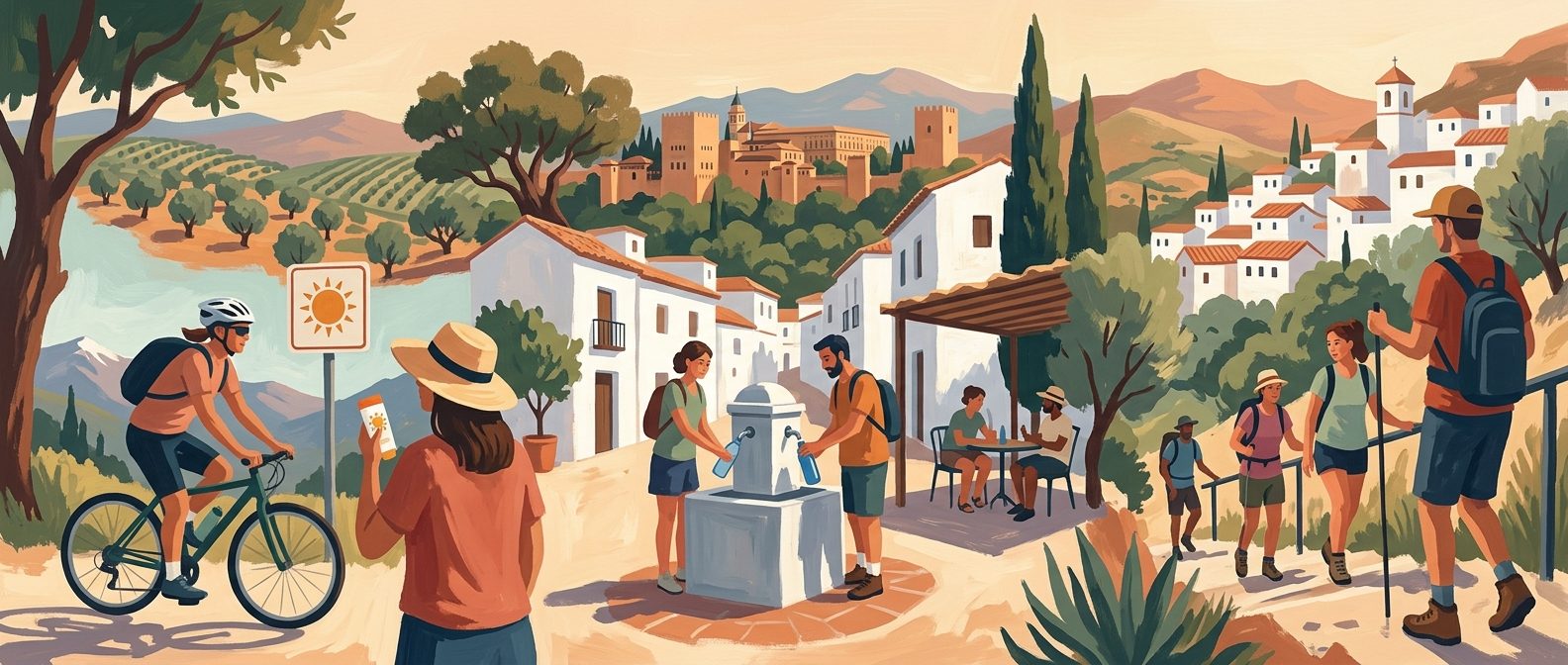
Health and safety planning for Andalucía: 112 emergencies, EHIC/GHIC, urgent care, pharmacies, heat, beach flags, theft awareness and official checks.
Andalucía is generally straightforward to visit, but health and safety planning should be practical rather than casual: know when to call 112, carry the right healthcare documents, plan around summer heat, and treat beach flags, road conditions and theft reports seriously. This guide is travel-safety orientation, not medical advice. For symptoms, medication, urgent care or insurance decisions, use official health services, a pharmacist, a doctor or your insurer.
Safety priorities before you travel
- Save 112 offline: use it for medical emergencies, fire, violence, rescue, road danger or anyone in immediate danger.
- Carry documents: passport, EHIC/GHIC if eligible, insurance details, prescriptions and allergy/condition notes.
- Plan heat around the itinerary: inland cities such as Sevilla, Córdoba and Jaén can be punishing in summer afternoons.
- Use official health sources: rules on public cover, travel health and emergency access can change.
Emergency Numbers
Spain uses a centralised emergency system. Ask clearly for English if needed, but be ready to repeat your location slowly.
- 112: The primary emergency number for police, fire, and ambulance services. This is free to call from any phone.
- 061: Direct line for health-related emergencies (Ambulance).
- 091: National Police (Policía Nacional), for reporting crimes like theft. You can also use the AlertCops smartphone app (available on the App Store and Google Play) to contact emergency services with GPS location tracking.
- 092: Local Police (Policía Local), which handles traffic and municipal issues.
Healthcare for Visitors and Expats
The healthcare system in Andalucía consists of the public Servicio Andaluz de Salud (SAS) and various private providers.
EHIC and GHIC Cards
Eligible UK and EU visitors should carry an EHIC or GHIC for medically necessary state healthcare. The exact cover depends on eligibility, documentation and whether the provider is public or private, so check official guidance before travelling.
- Coverage: Covers medically necessary state healthcare on the same basis as local residents, not private treatment.
- Exclusions: It does not cover private clinics, dental work, or medical repatriation to your home country.
- Documentation: Bring the card, passport and any insurance details. Do not delay emergency treatment if documents are not immediately to hand.
Private Healthcare
Visitors without public healthcare cover should arrange suitable travel insurance. Even with EHIC/GHIC, insurance can matter for private treatment, repatriation, missed travel, mountain incidents or medical escort costs.
- Cost: Private clinics set their own charges, so confirm prices, receipts and insurer authorisation before treatment unless it is urgent.
- Payment: Private clinics usually require payment upfront, which you then reclaim from your insurer.
Pharmacies (Farmacias)
Pharmacies in Andalucía are identified by a large, illuminated green cross. They are the normal place to ask about over-the-counter medicines, prescription rules and out-of-hours pharmacy cover.
- Opening hours: Hours vary by town, season and pharmacy. Check the sign on the door or the provincial pharmacy college listing for the duty pharmacy.
- Farmacia de Guardia: Duty pharmacies provide out-of-hours cover, though smaller municipalities may share a rota. Locations are posted on the door of every pharmacy and listed online or in local newspapers.
- Medication advice: Ask the pharmacist about Spanish brand names, interactions and whether a doctor is needed. Do not assume a medicine has the same dose or legal status as at home.
Sun and Heat Safety
Heat exhaustion and heatstroke are significant risks in Andalucía, particularly between June and September when inland temperatures in cities like Sevilla and Córdoba regularly exceed 40°C.
- Hydration: Drink regularly and adjust for your age, health, activity and medical advice. Avoid excessive caffeine and alcohol during peak heat.
- Peak Hours: Stay out of direct sunlight between 12:00 and 18:00. This is when the UV index is highest.
- Sunscreen: Use SPF 30 or higher. The UV index in Andalucía can reach 10 or 11 in summer, meaning skin can burn in less than 15 minutes.
Water Safety
Tap Water
Public tap water is generally drinkable, but taste, hardness and temporary local notices vary. If you have a medical vulnerability, are staying rurally, or see a local aviso, check the municipality, accommodation provider or Spain's official drinking-water information system rather than relying on general advice.
Beach Safety
Always check the flag system before swimming in the Mediterranean or Atlantic:
- Green: Safe to swim.
- Yellow: Caution; waves or currents may be present.
- Red: Swimming is prohibited and strictly enforced.
- Jellyfish: Look for purple flags, white flags with a jellyfish symbol, or signs indicating "Medusas".
Common Scams and Personal Safety
While violent crime is rare, petty theft occurs in crowded areas. Be aware of the following:
- Street approaches: In busy tourist areas, ignore unsolicited offers, petitions, lucky charms or overly helpful distractions if they make you uncomfortable.
- Distraction theft: Be cautious if someone suddenly points out a spill, stain or problem with your bag while another person stands close by.
- Unlicensed Taxis: Always use official taxis (typically white with a city-specific diagonal stripe or crest on the door). Do not accept rides from individuals in unmarked cars at airports.
- Pickpockets: Be extra vigilant on public transport and at major sites like the Alhambra or the Málaga seafront.
Heat Illness: Local Habits That Help
In July and August, locals do not treat the afternoon heat as something to push through. They change the day around it. For visitors, the safest plan is to finish outdoor sightseeing before lunch, eat properly, rest indoors, then go out again in the evening. This is especially important for children, older travellers and anyone with heart, kidney or respiratory conditions.
- Early starts: Book monuments, hikes and driving days for the morning. Do not begin exposed walks at midday because the map distance looks short.
- Shade: Walk on the shaded side of the street, use arcades where available and pause in churches, markets or museums rather than waiting until you feel unwell.
- Warning signs: Dizziness, confusion, nausea, headache, cramps or stopping sweating need prompt attention. Move to shade, cool down and seek medical help if symptoms are serious or do not improve.
Bites, Stings And Spring Hazards
Mosquitoes are worst around standing water, river valleys and some coastal wetlands after warm weather. Pack repellent if you are staying rurally, near rice fields or close to marshes on the Costa de la Luz. Window screens are not universal in older rentals, so ask before booking if bites bother you.
In pine areas during late winter and spring, watch for processionary caterpillars moving in nose-to-tail lines. Do not touch them, and keep children and dogs away, as their hairs can irritate skin, eyes and mouths. On beaches, jellyfish warnings are usually posted with flags or signs. If stung, ask the lifeguard or a pharmacist for current local advice rather than using old home remedies.
Choosing The Right First Stop
For minor, non-urgent problems, a pharmacy is often the simplest first stop. Pharmacists are used to advising visitors about bites, sunburn, stomach upsets, mild allergies and lost or forgotten toiletries. They can explain when a medicine needs a doctor and may know the nearest clinic that handles tourists. Bring the packaging or generic name of any medicine you already take, as brand names often differ from home.
- Use a pharmacy: Minor symptoms, over-the-counter medicine, sunscreen, rehydration products, dressings and advice on Spanish equivalents.
- Use a clinic: Symptoms that need examination, prescriptions, worsening infections, ear problems after swimming or travel-insurance paperwork.
- Use 112: Chest pain, breathing difficulty, severe allergic reaction, serious injury, confusion, collapse, stroke signs or any immediate danger.
Frequently Asked Questions
Can I get a prescription filled in Andalucía?
Yes, but you will need a physical prescription from a doctor. If you have a UK or EU prescription, a Spanish pharmacist may accept it if it is a 'cross-border prescription' containing specific details like the doctor's contact info and the generic name (INN) of the medication, but it is often easier to visit a local clinic for a Spanish equivalent.
Is the water safe for brushing teeth?
In normal circumstances, yes. If there is a local notice, rural supply issue or medical vulnerability, follow municipal, accommodation or health advice.
What should I do if I lose my passport?
First, report the loss to the local police (Policía Nacional) to get a denuncia (police report). You usually need this report to apply online for an Emergency Travel Document (ETD) via GOV.UK. Note that you cannot use a police report itself to travel or leave Spain. In Andalucía, the primary British Consulate is located in Málaga, but most ETD applications are now processed digitally.
Summary
- Call 112 for emergencies and ask clearly for English if needed.
- Carry your GHIC/EHIC and passport for state medical treatment.
- Avoid the sun between 12:00 and 18:00 during summer months to prevent heatstroke.
- Keep valuables secure in city centres to avoid common pickpocketing scams.
Official checks before travelling
Use GOV.UK Spain travel advice, NHS GHIC guidance, the Servicio Andaluz de Salud, Junta urgent healthcare information, Spain's travel health portal, SINAC for drinking-water information, and AlertCops for police alerts.
Last reviewed: 18 July 2026 · Editorial policy
Related guides
Emergency Numbers and Procedures in Andalucía
A practical emergency guide for Andalucía, with 112 first advice, police and medical numbers, passport theft steps, AlertCops and official consular sources.
8 min read

Travelling with Kids in Andalucía: A Practical Guide
A practical family guide to Andalucía, covering rooms, car seats, trains, meal times, pushchairs, heat, beaches, child health and official planning checks.
8 min read

Month-by-Month Guide to Visiting Andalucía
Discover the best time to visit Andalucía with this practical month-by-month guide covering weather, local festivals, and seasonal costs.
9 min read
Shopping Hours and Siesta Guide for Andalucía
A practical guide to shopping hours in Andalucía, covering the afternoon siesta, Sunday trading laws, and bank and pharmacy schedules.
7 min read

Pharmacies and Medicine in Andalucía: A Practical Guide
How to use pharmacies in Andalucía safely, including duty chemists, prescriptions, medicine names, Nolotil/metamizole warnings, and official AEMPS/SAS checks.
7 min read

Best Time to Visit Andalucía: Weather, Prices, and Festivals
Discover the best time to visit Andalucía with our practical guide to seasonal weather, price drops, and the regional festival calendar.
7 min read
More guides
Using a VPN in Andalucía: A Practical Guide for Travellers and Residents
A comprehensive guide to using a VPN in Andalucía for security, accessing UK streaming services, and maintaining privacy on public Wi-Fi.
6 min read

Sevilla Airport (SVQ) Guide: Transport, Facilities and Tips
A practical guide to Sevilla Airport (SVQ) covering the EA bus, taxi flat rates, terminal facilities, car hire, and connecting to wider Andalucía.
9 min read
Practical Guide to Almería Airport (LEI)
A practical logistics guide to arriving at Almería Airport (LEI). Discover how to navigate terminal facilities, use the Surbus Line 30, connect to intercity buses, and avoid common transport mistakes.
7 min read
Practical Guide to Gibraltar International Airport (GIB)
A practical guide to using Gibraltar Airport (GIB) for trips into Andalucía, covering border logistics, avoiding vehicle queues, Spanish transport options, and how to handle wind diversions.
8 min read

Málaga-Costa del Sol Airport (AGP) Travel Guide
A deep practical guide to navigating Málaga-Costa del Sol Airport (AGP). Learn the realities of arrivals, transport connections, parking rules, and common mistakes.
8 min read
Federico García Lorca Granada-Jaén Airport Guide: Transport, Costs and Tips
A complete practical guide to Granada-Jaén Airport (GRX), covering airport buses, taxi fares, car hire friction, terminal facilities, and the step-by-step reality of arriving and departing.
7 min read

Jerez Airport (XRY): The Complete Guide to the Gateway of Cádiz
A deep-dive practical guide to using Jerez Airport (XRY). Learn the realities of onward transport to Cádiz province, car hire friction, train timetables, and how to avoid the most common arrival mistakes.
8 min read

Understanding Spanish Festival Culture in Andalucía
A deep dive into Andalucían festival culture for residents and visitors. Understand Semana Santa, ferias, local holidays, etiquette, administrative friction and how to survive the local party season.
9 min read
Driving in Andalucía: Rules, Tolls, and Parking Guide
A practical guide to driving in Andalucía, covering road rules, ZBE checks, AP-7 toll choices, parking, roundabouts, breakdown equipment and official sources.
9 min read
Newsletter
More stories from Andalucía
Weekly notes, seasonal picks, and the next guides worth bookmarking.