
Route
Roman Andalucía Heritage Trail
Before the Moorish emirs reshaped southern Spain, this territory was the fiercely wealthy Roman province of Baetica, a crucial supplier of olive oil and emperors to the empire. This seven-day route traces the classical footprint across Andalucía, leading you from coastal fish-salting ruins and lonely mountain amphitheatres to the architectural remnants that bridged the fall of Rome and the rise of Al-Andalus.
By Dan · Updated 7 June 2026 · 9 min read
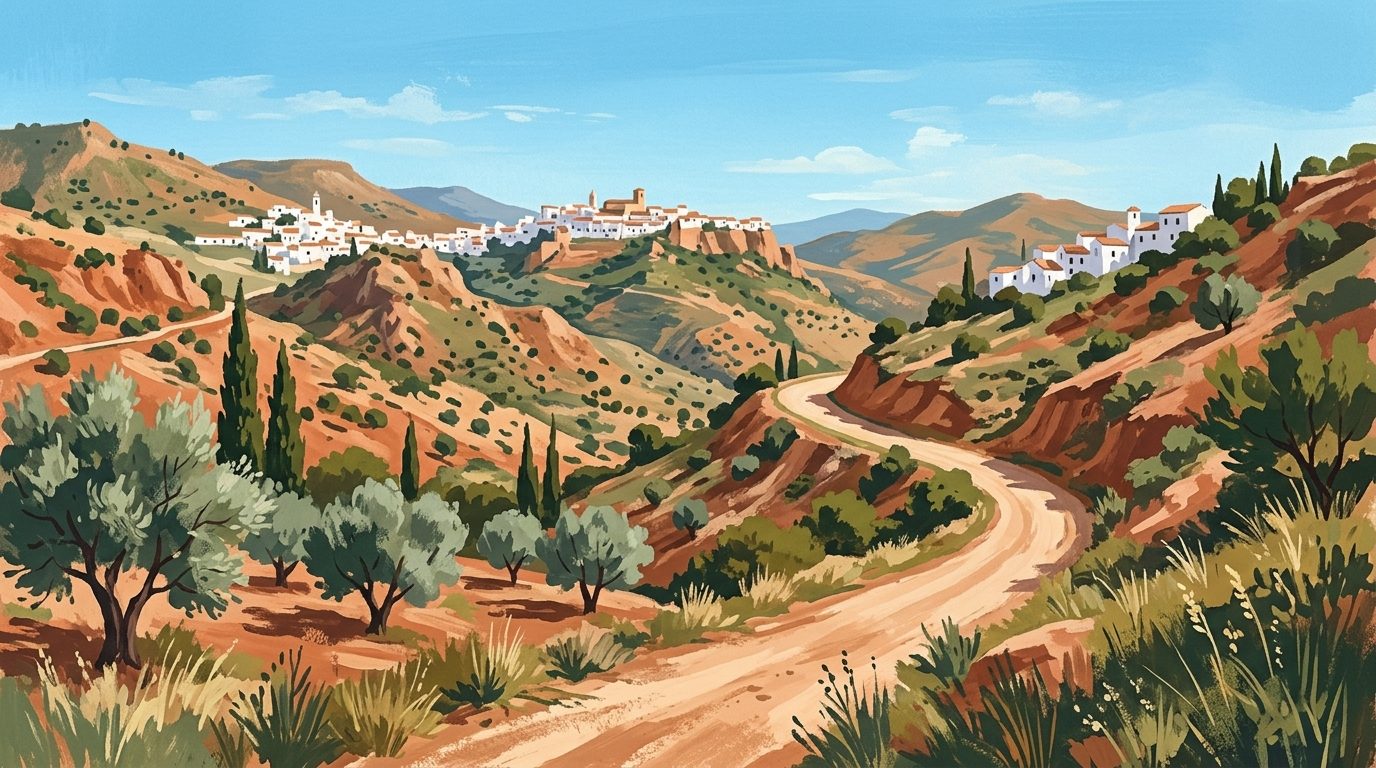
Before the Moorish emirs reshaped southern Spain, this territory was the fiercely wealthy Roman province of Baetica, a crucial supplier of olive oil and emperors to the empire. This seven-day route traces the classical footprint across Andalucía, leading you from coastal fish-salting ruins and lonely mountain amphitheatres to the architectural remnants that bridged the fall of Rome and the rise of Al-Andalus.
Introduction
Southern Spain often feels entirely defined by its Islamic past. Yet beneath the Alhambra and the Alcázares lies an older, highly sophisticated foundation: Baetica. As a Roman province, it was staggeringly prosperous. It exported wine, wheat, and millions of amphorae of olive oil to Rome. It also exported power, producing two of Rome’s greatest emperors, Trajan and Hadrian.
Following the Roman Andalucía Heritage Trail requires a different way of travelling. You will frequently leave the major motorways to find solitary ruins exposed to the coastal winds or situated high on limestone plateaus. You will trace the ancient Via Augusta. You will see how classical columns were later scavenged to build caliphal palaces.
This 4 to 7-day itinerary covers the major surviving nodes of Roman Baetica. It is a route for those who want to understand the deep, structural roots of Andalucía. You need a car, a tolerance for walking over uneven ground, and a willingness to brave the Spanish sun exactly where the Romans did: out in the open.
Day 1: The Emperors’ Birthplace, Itálica and Hispalis (Sevilla)
Begin your journey in Sevilla (Roman Hispalis), but leave the city limits early. Drive 10 kilometres north on the N-630 to the modern town of Santiponce. Here you will find Itálica, the first Roman city established in Hispania, founded in 206 BC by Scipio Africanus to settle his wounded veterans after the Second Punic War.
By the 2nd century AD, Itálica was a grand, imperial city. Both Trajan and Hadrian were born here, and Hadrian poured enormous funds into expanding his hometown, creating the Nova Urbs (New City).
Arrive precisely when the gates open at 9:00 AM. The site offers virtually no shade, and the Sevillian heat is notoriously brutal by midday. Your primary focus should be the amphitheatre. Capable of seating 25,000 spectators, it was one of the largest in the entire empire, vastly disproportionate to the town’s population, serving instead as a massive status symbol. Walk down into the fossa bestiaria (the subterranean pit beneath the arena floor) where cages for wild animals were operated via complex wooden pulley systems.
Above ground, the sheer scale of the residential blocks is staggering. Walk along the original paved streets to the Casa de los Pájaros (House of the Birds) to examine the intricately preserved floor mosaics featuring dozens of distinct avian species.
Return to Sevilla for the afternoon. While Hispalis was a major trade hub, most of its Roman architecture lies buried beneath the current medieval street plan. However, you can view the remaining granite columns of a Roman temple on Calle Mármoles, protruding abruptly from the pavement in the Santa Cruz neighbourhood.
Day 2: The Coast of Baetica, Baelo Claudia (Cádiz)
Leave Sevilla via the AP-4, transitioning to the A-48 and eventually the N-340 as you head south toward the Strait of Gibraltar. Your destination is Bolonia, a wide, sweeping bay in the province of Cádiz. Turn off the N-340 at the CA-8202; the road narrows considerably as it descends toward the sea, flanked by pine forests and free-roaming Retinto cattle.
Right on the edge of the beach sits Baelo Claudia, arguably the most evocative Roman ruin in Spain. Founded in the 2nd century BC, this town existed for one primary reason: the tuna migration. The residents harvested the fish and manufactured garum, the fermented fish sauce that was highly prized and aggressively expensive across the Roman Empire.
Walk through the remains of the macellum (market), the basilica, and the forum, all set against the dramatic backdrop of a massive sand dune and the deep blue water. You can clearly identify the deep stone vats near the shoreline where the fish was left to ferment in the sun.
A crucial warning: Check the wind forecast before you drive down. If the Levante (the fierce easterly wind) is blowing heavily, walking through Baelo Claudia becomes a physically painful experience as you are sandblasted by the beach winds. On a calm day, however, there is no finer archaeological site in the country.
After exploring the ruins, eat lunch at one of the beachside restaurants just outside the site perimeter. Order the local almadraba tuna, caught using trap-net methods that have evolved directly from the Roman and Phoenician eras.
Day 3: Into the Serranía, Acinipo (Near Ronda)
From the coast, drive inland. Take the A-381 north, then cut across the mountains via the A-374 toward Ronda. From Ronda, follow the MA-7402 up into the austere limestone ranges of the Serranía de Ronda to reach Acinipo.
Known locally as Ronda la Vieja (Old Ronda), Acinipo sits at an elevation of 1,000 metres. The site is radically different from the coastal wealth of Baelo Claudia. This was an agricultural hub, heavily focused on viticulture. The drive up the winding rural road is slow, and the site itself is remarkably isolated.
The primary survival here is the Roman theatre. The cavea (seating area) was carved directly into the bedrock of a steep escarpment. Climbing to the top tier of the seating provides a panoramic view that stretches all the way to the Sierra de Grazalema. You can easily see why the Romans chose this strategic high ground.
Practical advice: Acinipo is frequently unstaffed, and its opening hours are notoriously erratic. Officially, it opens Wednesday through Sunday mornings, but local municipal issues often result in closed gates. Have a backup plan to hike the perimeter fence if you cannot get in (you can still see the theatre clearly from the boundary). Furthermore, the high-altitude plateau offers no protection from the elements. Bring a windbreaker in spring and autumn.
Day 4: Coastal Return, Teatro Romano Málaga
Descend from the Ronda mountains via the A-367 and A-357, a beautiful, sweeping two-hour drive that drops you directly into the Mediterranean humidity of Málaga.
Unlike Acinipo or Itálica, Málaga’s Roman theatre is entirely integrated into the modern city layout. Located on Calle Alcazabilla, it sits directly at the foot of the Moorish Alcazaba fortress. For centuries, the theatre was completely buried, only discovered in 1951 when construction workers were preparing the ground for a cultural centre.
Built during the reign of Augustus, the theatre was in use until the 3rd century AD. What makes this site particularly fascinating is the physical evidence of cultural succession. When you look closely at the Moorish Alcazaba rising directly behind the theatre, you will spot Roman column shafts and capitals embedded in the Islamic brickwork. The Moors literally quarried the abandoned Roman theatre to build their fortifications.
The visitor centre is small but excellent, displaying fragments of the Lex Flavia Malacitana, the bronze tablets that granted municipal rights to the city under Emperor Domitian.
Day 5: The Imperial Capital, Corduba and Medina Azahara
Head north along the A-45 motorway to Córdoba. As the capital of Baetica, Roman Corduba was an administrative powerhouse and the intellectual centre of the province, giving birth to the philosopher Seneca and the poet Lucan.
Start at the river. The Puente Romano (Roman Bridge) spans the Guadalquivir. While heavily reconstructed by the Moors and later Christian kings, the foundations and the sweeping 16-arch structure remain fundamentally Roman. Walk across it at dawn before the immense crowds arrive. Next, navigate the narrow streets up to Calle Claudio Marcelo, where the stark, fluted columns of a 1st-century Roman temple stand unexpectedly between modern apartment blocks and cafés.
In the afternoon, drive 8 kilometres west of the city via the A-431 to Medina Azahara. This is a 10th-century Islamic palatine city built by Caliph Abd al-Rahman III. Including an Umayyad palace on a Roman heritage trail might seem contradictory, but Medina Azahara serves as the essential epilogue to the classical era in Andalucía.
To build his magnificent city, the Caliph ordered the systematic stripping of Roman ruins across the region. As you walk through the Salón Rico and the grand basilical halls of Medina Azahara, look at the marble capitals and the diverse column shafts. You are looking at Roman spolia. The architectural language of Rome was physically uprooted, transported, and repurposed to legitimise the new Islamic empire. Understanding Roman Andalucía requires seeing how its bones were used to construct the era that followed.
Days 6 and 7: The Mining Frontier, Cástulo (Jaén)
For the final leg, drive east along the A-4 toward the province of Jaén, stopping just outside the city of Linares. This region was the heavy industrial heartland of the ancient world. The Sierra Morena mountains were packed with silver, lead, and copper.
Cástulo was originally an Iberian settlement. Hannibal, the Carthaginian general, married the local princess Himilce here to secure an alliance. When the Romans eventually took control in the late 3rd century BC, Cástulo became one of the wealthiest outposts in the empire.
The site is vast, covering roughly 3,200 hectares, but only a fraction has been excavated. Turn off the A-32 and navigate the local farm roads to reach the visitor car park. Cástulo rarely sees the tourist traffic of Itálica, lending it a quiet, scholarly atmosphere.
Your primary objective here is the Mosaico de los Amores (Mosaic of the Loves), unearthed only in 2012. Housed under a protective canopy, the tesserae are so pristine and brilliantly coloured that it looks as if the artisans finished laying it yesterday. The geometric precision and the detailed depictions of mythology demonstrate the immense private wealth generated by the local lead mines.
Spend your final day visiting the Archaeological Museum in Linares to see the artefacts recovered from the site, including the beautifully carved Patena de Cristo en Majestad, a 4th-century glass plate that provides some of the earliest physical evidence of Christianity reaching the southern Iberian Peninsula.
Practical Information for the Trail
When to Go
The optimal windows for this route are mid-March through late May, and late September through November. Do not attempt this itinerary in July or August. Sites like Itálica, Acinipo, and Cástulo offer zero shade, and afternoon temperatures routinely exceed 40°C. If you must travel in summer, you will need to be at the gates by 9:00 AM and leave by midday.
Driving and Transport
A rental car is absolutely mandatory. While Málaga, Sevilla, and Córdoba are easily connected by high-speed AVE trains, Acinipo, Baelo Claudia, and Cástulo require personal transport. The roads are generally in excellent condition, though the final approaches to Acinipo and Baelo Claudia involve narrow, winding mountain passes or degraded tarmac. Ensure your rental includes comprehensive insurance for rougher parking lots.
Tickets and Access
The majority of these archaeological sites (Itálica, Baelo Claudia, Cástulo, Málaga Roman Theatre) are managed by the Junta de Andalucía. Access is entirely free for European Union citizens. If you hold a passport from outside the EU (including the UK, US, and Canada), the entry fee is a nominal €1.50 per site. Carry small coins, as the ticket offices often struggle to break large banknotes.
Medina Azahara requires a ticket for the shuttle bus that runs from the museum and parking area up to the ruins (€3.00 return).
What to Bring
Because you are visiting exposed sites, pack a wide-brimmed hat, SPF 50 sunscreen, and rugged walking shoes. The ancient Roman paving stones at Itálica and the uneven bedrock at Acinipo are heavily worn and highly slippery. A refillable water bottle is essential; do not rely on on-site cafés, as many of these remote ruins only have basic vending machines, if that. Finally, download offline maps before heading to the mountainous interior, as mobile signal frequently drops out near Ronda and the Cádiz coast.
Last reviewed: 21 June 2026 · Editorial policy
Related guides
Game of Thrones Filming Locations: The Ultimate Andalucían Road Trip
For years, fantasy tourists flocked to the freezing coastlines of Northern Ireland and the medieval streets of Croatia. But it was the sun-baked architecture and cracked deserts of southern Spain that brought the most exotic kingdoms of Westeros to life.
10 min read
Journey Through Time: Unveiling Andalucía's Magnificent Moorish Legacy
Discover the enchanting Moorish legacy of Andalucía, from Granada's Alhambra to Córdoba's Mezquita, and look at the long history of Al-Andalus in southern Spain.
6 min read
Moorish Andalucía: A Cultural History Route
A definitive 7-day guide through the architectural and political legacy of al-Andalus, tracing the evolution from the Caliphate of Córdoba to the Nasrid Kingdom of Granada.
8 min read
The Ghost in the Garden: Searching for the Al-Andalus Within
Eight centuries of Al-Andalus did not vanish in 1492; they simply moved indoors, into the kitchens, and onto the tip of the tongue.
7 min read
The Reconquista in Andalucía
The centuries-long Christian conquest of southern Iberia redefined the physical and cultural landscape of the peninsula. How did the military campaigns of the northern kingdoms dismantle the Islamic territories of Al-Andalus and forge the modern region of Andalucía?
7 min read
Corduba and Roman Baetica
Discover the political and intellectual might of Corduba, the wealthy administrative capital of Roman Baetica and the birthplace of the philosopher Seneca.
7 min read
More guides
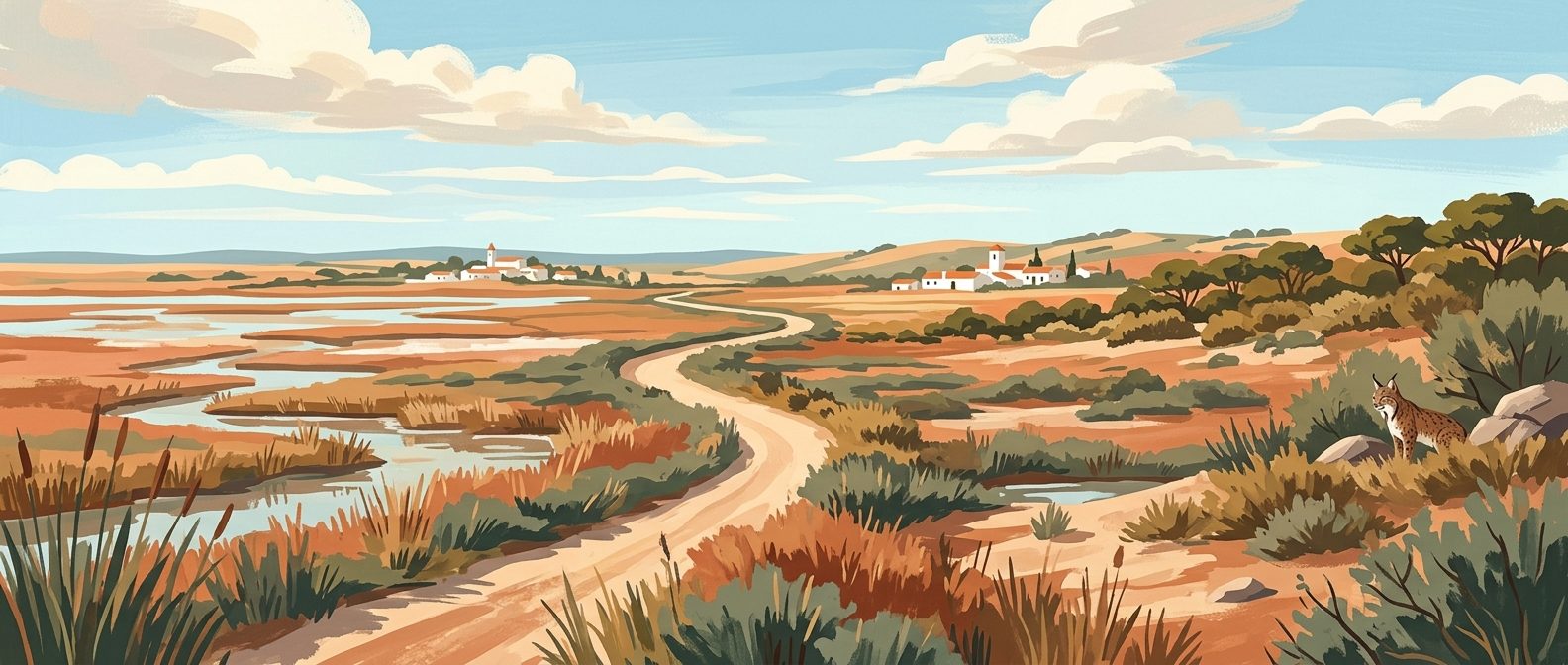
Doñana National Park Guide: Marshes, Lynx, and Restricted Zones
A shifting landscape of tidal marshes, ancient pine forests, and wind-sculpted dunes, Doñana is Europe's most crucial wetland reserve. Navigating its restricted zones requires planning, but the reward is encountering Iberian lynx and thousands of migratory flamingos in total wilderness.
9 min read
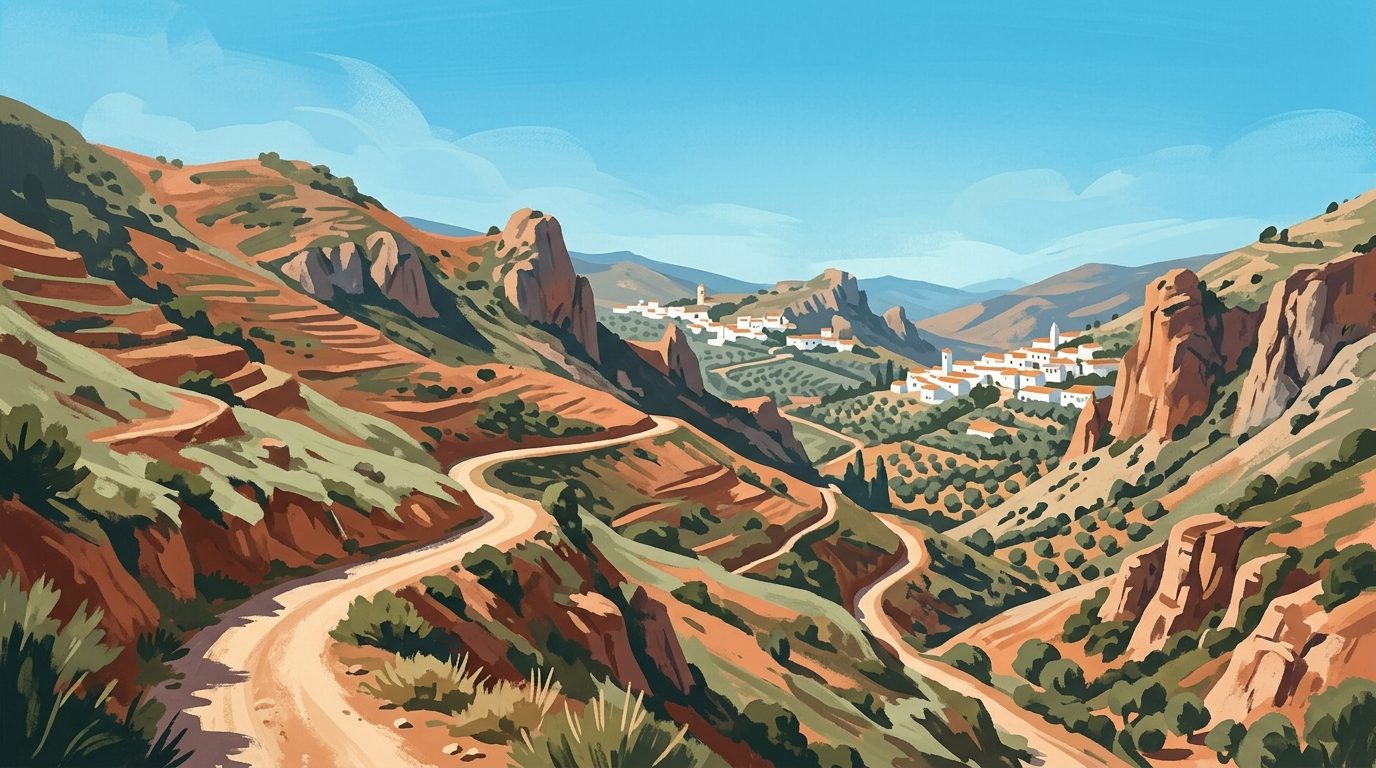
Walking the GR7 in Andalucía: The Ultimate Guide to Spain's Great Southern Trail
Leave the crowds behind and tackle Spain's greatest long-distance trail. From navigating faded waymarks to crossing the high Alpujarras, here is exactly how to walk the GR7 in Andalucía.
11 min read
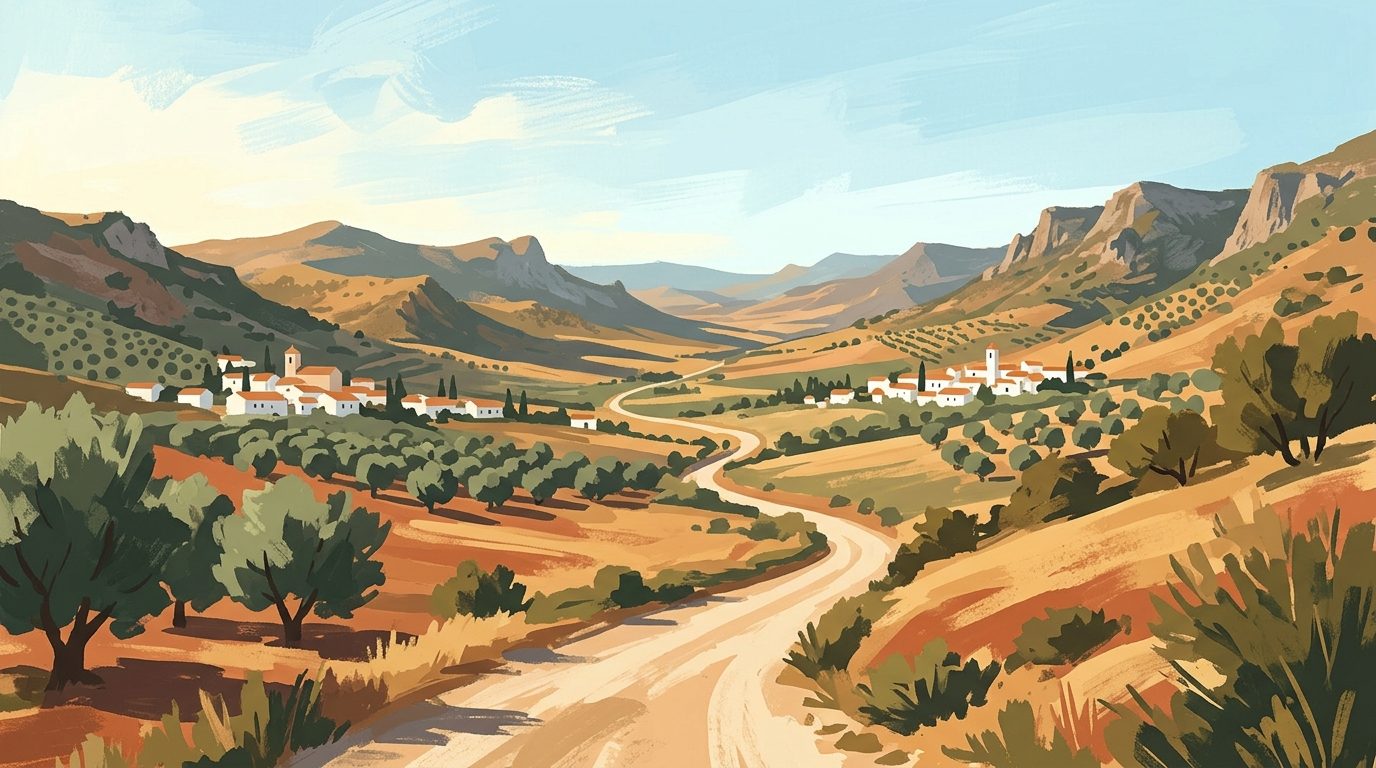
The Ultimate Andalucía Photography Route: Chasing Light Across Southern Spain
Forget the bleached-out midday snaps and crowded tourist viewpoints; photographing southern Spain requires an obsession with timing and terrain. This comprehensive route guides you to the exact coordinates and precise hours needed to capture the region's finest architectural geometry and dramatic geology.
9 min read
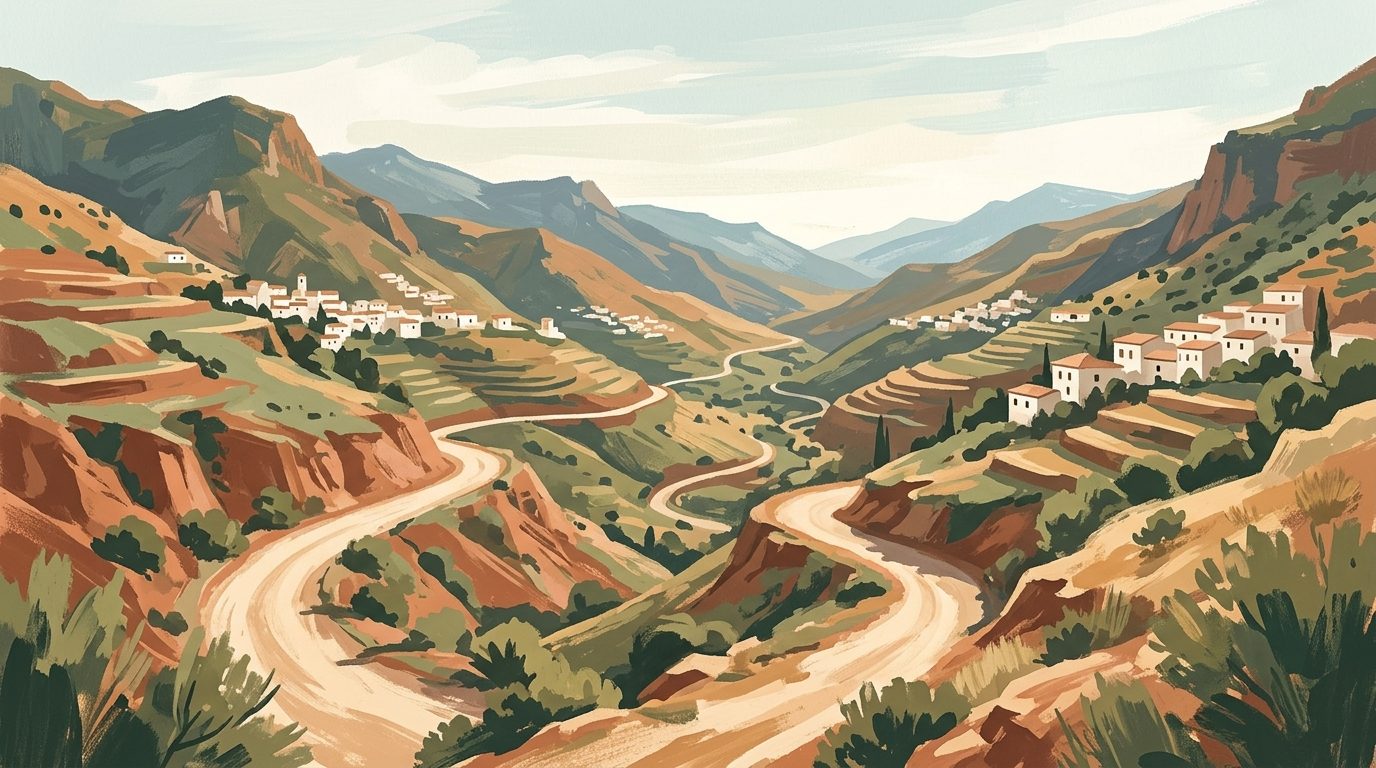
The Alpujarras Complete Guide: High Altitudes and Moorish Footpaths
South of the Sierra Nevada, the Alpujarras is a high-altitude network of steep ravines, ancient irrigation channels, and white villages clinging to the mountainside. This guide covers how to navigate the hairpin bends, where to find the best hiking trails, and which village suits your basecamp needs.
9 min read
The Ultimate Jamón Ibérico Route: Through Huelva and Córdoba
Tracking down the world's finest ham is an exercise in geography, patience, and appetite. This three-day drive through the ancient oak forests of Huelva and Córdoba takes you straight to the source of authentic Jamón 100% Ibérico de Bellota.
9 min read
Best Weekend Breaks in Andalucía
When you live in southern Spain, the temptation is to spend every weekend repeating the same comfortable Sunday routines. These seven targeted 48-hour itineraries bypass the obvious tourist traps, giving residents and expats a genuine excuse to pack a weekend bag and drive somewhere entirely new.
11 min read
One Week in Andalucía Itinerary: The Classic Triangle & Ronda
Seven days in southern Spain is just enough time to trace the defining Moorish capitals and mountain roads of Andalucía. This itinerary strips away the coastal sprawl to focus entirely on the essential cities of Málaga, Granada, Córdoba, and Sevilla, returning via the dramatic mountain gorge of Ronda.
9 min read
Budget Backpacker Guide to Andalucía
Andalucía on a shoestring is entirely possible if you know where to eat, how to travel, and which timing tricks unlock the region's monuments for free. Taking this approach strips away the tourist premium to show you exactly how to backpack southern Spain on less than €50 a day.
10 min read
Motorcycle Touring in Andalucía: The Ultimate Rider's Guide
Forget the motorways; Andalucía’s true character is carved into its mountain passes, where immaculate asphalt drapes across deep ravines and high-altitude plateaus. This is a landscape built for motorcycles, offering thousands of kilometres of technical riding.
9 min read
Newsletter
More stories from Andalucía
Weekly notes, seasonal picks, and the next guides worth bookmarking.