
Route
Motorcycle Touring in Andalucía: The Ultimate Rider's Guide
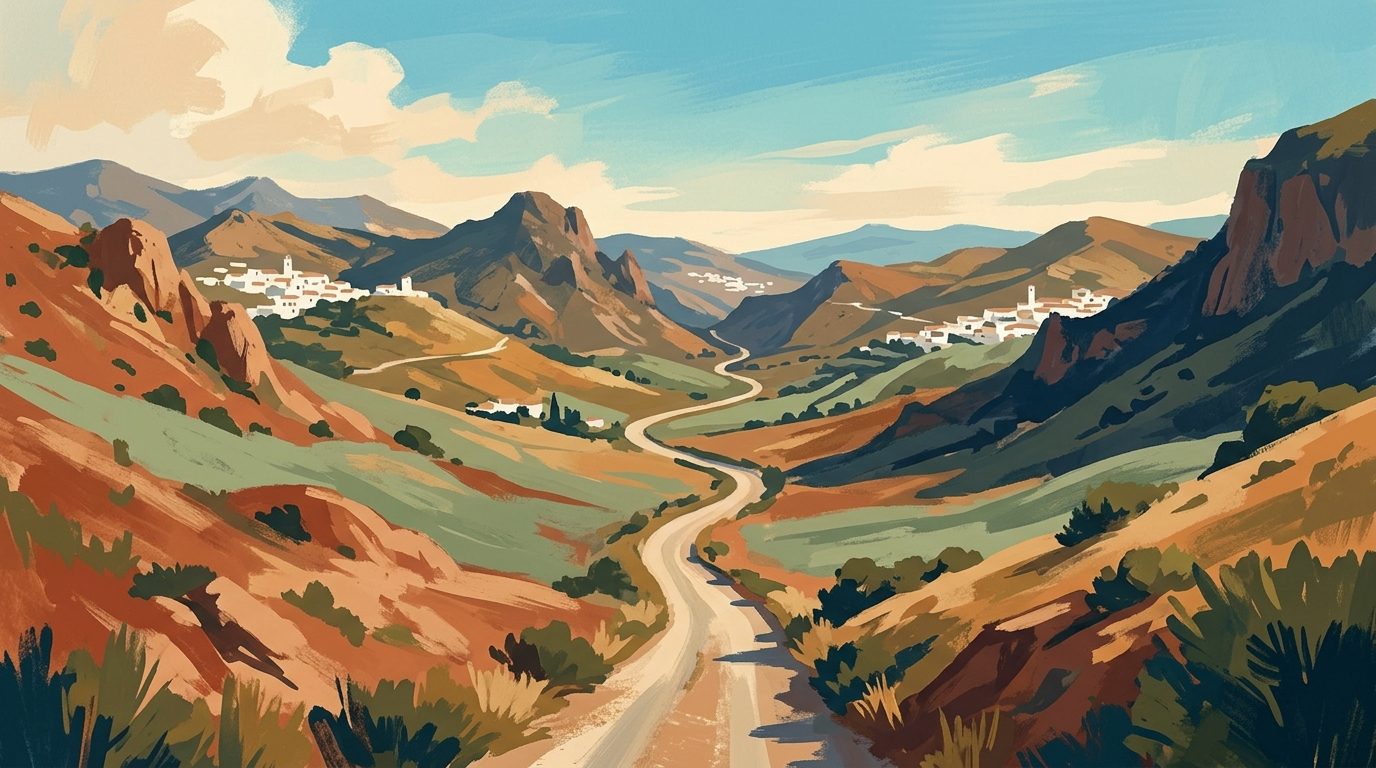
Forget the motorways; Andalucía’s true character is carved into its mountain passes, where immaculate asphalt drapes across deep ravines and high-altitude plateaus. This is a landscape built for motorcycles, offering thousands of kilometres of technical riding.
By Dan · Updated 24 July 2026 · 9 min read
This article contains affiliate links. If you book through them, we may earn a small commission at no extra cost to you.
There is a specific moment when riding in Andalucía that stays with you long after the engine ticks cool. It usually happens around 9:00 am, halfway up a deserted mountain pass, when the morning mist burns off the olive groves and the tarmac stretches ahead in a series of perfect, predictable arcs. The air smells sharply of wild thyme and hot pine needles. You roll on the throttle, lean into the camber, and realise you haven't seen another vehicle in forty minutes.
Southern Spain is arguably Europe’s greatest motorcycle destination. The region possesses an almost unfair combination of assets: over 300 days of sunshine a year, an immense network of heavily subsidised, perfectly surfaced regional roads, and a topography that is aggressively vertical. From the coastal ranges of Málaga to the snow-capped peaks of the Sierra Nevada and the arid badlands of Almería, the variations in altitude and environment mean the riding never becomes repetitive.
However, touring here requires deliberate planning. The distances are vast (crossing Andalucía from Huelva to Almería takes roughly the same time as driving from London to Edinburgh) and the environment is unforgiving. Rely on the main autovías and you will die of boredom; dive unprepared into the deep sierras and you might find yourself 80 kilometres from the nearest petrol pump with the sun rapidly setting.
The following routes dissect the finest regional riding stages across Andalucía. For riders on an adventure bike loaded with aluminium panniers, a nimble naked middleweight, or a heavy touring rig, these are the roads you need to ride, the hazards you need to anticipate, and the exact routes to programme into your sat-nav.
Stage 1: The Málaga Mountains and the Ronda Passes
Málaga is the logical starting point for most touring riders, either stepping off the ferry or collecting a machine from local rental hubs. Directly north of the city lies the Montes de Málaga natural park. The A-7000 climbs out of the city sprawl via a series of tight, heavily wooded hairpins. It is a brilliant, immediate introduction to Andalucían riding, though the road surface under the pine canopy can remain damp and slippery well into the late morning.
The main event in this western sector, however, is the route up to Ronda. The A-397 from San Pedro de Alcántara is legendary across Europe. It is 45 kilometres of continuous, sweeping curves climbing from sea level to over 1,000 metres. The asphalt is race-track smooth, the sightlines are generous, and the corners flow together with a hypnotic rhythm.
The Caveat: Because the A-397 is so good, it is heavily policed. On weekends, it swarms with local sports-bike riders testing their limits. Guardia Civil checkpoints are common, and the DGT 'Pegasus' traffic helicopters frequently patrol the airspace above (check current DGT enforcement zones before travelling). Ride it on a Tuesday morning instead, stop for a coffee at Venta El Madroño (the traditional bikers' halt halfway up), and enjoy the road entirely to yourself.
Once in Ronda, secure your bike in a secure underground car park, as parking a fully loaded touring motorcycle on the street is a recipe for anxiety, and spend the evening exploring the town on foot.
Stage 2: The Verticality of the Sierra de Grazalema
West of Ronda sits the Sierra de Grazalema, a limestone massif that acts as a rain trap for weather systems rolling off the Atlantic. This creates an unusually green environment, deeply scarred by gorges and high passes.
You want to target the CA-9104, specifically the climb to the Puerto de las Palomas (Pass of the Doves) at 1,357 metres. Approaching from the village of Zahara de la Sierra in the north is the superior option. The ascent is incredibly technical: the road is narrow, lacking central markings, and consists of aggressive first-gear switchbacks layered directly on top of one another. The drop-offs are sheer, often protected by nothing more than a rusted Armco barrier or a low stone wall.
At the summit, the Mirador del Puerto de las Palomas provides a vast view over the reservoir below. The descent down the southern flank towards Grazalema village is faster, sweeping through dense cork oak forests.
Rider Warning: The CA-9104 is heavily frequented by cyclists and, disastrously, large campervans attempting routes they have no business being on. Keep your corner speed conservative and hug the right-hand line on blind crests. Furthermore, Grazalema has a microclimate; it can be 25°C in Ronda but shrouded in dense, wet fog at the pass.
Stage 3: The Alpujarras (Granada)
Leaving the western provinces behind, the riding changes entirely as you approach the southern flanks of the Sierra Nevada. The Alpujarras is a region defined by deep ravines and clinging white villages. The primary artery here is the A-4132, which traverses the mountainside from west to east.
This is not a fast road. The A-4132 demands concentration, rhythm, and a smooth throttle hand. You will ride through Órgiva, climbing rapidly towards Pampaneira, Bubión, and Capileira. The surface fluctuates wildly from pristine new tarmac to cracked, degraded asphalt heavily patched over the years. The corners are mostly blind, carved directly into the rock face.
The joy of the Alpujarras lies in the isolation and the sheer scale of the landscape. As you pass Trevélez (one of the highest municipalities in Spain and the highest in Andalucía, famous for its air-cured ham), the road narrows further, eventually becoming the A-4130 as it winds towards the Almería border.
Plan to spend a night here. Many local guesthouses offer excellent off-street parking and hearty mountain food, which you will need after wrestling a heavy bike around hundreds of tight corners.
Stage 4: The Spanish Stelvio and the Almería Desert
Crossing into Almería, the lushness of Granada vanishes, replaced by a brutal, stark beauty. The Sierra de los Filabres hides what is widely considered the most visually spectacular stretch of tarmac in Spain: the Puerto de Velefique (AL-3102).
Starting from the village of Velefique, the road climbs the barren mountainside through more than 20 perfectly engineered hairpin bends. Because there are no trees, you can look up from the bottom and see the road zig-zagging to the summit like a dropped ribbon. It is often referred to as the 'Spanish Stelvio', but frankly, it is better. There are no tolls, almost zero traffic, and the road surface is immaculate.
Once you clear the 1,860-metre summit, continue north to the Calar Alto observatory (AL-4404). The landscape up here feels lunar: white observatory domes scattered across a high, desolate plateau.
From the high mountains, drop south to the coast to experience the Cabo de Gata-Níjar Natural Park. The AL-4200 from San José to Las Negras cuts through volcanic calderas and arid badlands that famously served as the backdrop for Sergio Leone’s spaghetti westerns.
Rider Warning: Almería is incredibly windy. The crosswinds whipping off the Mediterranean and funnelling through the arid valleys can easily push a fully luggaged adventure bike across the central white line. Grip the tank with your knees and keep your arms relaxed.
Stage 5: The Pine Forests of the Sierra de Cazorla (Jaén)
For a completely different atmosphere, head north to Jaén province and the Sierras de Cazorla, Segura y Las Villas Natural Park. This is Spain’s largest protected natural area, and the riding here is slower, heavily forested, and profoundly remote.
The defining route is the A-319, which enters the park from the town of Cazorla and follows the upper reaches of the Guadalquivir river. The road cuts through narrow limestone gorges and skirts the edge of the vast Tranco reservoir.
You come to Cazorla to drop your pace. The speed limits within the park are strictly set at 40 to 60 km/h, and for good reason. The area sustains enormous populations of wild boar, red deer, and mountain goats. These animals show zero respect for the highway code and frequently wander onto the road, particularly at dawn and dusk. Never ride in the Sierra de Cazorla after sunset; the risk of an animal strike is severe.
Mobile phone reception in this park is virtually non-existent. Ensure you have downloaded offline maps on your phone or GPS device before leaving the town of Cazorla, and top up your fuel tank, as petrol stations inside the park boundaries are rare and keep irregular hours. Consider booking a room at the Parador de Cazorla, which serves as an excellent basecamp for exploring the northern ridges (check on the operator's website for availability before travelling).
Practical Information for Touring Riders
When to Ride
Timing is everything. Do not attempt a motorcycle tour of Andalucía in July or August. The ambient air temperatures routinely exceed 40°C in the valleys. Tarmac melts, protective gear becomes an unbearable liability, and riding becomes a test of endurance rather than a pleasure.
The optimal windows are Spring (April to early June) and Autumn (September to November). During these months, the daytime temperatures hover between 20°C and 25°C, perfectly suited for leathers or heavy textiles. Winter riding (December to February) is entirely feasible along the coast and in the lower foothills, but be aware that high passes like Velefique and anything in the Sierra Nevada will be closed due to heavy snow and ice.
What to Bring
Layering is vital. A route can start on the coast at 22°C and drop to 5°C as you crest a 1,500-metre pass. A ventilated summer jacket with a removable thermal liner and a packable waterproof shell is the ideal setup. Carry a clear visor for your helmet: while tinted visors are excellent for the relentless Andalucían sun, riding into a deep, unlit mountain tunnel wearing dark tint is terrifying.
Motorcycle Rental and Logistics
If you are not riding your own machine down through France and Spain, flying into Málaga is the most efficient strategy. The city hosts numerous premium rental outfits. Several local providers offer well-maintained fleets of BMW GS models, Honda Africa Twins, and Ducati Multistradas, complete with hard luggage (check individual operator websites before travelling).
Always photograph every existing scratch on a rental bike before departing, and ensure your travel insurance specifically covers riding large-capacity motorcycles overseas.
Rules of the Road and Etiquette
- Speed Limits: Autovías (motorways) are 120 km/h. Conventional single-carriageway national roads (N-roads) are 90 km/h. Beware of the speed limits dropping aggressively right before junctions or sharp curves.
- Filtering (Lane Splitting): Filtering through stationary traffic is widely accepted and practised by locals in towns and cities. However, filtering through moving traffic on open roads is illegal and dangerous. Use common sense.
- Roundabouts: Spanish drivers famously stick to the outside lane of a roundabout regardless of which exit they intend to take. Never assume a car in the right-hand lane is exiting; always expect them to cut across your path to continue around the circle.
- Petrol Stations: Inland, many rural fuel stations close for the siesta (typically 2:00 pm to 5:00 pm) and on Sundays. Most now have 24-hour automated card machines. While payment integration has improved, it is wise to carry a backup physical card and a minimum of €50 in small notes for emergency fuel in case a foreign card is rejected.
- Tractors and Agriculture: In Jaén and Córdoba, the olive harvest runs from November to February. During this time, the twisty rural roads are dominated by slow-moving tractors dragging trailers. They inevitably spill diesel and mud on the apex of corners. Exercise extreme caution on blind, right-hand bends.
Motorcycle touring in Andalucía is not about dragging your knee on every apex, nor is it about ticking off major tourist monuments. It is about understanding the rhythm of the landscape, linking the high mountain passes, and experiencing the vast, empty spaces of southern Spain exactly as they were meant to be ridden.
Last reviewed: 21 June 2026 · Editorial policy
Related guides
A Guide to Rock Climbing in Andalucía: The Best Crags and Routes
With over 10,000 routes across the region, Andalucía is arguably Europe’s premier winter climbing destination for sport enthusiasts.
6 min read
Exploring the Heavens: A Practical Guide to Stargazing in Andalucía
Andalucía offers some of Europe’s clearest night skies, particularly within its expansive Starlight Reserves. This guide covers the best locations and practical tips for observing the Milky Way across the southern Spanish landscape.
6 min read
Bikepacking in Andalucía: A Complete Guide to Two-Wheeled Adventures
Discover how to plan the ultimate bikepacking adventure in southern Spain. Our guide covers route planning, essential gear, weather windows, and tips for navigating wild terrain.
13 min read
Cycling in Jaén: From Infinite Olive Groves to Rugged Mountain Peaks
Discover why Jaén is Spain’s best-kept secret for cyclists, from the flat Vía Verde del Aceite to the technical trails of the Sierras de Cazorla.
6 min read
Cycling in Córdoba: The Best Routes and Practical Guide
From the flat trails of the Guadalquivir valley to the rugged peaks of the Sierras Subbéticas, Córdoba offers a diverse landscape for cyclists of all abilities.
6 min read
Where to Find the Best Water Sports in Jaén
Discover the unexpected side of Jaén, where mountain reservoirs and limestone gorges offer world-class kayaking, rafting, and canyoning away from the coastal crowds.
6 min read
More guides
Doñana National Park Guide: Marshes, Lynx, and Restricted Zones
A shifting landscape of tidal marshes, ancient pine forests, and wind-sculpted dunes, Doñana is Europe's most crucial wetland reserve. Navigating its restricted zones requires planning, but the reward is encountering Iberian lynx and thousands of migratory flamingos in total wilderness.
9 min read
Walking the GR7 in Andalucía: The Ultimate Guide to Spain's Great Southern Trail
Leave the crowds behind and tackle Spain's greatest long-distance trail. From navigating faded waymarks to crossing the high Alpujarras, here is exactly how to walk the GR7 in Andalucía.
11 min read
The Ultimate Andalucía Photography Route: Chasing Light Across Southern Spain
Forget the bleached-out midday snaps and crowded tourist viewpoints; photographing southern Spain requires an obsession with timing and terrain. This comprehensive route guides you to the exact coordinates and precise hours needed to capture the region's finest architectural geometry and dramatic geology.
9 min read
Roman Andalucía Heritage Trail
Before the Moorish emirs reshaped southern Spain, this territory was the fiercely wealthy Roman province of Baetica, a crucial supplier of olive oil and emperors to the empire. This seven-day route traces the classical footprint across Andalucía, leading you from coastal fish-salting ruins and lonely mountain amphitheatres to the architectural remnants that bridged the fall of Rome and the rise of Al-Andalus.
9 min read
The Alpujarras Complete Guide: High Altitudes and Moorish Footpaths
South of the Sierra Nevada, the Alpujarras is a high-altitude network of steep ravines, ancient irrigation channels, and white villages clinging to the mountainside. This guide covers how to navigate the hairpin bends, where to find the best hiking trails, and which village suits your basecamp needs.
9 min read
The Ultimate Jamón Ibérico Route: Through Huelva and Córdoba
Tracking down the world's finest ham is an exercise in geography, patience, and appetite. This three-day drive through the ancient oak forests of Huelva and Córdoba takes you straight to the source of authentic Jamón 100% Ibérico de Bellota.
9 min read
Best Weekend Breaks in Andalucía
When you live in southern Spain, the temptation is to spend every weekend repeating the same comfortable Sunday routines. These seven targeted 48-hour itineraries bypass the obvious tourist traps, giving residents and expats a genuine excuse to pack a weekend bag and drive somewhere entirely new.
11 min read
One Week in Andalucía Itinerary: The Classic Triangle & Ronda
Seven days in southern Spain is just enough time to trace the defining Moorish capitals and mountain roads of Andalucía. This itinerary strips away the coastal sprawl to focus entirely on the essential cities of Málaga, Granada, Córdoba, and Sevilla, returning via the dramatic mountain gorge of Ronda.
9 min read
Budget Backpacker Guide to Andalucía
Andalucía on a shoestring is entirely possible if you know where to eat, how to travel, and which timing tricks unlock the region's monuments for free. Taking this approach strips away the tourist premium to show you exactly how to backpack southern Spain on less than €50 a day.
10 min read
Newsletter
More stories from Andalucía
Weekly notes, seasonal picks, and the next guides worth bookmarking.