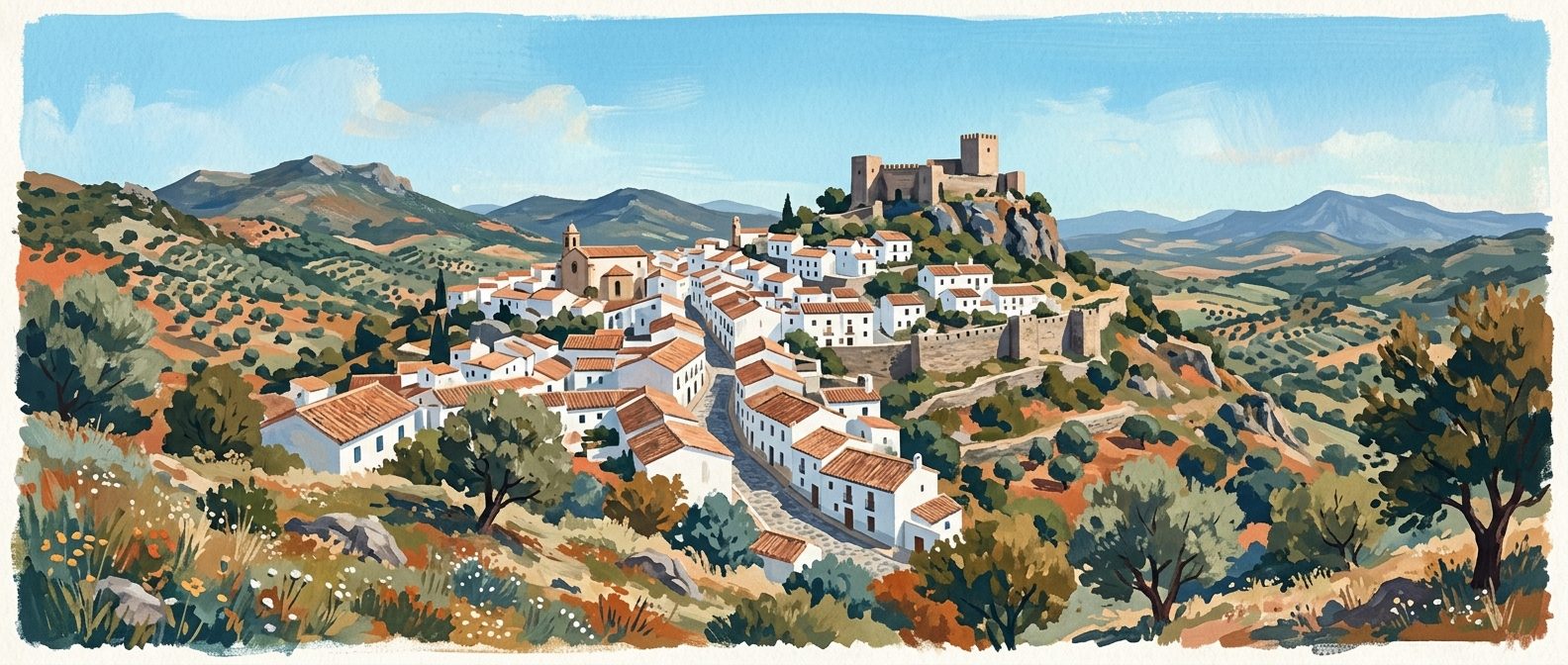
Perched on a steep ridge at the edge of the Alcornocales Natural Park, Jimena de la Frontera is a quiet alternative to the busier white villages of Cádiz. Its commanding Moorish castle provides views stretching across the Campo de Gibraltar to the coast of Africa.
Jimena de la Frontera sits in the northern reaches of the Campo de Gibraltar, where the rolling farmland of the south meets the rugged, wooded slopes of the Sierra de Grazalema. It is a village shaped by its position on the edge of empires, reflected in the "de la Frontera" suffix that marks its history as a border town between Christian and Muslim territories. Unlike some of its more visited neighbours, Jimena retains a genuine rural atmosphere, where the rhythms of life are still dictated by the cork harvest and the seasonal appearance of wild mushrooms.
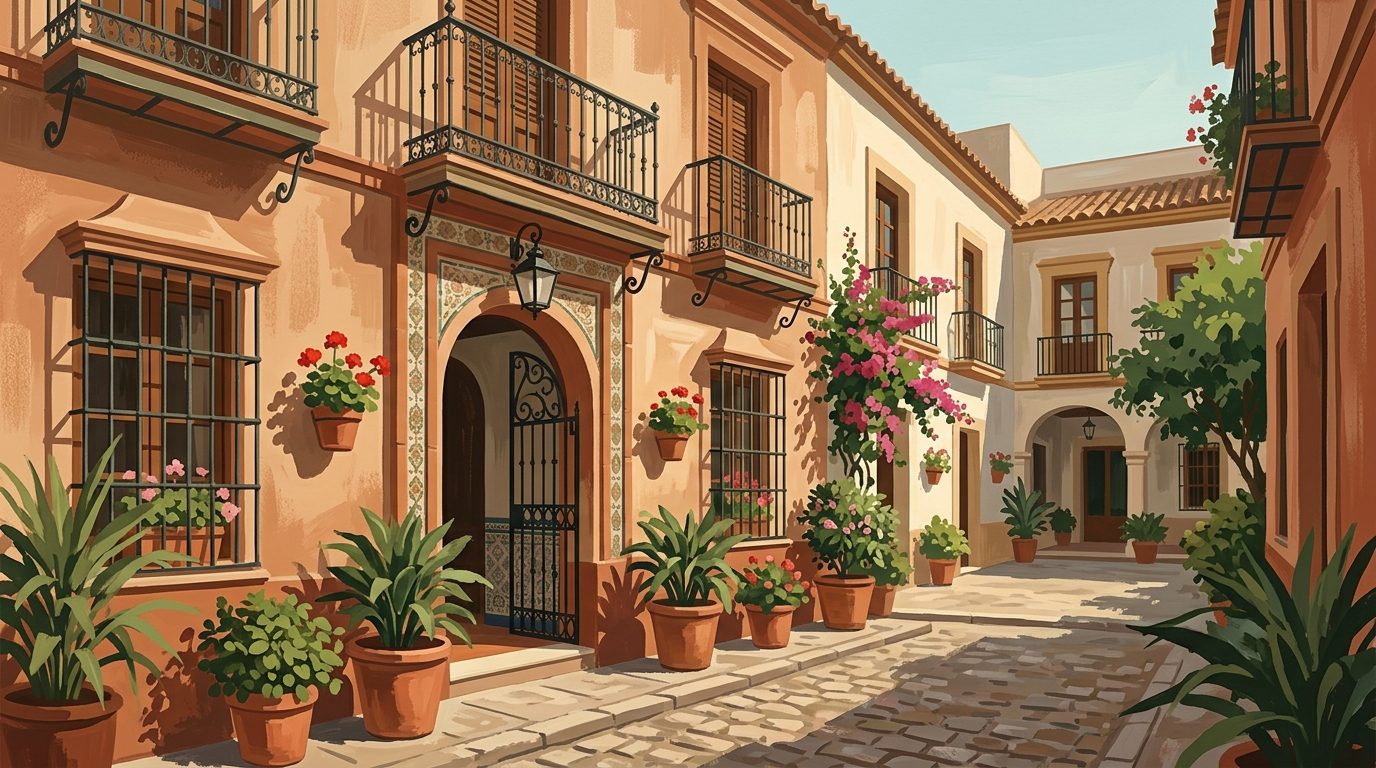
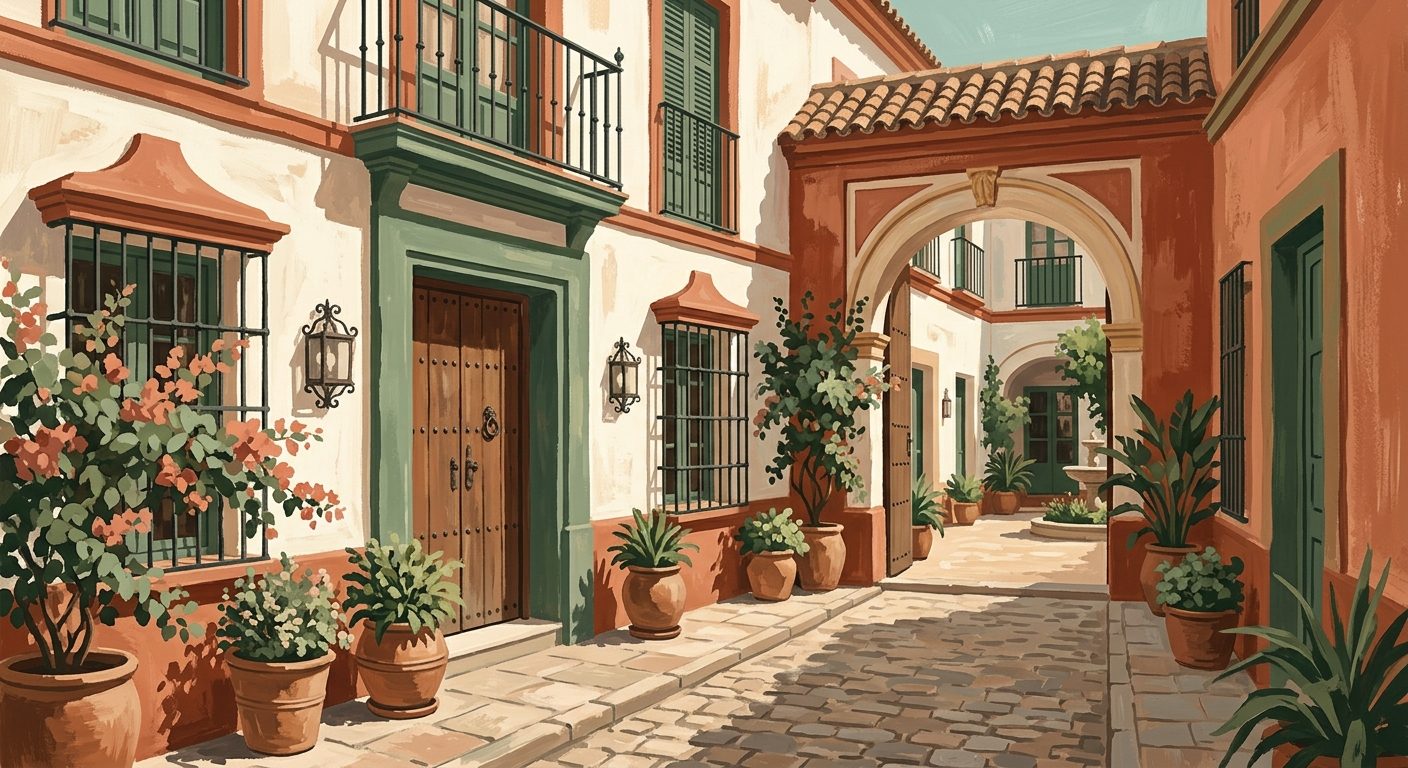
The village is built into the hillside, with narrow, whitewashed streets climbing steeply towards the fortress. It is divided into three distinct areas: the upper old town, the lower village, and the separate district of Los Ángeles near the train station. For the traveller, Jimena offers a blend of archaeological depth and some of the finest hiking in the province, serving as the eastern gateway to the vast Los Alcornocales Natural Park.
What to See & Do
The Castillo de Jimena
The fortress is the undisputed centrepiece of the village, crowning the hill of San Cristóbal. Though largely Moorish in its current form, dating from the 13th and 14th centuries, the site has been a strategic lookout since Roman times, when it was known as Oba. The keep, or Torre del Homenaje, has been restored and stands as a circular silhouette against the sky. Visitors can walk the perimeter of the walls and explore the various towers, including the Albarrana tower and the Clock Tower (Arco del Reloj).
Beyond the military architecture, the castle grounds hold religious and social history. The Baño de la Reina Mora (Moorish Queen’s Bath) is often the subject of local legends, though historians believe it was actually a baptismal font for an early Mozarabic church carved directly into the rock. Next to the castle lies the ancient cemetery, a place of quiet reflection with impressive masonry that offers a different perspective on the village’s past. On clear days, the views from the ramparts are exceptional, encompassing the Rock of Gibraltar and the Rif mountains of Morocco.
Los Alcornocales Natural Park
Jimena is surrounded by the largest cork oak forest in the Iberian Peninsula. This is not just a landscape to be admired, but a working forest. Every nine years, the trees undergo the saca de corcho (cork harvest), where skilled workers strip the bark, leaving the trunks a deep, oxidised red. This ancient industry sustains the local economy and preserves a unique ecosystem that provides a home for eagles, vultures, and rare orchids.
In the autumn months, the forest becomes a destination for mycologists. Jimena is famous for its wild mushrooms, particularly the chantarela (chanterelle) and the boletus. The village hosts an annual Mycological Conference in November, but throughout the season, you will see locals heading into the woods with wicker baskets, and the local menus reflect this seasonal bounty.
The Hozgarganta River Walk
The Hozgarganta is one of the last remaining rivers in Spain without a single dam along its course. A well-marked trail follows the riverbank, passing through a landscape of river-side vegetation and rocky outcrops. This walk also provides a glimpse into Jimena’s industrial heritage. You will pass the ruins of the Royal Artillery Factory (Fábrica de Bombas), an ambitious 18th-century project commissioned by Carlos III to produce munitions for the Great Siege of Gibraltar.
The trail is relatively easy and takes roughly three to four hours to complete. Along the way, you can see ancient flour mills and the canal del Real de la Fábrica, an engineering feat that diverted water to power the foundry. In spring, the riverbanks are particularly beautiful with wildflowers, and the water remains cool enough for a quick paddle in the shallower sections.
Laja Alta Cave Paintings
For those interested in prehistory, the Laja Alta cave is an exceptional site. It contains schematic paintings that are unique in Europe because they depict maritime scenes, including sailing ships that are thought to represent early Phoenician or Tartessian vessels. These paintings suggest that even thousands of years ago, the inhabitants of this hill were looking out towards the sea and recording the arrivals of early Mediterranean colonisers.
Access to Laja Alta is restricted as it is located on private land within the natural park. It is essential to contact the Jimena de la Frontera Tourist Office at least two weeks in advance to verify current access protocols or book a specific guide, as the walk is several kilometres from the village and requires permission to enter the fenced area.
Practical Information
Opening Times & Tickets: The Castillo de Jimena is generally open from dawn until dusk. Entry to the castle grounds is free of charge, though you can check the official tourism portal to confirm current opening times. The interpretive centre located in the Iglesia de la Misericordia usually opens Wednesday to Saturday from 10:00 to 14:00, providing maps and local history displays.
How to Get There: Jimena is well-connected by rail, sitting on the scenic Algeciras to Ronda line. There are typically three trains daily in each direction, though service is frequently affected by track maintenance (check the Renfe 'Media Distancia' timetable for 'Jimena de la Frontera' before travelling). The station is located in the Los Ángeles district, about 2 kilometres from the historical centre. If you arrive by train, be prepared for a steep uphill walk or check the Consorcio de Transportes del Campo de Gibraltar for current bus schedules. By car, the A-405 provides a direct route from the coast (Sotogrande/San Roque) or from Ronda.
Parking: Driving into the uppermost streets of the old town is not recommended for those unfamiliar with the narrow, one-way system. It is better to park in the lower village near the Paseo de la Constitución or in the designated car parks near the entrance to the village and walk up to the castle.
Where to Eat Nearby
Restaurante Cuenca: Located on Avenida de los Deportes, this family-run establishment is a local institution with over a century of history. It is the best place to sample the area's famous mushrooms. Their venison with chanterelles is a signature dish, and the traditional dining room feels authentic and unpretentious.
El Ventorrillero: Situated on the Plaza de la Constitución, this restaurant offers a lovely terrace for people-watching. The menu focuses on local game and traditional Andalucían stews. It is a reliable spot for a long, slow lunch after exploring the castle, with friendly service and generous portions of rabo de toro (oxtail).
Restaurante El Anón: Located within the hostal of the same name, this spot offers a slightly more eclectic menu alongside local staples. The courtyard setting is particularly pleasant on warm evenings, and they often incorporate organic produce from the surrounding area into their seasonal specials.
Where to Stay
For a boutique experience, Casa Henrietta is a beautifully restored townhouse in the centre of the village, offering individually designed rooms and a rooftop terrace with views of the castle. If you prefer a more traditional setting, Hostal El Anón provides comfortable, rustic accommodation with an excellent courtyard and a small pool, perfect for hikers returning from the park. Both options offer a chance to stay within the historical heart of the village.