
attraction · Córdoba
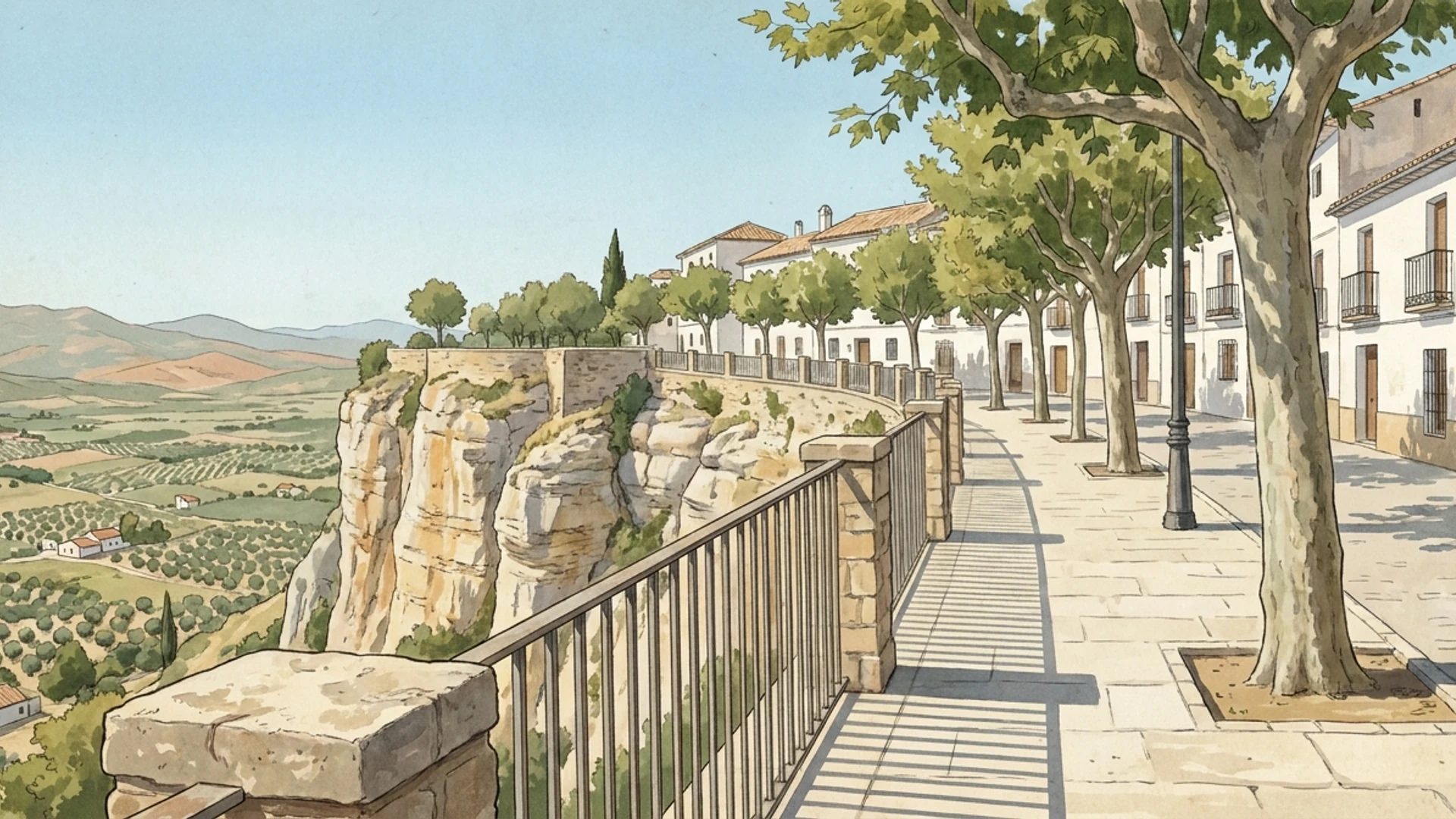
Barrio de la Villa y Balcón del Adarve
Andalucía 365 · Updated 18 July 2026
Our Verdict
“A beautifully preserved Moorish quarter offering atmospheric walks and sweeping views over the Subbética, though lacking formal historical interpretation.”
Last verified: July 2026
Forming the medieval core of Priego de Córdoba, the Barrio de la Villa is a preserved Moorish quarter that culminates at the Balcón del Adarve, a cliff-edge promenade. Declared a Historic-Artistic Site in 1972, this labyrinth of whitewashed alleys, wrought-iron grilles and cascading geraniums shares its architectural layout with Granada’s Albaicín and Córdoba’s Judería. The neighbourhood’s eastern edge drops away abruptly at the Adarve, a 55-metre natural escarpment that once rendered the town impregnable from this flank. Today, it serves as a panoramic viewpoint over the Río Salado and the olive groves of the Subbética mountains. This atmospheric enclave is best suited to independent walkers, photographers and those seeking the quiet rhythms of traditional Andalusian street life rather than formal, ticketed attractions.
The Moorish labyrinth
The Barrio de la Villa is the oldest section of Priego de Córdoba, tracing its origins to the period of Al-Andalus. Its urban layout remains loyal to its medieval roots: a deliberate tangle of narrow streets, sudden dead ends and small plazas designed to provide shade and confuse potential invaders. Today, the defensive purpose has given way to a residential area that feels entirely removed from the grand Baroque architecture found elsewhere in the town.
Walking through the quarter is an exercise in observation. The white facades are punctuated by brightly painted doors and window frames, while almost every available surface is decorated with potted plants. The residents take pride in their botanical displays, maintaining a year-round exhibition of geraniums, carnations and petunias that contrast sharply against the whitewash. The pots themselves are often painted in vivid shades of blue, suspended from wrought-iron window grilles or arranged meticulously along the cobblestones.
Key thoroughfares like Calle Real and Calle Jazmines lead walkers toward the Placita de San Antonio, a small, well-maintained square that serves as the neighbourhood's focal point. Here, the density of the floral arrangements reaches its peak, creating a space that feels more like a private courtyard than a public thoroughfare.
The Balcón del Adarve
The dense, enclosed streets of the Villa eventually break open at the Balcón del Adarve. This sweeping, crescent-shaped promenade traces the natural contour of a 55-metre limestone cliff. For centuries, this sheer drop acted as a formidable natural wall, protecting the town from eastern assaults and rendering a man-made fortress wall largely unnecessary on this flank. The transition from the shaded alleys of the Moorish quarter to the sudden, expansive light of the cliff edge is a distinct urban experience in the Córdoba province.
Today, the Adarve is a shaded, tree-lined walkway offering clear views over the surrounding topography. The landscape below is a classic Andalusian tableau: the fertile valley of the Río Salado, undulating hills carpeted with olive trees and the jagged limestone peaks of the Sierras Subbéticas on the horizon, stretching towards towns like Zuheros. The promenade is also punctuated by three continuous water sources: the Fuente de la Puerta del Sol, the Fuente de Enmedio and the Fuente del Ermitaño. These fountains provide a constant acoustic backdrop of running water, a nod to Priego de Córdoba's reputation as a city defined by its abundant natural springs.
Architectural details and heritage
Beyond the immediate visual appeal of the flowers and whitewash, the Barrio de la Villa contains subtle architectural details that reward careful observation. Many of the houses retain their original structural proportions, featuring thick stone walls designed to insulate against both the summer heat and the winter chill of the mountains. The wrought-iron work on the balconies and window grilles often displays intricate craftsmanship, a legacy of the region's historical metalworking traditions.
The neighbourhood is anchored by the nearby Parroquia de la Asunción, a church that bridges the gap between the town's Moorish past and its Baroque golden age. While the church itself sits just outside the strict boundaries of the Villa, its bell tower serves as a constant navigational reference point when wandering the labyrinthine streets. The contrast between the humble, vernacular architecture of the residential quarter and the large scale of the surrounding religious buildings highlights the dual nature of Priego de Córdoba.
Our verdict
The Barrio de la Villa and Balcón del Adarve offer one of the most evocative urban walks in inland Andalucía. The visual impact of the pristine white streets opening onto a vast mountain panorama is impressive, providing a stark contrast to the monumental Baroque architecture for which the town is otherwise known.
Visitors should adjust their expectations: this is a living residential neighbourhood, not an open-air museum. There are no interpretation panels, audio guides or staffed visitor centres within the streets. Those who prefer structured historical context may find the experience lacking without a local guide to explain the nuances of the Moorish urban planning or the specific history of the Adarve's defensive role. Furthermore, the aesthetic appeal is highly dependent on the residents' maintenance of their floral displays, which can vary slightly depending on the season and recent weather. Yet, for those content to simply wander, observe the vernacular architecture and take in the sweeping views of the Subbética Cordobesa, it remains a rewarding stop.
Practical advice
The Barrio de la Villa is a public residential area, meaning access is free and unrestricted at all hours. For current visitor information and guided tour options, consult the official Andalucía tourism portal. When planning your visit, keep the following in mind:
- Timing: The most rewarding times to visit are early morning, when the streets are quiet and the light is soft, or late afternoon as the sun sets behind the town, casting long shadows over the olive groves visible from the Adarve.
- Mobility: The streets are paved with traditional cobblestones, and while the inclines are generally gentle, the uneven surfaces require sturdy footwear. Wheelchair users will find the Balcón del Adarve relatively flat and accessible, but navigating the deeper alleys of the Villa may prove difficult due to narrow passages and occasional steps.
- Parking: If driving to the town, do not attempt to navigate the historic centre. Parking is strictly limited to residents, and the streets are often too narrow for modern vehicles. Use the public car parks on the outskirts and walk the short distance to the historic core.
- Seasons: Spring is the optimal season for a visit, particularly during May and the festival of Corpus Christi, when the neighbourhood’s floral displays are at their peak. High summer should be approached with caution; while the narrow streets offer some shade, the midday heat is intense, and the Adarve viewpoint is exposed to the sun.
Nearby worth your time
A few well-placed stops for extending the day without turning it into a checklist.
Continue through Subbética Cordobesa
Step back into the wider landscape with local guides, nearby places and the province overview.
Things to do · 10 min
Golf in Córdoba Province: Courses, Holidays, and Shops
Discover practical tips, course details, and holiday planning advice for playing golf in Córdoba province, from the mountain fairways of Sierra Morena to the historic greens of Los Pedroches.
Feature · 8 min
The Caliphate of Córdoba
In 929, Abd al-Rahman III declared himself Caliph, breaking religious ties with the Middle East and launching an era of unparalleled architectural and intellectual achievement.
Itinerary · 9 min
A Weekend in Cordoba: Two Days in Andalucía's Caliphate City
Spend 48 hours in Cordoba exploring the mesmerising Mezquita, getting lost in the whitewashed streets of the Judería, and eating excellent salmorejo.