
attraction · Almería
Castillo de San Felipe de Los Escullos
Andalucía 365 · Updated 18 July 2026
Our Verdict
“Though its interior remains closed, this eighteenth-century coastal battery offers a masterclass in military architecture set against the surreal fossil dunes of Los Escullos.”
Last verified: July 2026
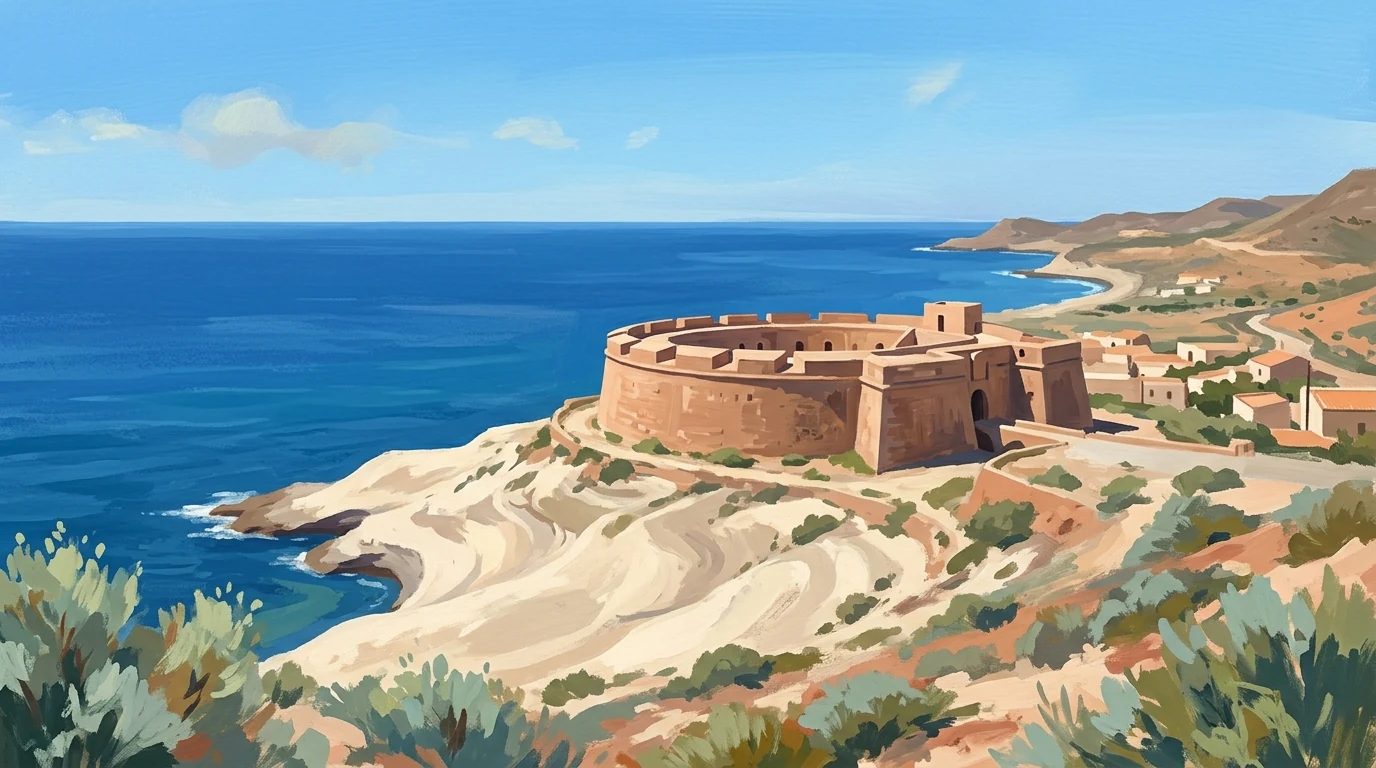
Perched on a dramatic fossilised sand dune overlooking the Mediterranean, the Castillo de San Felipe is a striking eighteenth-century coastal fortress in the Cabo de Gata-Níjar Natural Park. Built to defend this exposed stretch of the Almería coastline from relentless pirate raids, the restored artillery battery stands as a stark monument to Spain's maritime history. While the interior remains closed to general visitors, the formidable exterior architecture and its surreal geological setting make it a compelling stop. Photographers, coastal walkers, and history enthusiasts will find immense value in exploring the rugged cliffs, admiring the military engineering, and taking in the panoramic sea views that once served as a vital early warning system for the region.
Why It Matters
During the eighteenth century, the southeastern coast of Spain was highly vulnerable to incursions by Barbary corsairs. To secure the area and encourage local settlement, King Charles III commissioned a network of coastal defences. The Castillo de San Felipe, also known as the Batería de Los Escullos, was constructed between 1764 and 1771. Designed by military engineers, it represents a classic example of Enlightenment-era coastal fortification. The garrison typically housed a small contingent of soldiers and artillerymen tasked with operating four heavy cannons. Although the fortress fell into disrepair over the centuries, a comprehensive restoration in the early 1990s saved the structure from ruin. Today, it is protected as a Bien de Interés Cultural, preserving a vital chapter of Andalusian maritime heritage.
What to See and Do
Military Architecture on the Edge
The fortress is a masterclass in functional military design, built to withstand both naval bombardment and the harsh coastal elements. Approaching from the landward side, visitors can observe the classic defensive features of the era, including a dry moat, a barbican, and a hornwork structure designed to protect the main entrance. The seaward side is dominated by a sweeping, semi-circular battery platform known as a barbeta. This open terrace once housed the heavy artillery, offering the cannons an unobstructed 180-degree field of fire across the bay. The solid masonry walls, constructed from local stone, blend seamlessly with the arid landscape, creating a formidable silhouette against the horizon.
The Fossil Dunes of Los Escullos
The Castillo de San Felipe owes much of its visual impact to its extraordinary geological foundation. The fortress sits atop Punta del Esparto, a massive oolitic fossil dune that dates back over 100,000 years to the Quaternary period. When the Mediterranean Sea retreated, these ancient sands petrified and were subsequently sculpted by millennia of wind and wave erosion. The result is a surreal, undulating landscape of pale, carved rock that contrasts sharply with the rigid geometry of the military walls. Exploring the immediate perimeter allows visitors to appreciate these whimsical, natural formations, which are among the largest and best-preserved fossil dunes in the natural park.
Coastal Trails and Viewpoints
Beyond the fortress itself, the surrounding coastline offers excellent opportunities for walking and photography. The elevated position of the battery provides sweeping views across the Mediterranean and along the volcanic cliffs of the Cabo de Gata-Níjar Natural Park. To the north, the trail leads towards the picturesque fishing village of La Isleta del Moro, while the southern path winds towards Loma Pelada. The stark, treeless environment means the sightlines are completely uninterrupted. Photographers will find the juxtaposition of the dark volcanic rock, the pale fossil dunes, and the deep blue sea particularly striking, especially when illuminated by the low light of dawn or dusk.
Planning Your Visit
Getting There
The Castillo de San Felipe is located at Punta del Esparto in the coastal hamlet of Los Escullos. It is easily reached by car via the AL-3115 road, which connects the popular park villages of San José and La Isleta del Moro. There is a designated dirt parking area just a short walk from the fortress, providing straightforward access to the coastal path.
How Long to Allow
Set aside 30 to 45 minutes to walk around the exterior of the fortress, examine the architectural details, and explore the adjacent fossil dunes. If you plan to hike the connecting coastal trails, allow at least two hours.
When to Go
Early morning and late afternoon are the best times to visit. The midday sun in Almería can be intensely hot, and the exposed coastal setting offers absolutely no shade. Visiting outside peak daylight hours also provides the most dramatic lighting for photography.
Access Note
The interior of the Castillo de San Felipe is closed to the public and is only opened for occasional municipal or cultural events. Visitors should plan their trip with the understanding that the experience is entirely focused on the exterior architecture and the surrounding natural landscape. Always check the official Andalusian heritage website for any unexpected changes to access before travelling.
Good to Know
- Wear sturdy, closed-toe walking shoes with good grip, as the fossilised dunes are uneven and can be slippery.
- Bring ample drinking water and high-factor sun protection, as there are no facilities or shaded areas at the fortress itself.
- Keep a safe distance from the cliff edges when taking photographs, as the eroded rock can be brittle and unpredictable.
- Combine your visit with a stop at the nearby Playa del Arco, a wide sandy beach just a few minutes' walk from the castle.
- Respect the fragile geological environment by staying on the established paths and avoiding climbing on the most delicate sections of the fossil dune.
Nearby worth your time
A few well-placed stops for extending the day without turning it into a checklist.
Continue through Cabo de Gata-Níjar Natural Park
Step back into the wider landscape with local guides, nearby places and the province overview.
Place guide · 8 min
A Local Guide to Playa de Mojácar: Sands, Spirits and Almerían Soul
Experience the diverse 17-kilometre coastline of Mojácar Playa, where volcanic sands meet clear waters and lively chiringuitos offer the perfect Almerían escape.
Place guide · 7 min
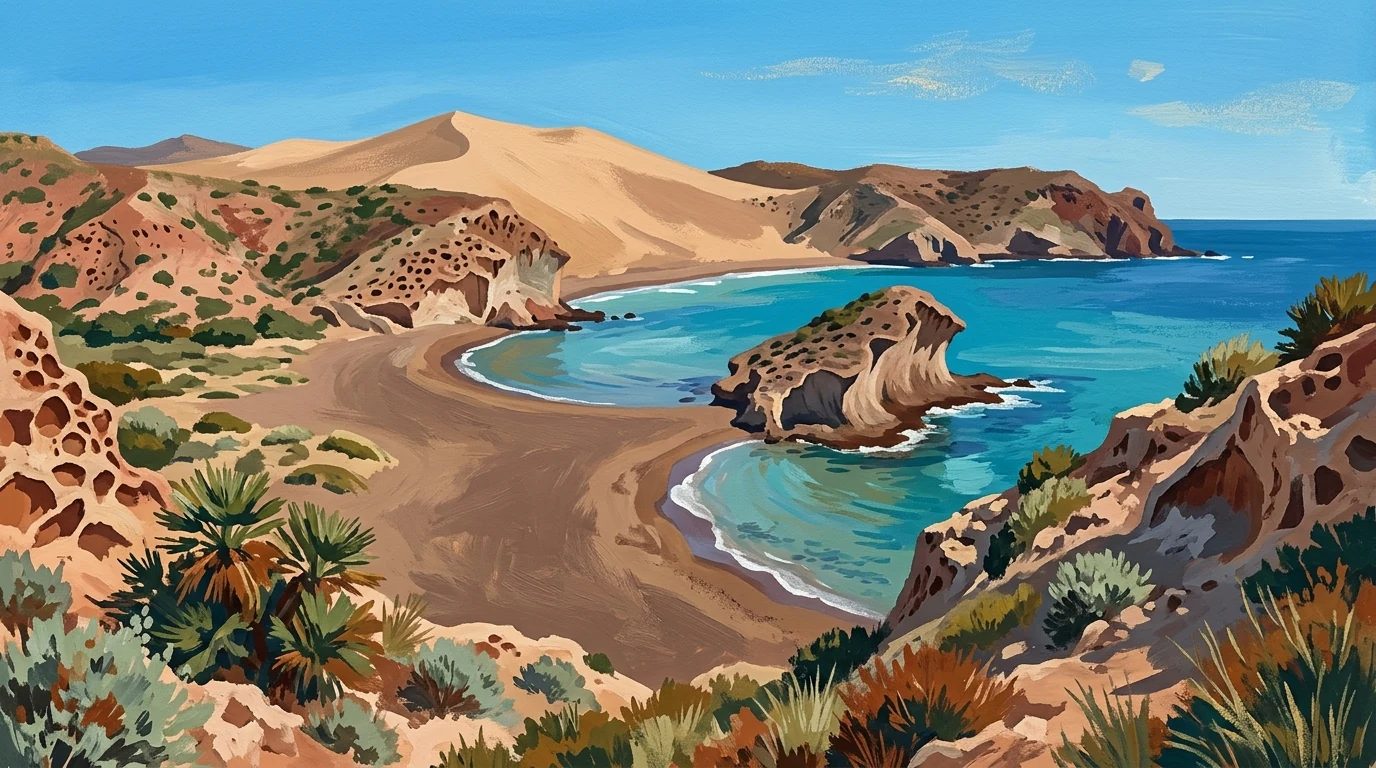
Playa de los Genoveses: A Guide to the Wild Heart of Cabo de Gata
Experience the untouched beauty of Playa de los Genoveses, a vast volcanic bay in Almería where golden sands meet shallow turquoise waters in a protected natural park.
Itinerary · 13 min
5 Days in Almería: City, Desert and Cabo de Gata
A realistic five-day driving itinerary through Almería province, balancing the historic capital, the cinematic Tabernas badlands, and the protected volcanic shores of Cabo de Gata.