
attraction · Almería
Playa de Mónsul
Andalucía 365 · Updated 18 July 2026
Our Verdict
“A cinematic volcanic beach where dark sands and a towering dune meet the pristine waters of the Cabo de Gata natural park.”
Last verified: July 2026
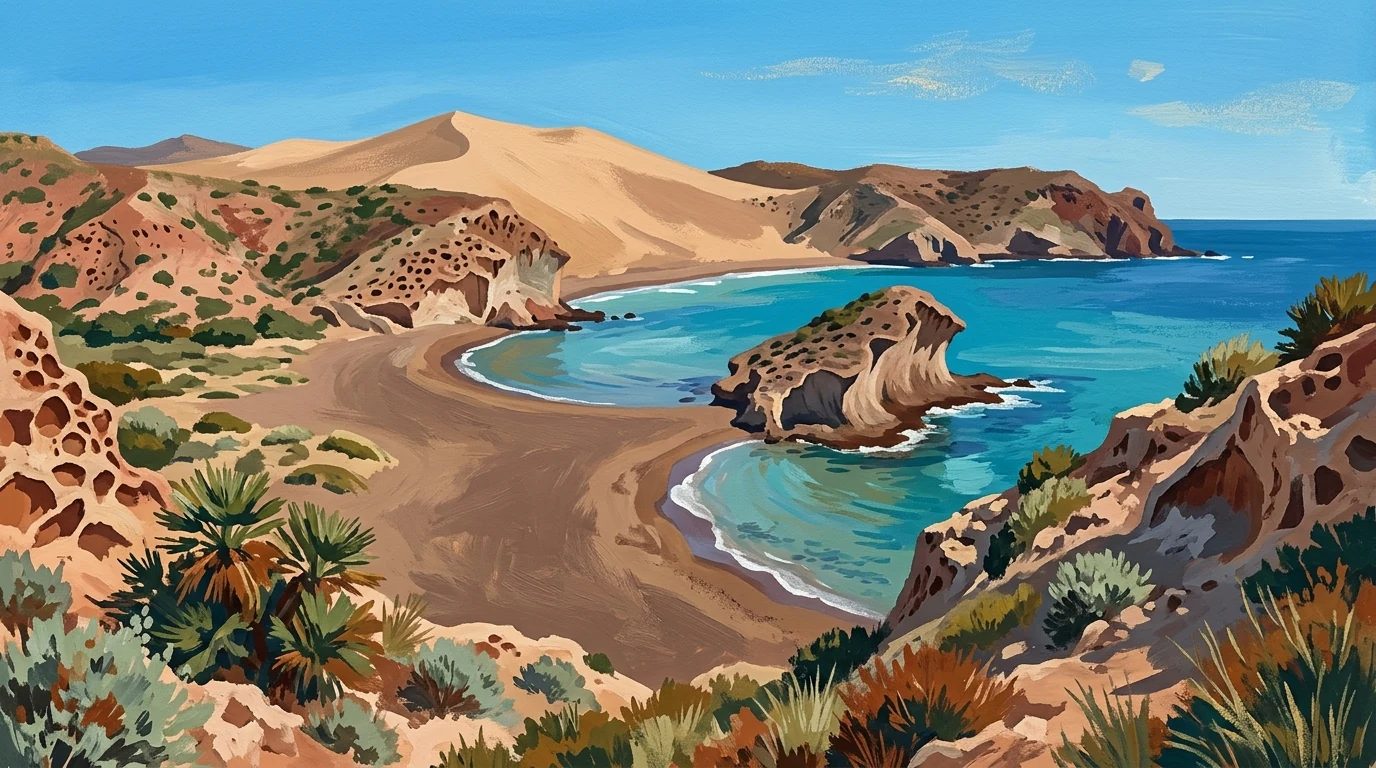
Tucked into the rugged coastline of the Cabo de Gata-Níjar Natural Park, Playa de Mónsul is one of Andalusia’s most visually striking beaches. Defined by its fine dark sand, eroded lava cliffs, and a massive shifting dune, this isolated cove feels a world apart from the heavily developed resorts of the Mediterranean. The beach is famous for its crystal-clear waters and the dramatic central rock formation that rises directly from the shoreline. While its cinematic beauty draws significant crowds, strict environmental protections ensure the landscape remains entirely unspoiled. Nature lovers, geology enthusiasts, and film buffs will all find something to appreciate here. Whether you are swimming in the calm bay or climbing the dune for panoramic views, Mónsul offers a raw, elemental coastal experience.
Why It Matters
The dramatic topography of Playa de Mónsul is the result of volcanic activity that shaped the Cabo de Gata region millions of years ago. As part of a UNESCO Global Geopark, the area preserves a fascinating geological record of magma flows that cooled rapidly underwater, creating the dark, jagged formations seen today. This otherworldly landscape has not gone unnoticed by location scouts. The beach achieved global fame when it was chosen by director Steven Spielberg as a filming location for Indiana Jones and the Last Crusade, serving as the backdrop for the memorable scene where Sean Connery uses an umbrella to flock seagulls into the path of a fighter plane. Today, it stands as a prime example of successful coastal conservation in Spain.
What to See and Do
The Volcanic Shoreline
The defining feature of Mónsul is the large, wave-shaped volcanic rock sitting right in the centre of the beach. Known locally as La Peineta, this fossilised lava tongue extends into the water and provides a striking focal point against the blue sea. The surrounding cliffs are equally impressive, featuring heavily eroded, honeycomb-like textures created by millennia of wind and water exposure. These natural alcoves offer welcome shade during the peak heat of the day. The beach itself stretches for 300 metres, covered in fine, dark sand that contrasts beautifully with the Mediterranean waters.
The Moving Dune
Rising behind the beach is the Duna de Mónsul, a massive barchan sand dune that shifts its shape depending on the prevailing winds. Climbing to the top of this natural monument requires a bit of effort, but the reward is a sweeping panoramic view over the bay, the jagged coastline, and the arid, agave-studded hills of the natural park. The dune is a vital part of the local ecosystem, demonstrating the dynamic forces of nature that continue to shape the Cabo de Gata coastline.
Swimming and Snorkelling
The waters at Playa de Mónsul are exceptionally clear and generally calm, making it an excellent spot for swimming. The rocky outcrops and underwater volcanic formations create a thriving marine habitat, so bringing a mask and snorkel is highly recommended. Divers and snorkellers can explore the submerged lava flows, which host a variety of Mediterranean fish and marine plant life. Because the beach is entirely undeveloped, the water quality remains pristine, offering a refreshing escape after a walk along the coast or a climb up the dune.
Planning Your Visit
Getting There
Playa de Mónsul is located approximately six kilometres from the marina at San José. The beach can be reached on foot, by bicycle, or by car via a dusty, unpaved track. However, because the environment is carefully protected, vehicle access is restricted during busy periods. When the car park reaches capacity, the barrier is closed. A seasonal shuttle bus may operate from San José to the beach to help manage visitor numbers and reduce environmental impact.
How Long to Allow
Most visitors spend between three hours and a full day at the beach. If you plan to hike the coastal trails connecting Mónsul to neighbouring coves like Playa de los Genoveses, allow extra time for walking and taking in the scenery.
When to Go
The beach experiences high occupancy rates during the peak summer months. To secure a spot on the sand or in the car park, it is best to arrive early in the morning. The shoulder seasons of spring and autumn offer a much quieter experience, with milder temperatures that make hiking the surrounding volcanic hills far more comfortable.
Access Note
As transport schedules and access rules are subject to change, always check the official Cabo de Gata-Níjar Natural Park website or local tourist information in San José before travelling to confirm current shuttle operations and vehicle restrictions.
Good to Know
- There are no beach bars, restaurants, or shops at Playa de Mónsul, so you must bring all the food and drinking water you will need for the day.
- The central volcanic rock provides some natural shelter, but it is highly advisable to bring your own parasol, as the sun can be intense and shade is limited.
- Basic services are limited to litter bins and a seasonal cleaning service, so please ensure you take all your rubbish with you when you leave.
- Wear sturdy footwear if you intend to climb the sand dune or explore the rocky coastal paths, as the volcanic terrain can be sharp and uneven.
- The unpaved access road from San José can be bumpy, so drive carefully if you are taking a rental car.
Nearby worth your time
A few well-placed stops for extending the day without turning it into a checklist.
Continue through Cabo de Gata-Níjar Natural Park
Step back into the wider landscape with local guides, nearby places and the province overview.
Place guide · 8 min
A Local Guide to Playa de Mojácar: Sands, Spirits and Almerían Soul
Experience the diverse 17-kilometre coastline of Mojácar Playa, where volcanic sands meet clear waters and lively chiringuitos offer the perfect Almerían escape.
Place guide · 7 min
Playa de los Genoveses: A Guide to the Wild Heart of Cabo de Gata
Experience the untouched beauty of Playa de los Genoveses, a vast volcanic bay in Almería where golden sands meet shallow turquoise waters in a protected natural park.
Itinerary · 13 min
5 Days in Almería: City, Desert and Cabo de Gata
A realistic five-day driving itinerary through Almería province, balancing the historic capital, the cinematic Tabernas badlands, and the protected volcanic shores of Cabo de Gata.