
attraction · Almería
Castillo de Tabernas
Andalucía 365 · Updated 18 July 2026
Our Verdict
“A ruined medieval fortress offering the most spectacular, sweeping views over the badlands of the Tabernas Desert.”
Last verified: July 2026
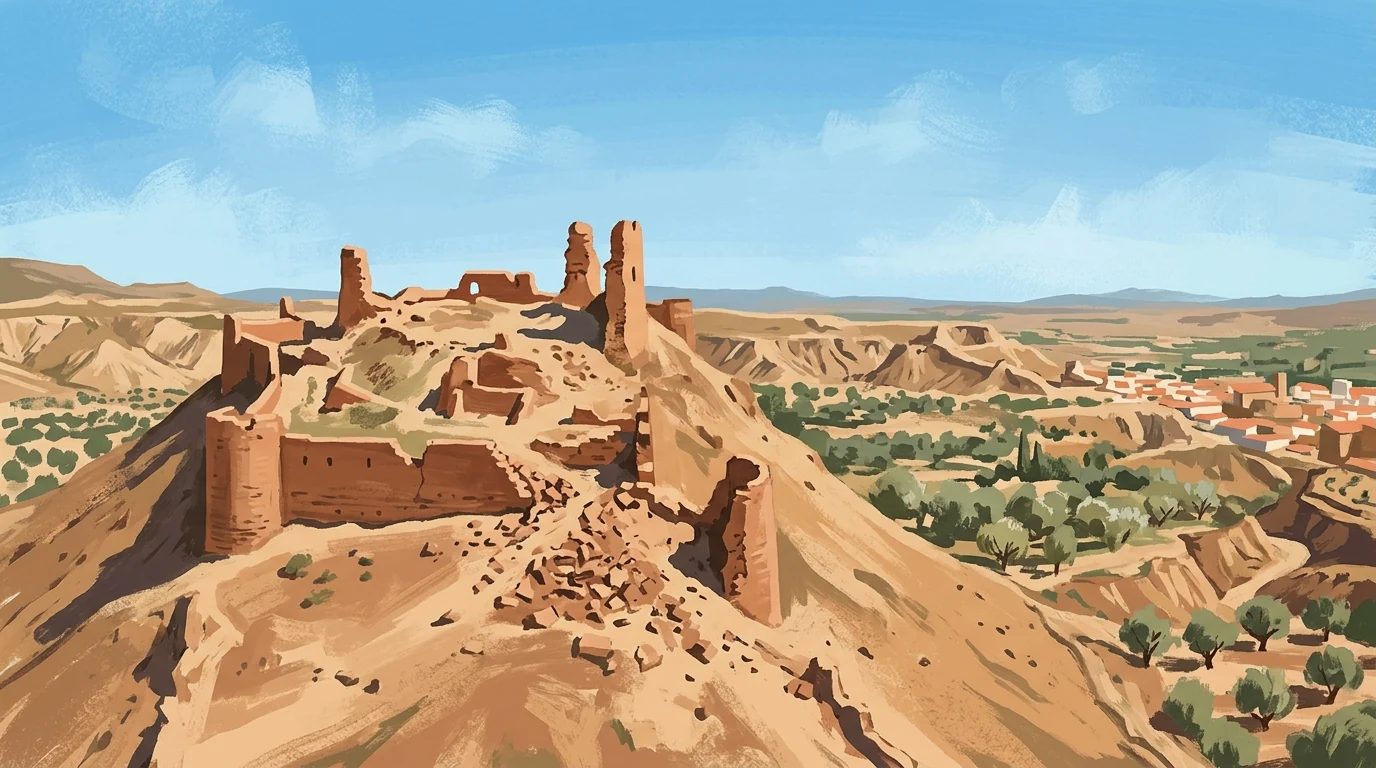
Crowning a steep, rocky hill above the town of Tabernas, the Castillo de Tabernas is a striking medieval ruin commanding the surrounding desert badlands. Built during the period of Islamic rule, this former fortress once controlled the vital inland communication routes between Almería and the eastern Iberian Peninsula. Today, while only fragments of its rammed-earth walls and defensive towers remain, the site offers an evocative journey into the region's turbulent past. Visitors who make the short, steep climb are rewarded with unparalleled panoramic views over the arid landscapes of the Tabernas Desert and the distant sierras. It is an essential stop for history enthusiasts, photographers, and anyone seeking a dramatic vantage point over Europe's only true desert.
Why It Matters
Constructed between the late ninth and early tenth centuries, the fortress originally served as a hisn, or rural refuge, for the local population. During the Caliphate of Córdoba, it was integrated into the defensive network of the Cora de Bayyana, gaining formidable rammed-earth walls and rectangular towers. The stronghold was later reinforced by the Nasrids before falling to Christian forces in 1489. Following the conquest, the site was divided in two, and a circular artillery tower was added to modernise its defences. However, in the mid-sixteenth century, amid rising tensions with the Morisco population, the Crown of Castile ordered its partial demolition to prevent it from being used in uprisings. It saw brief use again during the War of the Alpujarras between 1568 and 1570 before being permanently abandoned. Despite its ruined state, the castle remains a designated Bien de Interés Cultural and a powerful symbol of Almería's medieval frontier history.
What to See and Do
Exploring the Medieval Ruins
The ascent to the castle leads visitors through the remnants of its historic defences. While centuries of erosion, abandonment, and deliberate dismantling have reduced much of the fortress to its foundations, you can still trace the outline of its former grandeur. Look out for the surviving sections of the original rammed-earth walls, known as tapial, which are characteristic of the Caliphate era. You can also spot the masonry reinforcements added during the Nasrid dynasty, and the remains of a circular artillery tower built shortly after the Christian conquest. The sheer scale of the footprint hints at the impressive stronghold that once dominated this arid landscape. Interpretive panels along the route help to contextualise the different architectural phases, allowing visitors to piece together the complex timeline of the site.
Panoramic Desert Viewpoints
The primary draw of the Castillo de Tabernas today is its extraordinary vantage point. From the elevated battlements, the views stretch uninterrupted across the town's whitewashed rooftops and out into the sprawling badlands of the Tabernas Desert. The stark, eroded ravines and gullies contrast sharply with the rugged peaks of the Sierra Alhamilla and the Sierra de los Filabres in the distance. The light here is famously cinematic, making the ruins an exceptional spot for landscape photography, particularly as the sun begins to dip below the horizon and casts long shadows across the desert floor. Watching the sunset from these ancient walls offers a profound sense of isolation and a deep connection to the harsh, beautiful environment that defines inland Almería.
Planning Your Visit
Getting There
The castle is located directly above the town of Tabernas. Access is on foot via a steep, cobbled pathway that begins near the Pabellón Municipal de Deportes. Drivers can usually find free parking in the residential streets surrounding the sports centre before beginning the ascent. The walk up to the ruins takes approximately ten to fifteen minutes, depending on your pace, and requires a moderate level of fitness.
How Long to Allow
Allow around 45 minutes to an hour for the visit. This provides ample time to tackle the uphill walk, explore the surviving walls, and take in the expansive desert views.
When to Go
Early morning or late afternoon are the best times to visit, offering cooler temperatures for the climb and the most dramatic lighting for photography. Midday visits during the summer months should be avoided due to the intense desert heat and lack of shade.
As an open-air ruin, access conditions and potential guided tour availability can vary. Always check the official Tabernas tourism website or enquire at the local town hall for the latest information on opening hours and any applicable admission fees before travelling.
Good to Know
- Wear sturdy, flat walking shoes with good grip, as the cobbled ascent is steep and the terrain around the ruins can be uneven.
- Bring plenty of drinking water, especially during the warmer months, as there are no facilities or vendors at the summit.
- Sun protection is essential, as the elevated, exposed site offers virtually no shade from the intense Almerían sun.
- The path to the castle is not suitable for wheelchair users or those with significant mobility issues due to the steep incline and uneven surfaces.
- Keep a close eye on young children near the edges of the ruins, as there are steep drops and unprotected sections of the historic walls.
Nearby worth your time
A few well-placed stops for extending the day without turning it into a checklist.
Continue through Tabernas Desert
Step back into the wider landscape with local guides, nearby places and the province overview.
Place guide · 8 min
A Local Guide to Playa de Mojácar: Sands, Spirits and Almerían Soul
Experience the diverse 17-kilometre coastline of Mojácar Playa, where volcanic sands meet clear waters and lively chiringuitos offer the perfect Almerían escape.
Place guide · 7 min
Playa de los Genoveses: A Guide to the Wild Heart of Cabo de Gata
Experience the untouched beauty of Playa de los Genoveses, a vast volcanic bay in Almería where golden sands meet shallow turquoise waters in a protected natural park.
Itinerary · 13 min
5 Days in Almería: City, Desert and Cabo de Gata
A realistic five-day driving itinerary through Almería province, balancing the historic capital, the cinematic Tabernas badlands, and the protected volcanic shores of Cabo de Gata.