
attraction · Granada
Centro de Visitantes El Dornajo
Andalucía 365 · Updated 18 July 2026
Our Verdict
“The official visitor gateway to Sierra Nevada, combining ecological and ethnographic interpretation with route orientation.”
Last verified: July 2026
Gateway to the High Peaks
Situated at kilometre 23 of the A-395 mountain road, the Centro de Visitantes El Dornajo serves as the official gateway to the Sierra Nevada National and Natural Park. Housed in a purpose-built facility at the junction of the old and new mountain roads, it provides essential orientation for hikers, cyclists, and motorists ascending from the city. The centre combines practical route advice with an engaging exhibition detailing the ecology, ethnography, and history of the massif. It is particularly well-suited for first-time visitors seeking to understand the high-altitude environment before venturing into the peaks, as well as those embarking on the Sulayr GR-240 circular trail. While not a destination for dramatic mountain scenery itself, it offers a crucial educational foundation for exploring the highest mountain range in the Iberian Peninsula, ensuring visitors understand the fragile ecosystem they are entering.
The Exhibition: Ecology and Ethnography
The core of El Dornajo is its interpretive exhibition, which unpacks the complex biodiversity and human history of the Sierra Nevada. Displays highlight the region's status as a global biodiversity hotspot, focusing on the high-altitude flora and fauna adapted to extreme conditions. Visitors can learn about endemic species such as the Sierra Nevada violet and the snow star, gaining a deeper appreciation for the wildlife of the Sierra Nevada before encountering it on the trails. The ecological section also explains the geological formation of the massif, detailing how glacial activity shaped the high valleys and cirques that define the landscape today.
Beyond ecology, the centre delves into the traditional uses of the mountain. For centuries, the Sierra Nevada was not a recreational playground but a harsh environment where locals carved out a living. Ethnographic exhibits explain historical agricultural practices, mining operations, and the medicinal use of thermal waters. A particularly fascinating section covers the trade of the neveros, the ice harvesters who once cut snow from the high peaks and transported it down to Granada on pack animals during the summer months. This arduous profession was vital for preserving food and cooling drinks in the city long before the advent of modern refrigeration.
The Old Sierra Nevada Tram
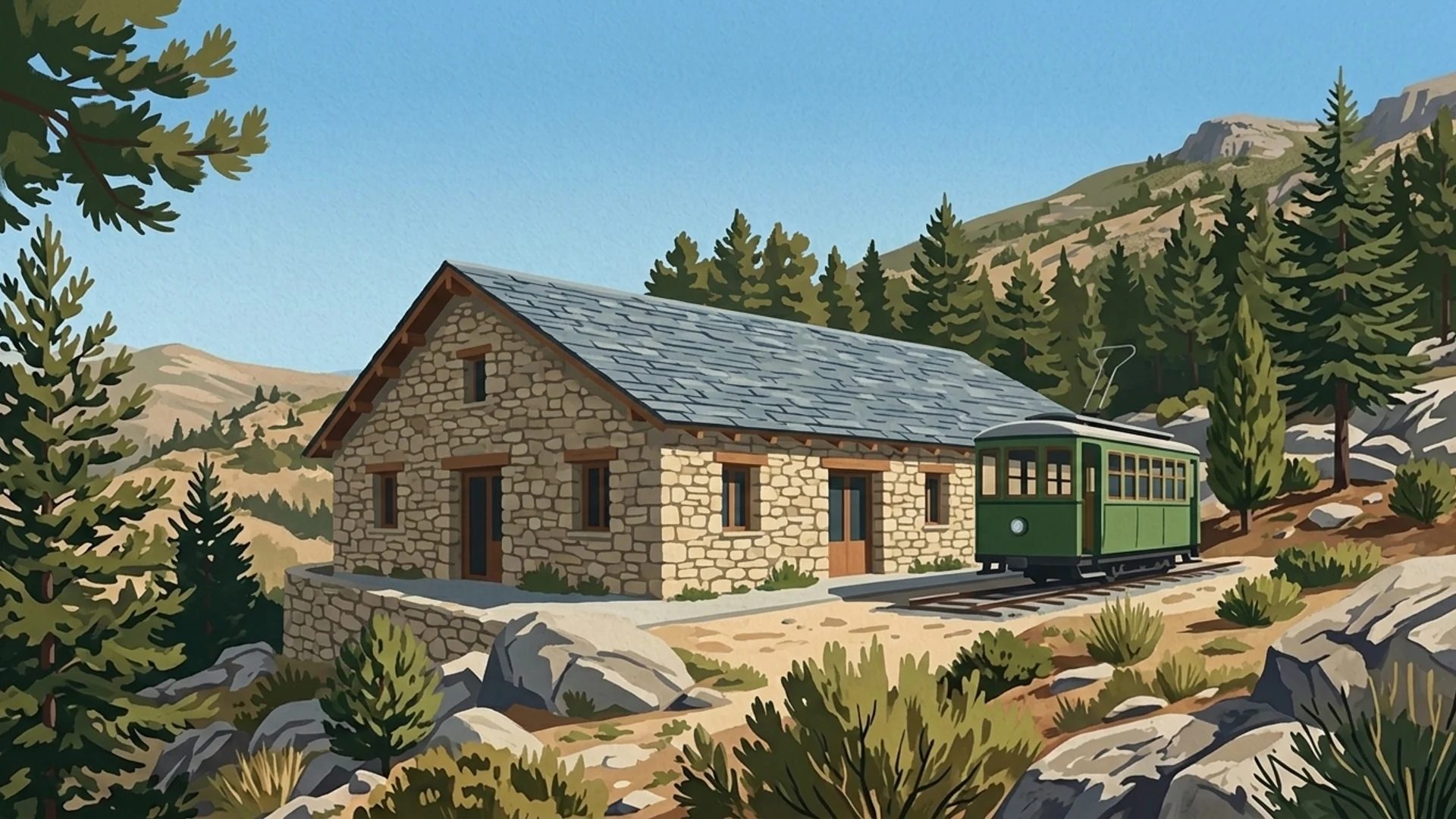
A significant portion of the historical exhibition is dedicated to the Tranvía de Sierra Nevada, an engineering marvel that operated from 1925 until 1974. This narrow-gauge railway once connected Granada to the Barranco de San Juan, bringing early tourists and romantic travellers into the heart of the Genil Valley. The centre features a restored carriage from the original tramway, offering a tangible link to the early days of mountain tourism. The carriage allows visitors to step inside and imagine the slow, scenic ascent that defined early twentieth-century travel in the region.
Audio guides and displays recount the experiences of nineteenth-century romantic travellers and botanists, such as Edmond Boissier and Washington Irving, who first documented the rugged beauty of these peaks. Their accounts provide a historical lens through which to view the modern landscape, contrasting the perilous journeys of the past with today's paved access roads. The exhibition highlights how these early explorers laid the groundwork for the scientific understanding and eventual conservation of the Sierra Nevada.
Starting Point for the Sulayr Trail
For active visitors, El Dornajo is more than an educational stop; it is a vital logistical hub. The centre marks the official starting and finishing point of the Sendero Sulayr (GR-240), a monumental 300-kilometre circular hiking trail that rings the entire Sierra Nevada massif. Staff at the reception desk provide up-to-date information on trail conditions, refuge availability, and weather forecasts, which are essential for anyone attempting sections of this demanding route.
The centre is also a key node for the Transnevada, a network of mountain biking routes that circumnavigate the park. Even for those not tackling multi-day treks, the staff can recommend shorter, accessible walks in the surrounding Güéjar Sierra municipality, tailoring their advice to the visitor's fitness level and the current season. Detailed topographical maps, local guidebooks, and basic outdoor supplies are available for purchase in the centre's shop, ensuring hikers are properly equipped before setting out.
Our Verdict
The Centro de Visitantes El Dornajo is an excellent, well-maintained resource that adds significant context to a Sierra Nevada visit. Its exhibitions are informative without being overwhelming, and the inclusion of the historic tram carriage is a genuine highlight. The staff are knowledgeable and provide grounded, practical advice for navigating the park's extensive trail network, making it an invaluable stop for independent hikers.
However, visitors should manage their expectations. This is an interpretation centre and logistical stop, not a scenic viewpoint or a high-mountain attraction. It sits at a relatively modest altitude compared to the peaks above, meaning the dramatic alpine landscapes are still a drive away. It is best utilised as a brief, educational pause on the ascent rather than a standalone half-day destination. Those looking for immediate high-altitude thrills might find it too static, but for hikers and nature enthusiasts, it is an indispensable first stop that enriches the rest of the journey.
Practicalities and Access
El Dornajo is located directly on the A-395 road, approximately 23 kilometres from Granada, making it an easy stop for those driving up to Pradollano or the Hoya de la Mora. The centre has its own dedicated parking area, which rarely fills up outside of peak winter weekends. The location at the junction of the old and new mountain roads makes it impossible to miss on the main ascent.
The building is fully accessible for wheelchair users, with step-free access to the main exhibition spaces, the audiovisual room, and the shop. The layout is spacious, allowing easy navigation for those with limited mobility, and accessible restrooms are available on-site.
During the summer months, the centre also serves as an information and booking point for the High Peaks Interpretation Service (SIAC), which operates guided minibus tours into the restricted upper reaches of the national park. Visitors interested in the region's unique flora can easily combine a stop here with a visit to the nearby Jardín Botánico Hoya de Pedraza, located just a few kilometres further up the mountain road. As opening hours fluctuate with the seasons, visitors should consult the official Ventana del Visitante website before travelling.
Nearby worth your time
A few well-placed stops for extending the day without turning it into a checklist.
Continue through The Sierra Nevada
Step back into the wider landscape with local guides, nearby places and the province overview.
Place guide · 7 min
Playa de Calahonda (Granada) Beach Guide
Playa de Calahonda in Granada offers deep, crystal-clear waters and a dramatic limestone cliff backdrop. This Blue Flag beach is a favourite for snorkelling and authentic Andalucían seafood.
Place guide · 7 min
A Guide to Playa de Salobreña on the Costa Tropical
Playa de Salobreña is a vast stretch of dark sand and clear water on the Costa Tropical, overlooked by a historic Moorish castle and dramatic cliffs.
Itinerary · 10 min
Two Days in Granada: A Step-by-Step Itinerary
Two days in Granada gives you just enough time to explore the Alhambra and lose yourself in the steep alleys of the Albaicín. This itinerary balances major monuments with the city's legendary free tapas culture.