
Nature & wildlife · Granada
Wildlife of the Sierra Nevada: High Altitude Biodiversity in Southern Spain
Discover the unique biodiversity of the Sierra Nevada, from the iconic Spanish ibex and Golden eagles to rare endemic flowers found nowhere else on Earth.
By Dan · Updated 16 July 2026 · 7 min read
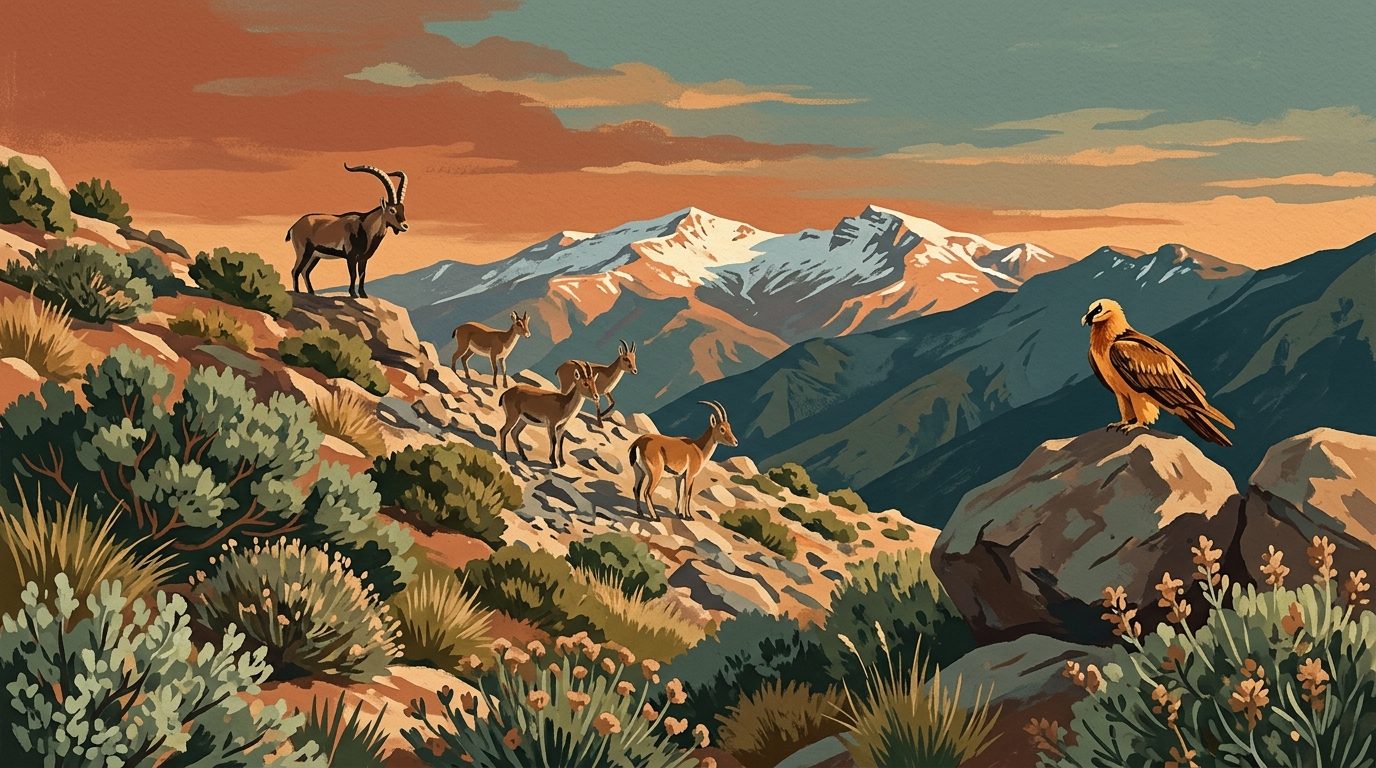
The Sierra Nevada represents the highest peaks in the Iberian Peninsula, providing a glacial refuge for species found nowhere else on the planet. This UNESCO Biosphere Reserve offers a vertical journey through distinct ecological zones, from Mediterranean scrub to arctic-alpine tundra.
Rising to 3,482 metres at the summit of Mulhacén, the Sierra Nevada is more than just a backdrop to the city of Granada. It is a biological island. Isolated from other high mountain ranges, it has developed an extraordinary level of endemism, particularly among its flora and invertebrates. For the wildlife enthusiast, the park offers a rare opportunity to observe high-altitude specialists within a short drive of the Mediterranean coast.
The massif spans over 850 square kilometres, encompassing the highest road in Europe and a rugged landscape carved by ancient glaciers. Because of its southern latitude, the sun intensity is high, yet the peaks remain snow-capped for much of the year. This creates a harsh, unpredictable environment where only the most adaptable species survive. The sheer scale of the landscape demands respect and careful observation, from the wet meadows known as borreguiles to the crags of the Veleta.
The Ecosystem: From Scrub to Summit
The Sierra Nevada is defined by its altitudinal zonation. Ecologists divide the park into several distinct layers, each supporting a different community of life. At the lower elevations, the Mediterranean forest consists of Holm oak (Quercus ilex) and Pyrenean oak (Quercus pyrenaica). As you ascend, these give way to Scots pine (Pinus sylvestris) and maritime pine (Pinus pinaster), forming the subalpine forest belt.
Above the tree line, the environment shifts into the Crioro-mediterranean zone. This is a world of schist and slate, where plants must cling to the moving scree. The most critical habitats here are the borreguiles, high-altitude wetlands fed by melting snow. These alpine meadows act as natural sponges, supporting a high concentration of endemic plants. During the summer thaw, these areas become the primary feeding grounds for the park’s mammals and insects. The buffer zones around the Pradollano ski resort also provide interesting transition habitats, where wildlife often adapts to the presence of human infrastructure, though these areas face the highest pressure from seasonal tourism.
Key Species: The High Mountain Specialists
Spanish Ibex (Capra pyrenaica hispanica)
The undisputed icon of the Sierra Nevada is the Spanish ibex. These sure-footed ungulates are remarkably common here, and sightings are almost guaranteed if you head above the tree line. The population in the Sierra Nevada is one of the healthiest in Spain. During the summer, they retreat to the highest peaks to avoid the heat, often seen grazing near the Laguna de las Yeguas or the summit of Veleta. In late autumn (November and December), the rut begins, and large males with impressive scimitar-shaped horns descend to lower ridges to compete for females. They are generally unperturbed by humans, often allowing for close photography, though a respectful distance of at least 20 metres should always be maintained.
The Great Raptors: Eagles and Vultures
The thermals rising from the deep valleys of the Alpujarras provide ideal lifting conditions for large birds of prey. The Golden eagle (Aquila chrysaetos) maintains a strong presence here, hunting rabbits, hares, and small mammals across the open slopes. You are also likely to see the Griffon vulture (Gyps fulvus) circling in large kettles. While the Sierra Nevada is not their primary nesting site in the same way as the Grazalema mountains, they frequent the range in search of carrion. Keep a keen eye out for the Montagu's harrier (Circus pygargus) in the lower buffer zones and cereal fields on the plateau; these elegant flyers are summer visitors, arriving in April to breed in the taller grasses and shrubs.
Rare Flora and Endemic Plants
Botanists consider the Sierra Nevada a global hotspot. There are over 2,100 vascular plant species here, with more than 60 found nowhere else on earth. The Sierra Nevada violet (Viola crassiuscula) is a specialist of the high-altitude scree, surviving in the shifting slate above 3,000 metres. In the borreguiles, look for the Sierra Nevada gentian (Gentiana sierrae) and the insectivorous common butterwort (Pinguicula vulgaris), which uses its sticky leaves to trap insects, supplementing the nutrient-poor soil. The best time for botany is shortly after the snow melts, typically June and early July.
Amphibians and Invertebrates
In the damp gullies and near the mountain streams, you may encounter the Fire salamander (Salamandra salamandra). The subspecies found here often shows a more pointed snout and distinct yellow markings. They are most active during the spring rains or on misty autumn evenings. The park is also home to the Apollo butterfly (Parnassius apollo), a large, white butterfly with red eyespots that has evolved into several distinct local varieties across the range's different valleys.
Best Time to Visit
The wildlife calendar in the Sierra Nevada is strictly dictated by the snowpack.
- May to June: The spring awakening. This is the prime time for birdwatching and seeing the first flush of wildflowers at mid-elevations. Migratory birds return from Africa, and the ibex begin to move higher up the mountains.
- July to August: The high summer. While the lowlands swelter, the peaks are accessible. This is the only time to see the highest-altitude endemics in flower. Ibex are easily spotted near permanent water sources.
- September to October: The autumn transition. The air clears, providing exceptional visibility for spotting raptors on migration. The ibex rut begins late in this period, and the deciduous oaks in the lower valleys turn deep ochre.
- December to March: The winter season. Most of the park is under deep snow. Wildlife watching is restricted to the lower elevations and the edges of the ski resort. It is a quiet time, focused on tracks in the snow and the hardy resident birds like the Red-billed chough (Pyrrhocorax pyrrhocorax).
How to Explore
Access to the high peaks is tightly controlled to protect the fragile soil. During the summer season (typically starting mid-June, depending on snow), a "High Peaks Microbus" service (SIASM) runs from Hoya de la Mora and Capileira, taking visitors into the heart of the national park, saving a long uphill climb and reducing private vehicle impact.
For the best wildlife viewing, the Hoya de la Mora area (2,500m) is a reliable starting point. Even short walks from the car park often result in ibex sightings. For those seeking raptors, the Puerto de la Ragua at the eastern end of the park offers a quieter experience with dense pine forests and open ridges. If you are looking for rare plants, the Jardín Botánico Hoya de Pedraza offers a structured look at the park's flora without the need for a strenuous hike.
Guided tours are highly recommended for tracking specific species like the Golden eagle or finding the smaller endemic flowers. Several local outfitters in Granada and the Alpujarras specialise in "slow" nature tours that focus on ecology rather than just peak-bagging.
Practical Information
Access: The main access point from Granada is the A-395 road leading to the Sierra Nevada ski station. For the southern slopes, drive to the mountain villages of the Alpujarras, such as Capileira or Trevélez.
Permits: No permit is required for general hiking on established trails. However, if you plan to organise a large group or conduct scientific research, you must contact the National Park office in Pinos Genil. Wild camping is permitted only under strict conditions (above 2,100m, one night only, no tents during daylight hours) and requires prior notification to the park authorities via email (pnsn.usopublico.dtgr.csmaea@juntadeandalucia.es).
What to bring: Even in mid-summer, temperatures can drop to near freezing at night. High-SPF sun protection is vital due to the thin atmosphere. Sturdy boots are essential for the sharp schist trails. Always carry more water than you think you need, as many high-altitude springs are seasonal and may dry up by August.
Conservation Note
The Sierra Nevada faces significant challenges from climate change. As the average snow line retreats upwards, the endemic plants at the summits have nowhere higher to go, facing potential extinction as they are squeezed out by species from lower elevations. The park is strictly protected as a National Park (the highest level of protection in Spain), but the balance between the massive economic engine of the ski resort and the preservation of fragile alpine ecosystems remains a constant point of tension. Visitors are urged to stay on marked paths to prevent soil erosion, which is the primary threat to the high-altitude borreguiles.
Last reviewed: 21 June 2026 · Editorial policy
Related guides
Sierra Morena: The Forgotten Wild of Andalucía
Discover the rugged beauty of the Sierra Morena, a vital sanctuary for the Iberian lynx and Europe's rarest raptors in the heart of northern Sevilla.
8 min read
Reptiles of Andalucía: A Field Guide to Europe’s Herpetological Stronghold
Discover the incredible biodiversity of Andalucía's reptiles, from the giant Ocellated Lizard to the elusive Mediterranean Chameleon and the rare Lataste’s Viper.
7 min read
Exploring Sierra de las Nieves National Park
Discover the prehistoric Spanish fir forests and the rugged limestone peaks of the Sierra de las Nieves, Málaga’s first National Park.
6 min read
Sierra de Aracena: Huelva's Green Highland
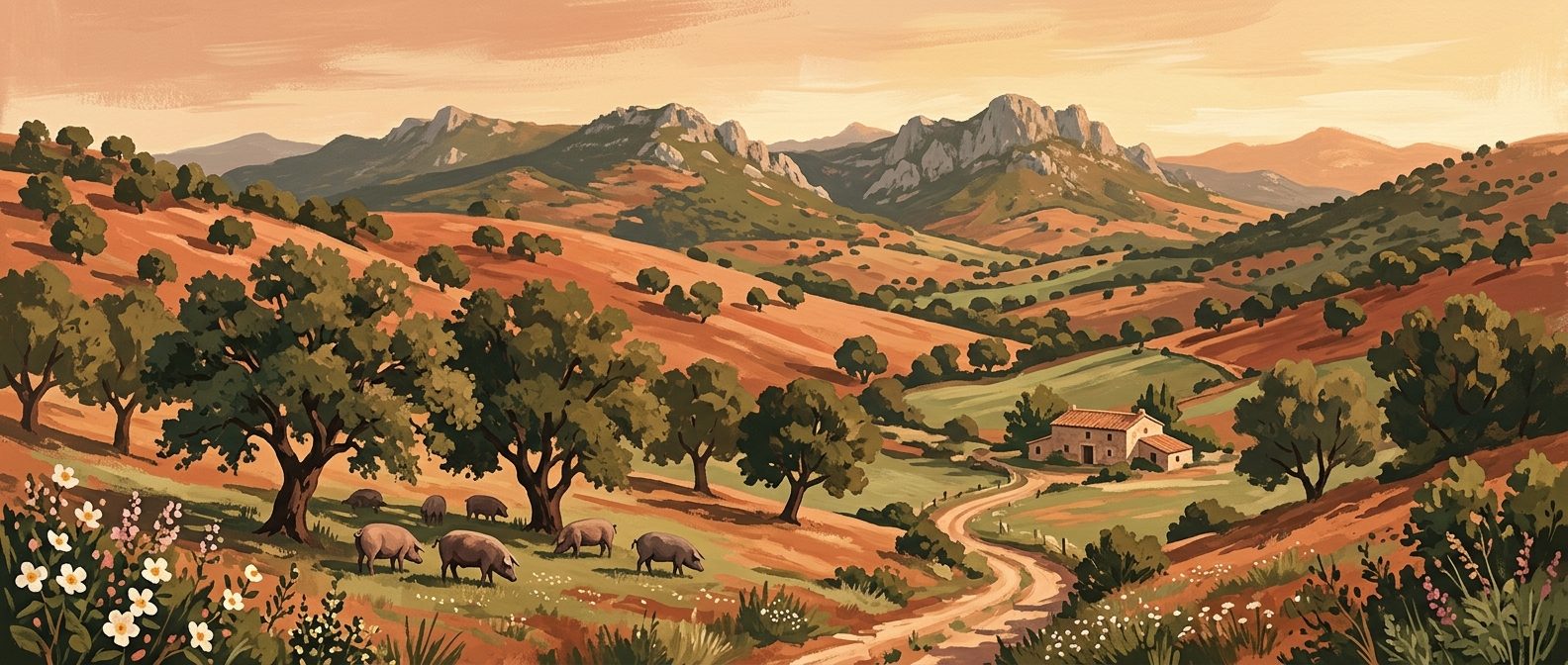
An ancient managed landscape where holm oak and chestnut forests meet rare raptors and the iconic Iberian pig. This northern Huelva highland provides one of Andalucía's most intact examples of the dehesa ecosystem.
8 min read
The Spring Wildflower Season in Andalucía
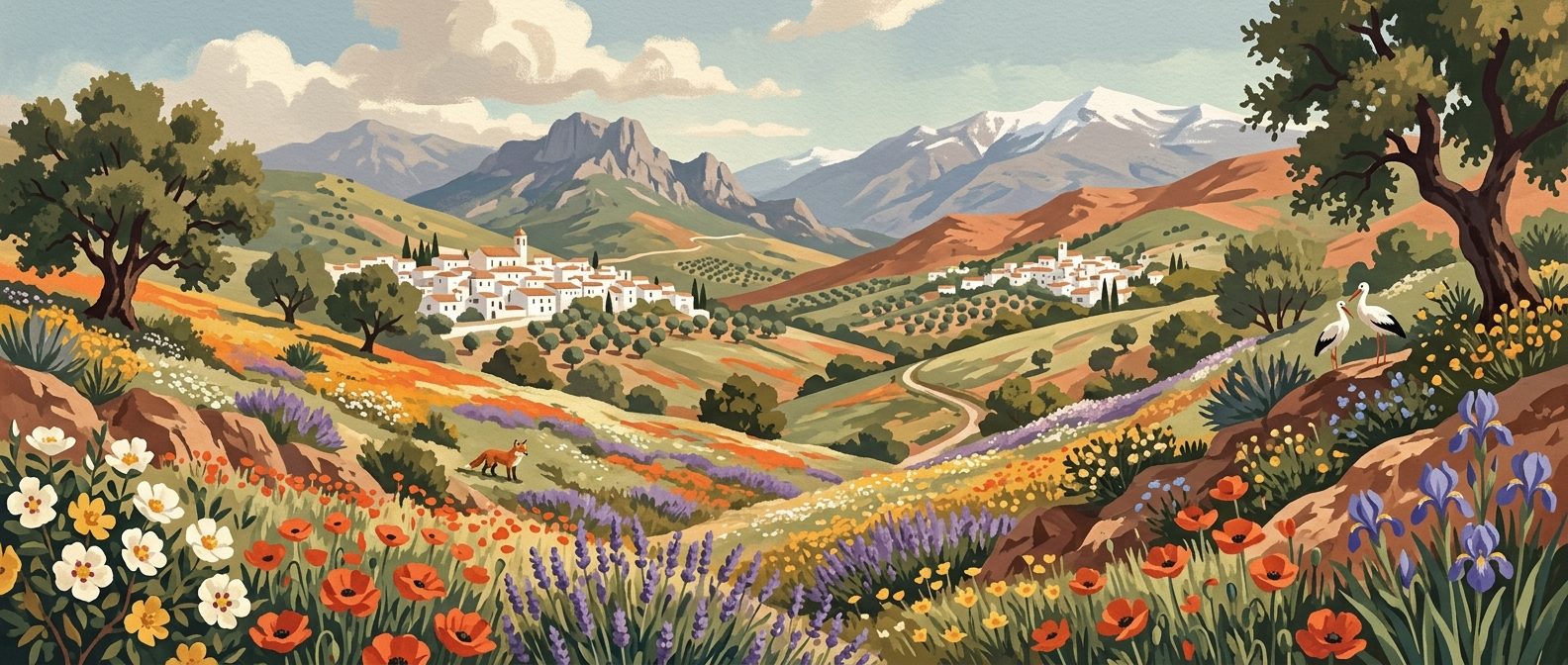
Discover the exceptional botanical diversity of southern Spain, from the orchid-rich limestone sierras to the rare peonies of the cork oak forests.
7 min read
Where to See the Iberian Lynx: Andújar and Beyond
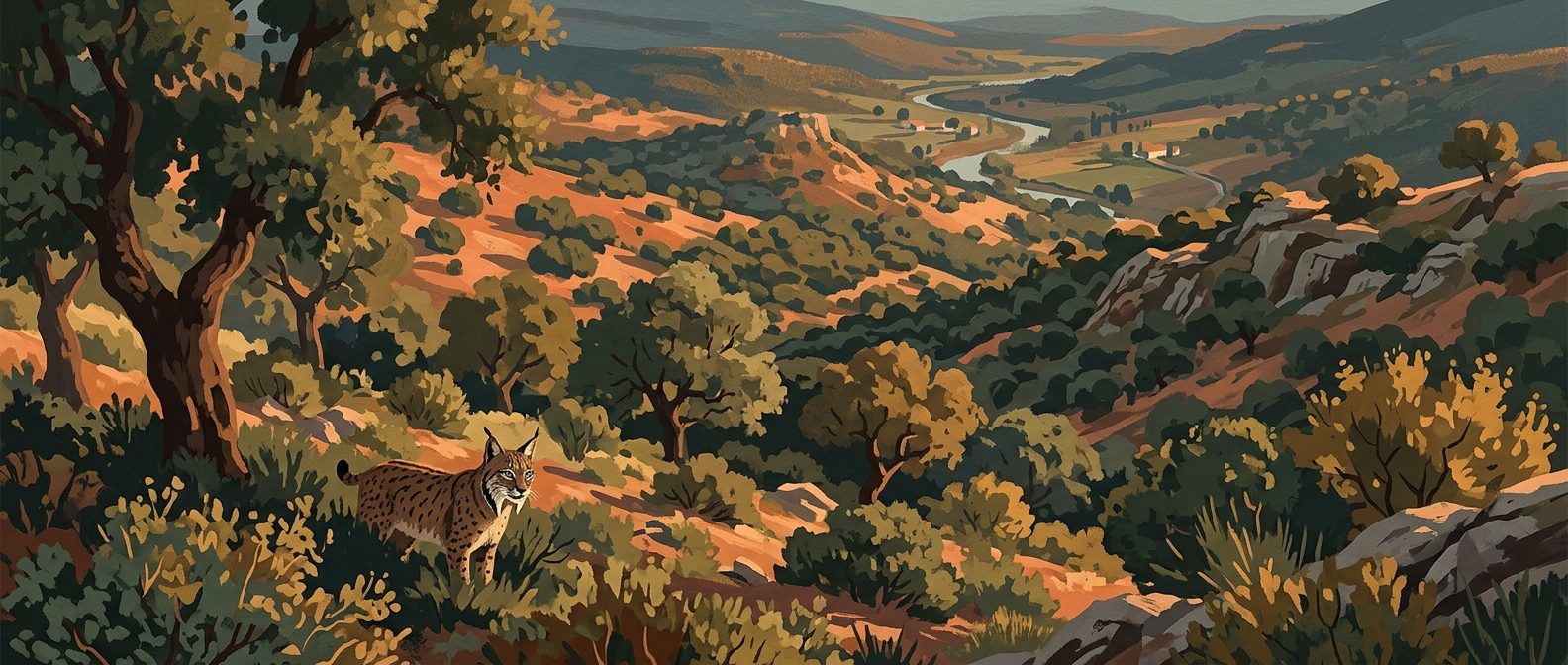
Discover the best ways to see the world's rarest cat in the Sierra de Andújar. This guide covers the best viewing spots, seasonal timing, and the diverse wildlife of Jaén's rugged Mediterranean scrubland.
6 min read
More from Granada
Newsletter
More stories from Andalucía
Weekly notes, seasonal picks, and the next guides worth bookmarking.