
attraction · Granada
Casa Museo Alpujarreña
Andalucía 365 · Updated 18 July 2026
Our Verdict
“A vital ethnographic record that grounds the picturesque Alpujarra villages in their harsh agricultural reality.”
Last verified: July 2026
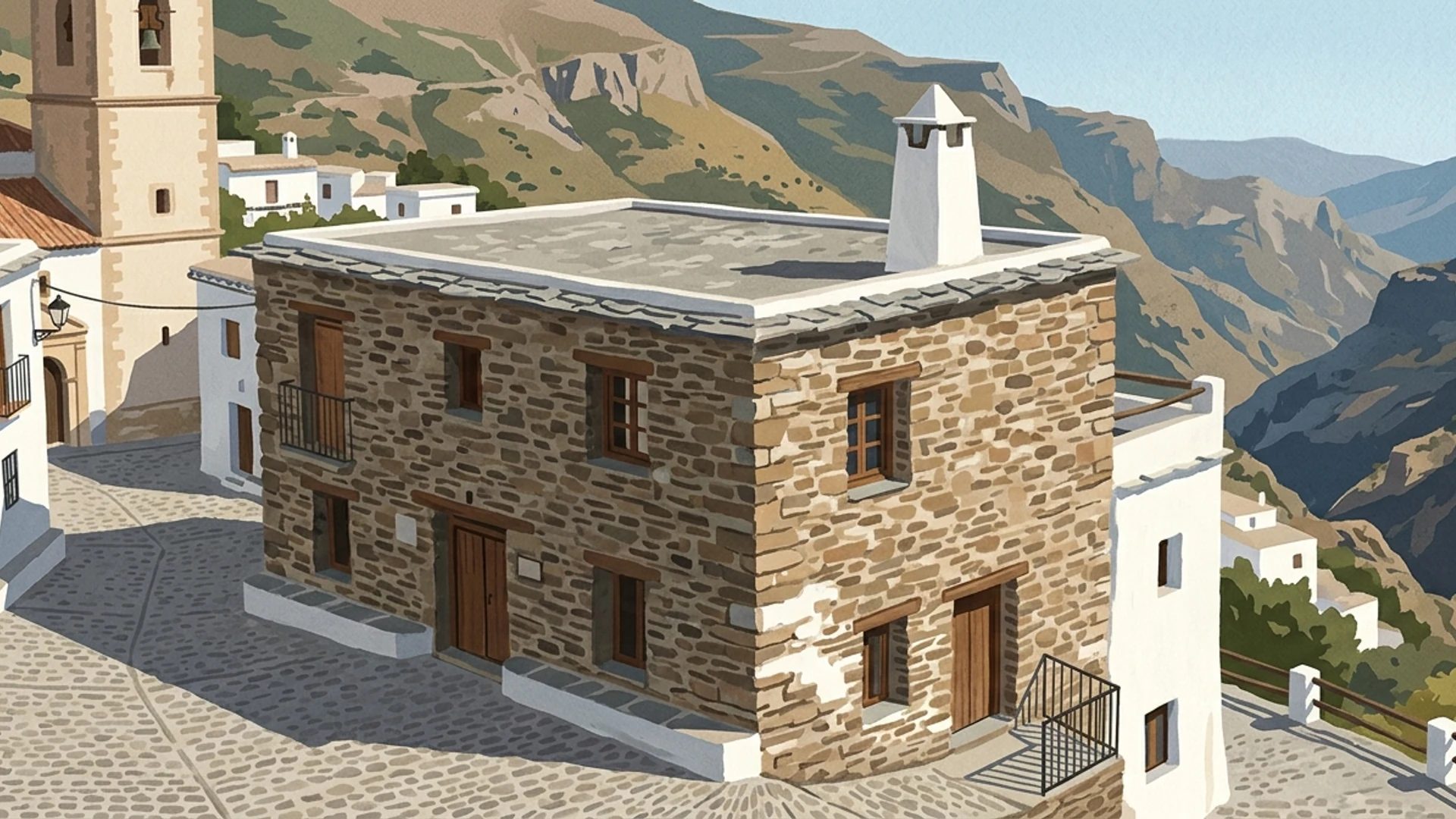
Set in the high-altitude village of Bubión, the Casa Museo Alpujarreña is a preserved traditional dwelling that offers a tangible record of domestic life in the Poqueira Gorge. Built with thick stone walls, a flat terrao roof sealed with local launa clay, and a characteristic prismatic chimney, the building itself is a prime example of Berber-influenced mountain architecture. Inside, the rooms are arranged exactly as they would have been when it was a working family home, displaying over 500 everyday objects, from agricultural implements and esparto grass weaving tools to period furniture and domestic ceramics. For visitors exploring the Alpujarra Granadina, this modest ethnographic museum provides essential context, transforming the surrounding white villages from mere scenery into functional, historically grounded agricultural settlements.
Architecture of the High Alpujarra
Before examining the collection inside, the building itself warrants close attention. The Casa Museo Alpujarreña is a textbook example of the vernacular architecture that defines the Alpujarra Granadina. Adapted to the steep slopes of the Sierra Nevada, the house is constructed using thick stone masonry and rammed earth, materials chosen for their thermal mass to combat freezing winters and hot summers.
The roof structure is particularly notable and distinct from the rest of Andalusia. Unlike the pitched tiled roofs found in the lower valleys, this house features a flat terrao. These roofs are supported by sturdy chestnut beams and covered with a layer of launa, a naturally occurring slate clay found in the surrounding mountains. When wet, the launa expands to create a highly effective waterproof seal. The roof is punctuated by a traditional prismatic chimney, topped with a flat stone slate to prevent heavy winter snow from entering the hearth. These flat roofs also served a vital agricultural purpose, providing a secure, sun-drenched space to dry figs, tomatoes, and peppers in the autumn months, preserving food for the harsh winters.
Inside the Family Home
The interior of the museum faithfully replicates the layout and atmosphere of a traditional rural home. Rather than displaying items in sterile glass cases, the museum presents its collection of over 500 ethnographic objects in situ. The rooms are arranged to reflect their original functions, offering a clear window into the daily routines of a mountain family before the arrival of modern conveniences.
Visitors walk through the main living quarters, which include the kitchen, bedrooms, and storage areas. The kitchen, traditionally the warmest room and the undisputed centre of family life, features authentic cooking utensils, domestic ceramics, and heavy iron pots suspended over the hearth. In the bedrooms, period furniture, heavy woollen blankets, and traditional textiles demonstrate the modest but highly functional living conditions of the era. The lower levels of such houses were typically reserved for livestock and agricultural storage. This was a deliberate design choice that allowed the rising heat from the animals to naturally warm the human living spaces above during the freezing mountain nights.
Tools of the Mountain Trade
Beyond domestic life, the Casa Museo Alpujarreña serves as a vital archive of the region's agricultural and artisanal heritage. The collection includes a comprehensive array of tools that were essential for survival in the rugged, unforgiving terrain of the Poqueira Gorge.
- Agricultural implements: Heavy wooden ploughs, iron sickles, and threshing boards used to cultivate the narrow, terraced fields carved into the mountainside.
- Esparto grass crafts: Baskets, panniers for mules, and woven footwear, demonstrating a complete reliance on natural, renewable materials found in the immediate environment.
- Carpentry and blacksmithing tools: Equipment used by local artisans to maintain the village's infrastructure, build furniture, and repair essential farming gear.
- Textile equipment: Traditional looms and spinning tools that highlight the region's long and lucrative history of silk and wool production, a trade that sustained the local economy for centuries.
These objects provide crucial context for understanding how the landscape was shaped. The terraced fields and complex irrigation channels visible around Bubión and the neighbouring villages of Pampaneira and Capileira were built and maintained using exactly these types of hand tools, representing centuries of continuous agricultural knowledge.
Our Verdict
The Casa Museo Alpujarreña is an essential stop for anyone wanting to understand the cultural and historical reality of the Alpujarras. It grounds the aesthetic appeal of the white villages in the hard, practical realities of mountain agriculture. The collection is comprehensive, and the preservation of the building itself is excellent, offering a highly educational experience.
However, visitors should manage their expectations regarding scale and access. The museum is small, and a thorough visit rarely takes more than thirty minutes. The most significant limitation is its operating schedule. Opening hours can be highly volatile and are often dependent on the availability of municipal staff. It is highly recommended to check the official Casa Museo Alpujarreña website or enquire at the Bubión town hall upon arrival to confirm that the building is open to the public on the day of your visit.
Practical Planning and Access
The museum is located on the Plaza de la Iglesia, right in the centre of Bubión, directly adjacent to the Church of the Virgen del Rosario. Finding the building is straightforward once you are in the main village square, as it is clearly signposted from the church.
Due to the steep, narrow, and often pedestrianised streets of the village, driving directly to the museum is not advisable. Visitors should park in the designated public parking areas near the main road or at the upper entrance to the village, and walk down to the church square. The walk involves steep inclines and cobbled surfaces, so sturdy footwear is recommended.
Mobility access within the museum is severely limited. As a preserved historical dwelling, the building retains its original uneven stone floors, narrow doorways, and steep internal stairs. There are no lifts or ramps, making it entirely unsuitable for wheelchair users or those with significant mobility impairments. The interior can also be quite dark, relying on small traditional windows and limited artificial lighting to protect the historical textiles and wooden artefacts from sun damage.
Nearby worth your time
A few well-placed stops for extending the day without turning it into a checklist.
Continue through The Alpujarra Granadina
Step back into the wider landscape with local guides, nearby places and the province overview.
Place guide · 7 min
Playa de Calahonda (Granada) Beach Guide
Playa de Calahonda in Granada offers deep, crystal-clear waters and a dramatic limestone cliff backdrop. This Blue Flag beach is a favourite for snorkelling and authentic Andalucían seafood.
Place guide · 7 min
A Guide to Playa de Salobreña on the Costa Tropical
Playa de Salobreña is a vast stretch of dark sand and clear water on the Costa Tropical, overlooked by a historic Moorish castle and dramatic cliffs.
Itinerary · 10 min
Two Days in Granada: A Step-by-Step Itinerary
Two days in Granada gives you just enough time to explore the Alhambra and lose yourself in the steep alleys of the Albaicín. This itinerary balances major monuments with the city's legendary free tapas culture.