
attraction · Granada
Jardín Botánico Hoya de Pedraza
Andalucía 365 · Updated 18 July 2026
Our Verdict
“A rigorous, high-altitude botanical garden essential for understanding Sierra Nevada's rare endemic flora, though its appeal is highly seasonal.”
Last verified: July 2026
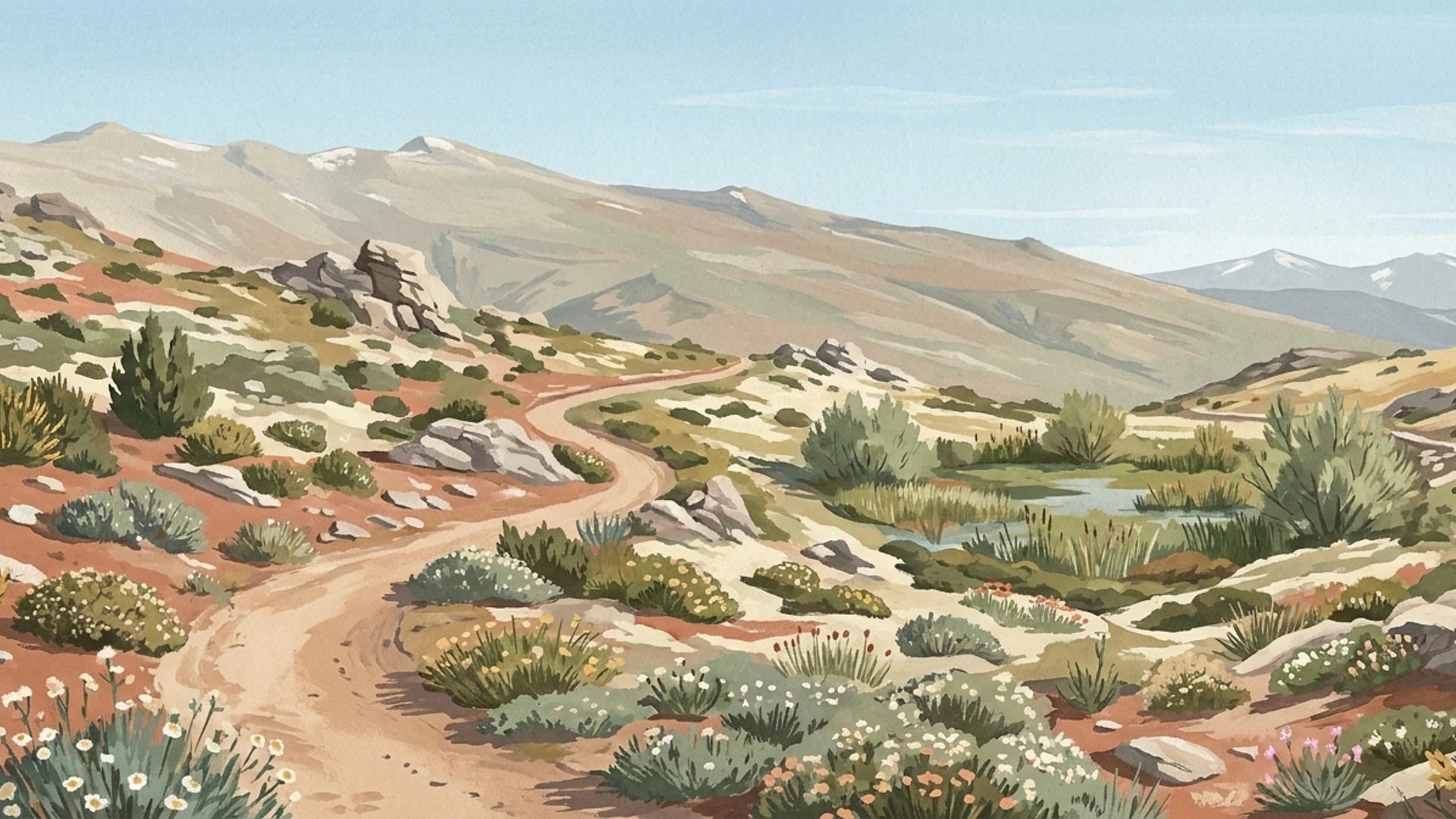
Situated at an altitude of 1,950 metres in the Sierra Nevada, the Jardín Botánico Hoya de Pedraza is a specialised botanical garden dedicated to the conservation of high-mountain flora. Located just four kilometres below the Pradollano ski resort, the 16-hectare site serves as a living sanctuary for the rare and endemic plant species of the Nevadense and Alpujarreño-Gadorense biogeographical sectors. It helps visitors understand the unique biodiversity of southern Spain's highest peaks. Visitors can explore carefully reconstructed habitats, including siliceous and calcareous soils, riverside ecosystems, and a dedicated endangered species garden. While the harsh mountain climate dictates a short growing season, the facility offers a rare opportunity to observe highly specialised plants that are otherwise difficult to locate in the wild.
A Sanctuary for High-Altitude Flora
Positioned at 1,950 metres above sea level, the Jardín Botánico Hoya de Pedraza is a crucial conservation centre within the Sierra Nevada. Opened to the public in 2010, the 16-hectare site is a prominent member of the Andalusian Network of Botanical Gardens. It focuses exclusively on the flora of the high peaks and the surrounding mountain ranges, including the Alpujarras, Los Filabres, and Gádor. The Sierra Nevada functions as a biological island, forcing plant life to adapt to extreme temperature fluctuations, intense solar radiation, and prolonged snow cover. This geographical isolation has resulted in a remarkable concentration of endemic species, meaning plants found nowhere else on Earth. The garden provides a controlled, accessible environment where these highly specialised species can be studied, propagated, and displayed to the public without risking damage to their fragile natural habitats.
The Four Botanical Zones
The garden is meticulously structured into four distinct thematic areas, each replicating a specific high-mountain habitat. Visitors navigate the site via a network of signposted footpaths that wind through these reconstructed ecosystems, offering a comprehensive overview of the region's botanical diversity.
- Siliceous Vegetation Unit: This area represents the acidic soils derived from mica schists, which dominate the highest peaks of the Sierra Nevada. It features hardy cushion plants, low-lying shrubs, and resilient grasses adapted to withstand freezing temperatures and scouring winds.
- Calcareous Vegetation Unit: Dedicated to the flora that thrives on limestone and dolomite substrates, such as those found around the Trevenque peak. This section highlights plants that have evolved to survive in nutrient-poor, highly mineralised soils that drain water rapidly.
- Riverside Vegetation: A carefully recreated wetland and stream environment that showcases the deciduous trees, shrubs, and herbaceous plants that line the high-altitude watercourses, glacial lagoons, and mountain springs.
- Endangered Species Garden: The most critical section of the facility, housing collections of rare and threatened plants grouped by their specific ecological requirements. This area serves as a living gene bank for the region's most vulnerable flora.
Rare and Endemic Species
The primary draw of Hoya de Pedraza is the opportunity to observe species that are exceptionally difficult to find in the wild. The garden is home to several critically endangered plants, including the Sierra Nevada chamomile (Artemisia granatensis), a highly sought-after aromatic plant that has suffered severely from historical over-harvesting and habitat loss. Visitors can also see the Sierra Nevada willow (Salix hastata subsp. sierrae-nevadae) and the extremely rare Senecio elodes, a yellow-flowering plant that relies on specific high-altitude wetlands and shares the same critical threat level as the Iberian lynx.
Other notable endemics include the Sierra Nevada daffodil (Narcissus nevadensis), which blooms in the damp meadows, and the striking pink-flowered Erodium boissieri. This particular geranium is named after the Swiss botanist Pierre Edmond Boissier, who extensively documented the region's flora in the 19th century and brought the botanical wealth of southern Spain to international attention.
Conservation and Scientific Research
Beyond public education, Hoya de Pedraza operates as a working scientific facility. It plays a vital role in the recovery plans for threatened Andalusian flora. The resident botanists and staff conduct ongoing research on seed germination, plant propagation techniques, and habitat restoration strategies. The garden acts as a genetic reservoir, cultivating backup populations of endangered plants that can be used to reinforce wild populations if necessary.
This proactive approach is increasingly important as climate change forces high-altitude species to migrate further up the mountains, steadily shrinking their available habitat. By maintaining these ex-situ collections, the garden ensures that the genetic diversity of the Sierra Nevada is preserved for future generations. The facility also collaborates closely with the nearby Centro de Visitantes El Dornajo to promote environmental awareness among visitors heading towards the Pradollano ski resort, emphasising the fragility of the alpine ecosystems.
Our Verdict
The Jardín Botánico Hoya de Pedraza is a rigorous, scientifically driven institution rather than a traditional ornamental garden. Its appeal is highly specific and heavily dependent on the season. For those expecting manicured flowerbeds, exotic imports, or year-round colour, the experience may be underwhelming. The landscape is designed for ecological accuracy, not aesthetic drama.
However, for botany enthusiasts, hikers, and anyone interested in high-altitude biodiversity, it is an exceptional resource. The opportunity to see critically endangered endemic species in a single, accessible location is rare. The garden demands a degree of patience and a willingness to appreciate the subtle adaptations of mountain flora. If you time your visit for the brief alpine spring, it is a highly rewarding and educational addition to any Sierra Nevada itinerary.
Practical Information
Visiting a high-altitude botanical garden requires careful planning, as the environment is entirely dictated by the harsh and unpredictable mountain climate.
- Arrival and Access: The garden is located at kilometre 27.8 on the A-395 road, approximately four kilometres before reaching the main ski village. It is easily accessible by car from Granada, with a dedicated parking area situated directly at the entrance.
- Seasonal Timing: The flowering season is exceptionally short. Late May, June, and July are the optimal months to visit when the alpine plants are in full bloom. By late summer, the vegetation can appear dry and dormant as the plants conserve energy.
- Weather Constraints: At 1,950 metres, the weather is volatile and can change rapidly. The garden frequently closes during the winter months and may shut at short notice due to snow, ice, high winds, or electrical storms. Always check the official visitor portal before travelling to confirm it is open.
- Mobility and Comfort: While the main paths are well-defined and signposted, the terrain is uneven in places, and the high altitude can make walking more strenuous than expected. Comfortable walking shoes, layered clothing, and strong sun protection are essential, as there is very little natural shade across the site.
Nearby worth your time
A few well-placed stops for extending the day without turning it into a checklist.
Continue through The Sierra Nevada
Step back into the wider landscape with local guides, nearby places and the province overview.
Place guide · 7 min
Playa de Calahonda (Granada) Beach Guide
Playa de Calahonda in Granada offers deep, crystal-clear waters and a dramatic limestone cliff backdrop. This Blue Flag beach is a favourite for snorkelling and authentic Andalucían seafood.
Place guide · 7 min
A Guide to Playa de Salobreña on the Costa Tropical
Playa de Salobreña is a vast stretch of dark sand and clear water on the Costa Tropical, overlooked by a historic Moorish castle and dramatic cliffs.
Itinerary · 10 min
Two Days in Granada: A Step-by-Step Itinerary
Two days in Granada gives you just enough time to explore the Alhambra and lose yourself in the steep alleys of the Albaicín. This itinerary balances major monuments with the city's legendary free tapas culture.