
attraction · Cádiz
Mercado de Abastos Ingeniero Torroja
Andalucía 365 · Updated 18 July 2026
Our Verdict
“A milestone of 1930s rationalist engineering, this functioning municipal market boasts a pioneering octagonal concrete dome that remains a key example of Spanish modernism.”
Last verified: July 2026
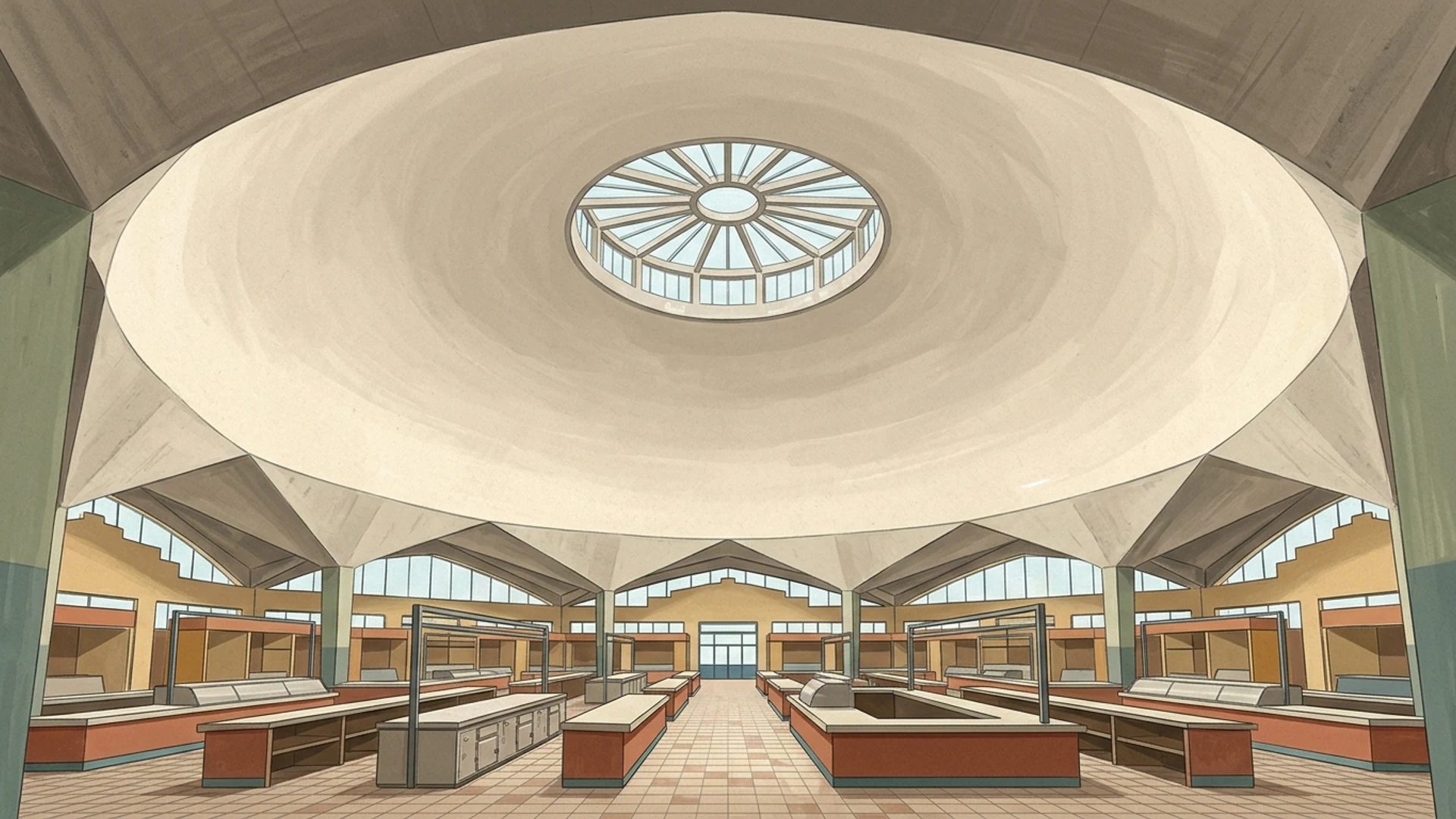
The Mercado de Abastos Ingeniero Torroja is a functioning food market and a landmark of twentieth-century rationalist architecture in the centre of Algeciras. Designed by the engineer Eduardo Torroja and the architect Manuel Sánchez Arcas, the building opened in 1935 and is defined by its pioneering octagonal concrete dome. At the time of its construction, this sweeping, column-free canopy was a major achievement in thin-shell concrete engineering. Today, it remains an active municipal market where local vendors sell fresh seafood from the Strait of Gibraltar, alongside regional produce and meats. It suits architecture enthusiasts seeking a milestone of Spanish modernism, as well as independent travellers wanting to experience the everyday commercial life of a major Andalusian port city.
A Milestone of Rationalist Engineering
In the early 1930s, Algeciras required a modern, hygienic space to replace its ageing open-air market in the Plaza Nuestra Señora de la Palma. The municipal commission was awarded to Eduardo Torroja, an engineer who would become one of the most influential figures in the development of reinforced concrete, and the architect Manuel Sánchez Arcas. Completed in 1935, their design stripped away decorative excess in favour of pure, functional geometry, aligning with the avant-garde principles of the era. The resulting structure is a celebrated example of the Modern Movement in Spain, recognised as a Bien de Interés Cultural by the Andalusian government.
The building achieves its purpose by integrating structure, natural lighting and ventilation into a single, cohesive form. Torroja’s philosophy was that the form of a structure should be dictated by its load-bearing requirements rather than applied ornamentation. This market hall stands as a physical manifestation of that belief, continuing to draw students of architecture and engineering from across Europe who come to study its elegant, uncompromising lines.
The Octagonal Dome
The defining feature of the market is its laminar concrete dome, a structural achievement that pushed the boundaries of contemporary engineering. Spanning 47.8 metres in diameter, the canopy rests on just eight peripheral pillars, creating a vast, column-free interior that feels remarkably weightless. The reinforced concrete shell is a mere nine centimetres thick at its centre, a testament to Torroja’s mastery of material tension and compression. While local lore often incorrectly claims it was the largest dome in the world for thirty years, it was undoubtedly one of the most advanced thin-shell concrete structures of its era.
A central ten-metre octagonal skylight pierces the roof, flooding the market floor with natural light and reducing the need for artificial illumination. The open sides beneath the canopy allow the coastal breeze to naturally ventilate the space, carrying away the strong odours of the fish stalls. The absence of internal supports was a deliberate, highly practical choice, allowing for the flexible, unobstructed arrangement of market stalls beneath the sweeping concrete sky. The geometric precision of the dome creates a visual rhythm that changes as the sun moves across the skylight throughout the morning.
The Daily Market Experience
Beyond its architectural pedigree, the Mercado Ingeniero Torroja remains the commercial stomach of Algeciras, serving the daily needs of the city's residents just as it has for nearly a century. The interior is a dense, highly organised grid of traditional stalls selling fresh produce, cured meats, regional cheeses and baked goods. However, the undisputed highlight of the floor is the central fish market. Algeciras sits at the confluence of the Atlantic Ocean and the Mediterranean Sea, and the seafood on display reflects the rich marine biodiversity of the Campo de Gibraltar region.
Vendors sell everything from locally caught bluefin tuna and swordfish to an array of shellfish, squid and octopus, often with vociferous enthusiasm. The atmosphere is highly energetic, characterised by the shouting of prices, the chopping of ice and the rapid filleting of fish. The surrounding streets and the Plaza de la Palma spill over with additional stalls, cafes and tapas bars, creating a dense, active commercial zone that feels entirely detached from conventional tourism. Local shoppers navigate the narrow aisles with purpose, pulling wheeled trolleys and engaging in rapid-fire negotiations with the stallholders.
Our verdict
The Mercado de Abastos Ingeniero Torroja is a compelling stop for anyone interested in twentieth-century architecture or the daily rhythms of a working port city. For travellers exploring Cádiz province or basing themselves in nearby La Línea de la Concepción, it is a rare opportunity to see an engineering milestone functioning exactly as its creators intended, without the polish or commercialisation often applied to heritage sites. The sheer scale and elegance of Torroja’s concrete shell remain deeply impressive, even to those without a background in structural engineering.
However, visitors should adjust their expectations accordingly: this is a municipal food market, not a curated museum or a modern gastronomic food hall. The environment is loud, wet and intensely practical. The floors are often slick with melted ice and water from the fish stalls, and the sensory experience is dominated by the sights and smells of raw seafood. Those looking for boutique food stalls, craft beer bars or tourist-oriented gastronomy will be disappointed. But for travellers who appreciate raw civic life and groundbreaking modernist design, the market offers a deeply rewarding and grounded experience.
Practicalities and Planning
The market is located in the commercial centre of Algeciras, a short walk from the main port facilities and the railway station. To experience the building at its most active and atmospheric, visitors should plan to arrive in the morning, ideally between 9:00 and 11:30. During these hours, the fish stalls are fully stocked, the natural light through the central skylight is at its best, and the local trade is at its peak. By early afternoon, the vendors begin to pack up their produce, the energy dissipates, and the interior is aggressively washed down with hoses.
When planning a visit, keep the following practicalities in mind:
- Accessibility: The open-plan design and complete lack of internal columns mean the ground floor is entirely accessible for wheelchair users, though the surrounding exterior streets can be crowded and occasionally uneven.
- Weather protection: The massive concrete canopy provides excellent shelter from both the intense Andalusian summer sun and heavy winter rain, making it a reliable destination regardless of the weather conditions.
- Parking: Finding a space in the immediate vicinity of the Plaza de la Palma is notoriously challenging due to the high volume of delivery vans. Visitors are strongly advised to use the municipal car parks located near the port or the railway station and approach on foot.
For current information on the market's operating days and municipal regulations, visitors should consult the official Andalusian tourism portal.
Nearby worth your time
A few well-placed stops for extending the day without turning it into a checklist.

Continue through Campo de Gibraltar
Step back into the wider landscape with local guides, nearby places and the province overview.
Place guide · 7 min
Playa de La Caleta: A Guide to the Historic Heart of Cádiz
Playa de La Caleta is a historic urban bay in Cádiz, famous for its calm waters, ancient fortresses, and the stunning white Balneario spa building.
Place guide · 7 min
Playa de los Caños de Meca: A Guide to the Cádiz Coastline
Discover the wild Atlantic beauty of Playa de los Caños de Meca, from its freshwater springs to the historic Cape Trafalgar lighthouse.
Itinerary · 7 min
Three Days in Cadiz: The Ultimate Itinerary for Independent Travellers
Three days allows you to completely sink into the maritime rhythm of Europe's oldest city. You can cover the historic centre, explore the twin seaside fortresses, and still have time for a sherry tasting afternoon across the bay.