
attraction · Cádiz
Casas Cueva de la Calle Cuevas del Sol
Andalucía 365 · Updated 18 July 2026
Our Verdict
“A remarkable display of troglodyte architecture where houses are built directly into the limestone gorge, though its popularity means it can feel crowded and commercialised during peak hours.”
Last verified: July 2026
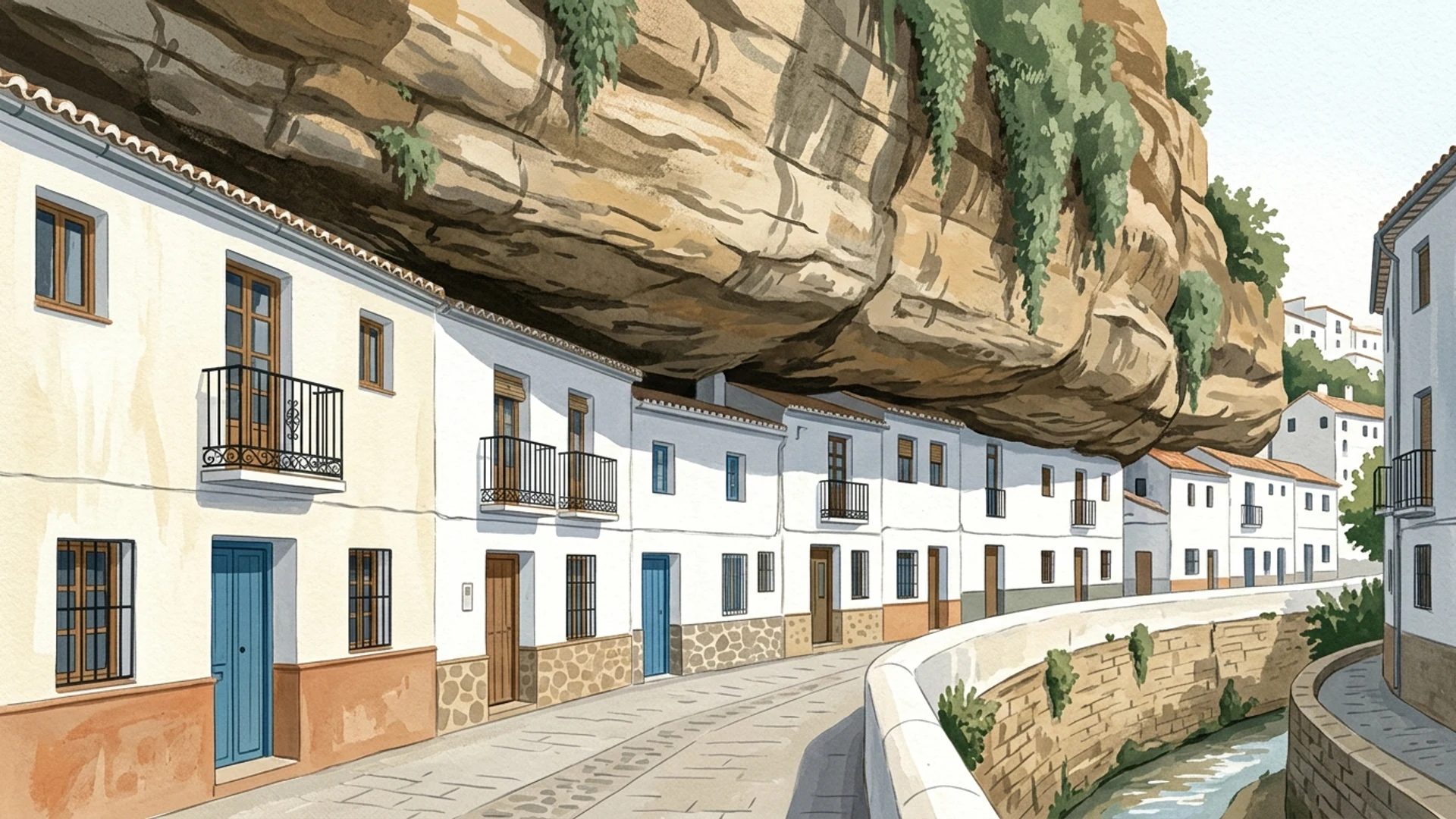
Setenil de las Bodegas defies the conventional architecture of Andalucía’s white villages. Instead of building atop a defensive hill, its residents settled deep within the Trejo River gorge, using the natural limestone overhangs as ready-made roofs. Casas Cueva de la Calle Cuevas del Sol is the most striking example of this troglodyte urban planning. Facing south to catch the sunlight, this pedestrian street features a continuous row of whitewashed facades built directly into the rock face. It is a fascinating study in human adaptation to extreme geology, appealing to architecture enthusiasts and photographers. While it is a public thoroughfare rather than a traditional museum, walking beneath the massive, suspended boulders provides a visceral sense of the village's unique topography and historical resourcefulness.
The Geology and Historical Context
The defining feature of Setenil de las Bodegas is the deep canyon carved by the Trejo River over millennia. Unlike other settlements featured in The White Villages of Cádiz: A High-Altitude Journey Through Andalucía’s Limestone Heartland, which sought high ground for military defence, Setenil’s early inhabitants found protection within the gorge itself. Archaeological evidence suggests the caves along the river have been utilised since prehistoric times. During the medieval period, this geological trench provided a formidable natural defence. The Almohad settlement was so well protected by the rock walls that it withstood six Christian sieges before finally falling to the Catholic Monarchs in 1484.
This method of construction, known locally as 'abrigo bajo rocas' (shelter under rocks), is highly efficient. It regulates temperature naturally, keeping interiors remarkably cool during fierce Andalusian summers and retaining warmth during damp winters. The town's suffix, referencing 'bodegas' (wineries), points to a time when these cool cave environments were used extensively for storing local wine, a trade that flourished before the nineteenth-century phylloxera blight.
Architecture and Adaptation
Walking along Calle Cuevas del Sol, the sheer scale of the geological overhang becomes immediately apparent. The rock does not merely sit behind the houses; it serves as the structural roof and rear wall for the entire row of buildings. The whitewashed facades and traditional wrought-iron balconies contrast sharply with the rough, dark texture of the limestone pressing down from above. This street, translating to 'Caves of the Sun', is oriented southward, allowing natural light to flood the facades and outdoor terraces throughout the day.
The construction technique demonstrates a profound understanding of the local environment. Rather than excavating into the stone, builders simply enclosed the existing natural cavities. This approach minimised the labour required to build a home while maximising the structural integrity provided by the solid rock ceiling.
The Contrast with Cuevas de la Sombra
To fully appreciate the environmental strategy of Calle Cuevas del Sol, visitors should cross the narrow river channel to its sister street, Calle Cuevas de la Sombra (Caves of the Shadow). While the sunlit side was designed to capture warmth and light, the shaded side demonstrates how residents adapted to the intense summer heat. Here, the rock formations completely block the sunlight, creating a tunnel-like environment where the sky is entirely obscured by stone.
The temperature drop between the two streets is noticeable, even on a short walk. Together, these parallel thoroughfares illustrate the extreme spatial constraints and the ingenious architectural solutions developed by the residents to maximise the habitable space within the narrow confines of the river gorge.
Experiencing the Streetscape
Today, Calle Cuevas del Sol serves as the social and commercial artery of the lower village. Many of the original residential cave houses have been converted into tapas bars, cafes, and local shops selling regional products such as Payoya goat cheese, olive oil, and cured meats. Visitors can sit at outdoor tables positioned directly beneath the massive rock lip, observing the interplay between the natural environment and the built environment.
While private residential interiors are generally closed to the public, several commercial establishments allow visitors to step inside and see exactly how the natural rock forms the interior ceilings and walls, often left exposed and unpainted. For a broader exploration of the region's unique topography, this street serves as a natural starting point before embarking on The Pueblos Blancos Road Trip: A Five-Day Route Through Andalucía’s White Villages.
Our verdict
Calle Cuevas del Sol is undeniably the visual centrepiece of Setenil de las Bodegas: A Guide to the Village Built Under the Rocks. The sight of the town seemingly crushed beneath the weight of the gorge is genuinely remarkable and offers a distinct architectural narrative compared to the rest of the region.
However, visitors should manage their expectations regarding the scale of the site. It is a single, relatively short public street rather than a sprawling complex or a curated museum. Its immense popularity means it can become heavily congested with day-trippers, particularly during peak midday hours and weekends. The heavy presence of souvenir shops and restaurant terraces can also detract from the historical atmosphere. It is best appreciated as a brief, highly photogenic stop to understand the village's unique geography.
Practicalities and Access
As a public street, Calle Cuevas del Sol is open continuously and requires no admission fee. For official visitor information, maps, and historical context, consult the Turismo de Setenil website. The street is located at the very bottom of the gorge, meaning access from the upper parts of the village involves navigating steep inclines, narrow alleys, and staircases.
Parking in Setenil is notoriously difficult due to the narrow, winding layout of the town. Driving into the lower gorge is strongly discouraged for non-residents, as the streets frequently bottleneck and GPS navigation can lead drivers into impassable alleys. When planning your arrival, consider the following strategies:
- Los Caños Parking: The most reliable option is this designated underground parking facility on the outskirts of the village, requiring a short walk into the centre.
- Timing your visit: To avoid the heaviest crowds and secure a table beneath the rocks, plan to arrive early in the morning or later in the afternoon.
The street itself is flat and paved, making it accessible for wheelchairs and pushchairs once you are at the river level. However, reaching the street from higher parking areas may present mobility challenges. The street is particularly pleasant in the shoulder seasons of spring and autumn, avoiding the intense heat that characterises summer afternoons in Beyond the Sherry Triangle: A Guide to Cádiz Province.
Nearby worth your time
A few well-placed stops for extending the day without turning it into a checklist.
Continue through Pueblos Blancos
Step back into the wider landscape with local guides, nearby places and the province overview.
Place guide · 7 min
Playa de La Caleta: A Guide to the Historic Heart of Cádiz
Playa de La Caleta is a historic urban bay in Cádiz, famous for its calm waters, ancient fortresses, and the stunning white Balneario spa building.
Place guide · 7 min
Playa de los Caños de Meca: A Guide to the Cádiz Coastline
Discover the wild Atlantic beauty of Playa de los Caños de Meca, from its freshwater springs to the historic Cape Trafalgar lighthouse.
Itinerary · 7 min
Three Days in Cadiz: The Ultimate Itinerary for Independent Travellers
Three days allows you to completely sink into the maritime rhythm of Europe's oldest city. You can cover the historic centre, explore the twin seaside fortresses, and still have time for a sherry tasting afternoon across the bay.