
attraction · Huelva
Monasterio de Santa María de la Rábida
Andalucía 365 · Updated 18 July 2026
Our Verdict
“A remarkably preserved Mudéjar friary that offers a quiet, authentic connection to the origins of Columbus's 1492 voyage, elevated by striking twentieth-century frescoes.”
Last verified: July 2026
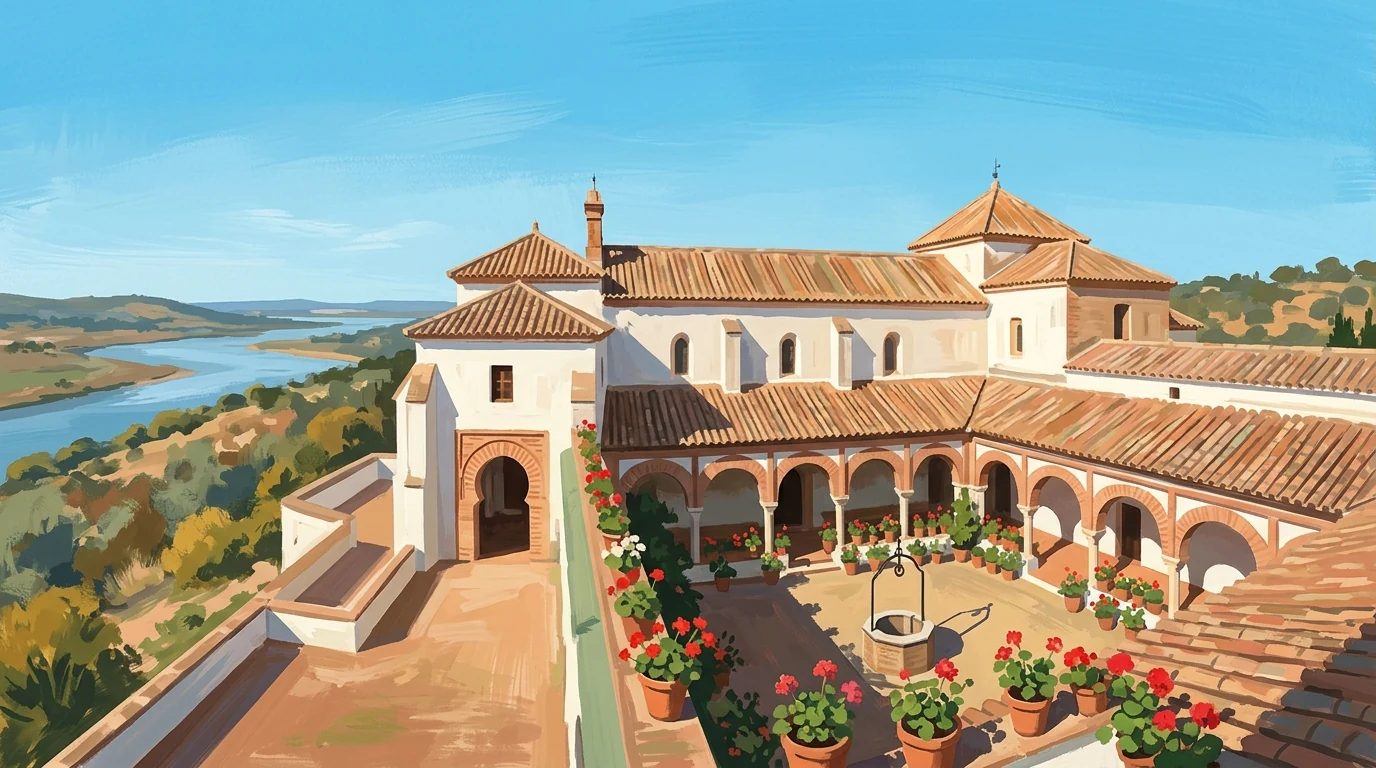
Perched above the confluence of the Tinto and Odiel rivers, the Monasterio de Santa María de la Rábida is a cornerstone of global maritime history. This modest Franciscan friary in Palos de la Frontera provided refuge to Christopher Columbus in 1490 after his initial proposals to reach the Indies were rejected. Thanks to the intervention of the monastery's prior, Fray Juan Pérez, the voyage that reshaped the world was ultimately approved. Today, the complex is a compelling blend of Gothic-Mudéjar architecture, tranquil courtyards and twentieth-century art. As the focal point of Huelva's Columbus Route, it offers visitors a tangible connection to the preparations for the 1492 expedition, combining profound historical resonance with the quiet atmosphere of a working religious community.
Why It Matters
Constructed in the fourteenth and fifteenth centuries over an Almohad watchtower, or 'rábita', the monastery has been a Franciscan stronghold since the thirteenth century. It was here that Columbus found crucial intellectual and political support from Fray Juan Pérez, who served as Queen Isabella's confessor, and the astronomer Fray Antonio de Marchena. The site was declared a National Monument in 1856, saving it from ruin after years of neglect following the 1755 Lisbon earthquake. Beyond its Columbian ties, the building is a prime example of Andalusian Mudéjar design, preserving a serene, contemplative character that contrasts with the monumental scale of the events it set in motion.
What to See and Do
The Mudéjar Cloister and Church
The heart of the monastery is its central cloister, a quintessential example of Mudéjar craftsmanship. Its exposed brick arches, shaded galleries and potted geraniums create a remarkably peaceful environment that has changed little since the fifteenth century. Adjacent to the cloister is the Gothic-Mudéjar church, which houses a fourteenth-century alabaster statue of the Virgen de los Milagros. This is the very image before which Columbus is said to have prayed prior to setting sail. The church also contains a striking Gothic crucifix and serves as the burial site for Martín Alonso Pinzón, the captain of the 'Pinta'.
The Vázquez Díaz Frescoes
One of the monastery's most unexpected highlights is a series of striking twentieth-century murals by the acclaimed Spanish artist Daniel Vázquez Díaz. Painted between 1929 and 1930, the 'Poema del Descubrimiento' covers the walls of a dedicated gallery. The frescoes depict the preparations for the voyage, the local mariners of Palos and the departure of the caravels. Vázquez Díaz employed a distinctive, proto-cubist style influenced by Paul Cézanne, bringing a bold, modern architectural quality to the historical narrative that contrasts brilliantly with the medieval setting.
The Discovery Museum
The monastery's museum rooms are filled with artifacts, navigational instruments, historical documents and scale models of the three caravels. These exhibits detail the daily life of the friars, the scientific knowledge of the era and the logistical realities of outfitting the 1492 expedition. The collection provides essential context for understanding how a small Andalusian port town became the launchpad for a voyage that altered the course of history.
Planning Your Visit
Getting There
The monastery is located in La Rábida, a district of Palos de la Frontera, roughly eight kilometres south of Huelva city centre. It is best reached by car via the A-497 and N-442 roads, with ample free parking available on site. Public transport options are limited, though local buses from Huelva occasionally serve the nearby Muelle de las Carabelas.
How Long to Allow
Set aside an hour to explore the church, cloister, frescoes and museum rooms. If you plan to visit the adjacent botanical gardens and the Muelle de las Carabelas, allow a full half-day for the area.
When to Go
Spring and autumn offer the most pleasant weather for exploring the surrounding gardens and estuary viewpoints. The monastery is particularly atmospheric in the early morning before the arrival of coach tours.
While the ground floor and main cloister are generally accessible, some of the older, uneven surfaces and upper rooms may present challenges for wheelchair users. Audio guides are available in multiple languages, and it is advisable to check the official website for current opening hours, as the monastery occasionally closes for religious services or private functions.
Good to Know
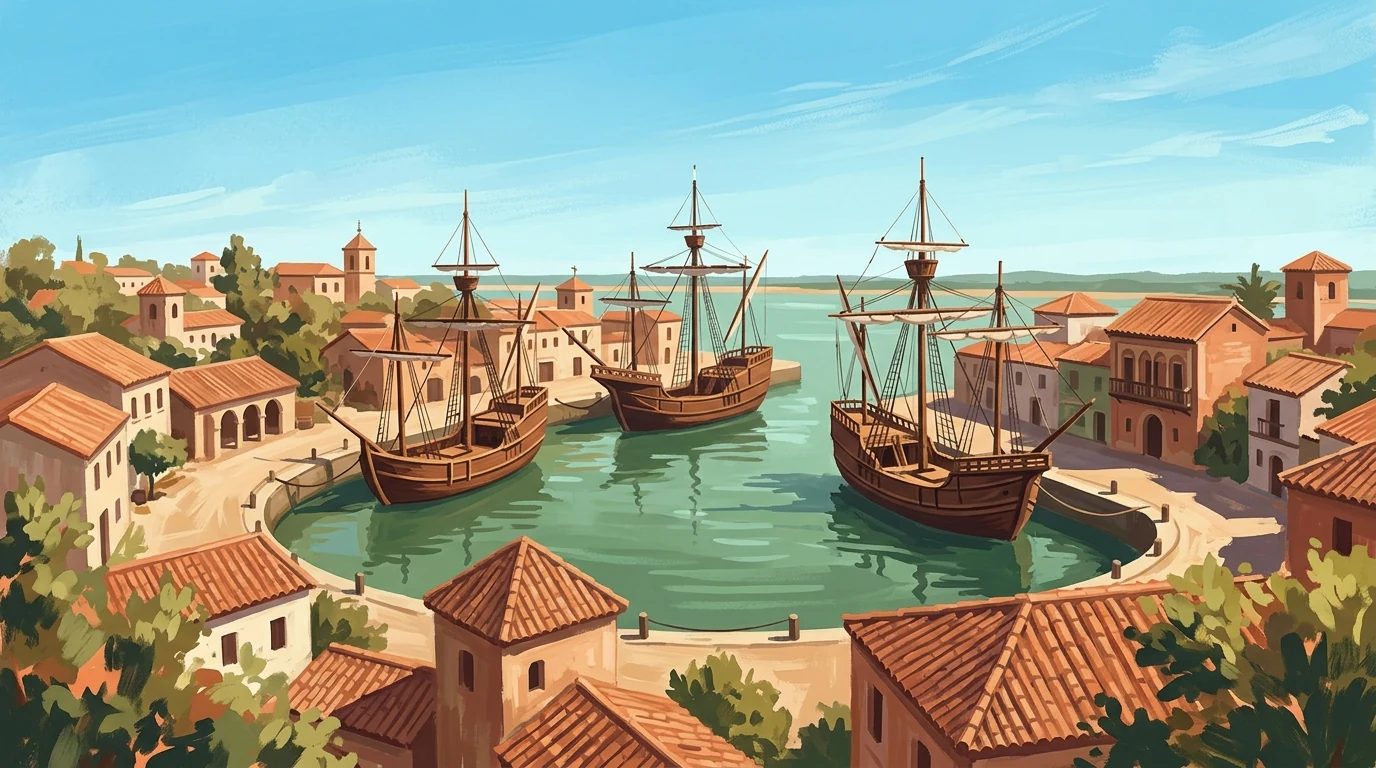
- Combine your visit with the nearby Muelle de las Carabelas, where you can board full-scale replicas of the 'Niña', 'Pinta' and 'Santa María'.
- The monastery is still home to a small community of Franciscan friars, so visitors are asked to maintain a respectful volume in the church and cloister.
- Photography is permitted in most areas, but flash is strictly prohibited, particularly in the room housing the Vázquez Díaz frescoes.
- The surrounding Parque Botánico José Celestino Mutis offers a shaded, tranquil space for a walk after your visit, featuring flora from five continents.
- Look out for the Monumento a los Descubridores nearby, a towering column erected in 1892 to mark the fourth centenary of the voyage.
Nearby worth your time
A few well-placed stops for extending the day without turning it into a checklist.
Continue through Columbus Route
Step back into the wider landscape with local guides, nearby places and the province overview.
Place guide · 7 min
Playa de Castilla: The Wild Frontier of the Doñana Coastline
Playa de Castilla is a vast, 20-kilometre stretch of wild Atlantic coastline bordered by the spectacular orange cliffs of the Doñana National Park.
Place guide · 7 min
Playa de Isla Canela Beach Guide: Huelva Coastline
Playa de Isla Canela is a vast stretch of fine sand where the Guadiana River meets the Atlantic, famous for its shallow lagoons and family-friendly atmosphere.
Itinerary · 12 min
5 Days in Huelva: Atlantic Coast, Doñana and Sierra
A realistic five-day driving route through Huelva province, linking the maritime history of the capital with the tidal wetlands of Doñana and the chestnut forests of the Sierra de Aracena.