
attraction · Huelva
Muelle de las Carabelas
Andalucía 365 · Updated 18 July 2026
Our Verdict
“A tactile, family-friendly immersion into maritime history, anchored by impressive full-scale replicas of the ships that crossed the Atlantic in 1492.”
Last verified: July 2026
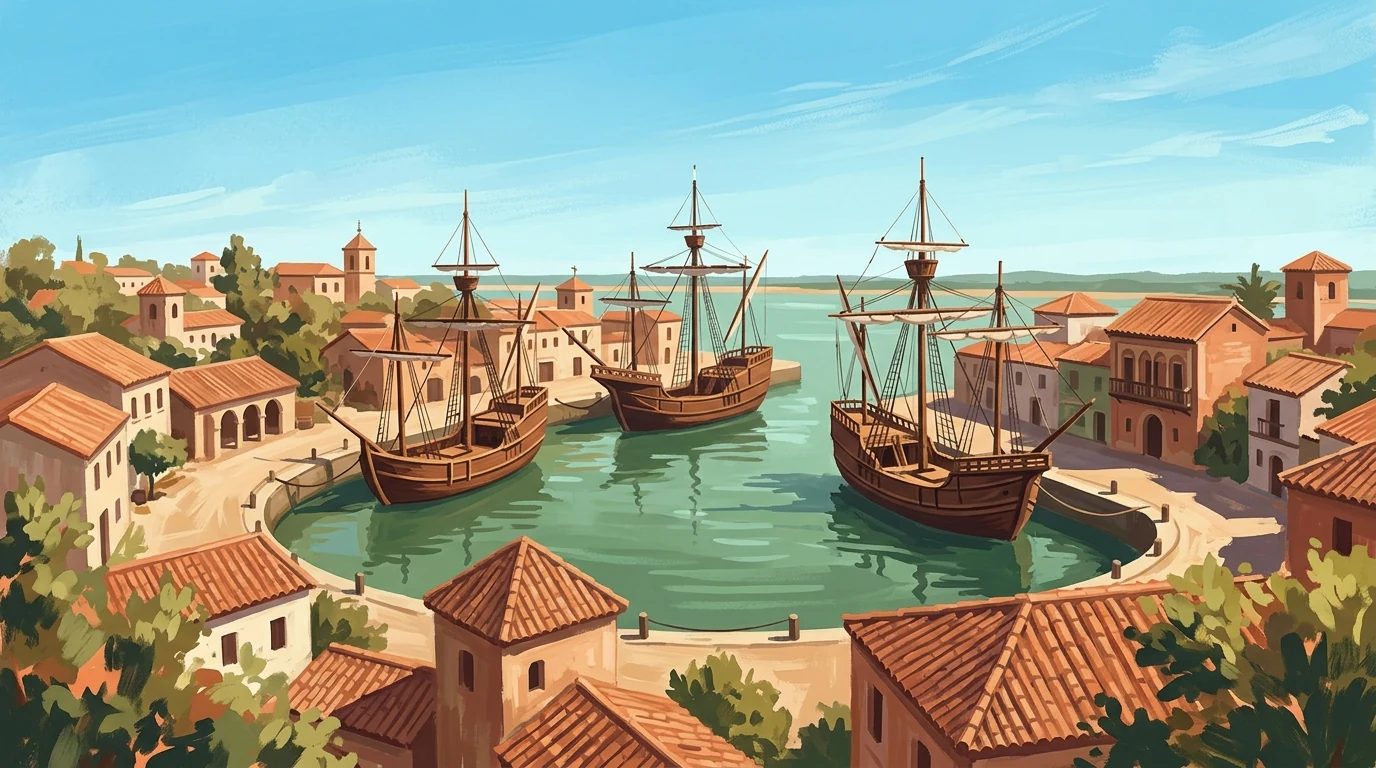
Moored in the tranquil waters of the Tinto estuary, the Muelle de las Carabelas is a waterfront museum that brings one of history's most famous maritime expeditions to life. Located at the Paraje de La Rábida in Palos de la Frontera, the site centres on full-scale, boardable replicas of the Niña, Pinta, and Santa María. Beyond the ships, the complex features a recreated fifteenth-century harbour, an exhibition hall, and an audiovisual centre detailing the 1492 transatlantic voyage. The museum provides a highly tactile and accessible introduction to Huelva's maritime heritage. It is an essential stop for history enthusiasts, families, and anyone curious about the practical realities and cramped conditions endured by the sailors who navigated the Atlantic over five centuries ago.
Why It Matters
The original fleet set sail from the nearby port of Palos de la Frontera on 3 August 1492, manned largely by local sailors. To mark the quincentenary of the voyage, the Spanish government commissioned these three replicas. Built in 1990 after extensive research into fifteenth-century naval architecture, the ships completed a commemorative tour of European and American ports before serving as a centrepiece for the 1992 Universal Exhibition in Seville. In 1994, they were permanently anchored in this custom-built 11,500-square-metre semicircular dock in Huelva. Today, the museum anchors the region's Columbian Sites, preserving the physical scale and mechanical reality of the vessels that altered the course of global history.
What to See and Do
Boarding the Caravels
The undisputed highlight of the museum is the opportunity to walk the decks of the three historic replicas. The ships are moored side by side, with the flagship Santa María in the centre, flanked by the smaller Niña and Pinta. Visitors can climb the gangways to explore the upper decks, peer into the holds, and examine the rigging. On the Santa María, you can step into a recreation of Christopher Columbus's cabin, complete with navigational charts and period furnishings. Navigating the steep wooden stairs and confined spaces offers a sobering perspective on the harsh, claustrophobic conditions the crews faced during their months at sea.
The Fifteenth-Century Harbour and Exhibitions
Surrounding the dock is a recreated medieval port neighbourhood designed to illustrate daily life in Palos de la Frontera before the expedition's departure. Visitors can wander past a bustling market, a pottery workshop, and wooden carts loaded with the types of provisions and trade goods that would have filled the ships' holds. Indoors, the visitor centre houses a museum displaying replica maps, navigational instruments, and historical treaties. A 148-seat auditorium screens a 23-minute audiovisual presentation that chronicles the voyage from the recruitment of the sailors to their eventual return. Across the water, the Isla del Encuentro provides a visual representation of the indigenous Guanahani culture the sailors encountered upon their arrival in the Americas.
Planning Your Visit
Getting There
The Muelle de las Carabelas is located at the Paraje de La Rábida, approximately a fifteen-minute drive south of Huelva city centre. A large, free parking area is situated directly outside the complex, with ample space for cars and motorhomes. Public transport options are limited, so driving or taking a taxi from Huelva is the most practical approach.
How Long to Allow
Most visitors spend between ninety minutes and two hours at the museum. This provides enough time to board all three ships, explore the medieval harbour, and watch the audiovisual presentation.
When to Go
Morning visits are highly recommended, particularly during the summer months, as the majority of the attraction is outdoors and exposed to the sun. The museum is closed on Mondays year-round, as well as on select public holidays in December and January.
Tickets can be purchased in advance through the official website or on the day at the museum entrance. Note that the ticket office operates a strict cashless policy.
Good to Know
- The ticket office only accepts payment by credit or debit card, so ensure you have a card or purchase your tickets online beforehand.
- For safety reasons, access to the ships is strictly prohibited during rainy weather due to the risk of slipping on the wooden decks.
- The audiovisual presentation runs on the hour in Spanish, with English screenings available on the half-hour.
- Wear flat, comfortable shoes with good grip, as the steps on the ships are steep and the decks can be uneven.
- Pets are not permitted anywhere within the complex, with the exception of registered guide dogs.
- The museum sits adjacent to the Monasterio de La Rábida and the Celestino Mutis Botanical Garden, making it easy to combine all three sites into a single morning or afternoon itinerary.
Nearby worth your time
A few well-placed stops for extending the day without turning it into a checklist.
Continue through Huelva City
Step back into the wider landscape with local guides, nearby places and the province overview.
Place guide · 7 min
Playa de Castilla: The Wild Frontier of the Doñana Coastline
Playa de Castilla is a vast, 20-kilometre stretch of wild Atlantic coastline bordered by the spectacular orange cliffs of the Doñana National Park.
Place guide · 7 min
Playa de Isla Canela Beach Guide: Huelva Coastline
Playa de Isla Canela is a vast stretch of fine sand where the Guadiana River meets the Atlantic, famous for its shallow lagoons and family-friendly atmosphere.
Itinerary · 12 min
5 Days in Huelva: Atlantic Coast, Doñana and Sierra
A realistic five-day driving route through Huelva province, linking the maritime history of the capital with the tidal wetlands of Doñana and the chestnut forests of the Sierra de Aracena.