
Itinerary · Huelva
5 Days in Huelva: Atlantic Coast, Doñana and Sierra
A realistic five-day driving route through Huelva province, linking the maritime history of the capital with the tidal wetlands of Doñana and the chestnut forests of the Sierra de Aracena.
By Andalucía 365 Editorial Team · 18 July 2026 · 12 min read
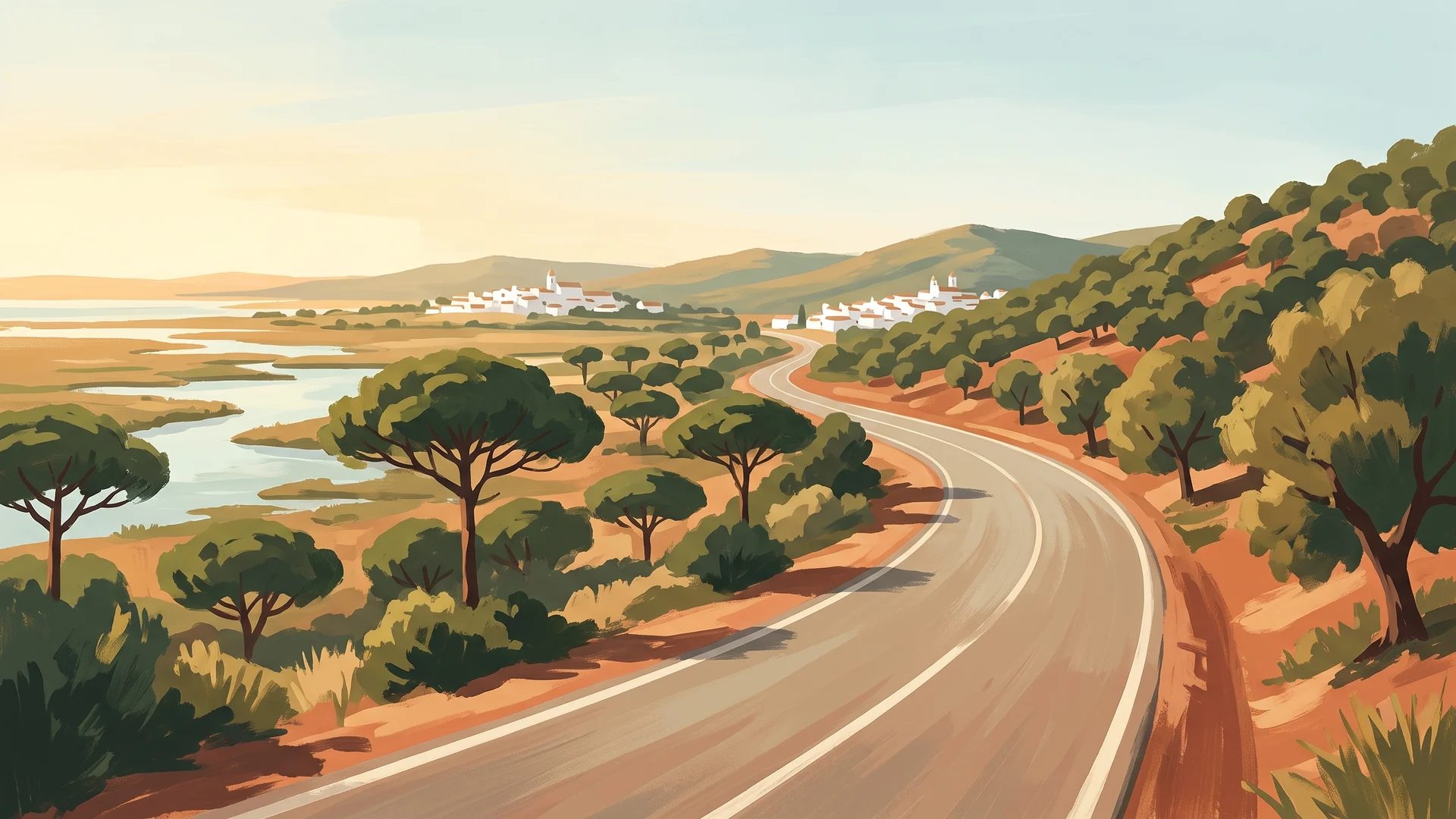
Exploring Huelva demands a reliable rental car and a willingness to navigate distinctly different ecosystems. Situated in western Andalucía, bordering Portugal, the province lacks the high-speed rail convenience of Seville or Málaga. Instead, it rewards deliberate driving through a landscape divided into three geographical bands. In the south, the industrial capital sits surrounded by tidal marshes and the maritime infrastructure of the 1492 transatlantic voyage. Further east, the sandy boundaries and protected wildlife zones of the Doñana wetlands dictate human movement. Finally, the north rises sharply into the chestnut-clad hills and oak pastures of the Sierra de Aracena.
This five-day route connects these environments without forcing exhausting daily round trips. You will negotiate tidal dike roads, walk through unpaved equestrian villages, and drive winding mountain switchbacks. This itinerary assumes you collect a rental car at the start, establish a base near the coastal capital for three nights, and migrate north to the mountains for the final leg. This progression trades maritime heat for the cooler elevation of the sierra, providing a measured rhythm while keeping driving times manageable. By splitting your accommodation, you avoid spending your days in transit and gain the opportunity to experience the distinct evening atmospheres of both the Atlantic shoreline and the high-altitude villages.
Day 1: Huelva City and the Columbus Basin
Morning
Begin by driving across the Tinto river to Palos de la Frontera. The estuary where the Tinto and Odiel rivers converge is the departure point of the 1492 voyage to the Americas. Your primary destination is the Monasterio de Santa María de la Rábida. Park in the adjacent municipal spaces. Franciscan friars here provided critical logistical backing to Christopher Columbus, connecting him with local shipbuilders and sailors. The building is a modest example of Gothic-Mudéjar brickwork, offering a cool refuge from the morning sun. Down the hill from the friary sits the Muelle de las Carabelas. This waterfront museum holds full-scale, navigable replicas of the Niña, Pinta, and Santa María. Walking the cramped wooden decks is essential for grasping the physical reality and extreme risk of the fifteenth-century maritime undertaking.
Lunch
Drive back into the centre of Huelva city for lunch. The central grid radiating from the Mercado del Carmen is the primary zone for provincial seafood. Huelva city is an unpretentious working port, and its culinary traditions reflect this pragmatism. Focus on the white prawn, known locally as the gamba blanca. The standard preparation is brief boiling followed by rapid chilling with coarse rock salt, served cold to preserve the firm texture of the meat. You will also find excellent cuttlefish, referred to as choco, served fried in a light batter.
Afternoon
Retreat from the peak afternoon heat by visiting the Museo de Huelva on the tree-lined Alameda Sundheim. The ground floor contains one of the most significant metallurgical and archaeological collections in Spain. It details the massive scale of Tartessian and Roman copper extraction in the province, displaying ancient mining tools, slag piles, and waterwheels. Examining these artefacts provides critical context for the heavily altered mining landscapes you will encounter on the final day.
Evening
As the temperature drops, walk down to the Odiel riverfront to locate the Muelle del Tinto. Despite its name, this enormous iron ore loading pier stretches far out into the tidal flats of the Odiel river. Built by British mining engineers in the late nineteenth century to load copper onto cargo ships, it has long been decommissioned and repurposed as a pedestrian walkway. Walking the wooden planks between the heavy iron struts offers a direct view across the estuary marshes. It provides a calm conclusion to the day, allowing you to watch the sun set over the Atlantic shipping lanes.
Day 2: The Odiel Marshes and Punta Umbría
Morning
The Paraje Natural Marismas del Odiel is a sprawling tidal wetland sitting right beside the heavy industry of the Huelva port facilities. A narrow, paved dike road penetrates deep into the marshes, running for several kilometres. Drive this road slowly and with extreme caution, as there are steep drops into the water and no hard shoulders. Pull over only at the designated gravel observation hides. This wetland is one of Europe's most significant tidal sanctuaries, hosting large populations of flamingos, ospreys, and resident spoonbill colonies. There is no shade on the dike road, making an early arrival a tactical necessity before the midday heat makes birdwatching uncomfortable.
Lunch
Follow the road out of the marshes and drive south towards the coast until you reach the resort town of Punta Umbría. Originally established as a remote health retreat for British mining executives seeking sea air, it has evolved into a dense Spanish summer resort. Parking in the town centre during July and August requires immense patience, so aim for the designated municipal car parks on the outskirts. Head towards the beachfront avenues for food. The restaurants here focus heavily on immediate Atlantic catches. Seek out coquinas, tiny wedge clams cooked rapidly in garlic, olive oil, and white wine.
Afternoon
Escape the concrete density of the resort by walking westward into the Paraje Natural Enebrales de Punta Umbría. This protected coastal strip provides a necessary buffer between the town and the open ocean. It features a continuous, raised wooden boardwalk running through a dense canopy of umbrella pines and coastal junipers. The tree cover offers deep, reliable shade, which is vital during the mid-afternoon. Intermittent paths lead down from the boardwalk directly onto the sand.
Evening
Return to your accommodation base around Huelva city or stay on the coast for the sunset. If you choose to remain near Punta Umbría, the beachfront bars situated further west at Playa de la Bota provide a relaxed environment as the Atlantic wind picks up. The coastal breeze is highly dependable in this region, dropping temperatures sharply after sunset. A light sweater is often required if you plan to eat dinner outdoors, even in the height of summer.
Day 3: El Rocío and the Doñana Coast
Morning
The drive east towards the Doñana perimeter takes roughly an hour from the capital. Your destination is El Rocío, an unusual settlement where the streets remain entirely unpaved, consisting of deep, loose sand. Every house features a hitching rail for horses, and the town is designed primarily for equestrian traffic. You must leave your vehicle at the large municipal car parks on the outskirts, as driving an ordinary rental car through the sand carries a high risk of getting stuck. Walk towards the Santuario de Nuestra Señora del Rocío, the white church that serves as the focal point for a million pilgrims during Pentecost. The church overlooks a vast marshland lagoon where wild horses graze.
Lunch
Drive south from El Rocío to the coastal resort of Matalascañas. The architecture here is uncompromising, consisting of high-rise apartment blocks built directly behind the dunes. While it lacks aesthetic grace, the town provides the most reliable cluster of restaurants on this isolated stretch of coast. Stick to the traditional chiringuitos located directly on the sand. The food is straightforward and durable, focusing on grilled sardines, fried cuttlefish, and cold tomato salads.
Afternoon
Matalascañas marks the beginning of the strictly regulated coastline belonging to Doñana National Park. Drive slightly north to the Centro de Visitantes El Acebuche. Accessing the core biological reserve requires booking a guided four-wheel-drive tour well in advance through official concessionaires. However, the visitor centre itself maintains a network of free, shaded boardwalks around a series of restored lagoons. You can walk these independently to spot waterbirds and deer. Afterwards, drive slightly west along the coastal road to observe the Monumento Natural Acantilado del Asperillo, a towering wall of orange fossilised sand dunes plunging directly into the Atlantic Ocean.
Evening
Conclude your coastal exploration by walking along the immense stretch of Playa de Castilla, accessible near the Asperillo cliffs. The sheer walls block out the modern world entirely, creating a profound sense of isolation. As the tide recedes, the vast scale of the Huelva shoreline becomes obvious, stretching unbroken for kilometres. Afterwards, return to your car and begin the drive north towards the mountains, establishing your second base for the final two nights. The transition from the flat coastal plains to the rising foothills of the sierra takes approximately ninety minutes.
Day 4: The Sierra de Aracena
Morning
The landscape changes drastically as you drive north on the N-435 highway. The flat pine forests and sandy soils vanish, replaced by the rolling hills, steep ravines, and holm oak pastures of the sierra. Head straight to Aracena, the administrative and commercial capital of the mountains. The priority here is the Gruta de las Maravillas, a spectacular limestone cave system that sits directly beneath the town castle. Entrance is strictly controlled by guided tour, and daily numbers are rigidly capped to preserve the subterranean environment. You must secure your tickets online well in advance. The cave features extensive lakes and striking rock formations, requiring comfortable shoes with good grip due to the damp pathways.
Lunch
The local mountain economy is entirely built upon the Iberian pig, which roams the surrounding oak forests foraging for acorns. Stay in Aracena or drive to nearby villages to find a traditional mesón. You are looking for establishments that focus on acorn-fed Jamón Ibérico de Bellota, alongside grilled cuts of fresh pork. Ask for secreto, pluma, or presa. These specific cuts are heavily marbled with fat and are traditionally flash-grilled with coarse rock salt. Pair the meat with fried potatoes and a robust red wine from the neighbouring regions.
Afternoon
The mountain roads require sharp focus. They are narrow, winding, frequently lack central dividing lines, and are heavily used by cyclists and logging trucks. Drive west to the village of Almonaster la Real. Park at the designated areas at the bottom of the village. You will need to walk up the steep, cobbled paths to reach the tenth-century Islamic mosque sitting inside the walls of a ruined hilltop fortress. It is an extraordinary architectural survivor from the caliphate period, built with salvaged Roman and Visigothic columns. The site offers sweeping views over the surrounding mountain ridges and dense woodlands.
Evening
Aracena makes the most logical base for the night, offering a good concentration of services, supermarkets, and pharmacies. The town square fills with locals in the early evening, creating a relaxed communal atmosphere. The temperatures in the sierra are noticeably cooler than on the coast due to the elevation. You will likely require a light jacket once the sun drops behind the hills, even in the summer months. Enjoy a measured dinner focusing on local goat cheeses, cured sausages, and regional wine.
Day 5: The Red River and a Measured Return
Morning
Leave the green, forested hills of Aracena and drive east towards the copper basin. The road to Minas de Riotinto takes you into an environment that looks entirely alien. The earth turns deep red, purple, and orange due to extremely high concentrations of iron and heavy metals in the soil and water. Head directly to the Riotinto Mining Park. The best way to understand the vast, destructive scale of these historic open-cast mines is to take the restored nineteenth-century mining train. The train runs on the original tracks parallel to the deeply coloured Tinto river. The carriage ride is slow and loud, offering views of an industrial landscape that resembles the surface of Mars.
Lunch
The mining towns of Riotinto and Nerva have a stark, functional feel, completely different from the white agricultural villages of the sierra. Find a local bar or workers restaurant serving robust, traditional fare. The menus here feature slow-cooked pork stews, thick cuts of local bread, and heavily seasoned chickpeas. Do not expect refined service or extensive wine lists. The focus is entirely on caloric density, large communal tables, and authentic local flavour.
Afternoon
Explore the Bella Vista neighbourhood in Riotinto before you leave. When a British consortium bought the mines in 1873, they built a highly segregated Victorian colony for their managers and engineers. The contrast between the manicured British architecture, complete with a Presbyterian church and a tennis club, and the blasted red landscape of the mine is absolute. You can walk through the restored Casa 21 to see the precise living conditions, Victorian furniture, and strict daily routines of the foreign executives who controlled the region for decades.
Evening
From Riotinto, you are strategically positioned to leave the province and conclude the itinerary. The city of Seville is just over an hour away via the A-476 and A-66 motorways, providing easy access to its international airport and high-speed rail connections. Alternatively, returning south to Huelva city takes about the same time via the N-435 highway. Plan your onward journey based on your departure flight or your next Andalusian destination. Ensure you have allowed sufficient time to return your rental car, factoring in the potential for slow-moving agricultural vehicles on the rural roads leading out of the mining basin.
Where to stay on this route
To execute this five-day plan without spending excessive hours driving back and forth, you must split your accommodation into two distinct bases. For Days 1 through 3, locate yourself on the coast or in Huelva city. Staying in Huelva city provides urban conveniences, excellent tapas bars, and immediate access to the motorways heading both south and east. Alternatively, basing yourself in a coastal town like Punta Umbría or Mazagón guarantees Atlantic breezes and immediate beach access, though you will face heavier local traffic and fierce competition for parking during peak summer months. For Days 4 and 5, you must move your base north into the Sierra de Aracena. The driving times from the coast to the northern villages are too long to repeat daily, often exceeding two hours each way. Aracena town offers the best concentration of hotels, bakeries, and evening dining options, making it the most sensible logistical choice. If you prefer absolute silence, look for rural rental properties, known as casas rurales, in the smaller surrounding hamlets. Ensure your chosen accommodation in the sierra has adequate heating, as winter nights drop below freezing and spring mornings carry a heavy, damp chill.
Practical planning
A reliable rental car is non-negotiable for this specific itinerary. While public bus networks connect Huelva city to Punta Umbría and Aracena, they operate on schedules designed for local commuters. They are unsuited for independent travellers attempting to link protected tidal wetlands with mountain caves on a tight timeline. Ensure your rental agreement covers tyre damage, as the rural parking areas and mountain tracks can be rough. Automatic transmission is highly recommended for the steep inclines and constant gear changes required in the Sierra de Aracena.
When packing, prepare for significant temperature variations. The Huelva coast benefits from the Atlantic influence, which keeps summer temperatures manageable compared to the inland furnace of Seville. However, the inland Odiel Marshes offer zero shade, and the Riotinto mining basin traps heat in the excavated rock from June to September. Carry heavy-duty sun protection, a wide-brimmed hat, and keep at least three litres of water per person in the car at all times. By contrast, the high elevation of the Sierra de Aracena means winter nights are bitter, and spring mornings carry a heavy, damp chill. Layered clothing is essential for managing the transition between the coast and the mountains.
Driving in the province requires adaptability and patience. The coastal motorways are flat and fast, but the rural roads dictate their own pace. In the mountains, the N-435 and its connecting routes are heavily frequented by logging trucks extracting cork and timber, cyclists training on the inclines, and the occasional loose herd of goats. Overtaking opportunities are rare, and attempting to rush will only lead to frustration. Always park in designated municipal areas on the edge of historical villages, as modern rental vehicles frequently get wedged in the narrow alleys designed for pack animals.
Finally, respect the access limitations of Doñana. The vast majority of the national park is entirely sealed off from private vehicles to protect the highly endangered Iberian lynx and the fragile dune ecosystems. Rely entirely on the official visitor centres, or book formal excursions through the park authorities well in advance to see the restricted core zones. Do not attempt to drive rented vehicles onto the beach or dune perimeters, as the local environmental police issue immediate and substantial fines for unauthorised access.
Last reviewed: 18 July 2026 · Editorial policy
Related guides
Where to Stay in Huelva: Coast, Doñana or Sierra
A candid planning guide to choosing the right base in Huelva. Discover the trade-offs between the wild Atlantic coast, the Doñana wetlands and the northern mountains.
8 min read
Mazagón: Untamed Beaches and Pine Forests in Huelva
A peaceful alternative to the built-up resorts of the western Costa de la Luz, Mazagón offers vast stretches of golden sand backed by ancient dunes and fragrant umbrella pines.
5 min read
A Guide to El Rocío: Andalucía’s Sandy Pilgrimage Village
Discover El Rocío, a unique Andalucían village where the streets are made of sand and the traditional horse-and-carriage still reigns supreme on the edge of Doñana.
6 min read
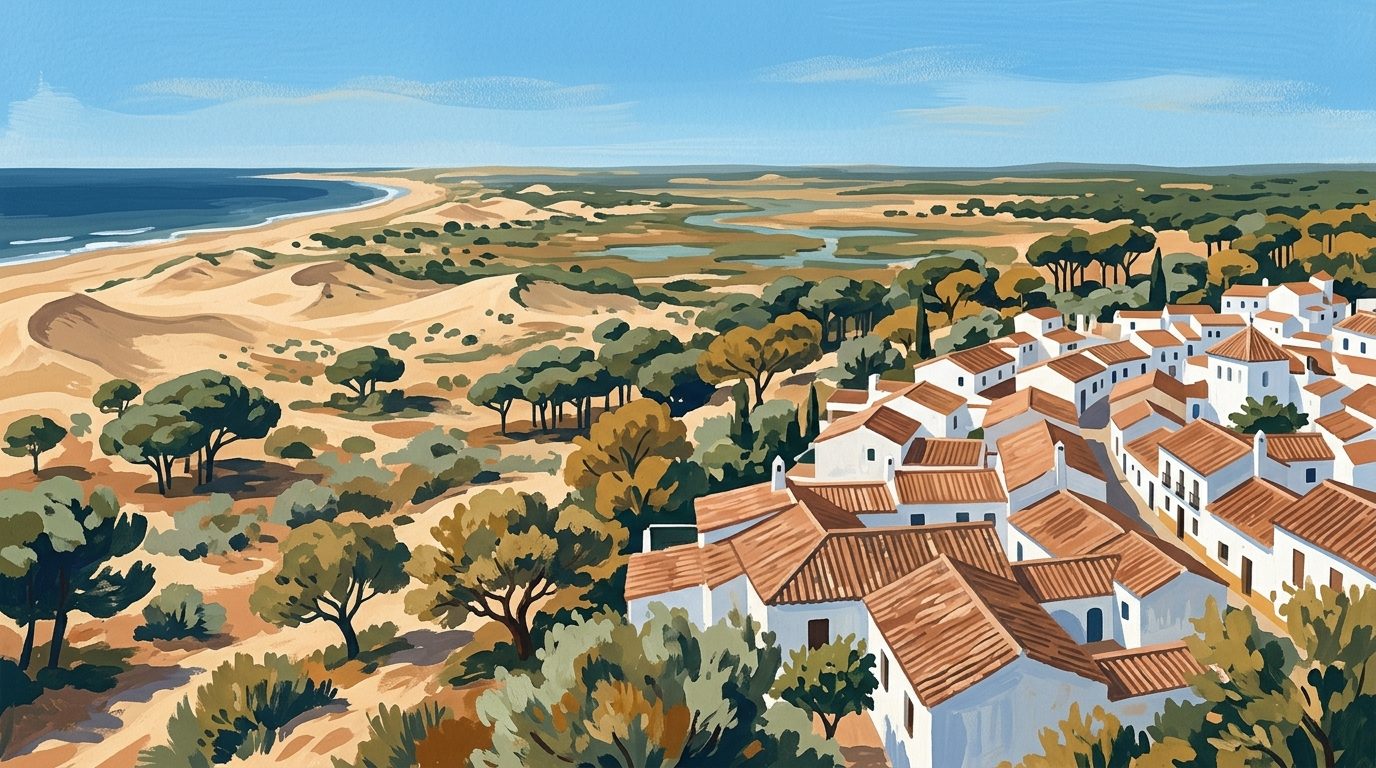
Where the Sands Shift and the Marismas Breathe: A Guide to Doñana
Discover the wild Atlantic coast of Huelva, where the shifting dunes of Doñana meet the sand-paved streets of El Rocío and the pristine beaches of Mazagón.
8 min read
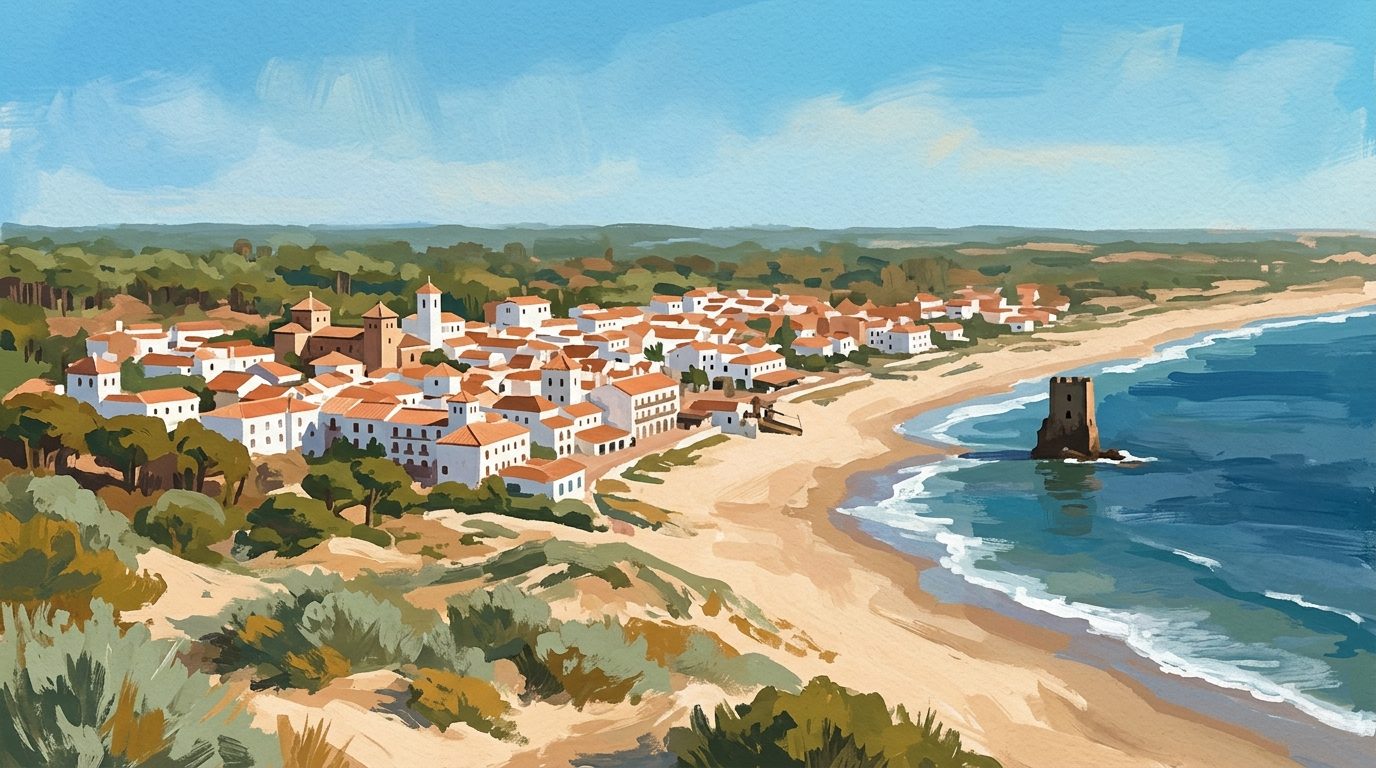
Matalascañas: The Coastal Gateway to Doñana National Park
A unique coastal resort where urban convenience meets the wild, untouched dunes of Doñana National Park. Discover kilometres of golden sand and the iconic ruins of a 16th-century watchtower.
6 min read
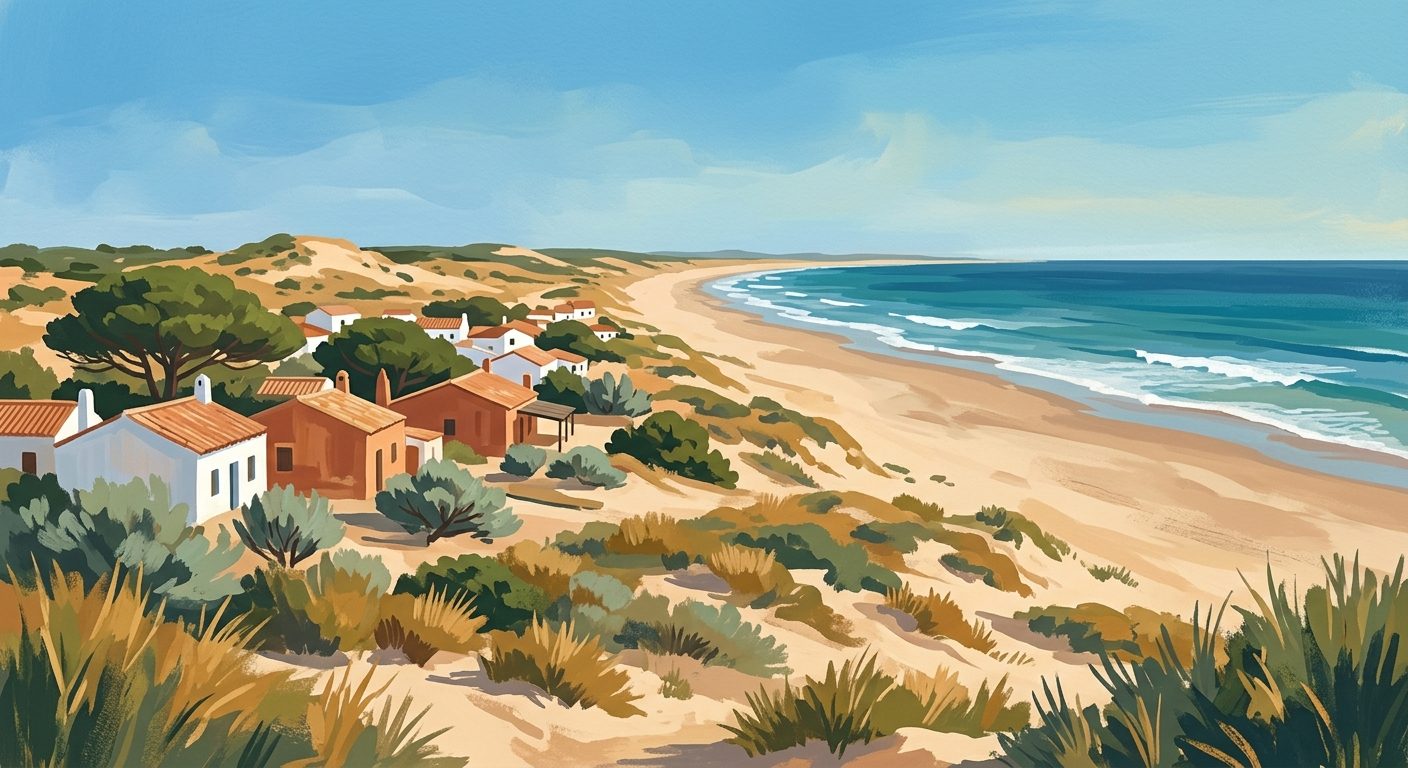
Playa de Castilla: The Wild Frontier of the Doñana Coastline
Playa de Castilla is a vast, 20-kilometre stretch of wild Atlantic coastline bordered by the spectacular orange cliffs of the Doñana National Park.
7 min read
Newsletter
More stories from Andalucía
Weekly notes, seasonal picks, and the next guides worth bookmarking.