
attraction · Huelva
Museo de Huelva
Andalucía 365 · Updated 18 July 2026
Our Verdict
“An essential primer on Huelva’s ancient wealth, anchored by extraordinary Tartessian grave goods and a monumental Roman water wheel.”
Last verified: July 2026
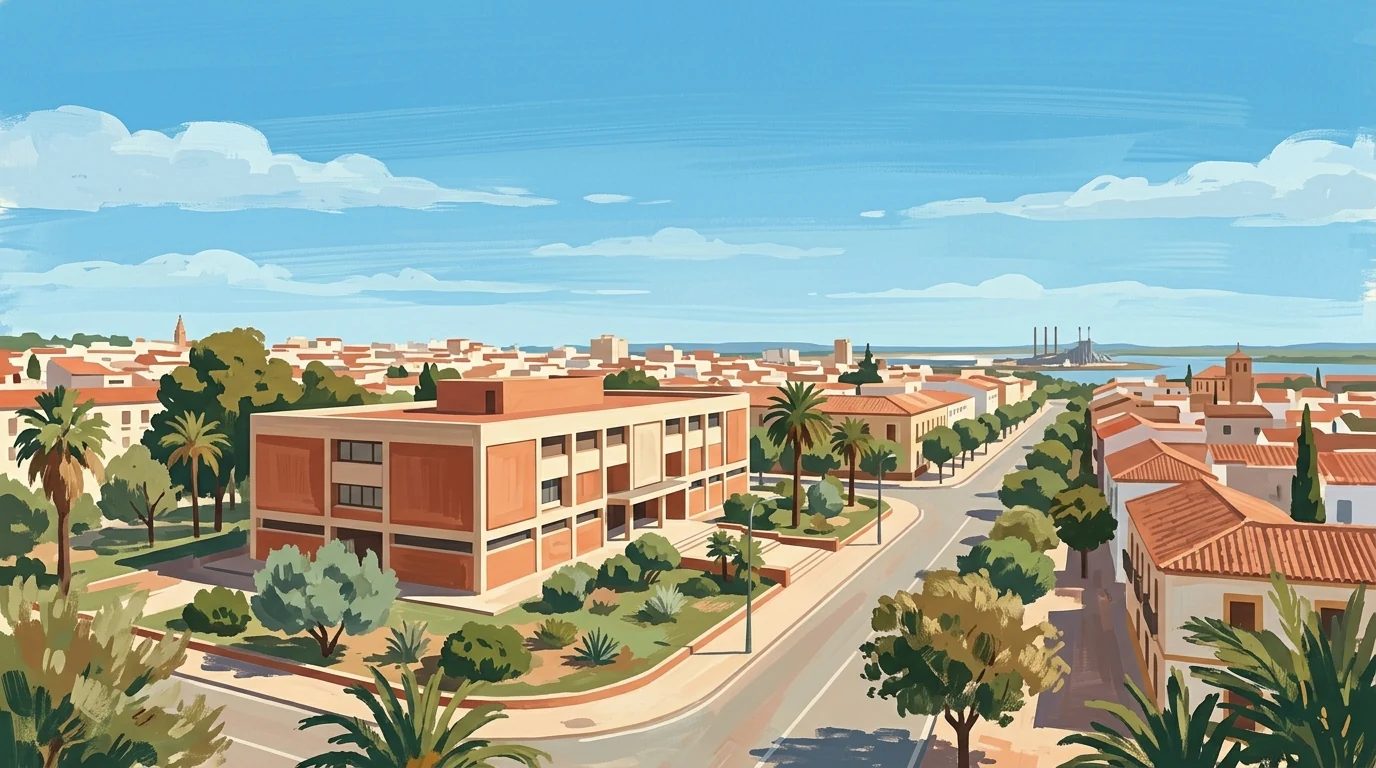
Set on the elegant Alameda Sundheim, the Museo de Huelva is the definitive gateway to the province’s deep and complex past. Housed in a purpose-built 1970s structure, the museum is divided into two primary disciplines: archaeology and fine arts. It is best known for its exceptional Tartessian artefacts from the La Joya necropolis and its monumental Roman mining relics from the Riotinto basin. While the fine arts section champions twentieth-century local painters, it is the archaeological collection that truly distinguishes the institution. For anyone seeking to understand how ancient civilisations, natural resources, and maritime trade shaped this corner of southwestern Spain, this provincial museum provides an indispensable and highly accessible foundation.
Why It Matters
Huelva’s geographical position and mineral wealth have attracted successive civilisations for millennia. The museum’s collection reflects this continuous occupation, charting a course from Neolithic megalithic builders to the sophisticated Tartessian culture that thrived on the Iberian Peninsula between the eighth and sixth centuries BC. The Tartessians, enriched by local metallurgy and trade with Phoenician and Greek merchants, left behind extraordinary grave goods. Later, the Romans exploited the region's copper and silver on an industrial scale, particularly around Riotinto. By bringing these disparate eras under one roof, the museum contextualises the province's historical reliance on mining and maritime commerce, offering tangible evidence of a society that was highly connected to the wider Mediterranean world long before the Age of Discovery.
What to See and Do
The Tartessian Treasures of La Joya
The undisputed highlight of the archaeological wing is the material recovered from the La Joya necropolis, an orientalising Tartessian burial site located within Huelva itself. The collection includes intricate bronze work, alabaster, ivory, and precious metals that demonstrate the wealth and advanced craftsmanship of the era. The centrepiece is the meticulous reconstruction of a ceremonial chariot from Tomb 17, a princely grave that yielded some of the most significant Tartessian finds in the Iberian Peninsula. These grave goods illustrate the profound cultural exchange between indigenous populations and early Phoenician settlers.
Roman Mining and the Riotinto Water Wheel
The museum’s Roman section provides a stark look at the industrial scale of ancient mining in the province. The most arresting exhibit is a massive, four-metre-high wooden water wheel recovered from the Riotinto mines. Dating back to the Roman era, this hydraulic marvel was operated by enslaved people to pump water from deep subterranean galleries. It is one of the very few surviving examples of its kind in the world. Surrounding exhibits feature tools, amphorae, and architectural fragments that flesh out the daily reality of the Roman mining settlements that drove the local economy.
The Fine Arts Collection
Occupying the upper floor, the fine arts section shifts the focus to Huelva’s modern cultural output. The galleries are anchored by the works of Daniel Vázquez Díaz, a prominent twentieth-century painter from the mining town of Nerva. His Cubist-influenced portraits, including depictions of the Nobel Prize-winning poet Juan Ramón Jiménez, offer a striking contrast to the ancient artefacts below. The collection also features pieces by José Caballero and other regional artists, providing a comprehensive overview of the province's contribution to Spanish contemporary art.
Planning Your Visit
Getting There
The museum is located at Alameda Sundheim, 13, a prominent avenue linking the historic centre with the Isla Chica district. It is a straightforward ten-minute walk from the Plaza de las Monjas. Several local bus lines stop near the entrance.
How Long to Allow
Set aside 90 minutes to two hours to explore both the archaeological and fine arts sections at a comfortable pace. The layout is logical and easy to navigate, making it a manageable visit even for those with limited time.
When to Go
Mornings are generally quiet, particularly on weekdays, allowing for an uninterrupted view of the Tartessian and Roman exhibits. The museum is a cool, air-conditioned retreat during the intense heat of a Huelva summer afternoon.
Access and Booking
Admission is typically free for European Union citizens, with a nominal fee for visitors from the rest of the world. The building is equipped with lifts, providing step-free access to the upper floors. As opening hours fluctuate between summer and winter seasons, and the museum is generally closed on Mondays, it is advisable to check the official Junta de Andalucía website before travelling.
Good to Know
- The museum lacks a dedicated café, but the surrounding Alameda Sundheim and nearby Barrio Obrero offer plenty of options for coffee or tapas.
- All major exhibit labels are in Spanish, so having a translation app handy will significantly enhance your understanding of the archaeological context.
- Photography without flash is permitted throughout the permanent galleries.
- Temporary exhibitions are frequently hosted on the lower ground floor, often showcasing items from the museum's extensive reserve collection.
- Combine your visit with a walk to the nearby Barrio Obrero, the Queen Victoria neighbourhood, to see the British colonial-style architecture built for the Riotinto mining executives.
Nearby worth your time
A few well-placed stops for extending the day without turning it into a checklist.
Continue through Huelva City
Step back into the wider landscape with local guides, nearby places and the province overview.
Place guide · 7 min
Playa de Castilla: The Wild Frontier of the Doñana Coastline
Playa de Castilla is a vast, 20-kilometre stretch of wild Atlantic coastline bordered by the spectacular orange cliffs of the Doñana National Park.
Place guide · 7 min
Playa de Isla Canela Beach Guide: Huelva Coastline
Playa de Isla Canela is a vast stretch of fine sand where the Guadiana River meets the Atlantic, famous for its shallow lagoons and family-friendly atmosphere.
Itinerary · 12 min
5 Days in Huelva: Atlantic Coast, Doñana and Sierra
A realistic five-day driving route through Huelva province, linking the maritime history of the capital with the tidal wetlands of Doñana and the chestnut forests of the Sierra de Aracena.