
attraction · Huelva
Paraje Natural Marismas del Odiel
Andalucía 365 · Updated 18 July 2026
Our Verdict
“This vast, tidal wetland is one of Andalusia's most rewarding birdwatching destinations, offering accessible trails and spectacular flocks of flamingos and spoonbills just minutes from Huelva city.”
Last verified: July 2026
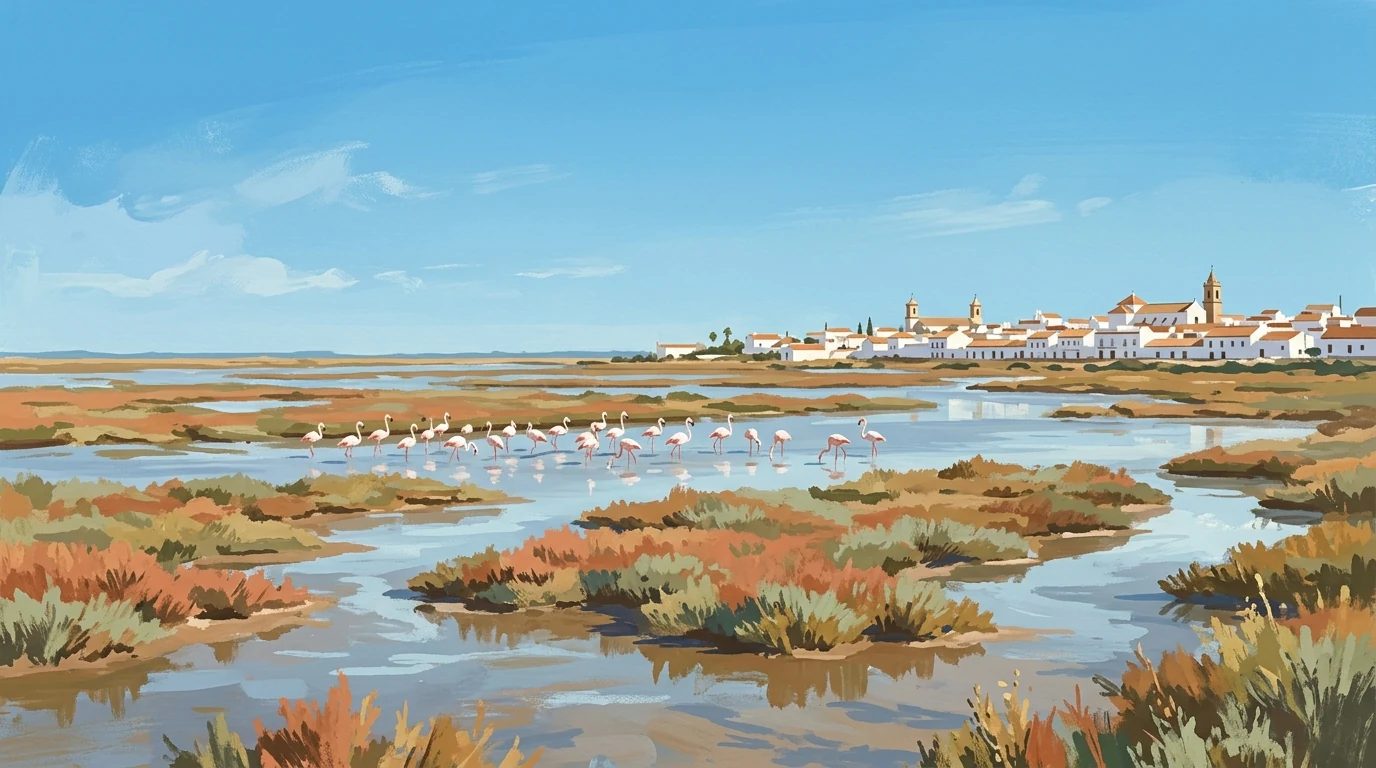
Paraje Natural Marismas del Odiel is a vast protected wetland where the Tinto and Odiel rivers converge before reaching the Atlantic Ocean. Recognised as a UNESCO Biosphere Reserve, this expansive estuary is a vital sanctuary for migratory and resident birds, including one of Europe’s most significant breeding colonies of Eurasian spoonbills. The landscape is defined by tidal marshes, salt pans and sandy islands, creating a dynamic environment shaped by the rhythm of the tides. For nature enthusiasts, birdwatchers and walkers, the reserve offers a tranquil escape just minutes from Huelva city. Visitors can explore a network of trails, hides and the Anastasio Senra visitor centre, discovering an ecosystem where fresh and saltwater meet to support hundreds of avian species.
Why It Matters
The Marismas del Odiel functions as a nutrient-rich estuary that sustains a staggering diversity of life. The continuous deposit of sediments from the rivers, combined with tidal forces, has formed islands such as Isla de Enmedio, Saltés and Bacuta. The Isla de Enmedio is a designated Nature Reserve, crucial for the survival of the endangered spoonbill, which builds its nests among halophile plants like salicornia and cordgrass. Beyond its natural significance, the area holds deep historical roots. It is believed to be the site of the ancient city of Tartessos, and the Isla de Saltés contains the archaeological remains of Salthish, the eleventh-century capital of the Baikríes Taifa kingdom. Roman fish-salting vats and traditional salt pans further illustrate centuries of human interaction with this maritime landscape.
What to See and Do
Visitor Centre and Trails
The Anastasio Senra visitor centre serves as the gateway to the reserve, offering exhibitions on tidal dynamics, local ecosystems and the historical heritage of the marshes. Outside, an interpretive botanical route and a lagoon with a bird observatory provide an immediate introduction to the local flora and fauna. From here, visitors can embark on several signposted trails. The Salinas de Bacuta route explores the traditional and industrial salt pans, while the La Cascajera trail leads through a unique landscape carpeted with shells, supporting specialised calcicole vegetation.
Birdwatching and Wildlife
The reserve is a premier destination for birdwatching, sitting on a crucial migratory flyway between Europe and Africa. A network of strategically placed hides and viewpoints allows for close observation without disturbing the wildlife. Alongside the famous spoonbills, the marshes are frequented by greater flamingos, ospreys, cormorants and a variety of waders such as redshanks, curlews and black-winged stilts. The tidal nature of the environment means the scenery and the visible birdlife change throughout the day, offering a dynamic experience for wildlife photographers and nature lovers.
Guided Tours and Boat Trips
To fully appreciate the scale and horizontal beauty of the marshes, visitors can join guided excursions. Boat trips navigate the shallow waters, providing a unique perspective on the islands and the spectacular flocks of feeding birds. Alternatively, guided minibus or train tours cover different ecosystems, from lagoons to forests like El Almendral and El Acebuchal, making stops at various observatories. These guided options are particularly valuable for spotting elusive species and understanding the complex ecology of the estuary.
Planning Your Visit
Getting There
The reserve is located just south of Huelva city. Access is via the A-497 towards Punta Umbría, taking the exit for the Paraje Natural and following the Dique Juan Carlos I road to the visitor centre. Parking is available on-site.
How Long to Allow
Allow at least two to three hours to visit the exhibition and walk one of the shorter trails. A half-day is recommended if you plan to take a guided boat or minibus tour, or if you are a keen birdwatcher spending time in the hides.
When to Go
The marshes are a year-round destination, but spring and autumn offer the most spectacular birdwatching due to breeding and migration patterns. Early morning or late afternoon visits provide the best light and highest bird activity.
The visitor centre and several trails, including El Acebuchal and Salinas de Bacuta, are adapted for physical accessibility. Guided boat and minibus tours must be booked in advance. Always check the official website for temporary trail closures or updated opening hours before travelling.
Good to Know
- Bring binoculars or a spotting scope to get the most out of the bird hides.
- Mosquito repellent is highly recommended, particularly during the warmer months and at dusk.
- The landscape offers little shade, so a hat, sunscreen and plenty of water are essential.
- Tide times significantly affect bird behaviour. Low tide exposes mudflats where waders feed, while high tide pushes birds closer to the hides.
- Stay on the marked paths to protect the fragile halophile vegetation and avoid disturbing nesting sites.
Nearby worth your time
A few well-placed stops for extending the day without turning it into a checklist.

Continue through Huelva City
Step back into the wider landscape with local guides, nearby places and the province overview.
Place guide · 7 min
Playa de Castilla: The Wild Frontier of the Doñana Coastline
Playa de Castilla is a vast, 20-kilometre stretch of wild Atlantic coastline bordered by the spectacular orange cliffs of the Doñana National Park.
Place guide · 7 min
Playa de Isla Canela Beach Guide: Huelva Coastline
Playa de Isla Canela is a vast stretch of fine sand where the Guadiana River meets the Atlantic, famous for its shallow lagoons and family-friendly atmosphere.
Itinerary · 12 min
5 Days in Huelva: Atlantic Coast, Doñana and Sierra
A realistic five-day driving route through Huelva province, linking the maritime history of the capital with the tidal wetlands of Doñana and the chestnut forests of the Sierra de Aracena.