
attraction · Huelva
Paraje Natural Enebrales de Punta Umbría
Andalucía 365 · Updated 18 July 2026
Our Verdict
“A vital pocket of protected coastal forest offering shaded boardwalks, rare juniper groves, and direct access to unspoilt Atlantic beaches.”
Last verified: July 2026
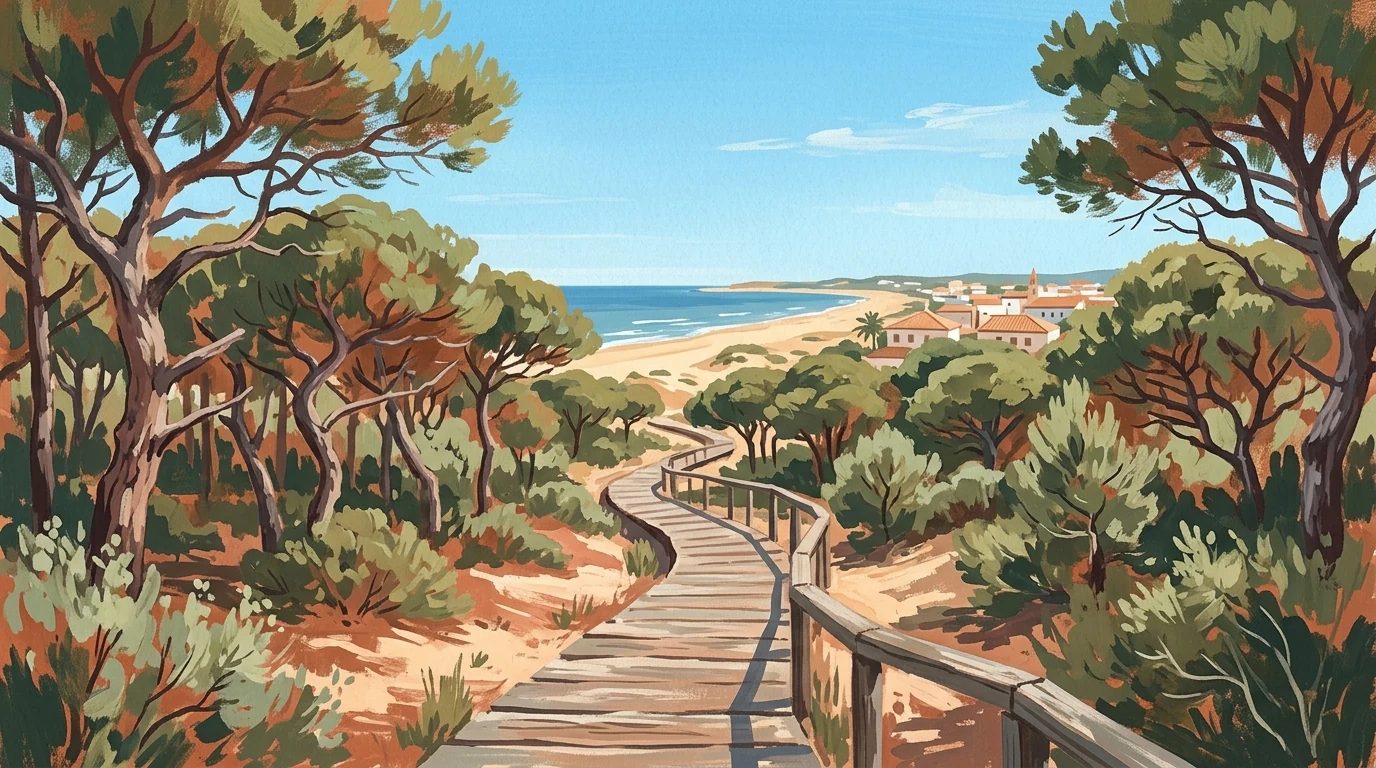
Stretching along the Atlantic coast between the town of Punta Umbría and Playa de La Bota, the Paraje Natural Enebrales de Punta Umbría is a small but ecologically vital protected reserve. Covering just 162 hectares, this coastal strip preserves one of Andalucía's last remaining mixed forests of savin and juniper. For visitors, it offers a peaceful, shaded escape from the busy resort areas, with a network of raised wooden boardwalks leading through the fragrant Mediterranean scrub directly to the fine sands of the beach. Whether you are cycling the dedicated coastal path, birdwatching among the pines, or simply looking for a scenic route to the ocean, this accessible nature reserve provides a pristine window into Huelva's original coastal landscape.
Why It Matters
Declared a protected natural area in 1989, the reserve is a rare survivor of the coastal development that swept across southern Spain. The defining feature is its mixed woodland of sabina (savin) and enebro (juniper), a combination that was once common along the Andalusian coastline but is now largely confined to protected pockets. The junipers are particularly remarkable for their extensive root systems, which anchor the shifting sandy substrates of the dunes and prevent coastal erosion. This stabilised environment creates a haven for a diverse range of flora and fauna, serving as a crucial ecological corridor between the urban edge of Punta Umbría and the wider natural landscapes of the Costa de Huelva.
What to See and Do
Walking the Boardwalks
The reserve is traversed by a main trail running parallel to the coast, intersected by six signposted wooden boardwalks that cut through the forest to the beach. These raised paths protect the fragile dune ecosystem while allowing visitors to walk comfortably beneath the canopy of replanted pines, mastic shrubs, and the signature junipers. As you approach the shoreline, the vegetation shifts, and the boardwalks deposit you onto a wide, unspoilt stretch of fine-sand beach, often scattered with an impressive variety of seashells brought in by the Atlantic tides.
Wildlife Spotting
Despite its compact size and proximity to town, the reserve supports a rich variety of wildlife. The dense, aromatic undergrowth provides shelter for reptiles, most notably the threatened ocellated lizard, which can often be spotted basking in sunny patches. The lizard is easily identified by its robust size and striking yellow-green colouration. Birdwatchers should look and listen for the Iberian magpie, the blue tit, and the blackcap flitting among the branches. The mature juniper berries also provide a vital food source for these resident and migratory birds.
Cycling the Coastal Path
For those who prefer two wheels, a dedicated cycle path runs alongside the reserve, connecting Punta Umbría with Playa de La Bota and beyond. The flat, well-maintained route makes for an effortless ride, offering constant views of the forest edge and the sea breeze. It is a popular option for families and casual cyclists looking to explore the coastline without navigating road traffic.
Planning Your Visit
Getting There
The reserve begins immediately west of Punta Umbría's town centre. It is easily reached on foot from the town's main resort areas. If driving, parking is available in the streets and designated lots near the eastern edge of the reserve or at the Playa de La Bota end.
How Long to Allow
Allow an hour for a leisurely walk along the boardwalks and back. If you plan to cycle the length of the reserve or spend time relaxing on the beach, allocate at least half a day.
When to Go
The reserve is open year-round. Spring and autumn offer the most comfortable temperatures for walking and the best opportunities for birdwatching. In the height of summer, visit in the early morning or late evening to avoid the midday heat and enjoy the spectacular Atlantic sunsets.
Access Note
Access to the Paraje Natural is free and open at all times. The raised wooden boardwalks provide level, stable surfaces suitable for pushchairs and most mobility aids, though the transition from the end of the boardwalks onto the soft sand of the beach can be challenging for wheelchair users.
Good to Know
- Always stick to the marked boardwalks and trails to avoid damaging the fragile root systems of the dune vegetation.
- There are no cafes, toilets, or water fountains within the reserve itself, so bring sufficient water and any supplies you might need.
- Pack binoculars if you are interested in spotting the Iberian magpies and other birdlife in the canopy.
- Mosquitoes can be prevalent in the shaded, wooded areas during the warmer months, so insect repellent is highly recommended.
- The beach at the end of the boardwalks is unmanaged, so swim with caution and pay attention to local tide and current conditions.
Nearby worth your time
A few well-placed stops for extending the day without turning it into a checklist.
Continue through Costa de Huelva
Step back into the wider landscape with local guides, nearby places and the province overview.
Place guide · 7 min
Playa de Castilla: The Wild Frontier of the Doñana Coastline
Playa de Castilla is a vast, 20-kilometre stretch of wild Atlantic coastline bordered by the spectacular orange cliffs of the Doñana National Park.
Place guide · 7 min
Playa de Isla Canela Beach Guide: Huelva Coastline
Playa de Isla Canela is a vast stretch of fine sand where the Guadiana River meets the Atlantic, famous for its shallow lagoons and family-friendly atmosphere.
Itinerary · 12 min
5 Days in Huelva: Atlantic Coast, Doñana and Sierra
A realistic five-day driving route through Huelva province, linking the maritime history of the capital with the tidal wetlands of Doñana and the chestnut forests of the Sierra de Aracena.