
attraction · Huelva
Santuario de Nuestra Señora del Rocío
Andalucía 365 · Updated 18 July 2026
Our Verdict
“This striking whitewashed hermitage offers a fascinating glimpse into Andalusia’s deepest religious traditions, set against the wild beauty of the Doñana wetlands.”
Last verified: July 2026
Overlooking the vast wetlands of the Doñana National Park, the Santuario de Nuestra Señora del Rocío is the spiritual heart of Andalusia and the focal point of Spain's most famous pilgrimage. This striking, whitewashed sanctuary rises dramatically from the unpaved, sandy streets of El Rocío, a village that feels entirely suspended in time. While the annual Pentecost Romería draws over a million devotees in a spectacle of faith and equestrian tradition, the rest of the year reveals a deeply peaceful atmosphere. Visitors are drawn by the profound cultural significance of the revered Virgen del Rocío, the unique architectural beauty of the hermitage, and its extraordinary natural setting on the edge of the marismas.
Why It Matters
Devotion to the Virgen del Rocío, affectionately known as the Blanca Paloma, dates back to the thirteenth century. Following the Christian reconquest, King Alfonso X ordered the construction of the first hermitage on this site. Over the centuries, the original structure underwent numerous modifications and survived severe damage from the 1755 Lisbon earthquake. The current sanctuary, a masterpiece of Andalusian Regionalism and Neo-Baroque design, was built between 1964 and 1969 by architects Alberto Balbontín de Orta and Antonio Delgado Roig. Today, it is the epicentre of a global religious movement supported by over a hundred official brotherhoods. The hermitage stands as a monument to a living tradition that blends Catholic devotion with the untamed landscape of the Guadalquivir delta.
What to See and Do
The Sanctuary and the Blanca Paloma
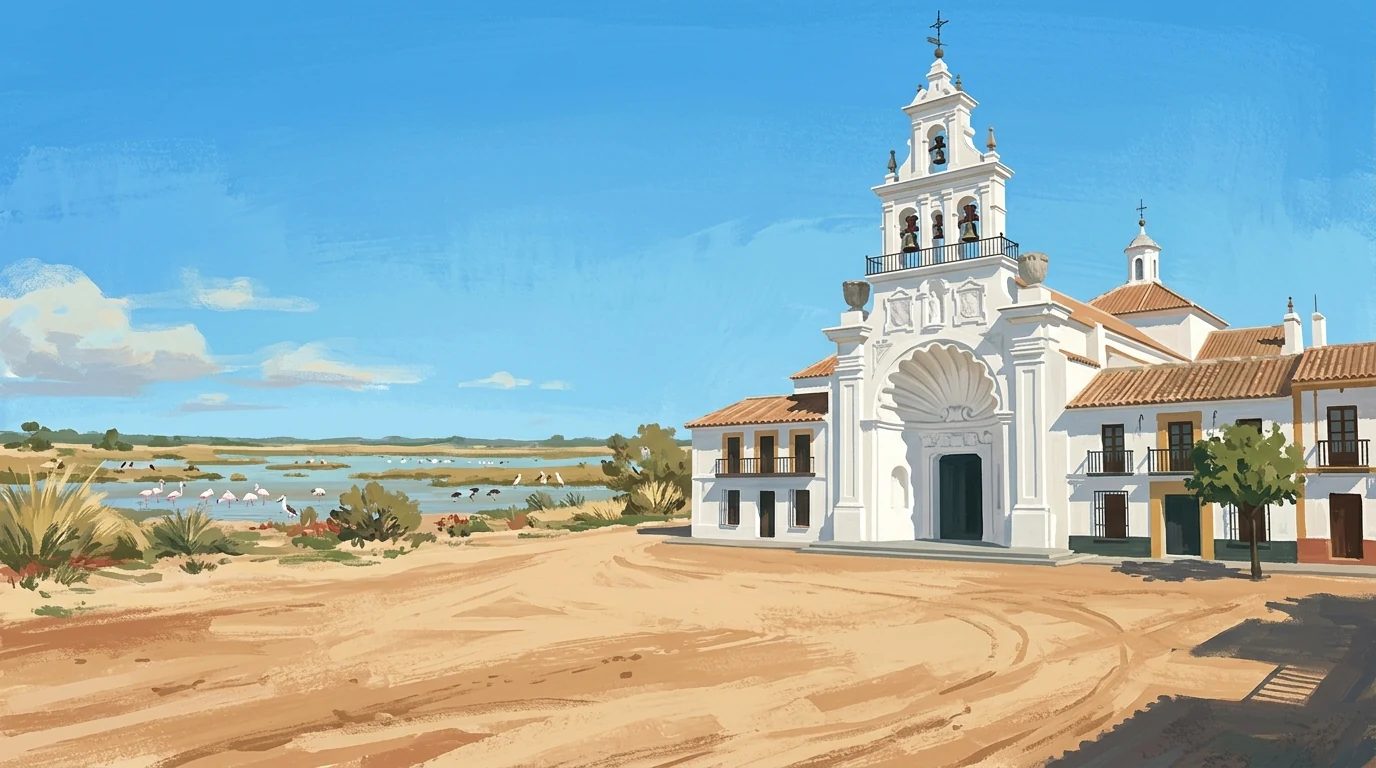
The exterior is instantly recognisable by its brilliant white facade, towering espadaña bell tower, and the large sculpted shell motif crowning the main portal. Inside, the expansive nave is designed to accommodate the massive crowds of pilgrims arriving during Pentecost. The focal point is the magnificent main altarpiece, housing the thirteenth-century carved wooden statue of the Virgin. The atmosphere within the church is one of intense quiet devotion, characterised by flickering candles and a steady stream of visitors. Architectural details, from the wrought-iron grilles to the ornate baptismal chapel, reflect the deep cultural investment of the surrounding communities.
The Treasury Museum
Located within the sanctuary complex, the Museo-Tesoro de la Hermandad Matriz offers a comprehensive look at the history of the Rocío devotion. The museum displays an extensive collection of processional items, intricate goldsmithing, and historical garments belonging to the Virgin. Visitors can examine elaborate ex-votos left by pilgrims over the centuries, providing fascinating insight into the personal stories attributed to the Blanca Paloma. The exhibits also detail the complex organisation of the brotherhoods that make the arduous journey to the village each year.
The Village and the Marshes
The sanctuary cannot be fully appreciated without exploring its immediate surroundings. The village of El Rocío is famous for its wide sandy streets, deliberately left unpaved to accommodate the horses and carriages that remain a primary mode of transport. Directly in front of the hermitage lie the marismas of the Doñana National Park. A waterfront promenade allows visitors to look out over the shallow waters, which are often teeming with flamingos and storks. The contrast between the monumental white church and the wild shifting landscape of the wetlands is one of the most enduring images of Huelva.
Planning Your Visit
Getting There
The sanctuary is located in the village of El Rocío, within the municipality of Almonte. It is easily reached by car via the A-483 road, connecting to the A-49 motorway between Seville and Huelva. Visitors should park in designated areas on the outskirts of the village, as driving through the deep sand of the central streets is impractical.
How Long to Allow
Set aside an hour to visit the sanctuary interior and the Treasury Museum. Allow two to three hours in total to walk through the sandy streets, admire the traditional brotherhood houses, and observe the wildlife in the adjacent marshes.
When to Go
The sanctuary is open daily throughout the year, but the experience varies wildly with the seasons. Winter and early spring are ideal for birdwatching, as the marshes are flooded and the weather is mild. Summer brings intense heat, and the wetlands often dry out completely. The Pentecost Romería transforms the village into a bustling festival, requiring immense logistical planning to attend. Access to the interior is free, though the museum charges a small fee and is closed on Mondays and Tuesdays. Always check the official Hermandad Matriz website for current opening hours before travelling.
Good to Know
- The Virgin is moved to the town of Almonte every seven years for a nine-month period; the next transfer, known as the Venida Jubilar, begins on 19 August 2026.
- Dress respectfully when entering the sanctuary, as it is an active place of worship with a strict code of conduct.
- Wear sturdy, closed walking shoes, as the streets of El Rocío are entirely made of sand and difficult to navigate in sandals.
- Bring binoculars to spot the diverse birdlife in the Doñana marshes directly in front of the hermitage.
- If visiting during the Pentecost pilgrimage, book accommodation in the surrounding towns months in advance.
Nearby worth your time
A few well-placed stops for extending the day without turning it into a checklist.
Continue through Doñana National Park & Coast
Step back into the wider landscape with local guides, nearby places and the province overview.
Place guide · 7 min
Playa de Castilla: The Wild Frontier of the Doñana Coastline
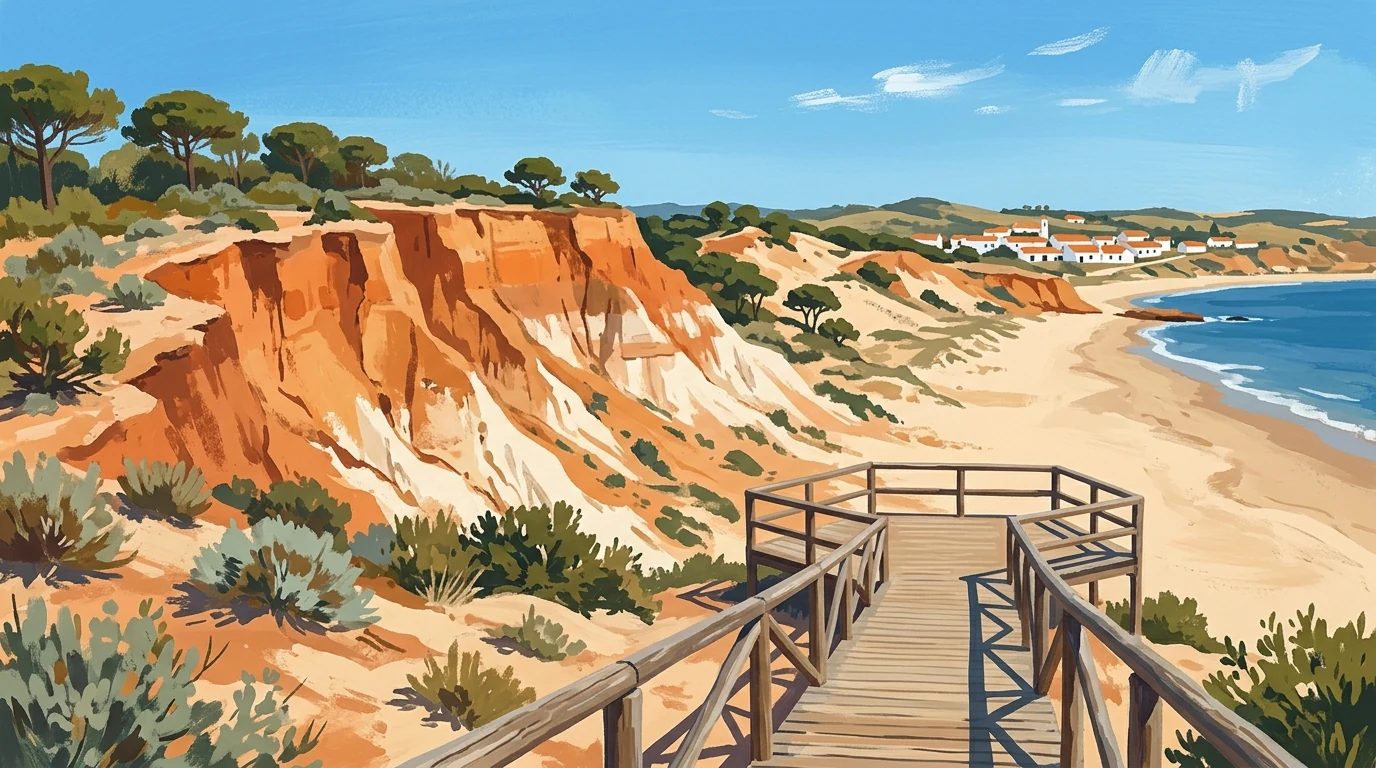
Playa de Castilla is a vast, 20-kilometre stretch of wild Atlantic coastline bordered by the spectacular orange cliffs of the Doñana National Park.
Place guide · 7 min
Playa de Isla Canela Beach Guide: Huelva Coastline
Playa de Isla Canela is a vast stretch of fine sand where the Guadiana River meets the Atlantic, famous for its shallow lagoons and family-friendly atmosphere.
Itinerary · 12 min
5 Days in Huelva: Atlantic Coast, Doñana and Sierra
A realistic five-day driving route through Huelva province, linking the maritime history of the capital with the tidal wetlands of Doñana and the chestnut forests of the Sierra de Aracena.