While Sevilla’s Moorish arches and Baroque facades often take center stage, the city’s bones are undeniably Roman. A short journey to the edge of the metropolis reveals Itálica, the first Roman settlement in Hispania and the birthplace of two of the Empire’s most influential emperors.
Finding the Footprints of Empire
To truly understand Sevilla, one must look down. Seven meters beneath the bustling streets of the modern city center lies Hispalis, the Roman precursor to today’s Andalucían capital. While the Great Mosque and subsequent Christian cathedrals reimagined the skyline, the Roman grid system and the city's strategic proximity to the Guadalquivir River dictated the flow of trade, faith, and daily life for centuries. However, the true scale of Roman ambition in the Baetica province is best witnessed in the nearby village of Santiponce.
Founded in 206 BC by Publius Cornelius Scipio, Itálica was established as a colonial outpost for veterans wounded in the Battle of Ilipa. Over the centuries, it evolved from a military recovery site into a sophisticated urban center of immense wealth. It was here that Trajan and his successor Hadrian were born, marking the first time Roman Emperors hailed from a province outside of Italy. Today, the site offers a remarkably preserved window into the lives of the Roman elite, featuring intact sewer systems, wide paved streets, and intricate floor mosaics that have survived nearly two millennia.
But Roman Sevilla is not confined to a single archaeological site; it is a scattered puzzle. From the colossal granite columns hidden in a narrow residential alley near the Cathedral to the subterranean ruins preserved beneath the modern wooden canopy of Las Setas, the Roman presence remains a quiet, persistent force. Exploring this legacy requires a bit of detective work and a willingness to step off the well-trodden tourist trails.
Places to Explore
Itálica: The Birthplace of Emperors
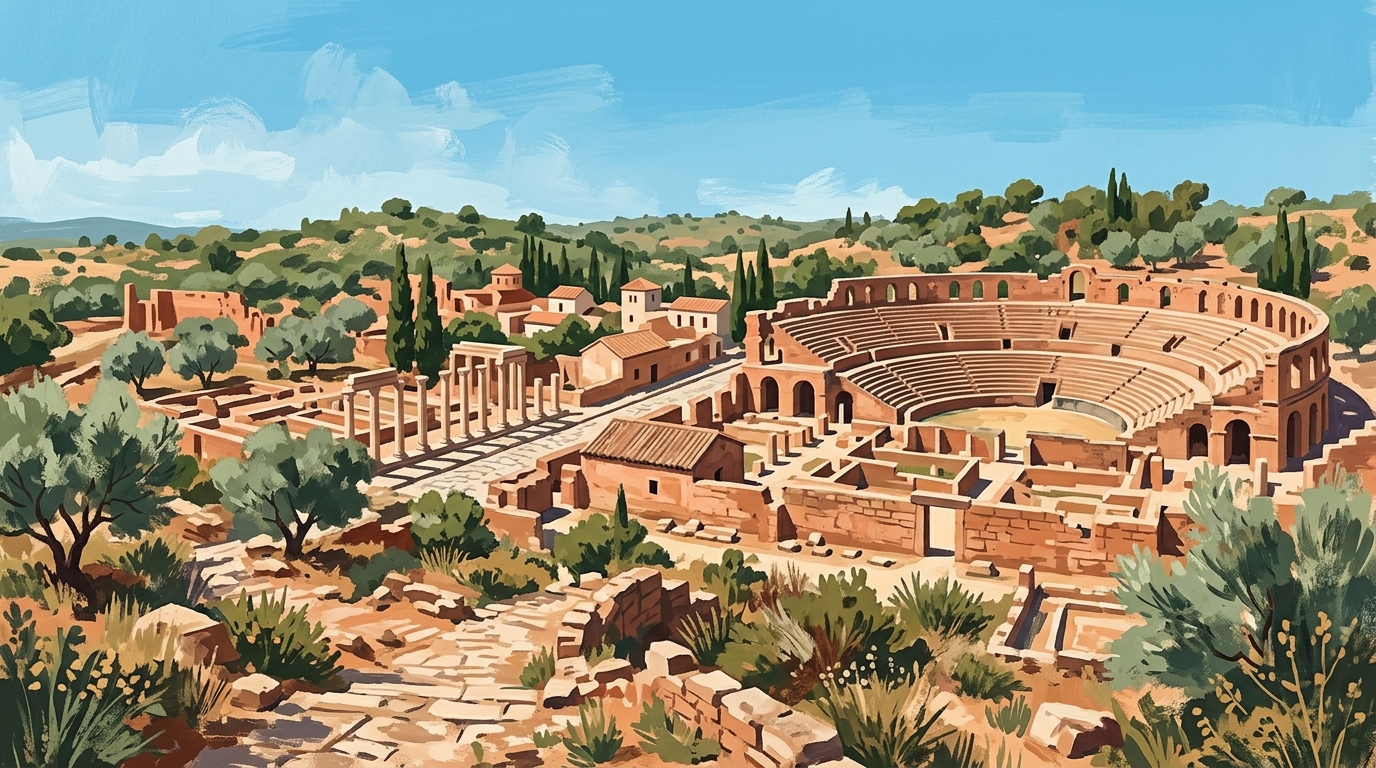
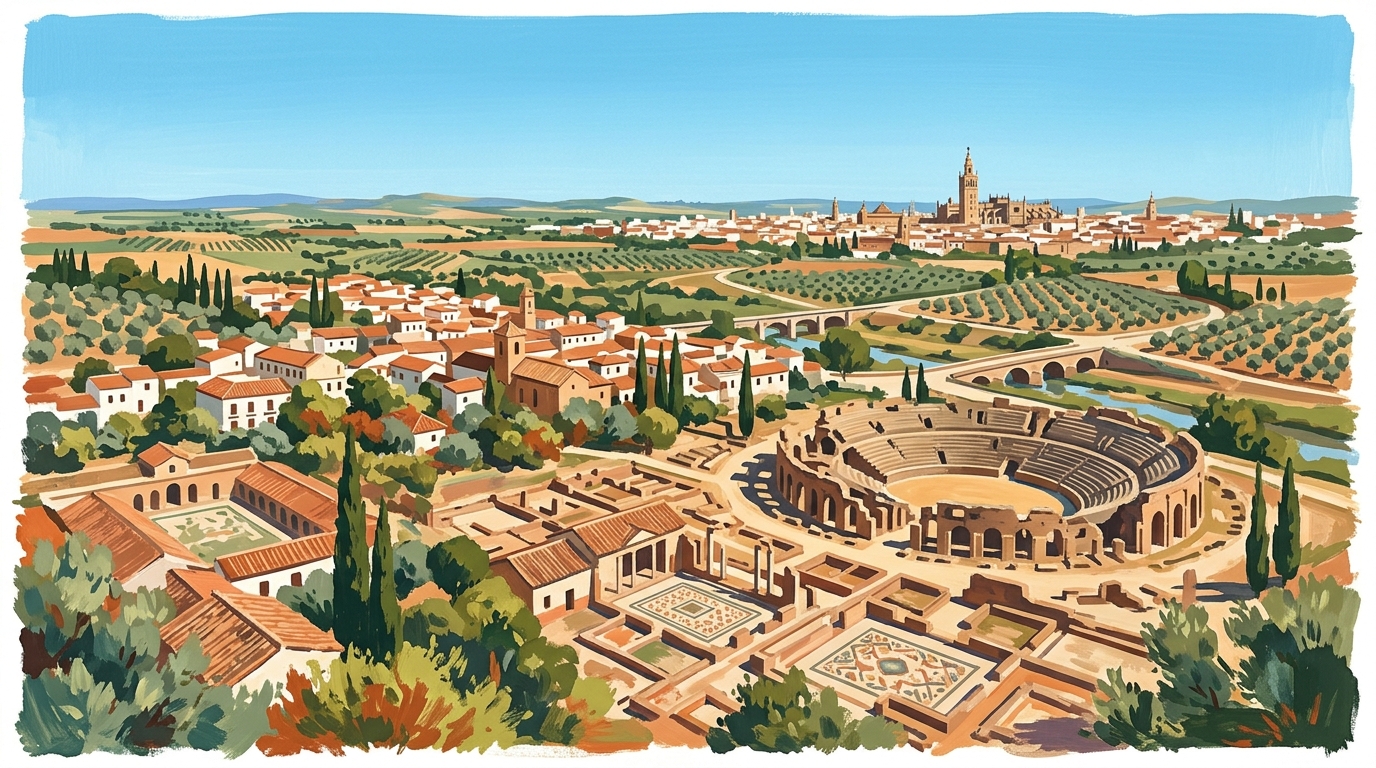
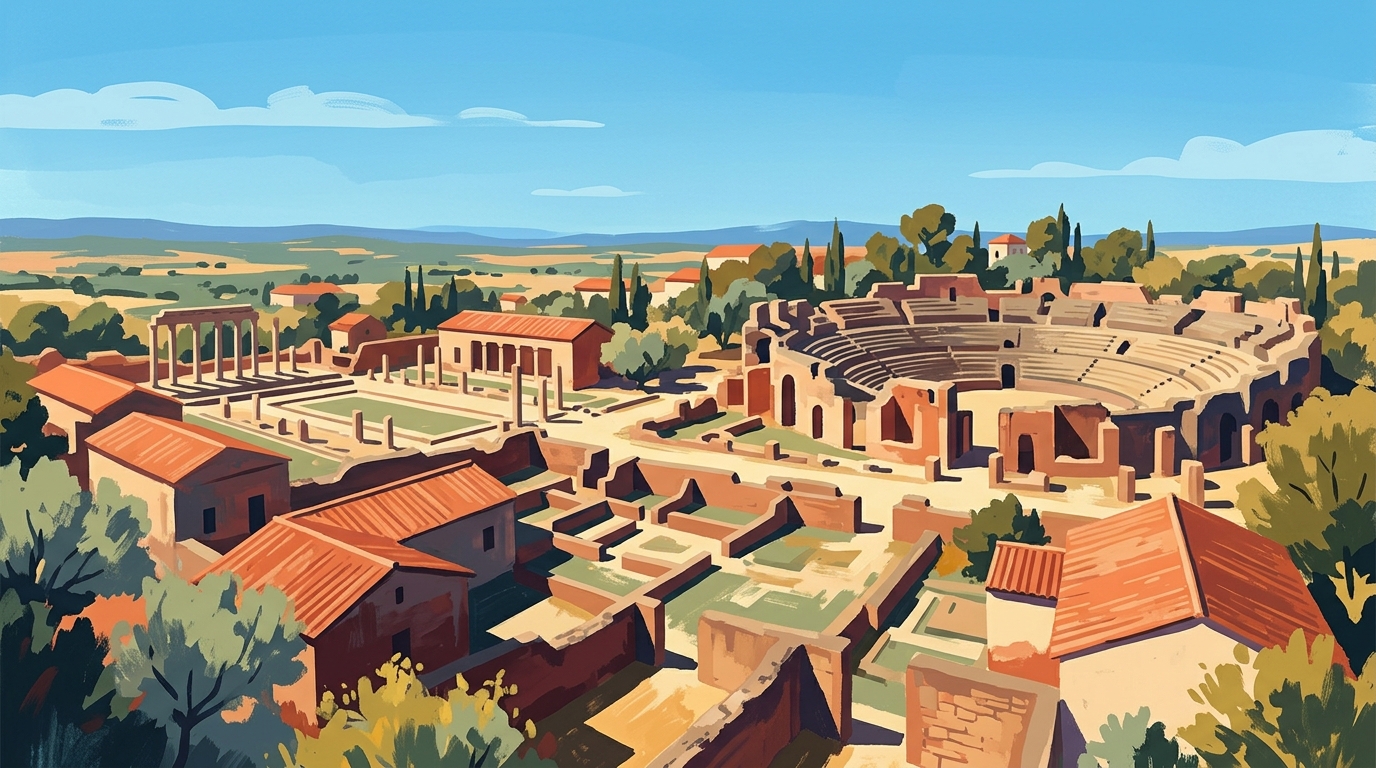
The Archaeological Ensemble of Itálica is the region's premier Roman site. Walking through the Vetus Urbs (Old City), partially buried under Santiponce, and the Nova Urbs (New City) commissioned by Hadrian, visitors experience the sheer scale of imperial urban planning. The amphitheater remains the undeniable highlight; in its prime, it held 25,000 spectators - a capacity nearly equal to the city's entire population at the time - making it one of the largest in the Roman world. Visitors can still traverse the vomitoria (exit tunnels) and look into the fossa bestiaria, the central pit where wild animals and gladiatorial machinery were staged.
Beyond the arena, the residential quarters showcase the opulence of the local aristocracy. The Casa de los Pájaros (House of the Birds) features a vibrant mosaic depicting 33 different avian species, while the Casa del Planetario (House of the Planetarium) contains a circular mosaic of the seven deities who represent the days of the week. Notice the lead pipes of the freshwater system and the stone drains still visible in the pavement - testaments to Roman engineering. At the site's highest point stands the Traianeum, a massive temple dedicated to the deified Trajan, where fallen columns and foundations hint at its former grandeur.
→ Read the full Itálica guide
Santiponce and San Isidoro del Campo
While modern Santiponce wraps around the ruins, it houses its own historical treasure: the Monasterio de San Isidoro del Campo. Founded in 1301 by Alonso Pérez de Guzmán (Guzmán el Bueno), this fortress-like monastery was built over the site where San Isidoro of Sevilla was originally interred. The complex is an architectural hybrid, blending Gothic and Mudéjar styles across two interconnected churches and silent, frescoed cloisters.
The interior features a stunning retablo (altarpiece) by Juan Martínez Montañés, a master of the Sevillano school. The monastery also played a pivotal role in the Spanish Reformation; it was here that monks began the clandestine translation of the Bible into Spanish, eventually fleeing the Inquisition for Northern Europe. The Claustro de los Muertos (Cloister of the Dead) offers a hauntingly beautiful space for reflection, providing a cool, quiet contrast to the sun-drenched ruins of Itálica nearby.
→ Read the full Santiponce guide
The Roman Footprint in Sevilla City
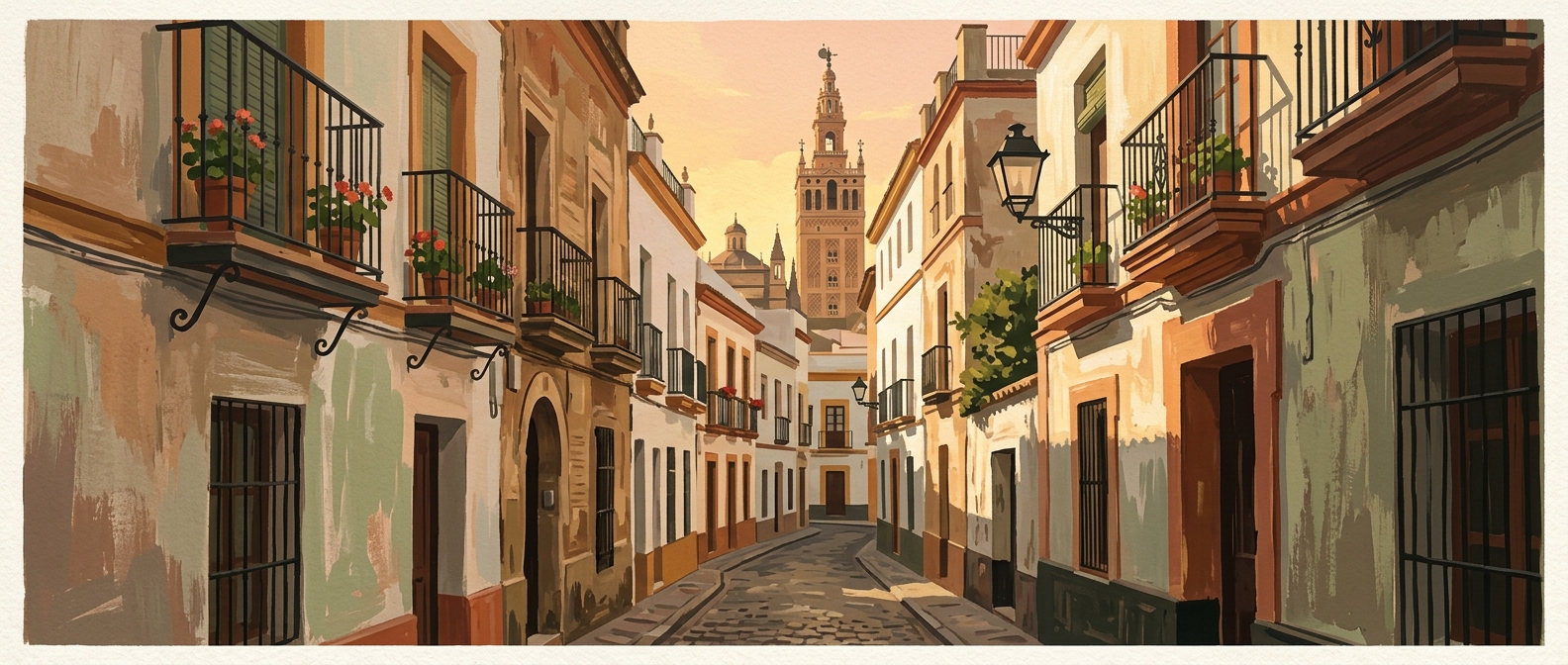
Inside Sevilla city, the Roman narrative is integrated into the urban fabric. In the Santa Cruz quarter, on Calle Mármoles, stand three massive 1st-century granite columns. Originally fifteen meters high and part of a six-column temple portico, their siblings were relocated in 1574 to the Alameda de Hércules to support statues of Hercules and Julius Caesar.
For an immersive archaeological experience, visit the Antiquarium located beneath the Metropol Parasol (Las Setas) in Plaza de la Encarnación. Glass walkways lead you over a sprawling 2nd-century Roman district unearthed during the construction of a car park in the 1990s. The site includes the Casa de la Columna and the Casa de las Ninfas, featuring exceptionally preserved mosaics. Another essential stop is the Palacio de la Condesa de Lebrija on Calle Cuna; the Countess paved her 16th-century palace with Roman mosaics salvaged from Itálica in the early 20th century, creating some of the most spectacular domestic flooring in the world.
Eating & Drinking in Itálica & Roman Sevilla
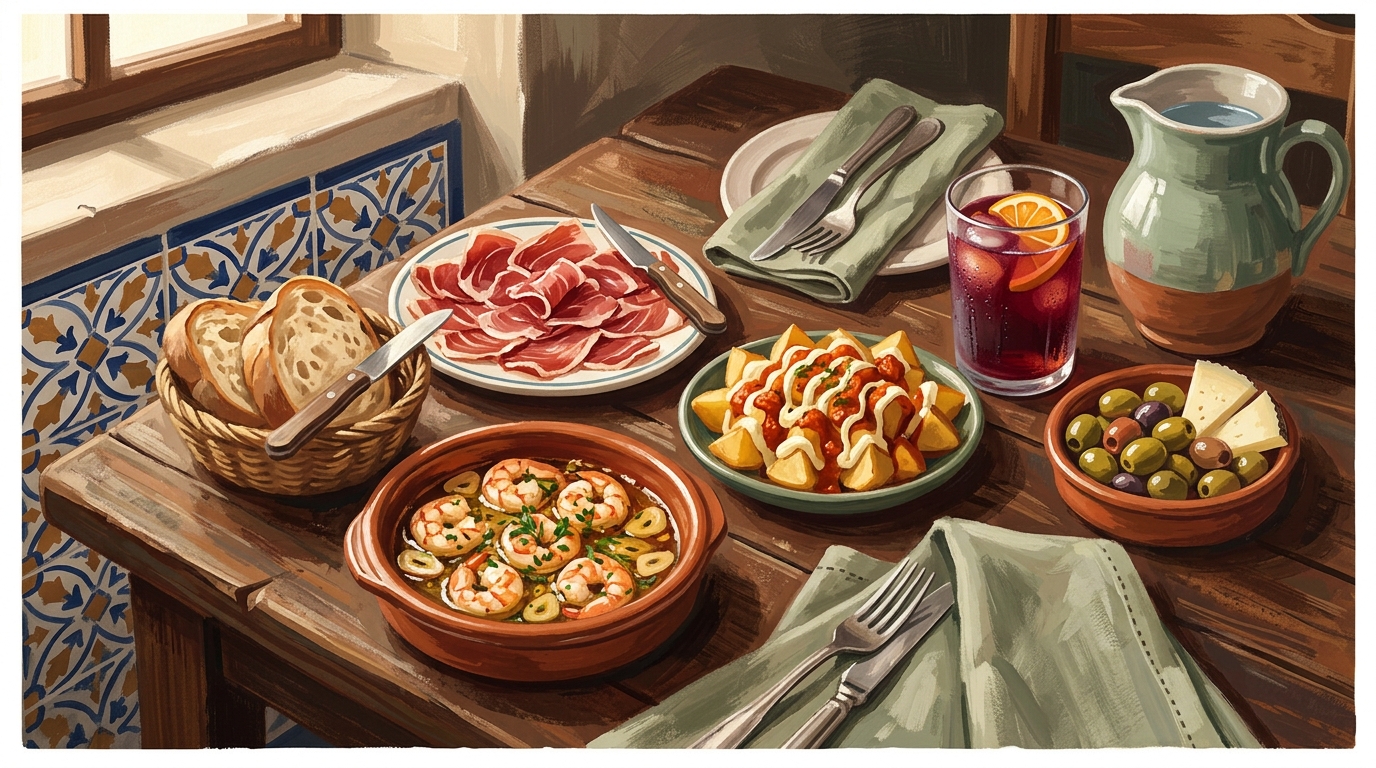
Dining in this region ranges from traditional tapas near the city ruins to rustic, wood-fired feasts in Santiponce. In Sevilla’s center near the Antiquarium, Taberna la Alfalfa serves classic mojama (cured tuna) and solomillo al whisky in an atmosphere that feels appropriately historic.
When visiting Itálica, Ventorrillo Canario is a local institution. This roadside restaurant is famous for its carne a la brasa (grilled meats); the aroma of Holm oak woodsmoke greets you at the door. Try the secreto ibérico or presa with their signature papas arrugás and mojo picón. Closer to the Santiponce village center, Bar La Caseta offers reliable Andalucían fare. Their salmorejo is particularly refreshing after a morning spent in the unshaded amphitheater. These local spots focus on comida casera (home-cooked food), providing a hearty, traditional alternative to the city's modern gastronomy.
Where to Stay
Most visitors base themselves in Sevilla and treat Itálica as a day trip. For proximity to the city's Roman sites, Hotel Palacio de Villapanés in the Alfalfa district is a converted 18th-century palace within walking distance of Calle Mármoles. For a boutique feel, Hospes Las Casas del Rey de Baeza offers a classic Sevillano courtyard experience near the remnants of the Roman walls.
If you prefer rural tranquility, Santiponce offers a few casas rurales (country houses) and apartments. Staying locally allows you to be the first through the gates of Itálica at 9:00 AM, avoiding the midday heat and the arrival of tour buses. However, the northern neighborhoods of Sevilla, such as La Macarena, offer a perfect compromise: a local atmosphere with quick access to the SE-30 or the bus lines heading north to the ruins.
Getting There & Around
Accessing Itálica is straightforward. From Sevilla’s Plaza de Armas bus station, take the M-170A or M-170B bus. The journey takes approximately 20 to 30 minutes, and the bus stops directly outside the archaeological site entrance. For those driving, take the SE-30 toward Mérida and follow the signs for Santiponce; free parking is available near the ruins. Once inside the park, exploration is done on foot. Within Sevilla city, the Roman sites are centrally located and easily reachable via a short walk through the historic center.
Best Time to Visit
Timing is essential when visiting Itálica, as the site offers very little shade. Summer temperatures in Sevilla frequently exceed 40°C (104°F). The ideal months are March to May, when wildflowers bloom among the ruins, or October and November, when the light is soft and the air is cool. If visiting in summer, arrive when the gates open at 9:00 AM. Sites are typically open Tuesday through Saturday, with reduced hours on Sundays. Many archaeological locations, including Itálica, are closed on Mondays, so verify the local schedule before your visit.