
Feature · Sevilla
The Siege of the Real: Inside Sevilla’s Private Universe
Beyond the yellow dust of the Real, Sevilla’s great fair is a labyrinth of closed doors where the city’s true social hierarchy is revealed in the clinking of glasses.
By Dan · Updated 7 June 2026 · 8 min read
Story context
This is a narrative feature, not a breaking-news report or a legal/practical guide. It is kept on the site because it adds local texture and reading value alongside the more practical Andalucía 365 guides.
Use the links below for planning details, current access, places to stay, transport or food guidance connected with the story.
The Feria de Abril is not a single festival, but a thousand private parties happening simultaneously behind green-and-white canvas, and you are almost certainly not invited.
(Editor's note: This feature captures the atmosphere of the 2026 Feria de Abril, which concluded in late April. Check official dates on the operator's website before travelling for future events.)
Antonio stands at the threshold of a caseta on the Calle Juan Belmonte, his hand resting lightly on the striped canvas flap that separates the dust of the street from the sanctuary within. He wears a suit of summer-weight navy wool, despite the mercury pushing thirty-two degrees, and his tie is knotted with a precision that suggests it hasn’t moved a millimetre since mid-morning. Behind him, the air is thick with the scent of fried boquerones and the sharp, saline tang of chilled Manzanilla. To the casual observer, Antonio is merely a host. In reality, he is a gatekeeper. He is the guardian of a small, fifteen-metre-wide strip of land that his family has occupied for three generations, and his job, perhaps his primary social function for the week, is to decide who belongs and who remains in the yellow dust of the street.
The Feria de Abril is a siege. It is the week when Sevilla turns inward, retreating behind the canvas walls of its one thousand and fifty-seven casetas. To the uninitiated, the rows of peaked tents resemble a temporary city of leisure, but to the Sevillano, it is a map of their social, professional, and familial DNA. The Real de la Feria, the purpose-built fairground in the Los Remedios district, is the most democratic space in the city that is simultaneously the least inclusive. While the gates are open to all, the heart of the event is strictly gated. To walk the albero, the crushed golden limestone that coats the ground, is to be a spectator; to step inside a caseta is to be a citizen.
The Myth of the Open Door
There is a persistent romanticism surrounding Andalucían hospitality, but the Feria de Abril tests its limits. Unlike the carnival in Cádiz or the street parties of Málaga, the Feria in Sevilla is a private affair. The vast majority of casetas are owned by families, groups of friends, or entities known as peñas. They pay substantial annual fees to maintain their spot, often waiting decades for the city council to grant them a space on the coveted grid. When a tourist wanders onto the grounds, they often find themselves met with a polite but firm "Socio?" from a man like Antonio. Are you a member? If not, the canvas remains closed.
This exclusivity is not merely snobbery; it is an extension of the Sevillano living room. In a city where social life often happens in the streets, the Feria is the one time of year when the home is moved into the public sphere. Inside the caseta, the hierarchy is clear. There are the tables at the back for the sit-down lunch, the bar at the front for the younger crowd, and the small wooden floor reserved for the four coplas of the sevillanas. It is a space where a grandfather can drink with his grandson’s lawyer, and where business deals that have stalled for six months are suddenly greased into motion by a bottle of Tío Pepe. For the outsider, the city provides a handful of public casetas: large, often crowded tents that lack the intimacy and the specific personality of the private ones. They are the pressure valves of the fair, designed to absorb the masses so the private rituals can continue undisturbed.
The Architecture of 1847
The irony of the Feria’s rigid traditionalism is that it was never intended to be this way. In 1847, the fair was established as a cattle market. Even more galling to the local purist is the fact that its founders were not Sevillano at all: José María Ybarra was a Basque, and Narciso Bonaplata was a Catalan. They simply wanted a place to sell cows and sheep. The first casetas were functional stalls for traders, places to escape the sun and sign a contract over a glass of wine. It didn't take long for the city’s aristocracy to realise that the traders were having more fun than the grandees in their palaces. The cattle were slowly pushed to the periphery, eventually disappearing altogether, replaced by the aesthetics of the señorito.
Today, the architecture of the Feria is governed by strict municipal ordinances. The colours of the canvas must be red and white or green and white stripes. The curtains must be of a specific material. The lighting must be the traditional farolillos, paper lanterns that glow with a soft, amber warmth as evening falls. This consistency creates a visual hypnotic state. When the sun sets and the twenty-two thousand lightbulbs of the Portada, the massive decorative entrance gate, flicker to life, the Real becomes an island in time. The modern world, with its steel and glass, feels like a distant rumour.
The Only Living Costume
While the men’s fashion at the Feria is a study in conservative tailoring, the women carry the event’s visual weight. The traje de flamenca is a cultural anomaly: it is the only traditional regional dress in the world that follows a fashion cycle. Each year, designers in Sevilla and the surrounding provinces release new collections. The height of the waistline, the volume of the volantes (ruffles), and the choice of fabric, from heavy poplin to light plumeti, change with the seasons. To wear a dress from five years ago is to mark oneself as a casual observer or, worse, someone who hasn't kept up with the city’s internal rhythm.
The dress is a statement of identity and investment. A high-end traje can cost upwards of a thousand euros, and for many Sevillanas, the acquisition of a new dress for the Feria is a mandatory annual expense, regardless of the economic climate. It is not a costume; it is a uniform of belonging. The politics of the dress extend to the accessories. The mantoncillo (shawl) must be pinned with a specific brooch; the flower must be placed exactly on top of the head, never tucked behind the ear like a tourist. To see a group of women walking toward the Real is to see a moving garden of silk and lace, a defiance of the homogenised fashion of the high street.
The Dust and the Hoof
In the mid-afternoon, the Paseo de Caballos begins. This is the hour when the cattle-trading roots of the fair are most visible, albeit transformed into a display of staggering wealth. Hundreds of carriages and riders flood the streets of the Real. The rules here are as strict as those of the casetas. A rider must wear the traje de corto (a short jacket, wide-brimmed hat, and leather chaps) and the horse must be groomed to a mirror shine. The carriages, many of them museum-quality pieces from the 19th century, are pulled by teams of mules or horses decorated with woollen tassels and bells.
There is a specific sound to this part of the day: the rhythmic jingle of the bells, the clip-clop on the hard-packed albero, and the constant shouting of the drivers. It is a display of horsemanship that borders on the theatrical. The horses are steered through crowds of people with millimetre precision, a dance of muscle and bone that requires nerves of steel. But even here, the divide exists. The carriages are not for hire; they are private vehicles, owned by families or clubs, moving from one caseta to another for a drink. The air becomes a haze of yellow dust and the smell of horse sweat, a sensory overload that signals the peak of the day's heat.
The Tension of the Fence
The exclusivity of the Feria is increasingly a point of local friction. Every few years, a debate erupts in the local papers about whether the fair should be more "open". Critics argue that a public space, funded by tax euros, should not be dominated by private clubs. They point to the Feria in Jerez or Córdoba, where casetas are generally open to the public. But Sevilla resists. The argument from the locals is that if the Feria were opened, it would lose its essence. It would become a generic party, a theme park of fried food and loud music, rather than a living expression of the city’s social structures. The closed door is precisely what keeps the sevillanas being danced and the Manzanilla being poured in the traditional way. To open it is to dilute it.
This tension creates a strange atmosphere for the visitor. You are at once a guest in a city of spectacles and an intruder in a family reunion. You can watch the most beautiful horses in the world, hear the most soulful flamenco, and see the most exquisite dresses, but you are always watching it through a filter of canvas. The Feria demands that you have a friend, a cousin, or a business associate who can pull back the flap and say, "Come in, have a drink." Without that invitation, you are merely a witness to someone else's memory.
As the clock nears four in the morning, the dust begins to settle. The horses have long since been led back to their stables, and the carriages are parked in dark warehouses across the Guadalquivir. The lights of the Portada are dimmed, but inside the casetas, the guitars are still playing. The sevillanas have slowed down, becoming more intimate, more tired. Antonio is still there, though his tie is finally loosened. He is sitting now, a half-empty glass in his hand, watching his daughter dance with a boy he’s known since they were both in nappies. The street outside is empty, save for the cleaning crews and the lingering scent of jasmine and fried flour. Here, in the quietest hour, the Feria makes sense. It isn't about being seen by the world; it is about being seen by your own. The canvas flap is still closed, and inside, Sevilla is finally alone with itself.
Last reviewed: 21 June 2026 · Editorial policy
Related guides
The Granite and the Geranium: The Fragile Geometry of Córdoba’s May
For two weeks in May, Córdoba’s residents throw open the doors of their private courtyards, turning a city of stone into a living, breathing laboratory of botanical obsession.
6 min read
The Floral Courtyards of Córdoba: A Guide to the Patios and Palacio de Viana
Discover the flower-filled courtyards of Córdoba, from the twelve aristocratic patios of the Palacio de Viana to the UNESCO-listed private homes that open their doors during the May Patio Festival.
6 min read
Exploring Sevilla Cathedral and the Giralda Tower
Sevilla Cathedral is the largest Gothic church in the world, home to the Giralda tower and the tomb of Christopher Columbus.
5 min read
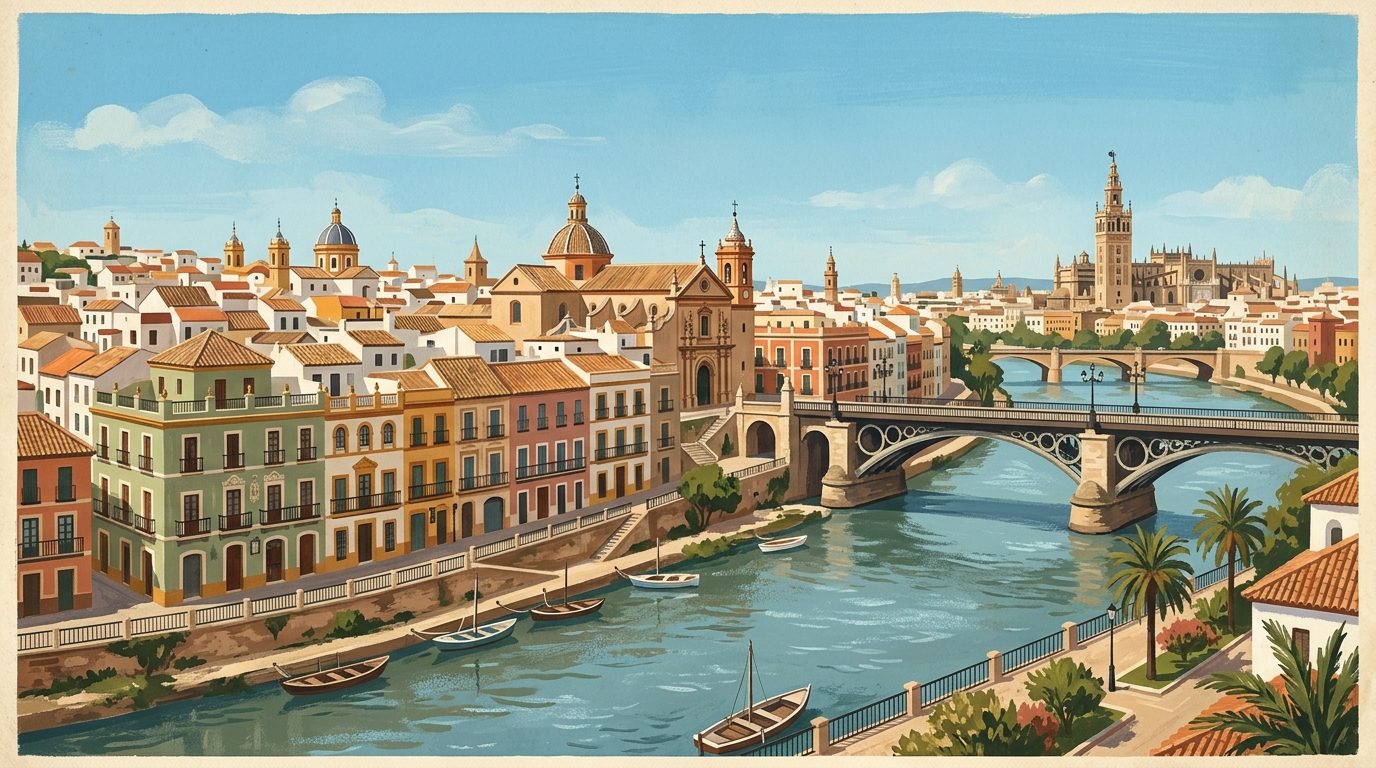
Discovering Triana: The Soul of Sevilla Beyond the River
Connected to the main city by the iconic Puente de Isabel II, Triana is a district with its own distinct seafaring and artisanal identity. From legendary ceramics workshops to the birthplace of flamenco, this neighbourhood offers an authentic side of Sevilla.
6 min read
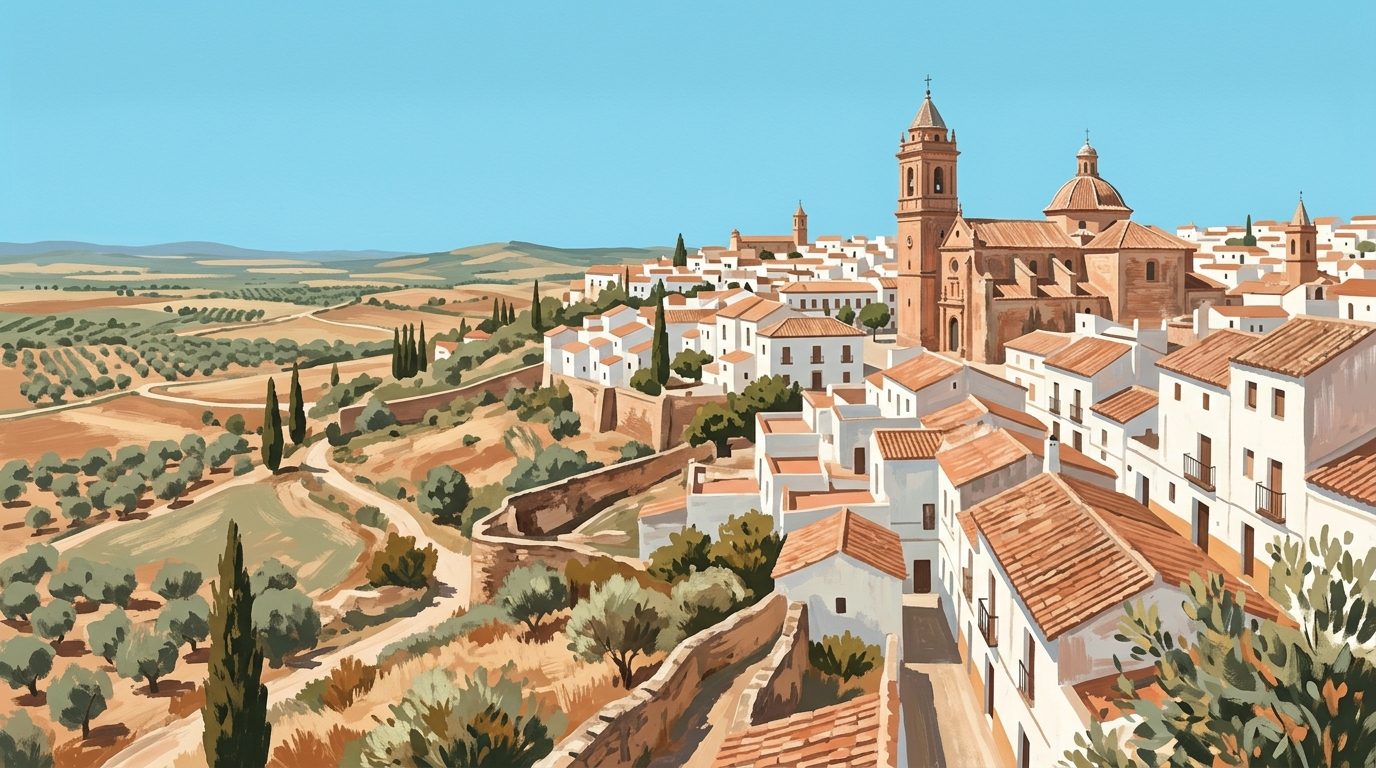
A Guide to Utrera: The Cradle of Soleá and Sevilla’s Countryside Heartland
Utrera serves as a pillar of Andalucían culture, renowned for its deep flamenco roots and the striking architecture of its historic churches.
6 min read
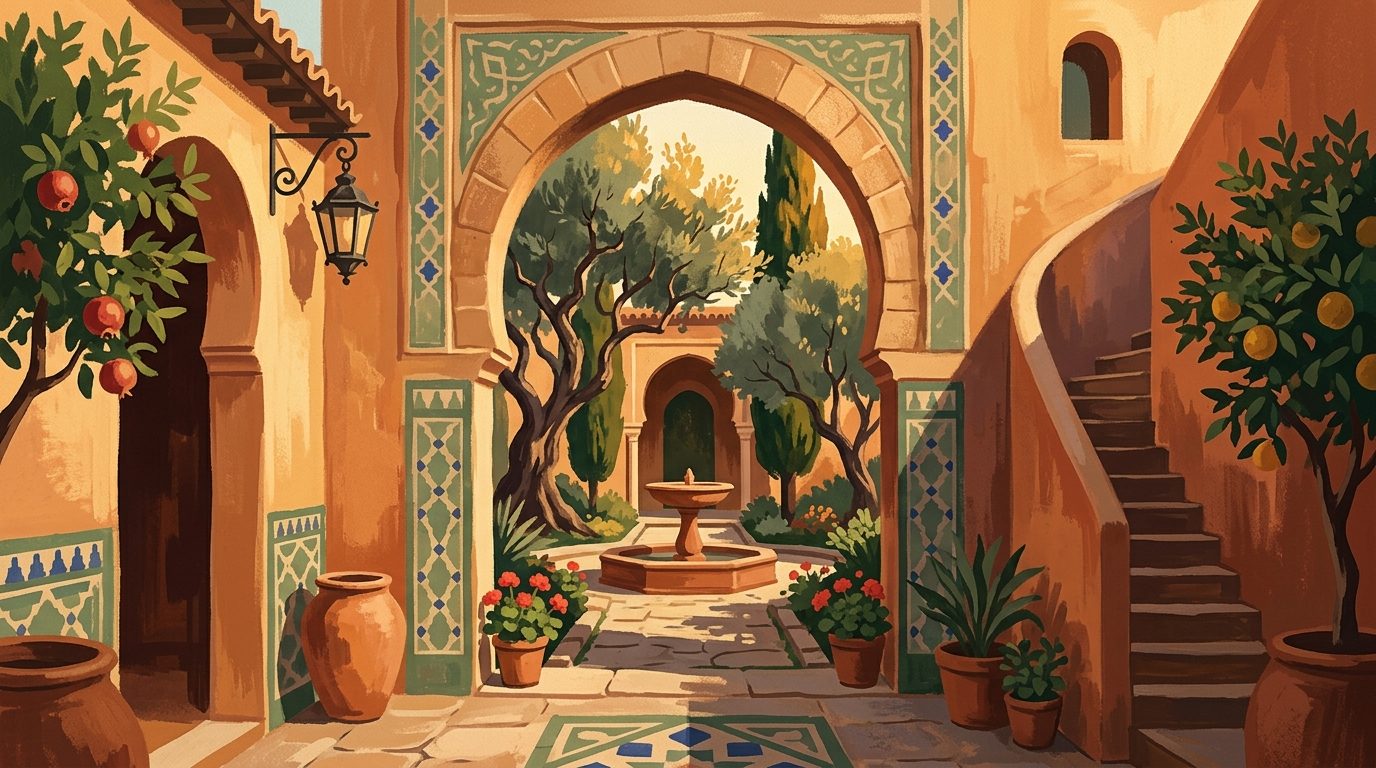
The Ghost in the Garden: Searching for the Al-Andalus Within
Eight centuries of Al-Andalus did not vanish in 1492; they simply moved indoors, into the kitchens, and onto the tip of the tongue.
7 min read
More from Sevilla
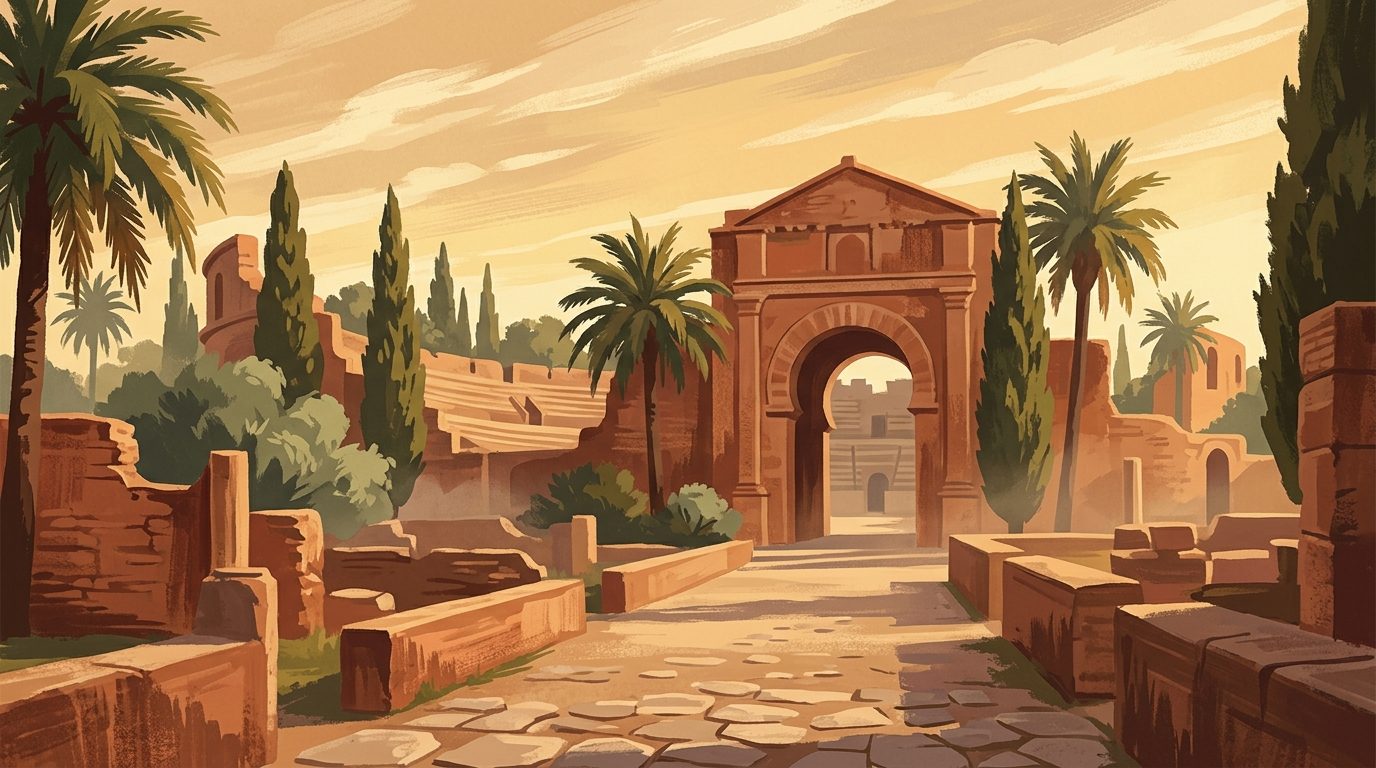
Itálica and the Emperor-Makers
Founded for wounded soldiers after a crushing military victory, Itálica rose from a provincial outpost to become a political powerhouse. By the second century AD, this settlement in southern Spain was reshaping the Roman world, producing two of its most formidable emperors.
9 min read
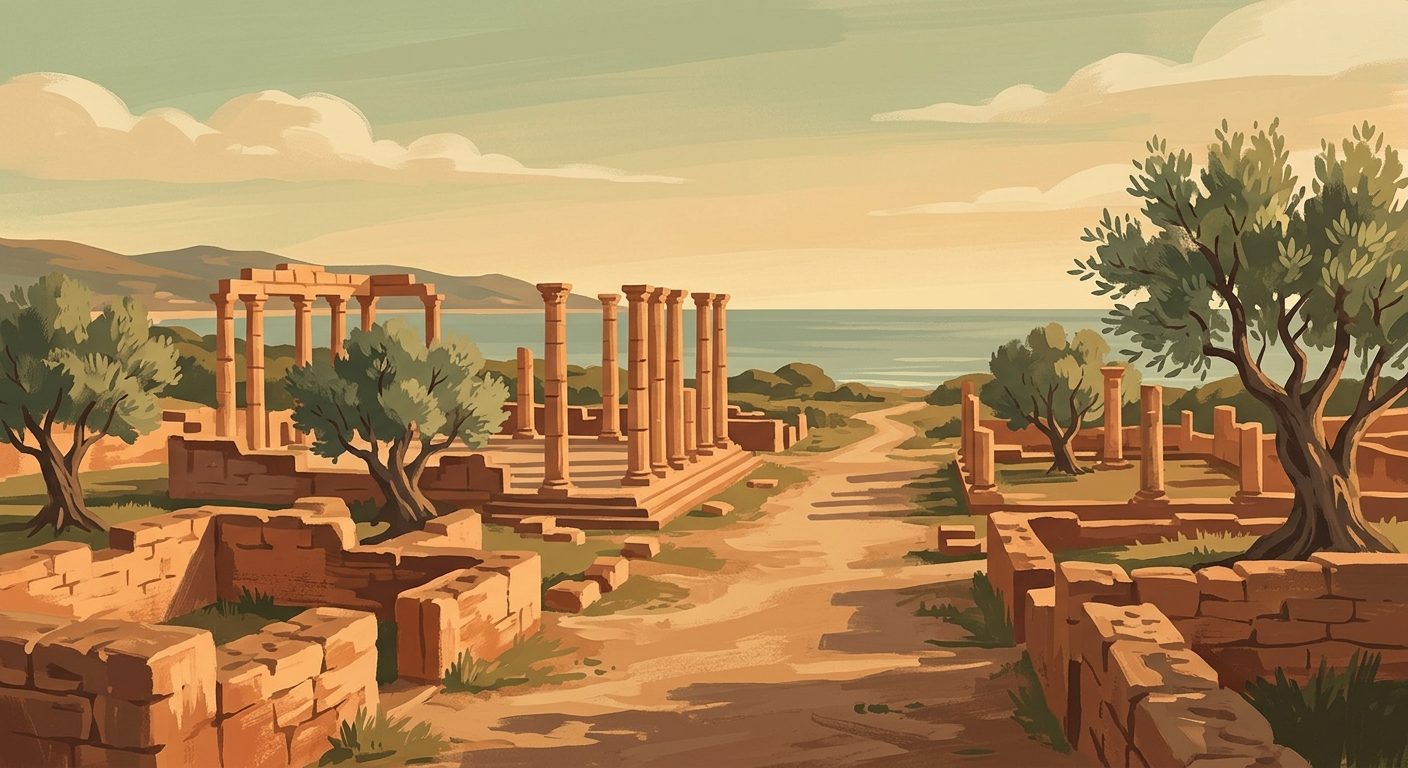
Roman Hispania Baetica: Itálica, Baelo Claudia and the Olive Economy
How did a distant southern province become the economic engine of the Roman Empire and the birthplace of emperors? The answer lies in the fertile soils and sheltered harbours of Hispania Baetica.
7 min read
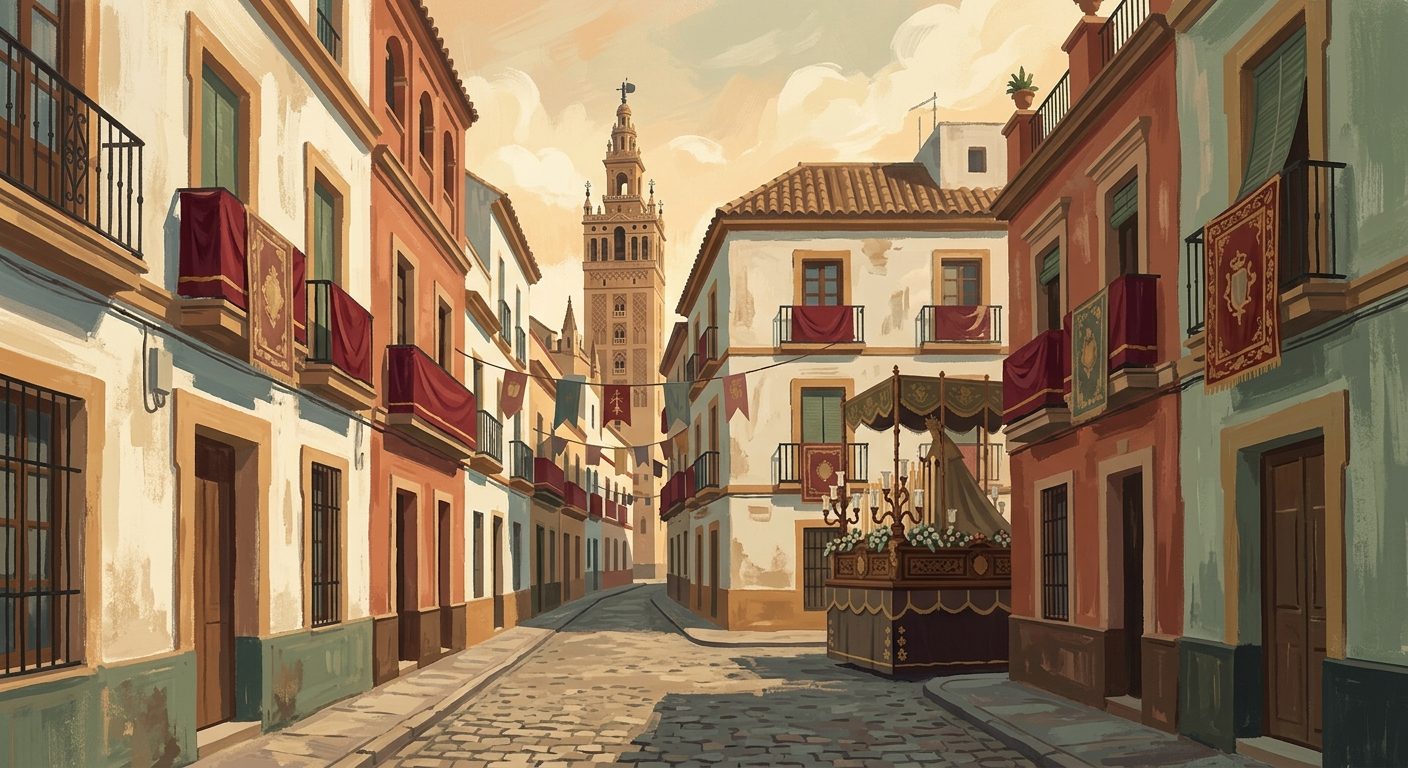
Semana Santa in Sevilla: A First-Timer's Guide
Semana Santa in Sevilla is an intense expression of faith, art and civic identity. Unlike other cities, the spectacular wooden floats are carried from below by hidden costaleros, moving to the slow beat of mourning marches or absolute silence.
8 min read
Newsletter
More stories from Andalucía
Weekly notes, seasonal picks, and the next guides worth bookmarking.