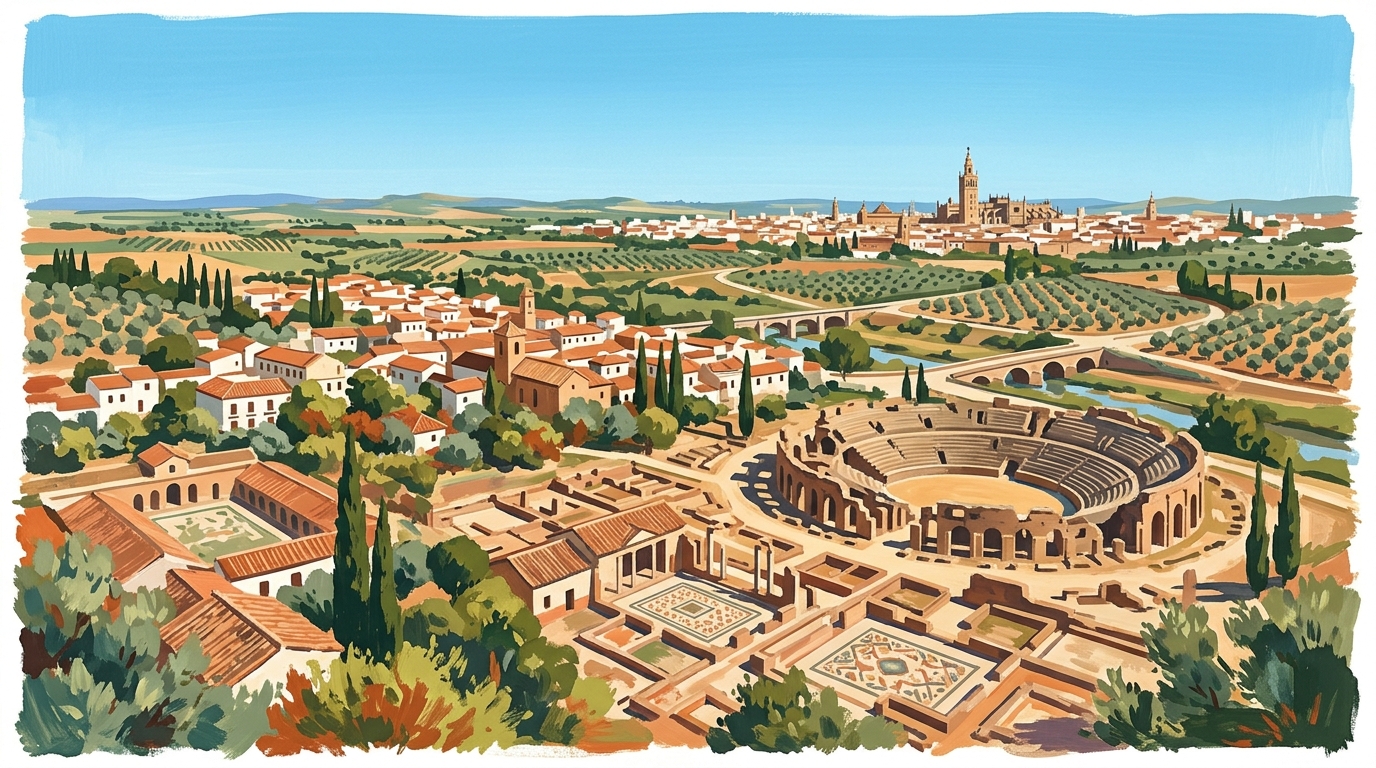
A short journey from Sevilla city centre leads to the birthplace of Roman emperors and a mediaeval monastery of immense spiritual significance. Santiponce offers a profound connection to the Roman Empire's presence in southern Spain through its impressive archaeological remains and religious heritage.
Just nine kilometres north of Sevilla, the town of Santiponce sits atop a narrative that spans over two thousand years. While it may appear as a quiet residential satellite of the Andalusian capital, it occupies one of the most significant archaeological landscapes in Europe. This is the site of Itálica, the first Roman city founded in the Iberian Peninsula and the ancestral home of the emperors Trajan and Hadrian. The modern town of Santiponce was actually moved to its current location in the 17th century after devastating floods from the Guadalquivir River, effectively being rebuilt over the 'Vetus Urbs' (Old City) of the Romans.
Visitors come here to walk the wide stone-paved streets of a Roman colony that once rivalled the grandest cities of the Mediterranean. However, Santiponce is not merely a collection of ruins. It also houses the Monastery of San Isidoro del Campo, a fortified mediaeval complex that protected the town's inhabitants and served as a focal point for the Spanish Reformation. The juxtaposition of Roman imperial ambition and Cistercian austerity makes Santiponce a essential stop for anyone wanting to understand the complex layers of Sevillian history beyond the city walls.
What to See & Do
The Archaeological Ensemble of Itálica
The primary draw is undoubtedly the ruins of Itálica. Founded in 206 BC by Publius Cornelius Scipio Africanus to settle veterans of the Second Punic War, the city reached its peak under Hadrian, who expanded it with the 'Nova Urbs' (New City). This is the area accessible to the public today. As you enter, the scale of the city is immediately apparent. The Roman grid system remains remarkably intact, allowing you to walk along original pavements and peer into the foundations of expansive aristocratic villas.
The amphitheatre is the most famous feature, once seating 25,000 spectators. It was one of the largest in the Roman world, and its subterranean galleries - where gladiators and wild beasts were held - are still accessible. Fans of modern culture might recognise this arena as the Dragonpit from the Game of Thrones television series. Beyond the arena, the city's houses contain some of the finest Roman mosaics in situ. The House of the Birds and the House of the Planetarium feature intricate tile work depicting wildlife and celestial bodies with a precision that has survived centuries of exposure.
The Monastery of San Isidoro del Campo
Located at the entrance to the town, this 14th-century monastery is often overlooked by those rushing to the Roman ruins, yet it is a monument of equal importance. Founded by Alonso Pérez de Guzmán (the famous Guzmán el Bueno), it was intended as a family pantheon. The architecture is a fascinating hybrid of Gothic and Mudéjar styles, reflecting the cultural overlap of the era.
Inside, the monastery contains two parallel churches - a rare layout - and cloisters decorated with delicate frescoes and tiles. The main altarpiece is a masterpiece by Juan Martínez Montañés, one of the most celebrated sculptors of the Spanish Baroque. Historically, the monastery is also significant as the place where the monks first translated the Bible into Spanish during the 16th century, a move that led many of them to flee the Inquisition.
The Roman Theatre of Santiponce
Unlike the main archaeological park, the Roman Theatre is located within the town itself on Calle Siete Revueltas. It was built during the reign of Augustus and was partially buried under the houses of Santiponce for centuries. Systematic excavations have revealed a well-preserved seating area (cavea) and the stage. It provides a more intimate look at Roman life, showing how the ancient city and the modern town are physically entwined.
Cotidiana Vitae
To help bridge the gap between the ruins and the reality of Roman life, the Cotidiana Vitae interpretation centre offers a reconstruction of a 2nd-century Roman street and house. Using sensory displays and faithful recreations, it explains the daily routines, smells, and sounds of the people who lived in Itálica. It is an excellent starting point for families or those who find it difficult to visualise the empty foundations of the archaeological site.
Practical Information
Planning a visit to Santiponce is straightforward from Sevilla, but you should be mindful of seasonal opening hours, as the midday sun at Itálica can be intense.
- Opening Times (Itálica):
- Autumn/Winter (mid-Sept to March): Tue-Sat 09:00-18:00, Sun 09:00-15:00.
- Spring (April to mid-June): Tue-Thu 09:00-18:00, Fri-Sat 09:00-21:00, Sun 09:00-15:00.
- Summer (mid-June to mid-Sept): Tue-Sun 09:00-15:00.
- Ticket Prices (Itálica): Free for EU citizens with valid ID. For all others, the entry fee is €1.50.
- Opening Times (Monastery): Generally Tue-Sat 10:00-15:00, though Friday and Saturday often stay open until 19:00 in winter. Admission is free.
- How to get there: The M-170A and M-170B buses depart from Sevilla’s Plaza de Armas bus station. The journey takes about 20-30 minutes. Look for the 'Santiponce' or 'Itálica' stop.
- Parking: There is a dedicated large car park directly in front of the entrance to the Itálica archaeological site.
Where to Eat Nearby
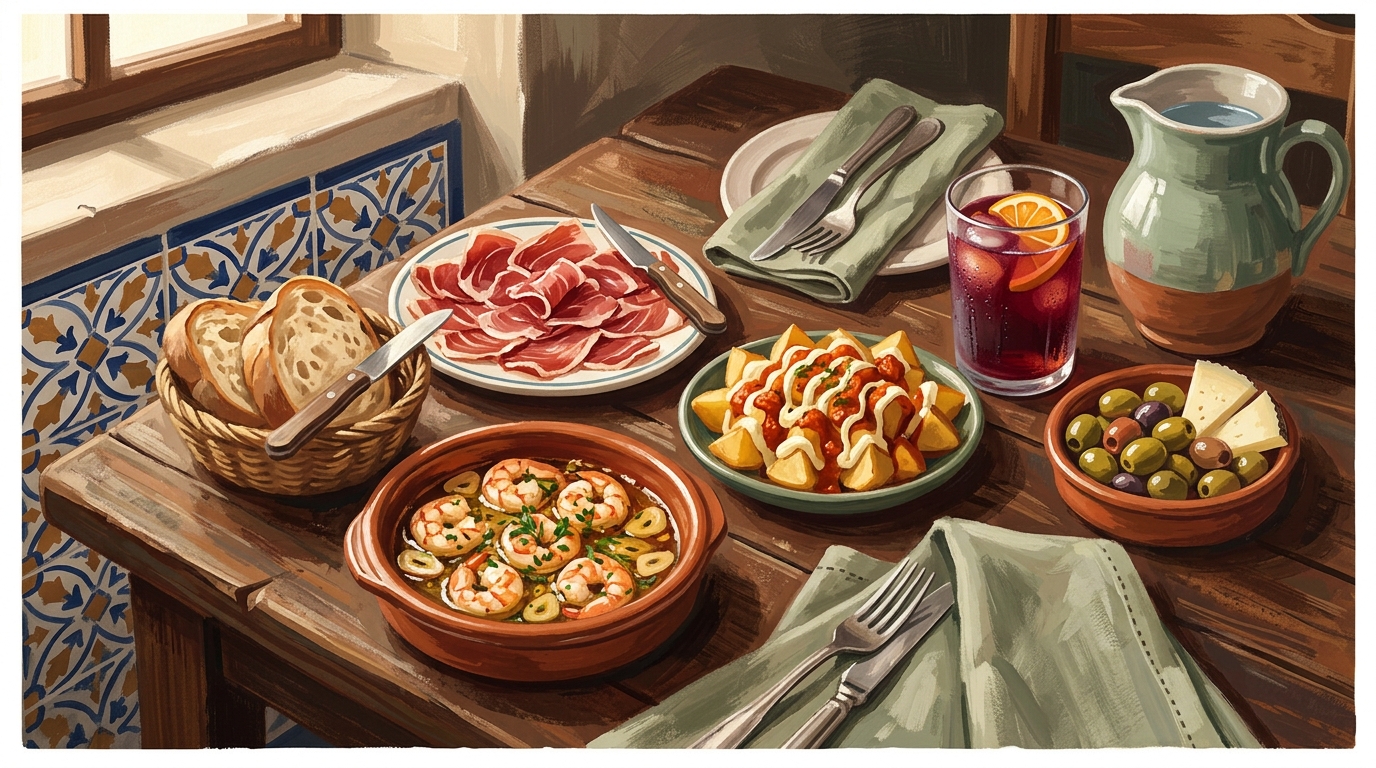
Santiponce offers several traditional options that serve local specialities, often with a focus on grilled meats and classic Andalusian tapas. For a traditional experience with a view of the Roman walls, Ventorrillo Canario is a popular choice, particularly known for its charcoal-grilled meats and rustic interior. If you prefer to stay closer to the Roman theme, Taberna La Romana sits directly opposite the entrance to the ruins and provides a shaded terrace perfect for a glass of manzanilla and a plate of local Iberico ham or espinacas con garbanzos. For those seeking seafood or rice dishes, Arrocería La Caseta de Antonio is highly regarded locally.
Where to Stay
Most visitors treat Santiponce as a day trip from Sevilla, but staying overnight allows you to explore the ruins in the quiet of the early morning. Hostal Itálica offers simple, clean, and affordable accommodation within walking distance of all the major sites. Alternatively, staying in the Macarena or Triana districts of Sevilla provides the easiest access to the bus routes that serve Santiponce, allowing you to enjoy the city's nightlife while being only a short journey away from the Roman ruins.