
Feature
The Sound of Silence: Inside Semana Santa
The drumbeat hits the sternum first, a rhythmic thud that vibrates through the marrow before the ear registers the sound. Then comes the silence: a heavy, suffocating quiet.
By Dan · Updated 7 June 2026 · 7 min read
Story context
This is a narrative feature, not a breaking-news report or a legal/practical guide. It is kept on the site because it adds local texture and reading value alongside the more practical Andalucía 365 guides.
Use the links below for planning details, current access, places to stay, transport or food guidance connected with the story.
The drumbeat hits the sternum first, a rhythmic thud that vibrates through the marrow before the ear registers the sound. Then comes the silence: a heavy, suffocating quiet that feels louder than any trumpet.
Manolo’s hands are mapped with the geography of thirty years. His knuckles are swollen, his palms calloused by the heavy hemp of the costal. He stands in the shadows of the Church of San Lorenzo in Sevilla, the air around him thick with the smell of cheap tobacco and the sharp, medicinal tang of Tiger Balm. It is 2:00 AM on Good Friday. Around him, forty-seven other men are doing the same: tightening sashes, adjusting the thick cotton pads on their necks, and staring at the floor. They do not talk. They are preparing to carry five tonnes of wood, silver, and grief through the streets of a city that has stopped breathing.
When the order comes (a sharp, wooden crack of the martillo against the float), there is no fanfare. There is only a collective grunt, a shudder of ancient timber, and the sound of forty-eight pairs of espadrilles shuffling in unison. They are the costaleros, the hidden lungs of the Holy Week. They see nothing but the feet of the man in front of them and the dust dancing in the dim light of their own exertion. To the thousands outside, they are an invisible force. To Manolo, they are the only reality left in a world that has dissolved into weight and silence.
The Architecture of Devotion
Semana Santa in Andalucía is often described by outsiders as a spectacle, a theatrical display of baroque excess. But to look at it through the lens of tourism is to miss the bone-deep reality of the cofradía. These brotherhoods are the social glue of the south, existing as year-round networks of charity, mutual aid, and community. (For visitors planning a future trip, consulting official associations like the Consejo General de Hermandades y Cofradías de Sevilla is the best way to verify upcoming routes and schedules). The procession is merely the public expiration of a year’s worth of private breathing.
The history is not a dusty archive but a living pressure. In the sixteenth century, the Council of Trent encouraged these displays as a way to bring the mysteries of faith to an illiterate populace. Today, the literacy is different: it is emotional and sensory. The nazarenos, those hooded figures who have become the uncomfortable iconography of the week to foreign eyes, are not meant to represent a group, but the erasure of the individual. Under the capirote, the lawyer is the same as the bricklayer. Their anonymity is their penance. They walk for miles, often barefoot, holding candles that drip hot wax onto the cobblestones, creating a slick, translucent skin on the city streets that will remain for weeks after the statues have returned to their niches.
The Geometry of the South: Sevilla vs Málaga
To understand the internal rhythms of the week, one must acknowledge the fierce, almost tribal differences between the cities. Sevilla is the capital of the paso: the relatively small, intimate float carried on the necks of men. Here, the movement is a graceful, swaying limp, a mecida that makes the Virgin Mary appear to be walking through the crowds. It is a city of narrow alleys where the velvet of a canopy might brush against a first-floor balcony, a moment of friction that brings a gasp from the onlookers.
Málaga, by contrast, operates on the scale of the epic. Here, they do not have pasos; they have tronos. These are massive, hulking structures of gold and silver carried by hundreds of hombres de trono on their shoulders, visible to all. If Sevilla is a whisper in a confessional, Málaga is a shout from a mountaintop. In Málaga, the Spanish Legion marches with a terrifying, rhythmic precision, tossing their rifles into the air and singing "El Novio de la Muerte" (The Bridegroom of Death). The energy is different: more military, more defiant, less concerned with the suffocating intimacy of the Sevillano night. While Sevilla focuses on the solitary weight of the costalero, Málaga celebrates the collective strength of the phalanx.
Then there is Granada, where the geography dictates the emotion. In the Albayzín, the medieval Moorish quarter, the processions must navigate streets so narrow that the costaleros have to drop to their knees to clear an archway. On the night of the Cristo de los Gitanos, bonfires are lit on the hillsides of the Sacromonte. The scent of woodsmoke mingles with the frankincense, and the reflection of the Alhambra across the valley provides a backdrop that feels less like a city and more like a fever dream of history.
The Serrated Edge of the Saeta
In the midst of the thumping drums and the wailing brass of the bands, there is one sound that holds the power to stop time. It is the saeta. Usually delivered from a balcony, it is a spontaneous flamenco prayer, stripped of all artifice. When a singer begins a saeta, the procession stops. The drums fall silent. The crowd holds its breath.
I watched a woman in Jerez (her face lined with the hard weather of seventy years) lean over a wrought-iron railing as the Prendimiento passed below. Her voice did not emerge so much as it erupted. It was a jagged, visceral sound, a series of microtonal laments that seemed to claw at the air. She wasn't singing to the crowd; she was shouting at the statue, a private conversation made public. In that moment, the distinction between the seventeenth-century wood of the sculpture and the living flesh of the woman vanished. The saeta is the emotional puncture point of the week, the moment where the ritual becomes raw, unmediated grief or gratitude.
The Friction of the Modern World
There is, however, a growing tension beneath the surface of the incense smoke. As the world becomes more secular and more digital, the Semana Santa faces a crisis of authenticity. The streets are now choked with selfie sticks and tourists who see the nazarenos as a costume rather than a vow. The "Disneyfication" of the event is a constant complaint among the semanasanteros. They see the rise of VIP balconies sold for thousands of euros and the influx of people who talk during the silencio as a slow erosion of the sacred.
There is also the physical cost. The costaleros suffer from chronic neck and back injuries. The brotherhoods spend millions on the upkeep of their images while the neighbourhoods around them struggle with unemployment and rising rents (a tension particularly felt in districts like Triana and the Macarena). Some argue that the money spent on a new silver crown for a Virgin could feed a village for a year. It is a valid critique, yet it ignores the psychological function of the week. For many in Andalucía, this is the one week where they are not invisible, where their history and their craft are the centre of the world. It is a defiance of the homogenised, globalised culture that threatens to wash away regional identity.
The contradiction is the point. The Semana Santa is not about logic; it is about the endurance of the irrational. It is the refusal to let go of a world where symbols matter more than statistics.
The Morning After
By Easter Sunday, the city has changed. The air is thinner, the heavy tension has broken, and a strange, exhausted peace descends. The smell of incense is replaced by the smell of orange blossom, the azahar, which arrives just as the processions end, as if the trees were waiting for their cue.
In a small bar in the Triana district, Manolo sits alone at the counter. His neck is bruised, a dark, angry purple mark where the beam of the paso rested for eight hours. He sips a glass of manzanilla, his hands still trembling slightly from the physical exertion. Outside, workers are already beginning to dismantle the grandstands. The wax on the pavement is being scraped away by machines, leaving white scars on the dark stone.
He looks at his hands, then at the empty street. The silence now is different. It is no longer the expectant, heavy silence of the Friday night. It is the silence of something that has been spent. He has carried his weight, he has walked his miles, and for another year, the ghosts are satisfied. He doesn't need to explain it to anyone, and he doesn't try. He simply finishes his wine and walks home, his footsteps echoing in the quiet morning, a solitary rhythm returning to the earth.
Last reviewed: 21 June 2026 · Editorial policy
Related guides
Flamenco Origins & Best Shows: A Journey Through the Heart of Andalucía
True flamenco is rarely found on a brightly lit stage accompanying a three-course dinner; it lives in the breathless silence of a cramped sherry tavern and the rhythmic agony of a soleá sung at midnight. To understand this complex art form, you have to trace its steps through the gitano quarters of Sevilla, Jerez, and the caves of Granada.
9 min read
Semana Santa Guide: Decoding Andalucía's Most Intense Week
Holy Week in Andalucía is a profound sensory experience of heavy incense, brass bands, and thousands of shuffling feet. This guide decodes the intricate schedules, unwritten rules, and distinct regional styles of Spain’s most intense cultural phenomenon.
9 min read
The Siege of the Real: Inside Sevilla’s Private Universe
Beyond the yellow dust of the Real, Sevilla’s great fair is a labyrinth of closed doors where the city’s true social hierarchy is revealed in the clinking of glasses.
8 min read
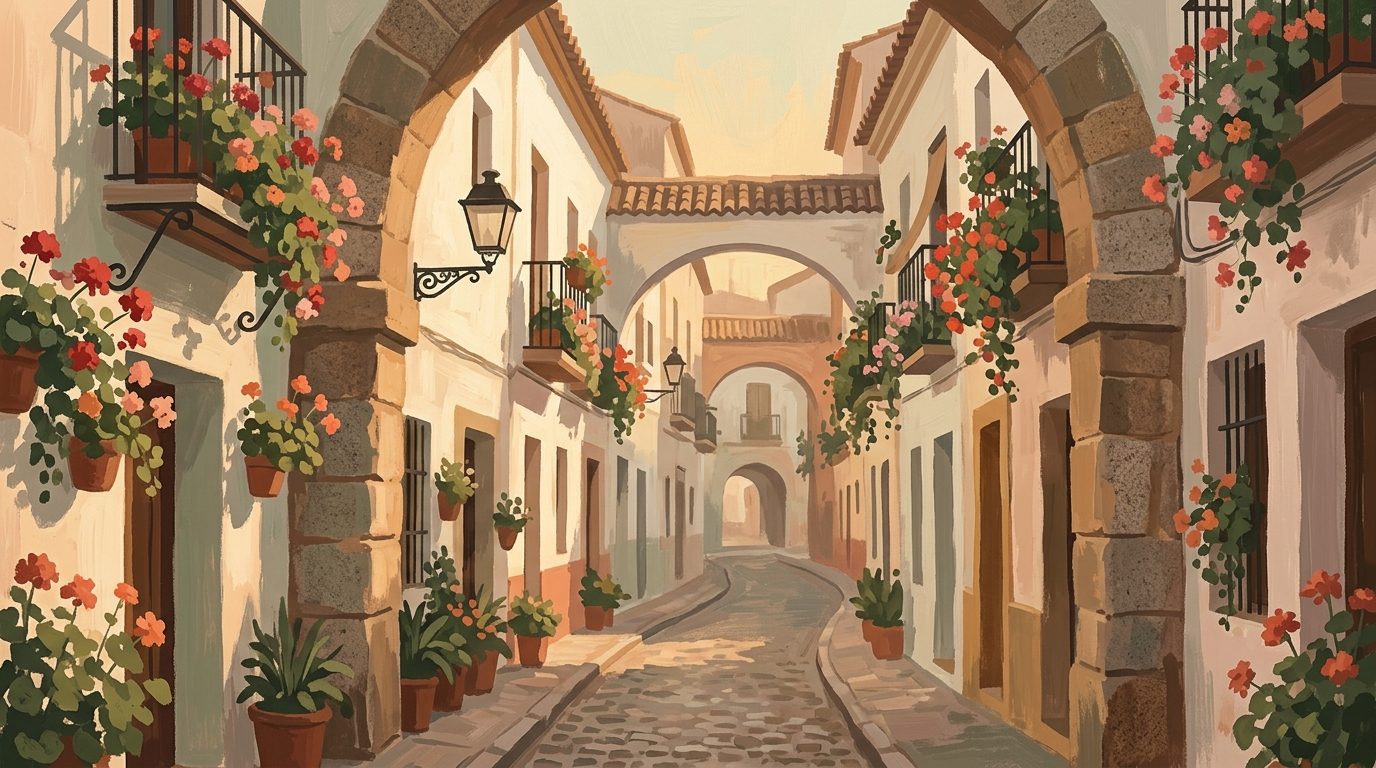
The Granite and the Geranium: The Fragile Geometry of Córdoba’s May
For two weeks in May, Córdoba’s residents throw open the doors of their private courtyards, turning a city of stone into a living, breathing laboratory of botanical obsession.
6 min read
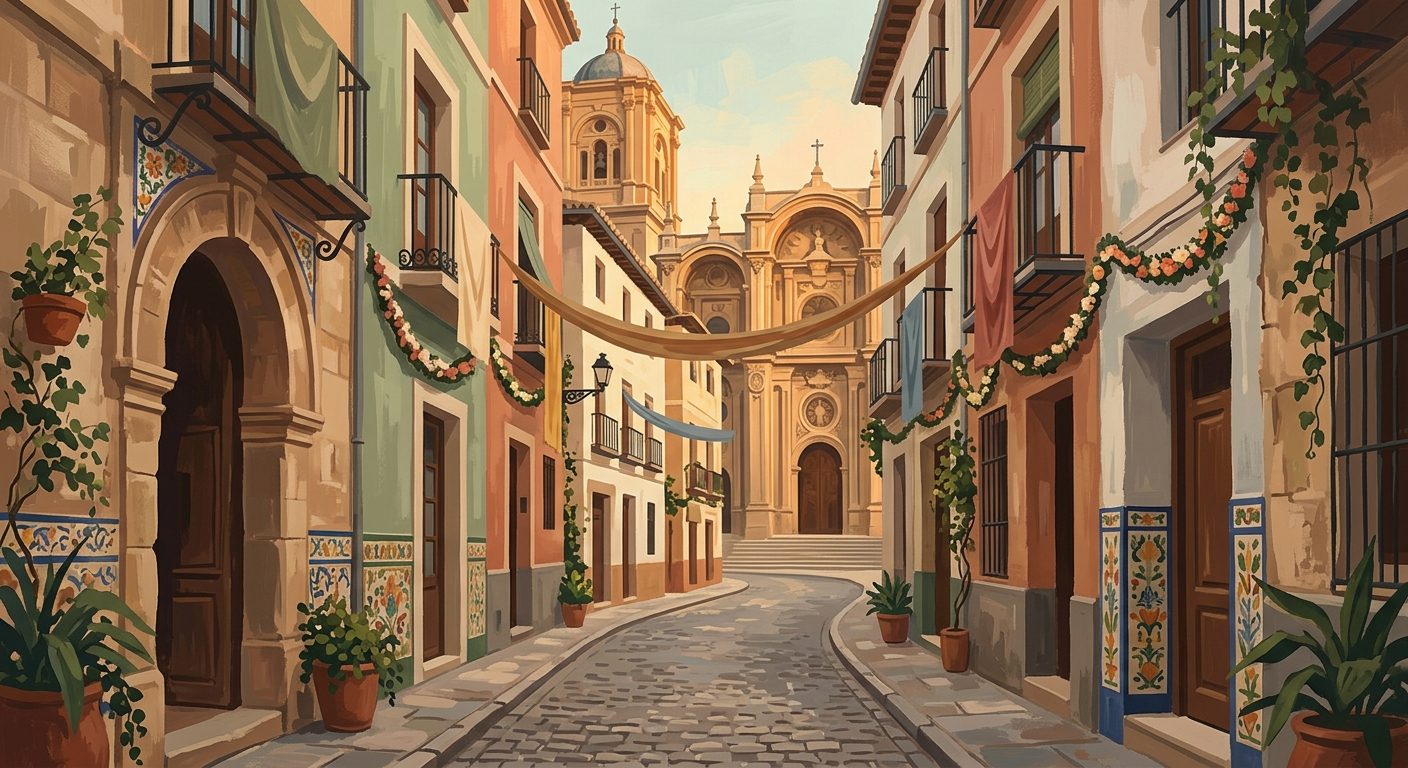
Corpus Christi in Granada: The Definitive Guide
In Granada, Corpus Christi is far more than a solemn religious observance. It is the city's largest annual festival, combining the scent of fresh rosemary crushed underfoot during the sacred Thursday procession with the unapologetic joy of the week-long public feria in Almanjáyar.
10 min read
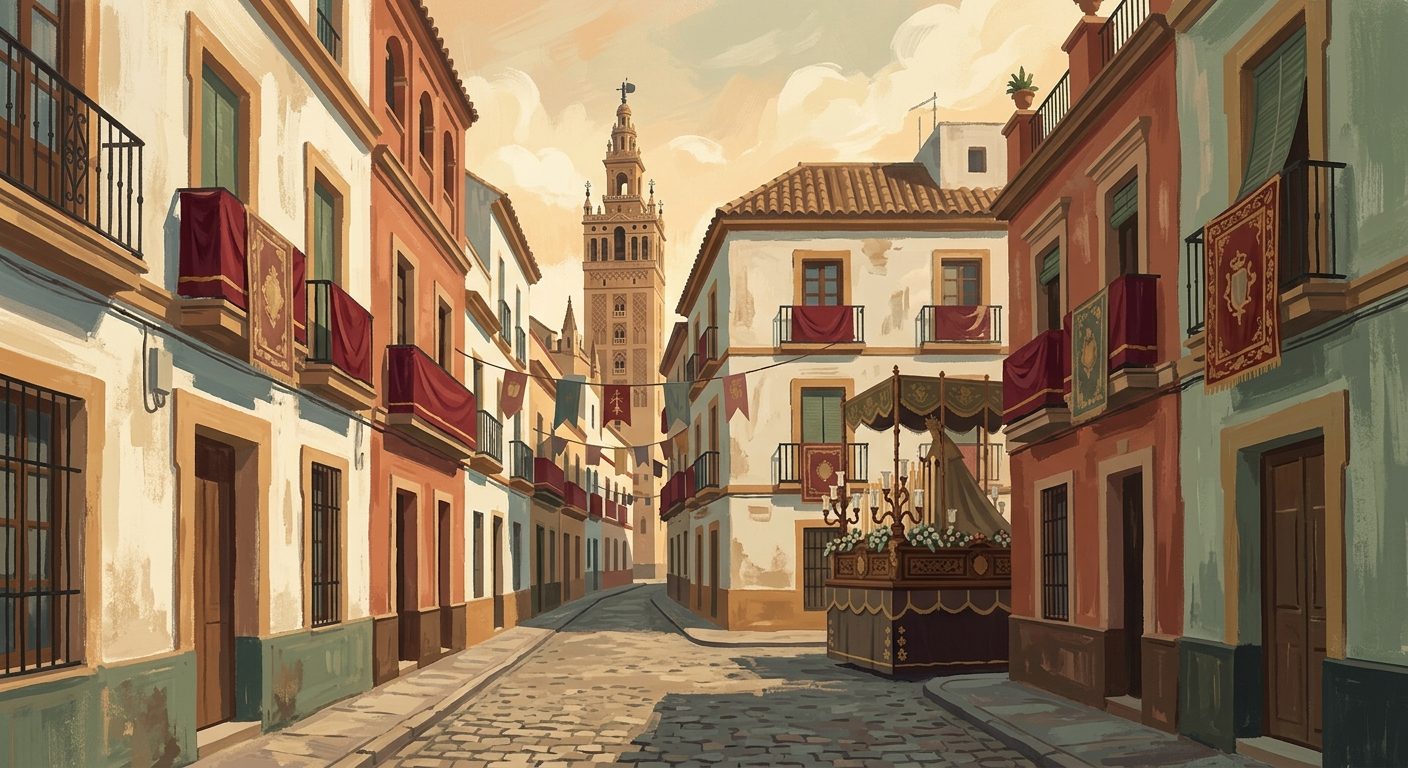
Semana Santa in Sevilla: A First-Timer's Guide
Semana Santa in Sevilla is an intense expression of faith, art and civic identity. Unlike other cities, the spectacular wooden floats are carried from below by hidden costaleros, moving to the slow beat of mourning marches or absolute silence.
8 min read
More guides
UNESCO World Heritage Sites in Andalucía
A curated guide to the cultural and natural sites in Andalucía recognised by UNESCO for their universal value. These landmarks offer a profound insight into the diverse civilisations of the region.
6 min read
The Best Beaches in Andalucía
From the Atlantic dunes of Huelva to the volcanic coves of Almería, the coastline of southern Spain offers an unparalleled variety of maritime landscapes.
6 min read
Phoenicians and Tartessians in Andalucía
Around three thousand years ago, eastern Mediterranean merchants arrived on the Iberian coast seeking silver and copper. Their arrival sparked a cultural collision that transformed local chiefdoms into the legendary civilisation of Tartessos.
6 min read
Roman Andalucía: Ruins and Archaeological Sites
Discover the monumental legacy of the Roman province of Baetica, from grand amphitheatres in the Guadalquivir valley to maritime cities on the Atlantic coast.
7 min read
Geological Wonders: Caves and Karst Landscapes of Andalucía
Discover the subterranean wonders and prehistoric secrets preserved within the limestone massifs and gypsum deposits of southern Spain.
6 min read
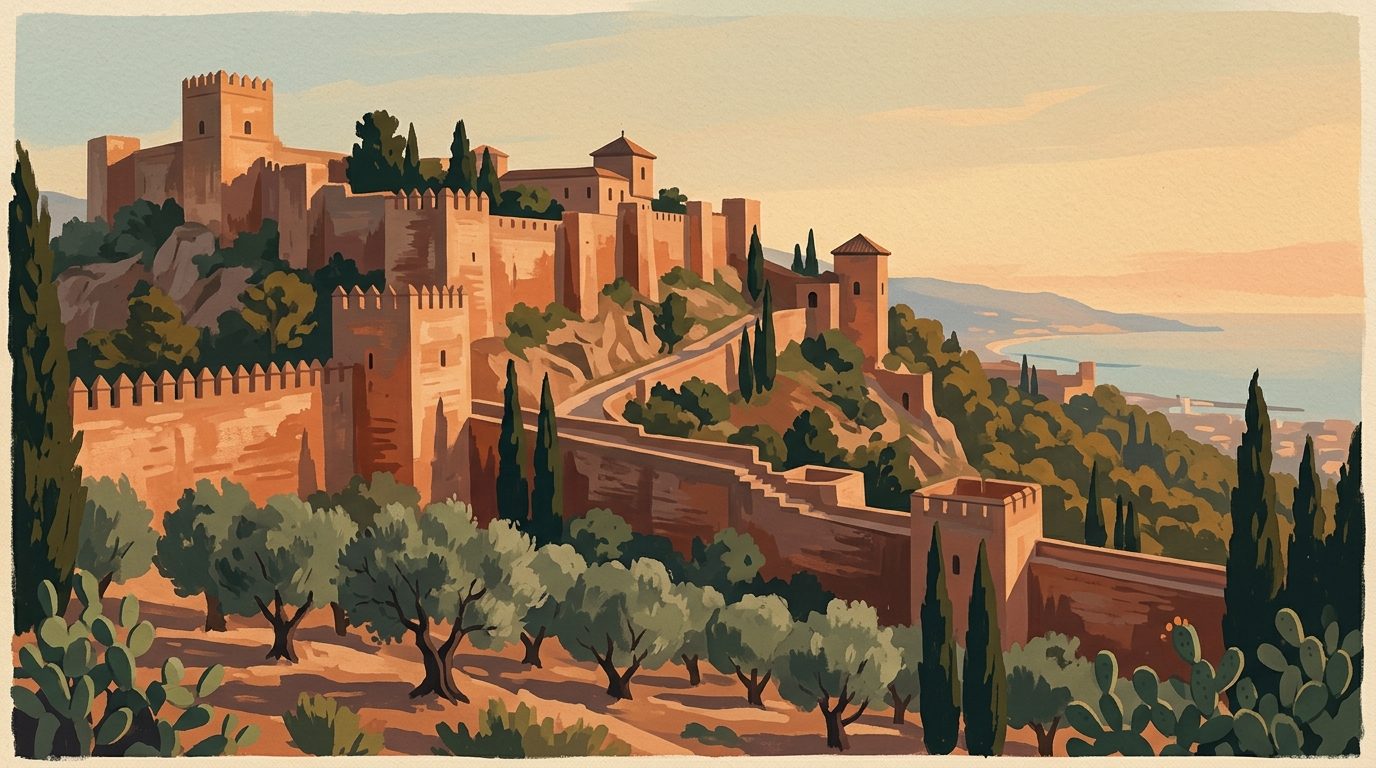
Castles and Fortresses of Andalucía
The fortresses of Andalucía are the stone guardians of a complex past, marking the ancient frontiers between empires and offering some of the most spectacular views in the southern peninsula.
6 min read
The Iberians in Andalucía: Warlords, Sculptors and the Dawn of Iron
Who were the sophisticated, iron-working peoples who controlled southern Spain before the Roman conquest? Their fortified hill towns and striking stone sculptures reveal a formidable culture caught between ancient local traditions and Mediterranean ambition.
6 min read
UNESCO Geoparks and Natural Wonders of Andalucía
Discover the geological heritage of Southern Spain through its UNESCO-designated geoparks and natural wonders. Explore the tectonic history and diverse ecosystems of Almería, Granada, and Cádiz.
6 min read
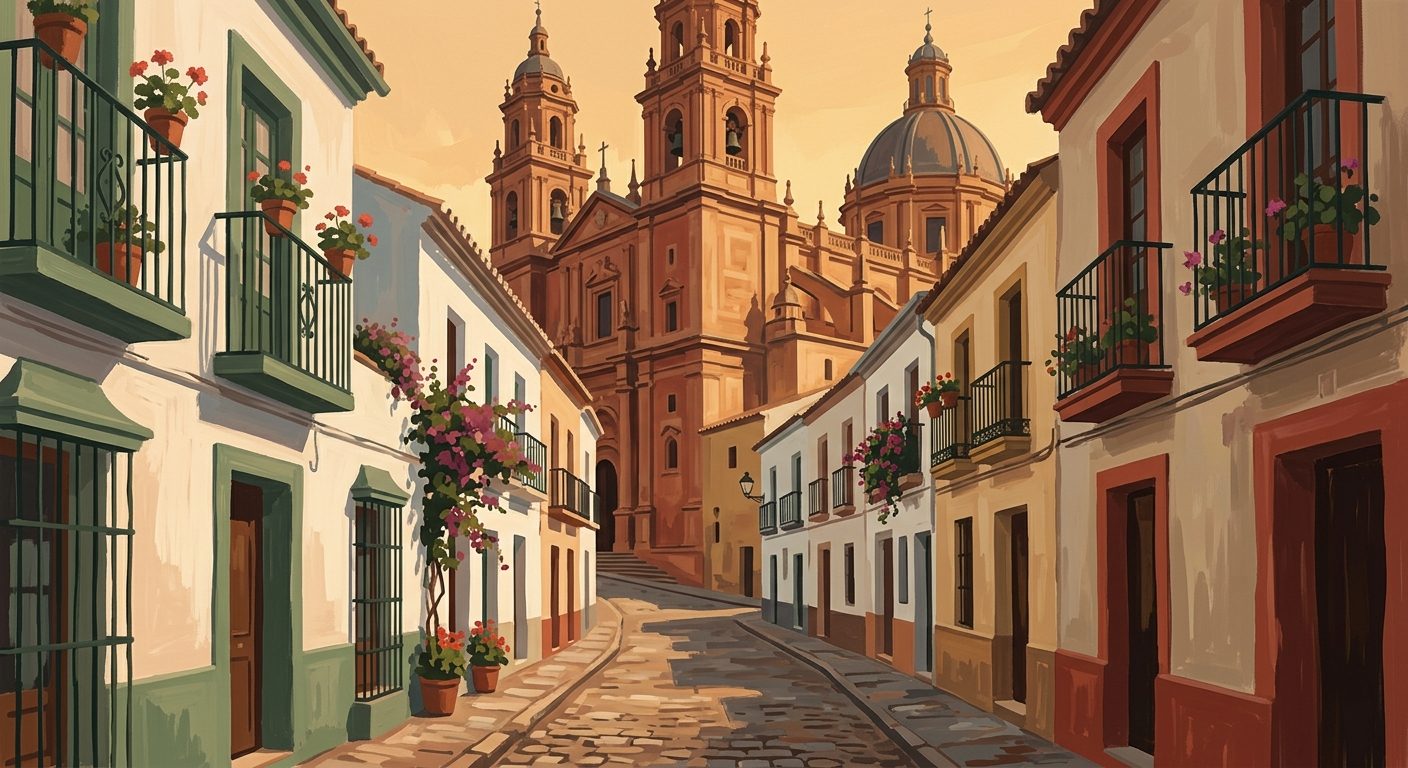
Cathedrals and Great Churches of Andalucía
A guide to the monumental religious architecture of Southern Spain, from the vast Gothic nave of Sevilla to the Renaissance masterworks of Jaén and Granada.
6 min read
Newsletter
More stories from Andalucía
Weekly notes, seasonal picks, and the next guides worth bookmarking.