
attraction · Granada
Castillo de San Miguel
Andalucía 365 · Updated 18 July 2026
Our Verdict
“Almuñécar's principal fortress offers a demanding climb rewarded by layered history and sweeping coastal views.”
Last verified: July 2026
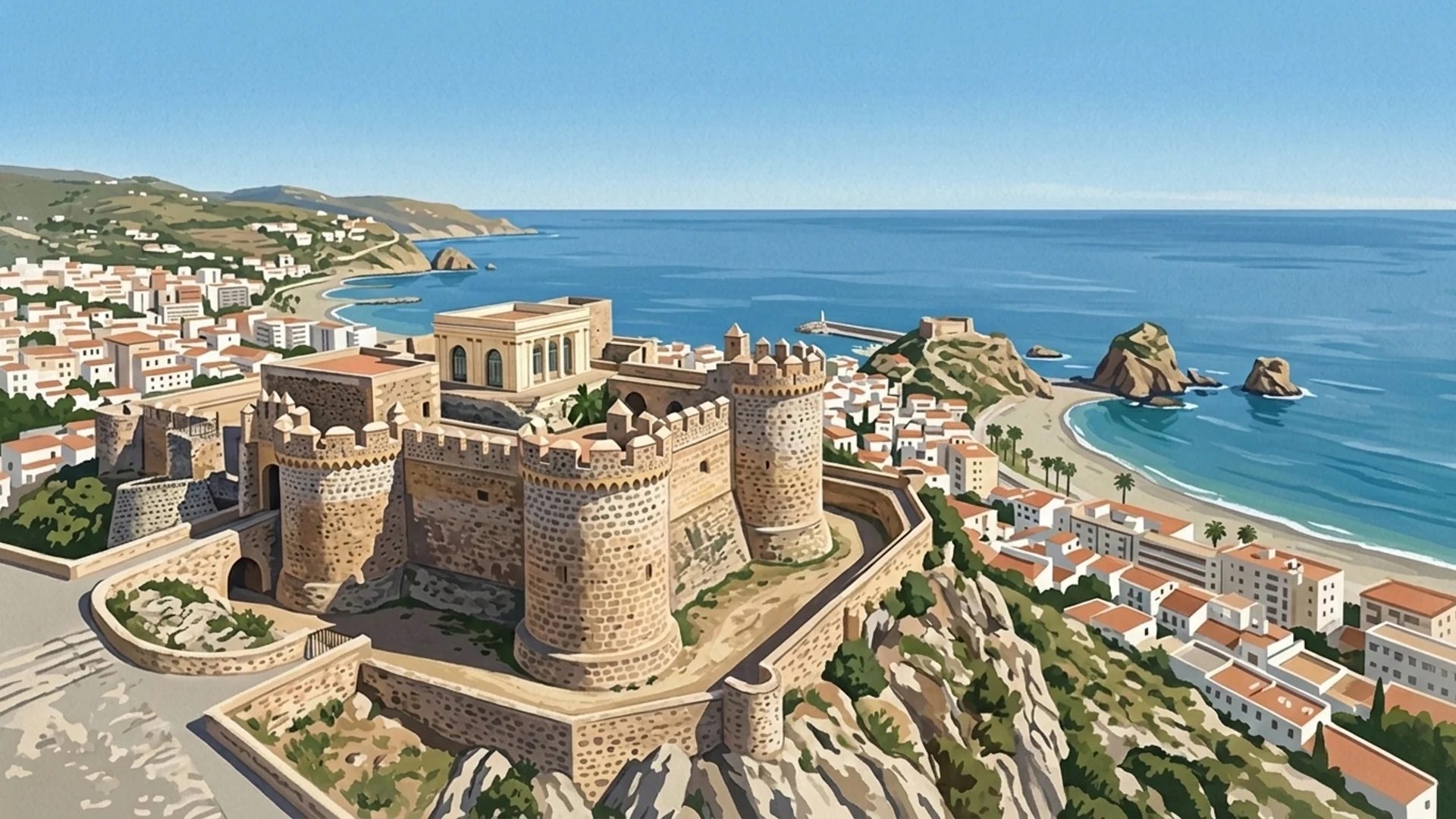
Crowning the Cerro de San Miguel above the Mediterranean, the Castillo de San Miguel is Almuñécar's principal fortress and a striking architectural palimpsest. Its strategic vantage point has drawn settlers for over three millennia, resulting in a complex defensive structure that layers Roman foundations, extensive Islamic walls, and robust 16th-century Christian fortifications. Today, the castle offers visitors a tangible journey through the military history of the Costa Tropical, complete with a dry moat, a drawbridge, and a neoclassical pavilion housing the municipal history museum. While the steep, cobbled ascent through the old quarter requires stamina, the reward is a sweeping panorama over the town, the coastline, and the distant mountains. It is a worthwhile stop for history enthusiasts and coastal explorers seeking context beyond the beaches.
A Strategic Coastal Stronghold
The site on Cerro de San Miguel has been occupied for over 3,000 years, making it one of the oldest continuously fortified positions on the Andalusian coast. Phoenicians and Romans were the first to recognise the defensive value of this rocky promontory, leaving behind structural foundations, cisterns, and fragments of Roman pavement. However, the sprawling fortress visible today is predominantly the result of Islamic military engineering.
Between the 10th and 13th centuries, during the Emirate and later the Nasrid Kingdom of Granada, the defensive walls were meticulously adapted to the uneven topography of the hill. It served as a formidable coastal stronghold protecting the maritime approaches to Granada. During the Nasrid era, the castle also functioned as a royal resting place and a secure dungeon for dethroned sultans, disgraced ministers, and high-ranking military prisoners.
Christian Fortifications and Conflict
Following the surrender of the town to the Catholic Monarchs in 1489, the castle transitioned into Christian hands and underwent significant structural modifications. In the early 16th century, under the direction of King Ferdinand, the fortress was modernised to withstand the growing threat of artillery fire and coastal raids by Barbary pirates. A deep dry moat, a functional drawbridge, and an imposing entrance gate flanked by four robust circular towers were added, fundamentally altering the castle's defensive profile.
The fortress maintained its military significance for centuries, but its darkest hour arrived during the Peninsular War in the early 19th century. Occupied by French troops, the castle suffered a devastating bombardment by British naval forces, which left much of the inner bailey and the original keep in ruins. In a pragmatic turn of events, the shattered interior was subsequently repurposed as a municipal cemetery, a function it retained from 1851 until 1977.
Exploring the Castle Grounds
Today, visitors enter the complex across the 16th-century moat, passing through the formidable gatehouse that still bears the scars of historical conflicts. Inside, the grounds present an irregular network of defensive walls, eleven distinct towers from various construction periods, and excavated archaeological ruins.
A prominent feature within the walls is a neoclassical pavilion. Constructed in the 18th century and seemingly disconnected from the medieval military architecture, it now houses the City History Museum. The museum features a scale model and exhibits detailing the fortress's evolution, helping to contextualise the site's long history, while the main archaeological finds are kept at the nearby Cueva de Siete Palacios. Recent municipal restoration efforts have progressively opened additional areas to the public, including the western tower. This allows visitors to examine the vaulted brick ceilings, original masonry, and gun ports up close.
The San Miguel Neighbourhood and Views
The approach to the fortress is an integral part of the visitor experience when exploring Almuñécar. The castle is tightly enveloped by the Barrio de San Miguel, a traditional quarter characterised by whitewashed houses, wrought-iron balconies, and narrow, winding alleys. Walking up through this district provides a vivid glimpse into the town's Moorish urban planning, where streets were designed to provide shade and confuse potential invaders.
Once at the summit, the fortress walls offer some of the most spectacular vantage points in the region. The panoramic views sweep across the Mediterranean Sea, encompassing the distinctive Peñones del Santo rock formations below, the curved bay of the town, and the rugged foothills of the Granada province hinterland. On clear days, the contrast between the deep blue of the sea and the agricultural terraces of the surrounding valleys is particularly striking.
Practical Advice for Visitors
Reaching the Castillo de San Miguel requires a reasonable level of physical fitness. The climb from the town centre is demanding, particularly during the warmer months, as the route through the old town offers limited shade and the gradients are steep. Visitors should wear sturdy, comfortable footwear to navigate the uneven cobbles, ramps, and staircases safely.
Parking in the immediate vicinity of the castle is severely restricted, and navigating the narrow, one-way streets by car is not recommended. It is highly advisable to leave vehicles in the underground car parks near the seafront or the commercial centre and proceed on foot. The castle grounds themselves are highly exposed to the elements, so bringing water, a hat, and sun protection is essential. For current opening hours, seasonal variations, and admission details, visitors should consult the official Almuñécar tourism website before planning their ascent.
Our Verdict
The Castillo de San Miguel is a compelling historical site that firmly anchors Almuñécar's coastal landscape. Its primary appeal lies in the sheer physical layering of history, from Roman remnants to Nasrid walls and Christian bastions, alongside the sweeping, unobstructed views over the Mediterranean. The internal museum is relatively small, and the ruins themselves require some imagination to fully interpret, as much of the original interior was lost to bombardment and its later use as a cemetery.
However, the architectural scale of the outer walls and the panoramic reward make the steep climb entirely worthwhile. It is a robust, unpolished fortress that offers a genuine sense of the region's turbulent past. While it may lack the pristine restoration of some larger Andalusian monuments such as the nearby Castillo de Salobreña, its rugged authenticity and commanding presence make it a highly recommended visit for anyone exploring the coast.
Nearby worth your time
A few well-placed stops for extending the day without turning it into a checklist.
Continue through Costa Tropical
Step back into the wider landscape with local guides, nearby places and the province overview.
Place guide · 7 min
Playa de Calahonda (Granada) Beach Guide
Playa de Calahonda in Granada offers deep, crystal-clear waters and a dramatic limestone cliff backdrop. This Blue Flag beach is a favourite for snorkelling and authentic Andalucían seafood.
Place guide · 7 min
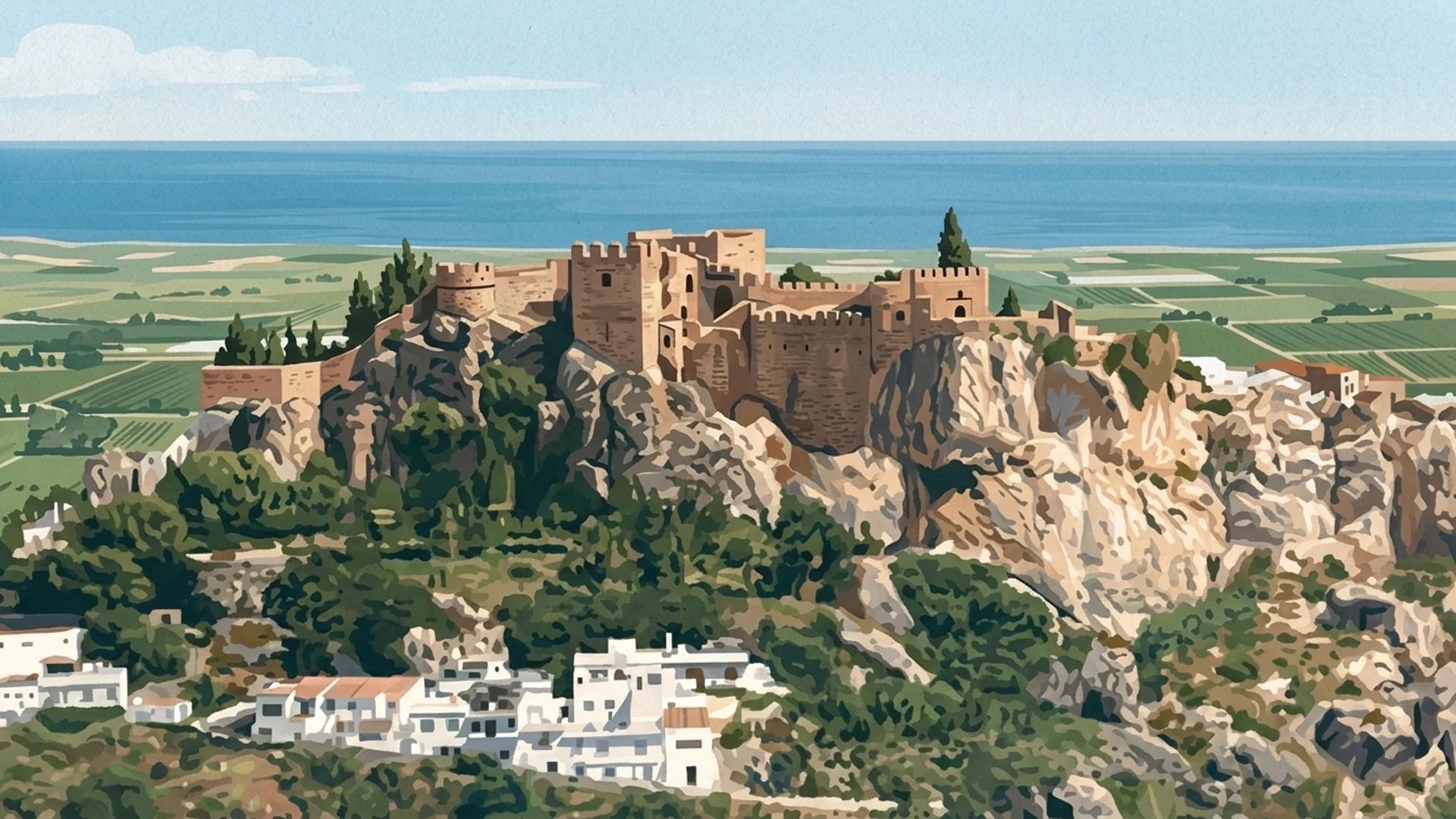
A Guide to Playa de Salobreña on the Costa Tropical
Playa de Salobreña is a vast stretch of dark sand and clear water on the Costa Tropical, overlooked by a historic Moorish castle and dramatic cliffs.
Itinerary · 10 min
Two Days in Granada: A Step-by-Step Itinerary
Two days in Granada gives you just enough time to explore the Alhambra and lose yourself in the steep alleys of the Albaicín. This itinerary balances major monuments with the city's legendary free tapas culture.