
attraction · Granada
Castillo de Salobreña
Andalucía 365 · Updated 18 July 2026
Our Verdict
“A commanding Moorish fortress offering layered military history and sweeping coastal views, provided you can manage the steep ascent.”
Last verified: July 2026
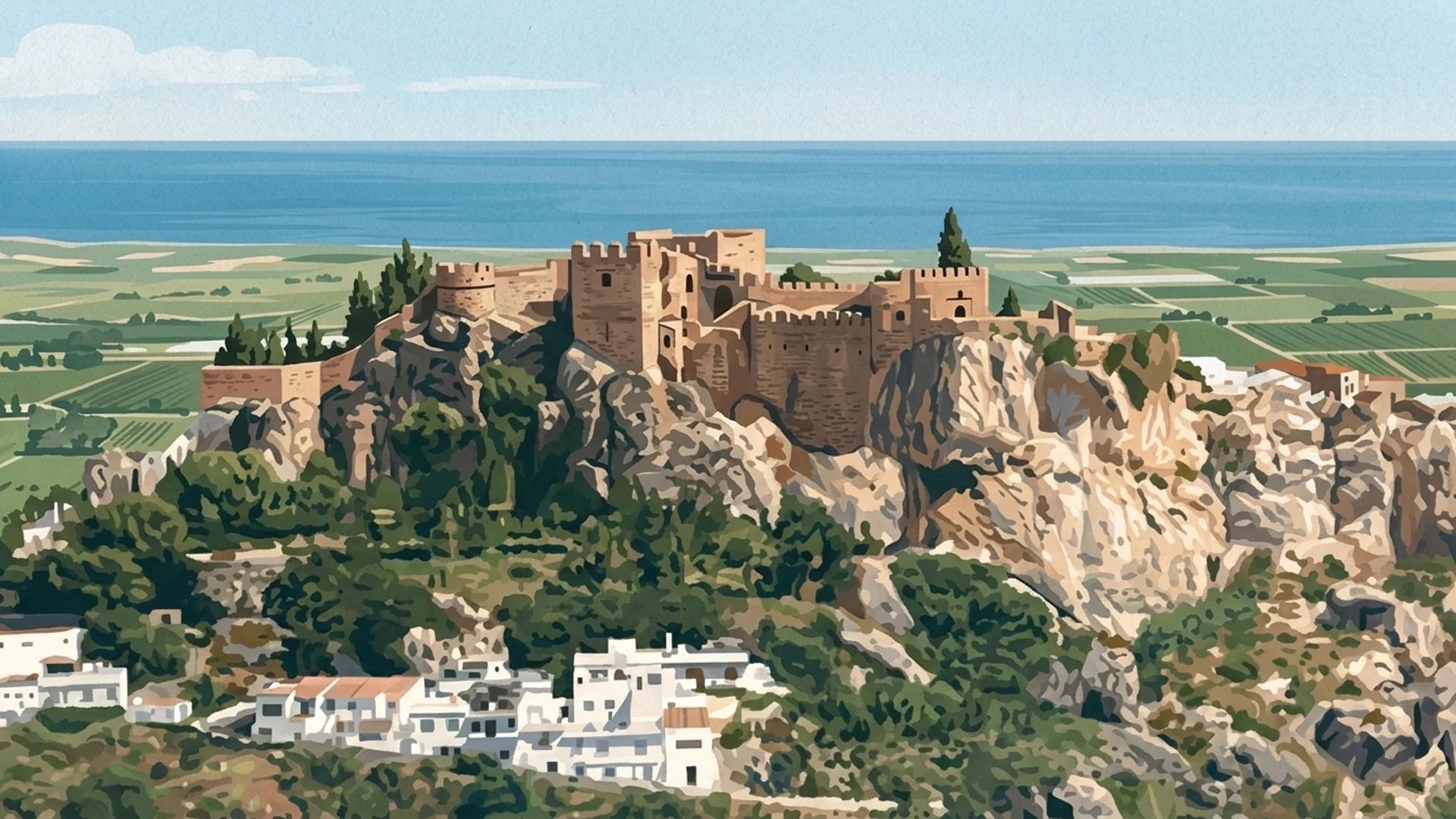
Crowning a rocky promontory 73 metres above the Mediterranean, the Castillo de Salobreña is a formidable Moorish fortress that dominates the surrounding agricultural plain and the Costa Tropical. Originally constructed during the Nasrid dynasty in the thirteenth century, this hilltop stronghold served a dual purpose as a luxurious royal summer residence and a high-security prison for deposed sultans. Today, its restored towers and fortified walls offer visitors a tangible link to the region's Islamic and Christian military history. The site appeals to history enthusiasts and anyone willing to tackle the steep ascent through the whitewashed old town for panoramic views of the sea and the Sierra Nevada. While the climb requires physical effort, the reward is an unvarnished look at one of the most significant coastal defences in Granada.
The Nasrid Fortress and Royal Prison
During the thirteenth to fifteenth centuries, the Castillo de Salobreña was a vital administrative and defensive node for the Kingdom of Granada. Unlike purely military outposts, this fortress was designed to accommodate the royal court during the summer, blending defensive might with palatial comfort. Recent excavations have uncovered the foundations of this royal residence, including a medieval bathhouse and intricate paving.
The castle is perhaps best known in historical chronicles as a royal prison. Its isolated position on a steep crag made it an ideal location to incarcerate political rivals. The most famous inmate was Yusuf III, who spent eleven years imprisoned here before ascending to the throne in 1408. According to historical accounts, when his brother ordered his execution, Yusuf requested permission to finish a game of chess. Before the match concluded, a messenger arrived with news of his brother's death, sparing Yusuf's life. The inner enclosure retains the layout of this period, anchored by the Torre del Homenaje and the Torre Vieja.
Architectural Evolution and Christian Additions
Following the conquest by the Catholic Monarchs in 1489, the fortress underwent significant modifications to adapt to early modern warfare. The introduction of gunpowder and heavy artillery rendered the high, flat walls of the Moorish era vulnerable. To counter this threat, the military engineer Ramiro López was commissioned to design a robust artillery barrier facing the town.
This secondary enclosure features thicker, lower walls and strategically placed embrasures designed to house cannons. Visitors exploring this section can observe the stark contrast between the refined, vertical architecture of the Nasrid period and the pragmatic, heavy masonry of the Christian era. Throughout the sixteenth and seventeenth centuries, the fortress continued to evolve, serving as a deterrent against Barbary pirate raids. It was only in the late eighteenth century that the castle lost its strategic maritime value. Over the centuries, sediment deposited by the Guadalfeo river expanded the coastal delta, pushing the shoreline further away and leaving the fortress stranded inland above a newly formed agricultural plain.
Exploring the Enclosures
The Castillo de Salobreña is organised into three distinct defensive rings, each serving a specific tactical purpose:
- The Artillery Barrier: The journey begins at the outer access gate, leading into the lower enclosure designed by Christian engineers to house cannons and repel modern assaults.
- The Coracha: A specialised defensive system designed to protect the fortress's water supply. This area includes the Baluarte del Aljibe and the Torre del Agua, which safeguarded a subterranean waterwheel and a restored Andalusi cistern.
- The Nasrid Alcázar: The highest part of the complex and the original inner sanctum. This area is a labyrinth of restored walls, archaeological trenches and imposing structures like the Torre Nueva and the Torre del Polvorín.
Ongoing conservation efforts mean the site is a working archaeological monument, with new discoveries frequently shedding light on its complex past, much like the Castillo de San Miguel further along the coast.
The Views from the Towers
Beyond its historical significance, the Castillo de Salobreña offers some of the most commanding vantage points in the region. From the upper battlements, the visual sweep encompasses the entire coastal plain. To the south, the Mediterranean Sea stretches out, though it is now separated from the castle by a wide expanse of subtropical agriculture. This green sea of mango, avocado and sugar cane plantations provides a stark contrast to the Middle Ages when the waves crashed directly against the base of the rock.
To the north, the snow-capped peaks of the Sierra Nevada provide a dramatic backdrop during the winter and spring months. The immediate foreground is dominated by the flat roofs and winding streets of the old town, cascading down the hillside. This elevated perspective provides a clear understanding of why this specific rock was chosen for fortification; it offers total visual control over the land and sea approaches.
Our verdict
The Castillo de Salobreña is an essential historical site that rewards the effort required to reach it. Its layered architecture provides a clear, readable timeline of military evolution from the Nasrid era to the Christian conquest. The ongoing archaeological work adds a layer of authenticity, ensuring the monument feels like a site of active discovery rather than a static museum piece.
However, visitors must be prepared for the physical demands of the visit. The ascent through the town is genuinely steep, and the cobblestone streets can be slippery underfoot. The castle itself features uneven ground, steep staircases and limited shade, making it a challenging environment during the peak heat of summer. Despite these logistical hurdles, the combination of rich history and sweeping coastal views makes it highly worthwhile.
Practicalities
Reaching the monument requires navigating the historic centre of Salobreña. Vehicular access to the upper town is heavily restricted, and parking near the castle is virtually non-existent for non-residents. Visitors should plan to leave their vehicles in the lower town, either near the municipal market or the beach areas, and proceed on foot. The walk takes approximately twenty to thirty minutes and involves a continuous, steep incline through narrow, whitewashed streets.
Due to the exposed nature of the hilltop, weather conditions significantly impact the experience. During the summer months, it is highly advisable to visit early in the morning or late in the afternoon to avoid the intense midday sun, as shade within the enclosures is sparse. Comfortable, flat walking shoes with good grip are essential for safely navigating the steep approach and the uneven archaeological terrain inside the fortress.
For current opening hours, holiday closures and admission tariffs, visitors should consult the official municipal tourism website before planning their ascent.
Nearby worth your time
A few well-placed stops for extending the day without turning it into a checklist.
Continue through Costa Tropical
Step back into the wider landscape with local guides, nearby places and the province overview.
Place guide · 7 min
Playa de Calahonda (Granada) Beach Guide
Playa de Calahonda in Granada offers deep, crystal-clear waters and a dramatic limestone cliff backdrop. This Blue Flag beach is a favourite for snorkelling and authentic Andalucían seafood.
Place guide · 7 min
A Guide to Playa de Salobreña on the Costa Tropical
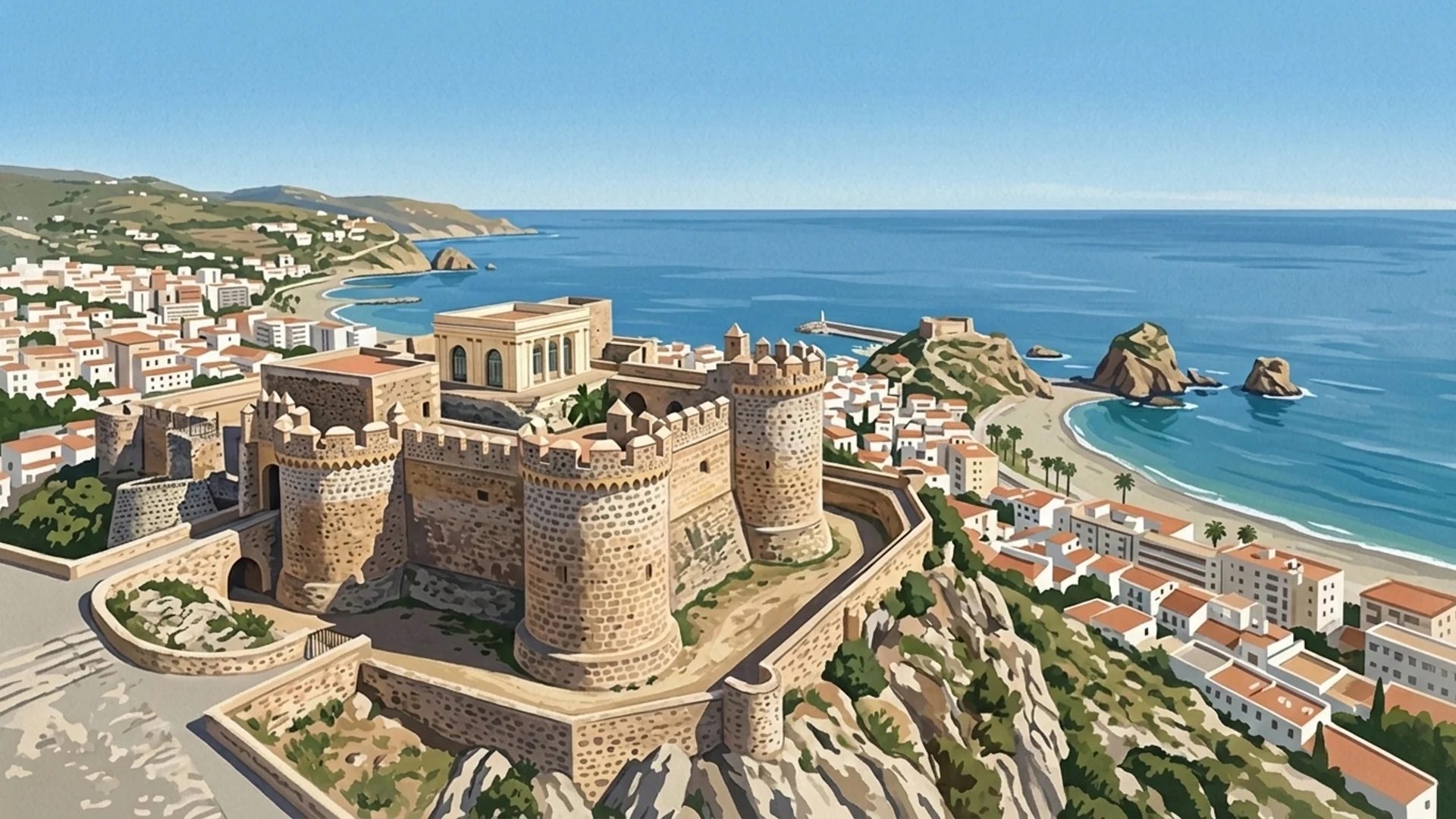
Playa de Salobreña is a vast stretch of dark sand and clear water on the Costa Tropical, overlooked by a historic Moorish castle and dramatic cliffs.
Itinerary · 10 min
Two Days in Granada: A Step-by-Step Itinerary
Two days in Granada gives you just enough time to explore the Alhambra and lose yourself in the steep alleys of the Albaicín. This itinerary balances major monuments with the city's legendary free tapas culture.